
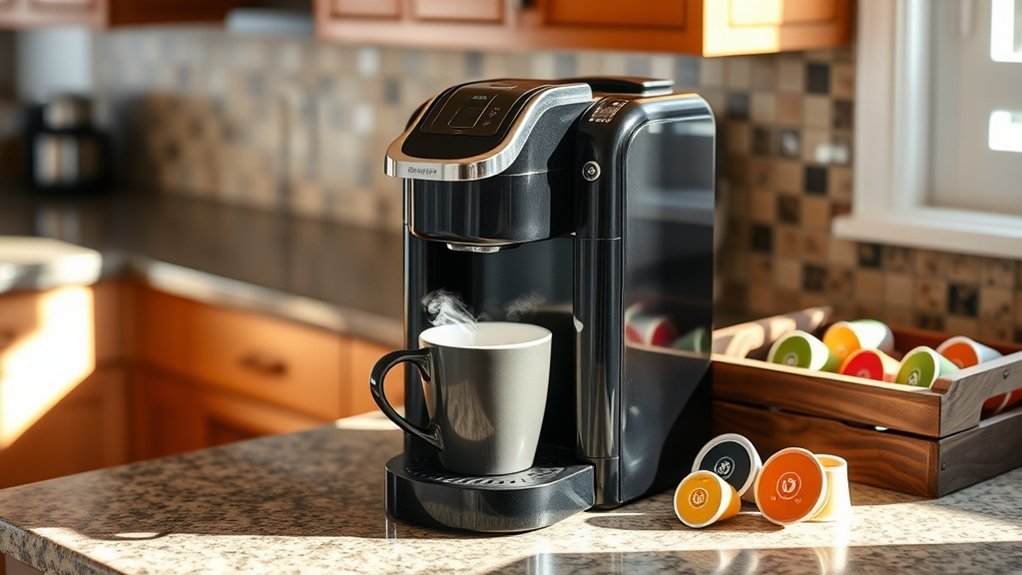
A single-serve coffee maker brews one drink at a time using a pre-portioned pod, capsule, or reusable filter filled with ground coffee. Instead of brewing a full carafe, these compact machines heat, meter, and push water through coffee grounds on demand. However, brewing mechanics vary significantly across the category: Keurig-style brewers, Nespresso Original machines, Nespresso Vertuo systems, and soft-pod brewers use completely different extraction pressures, capsule form factors, temperatures, and cup sizes.
Quick Answer
A single-serve coffee maker prepares individual cups of coffee by forcing heated water through a sealed capsule, pod, or reusable filter. Depending on the design, the machine extracts coffee using low-pressure flow (Keurig), high 19-bar pump pressure (Nespresso Original), centrifugal spinning (Nespresso Vertuo), or gravity/percolation (soft-pod brewers).
Key Takeaways
- Single-serve brewers prepare one beverage per cycle using compatible pods, capsules, or loose grounds in reusable filters.
- Brewing mechanisms differ: K-Cups use low-pressure flow, Nespresso Original uses 19-bar pressure, and Vertuo uses centrifugal spin extraction.
- Pods are not universally interchangeable across different brands or machine generations.
- Running a blank preheating cycle and adjusting cup size settings significantly improves drink temperature and concentration.
- Quarterly descaling prevents mineral scale buildup, clears slow water flow, and eliminates off flavors.
At a Glance
| Time Required | 1–3 minutes per cup (including machine preheating) |
| Difficulty | Beginner-friendly / Automatic |
| Tools Needed | Single-serve brewer, compatible pod or reusable filter, filtered water, mug |
| Cost | $40–$250+ for machines; $0.40–$1.25 per pod (reusable filters lower ongoing costs) |
What’s a Single-Serve Coffee Maker and How Does It Work?

A single-serve coffee maker is an electric appliance engineered to brew an individual portion of coffee directly into a cup. Unlike traditional drip machines that brew 8 to 12 cups into a shared glass carafe, a single-serve system meters only enough water for one chosen serving size.
The internal operation follows a precise sequence:
- Water Intake: The internal pump draws a measured volume of water from the reservoir.
- Rapid Heating: A thermo-block or flash-heating element raises the water to brewing temperature (typically 190°F to 200°F / 88°C to 93°C) in seconds.
- Chamber Piercing & Pressurization: Needles or mechanical clamps puncture the pod’s outer seal, creating entrance and exit ports.
- Extraction: The machine forces hot water through the compacted grounds inside the capsule under system-specific pressure.
- Dispensing: Brewed coffee flows through an exit nozzle directly into your mug, while the spent grounds remain contained inside the pod.
There is no single universal brewing temperature, reservoir volume, or pump pressure across pod machines. Extraction parameters depend entirely on the machine’s proprietary design.
Understanding these mechanical differences is critical when choosing a machine. For example, standard pod coffee makers are often mistakenly called espresso machines. However, according to the Specialty Coffee Association (SCA), true espresso requires a concentrated beverage extracted under 9 or more bars of atmospheric pressure with a short brew ratio. Drip-style pod machines produce standard filtered coffee, not authentic espresso.
Main Types of Single-Serve Coffee Makers
Single-serve technology spans four primary brewing systems, each utilizing distinct engineering, pressures, and pod constructions.
| System | Extraction Method | Beverage Profile |
|---|---|---|
| Keurig K-Cup Brewers | Low-pressure flow; punctures plastic cup top and bottom to pass heated water through a paper filter basket. | Standard American-style drip coffee, tea, and hot chocolate (6–12 oz). |
| Nespresso Original | 19-bar mechanical pump pressure forces water through a hermetically sealed aluminum capsule. | Concentrated espresso (1.35 oz) and lungo (3.7 oz) with dense crema. |
| Nespresso Vertuo | Centrifusion technology reads capsule barcodes and spins pods up to 7,000 RPM while infusing water. | Full-range cups: single espresso (1.35 oz) up to large alto and carafe sizes (18 oz) with thick crema. |
| E.S.E. & Soft Pod Brewers | Water passes through pre-pressed, compostable paper disc filters (Easy Serving Espresso format or Senseo soft pads). | Traditional espresso shots or medium-bodied European-style café crema. |
Key Components of a Pod Coffee Maker
While machine footprints vary, most single-serve coffee makers rely on the same fundamental subassemblies:
- Water Reservoir: Holds fresh brewing water. Sizes range from compact 40-ounce tanks on single-user models up to 78-ounce reservoirs on full-sized units like the Keurig K-Supreme Plus.
- Flow Meter & Heating Element: Measures water volume precisely while high-efficiency heating coils (thermoblocks) bring water to extraction temperature within 30 to 60 seconds.
- Internal Pump: Delivers controlled water pressure, ranging from gentle flow pumps (1 to 2 bars in drip brewers) to high-pressure vibratory pumps (15 to 19 bars in espresso-focused capsule machines).
- Brew Head & Needle Assembly: Clamps the pod securely. Puncture brewers utilize sharp upper entrance needles and lower exit needles to channel fluid flow.
- Control Interface: Electronic boards managing cup size presets, strength selectors, water-level sensors, and optical barcode scanners.
- Drip Tray & Spent Capsule Bin: Supports mugs of varying heights and collects residual drips or automatically discards spent capsules.
Warning: Pod brew heads house sharp puncture needles and release high-temperature pressurized steam. Never place your fingers inside the capsule chamber while closing the handle or during a brew cycle. Always unplug the appliance before cleaning the needle housing.
Brewing a Better Cup With a Single-Serve Coffee Maker

Because extraction mechanics are automated, cup quality depends on ingredient preparation, thermal stability, and proper machine setup. Follow this step-by-step method to maximize flavor extraction:
- Fill with Fresh, Filtered Water: Use filtered tap water with balanced mineral content. Avoid pure distilled or reverse osmosis water lacking minerals, as internal capacitive water-level sensors need slight mineral conductivity to detect water levels properly.
- Run a Blank Preheating Flush: Before inserting a coffee pod, close the brew head and run a small 4-ounce water-only cycle into your mug. This preheats the internal tubing, needle block, and drinking cup, raising extraction temperatures by up to 5–10°F.
- Insert a Fresh, Compatible Pod: Place the capsule firmly into the pod cradle without forcing it. Ensure the foil lid is unpunctured and flat.
- Select an Optimal Serving Size: Most single-serve pods contain between 9 and 12 grams of ground coffee. Brewing an 8-ounce or 6-ounce cup provides a balanced, rich extraction ratio. Selecting a 10-ounce or 12-ounce cup over-extracts the grounds and creates a watery, bitter cup.
- Engage the “Strong” Setting (If Available): This feature pulses the water flow, extending contact time between the water and coffee grounds for a more robust body.
- Eject and Dispose of the Pod Promptly: Discard the spent pod immediately after brewing to prevent coffee oils from drying and baking onto the exit needles.
Pro Tip: If you prefer a 12-ounce travel mug of coffee, do not brew a single 12-ounce cycle through one pod. Instead, brew two separate 6-ounce cycles using two fresh pods. This prevents over-dilution and preserves a full-bodied coffee flavor.
Pod and Capsule Compatibility Guide
Coffee pods are engineered to proprietary physical dimensions, puncture tolerances, and extraction profiles. Using an incompatible pod can crush the capsule, break puncture needles, or trigger water leaks.
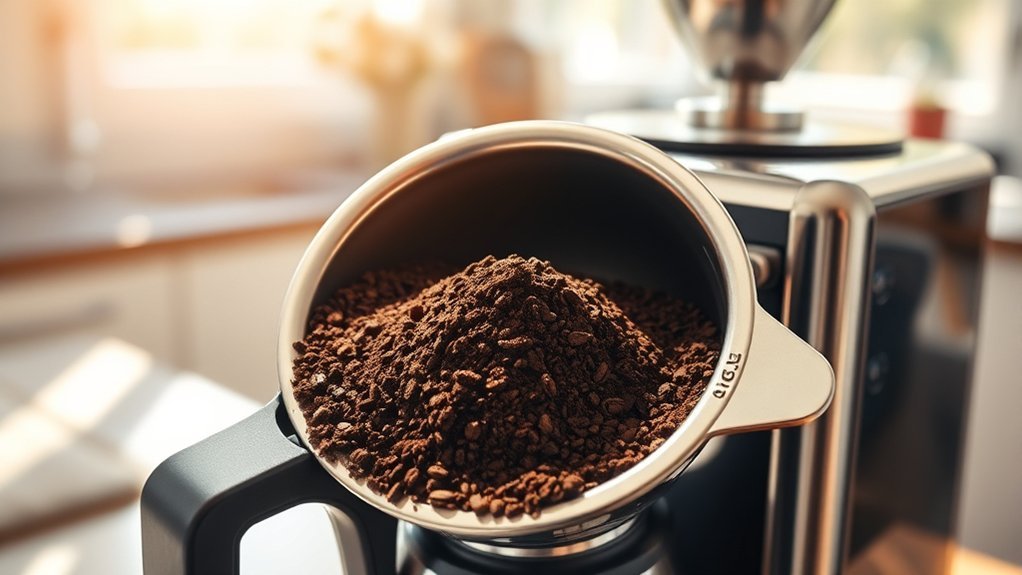
Note: Reusable filter baskets, such as the Keurig My K-Cup, allow you to brew your own ground coffee. Use a medium-coarse grind rather than an espresso-fine grind to prevent mesh clogging and chamber overflow.
- Keurig K-Cup: Compatible with Keurig machines, Cuisinart single-serve brewers, and dual-brew machines. Incompatible with Nespresso or Dolce Gusto units.
- Nespresso Original: Small aluminum/plastic capsules compatible with Inissia, Pixie, Essenza, Citiz, and third-party Original-line machines. Incompatible with Vertuo brewers.
- Nespresso Vertuo: Dome-shaped capsules featuring individual peripheral barcodes. They work exclusively in Vertuo machines (VertuoPlus, Next, Pop, Lattissima).
- E.S.E. Pods (44mm): Pre-tamped paper discs designed for dedicated E.S.E. machines or manual espresso machines with compatible filter baskets.
Pros and Cons of Single-Serve Coffee Makers
| Advantages (Pros) | Trade-offs (Cons) |
|---|---|
| Instant Convenience: Ready to brew in under 60 seconds with no bean grinding or measuring. | Higher Cost Per Cup: Packaged pods cost $0.50–$1.25 per cup versus $0.15–$0.30 for whole bean coffee. |
| Portion Control: Eliminates discarded half-pots of stale coffee in single-drinker households. | Fixed Extraction Parameters: Limited manual control over water temperature, dose weight, and grind profile. |
| Flavor Variety: Switch instantly between light roast, dark roast, decaf, and herbal teas. | Packaging Waste: Single-use plastic and foil capsules increase municipal landfill volume if unmanaged. |
| Minimal Cleanup: Grounds remain sealed inside the capsule, eliminating messy filter baskets. | Scale Sensitivity: Compact internal heating paths are vulnerable to mineral blockage without regular maintenance. |
How to Clean and Maintain a Single-Serve Coffee Maker
Coffee beans contain natural oils that turn rancid over time, while tap water deposits calcium carbonate (lime scale) along narrow internal heating pipes. Proper maintenance requires weekly hygienic cleaning and periodic chemical descaling.
- Daily / Weekly Rinsing: Wash the removable water reservoir, lid, and drip tray with warm, mild soapy water. Wipe down the pod holder and exterior casing.
- Clearing Needle Clogs: If coffee grinds back up into the puncture assembly, unplug the unit and use a straightened paperclip to gently clear debris from the upper and lower needle holes according to the Keurig Care Guide.
- Descaling Every 3 Months: Hard water creates mineral buildup that restricts water flow and lowers brewing temperature. Use a dedicated citric acid or lactic acid-based coffee descaling solution. Run the descaling solution through the reservoir, followed by 3–4 rinse cycles of fresh water.
- Avoid Undiluted Household Vinegar: While vinegar is a common DIY descaler, its acetic acid can erode internal silicone gaskets, degrade rubber seals, and leave a lingering sour odor that takes dozens of cycles to flush out.
Common Single-Serve Coffee Maker Problems & Fixes
Why Does My Coffee Taste Weak or Watery?
Weak coffee usually occurs when the selected cup volume is too large for the pod’s fixed coffee dose. Reduce the brew volume to 6 or 8 ounces, select the “Strong” brew setting, or switch to an extra-bold dark roast pod. If the problem starts suddenly, mineral scale may be preventing the heating element from reaching proper extraction temperature.
Why Is the Machine Brewing Only a Partial Cup or Trapping Air?
If the pump makes a loud humming noise but dispenses little or no liquid, the machine likely has an internal airlock (vapor lock) or mineral blockage. Remove the water reservoir, fill it with fresh water, and firmly reseat it multiple times to open the spring valve. If the machine continues short-brewing, clear the needle nozzles with a paperclip and complete a full descaling cycle.
Why Are There Coffee Grounds in My Cup?
Grounds in your mug indicate a puncture failure or clogged exit path. Inspect the lower needle assembly in the pod holder for stray coffee grinds. If using a reusable filter basket, ensure grounds are not filled past the “MAX” line and that you are using a medium grind rather than fine espresso powder.
Why Is Brewing Slower Than It Used to Be?
Gradually slowing brew times are caused by calcium and mineral scale narrowing the internal heating element. Running single rinse cycles will not dissolve hardened calcium. Perform a complete descaling process using a certified descaling agent to restore normal flow rates.
How to Reduce the Environmental Impact of Coffee Pods

Single-use packaging is a primary environmental concern for capsule machines. However, comprehensive lifecycle research reveals a broader picture. A 2024 systematic review of coffee lifecycle studies published in Sustainable Production and Consumption confirmed that agricultural cultivation and green-coffee processing contribute the largest share of overall greenhouse gas emissions across all brewing methods.
Because single-serve systems meter exact water volumes and coffee doses, they reduce the agricultural waste caused by pouring unused brewed coffee down the drain. You can lower packaging footprint further by taking practical steps:
- Use Reusable Mesh Filters: A stainless steel or BPA-free refillable filter eliminates disposable packaging and lowers ground coffee costs by up to 60%.
- Utilize Dedicated Manufacturer Recycling Programs: Aluminum Nespresso capsules are 100% recyclable through prepaid mail-back recycling bags or collection points at retail boutiques.
- Separate Plastic Pod Components: Keurig #5 polypropylene K-Cups can be recycled in communities that accept them, provided you peel off the foil lid, compost the organic grounds, and rinse the plastic cup as outlined in Keurig’s Recycling Guidelines.
- Verify Industrial vs. Backyard Composting: Pods labeled “compostable” frequently require commercial high-heat composting facilities (BPI-certified) and will not break down in typical home compost bins.
Frequently Asked Questions
Can I Use My Own Coffee Grounds in a Single-Serve Coffee Maker?
Yes, provided your machine is compatible with a refillable pod or reusable filter accessory (such as the Universal My K-Cup). Fill the filter basket with medium-ground coffee, avoid tamping the grounds too tightly, and ensure the accessory matches your specific brewer model.
How Often Should I Clean and Descale My Single-Serve Coffee Maker?
Wash the reservoir, drip tray, and capsule holder weekly. Descaling should be completed every 3 months (or every 300 brews) using a dedicated descaling solution to dissolve calcium scale and protect internal heating elements.
What Is the Average Lifespan of a Single-Serve Coffee Maker?
Most consumer single-serve coffee makers last between 3 to 5 years. Longevity depends directly on local water hardness and how consistently the machine is descaled. Clearing needle clogs and preventing mineral scale significantly extends pump life.
Are Single-Serve Coffee Makers Energy Efficient?
Yes. Because they use flash thermoblock heaters that heat only the precise volume of water needed per cup, they consume less idle electricity than traditional drip brewers that keep hot plates active for hours. Most models also include auto-off timers.
Can I Make Tea or Hot Chocolate With a Single-Serve Coffee Maker?
Yes. Many brands produce pre-packaged tea and hot cocoa pods. You can also run a water-only cycle without a pod inserted to dispense immediate hot water for loose tea bags or instant soups.
Are K-Cups and Nespresso Capsules Interchangeable?
No. K-Cups, Nespresso Original capsules, and Nespresso Vertuo pods use completely different physical dimensions, puncture mechanisms, and pressure systems. They cannot be swapped across machine types.
Do Single-Serve Coffee Makers Make Real Espresso?
Nespresso Original machines use 19 bars of pressure to produce genuine concentrated espresso with rich crema. Standard K-Cup machines brew drip coffee using low pressure and do not produce real espresso.
Why Does My Single-Serve Coffee Taste Weak?
Brewing an oversized cup (10–12 oz) pushes too much water through a fixed 10-gram coffee dose. Select a smaller 6 or 8-ounce cup size, activate the “Strong” brew mode, or switch to a dark roast pod for greater extraction density.
Sources
- Keurig — K-Supreme Plus Single Serve Coffee Maker — Multi-stream extraction, cup size selections, and reservoir specifications.
- Nespresso — Original and Vertuo Extraction Technology — High-pressure 19-bar Original extraction versus Vertuo Centrifusion barcode spinning.
- Specialty Coffee Association — Defining the Ever-Changing Espresso — Temperature, pressure metrics, and extraction ratios distinguishing espresso from filter coffee.
- Keurig — K-Express Essentials Use & Care Guide — Cleaning protocols, needle safety, and descaling guidelines.
- Keurig — K-Cup Pod Recycling Guide — Polypropylene recycling preparation, K-Cycle options, and municipal sorting limitations.
- Sustainable Production and Consumption — Coffee Lifecycle Review (2024) — Life cycle assessments of brewing energy, packaging impacts, and agricultural carbon footprints.
Conclusion
A single-serve coffee maker provides unmatched speed and convenience for individual coffee drinkers, delivering a fresh cup in under two minutes with virtually zero preparation. However, single-serve brewers are not identical: low-pressure K-Cup machines brew traditional American drip coffee, while high-pressure capsule systems like Nespresso Original extract dense, espresso-style beverages.
To get the most out of your brewer, use filtered water, run a quick preheating flush, brew in 6-to-8-ounce cup sizes for optimal concentration, and descale the system every three months. Pairing these simple habits with reusable filters or responsible recycling programs ensures you enjoy top-tier coffee flavor while minimizing packaging waste.


[…] single-serve coffee maker prepares one drink at a time. Many models use sealed plastic or aluminum capsules, but the category […]