
Bottle rot teeth—known clinically as Early Childhood Caries (ECC)—occur when milk, formula, fruit juice, or other sugar-containing drinks pool around a baby’s upper front incisors during naps or overnight sleep. Because saliva flow drops sharply while a child sleeps, oral bacteria turn those lingering liquid sugars into enamel-dissolving acid for hours at a time. You can prevent bottle rot by keeping bedtime bottles strictly water-only (for babies 6+ months), transitioning to an open or straw cup by 12 months, and brushing as soon as the first tooth erupts.
Quick Answer
Never put a baby or toddler to sleep with a bottle of milk, formula, or juice. Aim to transition from bottles to an open or straw cup by 12 months, enforce a nighttime water-only rule after brushing, and check the upper front gumline weekly for early chalky white spots.
Why Bedtime Bottles Attack the Upper Front Incisors First
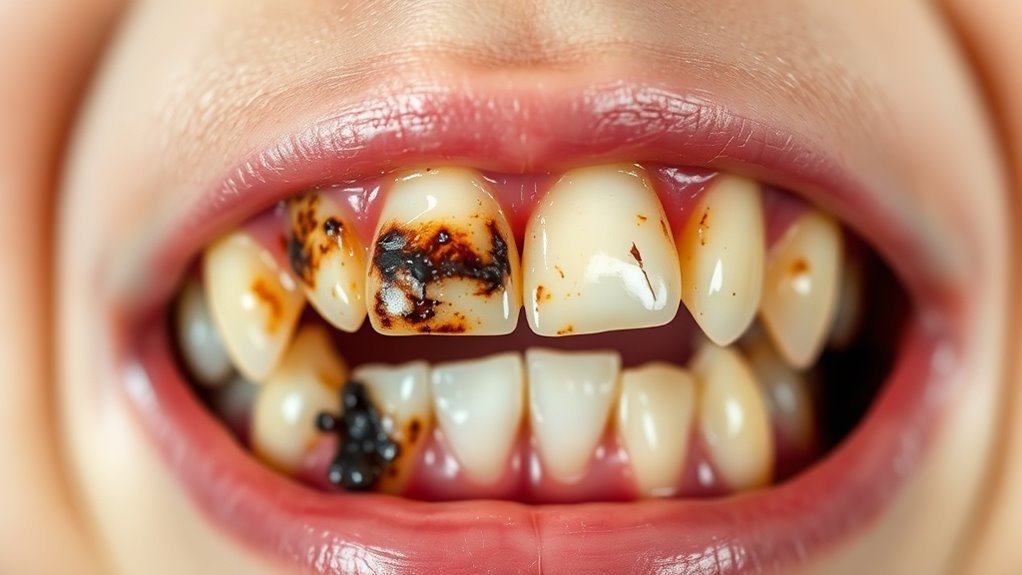
Bottle rot follows a distinct pattern that sets it apart from general childhood cavities. When a baby falls asleep sucking on a bottle, swallowing slows down and liquid pools directly behind the upper lip—bathing the four upper front incisors continuously. Meanwhile, the tongue naturally covers and shields the lower front teeth, which is why upper front teeth almost always show damage first.
Even unsweetened cow’s milk, infant formula, and breast milk contain natural sugars (lactose), while 100% fruit juice contains concentrated fructose and acid. According to the American Academy of Pediatric Dentistry (AAPD) Early Childhood Caries Policy, it is prolonged nocturnal contact—combined with reduced nighttime saliva—that drives rapid demineralization.
Protecting primary teeth matters far more than most parents realize: baby incisors stay in place until roughly ages 6 to 8, guiding speech and chewing. See our ADA baby teeth shedding timeline to see how long each tooth must last.
Early Signs and Stages of Bottle Rot Teeth
| Stage | What You See on Upper Incisors | Typical Symptoms | Likely Dental Treatment |
|---|---|---|---|
| Stage 1: Early demineralization | Dull, chalky white bands or spots right along the gumline | Usually painless | Fluoride varnish + stopping bedtime milk/juice + improved brushing (often reversible) |
| Stage 2: Moderate decay | Yellow, light brown, or rough pitted areas spreading across enamel | Sensitivity to cold or sweet foods | Tooth-colored fillings, pediatric crowns, or silver diamine fluoride (SDF) |
| Stage 3: Severe ECC | Dark brown/black cavities, chipped edges, or broken-down stumps | Toothache, trouble eating, fussiness, or gum swelling | Pulp therapy, crowns, or extraction (with space evaluation) |
Not every white or yellow mark is caused by a bottle—some children have developmental enamel defects or other alignment concerns. For broader pediatric dental conditions beyond bedtime bottles, see our guide on bad children’s teeth, enamel hypoplasia, and fluoride guidelines.
How to Break the Bedtime Bottle Habit (Step by Step)
Both the American Academy of Pediatrics (AAP) and AAPD advise transitioning to a cup around 12 months (starting cup practice at 6 months with solids). If your toddler already depends on a bedtime milk bottle, use this gentle two-week transition:
- Move milk earlier in the evening: Offer the final milk feed in the living room or during dinner—before bath time and toothbrushing—so the bottle is no longer tied to falling asleep.
- Use gradual water dilution (for toddlers 12+ months): If your toddler refuses to drop the bedtime bottle cold turkey, mix 3/4 milk + 1/4 water for 3 nights, then 1/2 milk + 1/2 water for 3 nights, then 1/4 milk + 3/4 water, until the bottle holds plain water only. (Never dilute infant formula for babies under 12 months—follow formula mixing directions strictly.)
- Switch to an open or straw cup by 12 months: Straw cups and open cups direct liquid toward the back of the mouth instead of pooling behind the upper front teeth.
- Enforce the nighttime water-only rule: After brushing teeth before bed, only plain water is allowed. Skip all fruit juice under 12 months, and limit 100% juice to at most 4 oz/day in an open cup for ages 1–3 per CDC infant nutrition guidelines.
- Swap the soothing cue: Replace bedtime sucking with a predictable “Brush, Book, Bed” routine—storytime, lullabies, or a soft comfort blanket (for toddlers over 12 months).
Cup Transition Options: Pros and Limitations
| Cup Type | Dental Pros | Limitations |
|---|---|---|
| Open training cup | Best for mature swallowing; zero pooling behind upper incisors | Spills more during early practice (start at 6 months with small sips) |
| Free-flow straw cup | Routes liquid past upper front teeth; low spill risk for toddlers | Requires thorough daily straw cleaning to prevent mold |
| Hard-spout spill-proof sippy cup | Convenient and mess-free on the go | Can mimic bottle pooling and affect bite if sipped all day—use only as a brief bridge |
If your child relies on sucking for comfort at bedtime, you may also want to watch for prolonged non-nutritive sucking habits—read our guide on how thumb sucking affects teeth and bite alignment.
Safety Red Flags: When to Call a Pediatric Dentist
Urgent Dental Warning: Seek prompt dental care if you notice brown/black spots, chipped enamel, or pain while chewing. Seek immediate urgent or emergency care if your child develops a swollen cheek or lip, a pus-filled bump on the gums (dental abscess), fever with tooth pain, or trouble swallowing or breathing.
Schedule your child’s first dental checkup within 6 months of the first tooth erupting and no later than age 1, so your pediatric dentist can check the upper incisors early and apply protective fluoride varnish if needed.
Frequently Asked Questions
What is the earliest visible sign of bottle rot teeth?
The earliest sign is usually a dull, chalky white band or spot along the gumline of the upper front baby teeth (the four upper incisors). Because early enamel demineralization causes no pain, gently lifting your child's upper lip once a week in good light helps catch it before brown stains or holes form.
At what age should a baby stop using a bedtime bottle?
The American Academy of Pediatrics (AAP) and American Academy of Pediatric Dentistry (AAPD) recommend introducing an open or straw cup around 6 months and weaning off baby bottles by 12 months (and no later than 12 to 18 months). Never let a child fall asleep with a bottle containing milk, formula, or juice.
Is it safe to give a toddler a bottle of plain water at bedtime?
For children 6 months and older who are cleared for water, plain water is the only drink that will not feed cavity-causing bacteria overnight. However, dentists still encourage transitioning toddlers away from bottles in bed to an open or straw cup before bedtime to support healthy bite and sleep habits.
Can bottle rot teeth be reversed without fillings?
Very early chalky white spots—before the enamel surface breaks open into a physical hole—can often be arrested or remineralized with professional fluoride varnish, twice-daily fluoride brushing, and stopping bedtime sugar exposure. Once a cavity hole forms, a pediatric dentist must restore or treat the tooth.
Can nighttime breastfeeding also cause early childhood caries?
Breast milk provides vital nutrition, but it contains natural lactose. The AAPD advises avoiding ad-lib (on-demand) nocturnal breastfeeding after teeth erupt beyond 12 months without consistent brushing, and recommends discussing individualized nighttime hygiene with a pediatric dentist.
Sources
- American Academy of Pediatric Dentistry (AAPD): Policy on Early Childhood Caries
- American Academy of Pediatrics (HealthyChildren.org): Preventing Baby Bottle Tooth Decay
- American Dental Association (MouthHealthy): Baby Bottle Tooth Decay
- CDC: Foods and Drinks to Avoid or Limit for Infants and Toddlers
- NHS: Dental Abscess Symptoms and Urgent Care

[…] Plaque bacteria feed on fermentable carbohydrates—not just candy, but also frequent crackers, sticky dried fruit, and sweet drinks—producing acid that strips minerals from enamel. If decay is concentrated on the upper front baby teeth from nighttime feeding, see our dedicated guide to bottle rot teeth and bedtime cup transitions. […]
[…] Plaque bacteria feed on fermentable carbohydrates—not just candy, but also frequent crackers, sticky dried fruit, and sweet drinks—producing acid that strips minerals from enamel. If decay is concentrated on the upper front baby teeth from nighttime feeding, see our dedicated guide to bottle rot teeth and bedtime cup transitions. […]