
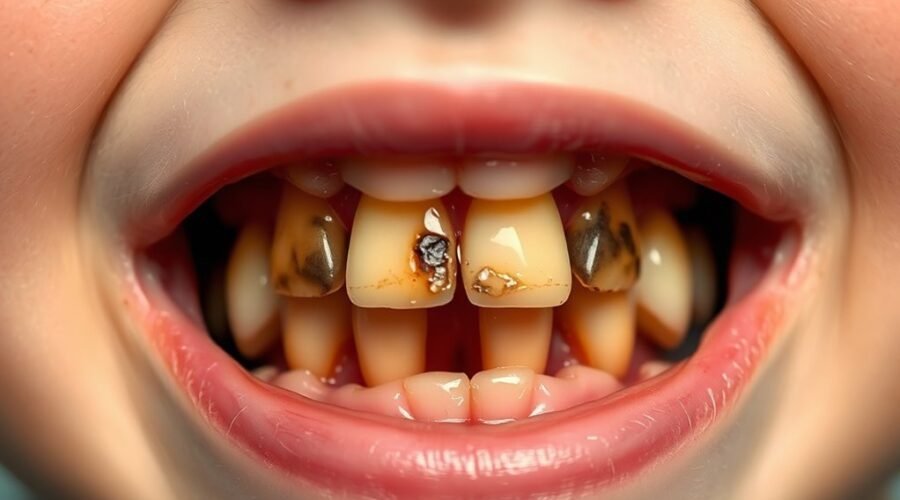
Bad children’s teeth do not come from sugar alone—pediatric dentists commonly treat three distinct problems: tooth decay (cavities), developmental enamel hypoplasia (thin or pitted enamel that forms before a tooth erupts), and malocclusion (bite misalignment or crowding). The most effective way to protect both baby and permanent teeth is following ADA/AAPD rules: brush twice daily with a rice-grain smear of fluoride toothpaste under age 3 (pea-sized for ages 3–6), schedule your child’s first dental visit by age 1, and monitor bite alignment as adult teeth arrive.
Quick Answer
Common causes of bad teeth in kids include plaque-driven cavities, congenital enamel hypoplasia, and bite misalignment (malocclusion). Start fluoride brushing at the first tooth (rice-grain smear under 3; pea-sized ages 3–6), establish a dental home by age 1, and schedule an orthodontic check by age 7.
3 Core Causes of Bad Children’s Teeth
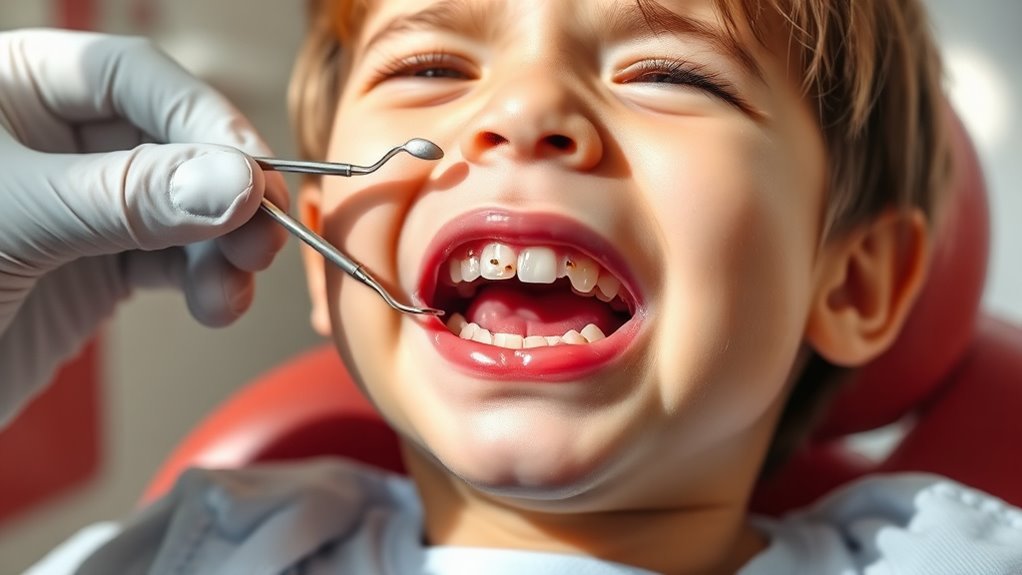
Parents often blame themselves when they see pits, yellow spots, or crooked teeth, assuming it is always poor brushing. In reality, pediatric dental issues fall into three major categories that require different solutions:
| Condition | What It Looks Like | Root Cause | Core Treatment |
|---|---|---|---|
| Childhood cavities (caries) | Chalky white spots near gums progressing to brown/black holes | Plaque bacteria turning dietary sugars & starches into acid | Fluoride varnish (early), fillings, crowns, or sealants for prevention |
| Enamel hypoplasia | Thin, grooved, pitted, or creamy-yellow/brown enamel right when tooth erupts | Disrupted enamel formation during pregnancy or infancy (illness, prematurity, vitamin D/calcium deficit, trauma, or genetics) | High-fluoride protection, remineralizing pastes, bonding, or protective crowns |
| Malocclusion (bite problems) | Crowded teeth, crossbite, underbite, deep overbite, or front open bite | Jaw size genetics, early baby tooth loss, or prolonged sucking habits | Monitoring, space maintainers, or Phase 1/Phase 2 orthodontics |
1. Enamel Hypoplasia (Underdeveloped Enamel)
According to the Cleveland Clinic, enamel hypoplasia means a tooth erupted with too little enamel from the start—unlike cavities, which erode enamel over time. Factors such as premature birth, high infant fevers, nutritional deficiencies (vitamins A, C, D, or calcium), dental trauma, or inherited traits (like amelogenesis imperfecta) can disrupt enamel cells while teeth are forming in the jaw. Because thin enamel breaks down fast, early diagnosis lets a pediatric dentist shield vulnerable molars with sealants, fluoride varnish, or crowns.
2. Childhood Cavities (Dental Caries)
Plaque bacteria feed on fermentable carbohydrates—not just candy, but also frequent crackers, sticky dried fruit, and sweet drinks—producing acid that strips minerals from enamel. If decay is concentrated on the upper front baby teeth from nighttime feeding, see our dedicated guide to bottle rot teeth and bedtime cup transitions.
3. Malocclusion and Bite Alignment Problems
Crowding, crossbites (where upper teeth sit inside lower teeth), underbites, and open bites can interfere with chewing, speech, and even jaw symmetry. The American Association of Orthodontists (AAO) recommends a child’s first orthodontic check no later than age 7, when permanent first molars and incisors have started erupting. Prolonged sucking habits are a frequent preventable driver of open bites—learn when to intervene in our thumb sucking and teeth guide, and track normal shedding with our baby tooth loss chart.
ADA & AAPD Fluoride Toothpaste Rules by Age
Both the American Dental Association (ADA) and AAPD Policy on Use of Fluoride recommend using fluoride toothpaste twice daily from the very first tooth—scaling the dose strictly by age to prevent cavities while avoiding mild dental fluorosis:
| Child’s Age | Fluoride Toothpaste Amount | Adult Supervision & Flossing Rule |
|---|---|---|
| First tooth to under age 3 | Rice-grain smear (tiny dab) | Parent brushes twice daily; safe even if child cannot spit yet |
| Ages 3 through 6 | Pea-sized amount | Adult dispenses paste and finishes brushing; teach child to spit out excess (do not rinse heavily) |
| Ages 7 and older | Pea-sized strip | Spot-check brushing until child has strong manual dexterity (often around age 7–8); floss daily wherever two teeth touch |
Preventive Care Options: Pros and Limitations
| Preventive Tool | Pros | Limitations |
|---|---|---|
| Fluoride toothpaste (2x/day) | Low cost; remineralizes early white spots and strengthens daily enamel | Requires exact age dosing and adult help for young kids |
| Professional fluoride varnish | Concentrated protection for high-risk kids or hypoplastic teeth; painless paint-on | Must be reapplied periodically; cannot fix existing cavity holes |
| Dental sealants (back molars) | Prevents up to 80% of cavities in deep molar grooves over 2 years (CDC) | Only covers chewing surfaces—does not protect between teeth |
First Dental Visit by Age 1: What to Expect
The ADA, AAPD, and AAP all advise establishing a “dental home” within 6 months of the first tooth erupting and no later than age 1. Here is a quick checklist to prepare:
- Schedule during a rested time of day: Morning appointments help toddlers stay cooperative during a brief lap-to-lap exam.
- Write down feeding & fluoride notes: Bring your toothpaste brand, tap/filtered water source, and any noticed spots or sensitivity.
- Ask about enamel and bite risk: Have the dentist check for early white-spot lesions, enamel hypoplasia, and jaw alignment.
- Set your recall interval: Most children return every 6 months, while kids with active decay or enamel defects may need 3–4 month visits.
Safety Red Flags: When to Seek Urgent Dental Care
Urgent Warning: Call a dentist promptly for persistent tooth pain, a broken/knocked-out tooth, or sensitivity that interferes with eating or sleep. Go to an emergency department immediately if your child has facial or cheek swelling, a pus-filled gum bump with fever, swelling near the eye, or difficulty breathing or swallowing.
Never place aspirin directly on a child’s gums (which causes chemical burns), and always confirm age- and weight-based pain reliever dosing with your pediatrician or pharmacist while awaiting dental care.
Frequently Asked Questions
How much fluoride toothpaste should young children use?
Both the American Dental Association (ADA) and American Academy of Pediatric Dentistry (AAPD) recommend brushing twice daily as soon as the first tooth erupts using a rice-grain-sized smear of fluoride toothpaste for children under age 3, and a pea-sized amount for children ages 3 through 6.
When should a child have their first dental visit?
The ADA, AAPD, and AAP all recommend scheduling your child's first dental visit within 6 months of the first tooth erupting and no later than their first birthday (age 1). Early visits check for cavities, enamel hypoplasia, and bite development before problems become painful.
What is the difference between enamel hypoplasia and a cavity?
Enamel hypoplasia is a developmental defect where tooth enamel forms too thinly, with pits, grooves, or chalky patches before the tooth even erupts. A cavity is acquired decay caused by plaque acids eating into the tooth after eruption—though hypoplastic teeth are much more vulnerable to cavities.
At what age should a child be evaluated for malocclusion or braces?
The American Association of Orthodontists (AAO) recommends a child's first orthodontic evaluation no later than age 7, when a mix of baby and permanent teeth allows specialists to spot crossbites, underbites, or crowding early. Most children only need monitoring rather than immediate braces.
Do children really need dental sealants on their back teeth?
Yes, sealants are strongly recommended for deep grooves on permanent molars (usually erupting around ages 6 and 12) and sometimes high-risk baby molars. According to the CDC, dental sealants can prevent up to 80% of cavities in treated back teeth during the first two years.
Sources
- American Dental Association (MouthHealthy): Healthy Habits for Babies and Kids
- American Academy of Pediatric Dentistry (AAPD): Policy on Use of Fluoride
- Cleveland Clinic: Enamel Hypoplasia Causes & Treatment
- American Association of Orthodontists (AAO): Child Orthodontics & Age-7 Evaluation
- CDC: About Dental Sealants
- National Institute of Dental and Craniofacial Research (NIDCR): Tooth Decay


[…] While protecting alignment, keep an eye on cavity prevention too—prolonged bedtime bottles can damage the exact same upper front incisors. Read our guide on preventing bottle rot teeth and our broader overview of common children’s dental problems. […]