Thumb sucking teeth changes rarely happen in infants and young toddlers, because most children naturally outgrow the habit between ages 2 and 4 without lasting dental harm. However, according to the AAP and AAPD clinical guidance, frequent or forceful thumb sucking that continues past ages 3 to 4—especially as permanent front teeth begin erupting around ages 5 to 6—can push upper teeth forward, narrow the upper palate, and cause an anterior open bite. Positive reinforcement, identifying anxiety triggers, and gentle bedtime reminders are the safest first-line ways to help your child stop.
Quick Answer
Passive thumb sucking under age 3 usually needs no intervention. Plan gentle habit-breaking strategies between ages 3 and 4 so the habit ends before permanent teeth erupt around ages 5–6. Consult a pediatric dentist if you notice flared front teeth, an open bite, or vigorous daytime sucking past age 4.
Thumb Sucking Teeth Changes: Bite and Jaw Growth
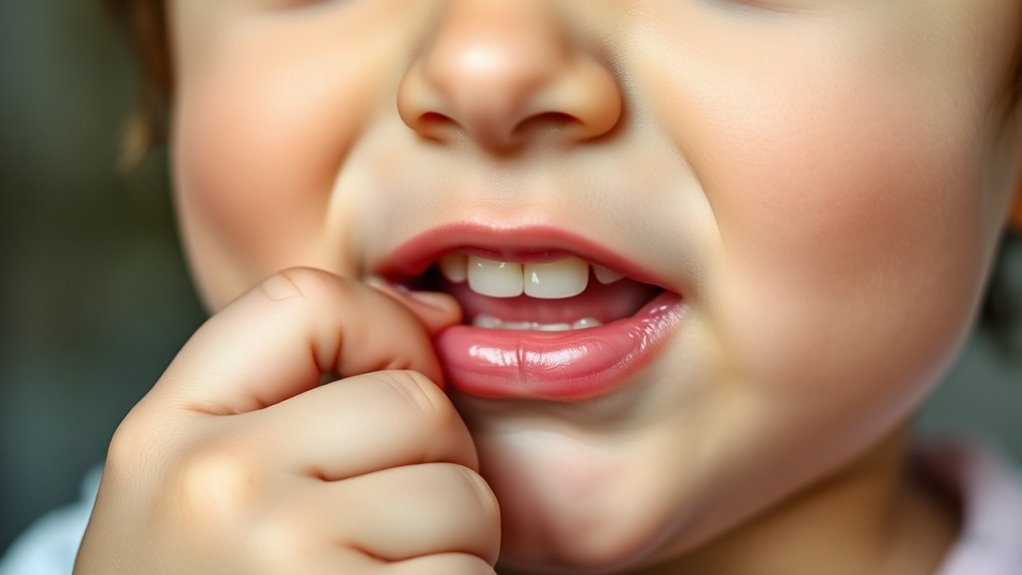
Not all thumb sucking carries the same dental risk. Pediatric dentists evaluate three factors—intensity, frequency, and duration. A child who rests a thumb passively in their mouth while falling asleep is far less likely to shift teeth than a child who sucks vigorously with audible popping sounds for hours each day.
When forceful sucking persists past the toddler years, steady upward and forward pressure on the soft, growing bone can cause:
- Anterior open bite: A vertical gap where the upper and lower front teeth do not touch when the back teeth are closed.
- Increased overjet (“buck teeth”): Upper front incisors tilt outward while lower incisors tilt inward, making front teeth more vulnerable to chipping during falls.
- Posterior crossbite & narrow palate: Suction pressure narrows the upper arch so upper back teeth sit inside the lower teeth.
- Speech and tongue-thrust changes: Altered tooth position and low tongue posture can contribute to lisping on “s” and “z” sounds.
Understanding when baby teeth shed helps you time intervention before adult teeth arrive—see our ADA baby tooth loss timeline and chart for the typical 6-to-12-year schedule.
AAP & AAPD Age-by-Age Intervention Window
Both the American Academy of Pediatrics (AAP) and the American Academy of Pediatric Dentistry (AAPD) emphasize watching the age window rather than rushing infants:
| Child’s Age | Dental Risk Level | Recommended Parent Action |
|---|---|---|
| 0 to 2 years | Very low (normal self-soothing reflex) | No intervention needed; focus on routine dental home visits by age 1 |
| 2 to 3 years | Low to mild (many children self-stop) | Begin gentle daytime redirection; AAPD advises phasing out pacifiers by 36 months |
| 3 to 4 years | Moderate (ideal intervention window) | Start positive reinforcement, sticker charts, and comfort swaps before permanent teeth form alignment |
| 5 to 6+ years | High (permanent incisors erupting) | Schedule a pediatric dental/orthodontic evaluation; ask about dentist-guided habit counseling or appliances |
While protecting alignment, keep an eye on cavity prevention too—prolonged bedtime bottles can damage the exact same upper front incisors. Read our guide on preventing bottle rot teeth and our broader overview of common children’s dental problems.
How to Help Your Child Stop Thumb Sucking (Step by Step)
Scolding, nagging, or shaming almost always backfires because thumb sucking is a self-soothing response to stress or fatigue. Use this calm, five-step approach instead:
- Track the triggers for 3 days: Note whether sucking happens mainly during screen time, car rides, fatigue, or anxiety.
- Offer hands-busy alternatives: Keep fidget toys, coloring books, or a favorite plush comfort item nearby during trigger times.
- Use a positive reward chart: Praise thumb-free stretches immediately and award stickers toward a small, motivating milestone (like a park trip or bedtime story choice).
- Add a gentle bedtime reminder (ages 4+): If your child agrees they want to stop, a soft cotton sock, bandage, or fabric thumb guard at night reminds them during sleep without feeling like punishment.
- Involve your pediatric dentist: Children often respond better when a friendly dentist explains in kid-friendly terms how stopping helps their “big-kid teeth” grow straight.
Stopping Strategies: Pros and Limitations
| Strategy | Pros | Limitations |
|---|---|---|
| Positive reinforcement & trigger swaps | Builds child’s confidence; addresses emotional root cause; zero cost | Requires parent patience and consistency over several weeks |
| Fabric thumb guard / bandage at night | Breaks unconscious sleep-time sucking when child is motivated | Can cause power struggles if forced on a child under age 4 |
| Bitter-tasting nail polish | Immediate sensory cue for daytime habit awareness | Ineffective for determined suckers; can transfer to food or eyes |
| Dental habit appliance (palatal crib) | High success rate for persistent habits past age 5–6 | Requires pediatric dentist/orthodontist fitting; reserved for older children after behavioral methods fail |
Safety Red Flags: When to See a Pediatric Dentist
When to Schedule Promptly: Book a pediatric dental evaluation if your child is still sucking their thumb regularly past age 4, if permanent front teeth are coming in crooked or spaced apart, if the upper and lower front teeth do not meet when biting down, or if the thumb skin becomes red, swollen, cracked, or oozing (signs of a skin or nail-fold infection).
Early checkups let your dentist track jaw growth and decide whether simple monitoring is enough or whether gentle guidance will prevent more involved orthodontic work later.
Frequently Asked Questions
At what age should a child stop thumb sucking to protect their teeth?
Most children stop thumb sucking naturally between ages 2 and 4. Both the American Academy of Pediatrics (AAP) and American Academy of Pediatric Dentistry (AAPD) recommend intervening around ages 3 to 4—and definitely before permanent front teeth begin erupting around ages 5 to 6—to prevent lasting bite and jaw changes.
Will my child's teeth straighten out on their own after stopping thumb sucking?
Often, yes—if the habit stops before permanent teeth erupt (around age 5 to 6), mild anterior open bites and flared baby teeth frequently self-correct as the jaws grow. If the habit continues into the mixed-dentition years, orthodontic care may be needed later.
Is a pacifier better than thumb sucking for teeth?
Both pacifiers and thumbs exert similar pressure on developing teeth and the palate if used long term. However, pediatric dentists note that pacifiers are easier for parents to limit and take away—the AAPD recommends ending non-nutritive sucking habits by 36 months (age 3).
Can thumb sucking cause speech problems or thumb skin infections?
Yes. Prolonged thumb sucking can push front teeth forward and alter tongue posture, sometimes contributing to a lisp with "s" or "z" sounds. Constant moisture and suction can also crack the skin around the thumbnail, raising the risk of bacterial or fungal nail-fold infections (paronychia).
Do bitter nail polishes or thumb guards actually work?
Bitter-tasting deterrents or soft thumb guards can serve as helpful physical reminders for a child who genuinely wants to quit (typically age 4 and older), especially at bedtime. They work best alongside positive reinforcement—not as punishment—and should be discussed with your pediatric dentist.
Sources
- StatPearls / NCBI: Thumb Sucking and Other Nonnutritive Sucking Habits in Children
- American Academy of Pediatric Dentistry (AAPD): Policy on Pacifiers and Nonnutritive Sucking
- AAPD: Management of the Developing Dentition and Occlusion in Pediatric Dentistry