
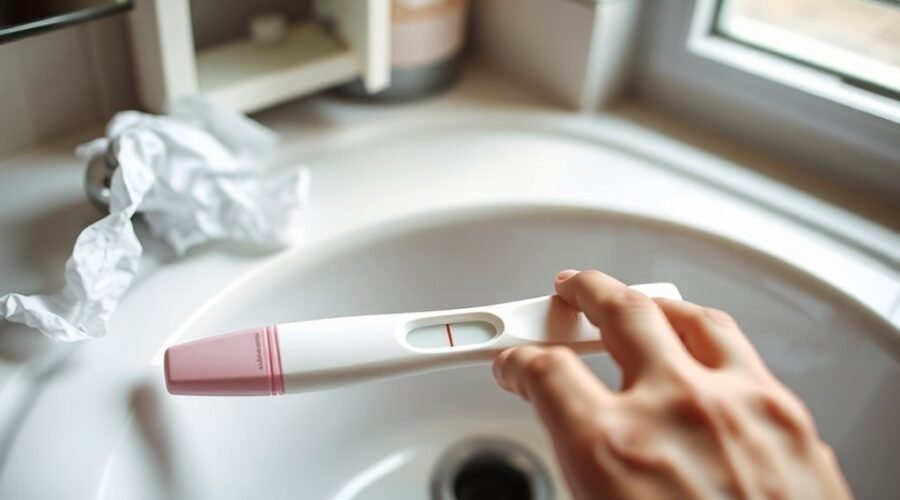
A true false positive pregnancy test—where a test reads positive even though no pregnancy hormone is present from an ongoing pregnancy—is very rare, occurring in well under 1% of properly performed home tests. Most unexpected positives come from an evaporation line read after the time limit, a very early chemical pregnancy, fertility medications containing hCG, residual hCG after a recent pregnancy loss, or benign pituitary hCG during perimenopause. Retesting in 48 hours with first-morning urine or getting a blood beta-hCG test from a clinician is the most reliable way to confirm the result.
Quick Answer
True false positive pregnancy tests are rare because home kits specifically target human chorionic gonadotropin (hCG). If you see a positive result within the instructed reading window, treat it as likely pregnant until confirmed, unless you recently received an hCG trigger shot, had a recent miscarriage or delivery, or are in perimenopause.
How Likely Is a False Positive Pregnancy Test?
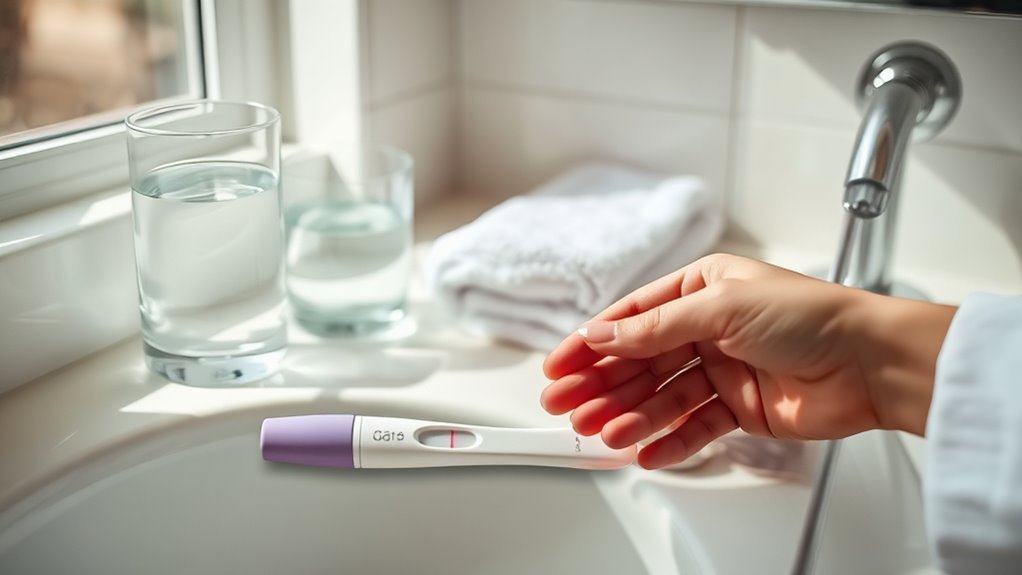
Home urine pregnancy tests are cleared by the U.S. Food and Drug Administration (FDA) with laboratory accuracy claims exceeding 99% when used from the day of a missed period. In real-world home use, however, user error—such as reading a strip too late, misinterpreting an indent mark, or using an expired kit—accounts for most misleading positive results.
False negatives (testing too early before hCG rises high enough) are far more common than false positives. For a full breakdown of sensitivity across test brands and cycle days, see our guide on how accurate pregnancy tests really are.
6 Verified Causes of a False Positive Pregnancy Test
According to the Cleveland Clinic and Cleveland Clinic Journal of Medicine, unexpected positive results fall into two buckets: user/test errors where no hCG is present, and biological situations where real hCG is in your urine without a viable ongoing pregnancy.
| Cause | Is hCG Present? | Typical Timing / Clue | Recommended Next Step |
|---|---|---|---|
| Evaporation line | No | Faint, colorless line appears after the 3–10 minute read window | Discard old strips; retest with a fresh kit and set a timer |
| hCG fertility trigger shot | Yes (synthetic) | Within 10–14 days of Ovidrel, Pregnyl, or Novarel injection | Wait at least 14 days or follow your clinic’s blood test date |
| Recent miscarriage, abortion, or birth | Yes (residual) | hCG can linger for 2 to 6 weeks as levels decline | Have your clinician track hCG down to zero |
| Chemical pregnancy | Yes (early loss) | Positive test followed by bleeding and a negative retest days later | Retest in 48 hours and report bleeding to your doctor |
| Perimenopause / pituitary hCG | Yes (benign pituitary) | Persistent low-level positive in people over 40–45 with irregular cycles | Request serum beta-hCG and FSH blood tests |
| Rare medical conditions | Yes (non-pregnancy) | Certain ovarian cysts, trophoblastic disease, or hCG-secreting tumors | Seek prompt clinical workup and pelvic ultrasound |
Evaporation Lines vs. True Faint Positives
Every home test lists an exact reading window—typically 3 to 5 minutes, and rarely beyond 10 minutes. Once urine evaporates off the strip, it can leave a faint grayish streak right where the test line sits. If you are squinting at an ambiguous mark, compare it using our guide to a faint line on a pregnancy test or a very faint line on a pregnancy test before assuming it is positive.
Medications That Do (and Do Not) Cause False Positives
Most everyday medications—including antibiotics, birth control pills, pain relievers, and standard antidepressants—do not cause a false positive pregnancy test. The main medication culprits are fertility trigger injections containing synthetic hCG (such as Novarel, Pregnyl, or Ovidrel). Wait at least two weeks after an hCG trigger shot before trusting a home urine test.
Chemical Pregnancy vs. True False Positive
A chemical pregnancy happens when a fertilized egg implants briefly, triggers real hCG production, and stops developing before an ultrasound can detect a gestational sac. Because hCG was genuinely present, clinicians consider this a very early pregnancy loss rather than a test malfunction—even though a follow-up test a few days later turns negative.
How to Confirm an Unexpected Positive Result (Step by Step)
- Check the test window and expiration date: Ignore any line that appeared after the package time limit, and verify the kit was not expired or stored in a humid bathroom.
- Retest in 48 hours with first-morning urine: In a developing early pregnancy, hCG typically rises rapidly every 48 hours. Use a fresh pink-dye or digital kit with concentrated morning urine.
- Review recent medications and cycle history: Note any hCG fertility injections within the last 14 days, or any miscarriage, abortion, or delivery within the past 6 weeks.
- Schedule a clinical confirmation: Ask a healthcare provider for a quantitative serum beta-hCG blood test (which measures exact hormone levels) and, when far enough along, an ultrasound to confirm location and viability.
Home Urine Retest vs. Clinical Blood Test: Pros and Limitations
| Confirmation Method | Key Pros | Main Limitations |
|---|---|---|
| Home urine retest (48 hrs later) | Fast, inexpensive, private; darkening line suggests rising hCG | Qualitative only (yes/no); cannot rule out ectopic pregnancy or confirm exact hCG numbers |
| Quantitative blood beta-hCG | Detects lower hCG levels; tracks exact doubling trend across 48 hours | Requires a clinic/lab draw; a single draw alone cannot confirm uterine location |
| Pelvic ultrasound | Confirms intrauterine pregnancy and rules out ectopic or molar pregnancy | Usually cannot visualize a gestational sac until around 5+ weeks (hCG typically above 1,500–2,000 mIU/mL) |
Safety Red Flags: When to Call a Doctor Immediately
Urgent Warning: Seek immediate medical care if a positive pregnancy test is accompanied by sharp or one-sided abdominal/pelvic pain, heavy vaginal bleeding (soaking a pad per hour), shoulder-tip pain, severe dizziness, or fainting. These can be signs of an ectopic pregnancy, which still produces hCG and turns home tests positive.
Even if you feel completely fine, contact a healthcare provider promptly after any positive test to confirm the result, review any prescription medications you take, and plan appropriate care.
Frequently Asked Questions
Can an expired pregnancy test cause a false positive?
Yes, though it is uncommon. The chemical reagents on an expired or heat-damaged test strip degrade over time, which can cause faulty dye lines or invalid readings. Always check the printed expiration date and repeat any unexpected result with a fresh, in-date kit.
Can evaporation lines be mistaken for a false positive pregnancy test?
Yes. Reading a test after the manufacturer's instructed time window (usually 3 to 10 minutes) allows urine to dry and leave a faint, colorless or grayish evaporation line. A true positive line appears within the reading window and has distinct pink or blue dye.
How long after an hCG trigger shot can you get a false positive?
Fertility trigger shots containing synthetic hCG (such as Ovidrel, Pregnyl, or Novarel) can remain detectable in urine for up to 10 to 14 days after injection. Fertility clinics generally advise waiting at least 14 days—or until your scheduled serum beta-hCG blood test—to avoid a false positive.
Can perimenopause or menopause cause a false positive pregnancy test?
Yes, rarely. During perimenopause and postmenopause, the pituitary gland can produce small benign amounts of hCG (pituitary hCG) alongside rising follicle-stimulating hormone (FSH), which can occasionally trigger a faint positive test. A clinician can confirm the source with blood hormone testing.
Is a chemical pregnancy considered a true false positive?
Medically, a chemical pregnancy is not a false positive—it is a very early pregnancy loss occurring shortly after implantation. The test accurately detected real hCG, which then drops as the pregnancy ends, causing a follow-up test days later to turn negative.
Sources
- U.S. Food and Drug Administration (FDA): Home-Use Pregnancy Tests
- Cleveland Clinic: Causes of a False Positive Pregnancy Test
- Cleveland Clinic: Chemical Pregnancy Causes & Symptoms
- Cleveland Clinic Journal of Medicine: Elevated hCG in Perimenopausal and Postmenopausal Women
- Mayo Clinic: Home Pregnancy Tests—Can You Trust the Results?




[…] positives are uncommon outside of hCG fertility shots or recent pregnancy loss—see our guide on how likely a false positive pregnancy test is for […]