To clean a thermal coffee carafe without damaging its liner or insulation, start by matching the cleaning method to the carafe material and the type of buildup. Daily coffee oils, stubborn brown stains, mineral film, and lid odors need slightly different treatment, and the manufacturer’s care instructions should decide which deeper cleaners are safe.
Quick Answer
To clean a thermal coffee carafe, wash the cooled carafe, lid, and removable gasket with warm water, mild dish soap, and a soft brush. For stubborn brown stains, use a manufacturer-approved baking-soda treatment, rinse thoroughly, and air-dry with the lid off. Check the manual before using vinegar, dishwasher detergent, tablets, or a dishwasher.
At a Glance
| Time Required | About 5–10 minutes for routine washing; deep-cleaning time varies by the approved method and may range from a short soak to overnight |
| Difficulty | Easy |
| Tools Needed | Mild dish soap, soft sponge or bottle brush, clean cloth, baking soda, and an optional manufacturer-approved cleaner |
| Cost | Low for routine cleaning; specialty cleaners cost more if your carafe requires one |
Why Cleaning Your Thermal Coffee Carafe Is Essential
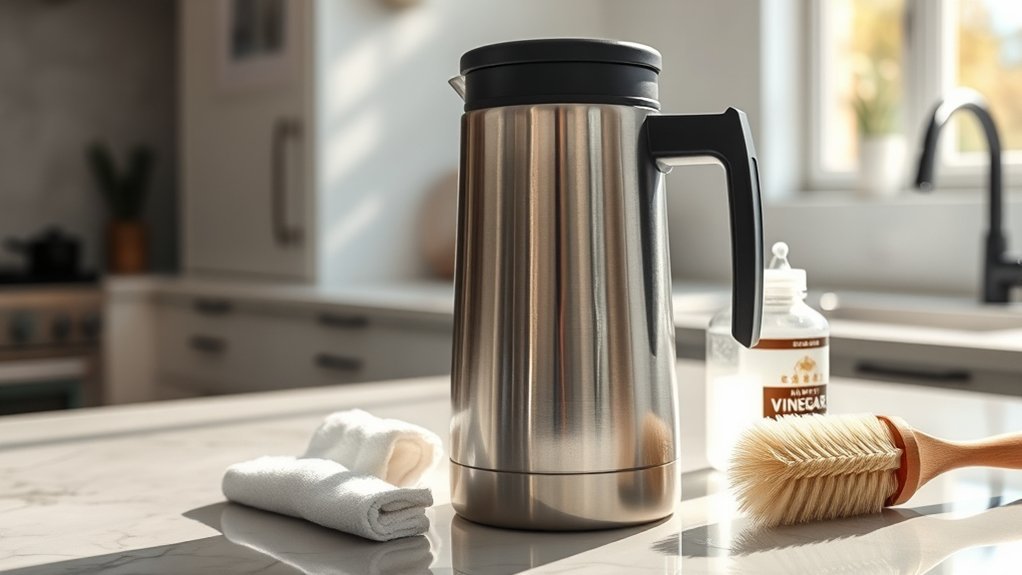
A thermal carafe can look clean while a thin brown film remains on its inner wall. Coffee oils and fine particles can also collect in lid channels, around pour buttons, and beneath removable silicone gaskets. Over time, that residue can produce stale odors and affect the aroma and flavor of freshly brewed coffee.
Cleaning also protects moving parts. Sticky residue can make a push-button lid slow to open, interfere with pouring, or prevent a gasket from seating correctly. A clean, correctly assembled lid is less likely to drip and is easier to inspect for wear.
A regular routine is more effective than waiting for a heavy stain to develop. Wash the carafe after each use, clean the lid and removable gasket at the same time, and use a compatible deep-cleaning method when ordinary washing no longer removes visible discoloration or odor.
A clean thermal carafe should smell neutral when it is empty and completely dry—not like yesterday’s coffee or cleaning detergent.
Why Are Thermal Coffee Pots Hard to Clean?
Thermal carafes often have narrow necks, dark interiors, double-wall construction, and multi-part lids. These features help retain heat, but they also make residue harder to see and limit the tools you can use safely.
Small Openings Challenge
A narrow opening may prevent your hand or a standard sponge from reaching the bottom and shoulders of the carafe. A long, soft-bristled bottle brush can reach these areas without forcing a hard cleaning tool against the liner.
Do not force a rigid brush into the carafe. A metal handle or exposed wire tip can scratch a stainless-steel interior or damage a glass liner. If the carafe has a glass interior, inspect it for chips or cracks before cleaning and avoid sudden temperature changes that could stress damaged glass.
Residue Build-Up Issues
A quick water rinse may remove loose coffee but leave behind oils and fine particles. Residue is especially likely to remain beneath the lid gasket, inside a pour channel, around threads, and in small valves operated by a button or lever.
The best prevention strategy is simple:
- Empty leftover coffee instead of allowing it to sit for long periods.
- Let the carafe cool before washing it.
- Wash the body, lid, and removable seals after each use.
- Rinse until the water runs clear and no detergent scent remains.
- Air-dry every part completely before reassembly.
Check the Manufacturer’s Instructions First
Thermal carafes are not all built the same way. Some have bare stainless-steel interiors, some use a coating, and others contain a glass liner. Dishwasher safety, immersion limits, approved cleaners, and lid-disassembly instructions can therefore differ between models.
Before using vinegar, a dishwasher tablet, dishwasher detergent, a commercial coffee cleaner, or a dishwasher, check the care instructions for your exact carafe. Do not assume that a carafe is dishwasher-safe simply because its exterior is stainless steel.
Identify Your Carafe Interior Before Deep Cleaning
If you are unsure what type of liner your carafe uses, check the product manual or manufacturer’s product page before proceeding. This is especially important when the interior appears dark, glossy, coated, or glass-like.
- Bare stainless steel: Usually tolerates soft nylon brushes and mild dish soap well, but stronger cleaners still depend on manufacturer guidance.
- Coated interior: Avoid abrasive powders, gritty pastes, harsh scrubbers, or acids unless the care guide specifically permits them.
- Glass-lined carafe: Avoid metal tools, hard impacts, and sudden temperature changes. Stop using the carafe if the liner is chipped or cracked.
Warning: Let the carafe cool before cleaning. Do not seal a carafe containing very hot water or a fizzing cleaning mixture. Avoid chlorine bleach, metal scouring pads, steel wool, and mixed household cleaners unless the manufacturer expressly permits a specific product. The CDC advises never mixing household bleach or disinfectants with other cleaners because dangerous vapors can be released.
How to Clean a Thermal Coffee Carafe After Each Use
Routine washing prevents most stains and is safer than repeatedly using stronger cleaning chemicals.
- Empty and cool the carafe. Pour out leftover coffee and allow the vessel to cool until it can be handled safely.
- Remove the lid and detachable parts. Take out the gasket or seal only if the manufacturer designed it to be removed.
- Add warm water and mild dish soap. Use a small amount of detergent rather than filling the carafe with concentrated soap.
- Clean with a soft tool. Wash the interior with a soft bottle brush or nonabrasive sponge. Clean the rim and exterior with a soft cloth.
- Wash the lid separately. Pay attention to pour channels, threads, buttons, valves, and the groove that holds the gasket.
- Rinse thoroughly. Rinse each part several times until there are no bubbles, slippery areas, or detergent odor.
- Air-dry open. Place the carafe and lid separately on a drying rack. Do not close the carafe while moisture remains inside.
Carafe Cleaning vs. Coffee Maker Descaling
Cleaning a thermal carafe is not the same task as descaling the coffee maker. Carafe cleaning removes coffee oils, stains, and residue from the serving vessel. Descaling removes mineral deposits from the brewer’s reservoir, tubing, heating system, or other internal water path.
A cleaner that is appropriate inside the carafe should not automatically be poured into the coffee maker. For example, Cuisinart gives separate guidance for washing a carafe and for descaling a coffee maker. Run vinegar, baking soda, detergent, tablets, or another cleaner through the brewer only when the coffee maker’s own instructions specifically direct you to do so.
If you need to clean removable brewer parts without running a cleaning cycle, see how to clean a coffee maker without running a brew cycle. For the design and maintenance differences between serving vessels, see thermal vs. glass coffee carafes.
Note: If the carafe is clean but the brewed coffee still tastes unusual or the machine is brewing slowly, the problem may be mineral buildup inside the coffee maker rather than residue in the carafe.
Can You Clean a Thermal Coffee Carafe With Baking Soda?
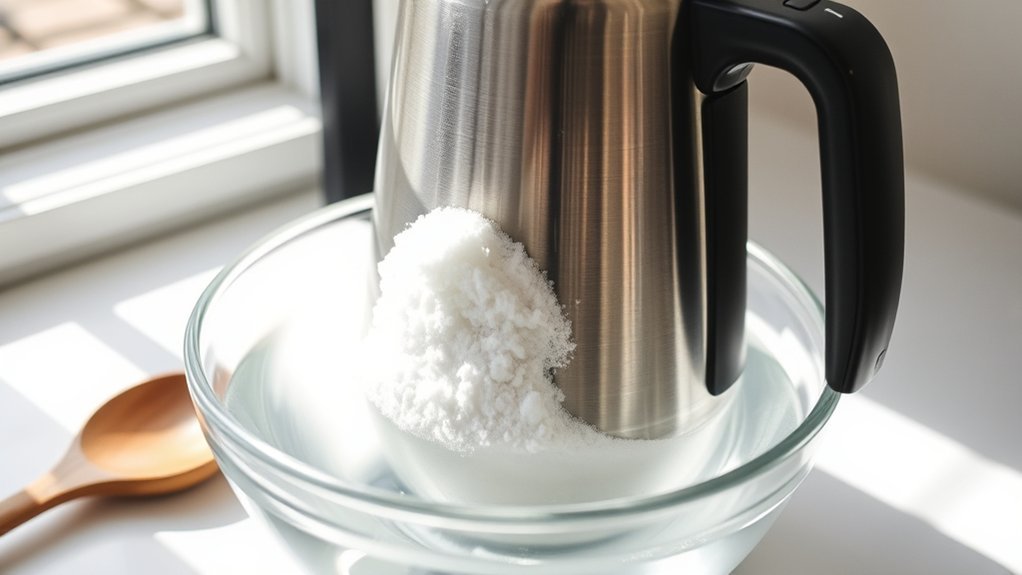
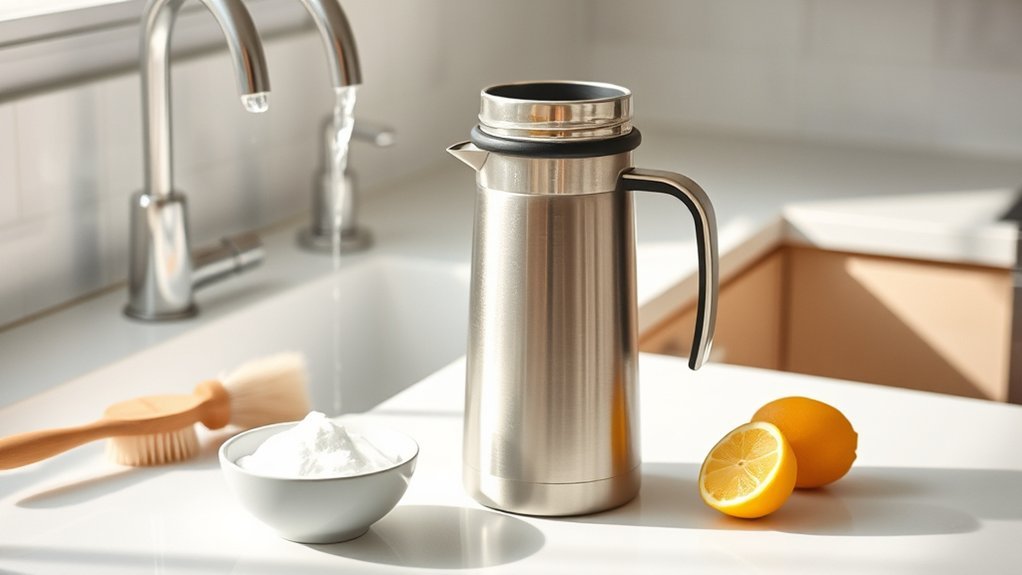
Baking soda is a practical first option for stubborn brown coffee residue when ordinary dish soap is not enough and the carafe’s care instructions permit it. Cuisinart recommends warm water with about 1 tablespoon of baking soda as one deep-cleaning option for a carafe, while Stanley recommends gentle baking-soda cleaning with a soft brush or sponge for coffee stains in stainless drinkware.
- Rinse loose coffee residue from the cooled carafe.
- Add about 1 tablespoon of baking soda if that method is compatible with your carafe.
- Fill the carafe with warm water, leaving some space at the top.
- Leave the lid off while the solution sits. Follow any soak time specified by the manufacturer; if none is given, start with a shorter treatment rather than an unnecessarily long soak.
- Pour out the solution and gently scrub stained areas with a soft bottle brush.
- Wash once with mild dish soap to remove loosened coffee oils and baking-soda residue.
- Rinse several times with clean water.
- Leave the carafe open until it is completely dry.
For a severe stain, repeat a gentle approved treatment rather than scraping the surface with a hard or sharp tool. If a coating is present, avoid a dry, gritty baking-soda paste unless the manufacturer specifically permits it.
Pro Tip: Shine a flashlight into the rinsed carafe before it dries. A thin brown film can be difficult to see inside a dark or reflective thermal carafe but becomes easier to spot under direct light.
Best Cleaning Methods for Your Thermal Coffee Carafe
Choose the method by the problem you can see or smell. Start with warm water and mild dish soap for ordinary coffee oils. For stubborn brown coffee film, move to a manufacturer-approved baking-soda treatment or coffee-equipment cleaner. For chalky or pale mineral film, use a diluted acidic cleaner such as vinegar only when the care guide permits it. If the carafe body looks clean but an odor remains, clean the lid, valve, and gasket before using a stronger cleaner on the whole vessel.
| Method | Best Use | Important Limit |
|---|---|---|
| Warm water and mild dish soap | Daily coffee oils and fresh residue | Rinse thoroughly so detergent does not affect flavor. |
| Baking-soda treatment | Brown coffee stains and mild odor | Use gently; do not scrub a coated liner with a dry, gritty paste unless approved. |
| Diluted white vinegar | Mineral film and some lingering odors | Use only if the manufacturer permits acidic cleaners and follow its recommended concentration. |
| Dishwasher tablet or detergent | Heavy coffee staining on compatible carafes | Use only when the exact carafe’s instructions allow it. |
| Manufacturer-approved coffee cleaner | Persistent coffee oils or stains | Follow the product dosage, contact time, and rinsing directions exactly. |
Current manufacturer guidance also shows why model-specific instructions matter. Fellow’s July 2026 guidance for the Aiden carafe says to start with warm water and soap, then use a measured Cafiza soak for stubborn stains. That is useful guidance for that carafe, not a universal recipe for every thermal model.
Do not use oxygenated laundry powder, a Magic Eraser, steel wool, or a metal brush inside the carafe unless the manufacturer explicitly approves that product or tool. Laundry cleaners are not automatically suitable for food-contact drinkware, while abrasive tools may scratch stainless steel, damage a coating, or harm a glass liner.
Can You Clean a Thermal Carafe With Dishwasher Tablets?
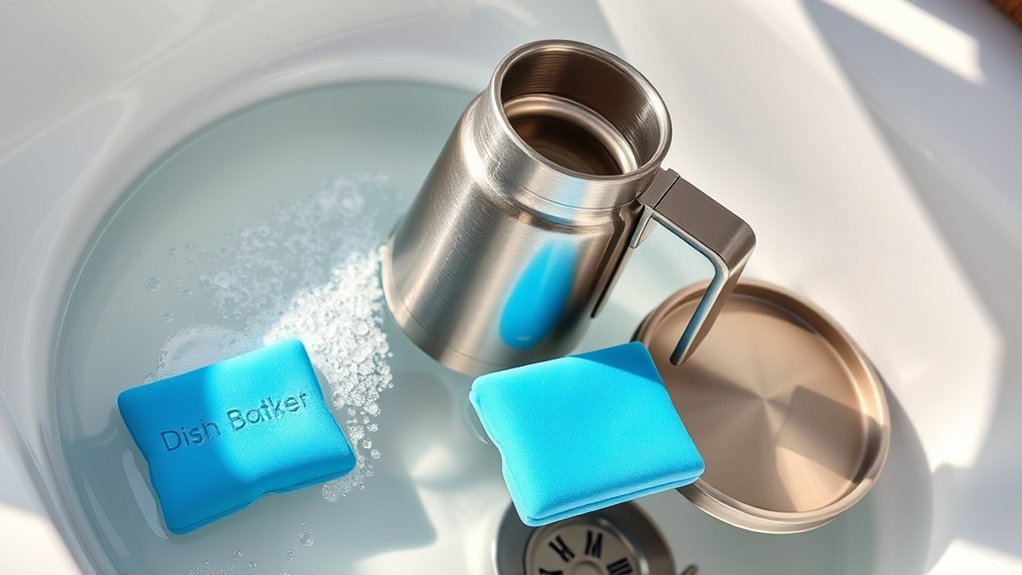
A dishwasher tablet can remove heavy staining from some stainless thermal carafes, but it is not a universal method. Hamilton Beach recommends a dishwasher tablet with boiling water and an overnight soak for its stainless-steel thermal-carafe stain-cleaning guidance. That instruction should not be copied to a different brand, glass-lined model, or coated carafe unless its own manual allows the same treatment.
Use a tablet or dishwasher-detergent method only when the instructions for your exact carafe permit it:
- Let the carafe cool and rinse out loose residue.
- Use only the amount and type of tablet or detergent specified by the manufacturer.
- Add water at the temperature directed by that manufacturer rather than assuming boiling water is safe for every carafe.
- Keep the lid off while the solution is hot or reacting unless the instructions explicitly say otherwise.
- Allow it to soak for the stated time.
- Empty the solution carefully and scrub only with a soft brush if needed.
- Wash the carafe with mild dish soap if the care instructions call for a follow-up wash.
- Rinse repeatedly until no foam, scent, or detergent residue remains.
- Air-dry with the lid removed.
Note: A tablet recommended for one manufacturer’s stainless carafe may not be suitable for a glass-lined, coated, or differently sealed carafe. The exact model’s care guide takes priority over generic cleaning advice.
Can You Use Vinegar to Clean a Thermal Coffee Carafe?
White vinegar can help with mineral film or lingering odor on compatible drinkware. Salt is sometimes suggested as a scrubbing abrasive, but a thermal carafe usually does not need it. Because many manufacturers caution against abrasive cleaning, a soft brush and an appropriate liquid cleaning method are generally the safer starting point.
Use Diluted Vinegar Only When Compatible
Instead of automatically combining vinegar with salt or another cleaner, use diluted vinegar by itself when the manufacturer allows acidic cleaning. For example, Zojirushi describes a 10% vinegar solution and a 30-minute soak for discoloration in certain drinkware. That concentration is an example from one manufacturer, not a universal recipe for every thermal carafe.
- Wash the carafe with dish soap first to remove loose coffee oils.
- Prepare the vinegar solution at the concentration recommended for your model. If your manufacturer’s guidance specifically permits a 10% vinegar solution, that is approximately one part vinegar to nine parts water.
- Leave the lid off and soak only for the recommended time.
- Empty the solution and rinse thoroughly.
- Wash once more with mild dish soap if a vinegar odor remains.
- Rinse and air-dry completely.
Do not add baking soda to the vinegar soak. Baking soda is a base and vinegar is an acid, so they react and neutralize one another while producing carbon dioxide. The fizz can move loose debris, but using the cleaners in separate cycles gives you more predictable cleaning action and avoids unnecessary foaming inside a narrow vessel.
Benefits and Limits of Vinegar
| Potential Benefit | Practical Guidance |
|---|---|
| Mineral-film removal | A compatible diluted acidic soak can loosen light hard-water deposits. |
| Odor reduction | It may help with some lingering odors after coffee residue has first been removed with dish soap. |
| Easy rinsing | Diluted vinegar is water-soluble, but the carafe still needs a thorough final rinse. |
| Important limitation | Do not use vinegar on a coating, seal, liner, or other component that the manufacturer says is incompatible with acidic cleaners. |
How to Clean the Lid, Spout, and Gasket
If the carafe still smells after the interior has been cleaned, inspect the lid assembly. Coffee can remain beneath a silicone ring, inside a narrow pour channel, or around a valve even when the visible interior looks spotless.
- Consult the manual before taking the lid apart.
- Remove only the components designed for routine removal.
- Wash the lid, gasket, valve, and other removable pieces in warm, soapy water.
- Use a soft brush to clean grooves and threads without stretching the gasket.
- For an odor in a compatible silicone or rubber gasket, apply a paste of baking soda and water, allow it to dry, and then wash it thoroughly. Zojirushi recommends this approach for lingering scents in removable rubber gaskets on its insulated food jars.
- Rinse all parts until no cleaner remains.
- Allow the pieces to dry completely before installing the gasket in its correct orientation.
When to Replace a Gasket Instead of Cleaning It
Replace a gasket that is torn, permanently stretched, hardened, sticky, or unable to form a proper seal. A damaged seal can trap residue and may cause leaking even when it looks clean.
Also take black or brown spotting seriously. Zojirushi notes that black dots or brown discoloration on rubber gaskets can be mold and recommends replacing the affected part. If staining, odor, or suspected mold remains after proper washing and drying, obtain the correct replacement gasket rather than repeatedly exposing the part to stronger chemicals.
Tips for Keeping Your Carafe Clean
Simple habits reduce the need for aggressive cleaning or long soaks:
- Rinse promptly. A quick warm-water rinse prevents fresh coffee from drying onto the interior before you can wash it properly.
- Wash after every use. Use mild dish soap rather than waiting until a visible stain forms.
- Deep-clean when needed. Choose a compatible stain treatment when you see brown film or notice an odor that ordinary washing does not remove.
- Clean the lid every time. Do not treat the lid as an occasional-cleaning part.
- Avoid abrasive tools. Use soft nylon bristles, a soft sponge, or a microfiber cloth.
- Do not store coffee in the carafe overnight. Empty, wash, and dry it after use.
- Store it open. Leaving the lid off until everything is dry helps prevent trapped moisture and stale smells.
- Inspect the seal. Replace worn or persistently contaminated gaskets with the correct manufacturer part.
What If My Carafe Still Has Stains?
First identify what remains. Brown or dark film is usually treated as coffee residue, while chalky or pale deposits are more consistent with mineral buildup. If the carafe body looks clean but the smell remains, inspect the lid and gasket before applying a stronger cleaner to the entire vessel.
Some old coffee deposits require more than one gentle cleaning cycle. Repeat an approved baking-soda treatment and use a soft bottle brush before moving to a stronger product.
If the stain remains, use a chlorine-free food-and-beverage stain remover or coffee-equipment cleaner that the carafe manufacturer approves. Zojirushi advises using a bleach- and chlorine-free beverage-stain remover for staining in its insulated drinkware.
Persistent odor may come from the lid rather than the carafe body. Disassemble the approved removable parts, clean beneath the gasket, rinse the pour mechanism, and allow everything to dry separately.
Stop using the carafe and contact the manufacturer if you find:
- A cracked or chipped glass liner
- A peeling or blistered interior coating
- Rust-colored pitting that does not wash away
- A warped or damaged lid
- A gasket that cannot be seated correctly
- An exterior that becomes unusually hot when the carafe is filled, which can indicate that the vacuum insulation is no longer performing normally; Zojirushi advises discontinuing use when a vacuum-insulated body becomes hot because the vacuum layer may be compromised
Key Takeaways
- Wash the carafe with warm, soapy water after each use instead of relying only on a quick rinse.
- Clean the lid, pour channel, threads, valve, and removable gasket because these areas commonly retain coffee oils and odors.
- Identify whether your carafe is stainless steel, coated, or glass-lined before choosing a deep-cleaning method.
- Use soft, nonabrasive tools and reserve vinegar, dishwasher detergent, tablets, or specialty cleaners for models that permit them.
- Rinse every food-contact surface thoroughly and store the carafe open until all parts are completely dry.
Frequently Asked Questions
Can I use bleach to clean my thermal coffee carafe?
Do not use chlorine bleach unless the manufacturer explicitly instructs you to do so. Some insulated-drinkware manufacturers warn against chlorine cleaners because they can damage stainless steel or other components. Never mix household bleach with vinegar, ammonia, detergent, or another cleaner.
How often should I clean my thermal coffee carafe?
Wash the carafe, lid, and removable gasket after every use. Use a deeper manufacturer-approved treatment when you notice discoloration, a stale smell, or residue that ordinary washing does not remove.
Is it safe to put my carafe in the dishwasher?
Only if the care instructions for your exact model say the carafe is dishwasher-safe. Stainless-steel construction alone does not confirm that its vacuum seals, coatings, bonded parts, handle, base, or lid can withstand dishwasher cleaning.
What should I do if my carafe has persistent odors?
Clean the lid, pour channel, threads, valve, and gasket as well as the carafe body. Use an approved stain or odor treatment for the vessel, wash all parts with dish soap, rinse thoroughly, and let everything dry separately. Replace a gasket that remains odorous, damaged, or mold-stained after proper cleaning.
Can I use a metal brush to scrub my carafe?
No. A metal brush, steel wool, or metal scouring pad can scratch stainless steel, damage a coating, or harm a glass liner. Use a soft nylon bottle brush or nonabrasive sponge.
Can I use a dishwasher tablet in a thermal carafe?
Some manufacturers recommend this method for specific stainless thermal carafes, but others do not. Check your model’s instructions and follow the stated cleaner type, dosage, water temperature, soak time, and rinsing steps rather than copying instructions written for another brand.
Can I submerge a thermal carafe in water?
Do not immerse the full carafe unless its manual permits immersion. Water may enter seams, handles, bases, or other components on some models. Wash the interior normally and wipe the exterior with a damp cloth when immersion is prohibited.
Should I mix vinegar and baking soda?
It is better to use them in separate cleaning cycles. They fizz when combined because the acid and base react, but they also neutralize one another. Use an approved baking-soda method for coffee stains and diluted vinegar separately when your manufacturer permits it for mineral deposits or odors.
Conclusion
A clean thermal coffee carafe protects the flavor and aroma of each fresh brew. Wash the cooled carafe, lid, and removable gasket after every use, use gentle tools, and match any deep-cleaning treatment to the liner and manufacturer’s instructions. Baking soda can help with coffee stains, while compatible diluted vinegar can help with mineral film. Dishwasher tablets and specialty cleaners are useful only on carafes that specifically permit them. Thorough rinsing, complete drying, and regular inspection of the lid and gasket will keep the carafe fresh without unnecessarily damaging its liner, coating, seals, or insulation.
Sources
- Cuisinart: How to Clean a Coffee Maker — supports routine carafe washing, baking-soda deep cleaning, and the distinction between carafe care and brewer cleaning.
- Hamilton Beach Frequently Asked Questions — documents the dishwasher-tablet method for stainless-steel thermal carafes and reinforces model-specific care.
- Stanley 1913: How to Get Coffee Stains Out of Mugs — supports mild dish soap, soft cleaning tools, baking-soda treatment, thorough rinsing, and avoiding abrasive scrubbers.
- Zojirushi Vacuum Insulated Mugs and Bottles FAQ — supports hand washing, chlorine-free stain removal, gasket replacement, and model-specific dishwasher and immersion restrictions.
- Zojirushi Spring Cleaning Guide — supports diluted-vinegar treatment and regular cleaning of removable drinkware parts.
- CDC: Cleaning and Disinfecting With Bleach — supports the safety warning never to mix household bleach or disinfectants with other cleaners.
- Fellow: My Aiden’s Carafe Is Stained—How Do I Clean It? — provides a current example of model-specific soap-first cleaning and a measured coffee-cleaner soak for stubborn stains.
- Zojirushi Worldwide FAQ — supports hand washing, avoiding immersion on certain vacuum-insulated products, and discontinuing use if a compromised vacuum layer makes the exterior hot.