
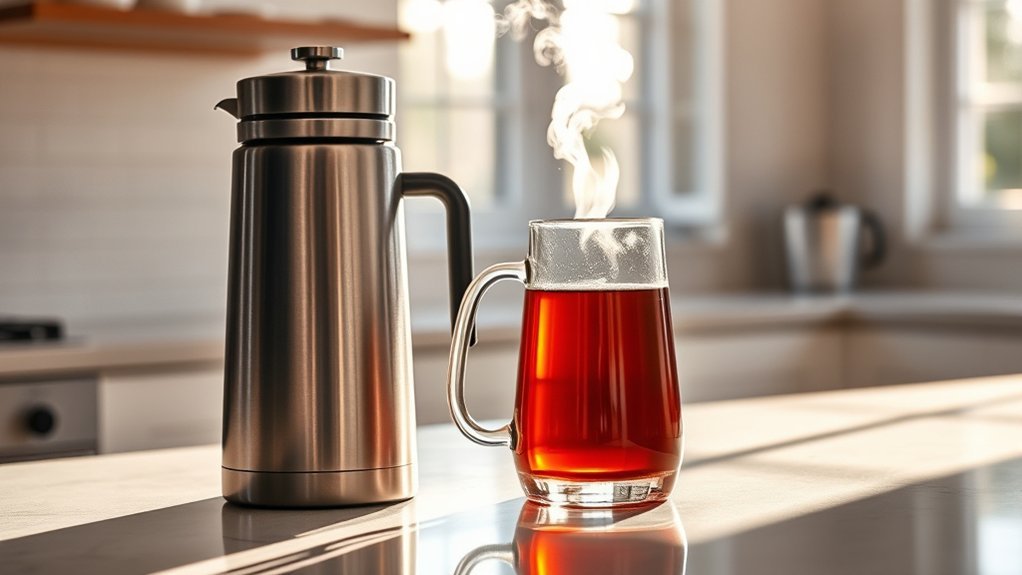
Choosing between glass vs. thermal coffee carafes is mainly about how long the brewed coffee will sit before you drink it. Glass favors visibility, lighter handling, and lower cost, while thermal favors passive heat retention and serving away from the brewer. The better option depends on your routine, not simply which material sounds more premium.
Quick Answer
Choose a glass carafe if you usually finish the pot soon after brewing and want a lighter, see-through, lower-cost option. Choose a thermal carafe if coffee sits for later cups and you want passive heat retention without a warming plate. The brewer’s design, lid, insulation, cleaning needs, and fit matter as much as carafe material.
Key Takeaways
- A glass carafe is easy to monitor and is often lighter, simpler to inspect, and less expensive to replace.
- A thermal carafe uses insulation instead of continuous electrical heat, so it can travel from the brewer to a table or desk.
- First-hour temperature performance can be closer than expected because a glass-carafe brewer actively adds heat.
- Longer holding time shifts the trade-off toward flavor, lid design, insulation quality, and ease of pouring.
- Dishwasher safety, deep-cleaning methods, liner material, and replacement compatibility are model-specific.
Glass vs. Thermal Coffee Carafes at a Glance
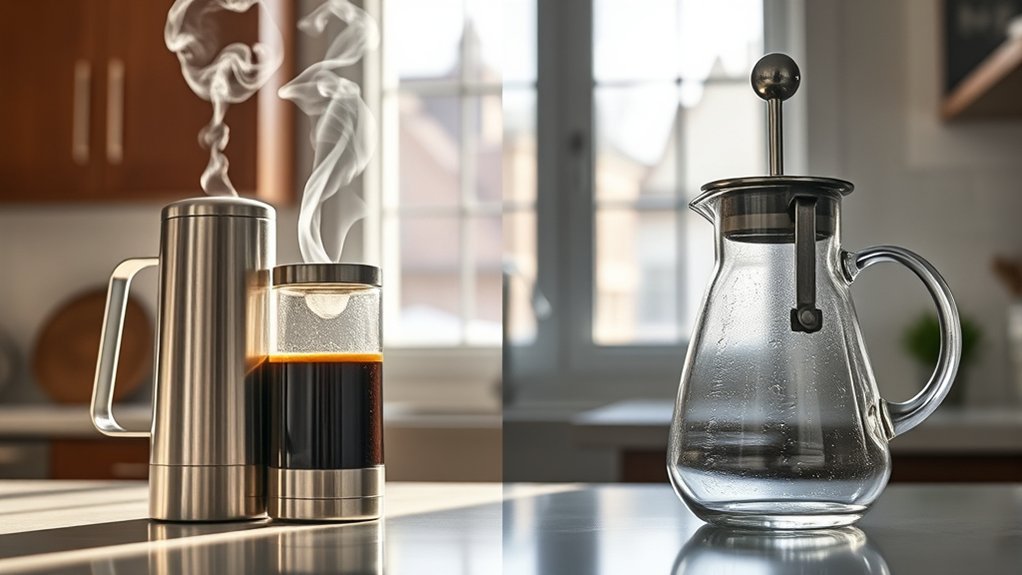
The key difference is how each carafe keeps brewed coffee warm. Glass-carafe brewers usually add heat with a warming plate, while thermal carafes slow heat loss with insulation; Consumer Reports testing found that the two approaches can be surprisingly close during the first hour.
| Feature | Glass Carafe | Thermal Carafe |
|---|---|---|
| How coffee stays warm | Usually sits on an electric warming plate | Uses double-wall insulation and a fitted lid |
| Best use | Coffee served soon after brewing | Coffee served gradually over several hours |
| First-hour heat behavior | An active hotplate adds heat and can keep temperature relatively stable, depending on the brewer | Coffee gradually loses heat; the rate depends on insulation, lid design, fill level, and conditions |
| Power after brewing | The keep-warm function requires power while the warming plate is active | Passive insulation needs no electricity after brewing |
| Visibility | Coffee level is easy to see | Usually opaque, so the level is harder to judge |
| Durability | Can chip, crack, or break if dropped or exposed to thermal shock | A stainless exterior resists ordinary bumps, although lids and vacuum seals can still wear or fail |
| Handling | Often lighter and easier to pour | Often heavier, with pouring performance that depends heavily on the lid and spout |
| Cleaning | The visible interior makes residue easier to spot | May have a narrow opening, deep interior, valve, gasket, or lid channels that need separate cleaning |
| Typical cost | Usually lower | Usually higher because of the insulated construction |
Breville’s manufacturer comparison reaches a similar practical split: glass emphasizes transparency and lower upfront cost, while thermal emphasizes passive heat retention but usually adds weight and price. Those are category-level tendencies, not guarantees for every model.
How Glass and Thermal Carafes Work
A standard glass carafe provides little insulation on its own. Coffee stays warm because the brewer’s electric plate supplies additional heat beneath the carafe. This approach keeps the pot visibly hot, but continued heating can change the flavor as water evaporates and the brewed coffee remains at an elevated temperature.
A thermal carafe normally has two walls with an insulating space between them. Many use stainless steel inside and outside, while some thermal carafes use an insulated glass liner. The lid also matters: a loose, open, or poorly sealed lid allows heat to escape faster.
Thermal performance is therefore not identical across products. Capacity, starting temperature, lid design, insulation, room temperature, how often the lid is opened, and whether the carafe was preheated all affect the result. Manufacturer heat-retention figures also depend on their test conditions rather than representing every cup of coffee in normal use.
For example, Zojirushi rates its EC-YTC100 thermal coffee maker at 125°F after 24 hours, but that figure is based on a full carafe of water starting at 203°F in a 68°F room. It is a useful illustration of a product-specific laboratory condition, not a universal promise for all thermal carafes or normal coffee-drinking conditions.
Carafe type also does not determine brewing quality by itself. The Specialty Coffee Association evaluates home brewers against brewing-performance standards, so compare the brewer’s extraction performance separately from the way the finished coffee is held.
Note: “Thermal” describes the insulated design, not one specific material. Check whether a carafe has a stainless-steel liner, a glass vacuum liner, or another manufacturer-approved construction before buying or cleaning it.
Pros and Cons of Glass Carafes
Glass carafes remain popular because they are simple, familiar, and easy to monitor. You can see when brewing starts, how much coffee remains, and whether the interior needs cleaning.
Advantages of Glass Carafes
Glass carafes are strongest on visibility, lighter handling, and simple day-to-day use. If you drink the coffee soon after brewing, those practical benefits can matter more than long passive heat retention.
- Clear coffee-level view: You do not have to lift a lid or estimate how much remains.
- Lower weight: Many glass carafes feel easier to lift and control than double-wall thermal models.
- Simple interior: A wide opening and visible walls can make routine rinsing and stain checks easier.
- Lower initial cost: Glass-carafe brewers and replacement pots are often less expensive than comparable thermal versions.
- Classic appearance: Glass lets you watch the coffee enter the carafe during brewing.
Disadvantages of Glass Carafes
The main trade-offs are breakage risk and reliance on a warming plate for extended holding. Those drawbacks matter most when coffee sits for a long time or the carafe is moved frequently.
- Limited passive heat retention: Once removed from the warming plate, an uninsulated glass carafe loses heat relatively quickly.
- Continued heating: Leaving coffee on a hotplate for an extended period can produce a flatter, harsher, or more concentrated taste.
- Breakage risk: A drop, impact, or rapid temperature change can crack the glass.
- Dependence on electricity: The warming function stops if the brewer is unplugged or its automatic shutoff activates.
- Hot exterior: The glass and warming plate can become hot enough to cause injury if touched carelessly.
A glass carafe is most practical when you serve the pot promptly, enjoy seeing the coffee level, or prefer a lighter vessel. If you need coffee for later, you can brew into the glass carafe and transfer it to a compatible insulated server rather than leaving it on the plate for hours.
What to Watch Out for With Thermal Carafes
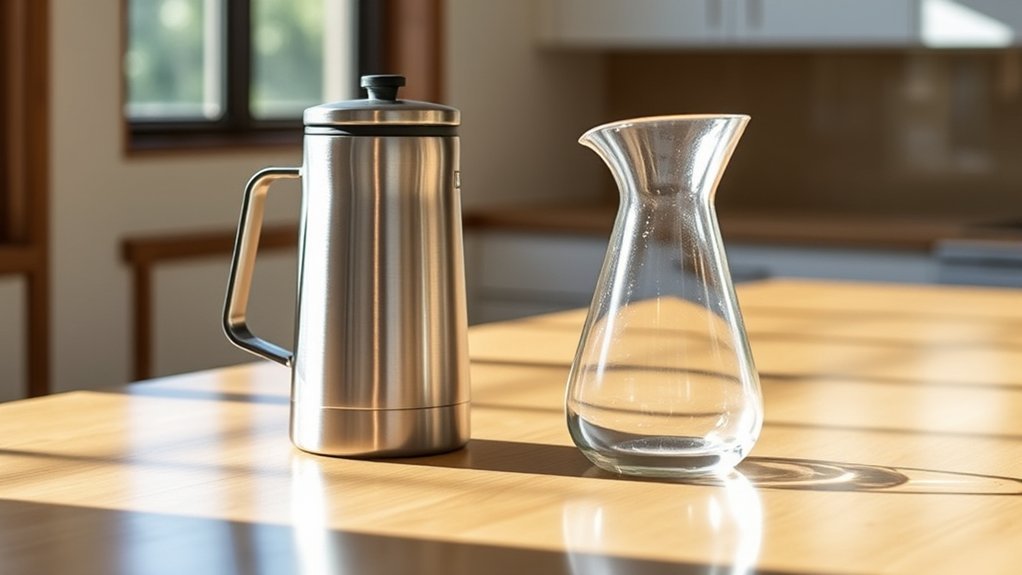
A thermal carafe avoids continuous reheating, but that does not make every thermal design equally convenient. Compare the complete carafe—weight, handle, lid, spout, opening, liner, and seal—rather than choosing on the word “thermal” alone.
Weight, Handle, and Pouring
Double-wall construction and a substantial lid can make a thermal carafe heavier than a glass pot of the same capacity. This matters if you have limited hand strength or plan to carry a full carafe between rooms.
Look for a balanced handle, a thumb-operated lid that does not require excessive force, and a spout that pours cleanly at both low and high fill levels. Reviews of one model do not predict another model’s pouring performance because lid and spout designs vary widely.
Limited Visibility
Most thermal carafes are opaque. You may need to estimate the remaining amount by weight or open the lid to check. Opening the lid releases heat, so a clearly marked brewer reservoir and a known serving routine can be helpful.
Coffee-Oil and Lid Residue
Stainless steel does not need to “absorb” coffee for stale flavors to develop. Coffee oils can coat the inner wall, while residue can collect beneath a gasket, inside a pour-through valve, or in narrow lid channels. Cleaning and fully drying these parts is more useful than blaming the metal itself.
Vacuum and Seal Performance
A damaged lid, worn gasket, dented body, or failed insulated chamber can reduce heat retention. If a carafe that once performed well begins cooling much faster, first check that the lid is assembled correctly and that its seal is clean and undamaged. Replace the correct part or carafe if performance does not recover.
Why Choose a Thermal Carafe?
A thermal carafe is usually the better choice when you brew a full pot but drink it gradually. It preserves heat without placing the coffee over an active heater, so the second or third cup is less likely to develop the cooked taste associated with extended hotplate use.
Vacuum-insulated stainless-steel models also resist ordinary breakage better than exposed glass carafes. Removing the need for a warming plate reduces one source of hot-surface exposure, although the coffee itself remains hot and must still be poured carefully.
The higher price may be justified in a home office, breakfast area, meeting room, or household where people drink from the same pot at different times. A thermal carafe is less compelling when the entire batch is served immediately or when its added weight makes pouring difficult.
Comparing Glass and Thermal Carafes: What to Consider
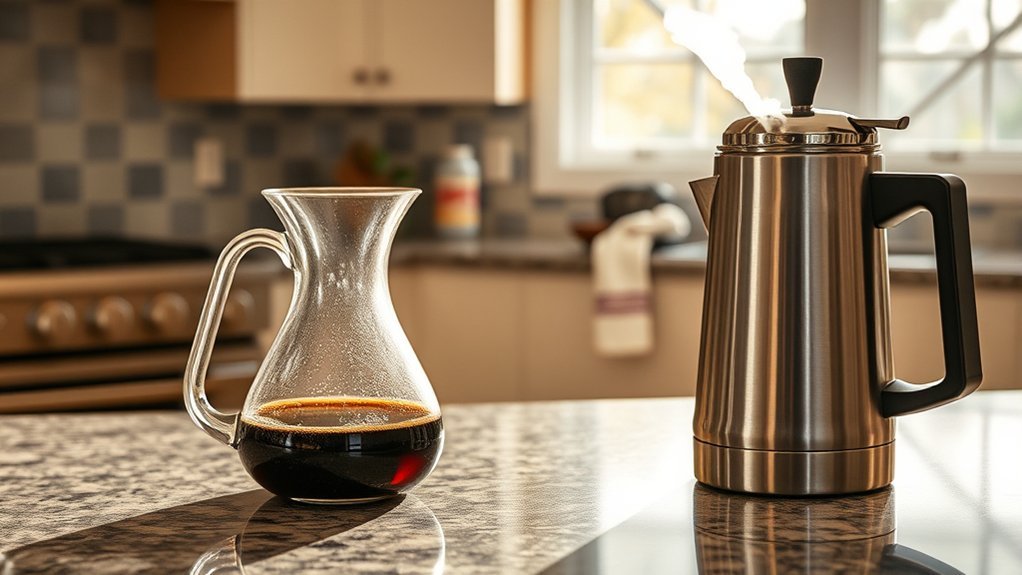
Compare heat behavior, durability, handling, capacity, cleaning, and brewer compatibility together. No single factor makes one carafe type universally better for every household.
Does a Thermal Carafe Keep Coffee Hotter Than Glass?
Not necessarily during the first hour. In Consumer Reports coffee-maker testing, engineers reported no significant overall difference in temperature loss between the two systems. Glass carafes sitting on hotplates varied by about 2.5°F in either direction after one hour, while thermal carafes lost about 4°F. Those results apply to the tested coffee makers rather than every glass or thermal carafe.
The bigger difference is how the temperature is maintained. A glass carafe and hotplate can keep coffee physically hot by adding heat. A thermal carafe gradually cools while slowing heat loss through insulation. If coffee will sit for a long period, avoiding continuous reheating may matter more to flavor than which system posts the smallest temperature change during the first hour.
Drinking temperature is also personal. A 2008 paper by Brown and Diller reported previously published consumer-preference data from 300 subjects showing a preferred coffee temperature of about 140 ± 15°F (60 ± 8.3°C). Their analysis calculated approximately 136°F (57.8°C) as an optimum balancing perceived warmth with scald risk. That is not a universal cutoff for good coffee; roast, aroma, cup material, serving conditions, and personal comfort still affect preference.
Durability and Safety
Glass provides visibility but can break. A stainless thermal body is more resistant to everyday bumps, although a glass-lined thermal carafe can still break internally. Check the actual liner material rather than assuming every opaque carafe is unbreakable.
A thermal carafe removes the need for an operating warming plate, but it does not eliminate burn risk. Keep any full carafe away from counter edges, close the lid securely, and pour with the spout directed away from your body.
There is no universal lifespan for either carafe type. Replace a carafe if it leaks, is cracked or otherwise damaged, cannot be cleaned safely, or—on an insulated model—no longer retains heat adequately after the lid and seal have been checked.
Warning: Never place a metal thermal carafe in a microwave. Do not place a thermal carafe on a stovetop or coffee maker’s warming plate unless the instructions for that exact carafe explicitly permit it. Likewise, do not heat a glass coffee carafe on a stove or in a microwave unless its manufacturer specifically states that the exact model is suitable for that use.
Aesthetics and Pouring Experience
Glass has a light, open appearance and lets you watch brewing progress. Thermal carafes have a more enclosed design and may coordinate well with stainless-steel appliances.
Neither material guarantees a drip-free pour. Handle angle, spout shape, lid position, flow rate, and balance all matter. When possible, inspect the carafe in person or review model-specific demonstrations instead of assuming all glass or thermal designs pour alike.
Cost, Capacity, and Compatibility
Do not compare capacity only by the brewer’s stated “cup” count. Coffee-maker cup markings may not equal a standard 8-fluid-ounce measuring cup. Compare the listed fluid-ounce or liter capacity instead. For a deeper explanation, see our guide to what “12-cup” means on a coffee maker.
Replacement carafes are rarely universal. The height, base diameter, lid, brew-through opening, drip-stop contact point, and warming-plate design must match the brewer. A manufacturer may allow a specific alternative, but you should not assume that a glass and thermal carafe are interchangeable.
For example, Bonavita’s compatibility guidance states that a thermal carafe should not be used with a brewer’s warming plate. Always use the replacement part listed for your exact brewer model.
Which Carafe Should You Choose?
Match the carafe to how you actually serve coffee. Glass works best for short holding times and easy visual checks, while thermal suits slower serving and carrying the pot away from the brewer.
Choose a glass carafe when:
- You usually finish the pot within a short period.
- You want to see the coffee level at a glance.
- A light, easy-to-lift carafe is important.
- You prefer a lower purchase or replacement cost.
- You do not mind turning off the warming plate or transferring leftover coffee.
Choose a thermal carafe when:
- You return for a second or third cup later.
- Several people drink from the pot at different times.
- You want to carry the carafe away from the coffee maker.
- You prefer passive insulation to continuous hotplate heating.
- You want a stainless exterior that is less likely to shatter than exposed glass.
The best carafe is not simply the one that stays hottest. It is the one that keeps coffee at a temperature you enjoy, pours comfortably, fits your brewer, and is easy enough to clean after every use.
Pro Tip: If your thermal-carafe instructions recommend preheating, fill the carafe with hot water for about a minute, empty it, and brew immediately. A warm interior absorbs less heat from the fresh coffee. Zojirushi includes this step for its EC-YTC100 vacuum-insulated coffee maker.
Carafe Maintenance Tips for Better Coffee Flavor
Both glass and thermal carafes collect coffee oils. A simple cleaning routine prevents brown residue, stale odors, clogged lid parts, and flavors carried over from an earlier batch. For care beyond the carafe itself, see the coffee maker cleaning checklist.
Clean After Each Use
Routine cleaning should remove fresh coffee oils before they build up in the carafe or lid. Use gentle tools and separate removable lid parts so residue does not stay trapped in valves, channels, or gaskets.
- Allow the carafe to cool enough to handle safely.
- Discard old coffee rather than storing it in the carafe for long periods.
- Wash the interior with warm water, mild dishwashing liquid, and a soft sponge or bottle brush.
- Remove and wash detachable lids, valves, mixing tubes, and gaskets as directed by the manufacturer.
- Rinse until no soap remains.
- Leave the carafe and lid open until every part is fully dry.
Avoid steel wool, abrasive pads, and hard-bristled brushes unless the manual for your exact carafe permits them. OXO’s care instructions specify hand washing for its 12-Cup carafe and lid, which is a good example of why care rules should be checked model by model.
Remove Coffee Stains Safely
For light stains, start with mild detergent and a nonabrasive brush. A baking-soda paste can help clean many glass carafes, and some manufacturers permit a diluted dishwasher-detergent soak for particular thermal models. Other manufacturers require a dedicated coffee-equipment cleaner.
Do not assume that bleach, chlorine cleaners, vinegar, dishwasher tablets, or automatic dishwashing are safe for every carafe. Review the manual first, especially when the carafe has coatings, seals, a glass vacuum liner, or a narrow mechanical lid.
| Carafe Type | Routine Cleaning | Deep Cleaning | Avoid |
|---|---|---|---|
| Glass | Warm water, mild dish soap, and a soft sponge after use | Use baking soda or a manufacturer-approved method for brown stains | Thermal shock, abrasive tools, and unapproved stovetop use |
| Stainless-lined thermal | Mild dish soap, warm water, and a soft bottle brush; clean the lid separately | Use only a detergent soak or coffee cleaner approved for the model | Abrasive pads, metal brushes, unapproved bleach, microwaves, and unapproved warming plates |
| Glass-lined thermal | Follow the liner-specific manual and handle gently | Use only the cleaner and water temperature approved by the manufacturer | Impact, thermal shock, and rigid tools that could damage the liner |
Storage and Lid Care
Store a clean glass carafe where it cannot be knocked from a shelf or counter. Keep a thermal carafe upright, but do not seal it while moisture remains inside. Trapped moisture and coffee residue can create odors in the lid and gasket.
Inspect removable seals during cleaning. Replace a cracked, stretched, or permanently stained gasket with the correct manufacturer part. A poorly fitted seal can cause drips and speed heat loss.
Cleaning distinction: Descaling the coffee maker and cleaning the carafe are separate jobs. Descaling removes mineral deposits from the brewer’s water system; washing the carafe removes coffee oils and stains from the serving vessel.
Frequently Asked Questions
Does a thermal carafe keep coffee hotter than a glass carafe?
Not always during the first hour. A glass carafe on an active warming plate receives additional heat, while a thermal carafe gradually cools. Consumer Reports testing found only a small difference in first-hour temperature behavior between tested coffee makers, although results vary by model. Thermal carafes are most useful because they retain heat without continuously reheating the coffee.
Does a thermal carafe make coffee taste better?
Not automatically. A thermal carafe does not improve the coffee that was brewed, but it can help preserve its freshly brewed character by holding heat without an active hotplate. Taste still depends on the beans, brewing method, water, holding time, cleanliness, and your preferences.
Can a thermal carafe be used on a stovetop or in a microwave?
No for a metal thermal carafe in a microwave. Coffee carafes also should not be treated as stovetop cookware unless the instructions for the exact model explicitly permit that use. Direct or unapproved heat can damage the body, insulation, base, lid, or seals and may create a burn or fire hazard.
Can a thermal carafe sit on a coffee maker’s warming plate?
Generally, no. Thermal carafes are designed to retain heat without a warming plate, and manufacturers such as Bonavita specifically state that their thermal carafes are not compatible with warming plates. Use a carafe on a warming plate only if the manufacturer explicitly lists that exact combination as compatible.
How do I clean a glass coffee carafe?
Wash it after use with warm water, mild dish soap, and a soft sponge. For brown residue, use a nonabrasive method approved by the manufacturer, such as a baking-soda paste. Avoid rapid temperature changes and abrasive pads that can scratch or weaken the glass.
How do I remove stale odors from a thermal carafe?
Clean the interior, lid, valve, gasket, and any removable tube with mild detergent. Coffee oil trapped in lid parts is a common source of odor. For stubborn residue, use only the soaking method or coffee-equipment cleaner approved in the carafe’s manual.
Are glass and thermal carafes dishwasher safe?
Dishwasher safety is model-specific. Some glass carafes or removable parts are dishwasher safe, while many thermal carafe bodies and lids require hand washing. Check the product manual before placing any part in a dishwasher.
Why is my thermal carafe no longer keeping coffee hot?
Make sure the lid is fully closed, correctly assembled, and free of residue. Preheat the carafe if the manual recommends it. If heat retention remains much worse than when the carafe was new, the lid seal or insulated chamber may be damaged.
Conclusion
The right choice depends mainly on how long the coffee waits between brewing and drinking. Glass is practical for fast serving and easy visual checks; thermal is better suited to slower serving without continuous hotplate heat.
Before buying, compare the actual fluid-ounce or liter capacity, handle comfort, pouring design, cleaning instructions, liner material, and brewer compatibility. Those details usually matter more in daily use than the label “glass” or “thermal.”
Sources
- Consumer Reports: Glass vs. Thermal Carafe — independent coffee-maker testing comparing one-hour temperature behavior, handling, and cleaning.
- Brown and Diller: Calculating the Optimum Temperature for Serving Hot Beverages — preferred coffee-drinking temperature and scald-risk analysis.
- Breville Glass vs. Thermal Carafe Guide — manufacturer comparison of carafe types and use cases.
- Zojirushi Fresh Brew Plus EC-YTC100 — product-specific thermal-carafe construction, capacity, and controlled heat-retention test conditions.
- Zojirushi Thermal Carafe Brewing Guide — thermal-carafe preheating guidance.
- OXO Coffee Maker Cleaning and Care Guide — hand washing, lid care, and coffee-maker maintenance guidance.
- Bonavita Coffee Brewer FAQ — thermal-carafe and warming-plate compatibility guidance.
- Specialty Coffee Association Coffee Standards — coffee standards and brewing-equipment reference material.


[…] leftover coffee. If you are deciding between carafe types rather than overnight storage, see thermal vs. glass coffee carafes for heat-retention and cleaning […]
[…] If you need to clean removable brewer parts without running a cleaning cycle, see how to clean a coffee maker without running a brew cycle. For the design and maintenance differences between serving vessels, see thermal vs. glass coffee carafes. […]