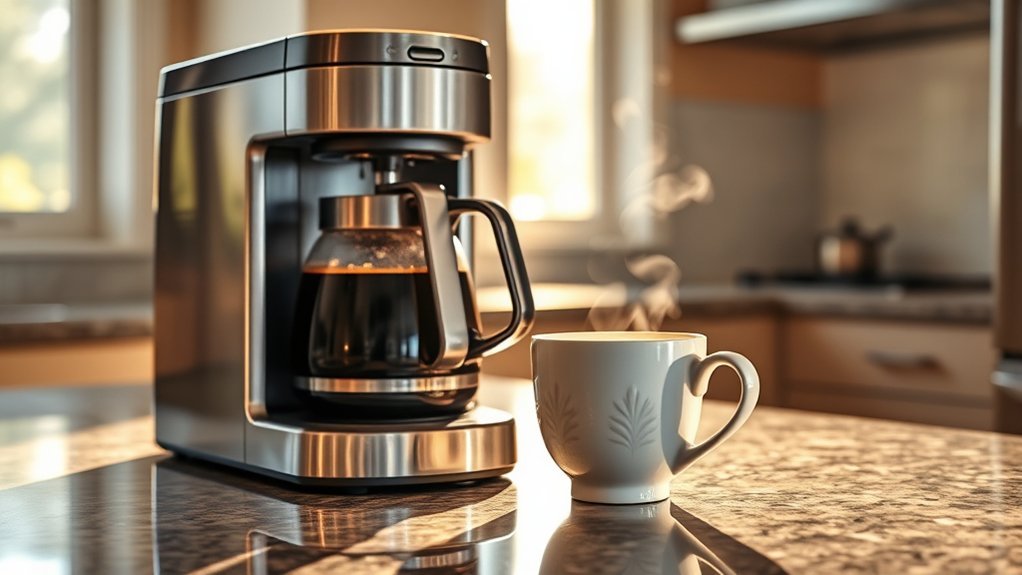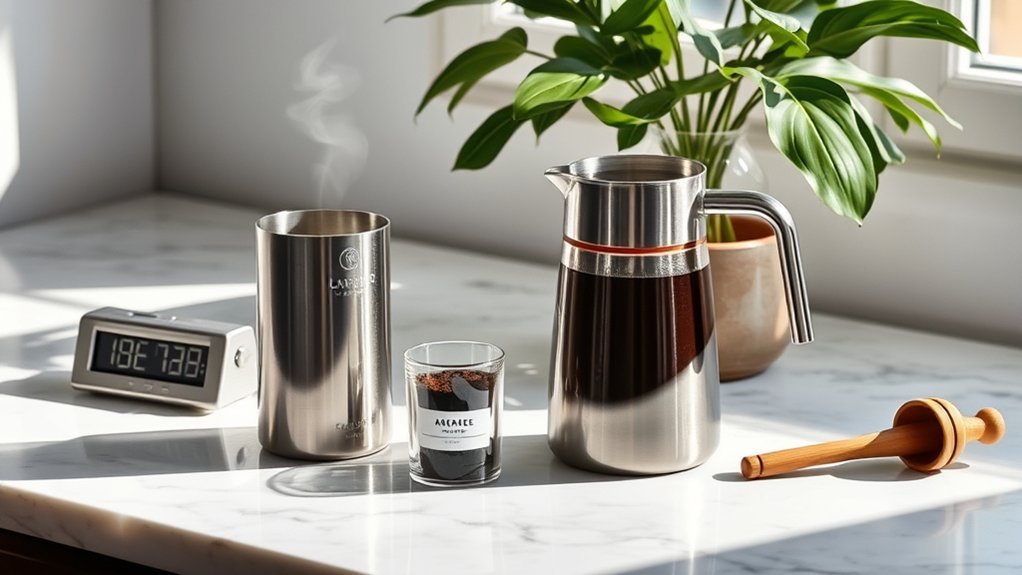
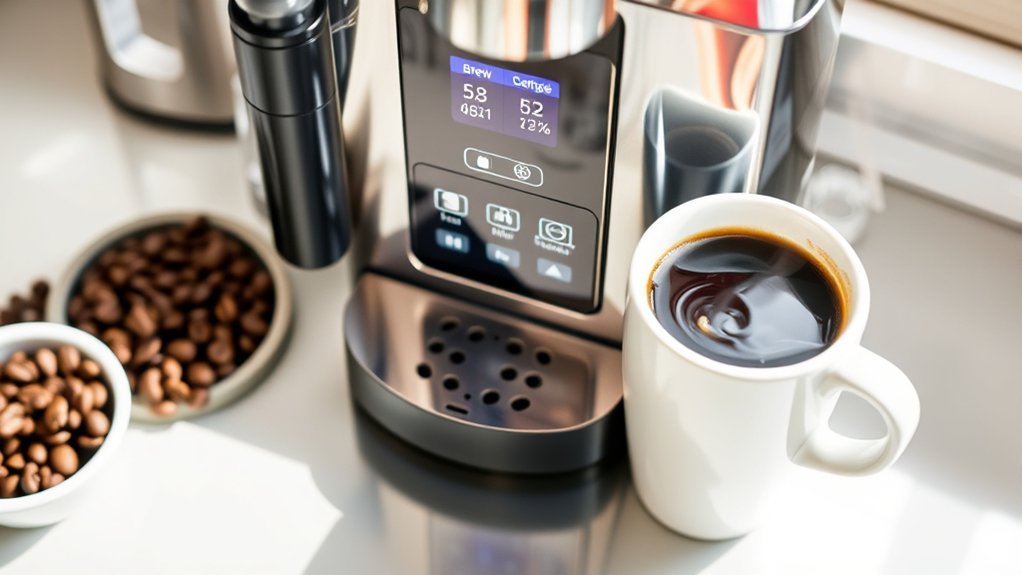
The brew strength setting on a coffee maker alters the brewing cycle to make the finished coffee taste lighter or more intense. On most automatic drip machines, a Bold, Strong, or Robust setting slows water flow, pulses the pump, or introduces a pre-infusion bloom phase to increase the contact time between hot water and coffee grounds. Because each manufacturer programs this cycle differently, the strength button is an extraction tool rather than a universal recipe.
Quick Answer
Brew strength tells your coffee maker to adjust its water flow, pulsing rate, or brew time so the finished cup tastes more or less intense. Strong or Bold settings typically slow water delivery or add a blooming pause to increase contact time. They do not add more coffee, reduce water volume, or guarantee a fixed increase in caffeine.
Key Takeaways
- Regular, Bold, Strong, and Robust settings are not standardized across brands; check your model manual for its exact cycle behavior.
- Stronger settings typically increase water-contact time via slower water delivery, heating element pulsing, or extended pre-infusion.
- The machine’s strength button changes extraction rate, which is distinct from physical coffee concentration (Total Dissolved Solids, or TDS).
- To achieve a substantially richer cup, adjusting the coffee-to-water ratio (using more ground coffee) is more direct than relying solely on the machine’s button.
- Adjust only one variable at a time—strength setting, dry dose, or grind size—to systematically dial in your flavor.
At a Glance
| Time Required | About 2–3 brew cycles to dial in your preferred taste |
| Difficulty | Easy |
| Tools Needed | Drip coffee maker, filter, fresh water, medium-ground coffee, and a digital kitchen scale |
| Cost | $0 (uses your existing coffee, water, and filters) |
What Does Brew Strength Mean on Your Coffee Maker?

A coffee maker’s brew-strength setting adjusts how water is pumped and heated through the brew basket to change flavor extraction. Because the machine cannot add more dry grounds on its own, it manipulates water contact time, pulse intervals, and water flow rate.
For example, KitchenAid explains that its documented Bold feature pulses the heating element so water passes through the cycle more slowly while maintaining proper brewing temperature. That extends the contact time between water and grounds.
Hamilton Beach notes that its Bold or Robust settings dispense hot water more slowly over the coffee bed, extending total brew time. Similarly, single-serve brewers like Keurig pulse water through the K-Cup at a restricted flow rate in “Strong” mode to ensure deeper saturation before draining.
Note: Labels such as Regular, Classic, Bold, Strong, Rich, Gourmet, and Robust are manufacturer-specific settings rather than universal industry standards. Two machines with a “Bold” button may use different flow rates and cycle durations.
Power your essentials anywhere with a 999Wh pure sine wave power station delivering up to 1000W continuous with 2000W surge. It supports fast charging via USB-C PD 60W and USB-A QC 18W, plus simultaneous output for multiple devices through AC, USB, wireless, and car/DC ports. Recharge using AC, car, or solar with a built-in MPPT controller and dual cooling fans, while the upgraded battery management system protects against surges, short circuits, and overheating.

Please refer to user guide or user manual or user guide (provided below in PDF) before first use

WHAT'S IN THE BOX: One water filter handle, and one filter to help ensure your beverages taste their absolute best.
Brew-Strength Setting vs. Actual Coffee Strength
There is a fundamental difference between a button on your appliance and the scientific definition of coffee strength:
- Soluble Concentration (TDS): In coffee science, strength refers to the concentration of dissolved coffee solids in the finished liquid, measured as Total Dissolved Solids (TDS percentage). A higher TDS means a heavier, more concentrated cup.
- Extraction Yield (PEY): This measures the percentage of soluble mass pulled out from the dry coffee grounds during brewing (ideally between 18% and 22%).
A brew-strength button influences extraction yield by keeping water in contact with the coffee longer. However, the physical concentration (TDS) is primarily dictated by your coffee-to-water ratio.
How Brew Strength Affects Your Coffee Flavor
Switching from Regular to Bold or Robust increases extraction on machines programmed for slower water flow. This allows hot water to dissolve more sugars, acids, and heavier aromatic compounds, creating a fuller, more pronounced flavor profile.
However, a longer cycle does not automatically make better coffee. Coffee extraction happens in phases: sour acids and light aromatics extract first, followed by balanced sugars, and finally heavier, bitter astringent compounds. If water stays in contact with fine grounds for too long, the cup can quickly turn dry and harsh.
| Setting | Typical Goal | Brew Cycle Modification | Best Use Case |
|---|---|---|---|
| Regular / Classic | Clean, balanced, everyday profile | Standard continuous water delivery | Standard medium-roast beans and standard medium grinds |
| Bold / Strong | Higher body, deeper flavor notes | Pulsed water flow, slower showerhead output | When Regular tastes watery, thin, or when adding milk |
| Robust / Rich | Maximum extraction intensity | Extended pulsing with longer pre-wetting pauses | When Bold still tastes underdeveloped, or for iced coffee bases |
Cycle times vary widely by brewer model and batch size. Informal benchmarks (such as 3:45 for Regular vs. 5:40 for Bold on a 16-ounce batch) illustrate the general time increase, but they are not universal specifications for every machine.
Practical Tips for Customizing Your Brew Strength
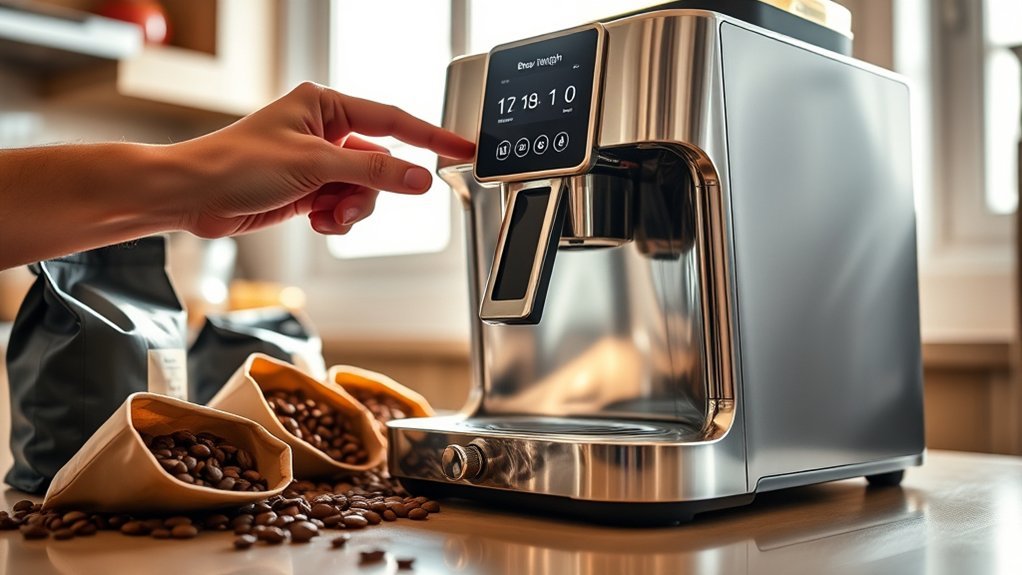
To produce consistent, repeatable coffee, start with a measured coffee-to-water ratio. Weighing both ingredients in grams with a kitchen scale eliminates the wide variations found in volume scoops and brewer carafe lines.
The Specialty Coffee Association (SCA) Certified Home Brewer standard uses a baseline specification of 55 grams of coffee per liter of water (a ratio of roughly 1:18 by mass). At home, a range between 1:15 and 1:18 provides an ideal dial-in window:
- Balanced Golden Ratio (1:16.7): 18 g coffee to 300 g water (or 60 g coffee to 1,000 g water).
- Stronger / Richer Body (1:15): 20 g coffee to 300 g water (or ~67 g coffee to 1,000 g water).
- Milder / Lighter Body (1:17.6): 17 g coffee to 300 g water (or ~57 g coffee to 1,000 g water).
While very tight ratios like 1:12 create strong coffee, they can overcrowd automatic drip filter baskets and lead to messy overflows. Increase doses incrementally.
A kitchen scale makes brew-strength changes repeatable: keep your water volume constant, adjust coffee dose by weight, and modify only one variable at a time.
How to Dial In Brew Strength Step by Step
- Establish a baseline on Regular. Use fresh coffee with a medium grind, measuring an exact 1:16 to 1:17 ratio on a scale.
- Taste the finished cup black. Identify whether the cup tastes sour and weak (under-extracted), bitter and dry (over-extracted), or simply thin in concentration.
- Toggle the machine strength setting. If the coffee tastes thin or hollow, brew the identical recipe on Bold or Strong to extend contact time.
- Adjust the dry dose if needed. If the flavor balance is pleasant but lacks physical body, increase the coffee dose by 2–3 grams while keeping the water volume fixed.
- Refine your grind size last. Adjust slightly finer to boost extraction, or slightly coarser if the Bold cycle introduces astringent bitterness.
- Maintain identical batch sizes. Changing from 4 cups to 10 cups changes bed depth and contact dynamics, skewing your comparison.
Pro Tip: If your coffee tastes thin and watery, increasing the coffee dose raises beverage concentration directly. The Bold button and grind adjustments primarily modify extraction efficiency, not overall dissolved solids mass.
Warning: Never combine an excessive coffee dose with an extra-fine espresso grind in a standard drip machine. Slower drainage can cause the brew basket to back up and overflow with boiling water and grounds. If an overflow begins, turn off or unplug the machine immediately and wait for the unit to cool before handling.
Navigating Various Brew Strength Settings
Treat the strength settings as relative extraction levels within your specific machine rather than universal brewing presets.
- Use Regular / Classic: When dialing in a new bean, using dark roasts that extract very quickly, or running full 10–12 cup batches.
- Use Bold / Strong: When brewing light-to-medium roasts, when preparing coffee intended for milk and sugar, or when Regular produces an under-developed flavor.
- Use Robust / Rich: For brewing iced coffee over ice cubes (where melting ice dilutes the brew) or when you prefer a heavy, lingering mouthfeel.
- Use 1–4 Cup Mode Correctly: Small-batch modes are designed to heat water more aggressively and pulse flow to compensate for shallow coffee beds. Do not use 1–4 Cup mode on a full carafe.
How Grind Size, Temperature, and Batch Size Change the Result
Grind Size
Grind size controls the total surface area exposed to water. Finer grinds increase surface contact and slow drainage through the basket, accelerating extraction. Coarser grinds allow water to pass quickly with less extraction.
Pairing a very fine grind with a Bold setting can cause severe over-extraction, creating an unpleasantly bitter, chalky aftertaste. If your Bold brew tastes drying, coarsen your grind slightly.
Water Temperature
Water temperature directly affects the speed at which soluble compounds dissolve. The SCA certification requirements establish an optimal brew-bed contact temperature of 92°C to 96°C (198°F to 205°F).
While water below 90°C (194°F) extracts sluggishly (often leaving coffee tasting sour), peer-reviewed research shows that when TDS and extraction yield are held constant, water temperature shifts within the 90–96°C window have a relatively minor effect on sensory profiles compared to ratio and contact time.
Batch Size
Brewing 2 cups on a drip machine provides a much thinner bed of coffee grounds than brewing 10 cups. Water flows through a shallow coffee bed quickly, resulting in lower extraction unless the machine compensates with pulsed heating (such as a 1–4 cup setting). Always use mass measurements (grams) rather than carafe lines, as brewer “cup” markings typically indicate 5 to 6 fluid ounces rather than an 8-ounce standard.
Troubleshooting Brew Strength Problems
| What You Taste or Observe | Immediate Fix |
|---|---|
| Weak, watery, or thin | Select Bold/Strong to increase contact time; if still thin, increase ground coffee dose by 10–15% using a scale. |
| Sour, sharp, or salty | This indicates under-extraction. Switch to Bold or adjust your grinder one step finer while keeping the dose constant. |
| Bitter, astringent, or chalky | This indicates over-extraction. Return to Regular mode or adjust your grinder coarser to allow faster drainage. |
| Bold tastes identical to Regular | The brewer’s cycle difference may be subtle. Increase the physical coffee-to-water ratio to 1:15 for a noticeable change. |
| Brew cycle takes excessively long | Check for an overly fine grind clogging the paper filter, or run a descaling cycle to remove internal mineral scale. |
| Filter basket overflows | Immediately reduce the dose, switch to a coarser medium grind, and confirm paper filter size matches basket geometry. |
What People Often Get Wrong About Brew Strength
A frequent point of confusion is treating strength, bitterness, and roast dark-level as the same thing.
Coffee can be strong (high dissolved solids concentration) while tasting sweet, smooth, and balanced. Conversely, coffee can taste harsh and bitter while being physically weak and watery if hot water has over-extracted a small amount of fine coffee dust.
Another common misconception is assuming the Bold button meters out extra coffee grounds or restricts water volume from the reservoir. On conventional automatic drip machines, the machine runs all loaded water through whatever grounds you placed in the basket. The button controls water delivery timing, not ingredient proportions.
Does Brew Strength Change the Caffeine Level?
Using a Bold or Strong setting can slightly increase caffeine yield because longer water contact facilitates extraction. However, the difference between brew cycles is relatively small.
According to a comprehensive review on caffeine content in brewed coffee, brewing time alone is not the primary driver of total caffeine. The dominant variables governing caffeine in your cup are:
- Dry coffee dose (grams): More coffee grounds naturally contain more caffeine.
- Bean species: Robusta beans contain roughly double the caffeine content of Arabica beans.
- Serving volume: Total ounces consumed has a far greater impact on caffeine intake than extraction timing variations.
If you want a more caffeinated beverage, use a higher dry coffee dose or choose a blend with a higher coffee-to-water ratio rather than relying on the Bold button alone.
Frequently Asked Questions
Can I adjust brew strength on any coffee maker model?
No. While many programmable drip makers offer Regular, Bold, Strong, or Rich settings, basic one-switch machines run a fixed, single-speed cycle. On machines without a button, you can adjust brew strength manually by tweaking your coffee-to-water ratio and grind size.
Does brew strength impact caffeine content in coffee?
It can cause a minor increase by lengthening contact time, but not in substantial amounts. Caffeine output is primarily dictated by the total dry coffee dose in grams, bean variety (Arabica vs. Robusta), and final beverage volume.
How does water temperature affect brew strength?
Hotter water accelerates the extraction of soluble flavor compounds. The SCA standard establishes an ideal coffee-bed temperature of 92–96°C (198–205°F). Within this optimal range, extraction is balanced without scorching or leaving the coffee under-developed.
Is there a standard measurement for coffee-to-water ratio?
The SCA Golden Cup testing benchmark is 55 grams of coffee per 1 liter (1,000 g) of water, which is roughly a 1:18 ratio. For everyday home drip brewing, a ratio between 1:15 and 1:17 offers a reliable starting point for balanced flavor and body.
Can I use the same settings for different coffee types?
Yes, as a starting baseline. However, darker roasts are more porous and extract quickly (often tasting best on Regular), while denser light roasts frequently benefit from the extended contact time of a Bold setting.
Does the Strong or Bold button use more coffee or less water?
No. Standard drip machines use all the water poured into the reservoir and cannot add ground coffee. The button alters the delivery rate, pulsing intervals, and saturation time of the water passing through the filter basket.
Why does my coffee maker take longer on Bold or Robust?
The machine intentionally pulses the water pump or slows heating output to keep water in contact with the coffee grounds longer, maximizing flavor extraction. Total brew time can increase by 1 to 3 minutes depending on batch volume.
Conclusion
Mastering your coffee maker’s brew strength setting comes down to understanding the relationship between water contact time and ingredient ratio. Start with Regular mode, weigh your coffee and water accurately on a kitchen scale, and engage Bold or Robust settings when you want deeper extraction from the same dose. When you desire a noticeably heavier, more concentrated cup, increase the dry coffee dose rather than depending on the machine cycle alone.
Consult your specific coffee maker’s manual to confirm how its settings operate. Once you separate your machine’s cycle controls from dose and grind size, dialing in balanced coffee every morning becomes simple and reliable.
Sources
- Specialty Coffee Association — Certified Home Brewer Program — standards for home coffee maker extraction, temperature consistency, and water contact dynamics.
- Specialty Coffee Association — Published Minimum Certification Requirements for Coffee Brewers — technical specifications for 55 g/L baseline dosing, contact time, and 92–96°C brew-bed temperatures.
- KitchenAid Product Help — 1–4 Cup and Bold Features — manufacturer documentation on pulsed heating elements for Bold brewing cycles.
- Hamilton Beach — Brew Selector & Strength FAQs — manufacturer specifications regarding water flow restriction and brew duration on Bold and Robust modes.
- Scientific Reports — Brew Temperature, Brew Strength, Extraction, and Sensory Profile — empirical research on Total Dissolved Solids (TDS), extraction yield, and temperature interactions in drip coffee.
- Foods Journal — Influence of Various Factors on Caffeine Content in Coffee Brews — peer-reviewed analysis on how brew duration, bean species, dose, and water volume impact final caffeine levels.