Most coffee makers and manual hot-brewing methods work well with water roughly between 195°F and 205°F (about 91°C to 96°C), but that range is a starting point rather than an absolute rule. Your brewing method, roast, grind size, contact time, water, and equipment all affect extraction. The goal is to use enough heat for balanced extraction without expecting temperature to correct problems caused by grind, dose, ratio, or brew time.
Quick Answer
For most automatic drip and pour-over coffee, start around 195°F to 205°F (91°C to 96°C). SCA brewer-certification testing is more specific, using 92°C to 96°C (197.6°F to 204.8°F) at the coffee bed. AeroPress, cold brew, and some other methods intentionally use different temperatures.
Key Takeaways
- A practical starting range for most hot filter coffee is about 195°F to 205°F (91°C to 96°C).
- SCA brewer-certification requirements use 92°C to 96°C (197.6°F to 204.8°F) where the water contacts the coffee, rather than the temperature of the finished drink.
- Temperature affects extraction, but grind size, dose, water volume, agitation, water chemistry, and contact time matter too.
- French press commonly uses near-boiling water in the same general hot-brew range rather than a default temperature such as 180°F.
- AeroPress recommends starting at 175°F for dark roasts and 185°F for medium or light roasts.
- Milk, cream, and sweeteners change serving temperature and perceived strength, but they do not require hotter brewing water.
- Measure in the correct location, preheat your equipment, and adjust one variable at a time.
At a Glance
| Time Required | About 5–10 minutes to test one brew cycle |
| Difficulty | Easy |
| Tools Needed | Fast digital thermometer, coffee, water, and the brewer’s manual |
| Cost | No added cost if you already own a thermometer |
Why Brewing Temperature Matters for Your Coffee
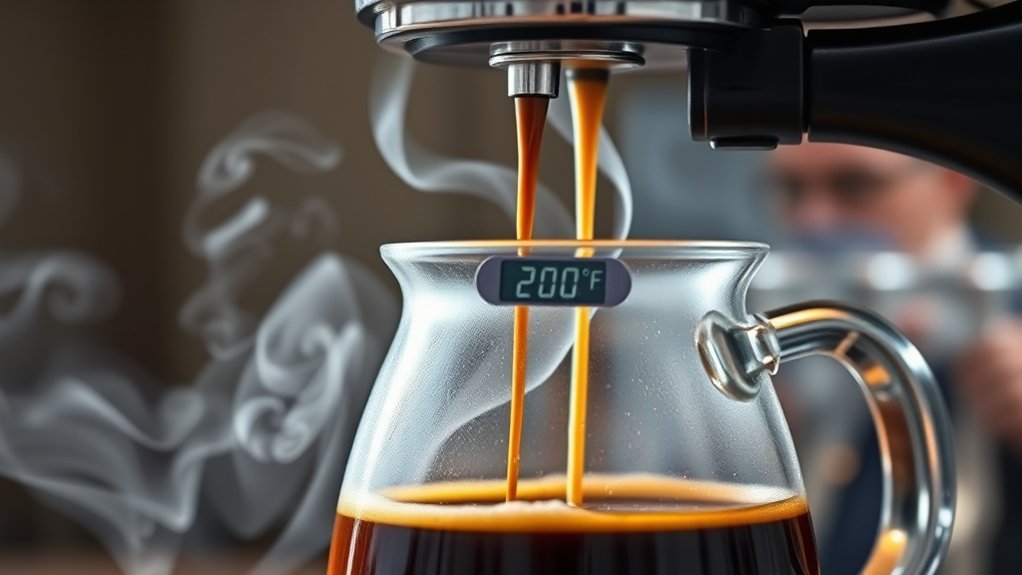
Water temperature changes how quickly soluble material moves from the coffee grounds into the water. Hotter water generally speeds extraction. Cooler water extracts more slowly and may require a finer grind, longer contact time, or more agitation to reach a similar extraction level.
For most hot filter coffee, approximately 195°F to 205°F (91°C to 96°C) is a dependable practical starting range. However, it helps to separate general brewing advice from formal equipment testing. Published Specialty Coffee Association certified-equipment guidance evaluates home brewers for brewing quality, consistency, and performance. Its brewer requirements use a coffee-bed temperature of 92°C to 96°C (197.6°F to 204.8°F), with the water reaching at least 92°C within the first minute.
That does not mean 194°F automatically produces sour coffee or 206°F automatically creates bitterness. Those flavors can appear when the overall recipe extracts too little or too much, but temperature is only one part of the process.
Temperature changes extraction speed. The final flavor still depends on the grind, dose, water volume, contact time, agitation, water, and coffee itself.
Research summarized by the Specialty Coffee Association found little sensory difference among brews made at 87°C, 90°C, and 93°C when brew strength and extraction yield were kept similar. In normal home brewing, however, changing temperature without adjusting the other variables can still change extraction and therefore change taste.
Power your essentials anywhere with a 999Wh pure sine wave power station delivering up to 1000W continuous with 2000W surge. It supports fast charging via USB-C PD 60W and USB-A QC 18W, plus simultaneous output for multiple devices through AC, USB, wireless, and car/DC ports. Recharge using AC, car, or solar with a built-in MPPT controller and dual cooling fans, while the upgraded battery management system protects against surges, short circuits, and overheating.

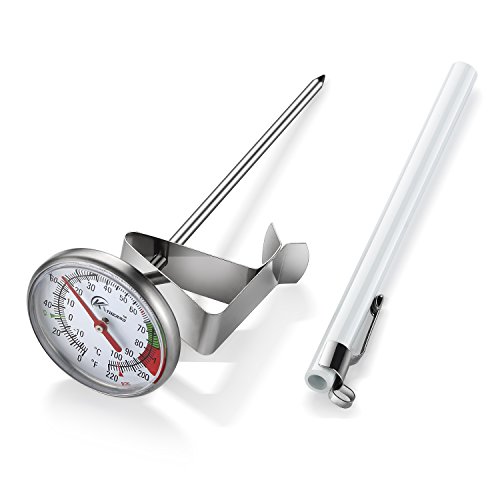
DESIGN:Multi-stage design of the fixed clip, adjust the thermometer read the location of the disk surface to facilitate observation of the temperature of the bubble.
Kettle Temperature vs. Coffee-Bed and Cup Temperature
One common source of confusion is that coffee temperature can be measured in several places. Those readings are not interchangeable.
| Measurement | What It Tells You | Important Detail |
|---|---|---|
| Kettle temperature | The temperature before water reaches the coffee | Water begins losing heat during pouring and when it contacts the brewer and grounds. |
| Coffee-bed or slurry temperature | The temperature where extraction actually happens | This is the important measurement when checking an automatic brewer against brewing-performance specifications. |
| Finished-cup temperature | How hot the beverage is when served | It will normally be lower than the brew-water temperature and should not be used by itself to judge brewer performance. |
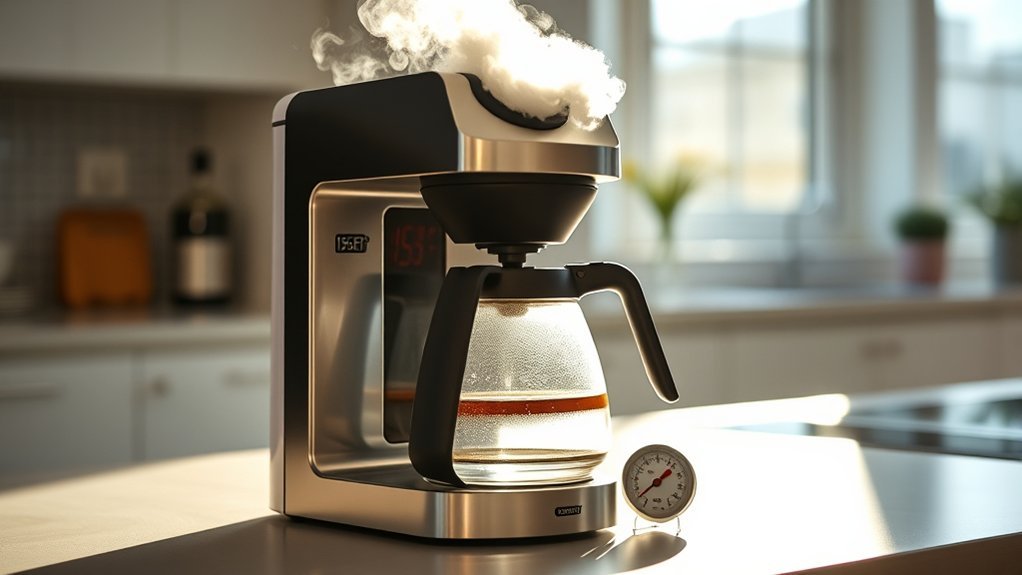
For manual brewing, controlling kettle temperature is usually the easiest approach. For an automatic coffee maker, measure as close as safely possible to the point where water contacts the grounds. Measuring only the carafe can make a properly heated brewer look cooler than it really is.
Note: A brewer’s boiler, heating element, kettle display, coffee slurry, and finished drink can all show different temperatures. Always compare measurements taken in the same location.
How to Find the Best Brewing Temperature for Your Coffee
Begin with the recommended range for your brewing method rather than choosing a temperature based only on roast color. Then make controlled adjustments based on taste.
- Start with the method’s baseline. Use roughly 195°F to 205°F for most drip, pour-over, and French-press recipes unless the manufacturer or recipe specifies another range.
- Keep the recipe consistent. Use the same coffee dose, water amount, grind setting, brew time, and pouring technique.
- Adjust by a few degrees. Move approximately 2°F to 5°F at a time rather than jumping from one extreme to another.
- Judge the full cup. Let the coffee cool slightly before deciding. Very hot coffee can make subtle sweetness, acidity, and aroma differences harder to judge.
Roast level can help you choose a starting point, but it should not become a rigid rule. Light roasts often respond well to more aggressive extraction, which may include hotter water, a finer grind, or longer contact. Darker roasts may taste better with slightly less aggressive extraction. Your coffee, grinder, brewer, and preferred flavor ultimately determine the best setting.
Pro Tip: Change only one variable between brews. If you change the temperature, grind, dose, and brew time together, you will not know which adjustment improved or harmed the cup.
How Temperature Affects Flavor Extraction
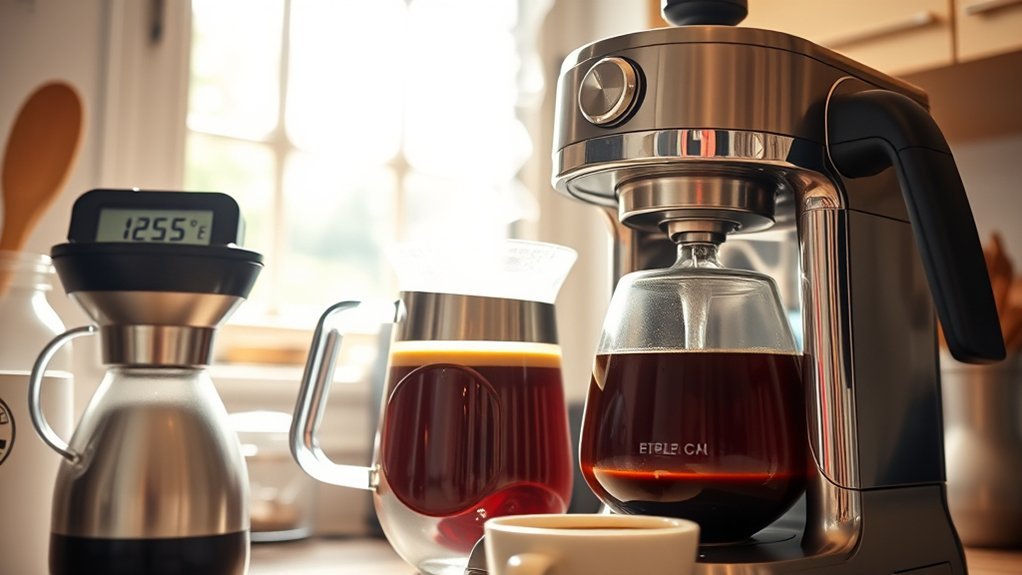
Hotter water generally increases the rate at which soluble coffee material leaves the grounds. If the rest of the recipe remains unchanged, raising the temperature can increase extraction. Lowering it can reduce or slow extraction.
| Temperature Approach | Likely Effect | What to Check |
|---|---|---|
| Lower than the method’s normal range | Slower extraction; the cup may taste thin, sharp, or sour if the recipe does not compensate | Grind finer, extend contact time, increase agitation, or raise the temperature slightly |
| About 195°F to 205°F (91°C to 96°C) | Reliable starting range for many hot filter-coffee recipes | Fine-tune grind and brew time before making large temperature changes |
| Higher than the method or equipment recommends | Faster extraction; harsh or drying flavors may become more noticeable if extraction is pushed too far | Lower the temperature, use a coarser grind, shorten contact time, or reduce agitation |
Use taste as a diagnostic clue rather than treating it as proof of a temperature problem. A sour cup may involve water that is too cool, but it can also result from a coarse grind, short brew time, uneven wetting, or an unsuitable coffee-to-water ratio. A bitter or drying cup may involve excessive extraction, but the cause could be temperature, a fine grind, long contact time, excessive agitation, or the coffee itself.
Tips for Maintaining a Consistent Brewing Temperature
Consistency matters because a stable process lets you repeat a good brew and diagnose a bad one.
- Preheat the brewer and serving vessel. Rinse a manual dripper, French press, mug, or carafe with hot water before brewing.
- Use a temperature-controlled kettle when available. An adjustable kettle is the simplest way to repeat the same manual-brew temperature.
- Measure near the coffee bed. For manual brewing, check the water shortly before pouring. For an automatic brewer, carefully measure where the water contacts the grounds rather than relying only on the finished coffee.
- Warm up the machine as directed. Espresso machines and some automatic brewers need a warm-up or rinse cycle.
- Descale on schedule. Mineral buildup can restrict water flow and interfere with normal heating performance.
- Use an appropriate batch size. Some automatic machines perform less consistently when asked to brew far below their designed capacity.
- Keep lids and heat-retaining parts in place. Open vessels and cold equipment increase heat loss.
If you do not own a temperature-controlled kettle, a fast thermometer is more reliable than waiting a fixed number of seconds after boiling. Cooling speed changes with water volume, kettle material, room temperature, lid position, and altitude. If you have neither, follow the brewing-device manufacturer’s instructions rather than assuming that “30 seconds after boiling” always produces one exact temperature.
Warning: Hot water and steam can cause serious burns. Keep your hands clear of the showerhead, brew basket, steam wand, and kettle spout. Do not place a thermometer where it can block moving water or contact exposed electrical parts.
Brewing Temperatures for Different Coffee Methods
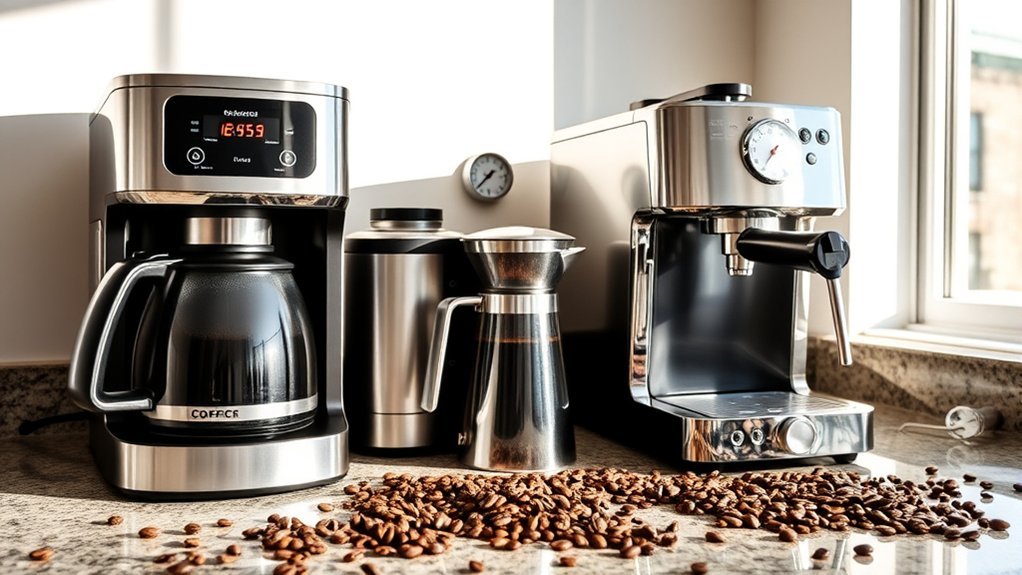
Different brewers use different grind sizes, pressures, filters, heat sources, and contact times. As a result, one temperature recommendation does not fit every method.
Brewing Method Variations
| Method | Practical Starting Point | Important Note |
|---|---|---|
| Automatic drip | Roughly 195°F to 205°F; SCA certification uses 197.6°F to 204.8°F (92°C to 96°C) at the coffee bed | Temperature stability through the cycle matters more than one brief peak reading. |
| Pour-over | About 195°F to 205°F (91°C to 96°C) | Adjust for the coffee, grind, brewer, filter, and drawdown time. |
| French press | Approximately 195°F to 205°F (92°C to 96°C) | Bodum’s Chambord guidance specifies approximately 92°C to 96°C. |
| AeroPress | 175°F (80°C) for dark roasts; 185°F (85°C) for medium and light roasts | These are manufacturer starting points. Other AeroPress recipes intentionally use different temperatures. |
| Espresso | Follow the machine’s programmed or manufacturer-approved brew-temperature range | Boiler, thermoblock, group-head, puck, and finished-espresso temperatures are different measurements. |
| Moka pot | Follow the moka pot manufacturer’s water and heat instructions rather than targeting a coffee-bed number | Pressure and continuously changing water temperature make direct comparison with pour-over or drip misleading. |
| Cold brew | Cold or room-temperature water | Time, grind, ratio, filtration, and storage practices replace the normal hot-water target. |
AeroPress recommends starting at 175°F (80°C) for dark roasts and 185°F (85°C) for medium or light roasts. This is a genuine method-specific exception to the common 195–205°F hot-filter range.
How Method and Temperature Work Together
A pour-over uses gravity and a relatively short contact time, so many recipes use water near the normal hot-filter range. A French press has a longer immersion period, but major manufacturers such as Bodum still recommend water around 92°C to 96°C.
An AeroPress combines immersion and pressure and can produce balanced extraction with cooler water, depending on the grind and recipe. Espresso uses pressure, a fine grind, and a short contact time, so the machine controls several variables at once.
Automatic pod and single-serve machines are harder to evaluate from the outside because many do not expose a brew-temperature control or provide access to the coffee bed. If the machine does not offer an approved adjustment, follow its manual rather than opening, modifying, or bypassing its heating system.
Cold brew uses no hot-water target. It relies on much lower brewing temperatures combined with a different extraction process. It should not be confused with hot-brewed coffee that is cooled or poured over ice.
Note: The brewer manufacturer’s instructions take priority over a general temperature chart. Equipment design changes both the appropriate temperature and the correct place to measure it.
Top Brewing-Temperature Mistakes to Avoid
- Treating 195–205°F as an unbreakable rule. It is a reliable starting range for many hot methods, not every brewer or recipe.
- Confusing general advice with SCA certification limits. SCA brewer testing uses a more specific 92°C to 96°C range at the coffee bed.
- Changing several variables at once. Temperature tests are difficult to interpret if you also change the grind, dose, ratio, and brew time.
- Measuring only the finished drink. Coffee loses heat as it moves through the grounds, filter, brewer, and carafe.
- Using sea-level assumptions at high altitude. Water boils at a lower temperature as elevation increases.
- Assuming bitterness always means excessive heat. A fine grind, long brew, excessive agitation, or naturally bitter roast profile may also be responsible.
- Assuming sourness always means cool water. Uneven wetting, a coarse grind, short contact time, or the coffee itself may be responsible.
- Ignoring scale buildup. Mineral deposits can interfere with normal water flow and heating performance.
- Pouring hot water into an automatic reservoir. Do this only when the appliance manual clearly permits it.
Note: Altitude can eliminate the usual “wait after boiling” advice. The U.S. Geological Survey reports that water boils at about 202.9°F (94.9°C) at 5,000 feet, so freshly boiled water there is already within the usual hot-filter range.
How to Check and Improve Your Coffee Maker’s Temperature
Before replacing a coffee maker, confirm that the temperature problem is real, measured in the correct location, and repeatable.
- Read the manual. Check the warm-up procedure, approved reservoir-water temperature, descaling schedule, batch-size limits, and available temperature settings.
- Run a normal brew cycle. Use the usual amount of room-temperature water. If the manual permits a water-only cycle, you can use one for an initial heating check, but a normal coffee-bed measurement better represents actual brewing conditions.
- Measure carefully. Position a fast thermometer near the top-center of the coffee bed without blocking water flow, touching the heating system, or creating a splash hazard.
- Watch the cycle, not just one second. A brief peak does not show whether the brewer maintains useful temperature while most of the water passes through the grounds.
- Compare the right numbers. If you are comparing an automatic brewer with SCA certification requirements, the relevant range is 92°C to 96°C (197.6°F to 204.8°F) at coffee contact, with at least 92°C reached within the first minute.
- Perform basic maintenance. Descale the machine, clean the showerhead, seat the basket correctly, and repeat the test.
- Use approved adjustments. Select a hotter setting, longer warm-up, pre-infusion mode, or manufacturer-approved calibration when available.
Warning: Do not pour boiling or preheated water into an automatic coffee maker unless its manual specifically allows it. Hot reservoir water can create steam, splash hazards, incorrect sensor behavior, or appliance damage.
If the machine remains far below its documented range after cleaning and correct setup, contact the manufacturer or replace the brewer. The SCA Certified Equipment Program provides a current list of home brewers that have passed third-party evaluation for brewing quality, consistency, and performance.
How Milk, Cream, and Sweeteners Affect Coffee Temperature
Milk, cream, syrups, and sweeteners are normally added after brewing. They can lower the drink’s serving temperature, soften perceived bitterness, and make coffee seem less intense, but they do not change the temperature that was required to extract the grounds.
Do not automatically raise the brewing temperature to compensate. Instead:
- Preheat the mug before brewing.
- Warm milk or cream when appropriate.
- Use less refrigerated milk if the drink cools too quickly.
- Brew stronger coffee by adjusting the coffee-to-water ratio rather than overheating the water.
- Add sweetener while the coffee is warm enough to dissolve it easily.
Brew-water temperature and drinking temperature are different measurements. Coffee may be brewed with water near 200°F but cool substantially before it reaches your mouth.
Note: Allow coffee to cool to a comfortable temperature before drinking. The International Agency for Research on Cancer defines beverages consumed above 65°C, or 149°F, as “very hot” and classifies drinking very hot beverages as probably carcinogenic to humans (Group 2A). This is a hazard classification; it does not state the size of an individual person’s risk.
Frequently Asked Questions
Can brewing temperature vary by coffee bean or roast?
Yes. Roast level, origin, processing, age, grind, water, and recipe can all affect the best brewing setup. Light roasts are often brewed with more aggressive extraction parameters, while some dark roasts taste better with slightly cooler water. Treat roast level as a starting clue rather than a strict temperature rule.
What is the best temperature for cold-brew coffee?
Cold brew can be made with refrigerated or room-temperature water depending on the recipe and equipment. There is no universal 60–70°F requirement. Follow the brewer or recipe for the grind, coffee-to-water ratio, steeping process, filtration, and storage instructions.
Does altitude affect coffee brewing temperature?
Yes. Water boils at a lower temperature as altitude increases. The U.S. Geological Survey reports that water boils at about 202.9°F (94.9°C) at 5,000 feet, compared with 212°F (100°C) at sea level. At that elevation, freshly boiled water is already within the usual hot-filter brewing range.
How can I check my coffee maker’s brewing temperature?
Use a fast digital thermometer to measure as close as safely possible to where water contacts the coffee bed. Take several readings during a normal cycle. Do not rely only on the temperature of the finished coffee because the liquid loses heat as it moves through the grounds, filter, basket, and carafe.
What temperature should an SCA-certified coffee maker reach?
Published SCA brewer-certification requirements specify that water where it contacts the coffee should reach at least 92°C (197.6°F) within the first minute, remain at or above 92°C for the rest of the brew, and not exceed 96°C (204.8°F). This refers to coffee-bed temperature, not the finished drink.
Are there health risks from high coffee temperatures?
Hot water and steam can cause burns during brewing. Separately, IARC classifies drinking beverages above 65°C (149°F) as probably carcinogenic to humans because of evidence concerning oesophageal cancer. This concerns repeatedly consuming beverages while very hot, not the normal process of brewing coffee. Let the drink cool to a comfortable temperature before drinking.
Is boiling water always too hot for coffee?
No single rule applies to every method. At sea level, actively boiling water is about 212°F (100°C), which is above the common 195–205°F hot-filter range and above Bodum’s 92–96°C French-press guidance. Follow the recipe or brewer manufacturer’s instructions. At higher altitude, the boiling point is lower and may already fall within the normal brewing range.
How long should water rest after boiling?
There is no universal waiting time. Cooling speed depends on altitude, kettle material, water volume, room temperature, and whether the lid is open. A thermometer or temperature-controlled kettle is more dependable than waiting a fixed number of seconds.
What should I do if my coffee maker brews too cool?
First confirm that you measured near the coffee bed rather than only in the carafe. Then use the correct batch size, complete the approved warm-up cycle, preheat the carafe when appropriate, and descale the machine. Check the manual for a temperature setting. If the brewer remains below its documented range, contact the manufacturer or consider a model evaluated under the SCA Certified Equipment Program.
Can I tell brewing temperature from the coffee in my mug?
Not accurately. The finished coffee loses heat to the grounds, filter, brew basket, air, carafe, and mug. A cup temperature well below 195°F does not prove that the coffee maker brewed too cool. Measure where the water contacts the coffee whenever you are evaluating brewer performance.
Conclusion
For most automatic drip and pour-over coffee, roughly 195°F to 205°F (91°C to 96°C) is a practical place to begin. If you are evaluating an automatic brewer against SCA certification requirements, use the more specific coffee-bed standard of 92°C to 96°C (197.6°F to 204.8°F). French press commonly uses a similar hot-water range, while AeroPress and cold-brew recipes may work at much lower temperatures.
Temperature matters because it changes extraction, but it cannot compensate for every grind, dose, ratio, timing, water, or equipment problem. Keep the rest of your recipe consistent, measure in the correct location, and make small adjustments based on taste. A repeatable brewing process will improve your coffee more reliably than chasing one supposedly perfect number.
Sources
- Specialty Coffee Association Certified Equipment Program — current certified-home-brewer program, equipment testing, brewing quality, consistency, and performance.
- Specialty Coffee Association: How Hot Is Hot Enough? — research on brewing temperature, extraction yield, brew strength, and sensory results.
- AeroPress Official Brewing Temperature Guidance — manufacturer starting temperatures for dark, medium, and light roasts.
- Bodum Chambord French Press — manufacturer guidance for French-press brewing.
- U.S. Geological Survey: Facts About Water — altitude and the boiling temperature of water.
- International Agency for Research on Cancer: Very Hot Beverages — very-hot-beverage definition and health classification.