A coffee maker “cup” is usually smaller than an 8-fluid-ounce measuring cup. On many drip coffee makers, one numbered cup equals about 5 fluid ounces, but that measurement is not universal. Check your machine’s manual, stated water capacity, or carafe markings before converting its cup count to ounces.
Quick Answer
One “cup” on a coffee maker commonly equals about 5 fluid ounces, or roughly 148 mL, especially on many drip machines. However, there is no universal coffee-maker cup size. A 12-cup brewer may hold 60 fluid ounces if it uses 5-ounce increments, so always confirm your machine’s stated capacity.
Key Takeaways
- A coffee maker cup is often 5 fluid ounces, or about 148 mL, while a U.S. measuring cup is 8 fluid ounces.
- Cup size varies by brand and model, so the machine’s manual, product specifications, or stated water capacity is the best source.
- A 12-cup brewer that uses 5-ounce increments holds 60 fluid ounces, which equals 7.5 standard measuring cups.
- A machine using 6-ounce increments would instead hold 72 fluid ounces at a 12-cup rating.
- Single-serve brew buttons usually state an actual serving volume, such as 6, 8, 10, or 12 ounces.
- For consistent coffee, measure the actual water volume and begin with a repeatable coffee-to-water ratio rather than assuming every machine “cup” is the same size.
At a Glance
| Time Required | About 3–5 minutes |
| Difficulty | Easy |
| Tools Needed | Machine manual or product page, liquid measuring cup, and optionally a kitchen scale |
| Cost | $0 with tools already at home |
How Many Ounces Are in a Coffee Maker Cup?
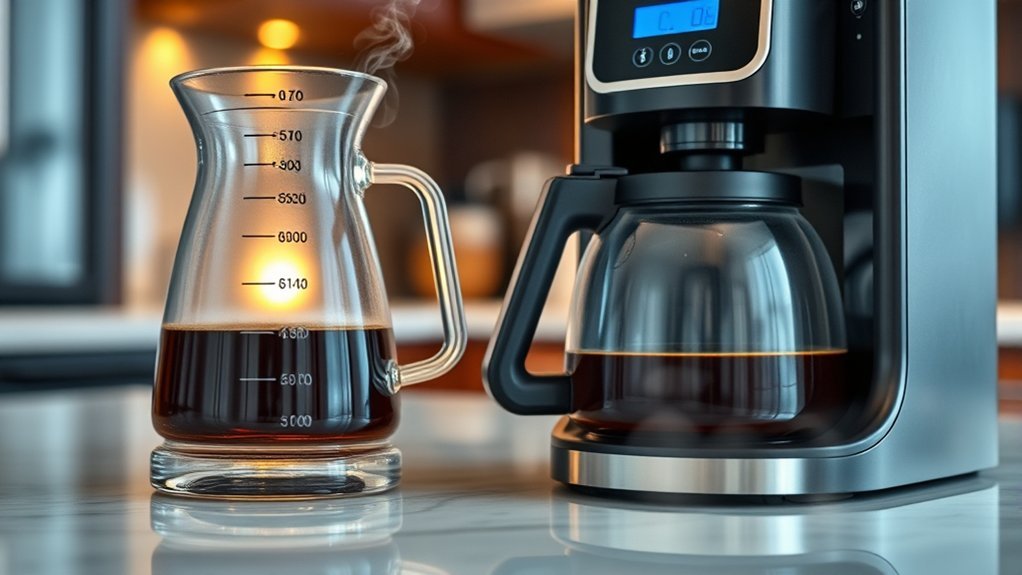
For many automatic drip coffee makers, one numbered “cup” represents approximately 5 fluid ounces, which is about 148 milliliters. That is why a machine labeled as a 12-cup brewer may have a nominal water capacity of 60 fluid ounces.
This is different from a standard U.S. measuring cup. The National Institute of Standards and Technology defines one measuring cup as exactly 8 fluid ounces. NIST also lists one U.S. fluid ounce as approximately 29.573 milliliters.
Current manufacturer examples demonstrate the difference. A Mr. Coffee five-cup brewer is rated for up to 25 ounces, while the Breville Luxe Brewer identifies its 60-fluid-ounce water tank as a 12-cup capacity. Both examples work out to 5 fluid ounces per rated cup.
A coffee maker’s cup count is a capacity label, not a promise that each numbered cup equals an 8-ounce drinking serving.
Note: Five ounces is common among drip machines, but it is not a universal standard. Use the capacity stated by the manufacturer for your specific brewer.
Coffee Maker Cup vs. Measuring Cup vs. Mug
The word “cup” can describe several different volumes. Keeping these definitions separate prevents most coffee measurement mistakes.
| Measurement | Typical Volume | Metric Equivalent | What It Means |
|---|---|---|---|
| Coffee maker cup | Often 5 fl oz, but model-specific | 5 fl oz ≈ 148 mL | A numbered capacity increment on a drip machine |
| U.S. measuring cup | 8 fl oz | About 237 mL | A standard household volume measurement |
| Coffee mug | Often 8–16 fl oz or more | Varies by mug | The physical container you drink from |
| Single-serve setting | Usually printed in actual ounces | Depends on the selected size | The intended output volume for one brewing cycle |
For example, the Keurig K-Classic offers 6-, 8-, and 10-ounce settings. The Keurig K-Elite offers 4-, 6-, 8-, 10-, and 12-ounce settings. These are model-specific serving selections, not a universal Keurig or coffee-maker cup definition.
Common Coffee Maker Sizes in Ounces
The safest conversion is always based on your brewer’s stated capacity. The table below shows what common ratings would mean under both a 5-fluid-ounce and a 6-fluid-ounce convention. The 5-ounce column also preserves the common drip-brewer conversions used throughout this guide.
| Coffee Maker Rating | If Each Cup = 5 fl oz | If Each Cup = 6 fl oz | Equivalent 8-oz Measuring Cups at 5 oz/Cup |
|---|---|---|---|
| 4 cups | 20 fl oz | 24 fl oz | 2.5 cups |
| 5 cups | 25 fl oz | 30 fl oz | About 3.1 cups |
| 8 cups | 40 fl oz | 48 fl oz | 5 cups |
| 10 cups | 50 fl oz | 60 fl oz | 6.25 cups |
| 12 cups | 60 fl oz | 72 fl oz | 7.5 cups |
| 14 cups | 70 fl oz | 84 fl oz | 8.75 cups |
For quick metric conversions, 5 fluid ounces is approximately 148 mL and 6 fluid ounces is approximately 177 mL. A 60-fluid-ounce brewer therefore holds about 1.77 liters of water, while 72 fluid ounces is about 2.13 liters.
These figures describe the water placed in the brewer or its nominal capacity. The amount of finished coffee in the carafe may be slightly lower because the grounds and filter retain some water.
How Many Mugs Does a 12-Cup Coffee Maker Make?
If your 12-cup brewer holds 60 fluid ounces, the number of actual mugs depends on the size of the mug rather than the “12-cup” label.
| Mug Size | Approximate Mugs From 60 fl oz |
|---|---|
| 8 oz | 7.5 mugs |
| 10 oz | 6 mugs |
| 12 oz | 5 mugs |
| 16 oz | About 3.75 mugs |
Actual finished yield can be slightly lower after brewing because some water remains in the coffee grounds, filter, and brewer.
How to Determine Your Coffee Maker’s Cup Size
You do not need to guess whether your machine uses a four-, five-, six-, or another ounce value. Use one of the following methods to identify its actual capacity.
1. Check the Manual or Product Page
Look for terms such as water capacity, carafe capacity, or fluid ounces. Divide the stated ounce capacity by the machine’s rated cup count.
Example: A 60-ounce machine rated for 12 cups uses 5 ounces per numbered cup:
60 ÷ 12 = 5 fluid ounces per coffee maker cup
2. Inspect the Carafe and Reservoir
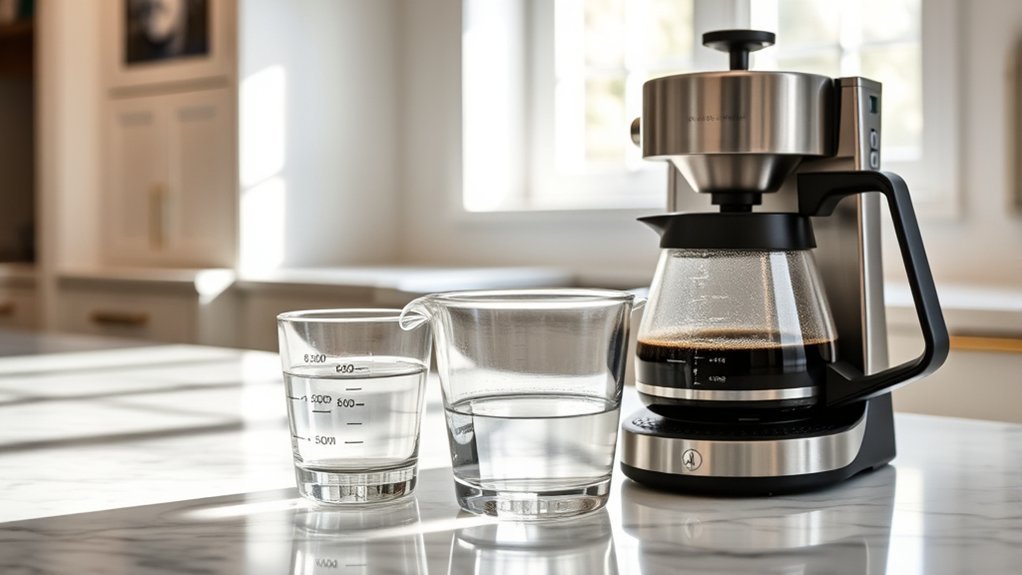
Some carafes show both numbered cup lines and ounce or milliliter markings. If yours does, compare the scales directly. A line marked “6” that also aligns with 30 ounces indicates 5 ounces per numbered cup.
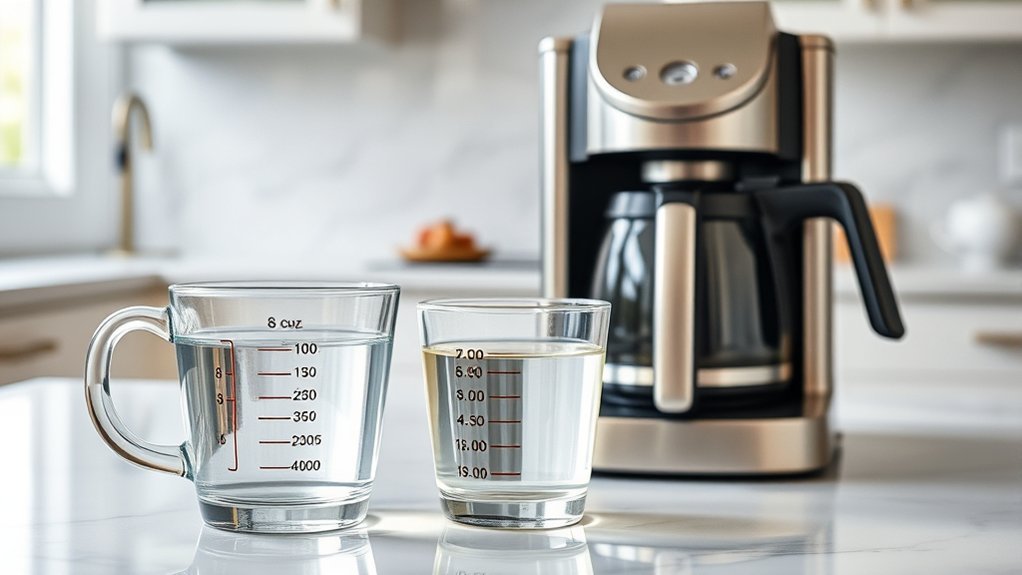
3. Perform a Water Measurement Test
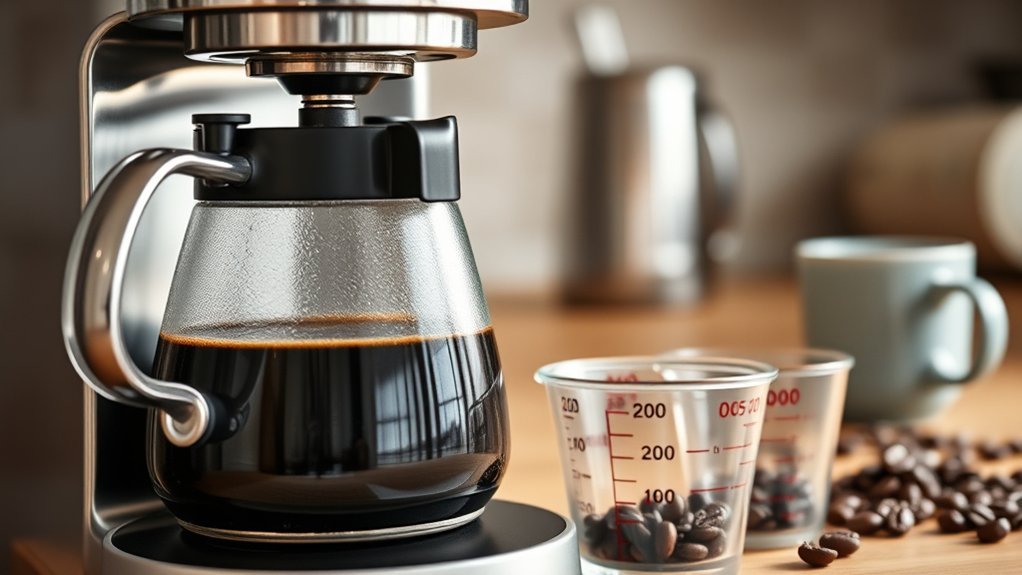
- Place the empty carafe on a level surface.
- Fill it to a numbered line using a liquid measuring cup.
- Record the total fluid ounces added.
- Divide that amount by the numbered line you selected.
For example, if 40 fluid ounces reaches the “8” line, each numbered coffee maker cup equals 5 fluid ounces.
Pro Tip: Measure water before brewing rather than measuring only the finished coffee. Grounds and filters retain water, so the beverage in the carafe may not equal the full amount poured into the reservoir.
Coffee Maker Cup Conversion Formulas
Use these formulas after checking the machine’s specifications.
To convert coffee maker cups to fluid ounces:
Rated cup count × ounces per manufacturer cup = total fluid ounces
Example: 10 cups × 5 ounces = 50 fluid ounces.
To find the machine’s ounces per cup:
Total stated capacity ÷ rated cup count = ounces per coffee maker cup
Example: 25 ounces ÷ 5 cups = 5 fluid ounces per cup.
To convert fluid ounces to standard measuring cups:
Total fluid ounces ÷ 8 = standard measuring cups
Example: 60 ounces ÷ 8 = 7.5 measuring cups.
To convert U.S. fluid ounces to milliliters:
Total fluid ounces × 29.573 ≈ milliliters
Example: 5 ounces × 29.573 ≈ 148 milliliters.
Note: Do not automatically multiply every coffee maker’s cup count by five. Five ounces is common, but the calculation is correct only when the brewer actually uses that capacity convention.
How Much Coffee Should You Use?
Once you know the actual water volume, use that volume to set your coffee dose. Measuring by weight produces more repeatable results because tablespoons can hold different amounts depending on the bean, roast, grind, and how tightly the coffee is packed.
A practical starting range for drip coffee is approximately 1 gram of coffee for every 16 to 18 grams of water. This is written as a 1:16 to 1:18 coffee-to-water ratio. Treat it as a starting point rather than a mandatory formula, then adjust for your brewer and taste.
| Water | Coffee at 1:18 | Coffee at 1:16 |
|---|---|---|
| 5 fl oz | About 8 g | About 9 g |
| 6 fl oz | About 10 g | About 11 g |
| 8 fl oz | About 13 g | About 15 g |
| 10 fl oz | About 16 g | About 18 g |
| 12 fl oz | About 20 g | About 22 g |
| 60 fl oz | About 99 g | About 111 g |
Measuring Coffee Without a Scale
If you do not have a scale, the National Coffee Association recommends a starting range of 1 to 2 tablespoons of ground coffee per 6 fluid ounces of water. Because volume measurements are less precise than weighing coffee, use this as a practical starting point rather than an exact dose.
Begin near the middle of the range, brew one batch, and record what you used. Add a little more coffee the next time if the drink tastes weak, or use less if it tastes stronger than you prefer.
Adjusting Coffee Strength
- For a stronger drink: Use more coffee while keeping the water amount unchanged.
- For a milder drink: Use less coffee while keeping the water amount unchanged.
- For better consistency: Use the same scale, scoop, water line, filter, and grind setting each time.
Coffee preferences vary, so a ratio is best treated as a repeatable starting point rather than a rule that everyone must follow. Research summarized by the UC Davis Coffee Center shows that changes in brew strength and extraction can produce different flavor profiles and that consumer preferences are not identical.
How Measurements Affect Coffee Strength and Flavor
The coffee-to-water ratio has the most direct effect on beverage strength. However, grind size, brew time, water quality, roast, and the coffee’s freshness also affect the final taste.
Coffee-to-Water Ratio
Adding more grounds without adding more water generally creates a more concentrated cup. Adding more water without increasing the coffee dose generally makes it weaker.
Measure the machine’s actual water volume rather than counting ordinary eight-ounce cups. Otherwise, you may unintentionally change the ratio each time you brew.
Grind Size and Extraction
Grind size changes how quickly water extracts soluble compounds from the coffee.
- Too coarse: Coffee may taste thin, sharp, sour, or underdeveloped.
- Too fine: Coffee may drain slowly and taste harsh, dry, bitter, or over-extracted.
- Balanced grind: Use the setting recommended for your brewer, then adjust one small step at a time.
Do not rely on grind size alone to make coffee stronger. Change the coffee dose first when concentration is the main problem.
Brew Time
Larger batches often take longer because the machine must heat and deliver more water. Brew time also changes with grind size, filter type, basket shape, and the brewer’s programmed flow.
If a batch suddenly takes much longer than normal, check for overly fine grounds, a folded or clogged filter, mineral buildup, or too much coffee in the basket.
Beans and Water
Use clean water that has no strong odor or unpleasant taste. If local tap water negatively affects the flavor, filtered water may help.
Buy roasted coffee in quantities you can use while it still tastes fresh. The National Coffee Association recommends protecting coffee from air, moisture, heat, and light. Store it in an opaque airtight container and grind only the amount needed for the next batch.
Troubleshooting Coffee Measurement Problems
Coffee Tastes Too Weak
- Confirm that you did not treat each machine cup as eight ounces unless your brewer specifically defines it that way.
- Increase the amount of ground coffee while keeping the water volume the same.
- Check whether the grind is much coarser than the brewer requires.
- Make sure water is not bypassing the grounds because of a folded filter or uneven coffee bed.
Coffee Tastes Too Strong or Harsh
- Reduce the coffee dose slightly.
- Check whether the grind is too fine and slowing the brew.
- Clean the machine if old coffee oils or mineral deposits are affecting flavor.
- Change only one variable per batch so you know which adjustment worked.
Finished Volume Is Lower Than Expected
Some difference is normal because the grounds and filter retain water. Steam and small amounts left inside the brewer can also reduce the beverage volume compared with the water originally added.
If the difference suddenly becomes large, inspect the brewer for leaks, scale buildup, an incorrectly seated reservoir, or a blocked flow path. Follow the manufacturer’s cleaning and descaling instructions.
The Filter Basket Overflows
- Do not fill the reservoir beyond its maximum line.
- Do not exceed the basket’s recommended coffee capacity.
- Use the correct filter size and shape.
- Avoid an excessively fine grind that restricts drainage.
- Confirm that the carafe and pause-and-serve mechanism are seated correctly.
Warning: Unplug the coffee maker and allow it to cool before clearing a blockage, repositioning removable internal parts, or cleaning areas near the hot plate and brew basket.
Batches Taste Inconsistent
Use the same water measurement, coffee weight, grind setting, filter, and brew size for several batches. Record your recipe so you can repeat it. Changing several variables at once makes the cause of a flavor difference difficult to identify.
Frequently Asked Questions
Do all coffee makers use the same cup measurement?
No. Many drip coffee makers use a nominal five-ounce cup, but other machines may use a different amount. Check the manual, product specifications, reservoir, or carafe markings for your model.
How can I convert coffee maker cups to standard ounces?
Multiply the rated cup count by the number of ounces the manufacturer assigns to each cup. If the machine uses five-ounce cups, a 10-cup rating equals 50 fluid ounces. Do not assume five ounces until you confirm the specification.
How many ounces are in a 12-cup coffee maker?
Many 12-cup drip coffee makers hold 60 fluid ounces because they use a five-ounce nominal cup. That equals 7.5 standard eight-ounce measuring cups. A brewer using six-ounce increments would hold 72 fluid ounces, so verify the stated capacity of your model.
How many milliliters are in a 5-ounce coffee maker cup?
Five U.S. fluid ounces is approximately 148 milliliters. A six-ounce coffee-maker cup would be approximately 177 milliliters. These are volume conversions, not universal definitions of what every brewer means by one cup.
How many 12-ounce mugs does a 12-cup coffee maker make?
If the brewer has a 60-fluid-ounce capacity, it contains enough water for about five 12-ounce mugs before accounting for the small amount of water retained by the coffee grounds, filter, and brewer. A different-capacity 12-cup machine will produce a different number of mugs.
Does cup size affect brewing time?
The amount of water affects how long a batch can take because larger batches require the machine to heat and deliver more water. Grind size, filter type, mineral buildup, and the brewer’s programmed flow also affect total brew time.
Are coffee scoops a universal size?
No. Many coffee scoops hold about two tablespoons, but scoop capacity and the weight of coffee inside can vary. Check the scoop markings or compare it with a standard tablespoon. A kitchen scale gives more consistent results.
Can I use another container to measure the water?
Yes. A liquid measuring cup, marked bottle, or weighed amount of water can work. Use the same reliable method each time and make sure any ounce markings refer to fluid volume rather than weight ounces.
Why is there less coffee in the carafe than the water I added?
Coffee grounds and the filter retain some water, and a small amount may remain inside the brewer or escape as steam. A modest difference is normal. A sudden large difference may indicate scale buildup, a leak, or a blocked flow path.
Are Keurig cup sizes the same as drip coffee maker cups?
Not usually. Keurig brew-size buttons generally show an intended single-serving volume in actual ounces. Drip coffee maker cup numbers usually divide the full carafe capacity into smaller nominal increments.
Conclusion
A coffee maker cup is commonly about 5 fluid ounces, or roughly 148 mL, but the exact amount depends on the machine. It should not automatically be treated as an eight-ounce measuring cup or as the size of the mug you drink from.
For the most accurate answer, find the machine’s stated ounce capacity and divide it by its rated cup count. Once you know the actual water volume, use a repeatable coffee-to-water ratio and adjust the dose gradually until the strength matches your taste.
Sources
- NIST Handbook 133 — 2026 Appendix E — U.S. measuring-cup and fluid-ounce conversions.
- Mr. Coffee 5-Cup Programmable Coffee Maker — manufacturer example of a five-cup brewer with up to 25 ounces of capacity.
- Breville Luxe Brewer Glass — manufacturer example of a 60-fluid-ounce, 12-cup water tank.
- Keurig K-Classic and Keurig K-Elite — model-specific single-serve volume selections.
- National Coffee Association: Drip Coffee and Storage and Shelf Life — practical drip-coffee dosing and coffee-storage guidance.
- UC Davis Coffee Center: New Brewing Control Chart — research on brew strength, extraction, sensory profiles, and consumer preferences.