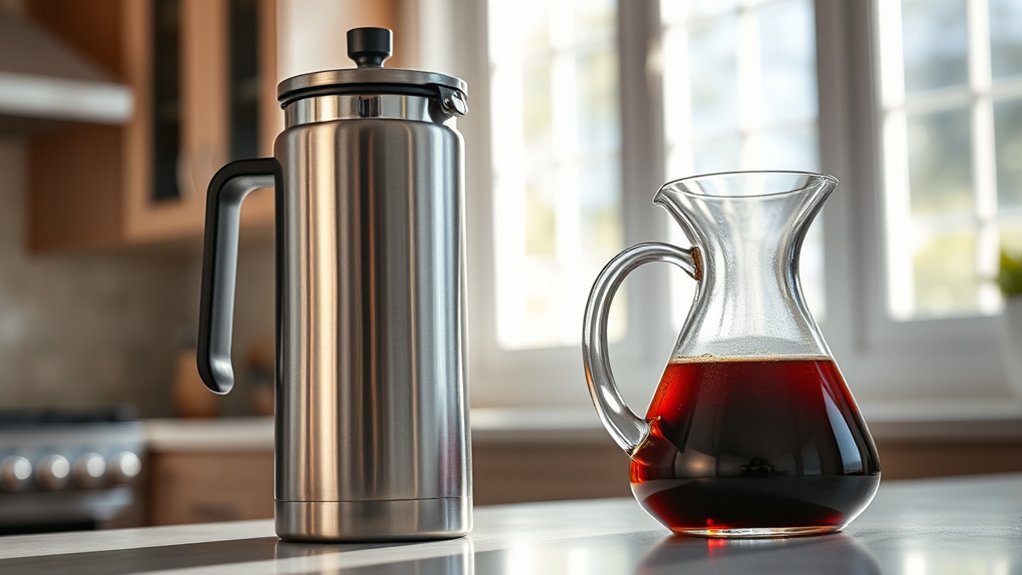
Thermal and glass coffee carafes can both serve good coffee, but they handle heat in very different ways. A thermal carafe uses insulation to slow heat loss without a warming plate. A glass carafe lets you see the coffee and is usually lighter, but it normally relies on the brewer’s hot plate to stay warm.
Quick Answer
Choose a thermal carafe if you sip coffee slowly, serve a group, or want to avoid a warming plate. Choose a glass carafe if you drink the pot soon after brewing, value a lighter vessel, or want to see how much coffee remains. The brewer’s design matters as much as the carafe material.
Key Takeaways
- Thermal carafes retain heat through insulation, while most glass-carafe brewers use an electric warming plate.
- A thermal carafe usually protects coffee from continued direct heating, which can help preserve flavor during slow drinking.
- Glass carafes are lighter and show the coffee level, but they can crack or shatter if dropped or exposed to sudden temperature changes.
- Heat retention, pouring quality, and cleaning ease vary by model, lid, seal, spout, and capacity—not just by material.
- Always check the coffee maker’s manual before placing a carafe in a dishwasher, on a warming plate, or near any other heat source.
Understanding Thermal and Glass Coffee Carafes

A thermal coffee carafe uses double-wall insulation or a vacuum layer to slow heat transfer. Many models have stainless steel interiors and exteriors, but thermal construction is not always all-metal. Some insulated carafes use a vacuum glass liner inside a protective housing.
Thermal carafes normally keep coffee warm without direct heat. For example, OXO describes its double-wall carafe as retaining heat without a heating plate. This design is useful when you want to keep a pot available for an extended breakfast, meeting, or gathering.
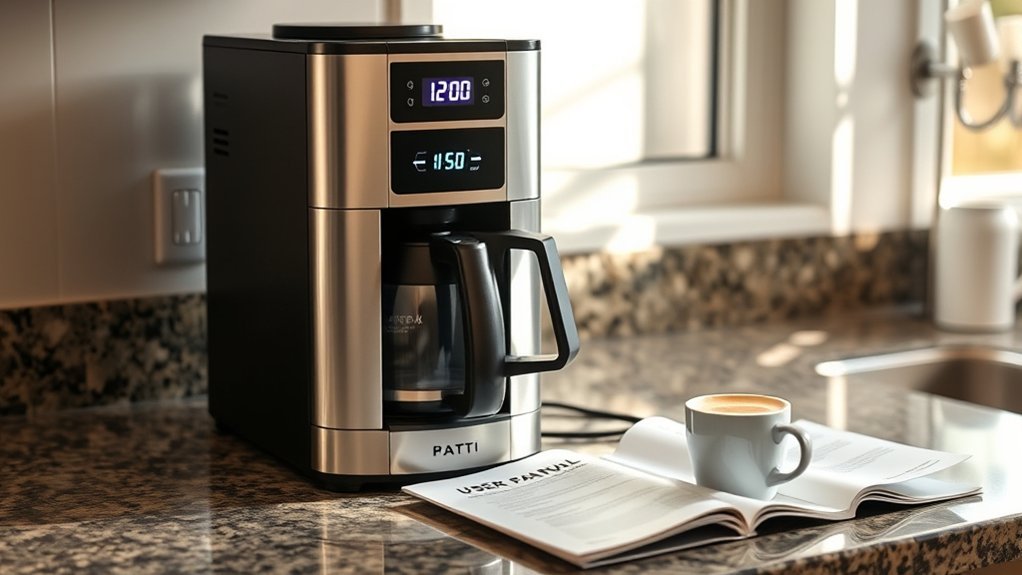
A glass coffee carafe is transparent, so you can see the brewing process and remaining coffee. It is often lighter than an insulated carafe and may be easier to rinse because its interior is fully visible. However, glass does not provide much insulation on its own. Most automatic brewers pair it with a warming plate.
Note: “Thermal” describes how the vessel limits heat loss. It does not guarantee one material, one holding time, or one level of durability.
Power your essentials anywhere with a 999Wh pure sine wave power station delivering up to 1000W continuous with 2000W surge. It supports fast charging via USB-C PD 60W and USB-A QC 18W, plus simultaneous output for multiple devices through AC, USB, wireless, and car/DC ports. Recharge using AC, car, or solar with a built-in MPPT controller and dual cooling fans, while the upgraded battery management system protects against surges, short circuits, and overheating.

TEMPERATURE RETENTION: Double-walled stainless steel vacuum insulation allows for maximum temperature retention; keeps your beverage hot up to 12 hours or cold up to 24 hours; seals the taste and aroma.

68 OZ Thermal Coffee Carafe: You will receive 2 pcs stainless steel coffee carafes and 2 pcs cleaning brushes, providing convenience for your daily use and cleaning needs, and bringing a pleasant experience.
Thermal vs. Glass Coffee Carafes: Pros and Cons
The best carafe depends on how quickly you drink coffee, how much weight you are comfortable lifting, and whether you prefer passive insulation or active warming.
| Feature | Thermal Carafe | Glass Carafe |
|---|---|---|
| How coffee stays warm | Passive insulation | Usually an electric warming plate |
| Best drinking pattern | Slow sipping, entertaining, or shared coffee | Drinking most of the pot soon after brewing |
| Flavor over time | No continuous bottom heat, although aroma still fades with time | Extended warming can make a small remaining volume taste stale or over-heated |
| Visibility | Coffee level is usually hidden | Coffee level is easy to see |
| Weight | Usually heavier and bulkier | Usually lighter |
| Damage risk | May dent; a vacuum seal or glass liner can fail | Can crack or shatter |
| Cleaning | Narrow opening and lid parts may need a bottle brush | Interior is visible, but the glass must be handled gently |
| Typical purchase price | Often higher | Often lower |
A thermal model is usually the stronger choice when coffee will sit for a while. A glass model can be more convenient when you value low weight, visibility, and quick cleanup. Neither choice guarantees a drip-free pour or an easy lid; those qualities must be checked on the individual model.
Temperature Retention and Coffee Flavor
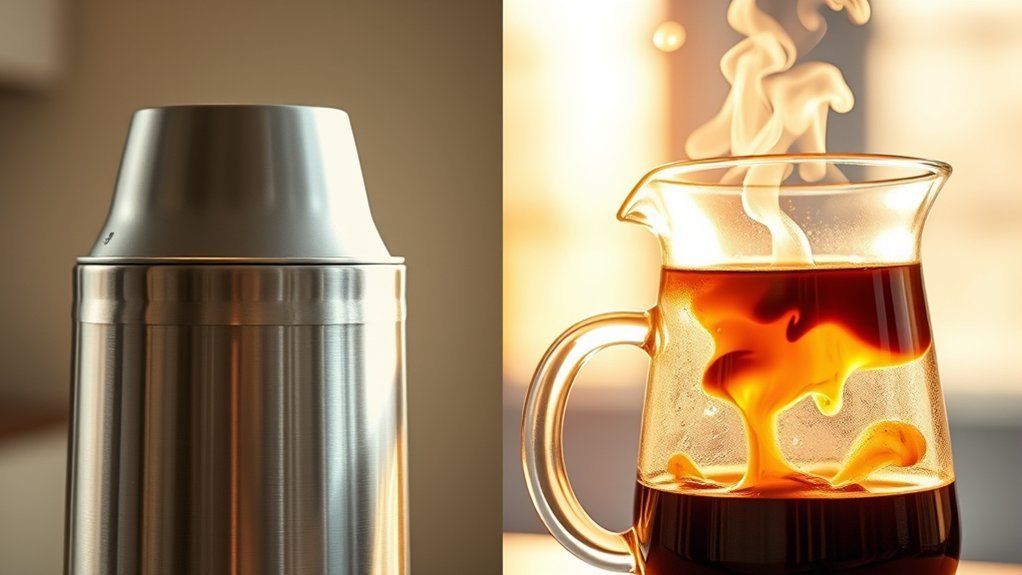
Thermal and glass carafes should not be compared with one universal “degrees lost per hour” number. They use different systems. A thermal carafe slows natural cooling, while a glass brewer’s warming plate adds heat to the bottom of the vessel.
How Heat Retention Differs
A well-insulated carafe can keep a substantial amount of coffee warm for several hours, but results depend on the model and test conditions. Starting temperature, fill level, room temperature, lid design, and preheating all matter.
Published ratings can vary widely. For example, Zojirushi lists specific 10-hour and 24-hour results for one vacuum-glass thermal carafe and explains that the test begins with 203°F water in a 68°F room. Those figures apply to that product and test—not to every thermal coffee pot.
A glass-carafe brewer can hold coffee warm as long as its warming cycle operates. Some current machines offer adjustable warming and automatic shutoff for up to four hours. That does not mean the coffee will taste equally fresh throughout the entire setting.
A thermal carafe slows cooling. A warming plate replaces lost heat. Those are different methods, so simple temperature-loss numbers can be misleading.
Brewing Temperature Is Not Serving Temperature
The temperature used to extract coffee from the grounds is much higher than the temperature at which many people comfortably drink it. Current SCA-certified home brewers commonly operate with water close to 200°F, and published research discusses drip brewing near 92–93°C.
Once coffee enters the carafe, it begins cooling. Aroma, bitterness, sweetness, and acidity may seem different as the beverage cools because temperature affects what you smell and taste. However, there is no reliable universal rule that coffee becomes unpleasantly acidic at one exact temperature.
Brewing temperature is also only one part of flavor. Research published in Scientific Reports found that brew strength and extraction had a larger sensory effect than temperature within the tested range when strength and extraction were controlled.
How Long Will Coffee Stay Warm?
Instead of relying on a blanket four-hour promise, compare the manufacturer’s stated retention test and consider how you use the pot. A nearly full carafe normally holds heat better than a small amount because there is more hot liquid relative to the exposed surface area.
- Carafe volume: A full vessel generally cools more slowly than a nearly empty one.
- Preheating: A cold thermal interior absorbs heat from fresh coffee.
- Lid position: An open or poorly sealed lid allows heat and aroma to escape faster.
- Room temperature: Coffee cools faster in a cold room or outdoors.
- Opening frequency: Repeated pouring introduces cooler air.
Pro Tip: Before brewing, fill a thermal carafe with hot tap water for a few minutes. Empty it immediately before the brew cycle. Preheating reduces the amount of heat the cold carafe takes from the first pot.
The Pouring Experience and Everyday Usability
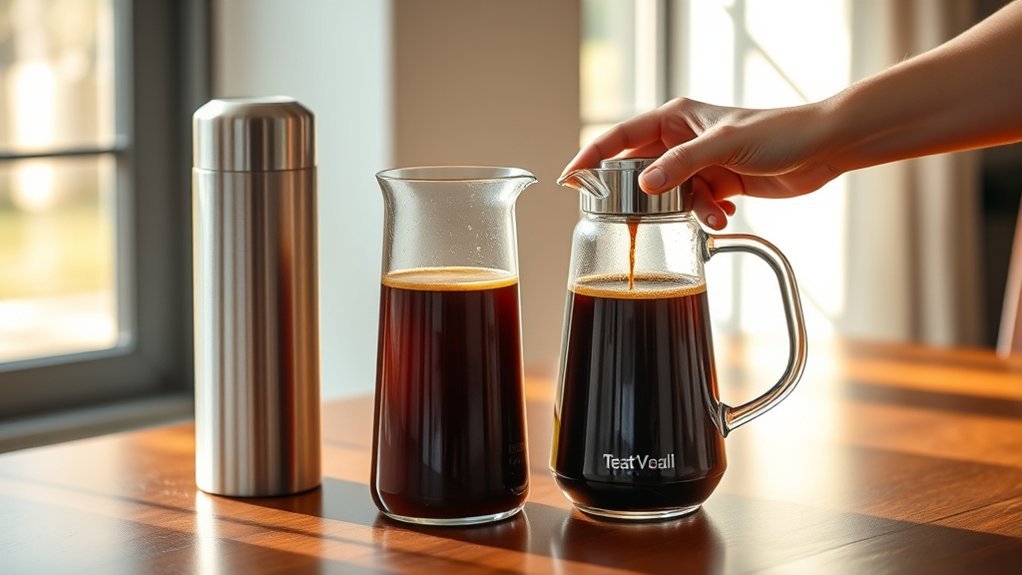
Glass carafes are often easier to lift because they have a single-wall body and a simple lid. Their transparency also helps you avoid overfilling a cup. However, a thin handle, poorly shaped spout, or loose lid can still make a glass model uncomfortable.
Thermal carafes are usually heavier, especially when full. Some require you to press a lever, rotate a lid, or hold a button while pouring. Others are designed for easy one-handed serving. A vented lid and well-shaped spout can prevent glugging and drips.
| What to Check | Why It Matters |
|---|---|
| Handle clearance | Your fingers should fit without touching the hot body or brewer. |
| Lid operation | A removable lid is easier to clean; a one-touch lid may be easier to serve from. |
| Spout and vent | Good airflow supports a steady stream and reduces glugging. |
| Full-carafe weight | A large thermal carafe may be difficult for someone with limited hand strength. |
| Replacement availability | A model-specific replacement can extend the brewer’s useful life. |
Do not assume that auto-shutoff comes from the carafe type. It is a feature of the coffee maker. Check the brewer for its warming duration, shutoff behavior, audible alerts, and controls.
How to Keep a Coffee Carafe Clean
Coffee oils form a brown film that can hold stale odors and affect later pots. Cleaning the carafe after each use is more effective than waiting for a heavy buildup.
Regular Cleaning Schedule
- After each use: Empty the carafe and allow it to cool enough for safe handling.
- Wash the interior: Use warm water, mild dish soap, and a soft sponge or nonabrasive bottle brush.
- Clean the lid: Remove it when the design allows, and rinse channels, seals, and valves where coffee can collect.
- Rinse thoroughly: Soap or cleaning-agent residue can affect flavor.
- Dry completely: Leave the lid off until the inside and seal are dry.
Effective Cleaning Solutions
For a glass carafe, warm soapy water and a soft sponge are normally the safest starting point. Avoid steel wool, harsh scouring powder, and hard tools that can scratch or weaken the surface.
Dishwasher safety depends on the exact model. Hamilton Beach states that many of its glass and stainless coffee carafes are top-rack dishwasher-safe, while still advising users to check the applicable care guide. OXO instructs owners to hand-wash the carafe and lid supplied with one of its thermal brewers. Follow your own manual rather than a general rule.
For stubborn staining inside a compatible thermal carafe, some manufacturers approve a soak with dishwasher detergent or a cleaning tablet. OXO recommends a detergent-and-water soak for remaining coffee-oil stains, while Hamilton Beach gives tablet instructions for certain stainless thermal carafes. Rinse repeatedly afterward.
Warning: Never mix cleaning chemicals. Do not use chlorine bleach, abrasive cleaners, or a dishwasher unless the carafe manufacturer specifically permits them. Discard a glass carafe that is cracked, deeply scratched, or has a loose handle.
Proper Storage Techniques
Store a glass carafe where it cannot be struck by cookware or pushed from a shelf. Do not place a very cold glass carafe directly onto a hot plate or pour boiling liquid into glass that is not designed for that temperature change.
Store a thermal carafe with the lid loose or removed after it is fully washed. Trapped moisture can create odors around seals and lid channels. Avoid forcing utensils through a narrow opening because they can scratch an interior coating or damage a glass liner.
Choosing a Carafe Style for Your Kitchen
Glass provides a classic look and makes the color and amount of coffee visible. It can suit a traditional drip brewer or a kitchen where you prefer lighter visual elements.
Stainless steel thermal carafes often match modern appliances and hide coffee stains from view. Their bulk can require more counter or cabinet space, so check the brewer’s full dimensions rather than looking at the carafe alone.
Appearance should be a secondary factor. A beautiful carafe that is difficult to lift, clean, replace, or fit under the brewer will become frustrating during daily use.
How to Choose Between Thermal and Glass Carafes
Begin with your drinking pattern. Then compare the entire brewer, because the machine determines brewing performance, keep-warm controls, automatic shutoff, and replacement compatibility.
- Choose thermal for slow sipping: It retains heat without continuously heating the bottom of the pot.
- Choose thermal for meetings or brunch: You can move it away from the brewer and serve at a table.
- Choose glass for quick household use: It works well when most of the coffee is consumed soon after brewing.
- Choose glass for low lifting weight: A glass vessel may be easier to handle than a large double-wall carafe.
- Choose glass for visibility: You can see the remaining amount without opening the lid.
- Compare lids carefully: Removable seals and wide openings can matter more than the body material during cleaning.
Also check capacity in fluid ounces. Coffee-maker “cups” are often smaller than an 8-fluid-ounce measuring cup, so two brewers labeled with the same cup count may not hold the same volume.
Replacement carafes are usually model-specific. The height, lid shape, drip-stop contact point, base diameter, and warming-plate fit all matter. A carafe that appears similar may not activate the brewer’s valve or sit safely on the base.
Pro Tip: Before buying a brewer, search the manufacturer’s parts page for the replacement carafe and lid. Easy access to model-specific parts can prevent a broken vessel from turning the entire machine into waste.
Frequently Asked Questions
Can thermal carafes be used on stovetops?
No. A coffee-maker thermal carafe is not cookware and should not be placed on a gas burner, electric element, induction surface, or hot plate unless its manufacturer explicitly approves that use. Direct heat can damage the base, seal, liner, handle, or vacuum insulation.
Are glass coffee carafes dishwasher-safe?
Some are top-rack dishwasher-safe, while others require hand-washing. Check the manual for the exact brewer and carafe. Even dishwasher-safe glass should be protected from impacts, abrasive cleaners, and rapid temperature changes.
How do I know when coffee is ready in a glass carafe?
Use the coffee maker’s completion light, display, or audible signal. The often-cited range near 195–205°F refers to water used during brewing, not a universal finished-coffee temperature that you must measure inside the carafe.
Do thermal carafes require special cleaning products?
Usually not for routine cleaning. Warm water, mild dish soap, and a soft bottle brush are often enough. For stubborn stains, use only a tablet, oxygen cleaner, or detergent soak approved in the product manual, and rinse the carafe thoroughly.
Can I brew coffee directly into a thermal carafe?
Yes, when the coffee maker is designed to brew into that carafe. The lid, height, and drip-stop mechanism must match the brewer. Do not substitute an unrelated insulated pitcher unless the manufacturer confirms compatibility.
Should I preheat a thermal coffee carafe?
Preheating is helpful, especially in a cold kitchen. Fill the carafe with hot tap water for a few minutes, empty it, and begin brewing immediately. Do not use water hotter than the manufacturer allows.
Does a warming plate ruin coffee?
Not immediately. A warming plate can keep a glass carafe ready for refills, but extended heating—especially when only a small amount remains—can reduce aroma and create a stale or over-heated taste. Use the shortest keep-warm setting that fits your routine.
Can I use a similar replacement carafe from another coffee maker?
Only when the manufacturer lists it as compatible. Small differences in height, lid shape, base diameter, or drip-stop contact can cause leaks, overflow, poor warming, or an unstable fit.
Conclusion
A thermal carafe is usually better when you want coffee to remain warm without continuous bottom heat. A glass carafe is often better when you drink the pot quickly, prefer a lighter vessel, and want to see the remaining coffee.
Do not choose by material alone. Compare the brewer’s temperature control, warming settings, carafe capacity, lid, full weight, cleaning instructions, replacement cost, and automatic shutoff. The best carafe is the one that fits both your drinking pace and your daily handling needs.
Sources
- Specialty Coffee Association Certified Home Brewers — current certified-brewer temperature and performance context.
- Scientific Reports: Brew Temperature and the Sensory Profile of Drip Coffee — brewing-temperature, strength, extraction, and sensory findings.
- OXO 12-Cup Coffee Maker Instructions and Care — insulated-carafe operation, hand-washing, and stain-cleaning guidance.
- Zojirushi Premium Thermal Carafe Specifications — vacuum glass construction, controlled test conditions, and model-specific heat-retention ratings.
- Cuisinart Glass-Carafe Coffee Maker Specifications — adjustable warming and automatic-shutoff example.
- Hamilton Beach Coffee Maker Care FAQ — model-dependent dishwasher and thermal-carafe cleaning guidance.