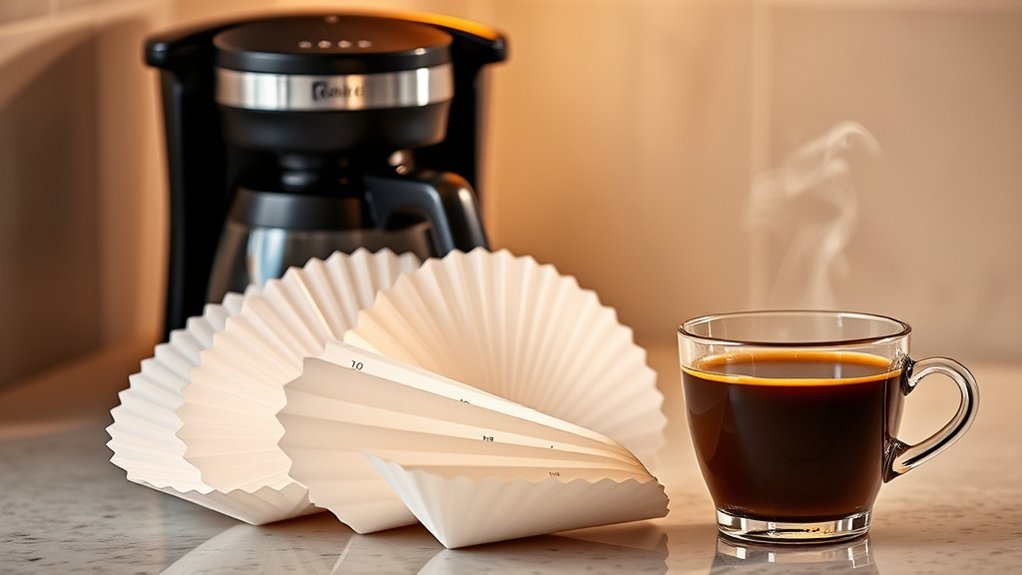
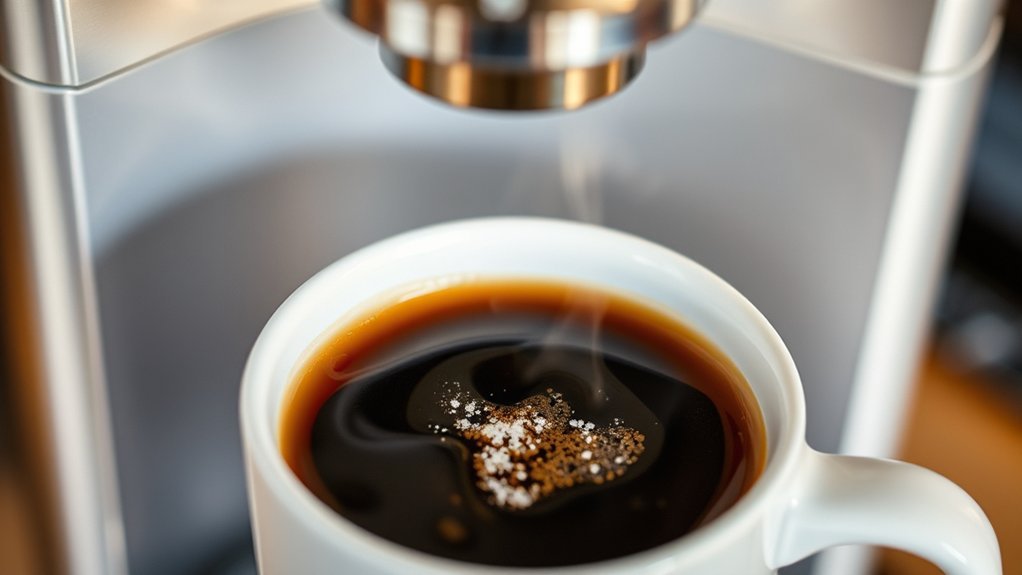
White flakes in your coffee maker are often pieces of hard-water mineral scale that have loosened from the reservoir, heater, tubing, or outlet. But pale debris is not automatically limescale. A quick water-only test can help you separate mineral scale from coffee chaff, filter debris, damaged plastic or rubber, or biological residue before you choose a cleaning method.
Quick Answer
Chalky, brittle white flakes are often limescale from hard water. First run a plain-water cycle into a clean glass. If the machine produces the flakes without coffee, follow the descaling method approved for your exact model. Stop using the brewer if the debris looks metallic, flexible, oily, rubber-like, fuzzy, or otherwise unidentified.
At a Glance
| Time Required | Model-dependent; allow enough time to complete the full descaling program and every required fresh-water rinse cycle |
| Difficulty | Easy for most home brewers when you follow the model-specific instructions |
| Tools Needed | Approved descaler, fresh water, a clean container, a soft cloth, mild dish soap for permitted removable parts, and the coffee-maker manual |
What Are the White Flakes in Your Coffee Maker?

The most common cause of chalky, brittle white flakes is limescale, a hard-water mineral deposit. Water hardness comes mainly from dissolved calcium and magnesium, and heating can turn some of those dissolved minerals into solid scale on wet internal surfaces.
The U.S. Geological Survey explains that heating hard water can form solid calcium-carbonate deposits. In a coffee maker, scale can collect on heating surfaces, tubing, reservoirs, showerheads, and outlets before small pieces break loose.
Calcium carbonate is a major part of many hard-water deposits, but scale is better described as mineral buildup rather than pure calcium. Heavy deposits can also narrow water passages and reduce heat-transfer efficiency. Appearance alone, however, cannot prove that a flake is limescale.
Run a Plain-Water Test First
A water-only cycle is the fastest way to narrow down the source. If flakes appear without coffee, the reservoir, water filter, brew path, outlet, or another machine component is more likely to be responsible.
- Wash and rinse a clear glass or white cup so it contains no coffee residue.
- Remove the coffee, pod, capsule, and paper filter from the machine.
- Fill the reservoir with fresh water and run the normal water-only or rinse cycle permitted by the manufacturer.
- Let the water settle for a minute, then inspect the bottom and sides of the glass in bright light.
- If particles appear, inspect the reservoir, water filter, brew path, and outlet before you assume the flakes came from the coffee.
- If the water-only cycle is clear but particles appear during brewing, inspect the paper filter, reusable filter, basket, capsule or pod, and grind size before descaling.
If the Coffee Maker Is New
A brand-new brewer can release harmless manufacturing dust or loose material during its first flushing cycles. Complete every first-use rinse or flush required by the manual before you brew coffee.
Do not repeatedly run vinegar, citric acid, or another descaler through a new machine unless its instructions specifically tell you to descale it. If visible debris continues after the required initial rinses, photograph the particles and the model label. Stop using the brewer if the material cannot be identified, then contact the manufacturer.
How to Identify the Material
Texture, color, and when the particles appear can help you tell mineral scale from other debris. Use the table as a screening guide, not as proof of what a particle is.
| What You See | Likely Cause | What to Do |
|---|---|---|
| Chalky, brittle white or pale-gray flakes | Hard-water mineral scale | Descale using the cleaner and procedure approved for the model. |
| Brown or tan specks that appear only when coffee is brewed | Fine coffee grounds or a damaged or poorly fitted filter | Check the grind, filter fit, basket, pod or capsule, and brewing setup. |
| Light tan, papery flakes mixed with ground coffee | Possible coffee chaff from the roasted bean | Run the plain-water test. If it is clear and the flakes appear with ground coffee, compare them with coffee chaff before assuming the brewer is shedding scale. |
| Small black granules after a water-filter change | Possible loose activated carbon | Remove and prepare the filter exactly as instructed, then complete the required rinse or flush procedure. |
| Thin white fibers | Paper-filter fibers or cloth residue | Run a water-only test without a paper filter and inspect the filter basket and cleaning materials. |
| Flexible, translucent, shiny, rubber-like, or oily pieces | Possible plastic, seal, gasket, coating, or internal component damage | Stop using the machine and contact the manufacturer or an authorized service provider. |
| Fuzzy, slimy, irregular residue with a musty odor | Possible microbial growth or biofilm | Stop brewing coffee, clean all safely accessible parts, and seek service if contaminated areas cannot be reached. |
Light tan or pale papery flakes that appear only when ground coffee is present can be coffee chaff, the parchment-like material left from roasting. Peet’s Coffee describes chaff as light tan flakes that can be visible after grinding. If a plain-water cycle is clear, coffee, the filter, or the brew basket becomes a more likely source than internal mineral scale.
Warning: Do not assume unidentified flakes are harmless mineral scale. Stop using the brewer if the pieces are metallic, flexible, rubber-like, oily, fuzzy, strongly odorous, or accompanied by leaking, sparking, smoke, overheating, or a burning smell.
How to Remove White Flakes Safely
Remove white flakes by treating the cause, not by choosing the strongest cleaner. If the particles look like mineral scale, use the exact descaling product, dilution, cycle, and rinse process approved for your model.
Manufacturer guidance differs. Cuisinart publishes vinegar-based cleaning guidance for many coffee makers, while Nespresso directs owners to its machine-specific cleaning and descaling procedures and warns against vinegar for its machines. That difference is why a generic vinegar recipe is not safe advice for every brewer.
Cleaning and Descaling Are Not the Same
Cleaning removes coffee grounds, oils, dust, and loose residue from accessible surfaces and removable parts. Descaling dissolves mineral buildup inside the water path with an approved acidic product or programmed process.
Washing a carafe or basket will not remove heavy internal scale. Repeated descaling will not repair a damaged gasket, coating, filter, or plastic component. For routine care beyond this specific problem, use the coffee maker cleaning checklist.
- Confirm the likely cause. Run a water-only cycle and compare the particles with the diagnostic table above.
- Find the model instructions. Check the printed manual, the manufacturer’s support page, or the model-number label on the machine.
- Cool and unplug the brewer. Do this before removing parts or wiping accessible surfaces. Never immerse the powered base, cord, or plug.
- Wash permitted removable parts. Clean the reservoir, lid, carafe, drip tray, filter basket, and reusable filter with warm water and mild dish soap if the manual allows it. Rinse each part thoroughly.
- Remove or protect the water filter. Some manufacturers require charcoal or other filter cartridges to be removed before descaling.
- Prepare the approved descaler. Use the exact product, dilution, reservoir level, and descaling mode specified for your machine. Do not guess at an acid concentration.
- Complete the full descaling program. Do not interrupt a programmed cycle unless the manual specifically directs you to pause or soak the solution.
- Rinse thoroughly. Empty and rinse the reservoir, then run every fresh-water cycle required by the manufacturer. The final rinse water should be clear, non-foaming, and free of cleaner odor. Do not taste rinse water to check whether descaler remains.
- Run a final plain-water check. Inspect the water in a clean glass. If unidentified or non-chalky particles continue to appear, stop using the machine and contact the manufacturer.
Drip, Pod, and Espresso Machines Need Different Procedures
The type of brewer changes what you can safely remove, wash, and descale. Use these differences to avoid applying a drip-machine cleaning method to a pod or espresso system.
- Drip coffee makers: Many have removable baskets and carafes that can be washed separately, but the approved internal descaling mixture still varies by model.
- Pod and capsule machines: Use the programmed rinse and descale modes and the descaling product specified by the manufacturer. Do not assume a vinegar recipe for a drip brewer is safe for a pod machine.
- Espresso machines: Boilers, thermoblocks, pumps, valves, steam systems, and water filters can require model-specific procedures. Do not dismantle a hot or pressurized component to reach scale.
- Machines with replaceable water filters: Check whether the cartridge must be removed, prepared, replaced, or reinstalled before and after descaling.
Warning: Never mix vinegar, citric acid, bleach, chlorine cleaners, ammonia, or commercial descalers. Descaling products can irritate skin or eyes and may be harmful if swallowed. Follow the product label, keep the solution away from children, clean spills promptly, and never run dish soap, abrasive powder, drain cleaner, or an unapproved household cleaner through the internal brew path.
Pro Tip: Take a clear photo of the flakes and the machine’s model label before cleaning. If the debris returns, those photos can help the manufacturer decide whether the material is ordinary scale or is coming from a filter, gasket, coating, or another component.
Cleaning Method Comparison
The likely source of the flakes and the brewer manual should determine the cleaning method. A stronger or more acidic solution is not automatically more effective and can damage seals, coatings, sensors, tubing, or metal parts.
| Cleaning Method | Best Use | Important Caution |
|---|---|---|
| Manufacturer-approved descaler | Usually the most straightforward choice when the manufacturer specifies it for internal scale removal | Use the specified amount, follow chemical-safety directions, and protect nearby surfaces from spills. |
| White vinegar | Models whose instructions specifically permit a vinegar solution | There is no universal dilution. Vinegar is prohibited for some machines. |
| Citric-acid descaler | Models that list citric acid or an approved citric-acid product | Do not use a homemade concentration unless the manufacturer provides or approves it. |
| Fresh-water rinse cycles | Flushing loosened scale and cleaner residue after an approved descaling process | One rinse may not be enough. Complete the manufacturer-required rinses and inspect the final water; do not taste it. |
| Reservoir and removable-part washing | Loose residue, coffee oils, dust, and accessible deposits | Keep soap out of inaccessible internal tubing unless the manufacturer specifically permits it, and rinse every washed part thoroughly. |
| Water treatment | Reducing future buildup when the treatment actually lowers hardness | A standard carbon pitcher or machine filter may improve taste without substantially reducing calcium and magnesium hardness. |
How to Identify and Prevent Limescale Buildup

Harder water usually creates mineral scale faster because it contains more dissolved calcium and magnesium. The USGS water-hardness scale classifies 0–60 mg/L as calcium carbonate as soft, 61–120 mg/L as moderately hard, 121–180 mg/L as hard, and more than 180 mg/L as very hard.
The harder your water and the more often the brewer heats it, the sooner visible buildup may appear. Common signs include:
- A chalky ring or white film near the reservoir waterline
- White crust around a visible heating surface, showerhead, or outlet
- A slower brew cycle or reduced cup volume
- New or increased noise from the heater or pump
- A clean or descale indicator appearing at the expected service interval or sooner with heavy use
- Loose chalky particles during a water-only rinse
Hard water is not generally considered a health concern, but the mineral scale it leaves behind can restrict water flow, reduce heat-transfer efficiency, and increase maintenance needs in appliances.
You can check your water hardness through your utility’s water-quality report, a hardness test strip, or a laboratory test. The EPA’s 2026 water-softener guide recommends determining the incoming water hardness before deciding whether a softener is appropriate.
How Water Quality Affects White Flakes in Your Coffee Maker
Water treatment can reduce scale, leave hardness unchanged, or alter coffee extraction depending on the method. “Filtered,” “purified,” “softened,” “reverse osmosis,” and “distilled” are not interchangeable terms.
- Hard tap water: Contains more dissolved calcium and magnesium, so mineral scale may form faster as the water is repeatedly heated.
- Activated-carbon-filtered water: May reduce chlorine, odors, and certain organic compounds, but standard carbon filtration does not normally remove calcium and magnesium. The University of Nebraska–Lincoln Extension lists calcium and magnesium among the substances ordinary activated-carbon filtration does not remove.
- Softened water: Ion-exchange systems reduce hardness by replacing calcium and magnesium with sodium or potassium ions. Check whether your brewer manufacturer recommends or permits softened water.
- Reverse-osmosis water: Can contain far fewer dissolved minerals than the source water, although the final composition depends on the membrane, system design, maintenance, and whether the water is remineralized.
- Distilled water: Contains very little mineral content and therefore forms little hardness scale, but it is not automatically the best choice for every brewer or for coffee flavor. Some manufacturers advise against distilled water, and coffee extraction changes with water chemistry and mineral content.
Note: Use water that meets both your brewer manufacturer’s instructions and your taste needs. Do not assume a built-in charcoal filter softens water unless its documentation specifically says it reduces calcium and magnesium hardness. For a broader comparison, see Do Coffee Makers Need Filtered Water?
Long-Term Care Tips to Prevent White Flakes

A simple maintenance routine can slow scale growth and keep loose residue from reaching your cup. Match the internal descaling interval to your water hardness, brewing frequency, maintenance indicator, and model instructions instead of using one universal schedule.
- After each use: Discard the grounds or capsule and rinse the carafe, reusable filter, and filter basket as appropriate for the machine.
- Every few days: Empty standing water, rinse a removable reservoir if the manual permits it, and let damp removable parts air-dry.
- Weekly: Wash permitted removable parts and inspect accessible seals, outlets, and the reservoir for scale, coffee residue, or damage.
- When directed: Replace the built-in water filter at the interval stated by the manufacturer.
- When the clean or descale light appears: Run the complete approved cleaning or descaling program rather than resetting the indicator without servicing the machine.
- At the manual’s descaling interval: Follow the manufacturer’s schedule and service earlier only if the manual recommends adjusting the interval for very hard water or heavy use.
A monthly wash of removable parts may be reasonable for a frequently used machine when the manual permits it, but internal descaling should not be placed on one arbitrary universal schedule. For broader upkeep beyond scale and flakes, use the coffee maker maintenance checklist.
Why White Flakes May Return After Descaling
A small amount of chalky material during the first rinse after descaling can be loosened scale that has not yet left the water path. Persistent flakes can mean incomplete rinsing, heavy mineral buildup, a shedding filter, continuing hard-water exposure, or debris that is not scale at all.
- Too few rinse cycles: Complete every fresh-water rinse required by the manual. If additional rinsing is permitted, continue until the water is visually clear.
- Heavy buildup: One approved cycle may loosen deposits without removing all of them. Follow the manufacturer’s guidance before repeating an acid treatment.
- Scale remains in the reservoir: After unplugging and cooling the machine, wipe accessible mineral residue with a soft cloth if the manual permits it.
- The filter is shedding material: Remove, inspect, prepare, or replace the filter according to its instructions.
- Your source water remains hard: A standard carbon filter may improve taste while leaving most hardness minerals in the water.
- The material is not scale: Plastic, rubber, coating, metal, or biological debris will not be repaired by repeatedly running acidic descaler through the machine.
When to Contact the Manufacturer
Stop troubleshooting at home when the debris may be coming from a damaged component or an inaccessible contaminated area. Contact the manufacturer or an authorized service provider when:
- Flakes continue after the complete approved cleaning and rinse process.
- The particles bend, stretch, shine like metal, feel oily, or smell like plastic or rubber.
- A coating inside the reservoir, outlet, or brew chamber appears damaged or is peeling.
- The machine leaks, overheats, trips a breaker, sparks, smokes, or smells burned.
- A new brewer continues to produce unidentified debris after all initial rinse cycles required by its manual.
- You can see contamination in an internal area that cannot be reached and cleaned safely.
Key Takeaways
- A clean water-only cycle points you toward the coffee, filter, basket, pod, capsule, or grinder rather than the internal water path.
- Ordinary activated-carbon filters can improve taste without removing the calcium and magnesium that cause water hardness.
- Light tan flakes mixed with ground coffee may be coffee chaff, not mineral scale.
- There is no universal vinegar ratio or descaling schedule; both depend on the exact brewer and its manufacturer instructions.
- Persistent flexible, metallic, oily, rubber-like, fuzzy, or unidentified debris needs inspection or service rather than repeated acid cleaning.
Frequently Asked Questions
Can white flakes affect the taste of my coffee?
Yes, they can affect brewing consistency if scale restricts water flow or interferes with heat transfer. Cleaner residue, biological buildup, plastic, rubber, or metal fragments can also cause unwanted tastes or odors. Do not drink coffee containing unidentified debris.
Are white flakes harmful to my health?
Confirmed hard-water mineral scale is generally treated as a water-quality and appliance-maintenance issue rather than a health concern. That reassurance applies only when the particles are clearly mineral scale. Stop using the machine if the material could be plastic, metal, rubber, coating, microbial growth, biofilm, or another unidentified substance.
How often should I clean my coffee maker?
Rinse or wash removable coffee-contact parts regularly, but follow the model manual for internal descaling. The right descaling interval depends on water hardness, brewing frequency, the machine’s clean or descale indicator, and the manufacturer’s instructions. Visible scale, slower flow, or a maintenance alert can indicate that service is due.
Why do I see light-colored flakes only when coffee is brewed?
If a plain-water cycle is clear, the machine’s internal water path is less likely to be the source. Check for fine grounds, a torn or poorly fitted filter, and light tan coffee chaff from the roasted beans. Diagnose the filter, basket, pod or capsule, and grind before you descale the machine.
Can I use vinegar to clean my coffee maker?
Use vinegar only when the instructions for your exact model permit it. Manufacturers specify different ratios, cycle procedures, soaking periods, and rinse requirements, while some brands warn that vinegar can damage their machines. If vinegar is not approved, use the manufacturer-specified descaling product.
Should I use distilled water to prevent white flakes?
Distilled water contains very little mineral content, so it produces little hardness scale. However, it is not recommended for every coffee maker and can change extraction and flavor. The Specialty Coffee Association’s home-brewer testing requirements use mineral-containing water rather than distilled water. Follow your machine manufacturer’s water guidance.
Why do white flakes keep returning after I descale?
Heavy scale may continue to loosen, the reservoir may still contain deposits, or your source water may remain hard. The particles can also come from a filter or damaged component. Complete the required rinse cycles, inspect safely accessible parts, and contact the manufacturer if the flakes persist or do not look chalky and brittle.
Conclusion
Chalky, brittle white flakes often point to hard-water mineral scale, but the plain-water test should come before descaling. Once scale is the likely cause, follow the exact model instructions, complete every required fresh-water rinse, and inspect the final water before brewing coffee again.
If the material cannot be identified, stop using the machine. Plastic, metal, rubber, coating fragments, microbial residue, persistent debris from a new brewer, leaking, overheating, or a burning smell calls for manufacturer or authorized-service support rather than another homemade cleaning cycle.
Sources
- U.S. Geological Survey — Hardness of Water — explains calcium and magnesium hardness, mineral scale, and standard hardness ranges.
- U.S. Environmental Protection Agency — Guide to Selecting and Maintaining a Water-Efficient Water Softener — covers hard-water scale, appliance effects, hardness testing, and ion-exchange softening.
- Cuisinart — How to Clean a Coffee Maker — provides manufacturer cleaning guidance and demonstrates why vinegar procedures should be checked against the specific model instructions.
- Nespresso — How to Clean and Descale Your Coffee Machine — provides machine-specific maintenance guidance; Nespresso’s descaling instructions warn against vinegar for its machines.
- University of Nebraska–Lincoln Extension — Activated Carbon Filtration — explains that standard activated-carbon filtration does not remove calcium and magnesium hardness minerals.
- Specialty Coffee Association — Certified Home Brewer Requirements — documents mineral-containing water used in standardized coffee-brewer testing.
- Peet’s Coffee — Why Are There White Flakes in My Coffee? — explains coffee chaff as a light tan, parchment-like roasting by-product that can appear after grinding.