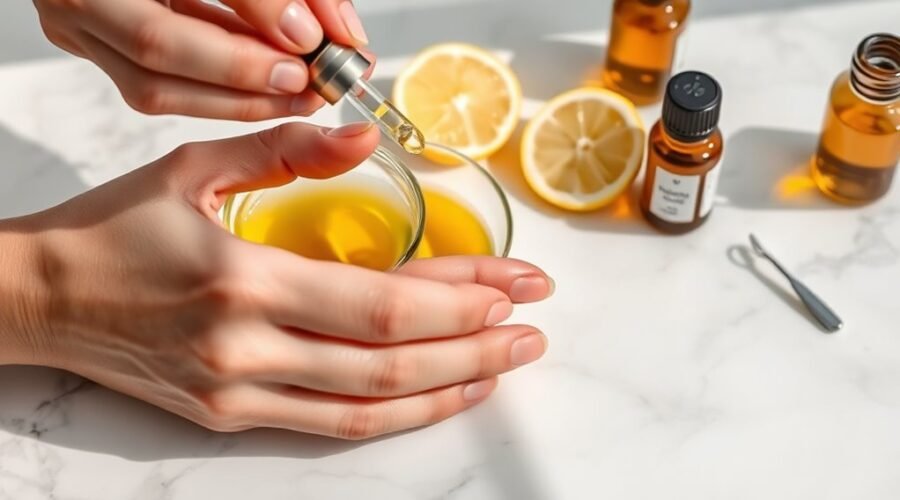
To learn how to make cuticle oil that absorbs cleanly without leaving greasy residue, combine 60%–70% cold-pressed golden jojoba oil with 25%–35% lightweight carrier oil (such as sweet almond, argan, or fractionated coconut oil) and about 5% vitamin E tocopherol. If you add essential oils for scent, keep dermal dilution strictly between 1% and 2% (6 to 12 drops per 1 oz / 30 ml) and store the finished oil in an amber glass bottle for a 6- to 12-month shelf life.
Why Golden Jojoba and Vitamin E Anchor DIY Cuticle Oil
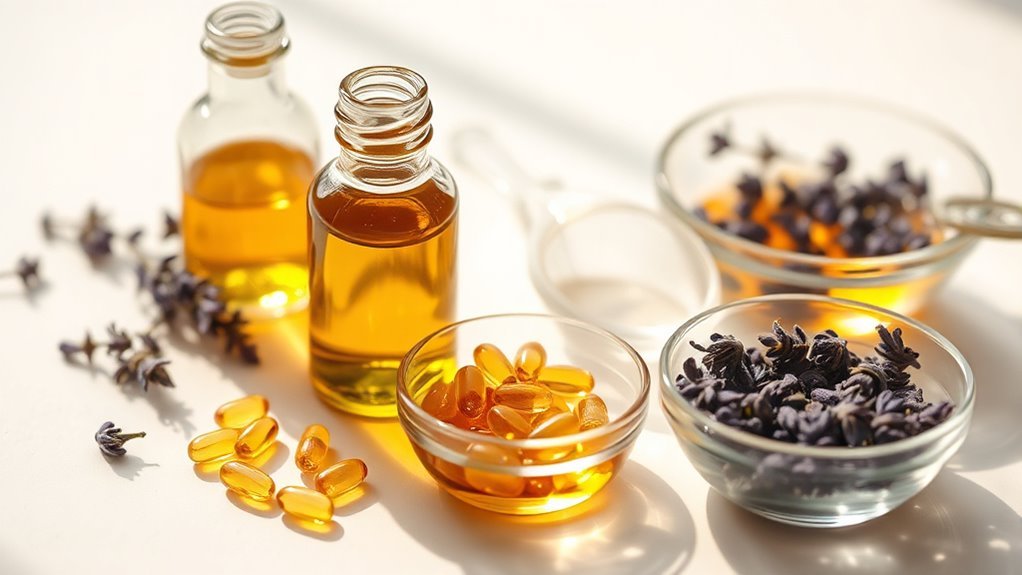
Unlike typical plant oils composed mainly of triglycerides, golden jojoba oil is roughly 97% liquid wax esters—a molecular structure closely matching the wax esters found in human sebum. Because of that similarity, jojoba absorbs quickly into the proximal nail fold and upper nail plate rather than sitting heavily on top of the skin. To understand how daily oiling improves nail flexibility and reduces peeling, see our overview of what cuticle oil does.
Adding vitamin E (mixed tocopherols) serves two practical purposes: it acts as an oil-soluble antioxidant that slows oxidation in your secondary carrier oils, and it adds a slightly richer cushion for parched skin around the nail sidewalls. Keep vitamin E around 5% of the total formula so the blend stays fluid and easy to dispense.
Carrier Oil Ratios for a 1 oz (30 ml) Batch
Blending golden jojoba with a secondary carrier oil lets you tune slip, absorption speed, and cost. Use the 1 oz (30 ml) reference ratios below to match your skin and nail needs:
| Formula Goal | Golden Jojoba Oil | Secondary Carrier Oil | Vitamin E (Tocopherol) | Best For |
|---|---|---|---|---|
| Balanced Everyday Blend | 20 ml (~67%) | 8.5 ml sweet almond oil (~28%) | 1.5 ml (~5%) | Daily hydration for normal to dry cuticles |
| Fast-Absorbing Desk Blend | 21 ml (70%) | 7.5 ml fractionated coconut oil (25%) | 1.5 ml (5%) | Typing and daytime use with minimal shine |
| Intensive Overnight Repair | 18 ml (60%) | 10.5 ml argan oil (35%) | 1.5 ml (5%) | Cracked hangnails and post-acetone recovery |
Extra-rich blends are especially helpful right after chemical soak-offs; for instance, following a proper nail dip powder removal routine with jojoba-and-argan oil helps restore lipids stripped by acetone.
Essential Oil Dermal Dilution and UV Lamp Safety
Essential oils are completely optional—fragrance-free carrier blends work just as well for nail hydration and are the safest choice for reactive skin. If you do add essential oils, follow standard aromatherapy dermal safety limits:
- 1% dilution (6 drops per 1 oz / 30 ml): Best for frequent daily application, sensitive skin, or multi-oil blends.
- 2% dilution (12 drops per 1 oz / 30 ml): Maximum recommended concentration for healthy adult hands.
- Avoid phototoxic cold-pressed citrus oils: Cold-pressed bergamot, lemon, lime, and bitter orange contain furanocoumarins that can cause phototoxic redness or blistering when exposed to sunlight or UV/LED gel curing lamps. If you want a citrus scent, choose steam-distilled citrus oils or non-phototoxic sweet orange, and always apply cuticle oil after UV/LED curing is complete.
- Patch test for 24 hours: Dab one drop of the finished blend onto the inner forearm and wait 24 hours before regular nail use.
How to Make Cuticle Oil Step by Step
Because water introduces bacterial growth without a broad-spectrum preservative, keep every tool completely dry before mixing:
- Sanitize and dry your tools: Wash your glass measuring cup, mini funnel, and applicator bottle with hot soapy water, rinse with 70% isopropyl alcohol, and let air-dry completely.
- Measure the carrier base: Pour your golden jojoba oil and secondary carrier oil (sweet almond, argan, or fractionated coconut) into the clean glass beaker or directly into the bottle via a mini funnel.
- Add vitamin E: Stir in 1.5 ml (about 1/4 teaspoon) of vitamin E tocopherol oil.
- Add essential oils (optional): Count 6 to 12 drops total of skin-safe essential oil (such as lavender, Roman chamomile, or frankincense) per 1 oz (30 ml) batch.
- Cap, invert, and label: Seal the bottle tightly, invert gently 15–20 times to blend evenly, and label it with the ingredients and mix date.
Amber Glass Dropper vs. Twist-Pen Applicators
Choosing the right container affects both oxidation rate and how consistently you use the oil:
- Amber or cobalt glass dropper bottles (15 ml–30 ml): Block UV light that degrades fatty acids and essential oils, resist essential oil leaching, and make refilling easy. Keep the pipette tip from touching bare skin to minimize contamination.
- Refillable twist-brush pens (2 ml–5 ml): Deliver controlled, mess-free strokes right into the cuticle fold and travel well in a purse or desk drawer. Because most twist pens are translucent plastic, store your master batch in amber glass and refill a pen with only 2–4 weeks of oil at a time.
Application Tips and 6–12 Month Shelf Life
Apply one small drop across the base and sidewalls of each nail, then massage in gentle circles for 20 to 30 seconds after handwashing and before bed. If you wear artificial nails, wait until after adhesive prep is finished—never apply oil right before sizing or bonding, as residue weakens adhesion (you can check our guide on measuring nails for press-ons for clean prep tips).
Stored tightly capped at room temperature (60°F–75°F) away from steamy bathrooms and direct sunlight, an anhydrous jojoba-based cuticle oil stays fresh for 6 to 12 months. Replace it sooner if the aroma turns sharp or crayon-like, which signals oil rancidity.
Frequently Asked Questions
What is the best carrier oil ratio for homemade cuticle oil?
A reliable everyday formula uses 60% to 70% cold-pressed golden jojoba oil as the primary liquid wax-ester base, 25% to 35% sweet almond, argan, or fractionated coconut oil for extra slip, and 5% vitamin E (tocopherol) as an antioxidant.
How many drops of essential oil are safe in 1 oz (30 ml) of cuticle oil?
Keep essential oils between 1% and 2% dilution for adult hands—that equals roughly 6 drops (1%) to 12 drops (2%) per 1 oz (30 ml) of carrier oil. For sensitive skin, drop to 0.5% (3 drops per 30 ml) or skip essential oils altogether.
Should you avoid citrus essential oils in DIY cuticle oil?
Avoid cold-pressed citrus oils such as bergamot, bitter orange, lemon, and lime in leave-on hand blends before sun exposure or UV/LED gel nail lamps, as their furanocoumarins can trigger phototoxic skin irritation. Steam-distilled citrus oils or sweet orange are much lower-risk alternatives.
Is an amber glass dropper bottle or a twist-pen applicator better?
Amber glass dropper bottles protect light-sensitive oils best for countertop storage and bulk mixing, while opaque or refillable twist-brush pens are more convenient for mess-free on-the-go application. Many people store the main batch in amber glass and refill a small twist pen every few weeks.
How long does homemade cuticle oil last?
An oil-only (anhydrous) blend stored in a tightly sealed dark glass bottle away from heat and sunlight typically stays fresh for 6 to 12 months. Discard the batch early if it develops a sharp, rancid odor, cloudiness, or sticky residue.