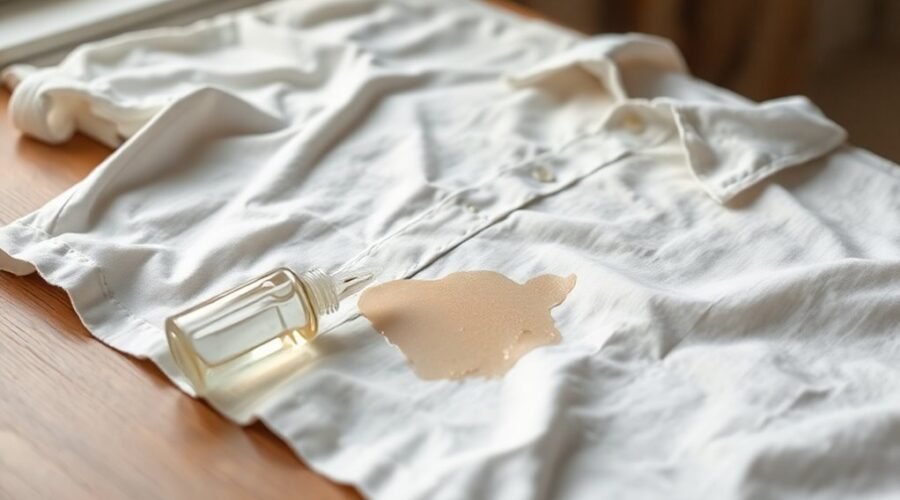
If you are asking does nail polish remover stain clothes, the honest answer is that clear, 100% pure acetone evaporates rapidly without leaving a pigment stain of its own—but it can chemically melt acetate, triacetate, and modacrylic fabrics into a permanent stiff hole and strip unstable dyes from dark clothing. Tinted or moisturizing drugstore removers (pink, purple, or oil-enriched formulas) can also leave a colored dye ring or greasy watermark behind if not rinsed out promptly.
Does Nail Polish Remover Stain Clothes? Reaction by Fabric Type
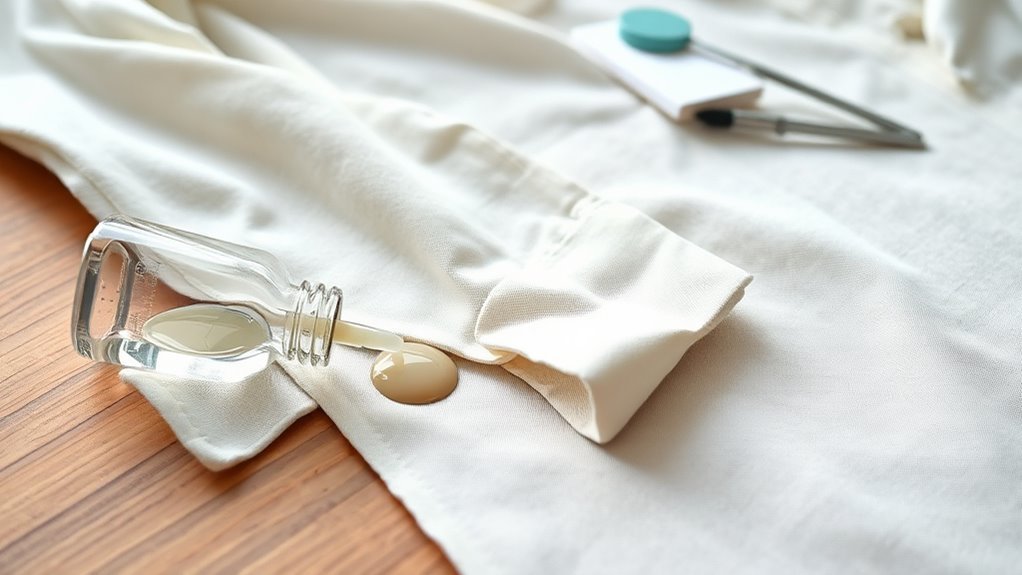
Before you put a single drop of remover near a garment—or panic over an accidental manicure spill—check the clothing care tag at the side seam. How a fabric reacts to nail polish remover depends entirely on its fiber chemistry:
| Fabric / Material Type | Reaction to Acetone Remover | What to Do If Spilled |
|---|---|---|
| Acetate, Triacetate & Modacrylic | High Risk (Melts Fiber): Acetone dissolves the fibers into a stiff, shiny, permanent hole | Never apply acetone; blot gently and take to a professional dry cleaner immediately |
| 100% Cotton, Linen & Denim | Low Fiber Risk / Dye Risk: Fibers tolerate acetone, but dark indigo or reactive dyes may fade | Blot excess, flush from back with cool water, wash with liquid detergent |
| Polyester, Nylon & Spandex | Moderate Risk: Usually tolerates brief contact, but prolonged soaking can weaken elastic spandex | Rinse promptly with cool water and mild dish soap; avoid scrubbing |
| Silk, Wool & Cashmere | Delicate Dye & Finish Risk: Can strip natural oils, dull sheen, or lift acid dyes | Blot with a dry white towel, rinse gently in cool water, or consult a dry cleaner |
| Faux Leather, Vinyl & Screen Prints | High Surface Risk: Strips polyurethane coatings, cracks vinyl, and smears printed logos | Dab off immediately with soapy water; never rub |
Pure Acetone vs. Tinted & Moisturizing Removers on Fabric
Not every bottle labeled “nail polish remover” leaves the same mark on your shirt or jeans:
| Remover Formula | Key Ingredients | What It Leaves on Washable Clothes |
|---|---|---|
| 100% Pure Acetone (Clear) | 100% Acetone | Evaporates completely on colorfast cotton; risk is dye lifting or melting acetate |
| Tinted Acetone (Pink/Purple/Blue) | Acetone, water, D&C dyes, fragrance, panthenol/oils | Can leave a faint pastel dye ring or oily spot on white/light fabrics |
| Non-Acetone Remover | Ethyl acetate or methyl acetate, propylene carbonate, oils | Evaporates slower than acetone; moisturizing oils often leave a greasy ring until washed |
Step-by-Step: How to Clean a Nail Polish Remover Spill Off Clothes
- Check the fiber label first: If the tag lists acetate or triacetate, do not rub—friction tears softened fibers into an open hole.
- Blot with a clean white paper towel: Press straight down to lift wet remover or dissolved nail polish pigment without spreading the ring outward.
- Flush with cool water from the back of the fabric: Hold the inside of the garment under running cool water so solvent and dye flush out the way they came in.
- Work in a drop of clear liquid dish soap: If you spilled an oil-enriched or tinted remover, massage a drop of grease-cutting dish soap or liquid laundry detergent into the damp spot and wait 10 minutes.
- Rinse and air-dry before using heat: Always let the garment air-dry after washing to confirm no oily shadow remains—dryer heat sets oil and dye rings permanently.
Pros and Limitations of Using Remover on Clothing Stains
When Pure Acetone Actually Helps
- 100% clear acetone can lift wet nail polish spills from sturdy, colorfast 100% cotton or linen when blotted from the back over a stack of paper towels
- Evaporates rapidly without leaving a sticky residue when free of added oils and dyes
Limitations and Permanent Damage Signs
- If a spot turns stiff, translucent, or crusty on a dress lining or blouse, the acetone has chemically fused synthetic acetate fibers (permanent damage)
- If a dark garment shows a pale orange or faded bleach-like patch after drying, the solvent stripped the fabric dye rather than leaving a surface stain
Safety Notes for At-Home Manicures
Always drape an old 100% cotton towel over your lap and work over a protected tray when removing nail polish at home. Keep acetone bottles capped between cotton-ball dabs—both to prevent accidental spills on your clothes and because acetone vapors are highly flammable around candles, space heaters, or hair styling tools.
Related Nail Polish Removal Guides
- How to Remove Nail Polish Cleanly Without Staining Cuticles
- How to Get Nail Polish Off Without Remover (Safe Methods)
- How to Remove Gel Nail Polish at Home (Safe Soak-Off Guide)
Frequently Asked Questions
Can nail polish remover damage plastic buttons, sequins, or zipper coatings?
Yes. Both acetone and ethyl acetate (non-acetone remover) soften or dissolve ABS plastic buttons, acrylic rhinestones, sequins, screen-printed graphics, and painted zipper pulls on contact. Always cover or unfasten nearby hardware before spot-treating.
Does tinted or scented nail polish remover leave a stain on fabric?
Yes. Unlike clear 100% pure acetone—which evaporates completely—drugstore removers tinted pink, purple, or blue and enriched with conditioning oils, glycerin, or fragrance often leave a faint dye ring or oily watermark that requires washing out with liquid dish soap or laundry detergent.
Is non-acetone remover safe to use on acetate or triacetate fabric?
Wait and test an inside seam first. While ethyl acetate (non-acetone remover) is slightly milder than pure acetone, it can still soften, dull, or warp acetate, triacetate, and modacrylic fibers. Take delicate acetate or silk garments straight to a professional dry cleaner.
Why did nail polish remover leave a pale spot on my dark shirt?
A pale or discolored ring means the solvent stripped or dispersed the fabric dye rather than leaving a removable stain on top. Because lost dye cannot be washed off, you can only restore the color with a matching fabric dye marker or full-garment re-dye.
Can a professional dry cleaner fix a nail polish remover spill?
A dry cleaner can safely remove oily remover residue or dissolved nail polish pigment from silk, wool, or structured garments—provided the acetone has not already chemically melted synthetic acetate fibers or stripped the dye.