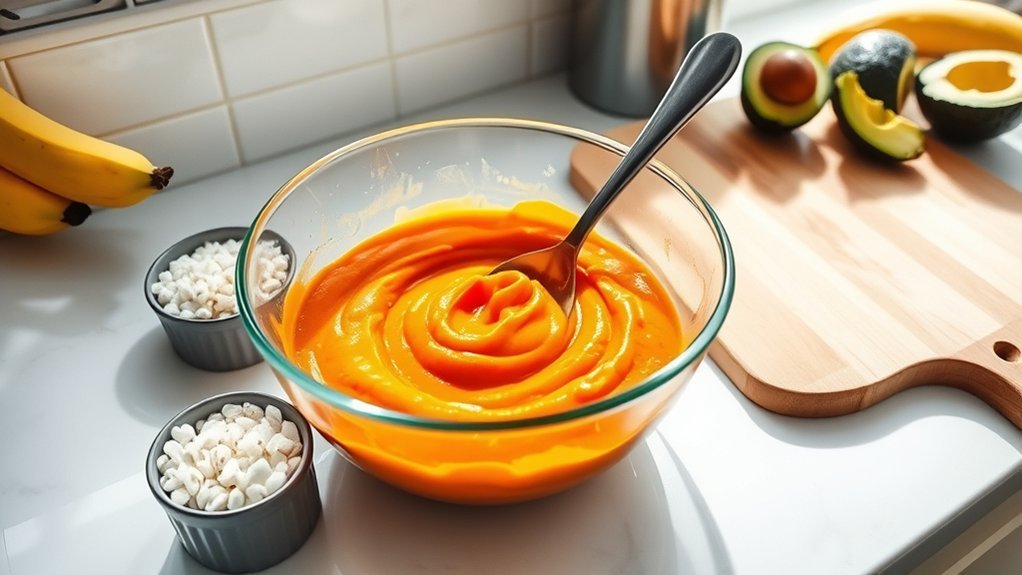
Added sugar has no nutritional role in a baby’s diet, and it can take up space that should go to iron-rich and other nutrient-dense foods. Babies can still enjoy naturally sweet foods such as fruit, sweet potato, and plain dairy when those foods are prepared in a safe texture.
Quick Answer
Do not intentionally add sugar, honey, syrups, juice concentrate, or other sweeteners to a baby’s food. Current U.S. guidance advises avoiding added sugars throughout infancy and early childhood. Naturally occurring sugars in whole fruit, vegetables, breast milk, and plain dairy are different; serve complementary foods in safe, age-appropriate forms.
Key Takeaways
- Avoid foods and drinks with added sugars during infancy and early childhood; there is no need to give a baby a “taste” of added sugar.
- Naturally occurring sugar in whole fruit, vegetables, breast milk, and plain dairy is not the same as added sugar.
- Honey is unsafe for babies younger than 12 months because it can contain spores that cause infant botulism.
- Use the “Added Sugars” line and the ingredient list to check packaged baby foods, snacks, cereals, and yogurt.
- Choose varied, nutrient-dense foods in textures that match your baby’s development, while breast milk or iron-fortified formula remains the main source of nutrition through 12 months.
Note: This article provides general feeding information. Ask your pediatrician or a registered dietitian for individual advice if your baby was born early, has poor growth, has eczema or food allergies, or has trouble chewing or swallowing.
Why Should Babies Avoid Added Sugars?
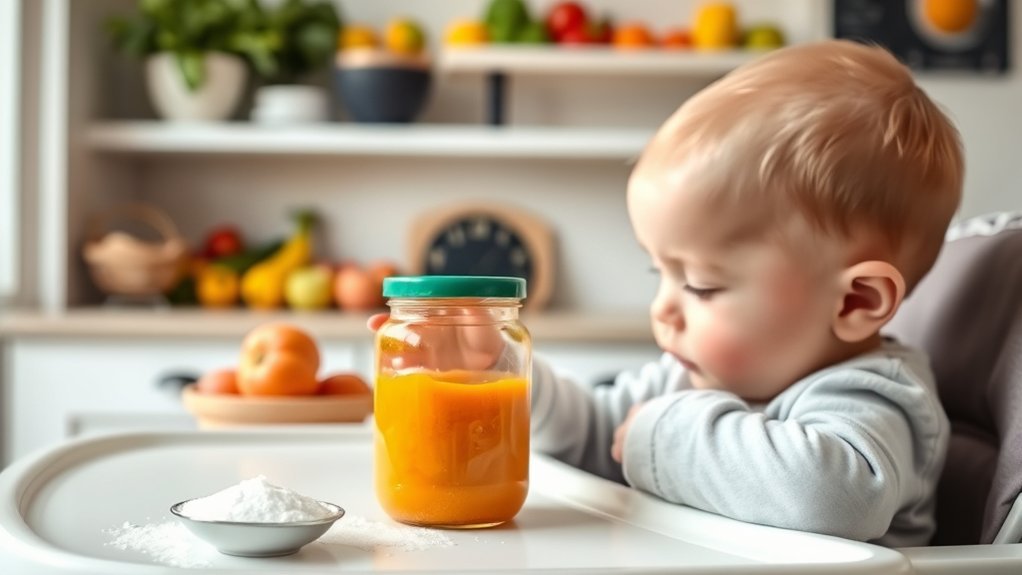
Babies have small stomachs and high nutrient needs. Foods with added sugar can provide calories without the iron, protein, healthy fats, vitamins, and minerals needed for growth. The current Dietary Guidelines for Americans, 2025–2030 advises avoiding added sugars during infancy and early childhood.
Sweet foods are not automatically unhealthy. A ripe banana, mashed pear, cooked carrot, sweet potato, breast milk, infant formula, and plain yogurt all contain or taste naturally sweet without needing table sugar or syrup. The goal is not to remove naturally occurring sugar from nutritious foods. It is to avoid adding concentrated sweetness that displaces more useful foods.
Frequent exposure to sugary foods and drinks also raises the risk of tooth decay once teeth begin to erupt. Good oral care matters too: wipe a baby’s gums, brush erupted teeth as advised by a dental professional, and arrange the first dental visit by the first birthday.
What Are the Risks of Introducing Added Sugar Too Early?
Regularly serving sweetened foods can make it harder to build meals around a wide range of flavors and nutrient-dense foods. The main concerns are:
- Less room for essential nutrients: Sweetened yogurt, desserts, drinks, and snack foods can replace iron-rich foods, vegetables, proteins, healthy fats, and whole grains.
- Tooth decay: Oral bacteria use sugars from foods and drinks to produce acids that damage tooth enamel. Frequent exposure is especially concerning.
- A narrower flavor pattern: Babies are born liking sweetness. Repeatedly making foods sweeter than they naturally are may reduce opportunities to become familiar with savory, tart, and mildly bitter flavors.
- Long-term habits: Early feeding routines can shape what families buy and serve later, so beginning with unsweetened foods makes the healthier choice easier to maintain.
A baby does not need added sugar to learn to enjoy food. Repeated exposure to varied, age-appropriate foods is more useful than making each meal taste sweet.
What Age Can Babies Safely Start Having Added Sugar?
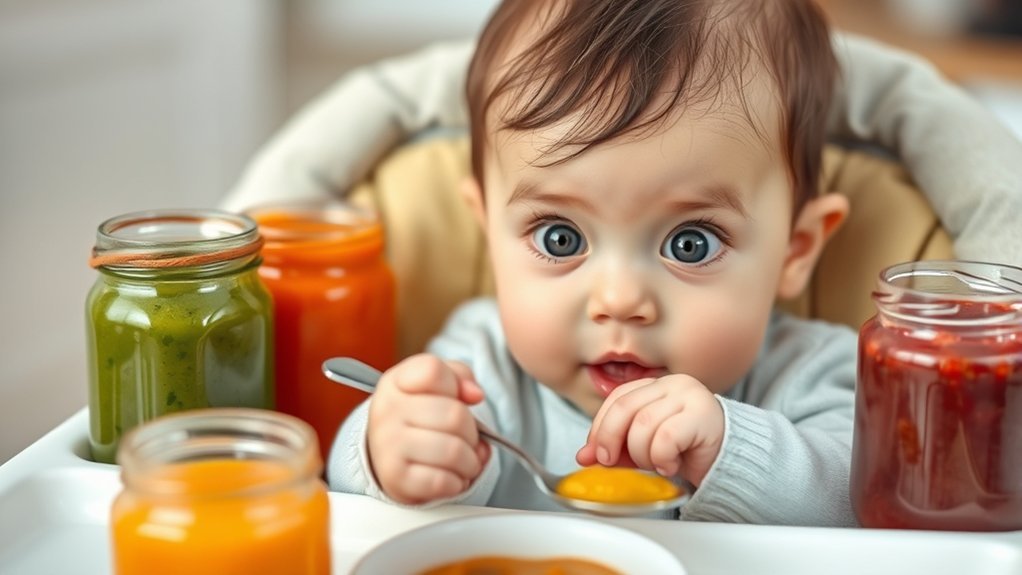
There is no recommended age during infancy for intentionally introducing added sugar. Babies can usually begin complementary foods at about 6 months when they show developmental readiness, but that does not mean they should begin eating foods sweetened with sugar.
Current federal guidance says to avoid added sugars during infancy and early childhood. An accidental taste is not the same as routinely serving sweetened foods, so there is no reason to panic if your baby has a small amount once. Return to the usual pattern of unsweetened, nutrient-dense foods.
Children younger than 12 months should not drink fruit or vegetable juice. After the first birthday, juice is still unnecessary; when offered to children ages 1 through 3, the American Academy of Pediatrics limit cited by the CDC is no more than 4 ounces of 100% juice per day.
Warning: Never give honey or foods made with honey to a baby younger than 12 months. Honey can contain spores that cause infant botulism. Cooking or baking with honey does not make it an appropriate infant sweetener.
How to Identify Natural Sources of Sweetness for Babies
Natural sweetness should come from whole, nutrient-dense foods rather than concentrated sweeteners. Choose foods that list fruit, vegetables, grains, protein foods, or plain dairy as the main ingredients and that show 0 grams of added sugar on the Nutrition Facts label.
Whole Foods, Not “Natural Sweeteners”
Pureed fruit is a food, not a free pass to sweeten every meal. It provides nutrients and can be served on its own or combined with other foods, but repeatedly mixing fruit into every vegetable, cereal, or yogurt can make those foods sweeter than necessary.
Honey, maple syrup, agave syrup, date syrup, molasses, coconut sugar, and fruit juice concentrate may sound natural, but they are still added sugars when used to sweeten food. Honey also carries a botulism risk before 12 months.
Benefits of Fruit Purees
Bananas, pears, peaches, berries, mangoes, and cooked apples can provide fiber, vitamins, and varied flavors. Serve a smooth puree, mash, or soft finger-food texture that matches your baby’s skills. When buying prepared puree, choose products with no added sugar and an ingredient list made mainly of the named fruit or vegetable.
Whole or mashed fruit is usually more useful than juice because it keeps more of the fruit’s structure and fiber. Always remove pits, hard seeds, and choking hazards, and prepare round or firm fruits in a safe shape and texture.
Healthy No-Added-Sugar Recipe Ideas
- Banana and plain full-fat yogurt: Mash ripe banana into pasteurized, unsweetened yogurt.
- Apple and carrot mash: Cook both foods until very soft, then mash to the texture your baby can manage.
- Pear oatmeal: Stir mashed ripe pear into cooked, unsweetened oatmeal; include an iron-rich food elsewhere in the meal.
- Sweet potato and lentil puree: Blend cooked sweet potato with soft lentils for natural sweetness plus protein and iron.
- Avocado and peach mash: Combine soft avocado with ripe peach for a creamy texture and healthy fat.
Pro Tip: Let foods taste like themselves. Offer plain yogurt plain sometimes, vegetables without fruit mixed in, and unsweetened cereal with savory as well as fruity combinations.
Added Sugar vs. Natural Sugar: What Is the Difference?
The body breaks down many sugars into similar basic units, but the food package matters. Whole fruit and plain dairy bring nutrients along with their naturally occurring sugars. Added sugars supply extra sweetness and calories without being needed for infant nutrition.
What Counts as Added Sugar?
The FDA defines added sugars to include sugars added during processing, syrups, honey, and sugars from concentrated fruit or vegetable juices used as sweeteners. Common label names include:
- Cane sugar, brown sugar, beet sugar, or coconut sugar
- Sucrose, glucose, fructose, dextrose, maltose, or corn syrup
- Honey, maple syrup, agave syrup, rice syrup, or date syrup
- Molasses or fruit juice concentrate used to sweeten the product
Benefits of Naturally Sweet Whole Foods
Fruit, vegetables, breast milk, and plain dairy contain naturally occurring sugars along with other nutrients. These foods can be part of a balanced infant diet when served in safe forms. Their natural sugar does not need to be removed, counted, or “balanced” with an artificial sweetener.
Risks of Added Sugar
| Choice | What It Provides | Better Baby-Food Approach |
|---|---|---|
| Sweetened yogurt | Dairy nutrients plus unnecessary added sugar | Choose plain, pasteurized full-fat yogurt and add mashed fruit only when desired. |
| Fruit drink or juice drink | Often added sugar with little or no need in an infant diet | Do not give juice before 12 months; offer breast milk or formula and, when appropriate, small amounts of water with meals. |
| Whole or mashed fruit | Natural sugar, fiber, vitamins, and flavor | Serve in a safe texture as one part of a varied meal. |
| Honey, maple syrup, or agave | Concentrated added sugar; honey also poses a botulism risk before age 1 | Do not use these to sweeten baby food. |
How to Read Labels for Added Sugars in Baby Foods
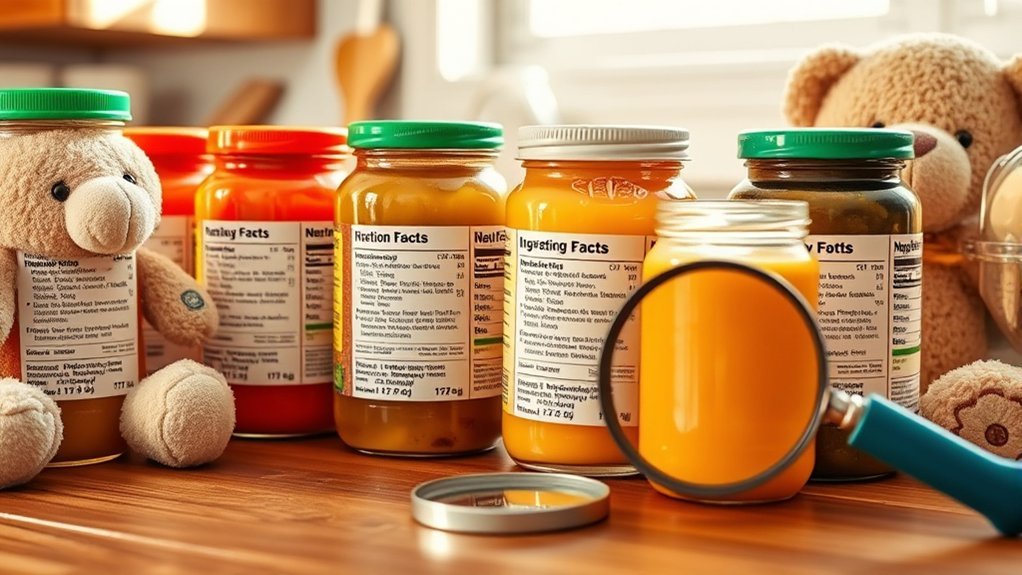
Packaging can use words such as “organic,” “made with fruit,” or “no artificial sweeteners” while the product still contains added sugar. Use this three-step check:
- Find “Added Sugars” on the Nutrition Facts label. For a baby or young child, choose 0 grams whenever possible. “Total Sugars” includes both natural and added sugars, so it cannot answer the question by itself.
- Read the ingredient list. Ingredients appear in descending order by weight. Look for sugar, syrup, honey, molasses, words ending in “-ose,” and fruit juice concentrate used as a sweetener.
- Check the serving size and product type. Compare similar yogurts, cereals, snacks, and pouches using the same serving size. A product does not become a good infant food simply because its package shows a baby.
Do not rely only on front-label claims. “No added sugar” is useful, but the full ingredient list also helps you spot non-nutritive sweeteners, excess sodium, and ingredients your baby must avoid.
What Are Healthy Alternatives to Sugar for Babies?
The best alternative is usually not another sweetener. Serve foods unsweetened, use fruit or naturally sweet vegetables as foods in their own right, and build flavor with age-appropriate herbs and spices.
Whole-Food Flavor Options
- Mashed banana, pear, peach, mango, or cooked apple
- Cooked sweet potato, squash, carrot, beet, or parsnip
- Plain, pasteurized full-fat yogurt
- Avocado, nut or seed butter thinned to a safe consistency, or soft legumes
- Cinnamon, mild herbs, or other family spices without added sugar and with minimal salt
Fruit-Based Alternatives
Fruit can add flavor to oatmeal, yogurt, or a mixed meal, but it does not need to hide every less-sweet food. Offer fruits and vegetables separately as well as in combinations so your baby learns their individual tastes.
Choose fresh, frozen, canned, or prepared fruit without added sugar. Avoid dried fruit pieces, hard raw fruit, whole grapes, and other shapes that can block a young child’s airway unless they are prepared according to current choking-prevention guidance.
Are Non-Nutritive Sweeteners a Better Choice?
No. Stevia, sucralose, aspartame, monk-fruit sweetener, saccharin, and similar products are not needed in baby food. Current federal guidance does not recommend non-nutritive sweeteners as part of a healthy diet. They also keep foods tasting intensely sweet rather than helping a baby learn a broad range of flavors.
How to Start Introducing Solid Foods to Your Baby
Most babies are ready to begin solid foods at about 6 months, but readiness matters more than the calendar alone. According to the CDC, signs include sitting alone or with support, controlling the head and neck, opening the mouth when food is offered, bringing objects to the mouth, and swallowing food instead of pushing it back out.
Begin with small amounts of nutrient-dense food in a texture your baby can safely manage. Include iron-rich choices such as meat, beans, lentils, eggs, tofu, or iron-fortified cereal, along with vegetables, fruit, full-fat plain yogurt, grains, and healthy fats. Breast milk or iron-fortified infant formula should remain the main source of nutrition through 12 months.
- Seat your baby upright and supervise every bite.
- Match texture and shape to your baby’s development; puree is not the only safe option, but all foods must be soft and manageable.
- Avoid whole nuts, spoonfuls of thick nut butter, hard raw vegetables, uncut grapes, popcorn, hot-dog rounds, and other choking hazards.
- Introduce common allergens in infant-safe forms and discuss timing with your pediatrician, especially if your baby has severe eczema or an existing food allergy.
- Allow your baby to decide how much to eat. Watch hunger and fullness cues instead of pressuring them to finish.
How Does Sugar Affect a Baby’s Taste Preferences?
Babies naturally prefer sweet tastes, so you do not need to teach them to like sugar. The more useful goal is repeated, low-pressure exposure to many flavors and textures. Current federal guidance notes that it may take about 8 to 10 exposures before a young child is willing to try a new food.
Offer vegetables, proteins, grains, plain dairy, and fruit without routinely sweetening them. A refusal on the first few attempts does not mean your baby dislikes the food permanently. Pause, try again on another day, and avoid using dessert or sweet foods as a reward.
Tips for Encouraging Healthy Eating Habits in Babies
- Serve variety: Rotate colors, flavors, textures, and food groups instead of relying on fruit-heavy pouches or sweet snacks.
- Use responsive feeding: Offer the food and let your baby decide whether and how much to eat.
- Model the habit: Eat unsweetened, nutrient-dense foods together when possible.
- Keep mealtimes calm: Seat your baby safely, reduce distractions, and never leave them alone with food.
- Repeat without pressure: Reoffer unfamiliar foods over time rather than disguising them with sweetness.
- Protect teeth: Avoid putting a baby to bed with a bottle, begin oral care early, and ask a dental professional about fluoride and the first visit.
Frequently Asked Questions
Can babies have fruits with natural sugars?
Yes. Fruit can be part of a baby’s varied diet once solids begin. Serve it in a texture and shape your baby can manage, and favor whole, mashed, or pureed fruit over juice. Natural sugar in fruit is not classified as added sugar.
What are the signs of a sugar sensitivity in babies?
“Sugar sensitivity” is not a specific diagnosis, and irritability or poor sleep alone does not prove a reaction to sugar. Vomiting, diarrhea, rash, or discomfort after a food may relate to another ingredient or a separate illness. Contact your pediatrician for repeated symptoms. Seek emergency help for trouble breathing, facial or tongue swelling, or unusual limpness.
Are there baby foods that naturally contain sugar?
Yes. Fruit, some vegetables, breast milk, and plain dairy contain naturally occurring sugars. Check the separate “Added Sugars” line to see whether a packaged product also contains sugar added during processing.
How can sugar affect a baby’s sleep patterns?
There is not good evidence that one small taste of sugar predictably causes an infant “sugar rush” or a specific sleep problem. Avoid added sugar because it is unnecessary and can displace nutritious food, not as a guaranteed sleep treatment. Discuss ongoing sleep changes with your pediatrician.
Is it safe to give babies sweetened yogurt?
Sweetened yogurt is not usually an emergency or a toxic food, but it is not the preferred routine choice because it contains added sugar. Choose plain, pasteurized full-fat yogurt without added sugar, then serve it plain or add mashed fruit when desired.
Are honey, maple syrup, agave, or date syrup healthier for babies?
No. These are concentrated sweeteners and count as added sugars when used in food. Honey must never be given before 12 months because of the risk of infant botulism.
What should I do if my baby accidentally eats added sugar?
A one-time small taste usually does not require special treatment. Continue the normal feeding routine and choose foods without added sugar going forward. Contact a clinician if your baby becomes ill or shows signs of an allergic reaction. Honey exposure before 12 months should be discussed with your pediatrician.
Can I use stevia or monk-fruit sweetener in baby food?
Do not use non-nutritive sweeteners to make baby food taste sweeter unless your child’s health professional gives a specific medical reason. Babies do not need these products, and unsweetened foods better support exposure to a broad range of flavors.
Conclusion
Babies do not need added sugar, honey, syrups, sweetened drinks, or sugar substitutes. Build meals around breast milk or iron-fortified formula, iron-rich foods, vegetables, fruit, proteins, plain dairy, grains, and healthy fats in safe textures. Reading both the Added Sugars line and the ingredient list makes it easier to choose foods that support growth without unnecessary sweetness.
Sources
- Dietary Guidelines for Americans, 2025–2030 — current guidance on added sugars, infant feeding, food variety, and repeated exposure.
- CDC: Foods and Drinks to Avoid or Limit — added sugar, juice, honey, and foods to limit in early childhood.
- FDA: Added Sugars on the Nutrition Facts Label — definition of added sugar and label-reading guidance.
- CDC: When, What, and How to Introduce Solid Foods — timing, readiness signs, and safe complementary feeding.
- CDC: Botulism Prevention — why honey is unsafe before 12 months.
- CDC: Oral Health Tips for Children — early tooth and gum care.