Freezing homemade baby food in ice cube trays is a practical way to prepare small portions, reduce waste, and make meals easier. The safest method is to work with clean equipment, cook ingredients fully, cool the puree promptly, freeze it in covered food-grade trays, and label every batch before longer storage.
Quick Answer
Cook and puree the food, cool it promptly, spoon it into clean freezer-safe ice cube trays without overfilling, cover, and freeze until solid. Transfer the cubes to a dated airtight bag or container. For a conservative general rule, use homemade baby-food cubes within 1 to 2 months and thaw only what you need.
Key Takeaways
- Use clean hands, utensils, freezer-safe trays, and fully cooked ingredients.
- Cool cooked puree promptly; do not leave it sitting out until it reaches room temperature.
- Cover the tray, freeze until solid, then move the cubes to a dated airtight container.
- Use thawed baby food within 24 hours, do not refreeze it, and discard food left in the serving dish.
- Introduce allergens in developmentally safe forms unless your child’s clinician has given different advice.
At a Glance
| Time Required | 20–40 minutes of active prep, plus cooling and freezing time |
| Difficulty | Easy |
| Tools Needed | Pot or steamer, blender or food processor, clean spoon, freezer-safe ice cube tray, cover, labels, airtight freezer container |
| Cost | Usually low; it depends on the ingredients and whether you already own the tools |
Warning: Homemade baby food is not a substitute for breast milk or infant formula during the first year. Start solids only when your baby is developmentally ready, usually around 6 months, and follow your pediatric clinician’s advice for allergies, growth, or medical needs. Never give honey to a child younger than 12 months.
Benefits of Freezing Baby Food
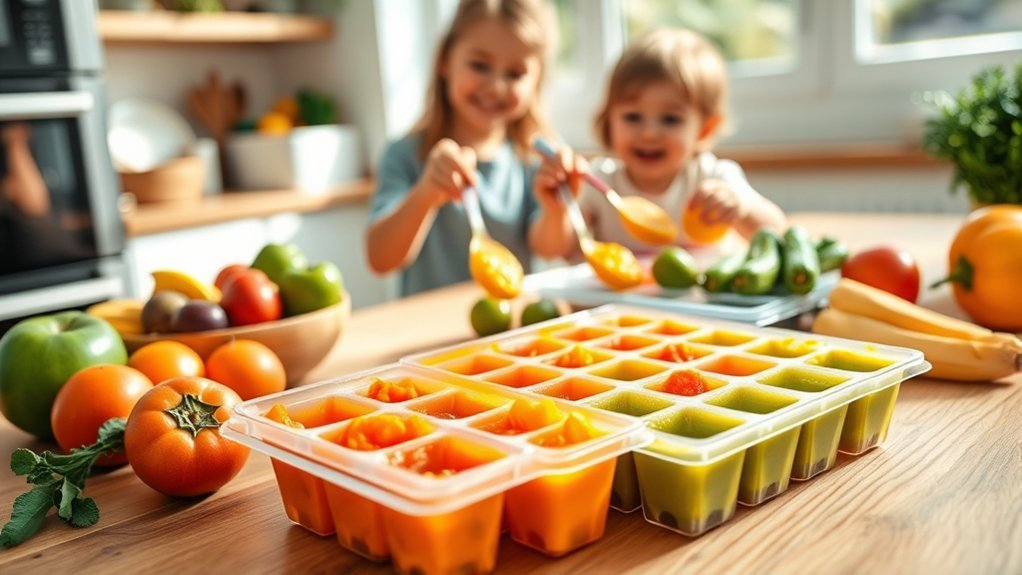
Freezing baby food can make meal preparation easier while helping you serve small portions. A tray lets you freeze single ingredients or simple combinations, so you can thaw only what your baby is likely to eat.
Freezing also slows bacterial growth and helps preserve food quality. It does not sterilize food, however, so clean preparation, prompt chilling, airtight storage, and safe thawing still matter. The FDA explains that freezing stops most bacterial growth but does not kill most bacteria.
Freeze small portions for convenience, but treat every batch as perishable food from preparation through serving.
Labeling each batch also supports a first-in, first-out routine, so older cubes are used before newer ones.
Power your essentials anywhere with a 999Wh pure sine wave power station delivering up to 1000W continuous with 2000W surge. It supports fast charging via USB-C PD 60W and USB-A QC 18W, plus simultaneous output for multiple devices through AC, USB, wireless, and car/DC ports. Recharge using AC, car, or solar with a built-in MPPT controller and dual cooling fans, while the upgraded battery management system protects against surges, short circuits, and overheating.

✅ LFGB Certified & Truly BPA-Free Safety: Crafted from premium, food-grade silicone and PP. These ice cube trays for freezer are independently certified to LFGB standards, ensuring no odors or chemicals transfer, for pure ice in family drinks and meals.

Food-Grade Silicone Ice Cube Trays: Made from BPA-free, food-grade silicone, these ice cube trays are safe, durable, and flexible. Perfect for direct contact with food and drinks, they’re compatible with the dishwasher, refrigerator, freezer, and even the microwave.
Essential Tools for Freezing Baby Food in Ice Cube Trays
- Freezer-safe, food-grade ice cube trays: A fitted lid is helpful, but tightly applied heavy-duty wrap also works.
- Pot, steamer, or baking dish: Use the cooking method that softens the ingredient without scorching it.
- Blender, food processor, immersion blender, or masher: Choose the tool that produces a texture your baby can safely manage.
- Clean spoon or small spatula: Use it to portion the puree without touching the food with your hands.
- Airtight freezer bags or containers: These protect the cubes after they are removed from the tray.
- Permanent marker or freezer labels: Record the food name, freezing date, and a use-by target.
Wash your hands, counters, trays, blender parts, and utensils before starting. The FoodSafety.gov clean, separate, cook, and chill guidance provides a reliable kitchen-safety baseline.
Step-by-Step Guide to Preparing Baby Food for Freezing
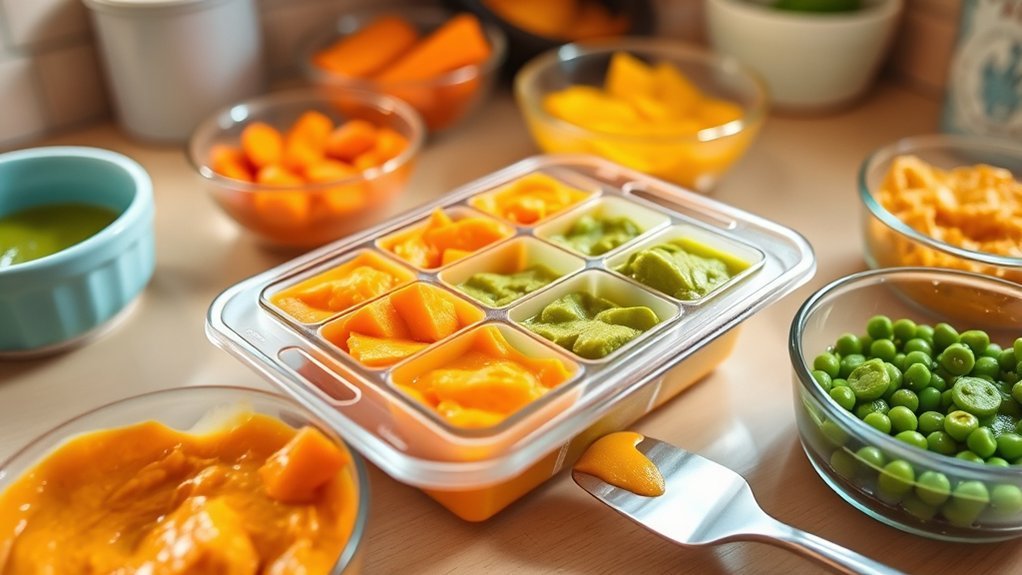
1. Wash and Prepare the Ingredients
Wash produce under running water. Peel, trim, seed, or pit it when needed. Keep raw meat, poultry, seafood, and eggs separate from ready-to-eat produce, utensils, and cutting boards.
2. Cook Food Until Safe and Soft
Steam, simmer, roast, or bake fruits and vegetables until they are soft enough to mash easily. Fully cook meat, poultry, fish, and eggs and check them with a food thermometer. Use the FoodSafety.gov safe minimum internal temperature chart rather than judging doneness by color alone.
3. Puree to a Developmentally Safe Texture
Blend or mash the cooked food to a texture your baby can handle. Early eaters may need a smooth puree, while babies with more feeding experience may be ready for thicker, mashed, or lumpy textures. Add a small amount of water or unsalted cooking liquid if needed.
Note: Freezing prepared infant formula is not recommended. For easier storage control, freeze the food without formula and mix in freshly prepared formula after thawing if your baby needs a thinner texture.
4. Cool the Puree Promptly
Do not leave cooked puree on the counter until it becomes fully cool. Divide it into small portions so heat escapes quickly, then refrigerate or freeze it within 2 hours of cooking. If the room is hotter than 90°F (32°C), shorten that limit to 1 hour.
5. Fill the Ice Cube Tray
Spoon the puree into a clean tray. Fill each compartment nearly full but leave a small amount of space at the top for expansion. There is no need to fill every compartment only halfway.
Tray sizes vary, so measure one compartment with a tablespoon or water before using it. That makes it easier to track how much food each cube contains.
6. Cover and Freeze Until Solid
Cover the tray with its lid or secure heavy-duty plastic wrap over the surface. Place the tray flat in a freezer set to 0°F (-18°C) or colder. Freeze until the cubes are completely solid; this may take several hours or overnight, depending on the tray and freezer.
7. Transfer, Label, and Date
With clean hands, remove the frozen cubes and place them in an airtight freezer bag or container. Press out excess air, seal the container, and label it with the food name and freezing date.
Pro Tip: Freeze single ingredients first. After your baby has tolerated each food, you can combine different cubes at serving time without committing an entire batch to one flavor.
Cover and Store Ice Cube Trays: Best Practices

Use a Tight Cover
A fitted tray lid is the easiest option. If the tray has no lid, use heavy-duty plastic wrap pulled tightly around the edges. The cover keeps other food and debris away from the puree and helps reduce drying and odor absorption.
After the cubes are solid, move them to an airtight container instead of leaving them uncovered in the tray for weeks.
Label for Easy Identification
Write enough information to identify and rotate the food safely. A simple label can include the food, the frozen-on date, and the planned use-by date.
| Label Field | Example | Why It Helps |
|---|---|---|
| Food name | Carrot puree | Prevents mix-ups |
| Frozen on | July 23, 2026 | Shows the batch age |
| Use by | September 23, 2026 | Supports a conservative 2-month limit |
| Ingredients | Carrot and water | Helps track allergens and combinations |
Store in the Freezer Safely
Keep the freezer at 0°F (-18°C) or colder. Store cubes in tightly sealed containers and use older batches first. If the freezer loses power, do not judge food safety by smell or appearance alone; follow official guidance based on time and temperature.
How Long Can Frozen Baby Food Be Stored?
Storage limits depend on the ingredients. The current FoodSafety.gov baby-food storage chart gives the following ranges for opened or freshly made purees and solids:
| Food Type | Refrigerator | Freezer |
|---|---|---|
| Strained fruits and vegetables | 2–3 days | 6–8 months |
| Strained meats and eggs | 1 day | 1–2 months |
| Meat and vegetable combinations | 1–2 days | 1–2 months |
| Homemade baby foods, general guidance | 1–2 days | 1–2 months |
For mixed recipes or when you are unsure which row applies, use the conservative general limit of 1 to 2 months. The FDA also describes freezing homemade baby food in ice cube trays and advises dating the cubes and discarding unused frozen food after 3 months. Using the shorter FoodSafety.gov range is a cautious choice for mixed homemade batches.
Note: Freezer burn is mainly a quality problem, not proof that food is unsafe. Discard food with an unusual odor, color, damaged packaging, or an uncertain storage history.
How to Thaw Frozen Baby Food Safely
Thaw only the number of cubes you expect to use. Never thaw baby food on the counter.
Refrigerate Overnight
Place the cubes in a clean, covered dish in the refrigerator. This is the safest and most even thawing method. Once fully thawed, use the food within 24 hours.
Use the Microwave Defrost Setting Carefully
Transfer the cubes to a microwave-safe dish; do not microwave them in a storage jar or sealed container. Use short defrost intervals, stir thoroughly, and let the food stand before checking the temperature. Microwave heating can create hot spots.
Avoid Thawing an Open Tray in Hot Water
Do not place an uncovered ice cube tray in a bowl of warm water or let bath water touch the food. This is difficult to control and can warm the outer food while the center remains frozen. Use the refrigerator or microwave defrost setting instead, as recommended by the NHS baby-food storage and reheating guidance.
Reheating Frozen Baby Food Safely
Thawed puree does not always need reheating. It can be served cold or at room temperature if it was thawed safely and the texture is appropriate for your baby.
If you reheat cooked baby food, heat it until steaming hot throughout, stir well, and then let it cool to lukewarm before serving. Reheat cooked food only once.
- Stovetop: Warm the food in a small pan over low heat, stirring often.
- Microwave: Use a microwave-safe dish, heat in short intervals, stir, let it stand for at least 30 seconds, and check several spots.
- Warm-water method: Place a sealed heat-safe container of already-thawed food in warm water, then stir the food and serve promptly.
FoodSafety.gov advises using the stovetop rather than a microwave for baby-food meats and eggs because their fat content can cause splattering and overheating.
Warning: Always test reheated food with a clean spoon before feeding. It should feel lukewarm, not hot. Throw away any portion that has touched your baby’s spoon or mouth.
Common Mistakes to Avoid When Freezing Baby Food
- Letting puree cool on the counter for too long: Refrigerate or freeze cooked food within 2 hours, or within 1 hour in very hot conditions.
- Filling each compartment only halfway: Leave a little headspace, but use the tray efficiently.
- Freezing food before it is fully cooked: Meat, poultry, seafood, and eggs must reach safe cooking temperatures before pureeing.
- Storing cubes loose or uncovered: Transfer solid cubes to an airtight freezer container.
- Using an unmarked batch: Label the food and date so you do not guess later.
- Refreezing thawed baby food: Use thawed food within 24 hours and discard what is not used.
- Saving a half-eaten portion: Saliva can contaminate the food. Serve a small amount in a separate dish and offer more with a clean spoon if needed.
- Staying with smooth purees for too long: Move toward thicker, mashed, and lumpy textures as your baby’s feeding skills develop.
Using Frozen Baby Food Cubes in Different Meals
Frozen cubes make it easy to vary flavor and texture without preparing a full recipe each time. Try combinations only after your baby has tolerated the individual ingredients.
- Mix sweet potato with peas for a mild vegetable blend.
- Stir apple puree into cooked oatmeal for breakfast.
- Combine carrot with fully cooked chicken puree for a savory meal.
- Blend pear with plain pasteurized yogurt after thawing.
- Add a vegetable cube to lentils or mashed beans for a thicker texture.
Thaw only what you need. If your baby is still hungry, offer another clean portion rather than saving food from the serving dish.
Allergens, Texture, and Foods to Avoid
Do not routinely avoid common allergens unless your baby has a diagnosed allergy or a clinician has told you to do so. The CDC recommends introducing potentially allergenic foods when other foods are introduced. Offer one new single-ingredient food at a time at first and wait 3 to 5 days before another new food so reactions are easier to identify.
Use forms that match your baby’s feeding skills. Thin smooth nut butter into another food instead of offering a thick spoonful, and never offer whole nuts. Cook eggs thoroughly. Use pasteurized dairy products and juices, and do not give honey before 12 months.
If your baby has severe eczema, an egg allergy, a known food allergy, or a previous reaction, ask your pediatric clinician how to introduce allergenic foods safely.
Frequently Asked Questions
Can I freeze baby food that contains dairy?
Yes, if the dairy is pasteurized and the finished food was handled safely. Yogurt, cheese sauces, and milk-based purees may separate or become grainy after thawing, but stirring often improves the texture. Do not use unpasteurized dairy products.
Is it safe to refreeze thawed baby food?
Do not refreeze home-prepared baby food after it has thawed. Keep thawed food refrigerated, use it within 24 hours, and discard any portion that was warmed, served, or touched by your baby’s spoon.
What fruits and vegetables freeze best?
Most cooked fruit and vegetable purees freeze well. Apples, pears, peaches, carrots, peas, squash, and sweet potatoes are common choices. High-water foods and potato-heavy purees may change texture, and bananas may darken, but these changes do not automatically make the food unsafe.
How can I choose the right portion size?
Measure how much one tray compartment holds before freezing. Many caregivers find 1- to 2-tablespoon portions convenient, but your baby’s appetite may differ. Start with a small serving and offer more from a clean container if needed.
Should I avoid common allergens when making baby food?
Not routinely. Current CDC guidance says potentially allergenic foods can be introduced with other foods in developmentally safe forms. Ask your child’s clinician for a personalized plan if your baby has severe eczema, an egg allergy, another diagnosed allergy, or a previous reaction.
Can I freeze puree made with infant formula?
Freezing prepared infant formula is not recommended because it can separate and lose quality. Freeze the puree without formula, then add freshly prepared formula after thawing when you need a thinner texture.
Do I have to reheat thawed baby food?
No. Safely thawed puree can be served cold or at room temperature if your baby accepts it. If you reheat it, heat it thoroughly, stir, let it cool to lukewarm, and reheat it only once.
Conclusion
Freezing baby food in ice cube trays works best when the process is simple and controlled: cook food safely, cool it promptly, freeze it in clean covered trays, transfer the solid cubes to airtight labeled containers, and thaw only what you need. Conservative storage limits, careful reheating, and discarding saliva-contaminated leftovers help keep each portion safer for your baby.
Sources
- FoodSafety.gov: Children Under Five — baby-food storage times and safe microwaving guidance
- U.S. Food and Drug Administration: Once Baby Arrives — freezing in ice cube trays, labeling, contamination, and serving safety
- NHS: Storing and Reheating Baby Food — cooling, thawing, reheating, and leftover guidance
- Centers for Disease Control and Prevention: Introducing Solid Foods — readiness, texture progression, allergen introduction, and choking prevention
- FoodSafety.gov: Safe Minimum Internal Temperatures — cooking temperatures for meat, poultry, seafood, eggs, and leftovers