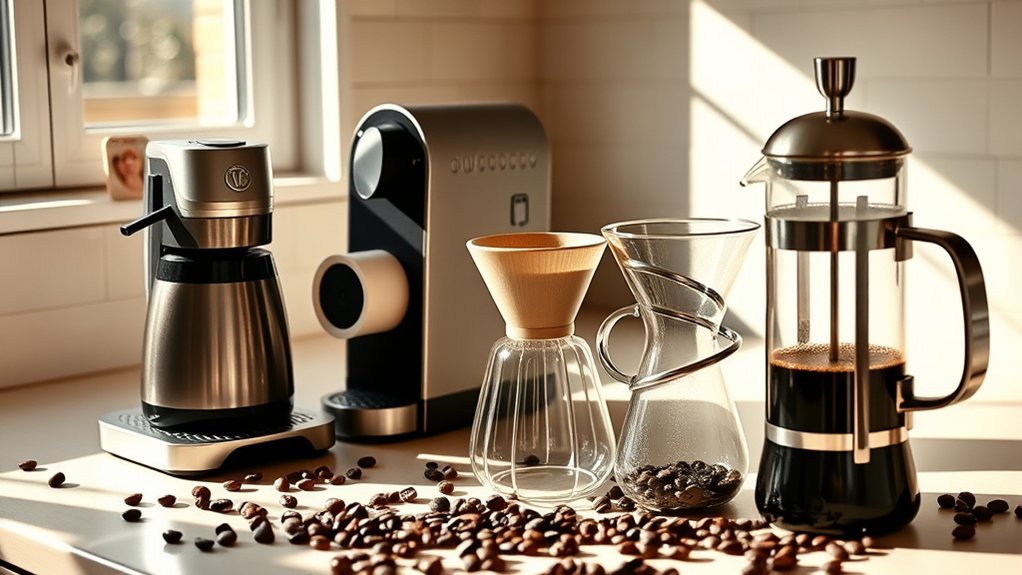
Choosing between the different types of coffee makers is easier once you know how each brewing method extracts flavor, controls water temperature, and filters soluble solids. Automatic drip and single-serve machines prioritize speed and convenience, while manual pour-over drippers and French presses offer precise control over body and extraction. Espresso machines, moka pots, AeroPress brewers, cold brew systems, siphon pots, and traditional Ibrik cezves each create a distinct mouthfeel, strength, and flavor profile.
Quick Answer
The best coffee maker depends on batch size, hands-on effort, and preferred cup clarity. Drip machines excel at multi-cup morning batches, single-serve brewers maximize speed, pour-overs deliver bright and clean cups, French presses produce heavy body, AeroPress provides portable versatility, and espresso machines or moka pots brew dense, concentrated coffee.
Key Takeaways
- Drip coffee makers automate water delivery and brew multi-cup carafes with minimal active effort.
- Pour-over brewers use paper filters and precise flow rates to highlight subtle floral and fruity flavor notes.
- French press and immersion brewers retain natural coffee oils and fine particles, producing a heavy, full-bodied mouthfeel.
- AeroPress and espresso machines use pressure rather than gravity alone to accelerate extraction and brew concentrated coffee.
- Moka pots and Ibriks (cezves) yield bold stovetop brews, while cold brew makers steep slowly over 12 to 24 hours for lower perceived acidity.
- Extraction ratios and grind consistency directly dictate strength, clarity, and extraction balance across every coffee maker style.
Understanding Different Coffee Brewing Methods
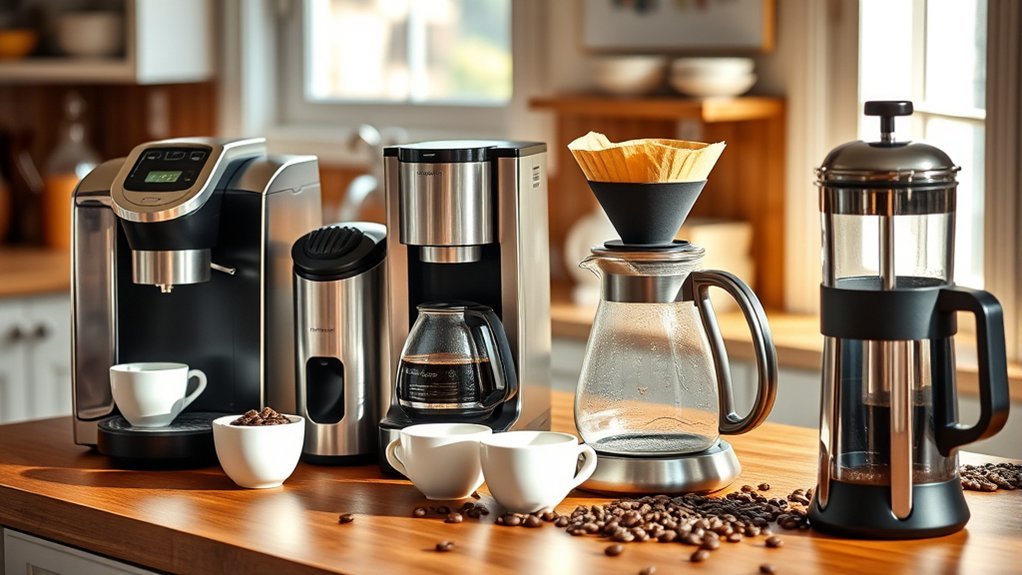
Every coffee maker relies on one of four primary extraction principles: percolation (gravity flow), immersion (steeping), pressurized extraction, or vacuum siphon. Understanding these mechanics reveals why the same roasted coffee bean tastes clean and crisp in a pour-over dripper yet rich, oily, and heavy in a French press.
Percolation brewers, such as automatic drip machines and manual pour-over cones, pass hot water continuously through a bed of grounds. Immersion brewers, including the French press and cold brew vessels, steep ground coffee directly in water for a set contact time before filtration. Pressurized brewers, such as commercial espresso machines, AeroPress plungers, and stovetop moka pots, force water through compacted coffee beds to extract concentrated oils and aromatics rapidly.
Traditional unfiltered methods like the Turkish Ibrik (cezve) boil powder-fine coffee directly in water, serving the drink with suspended micro-grounds. Choosing the ideal coffee maker requires balancing your desired cup clarity, batch volume, physical counter space, and morning routine.
Coffee Maker Types Compared
| Method | Brew Dynamic | Cup Style & Body | Active Effort | Best For |
|---|---|---|---|---|
| Drip Machine | Automated Percolation | Clean, balanced, light-medium body | Low | Multi-cup household batches |
| Single-Serve Pod | Pressurized Capsule | Variable, mild to medium concentration | Very low | Maximum speed and zero cleanup |
| Pour-Over | Manual Percolation | Crisp, bright, high flavor clarity | Medium | Single-origin beans and flavor exploration |
| French Press | Full Immersion | Rich, heavy, robust mouthfeel | Low | Dark roasts and bold, tactile coffee |
| AeroPress | Immersion + Air Pressure | Smooth, clean to espresso-style concentrate | Low to Medium | Travel, recipe flexibility, rapid cleanup |
| Espresso Machine | High Pressure (9 Bar) | Intense, syrupy concentrate with crema | High | Espresso shots, lattes, and cappuccinos |
| Moka Pot | Steam Pressure (1–2 Bar) | Strong, sharp, dense stovetop cup | Medium | Stovetop concentrated coffee on a budget |
| Cold Brew Maker | Extended Cold Immersion | Ultra-smooth, low perceived acidity, sweet | Low (12–24h wait) | Iced drinks and make-ahead batches |
| Siphon / Vacuum | Vapor Pressure & Vacuum | Exceptionally clean, tea-like, aromatic | High | Showcase brewing and delicate coffees |
| Ibrik (Cezve) | Decoction (Unfiltered) | Thick, viscous, intense, unfiltered | Medium | Traditional Turkish and Middle Eastern coffee |
Coffee remains a daily habit for 66% of U.S. adults, according to the National Coffee Association’s Spring 2026 National Coffee Data Trends survey.
How to Choose the Best Coffee Brewing Method for You
The most expensive coffee maker will not serve you well if its operational demands do not match your daily schedule. Selecting a brewer comes down to assessing six practical constraints:
- Daily Serving Volume: Brewing for a multi-person household requires an 8- to 12-cup automatic drip brewer or a 34-ounce French press. Solo drinkers benefit more from a single-serve machine, pour-over cone, or AeroPress.
- Flavor & Clarity Preference: If you enjoy bright, nuanced, floral notes, choose paper-filtered pour-over or siphon brewing. If you prefer rich, bold, chocolatey notes with heavy body, choose a French press or moka pot.
- Morning Time & Effort: If pressing a button while getting ready is essential, choose a programmable drip machine or pod brewer. Manual drippers and espresso machines demand dedicated active attention.
- Milk-Based Beverages: Creating authentic lattes, flat whites, and cappuccinos requires a true espresso machine with a steam wand to create microfoam.
- Portability & Durability: For travel, office desks, or camping, lightweight shatterproof brewers like the AeroPress outshine fragile glass carafes and electric machines.
- Countertop Footprint & Maintenance: Manual drippers store easily inside a drawer, whereas espresso machines demand dedicated counter space, daily group head rinsing, and routine descaling.
Pro Tip: Invest in a quality conical burr grinder before upgrading your brewer. Consistent particle distribution prevents simultaneous sour under-extraction and bitter over-extraction across all brewing styles.
The Convenience of Drip Coffee Makers: Pros and Cons

An automatic drip coffee maker remains the benchmark for simple, high-volume morning routines. You fill the water reservoir, place a paper or reusable filter into the basket, add medium-ground coffee, and let the internal heating element manage water dispersal.
Modern drip machines frequently include programmable 24-hour timers, brew-pause functions, pre-infusion bloom cycles, and thermal stainless-steel carafes. Thermal carafes keep coffee hot through insulation rather than continuous heating, preventing the burnt, astringent taste that develops when glass pots sit on electric hot plates.
The primary compromise is fixed water dispersion. Budget drip brewers often deliver water below the ideal brewing temperature or channel water unevenly through the center of the grounds bed. Look for brewers recognized by the Specialty Coffee Association’s Certified Home Brewer program, which rigorously tests machines for water temperature stability (195°F to 205°F), proper contact time, and uniform extraction.
The Art of Pour-Over Coffee: Techniques for Success
Manual pour-over brewing (using drippers like the Hario V60, Kalita Wave, or CHEMEX) gives you total control over water flow, brew temperature, extraction speed, and agitation. Paper filtration removes nearly all insolubles, producing exceptional flavor transparency that highlights single-origin terroir.
To master pour-over extraction:
- Match Grind Size to the Dripper: Conical drippers like the V60 require a medium-fine grind, flat-bottom drippers (Kalita Wave) thrive on a medium grind, and thick-filter brewers like CHEMEX require a medium-coarse grind to maintain proper drainage flow.
- Execute a Proper Bloom: Pour roughly twice the dry coffee weight in water over the grounds (e.g., 60g water for 30g coffee) and wait 30 to 45 seconds. This releases trapped carbon dioxide gas and prevents dry pockets during the main pour.
- Use a Gooseneck Kettle: A precision gooseneck spout allows you to control the flow rate and pour in slow, concentric circles without splashing water down the paper walls.
- Maintain a 1:16 Ratio: A proven starting baseline is 15g of ground coffee per 240g (8 oz) of hot water.
Benefits and Drawbacks of French Press Coffee

The French press (press pot) uses full immersion brewing. Coffee grounds steep directly in contact with hot water for several minutes before a fine stainless-steel mesh filter plunges them to the bottom of the carafe.
Because the metal mesh does not absorb natural coffee oils or capture microscopic fines, the resulting brew features an unmistakable velvety texture and deep aromatic richness. The downside is potential sediment buildup and rapid over-extraction if the brewed coffee is left sitting in the carafe over the spent grounds.
Flavor Profile Considerations
According to the Specialty Coffee Association’s French press brewing guideline, optimal extraction requires a consistent medium-coarse grind, 200°F water, and a 4-minute steep time before plunging.
- Sour or Thin Flavor: Increase steep time by 60 seconds or adjust the grinder slightly finer.
- Bitter or Astringent Flavor: Shorten steep time or move to a coarser grind size.
- Muddy Bottom-of-the-Cup Texture: Avoid pressing the plunger aggressively into the grounds bed. Decant the coffee immediately into cups or an external thermal carafe after pressing.
Note: French press and Turkish coffee are unfiltered or metal-filtered. Research highlighted by the Harvard T.H. Chan School of Public Health notes that unfiltered coffee contains diterpenes (cafestol and kahweol), which can elevate LDL cholesterol in individuals sensitive to these lipid compounds. Paper filters trap these compounds effectively.
Cleaning and Maintenance Ease
Maintaining a French press requires disassembling the mesh screen regularly to eliminate trapped oils and fine grounds that cause rancid off-flavors.
| Maintenance Task | Frequency | Key Objective & Best Practice |
|---|---|---|
| Eject Grounds & Rinse | After Every Use | Compost grounds and rinse carafe to stop stale oil buildup. |
| Wash Carafe & Plunger | Daily | Wash using mild dish soap or top-rack dishwasher cycle (check model rating). |
| Disassemble Screen Assembly | Weekly | Unscrew cross plate, mesh screen, and spiral disk to scrub trapped grounds. |
| Inspect Mesh & Seal | Monthly | Check for frayed wire edges or bent rims that allow excessive grounds to bypass the filter. |
The Versatility of AeroPress Brewing Methods
The AeroPress combines full-immersion steeping with gentle manual air pressure. Hot water and fine-to-medium grounds steep inside a lightweight cylinder before a silicone plunger creates an airtight seal that forces liquid through a paper or metal micro-filter directly into your cup.
According to official specifications for the AeroPress Original, the brewer has a 10-ounce (296 ml) capacity and produces standard American coffee, cold brew, or concentrated espresso-style shots in under two minutes.
Brewing Techniques Variability
The AeroPress supports two distinct brewing styles:
- Standard Method: Set the brewer with filter cap down atop a mug, add coffee and water, stir, insert plunger slightly to create a vacuum seal, steep for 1 to 2 minutes, and gently press down for 20 to 30 seconds.
- Inverted Method: Stand the brewer upside down on the plunger, add coffee and water, steep without any premature dripping, screw on the filter cap, carefully flip onto a sturdy mug, and plunge.
Compact and Portable Design
Constructed from shatterproof polypropylene, the AeroPress weighs under 8 ounces and requires no electricity. Cleanup takes under 15 seconds: unscrew the perforated cap, push the plunger forward to pop the spent grounds “puck” cleanly into the compost, and rinse the silicone seal.
Customizable Flavor Profiles
Using paper filters yields a clean cup with crisp flavor separation, while optional aftermarket stainless-steel mesh filters preserve oils and enhance body. By altering water temperature (175°F to 205°F) and grind size, you can brew anything from a delicate light-roast cup to a dense concentrate suitable for iced coffee drinks.
Espresso Machines: Best for Concentrated Shots and Milk Drinks
A true espresso machine forces 195°F to 205°F water through a finely ground, densely tamped coffee bed under 9 bars of mechanical pump pressure. This rapid 25-to-30-second extraction creates a 1-to-2-ounce beverage with high total dissolved solids, dense viscosity, and a signature layer of hazelnut-colored aromatic foam known as crema.
Espresso machines fall into four primary categories:
- Manual Lever Machines: Require the user to pull a mechanical lever to generate brewing pressure; offers maximum artisan control.
- Semi-Automatic Machines: Electric pump creates 9 bars of pressure; the user grinds, tamps, and manually starts/stops the shot timer.
- Super-Automatic Machines: Built-in bean hoppers, grinders, and automated brewing units grind, tamp, extract, and steam milk with a single button press.
- Capsule Espresso Machines (e.g., Nespresso Original): Use hermetically sealed aluminum pods at high pump pressure for fast, single-portion espresso shots.
Cold-Brew Coffee Makers: Best for Make-Ahead Iced Coffee
Cold brew makers (such as the Toddy, OXO Cold Brewer, or Hario Mizudashi) steep coarse coffee grounds in room-temperature or cold water for 12 to 24 hours. Because cold water extracts solubles much more slowly than hot water, heat-activated acids and bitter compounds are left behind, yielding a sweet, smooth, and naturally mellow concentrate.
Cold brew concentrate stays fresh in the refrigerator for up to two weeks. Dilute it 1:1 with cold water, milk, or ice. While dedicated cold brew carafes streamline filtration, you can also brew immersion cold brew in a large glass Mason jar and strain it through a fine sieve lined with cheesecloth or a paper coffee filter.
How Moka Pots and Ibriks Enhance Your Coffee Experience
Stovetop moka pots and Turkish Ibriks (cezves) represent centuries-old methods for brewing strong, rich coffee without electric machines.
A moka pot uses steam expansion. As water boils inside the sealed lower chamber, rising vapor creates 1 to 2 bars of pressure, forcing hot water upward through a funnel basket of ground coffee and out the central column of the upper chamber. According to Bialetti’s official Moka Express guidelines, brewing takes roughly 3 to 6 minutes over medium-low heat.
Warning: Never tamp coffee grounds into a moka pot funnel basket, always keep the water level below the safety pressure release valve, and remove the pot from heat the moment liquid begins gurgling into the upper chamber to avoid scorched coffee.
The Turkish Ibrik (cezve) method is recognized on UNESCO’s Representative List of Intangible Cultural Heritage. Powder-fine roasted coffee is combined with cold water and optional sugar in a small copper or brass pot, heated slowly over hot sand or a low burner to generate thick foam without boiling over, and poured unfiltered into small demitasse cups.
Paper vs. Metal Coffee Filters
The filtration medium used by your coffee maker determines the texture, clarity, and lipid content of the finished cup:
- Bleached & Unbleached Paper Filters: Dense cellulose fibers trap insolubles, microscopic coffee grounds (fines), and diterpenes (cafestol). Yields a sparkling, clean cup with distinct flavor separation. Always pre-rinse paper filters with hot water before brewing to wash away residual papery tastes.
- Stainless-Steel Mesh Filters: Allows natural coffee oils and colloidal micro-particles to flow into the cup, providing enhanced mouthfeel, heavier body, and a darker appearance. Reusable and eco-friendly, but requires thorough cleaning to prevent oil buildup.
- Cloth (Nel Drip) Filters: Retains all sediment while allowing aromatic oils to pass through, creating a syrupy, sweet, balanced brew. Cloth filters must be kept damp and refrigerated in clean water between uses to prevent bacterial contamination.
Coffee Grind Size and Brewing Ratios Reference Chart
Grind size dictates surface area and extraction velocity. Pairing the correct grind size with the SCA Golden Cup coffee-to-water ratio ensures balanced extraction without sourness (under-extraction) or harsh bitterness (over-extraction).
| Brewing Equipment | Grind Size | Tactile Consistency | Recommended Ratio (Coffee:Water) |
|---|---|---|---|
| Cold Brew | Extra Coarse | Cracked peppercorns / rock salt | 1:5 to 1:8 (Concentrate) |
| French Press | Coarse | Coarse sea salt | 1:14 to 1:16 |
| CHEMEX & Siphon | Medium-Coarse | Rough beach sand | 1:15 to 1:17 |
| Automatic Drip | Medium | Table salt | 1:16 to 1:18 (55–60g / Liter) |
| Pour-Over (V60/Kalita) | Medium-Fine | Fine granulated sugar | 1:15 to 1:17 |
| AeroPress | Fine to Medium-Coarse | Versatile (fine sand to table salt) | 1:12 to 1:16 |
| Moka Pot | Fine | Baker’s sugar / fine sand | 1:7 to 1:10 (Fill basket to rim) |
| Commercial Espresso | Very Fine | Powdered sugar (slight grit) | 1:2 to 1:2.5 (e.g., 18g in, 36g out) |
| Turkish (Ibrik) | Extra Fine (Powder) | Flour / talcum powder | 1:9 to 1:10 |
Common Coffee Brewing Problems
Bitter or Harsh Coffee
Bitterness indicates over-extraction. Water has extracted undesirable tannins and bitter plant fibers. To fix this: grind coarser, reduce water temperature (try 195°F to 200°F), shorten contact brew time, or avoid letting drip carafes sit on heated warming plates.
Weak or Sour Coffee
Sourness, grassy notes, or thin mouthfeel indicate under-extraction. The water failed to dissolve sufficient sugars and flavor compounds. To fix this: grind finer, verify brew water is between 200°F and 205°F, increase brewing time, or increase your dry coffee dose.
Muddy French Press Coffee
Excessive sludge occurs when coffee contains too many fine particles or when the plunger is forced down violently. Use a consistent burr grinder on a coarse setting, avoid using blade grinders that create coffee dust, let grounds settle for 3 minutes before plunging, and press smoothly.
Slow Pour-Over Drawdown
If water stalls in a pour-over cone beyond 3.5 to 4 minutes, excessive fines are clogging the filter pores. Move to a coarser grind setting, avoid excessive swirling/agitation during pouring, and pour hot water from a lower height to avoid disturbing the bottom bed.
Harsh Moka-Pot Coffee
Moka pot bitterness happens when boiling water overheats the grounds before extraction begins. Use pre-heated water in the bottom reservoir, keep the stove on low-to-medium heat, never pack/tamp the coffee basket, and immediately run cold tap water over the bottom base when the upper chamber is 80% full to halt extraction.
Choosing the Right Coffee Maker for Your Lifestyle Needs
Align your choice of coffee maker with your lifestyle preferences and volume demands:
- Choose an Automatic Drip Maker if you need to brew 4 to 12 cups at the touch of a button for morning family routines.
- Choose a Single-Serve Pod Machine if effortless operation and 60-second single cups outweigh artisan flavor tuning.
- Choose a Pour-Over Dripper if you love single-origin coffees, floral acidity, crisp cup clarity, and hands-on morning rituals.
- Choose a French Press if you prioritize a rich, heavy mouthfeel, dark roasts, and durable, electricity-free brewing.
- Choose an AeroPress if you need a durable travel brewer that cleans up in 10 seconds and supports diverse brew recipes.
- Choose a Semi-Automatic Espresso Machine if authentic café-style espresso, latte art, and flat whites are your daily goal.
- Choose a Moka Pot if you want concentrated, robust stovetop coffee for milk drinks on an affordable budget.
- Choose a Cold Brew Maker if you want low-acid, smooth iced coffee concentrates prepped in advance for the week.
- Choose an Ibrik / Cezve if you want to explore traditional, rich, and aromatic Turkish coffee culture.
Frequently Asked Questions
What Coffee Maker Is Best for Making Cold Brew?
A dedicated immersion cold brew maker with a built-in stainless-steel filter (such as the OXO Good Grips Cold Brewer or Toddy system) is the most convenient option because it streamlines straining and refrigerator storage. However, any large glass jar paired with a paper or cloth filter produces equal extraction quality.
How Do I Clean and Descale My Coffee Maker Properly?
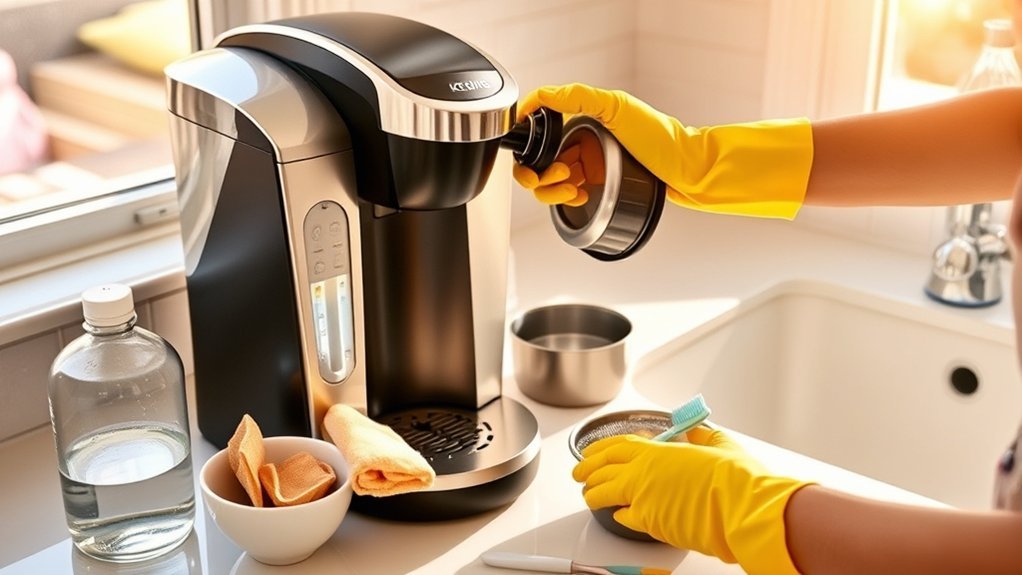
Wash all removable carafes, brew baskets, and filter screens daily with warm soapy water to remove stale coffee oils. For electric brewers, run a commercial citric acid or manufacturer-approved descaling solution through the water reservoir every 1 to 3 months to clear mineral calcium buildup. Avoid using generic household vinegar unless explicitly recommended in your user manual, as acetic acid can degrade internal silicone gaskets.
Can I Use Regular Coffee Beans in a Single-Serve Machine?
Yes, provided your machine supports a reusable capsule basket (such as a My K-Cup filter). Grind fresh whole beans to a medium consistency before filling the reusable pod. Avoid using fine espresso grinds in single-serve pods, as fine particles can clog the mesh screen and cause hot water to overflow.
What Is the Ideal Water Temperature for Brewing Coffee?
The Specialty Coffee Association standard brewing range is 195°F to 205°F (90°C to 96°C). Water below 195°F causes sour under-extraction, while water at a rolling boil (212°F) can scorch grounds and increase astringent bitterness. For light roasts, brew closer to 205°F to maximize extraction; for dark roasts, brew around 195°F to prevent harsh flavors.
How Does Grind Size Affect Brewing Methods?
Grind size controls surface area contact and water flow resistance. Finer grinds extract faster and create higher resistance, making them ideal for short-contact methods like espresso (25–30 sec) and moka pots. Coarser grinds extract slower, making them ideal for long-contact immersion methods like French press (4 min) and cold brew (12–24 hours).
What Is the Easiest Coffee Maker for a Beginner?
An automatic drip brewer or an AeroPress is ideal for beginners. Drip brewers automate the heating and water distribution process entirely, while the AeroPress is virtually forgiving of minor grind or temperature variances and rinses completely clean in seconds.
Which Coffee Maker Produces the Strongest Coffee?
Espresso machines produce the most concentrated coffee per fluid ounce due to high pump extraction pressure (9 bars). Moka pots and concentrated AeroPress recipes follow closely. If “strong” refers to total caffeine content per serving, a full 12-ounce mug of drip or cold brew coffee typically contains more total milligrams of caffeine than a single 1-ounce espresso shot.
Are Paper or Metal Coffee Filters Better?
Neither is objectively better; they serve different flavor goals. Paper filters remove coffee oils and micro-grounds for a crisp, bright cup with zero sediment. Metal filters allow natural oils and fine particles through, creating a rich, heavy mouthfeel with full body.
Conclusion
The best coffee maker is ultimately the one that fits seamlessly into your daily lifestyle and matches your taste preferences. Automatic drip machines and single-serve brewers deliver dependable speed for busy households. Manual pour-over drippers, AeroPress units, and siphon brewers reward patience with exquisite flavor nuance and clarity. Immersion French presses produce a dense, comforting body, while espresso machines and stovetop moka pots deliver concentrated power for rich shots and café-style milk drinks.
Rather than chasing unnecessary features, focus on the fundamentals: use freshly roasted beans, a consistent burr grinder, clean water heated between 195°F and 205°F, and the correct coffee-to-water brewing ratio. Mastering these core variables guarantees an exceptional cup from whichever coffee maker you choose.
Sources
- Specialty Coffee Association — Certified Home Brewer Program — standards on water temperature, extraction consistency, and contact time.
- AeroPress — Official AeroPress Original Specifications — volume capacity, versatility, and maintenance guidelines.
- Bialetti — How to Use the Moka Express — stovetop pressure dynamics, heat management, and safety valve protocols.
- UNESCO — Turkish Coffee Culture and Tradition — cultural heritage and authentic decoction brewing methods.
- National Coffee Association — Spring 2026 National Coffee Data Trends — verified coffee consumption statistics across U.S. demographics.
- Harvard T.H. Chan School of Public Health — Coffee Health Review — clinical insights regarding paper filtration, cafestol, and lipid extraction.