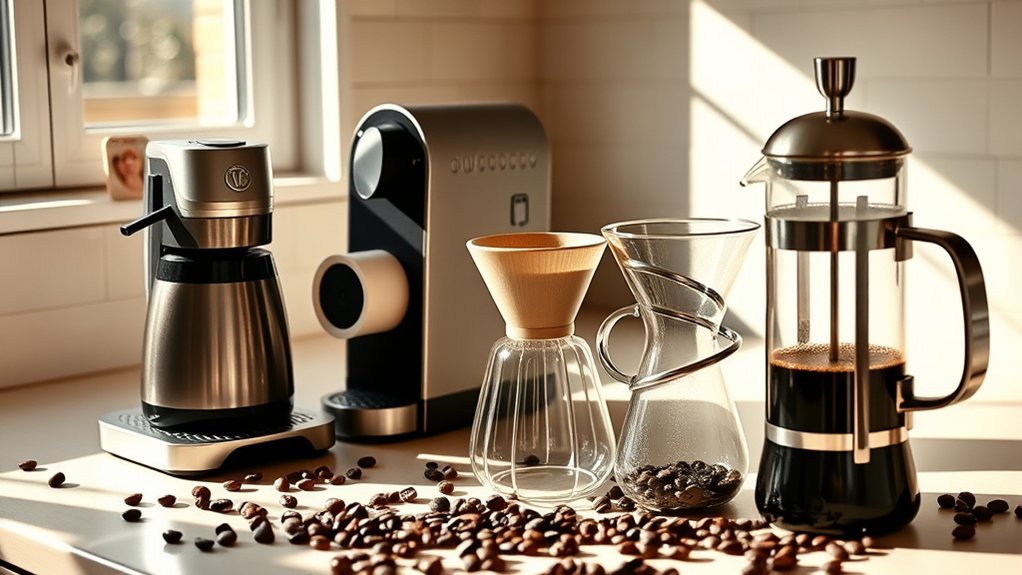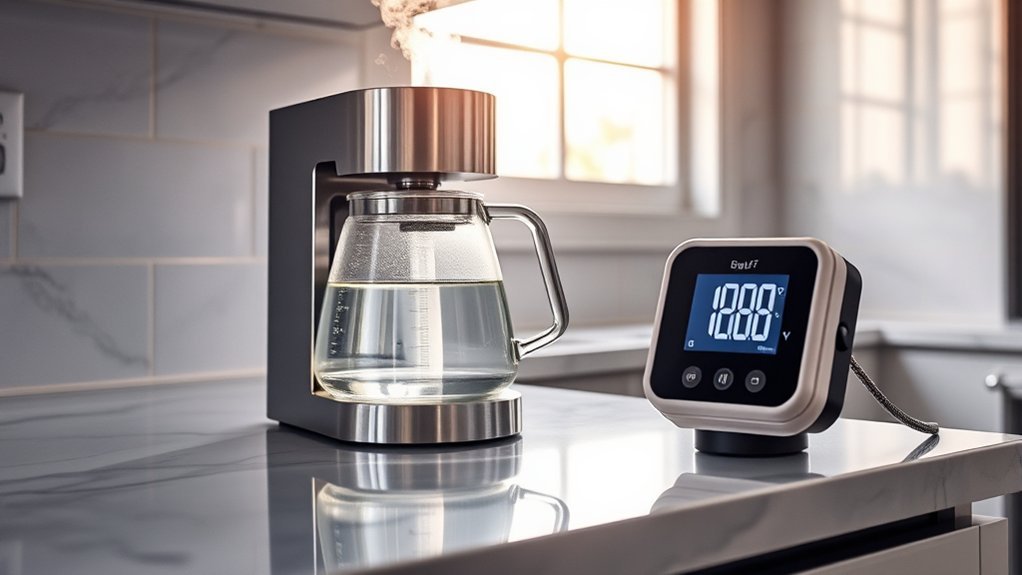
Most automatic drip coffee makers deliver very hot water to coffee grounds without sending a rolling boil across the brew bed. The important detail is that some brewers do boil or partially boil small amounts of water inside a heating tube to move water upward. What matters for extraction is the temperature where the water and coffee meet, not whether bubbles form inside the heater.
Quick Answer
Usually, the water reaching the coffee bed is below the sea-level boiling point of 212°F (100°C). Current SCA Standard 310 for home filter brewers uses a 90–96°C (194–205°F) slurry range. However, some drip machines may boil water inside a heater tube to create the pressure or bubbling action that moves hot water upward.
Key Takeaways
- Brew-bed temperature and internal heater temperature are not the same thing.
- SCA Standard 310-2021 specifies a 90–96°C (194–205°F) slurry temperature by the time 33% of the brew water has been sprayed, then maintains that range.
- Boiling water does not literally burn roasted coffee, but hotter water can speed extraction and may taste harsh when the grind, time, or agitation is already aggressive.
- Altitude lowers water’s boiling point, so water can boil below 212°F in high-elevation locations.
- A coffee maker is not a substitute for a kettle during a boil-water advisory; CDC guidance calls for a full rolling boil for a specified time.
- If coffee tastes weak, sour, bitter, or unusually cool, also check grind size, dose, contact time, batch size, water distribution, and mineral scale.
What’s the Best Brewing Temperature for Coffee?
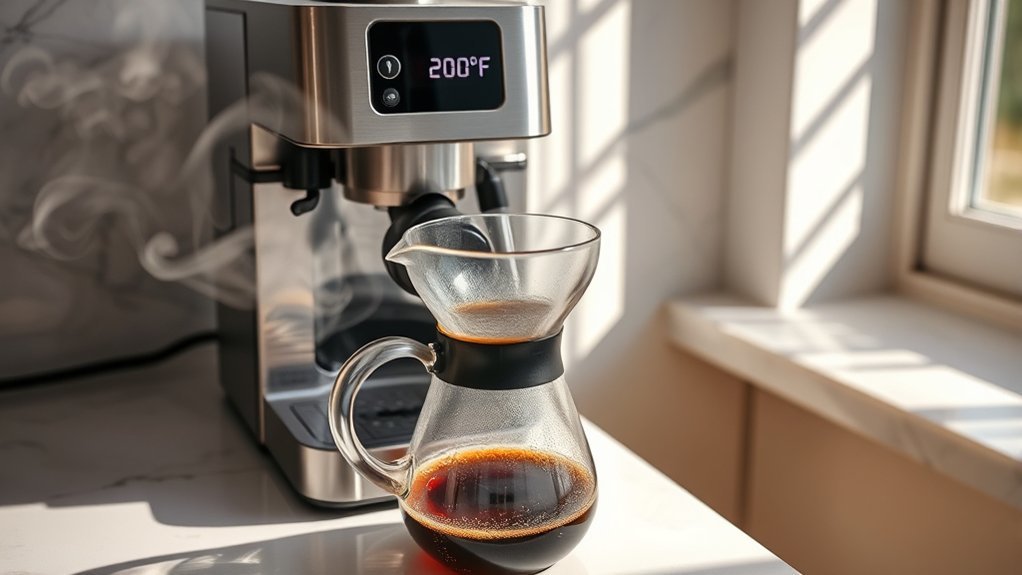
For hot automatic filter coffee, a practical starting point is around 195°F to 205°F. For certification testing, the current Specialty Coffee Association standards page identifies SCA-310 Home Coffee Brewers as the applicable standard. The published SCA-310 text specifies that the coffee slurry should reach 90°C to 96°C (194°F to 205°F) by the time 33% of the water mass has been sprayed and remain in that range for the rest of the brew cycle.
A target near 200°F is a useful midpoint, not a universal rule for every bean or method. If a light roast tastes thin or sour after the grind and brew time are reasonable, a modest temperature increase may help. If a dark roast tastes smoky, drying, or harsh, a slightly lower temperature can be one useful adjustment. Treat those as tuning choices rather than fixed roast-level laws.
Water temperature changes extraction speed, but flavor is governed by the whole recipe: strength, extraction yield, grind, dose, flow, contact time, water, and roast all interact.
A 2020 Scientific Reports study brewed drip coffee at 87°C, 90°C, and 93°C while adjusting grind and flow so brew strength and extraction yield could be compared independently. When strength and extraction were held constant, temperature had little appreciable sensory effect within the tested range. That does not mean temperature never matters; it means you should not diagnose flavor from temperature alone.
| Water or Slurry Temperature | What It May Do | Useful Adjustment |
|---|---|---|
| Below the brewer’s intended hot-brew range | May slow extraction and contribute to a thin, sour, or muted cup. | Confirm temperature, then consider hotter water, a finer grind, or more contact time. |
| About 194°F to 205°F for SCA-310 filter-brewer testing | Falls within the current SCA-310 slurry-temperature specification. | Fine-tune grind, dose, flow, and brew time instead of chasing one exact number. |
| Near the local boiling point | Can accelerate extraction and may emphasize harsh notes if other variables are already aggressive. | Try a coarser grind, shorter contact time, less agitation, or slightly cooler water. |
Note: “195°F to 205°F” is still a useful home-brewing shorthand, but the current SCA-310 home-filter-brewer standard is written as a 90–96°C slurry-temperature requirement under specified test conditions.
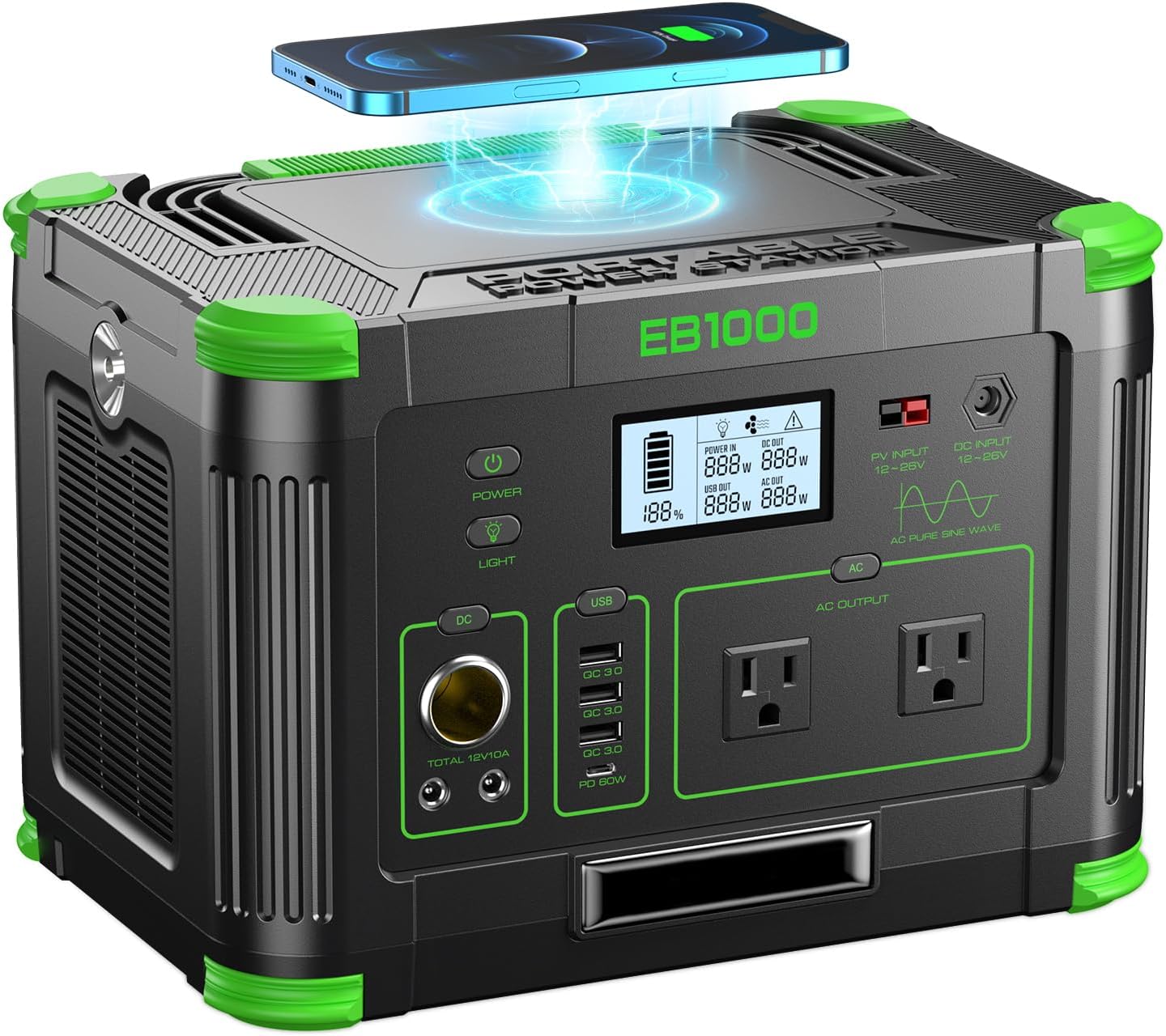
Power your essentials anywhere with a 999Wh pure sine wave power station delivering up to 1000W continuous with 2000W surge. It supports fast charging via USB-C PD 60W and USB-A QC 18W, plus simultaneous output for multiple devices through AC, USB, wireless, and car/DC ports. Recharge using AC, car, or solar with a built-in MPPT controller and dual cooling fans, while the upgraded battery management system protects against surges, short circuits, and overheating.

±1°F Precise Temp Control: Our kettle features a precise digital thermostat with ±1℉ accuracy, allowing for custom temperature settings. Achieve optimal extraction for the nuanced flavors of Light Roast Coffee, Oolong, Green, or Black Tea.

5 𝑶𝑵𝑬-𝑻𝑶𝑼𝑪𝑯 𝑷𝑹𝑬𝑺𝑬𝑻𝑺: Your Gooseneck Electric Kettle features 5 precise temperature presets. These accurate presets make brewing coffee or tea a breeze
Do Coffee Makers Boil Water Internally?
Sometimes. This is the key distinction that simple yes-or-no answers often miss. Many traditional automatic drip brewers use a heated metal tube and a one-way flow path. In some designs, water boils or partially boils in that heating passage. Expanding vapor and hot-water pulses help move water up to the outlet arm or showerhead.
Moccamaster describes this openly on current brewer pages: its copper boiling element heats water to a 196°F to 205°F brewing range, and the brand says the boiling action moves water up the glass tube before it pulses over the coffee bed. Other brewers may use pumps, boilers, thermoblocks, or electronically controlled heating systems instead.
So, if the question is “Does any water boil anywhere inside a coffee maker?” the answer can be yes. If the question is “Does a drip brewer pour a 212°F rolling boil over the grounds at sea level?” the answer is usually no.
Why Is Brew Water Usually Below a Rolling Boil?
An automatic drip coffee maker is designed to deliver hot water across a bed of coffee grounds at a controlled rate. It is not designed to act like an open kettle that holds an entire reservoir at a rolling boil.
As the machine operates, its heating system warms incoming water and moves it toward the showerhead. Depending on the design, internal boiling may help move that water, but the delivered brew water loses heat and is controlled so the coffee slurry stays in the brewer’s intended range.
This design supports several brewing goals:
- Controlled extraction: The coffee bed receives water in a useful hot-brewing range.
- Steady flow: Water is distributed at a rate matched to the basket and batch size.
- Safer normal operation: The system contains hot surfaces, water, and steam rather than asking the user to handle an open rolling boil.
- Repeatability: Thermostats, sensors, heating elements, pumps, or electronic controllers can create similar conditions from batch to batch.
Current SCA certification evaluates more than temperature. The SCA’s public certification page says home brewers are tested for brewing quality, consistency, and performance, while SCA-310 also addresses resulting brew, uniformity of performance, uniformity of extraction, holding temperature, and instructions.
How Does Boiling Water Affect Coffee Flavor?
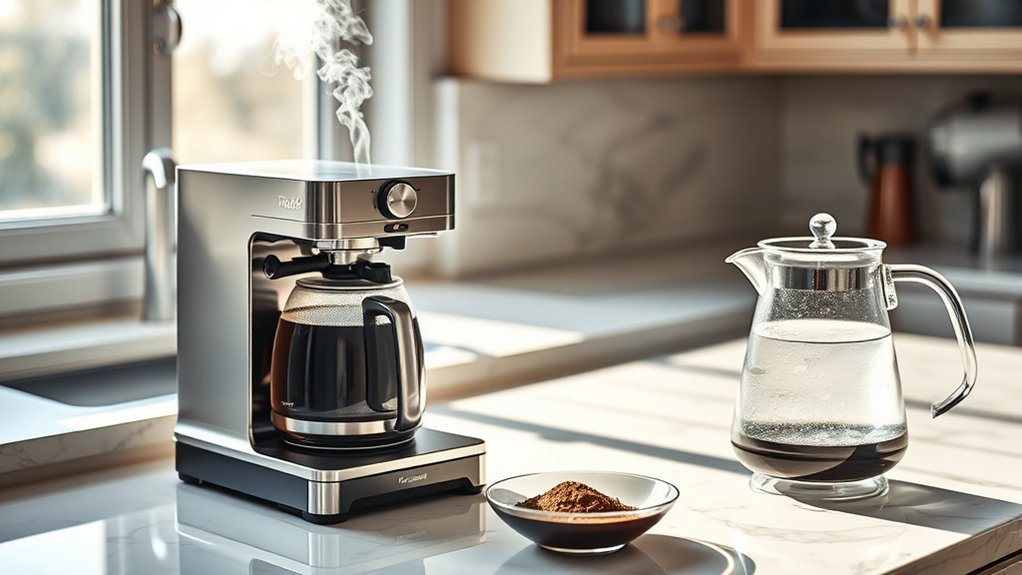
Boiling water does not literally burn roasted coffee grounds. The coffee was exposed to far higher temperatures during roasting. The more useful question is how hot water changes extraction.
Hotter water generally increases extraction speed. If you combine near-boiling water with a very fine grind, long contact time, heavy agitation, or an easily extracted dark roast, the cup may become harsh, drying, smoky, or bitter. Changing one of those variables may solve the problem without requiring a large temperature drop.
Under-Extraction Risks
Under-extraction means the brew has not removed enough soluble material from the grounds for the intended recipe. The coffee may taste sharp, sour, salty, thin, or weak.
Low water temperature can contribute, but other common causes include:
- A grind that is too coarse
- Too little contact time
- Too much water for the amount of coffee
- Uneven wetting or channeling through the grounds
- A batch size that does not suit the brewer
- Mineral scale that affects heating or water flow
If the water is below the brewer’s intended range, raising the temperature can help. If the brewer is already hot enough, adjust the grind, dose, flow, or brew time instead.
Over-Extraction Consequences
Over-extraction occurs when the brewing process removes more soluble material than the recipe can balance pleasantly. Common signs include a dry finish, strong bitterness, muted sweetness, or a hollow aftertaste.
Possible causes include:
- Grind too fine: Smaller particles expose more surface area and can slow flow.
- Contact time too long: Extended brewing keeps water and grounds together longer.
- Too little coffee for the water used: Each gram of coffee may be pushed to a higher extraction yield.
- Excessive agitation: Stirring or turbulent pouring can accelerate extraction.
- Very hot water: Higher temperature can make an already aggressive recipe extract faster.
Change one variable at a time. A slightly coarser grind or shorter contact time is often more informative than making several large changes at once.
Ideal Brewing Temperature
For a simple manual-brewing starting point, set a temperature-controlled kettle near 200°F. For an automatic filter brewer, use the manufacturer’s recommended settings and judge the result by taste, flow, and repeatability.
- Coffee tastes sour or thin: Try a finer grind, more coffee, longer contact time, or a modest temperature increase.
- Coffee tastes bitter or drying: Try a coarser grind, shorter brew, less agitation, or slightly cooler water.
- Coffee tastes weak but bitter: The brew may be low in strength yet unevenly extracted. Use an appropriate dose and improve water distribution rather than simply increasing temperature.
Does Altitude Change Whether the Water Boils?
Yes. Water boils when its vapor pressure matches the surrounding atmospheric pressure. Air pressure falls as elevation rises, so the boiling point also falls.
The U.S. Geological Survey lists a boiling point of 212°F (100°C) at sea level and about 202.9°F (94.9°C) at 5,000 feet. Therefore, water near 203°F may be below boiling at sea level but at or near its boiling point around 5,000 feet.
This also explains why a high-elevation brewer cannot be expected to maintain a temperature above the local boiling point in an open, atmospheric-pressure coffee bed. If your brewer offers altitude calibration, follow the manual.
Does the Answer Change by Coffee Maker Type?
Yes. “Coffee maker” covers several very different heating systems, so the boiling question depends on the machine.
- Automatic drip/filter brewer: Brew water at the grounds is generally below the sea-level boiling point, although some designs boil or partially boil water internally to move it.
- Pod or capsule machine: These machines often use pumps and fast heaters. Do not assume their outlet water reaches a rolling boil; follow the model’s specifications.
- Espresso machine: The brew circuit is pressurized and designed around espresso extraction, while a separate steam system may produce steam above atmospheric pressure. Brew-water rules for atmospheric drip coffee do not transfer directly to espresso.
- Percolator: The pot repeatedly circulates very hot water through coffee and operates much closer to boiling behavior than modern filter brewing.
- Siphon brewer: Heating the lower chamber creates vapor pressure that moves water upward; the method intentionally uses heat-driven pressure changes.
- Manual pour-over: The coffee maker itself has no heater. You control water temperature with a kettle.
Can a Coffee Maker Make Unsafe Water Safe to Drink?
Warning: Do not rely on a coffee maker to satisfy a boil-water advisory. The CDC says water should be brought to a full rolling boil for 1 minute, or 3 minutes above 6,500 feet, unless local officials give different instructions. A normal coffee-brewing cycle is not the same process.
If local authorities issue a boil-water advisory, use commercially bottled water or water boiled according to the advisory before making coffee. The CDC’s drinking-water advisory guidance also notes that boiling does not make water contaminated with harmful chemicals or toxins safe; follow local instructions for the specific advisory.
Best Equipment for Consistent Brewing Temperature
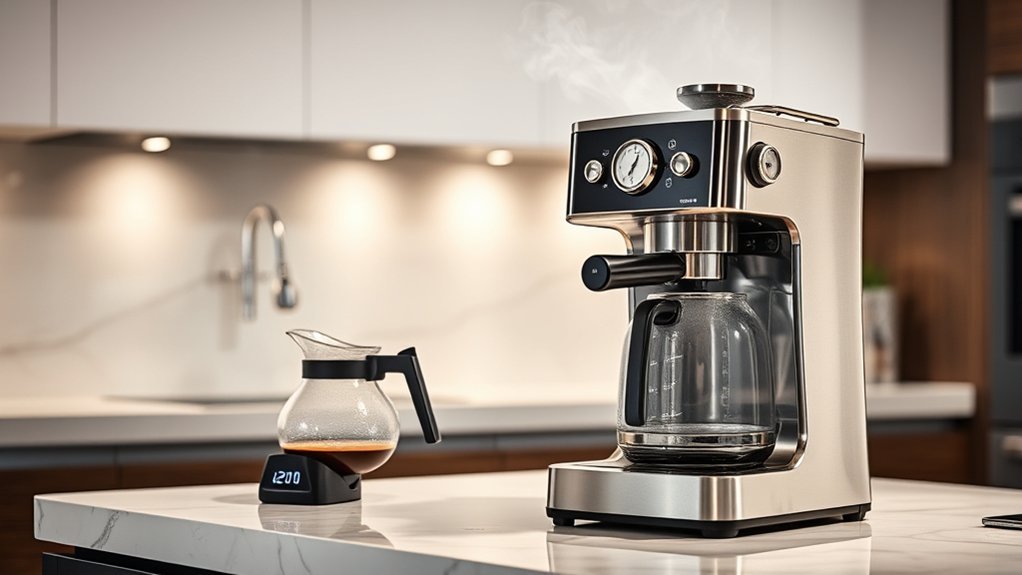
You do not always need expensive equipment. A clean brewer, consistent grinder, basic scale, and repeatable recipe can make a major difference. Temperature-control equipment becomes most useful when your current machine runs cool or when you want to repeat manual pour-over recipes closely.
Precision Brewing Equipment
Three equipment types can make temperature and extraction easier to control:
- Temperature-controlled kettle: Lets you select a target for pour-over, French press, AeroPress, tea, and other manual methods.
- SCA-certified automatic filter brewer: Has been tested against the SCA program’s brewing-performance requirements.
- Fast digital thermometer: Helps you troubleshoot whether water or slurry temperature is in the expected range.
A gooseneck kettle is especially helpful for pour-over because its narrow spout controls flow rate and placement. It is not automatically better for immersion methods such as French press, where precise pouring is less important.
Temperature-Controlled Kettles
The Fellow Stagg EKG is one current example of a variable-temperature gooseneck kettle. Fellow lists a selectable range of 104°F to 212°F (40°C to 100°C) for current models, along with temperature-control and hold features.
A temperature-controlled kettle helps you:
- Repeat the same recipe without guessing how much the water cooled after boiling
- Compare lower and higher temperatures while keeping other variables stable
- Use method-specific settings for coffee and tea
- Account more deliberately for high-elevation boiling limits
A basic kettle can also work well. Bring the water to a boil, then let it cool to your intended brewing temperature. Because cooling rate varies with kettle material, water volume, room temperature, and elevation, a thermometer is more repeatable than a fixed “wait 30 seconds” rule.
Key Features of the Moccamaster Brewing System
Moccamaster is the correct brand name. Models and capacities differ, so check the specifications for the exact brewer rather than assuming every unit has the same carafe or controls.
Common features across several current Moccamaster filter brewers include:
- Copper boiling element: Moccamaster says it rapidly heats water to a brewing temperature of approximately 196°F to 205°F.
- Heat-driven water movement: On models such as the KB, the brand says boiling action moves water up the glass tube to the outlet arm.
- Outlet arm with multiple openings: The arm spreads water across the coffee bed rather than using one narrow stream.
- Automatic brewing-element shutoff: The boiling element shuts off when the water reservoir is empty.
- Glass or thermal carafe options: Different models manage finished-coffee temperature differently.
- Model-specific basket controls: Some brewers use manual or automatic drip stops, while others alter flow for different batch sizes.
The brewing-water temperature should not be confused with hot-plate temperature. On the current Moccamaster KB product page, the hi-lo hot plate is listed at about 175°F to 185°F, with automatic shutoff after 100 minutes.
Note: If certification status matters to your purchase, check the SCA’s current certified-equipment list for the exact model rather than relying on an old badge, article, or retailer description.
How to Check Your Coffee Maker’s Water Temperature
You can perform a basic home temperature check with a fast digital thermometer. This can identify an obviously cool brew, but it is not equivalent to SCA laboratory testing, which uses multiple thermocouples, defined water and coffee conditions, and readings recorded every second.
At a Glance
| Time Required | About one normal brew cycle |
| Difficulty | Easy, if the probe can be positioned without reaching near hot or electrical parts |
| Tools Needed | Fast digital thermometer |
| Cost | No added cost if you already own a suitable thermometer |
- Make sure the brewer is clean, cool enough to handle, and fully assembled.
- Place a fresh paper filter in the basket. Add coffee if you want to approximate normal brewing conditions.
- Start a normal batch using the amount of water recommended for the brewer.
- Only if it can be done safely, position the thermometer probe in the hot-water stream or upper slurry without touching the metal outlet or placing your hand under the showerhead.
- Take several readings after the early warm-up portion of the cycle instead of judging the first few drops.
- Compare your observations with the manufacturer’s published specification. Do not treat a home thermometer test as certification-grade measurement.
Warning: Brewing water, steam, the showerhead, the basket, and the carafe can cause burns. Do not remove covers, open the housing, reach into the machine, or probe a pressurized system while it is operating. Stop the test if the thermometer cannot be positioned without putting your hand near hot water or electrical parts.
A thermometer reading taken in the carafe will normally be lower than the temperature at the coffee bed because heat is lost to the grounds, filter, basket, air, and carafe.
Achieving Consistent Coffee Quality at Home
Temperature control helps, but repeatable coffee depends on several linked variables:
- Coffee-to-water ratio: Weigh coffee and water instead of relying only on scoops and “cup” markings.
- Grind size: Match the grind to the brewing method and adjust it based on flow and taste.
- Contact time: Use the brewer’s intended batch size and expected cycle behavior; an unexpectedly slow brew may indicate scale, too-fine coffee, or a blockage.
- Water distribution: Grounds should become evenly wet rather than forming large dry pockets or a deep channel.
- Water quality: Fresh, pleasant-tasting water generally gives you a better starting point than water with strong chlorine, sulfur, or mineral flavors.
- Coffee freshness: Store beans in a sealed container away from heat, moisture, and direct light.
- Clean equipment: Coffee oils and mineral scale can change flavor, flow, and heating performance.
Pro Tip: Change one brewing variable at a time. Keep the dose, water amount, and temperature steady while adjusting the grind, for example. That makes it much easier to identify what actually improved the cup.
If a glass carafe cools the first batch quickly, preheat it with hot tap water, then empty it before brewing if the manufacturer allows that practice. Preheating a thermal carafe can also reduce heat loss.
What Common Coffee Brewing Mistakes Should I Avoid?
- Treating temperature as the only control: Grind, ratio, time, water, and distribution also matter.
- Confusing internal boiling with brew-bed temperature: Bubbles in a heater tube do not mean the grounds are being soaked in a 212°F rolling boil.
- Using the wrong batch size: Some full-size brewers perform poorly when asked to make a very small batch.
- Grinding far too fine: This can slow the brew, overflow the basket, or produce a harsh cup.
- Using too little coffee: The drink may taste weak even when the grounds are extracted heavily.
- Ignoring mineral scale: Scale can restrict water flow and impair heating performance.
- Leaving coffee on a hot plate for hours: Continued heating changes aroma and can create stale, cooked flavors.
- Pouring hot water into the reservoir without checking the manual: Home-filter-brewer test standards use fresh, cold water, and many machines are designed around cold reservoir water.
- Testing temperature only in the carafe: The finished drink is cooler than the brew slurry.
- Using the machine during a boil-water advisory as if it were a kettle: Follow public-health boiling instructions instead.
Why Is My Coffee Maker Not Hot Enough?
If your coffee tastes weak or the finished drink is unusually cool, work through these checks:
- Confirm what you are measuring. Heater temperature, brew-water temperature, slurry temperature, carafe temperature, hot-plate temperature, and drinking temperature are different values.
- Use the recommended batch size. Very small batches can behave differently in some machines.
- Preheat the carafe when appropriate. A cold glass or thermal carafe can lower finished-coffee temperature.
- Descale the brewer. Follow the manufacturer’s cleaning instructions and approved descaling method.
- Check water flow. A slow, uneven, or interrupted stream may point to scale or a blocked outlet.
- Review the manual. Confirm the intended brewing range and whether the model offers temperature or altitude adjustment.
- Contact the manufacturer. Seek service if the machine remains far below its published specification after cleaning.
Do not open the housing or bypass a thermostat, thermal fuse, pressure control, or safety switch. Coffee makers combine hot water and household electricity, so internal electrical or pressurized-system repairs should be handled according to the manufacturer’s service guidance.
How to Choose the Best Coffee Maker for Your Brewing Style
Choose equipment based on how you actually brew rather than on one temperature claim.
- For automatic drip: Look for an appropriately sized brewer with even water distribution, easy cleaning, and verified temperature performance. The current SCA Certified Home Equipment list is a useful comparison point.
- For pour-over: A variable-temperature gooseneck kettle, scale, and consistent burr grinder give you direct control over temperature, flow, and ratio.
- For French press: Stable water temperature, grind consistency, dose, and steep time matter more than a narrow pouring spout.
- For espresso: Use a machine designed to control pressure, flow, and brew temperature through a compact coffee bed.
- For cold brew: Hot-brewing temperature guidance does not apply because extraction happens with cool water over a much longer period.
Certification does not guarantee that every person will prefer the result, but it can confirm that a filter brewer met a defined test program. Capacity still matters: a large brewer may be ideal for a household or office, while a smaller machine may suit one daily mug better.
Frequently Asked Questions
Can I use a coffee maker for tea brewing?
You can use a clean drip coffee maker to provide hot water for some teas, but it is not ideal for every variety. Tea types often call for different temperatures and steeping times, and coffee oils can affect flavor. Never place tea leaves or other ingredients in the water reservoir unless the manufacturer specifically permits it.
What happens if I put boiling water in my coffee maker?
Do not pour boiling or preheated water into an automatic coffee maker unless the manufacturer specifically allows it. Home filter brewers are generally designed around a controlled heating cycle that starts with fresh, cooler water. Manual pour-over brewers are different because the water is heated separately in a kettle.
Do all coffee makers heat water the same way?
No. Coffee makers can use resistance heaters, bubble-pump or thermosiphon systems, boilers, thermoblocks, mechanical pumps, thermostats, electronic sensors, and PID-style controls. Their flow rates, temperature stability, pressure, and warm-up behavior also differ.
How long does a coffee maker take to brew coffee?
It depends on the brewer and batch size. Many home filter brewers finish a normal batch in several minutes. Compare your machine with its manual rather than using one universal time. A sudden increase in cycle time can indicate scale, a blockage, or coffee ground too finely for the basket.
Can I adjust the brewing temperature on my coffee maker?
Some premium drip and espresso machines offer adjustable temperature settings, while many basic brewers do not. Check the control panel and manual. Do not attempt to alter an internal thermostat or safety device yourself.
Does boiling water burn coffee grounds?
No. Brewing water does not burn already-roasted coffee in the literal sense. Near-boiling water can speed extraction, however, and may produce a harsh cup when paired with a fine grind, long contact time, heavy agitation, or an easily extracted roast.
Why does my coffee taste sour even when the water is hot?
The grind may be too coarse, the brew may finish too quickly, the dose may be too low, or the grounds may be wet unevenly. Sourness can also be part of a coffee’s natural flavor. Adjust one recipe variable at a time before assuming the heater is faulty.
Does altitude affect coffee-maker temperature?
Yes. Water boils at a lower temperature as elevation rises. At high altitude, a brewer may reach the local boiling point before reaching a sea-level temperature target. Use altitude calibration when the machine provides it and adjust grind, flow, or brew time as needed.
Does gurgling mean the coffee hitting the grounds is boiling?
Not necessarily. Gurgling can come from steam bubbles or boiling action inside a heating tube that helps move water upward. The water can then lose heat before reaching the showerhead and coffee bed, so internal boiling and brew-bed temperature should be treated as separate measurements.
Can I use a coffee maker during a boil-water advisory?
Do not rely on the coffee maker itself to disinfect advisory water. Follow local guidance. CDC guidance says to use bottled water or bring tap water to a full rolling boil for 1 minute, or 3 minutes above 6,500 feet, then let it cool before use.
Conclusion
Most coffee makers do not deliver a rolling boil directly to coffee grounds under normal sea-level conditions. However, some automatic drip brewers do boil or partially boil small amounts of water inside a heater tube as part of the mechanism that moves water upward.
For the coffee bed itself, the current SCA-310 home-filter-brewer standard uses a 90–96°C (194–205°F) slurry range under its test conditions. That range is a strong reference point, but it is not the only key to balanced coffee. Grind, dose, brew strength, extraction yield, contact time, batch size, water distribution, water quality, and cleanliness all matter.
If your coffee tastes weak, sour, bitter, or harsh, change one variable at a time and compare the result. If your concern is water safety rather than coffee flavor, use a kettle or another method that can meet official boil-water guidance instead of assuming a coffee-brewing cycle is equivalent to a rolling boil.
Sources
- Specialty Coffee Association — Coffee Standards — identifies SCA-310 Home Coffee Brewers as the current home-brewer certification standard.
- Specialty Coffee Association — SCA Standard 310-2021 — home filter-brewer scope, 90–96°C slurry requirement, testing method, water conditions, and performance specifications.
- Scientific Reports — Brew Temperature, Strength, Extraction, and Sensory Profile — evidence on the relationship among brew temperature, strength, extraction yield, and sensory results.
- Moccamaster USA — KB Coffee Brewer — manufacturer information on its copper boiling element, 196°F to 205°F brewing temperature, boiling-action water movement, and glass-carafe hot plate.
- U.S. Geological Survey — Facts About Water — sea-level boiling point and lower boiling temperature at 5,000 feet.
- CDC — Drinking Water Advisories — rolling-boil guidance and high-elevation timing during boil-water advisories.