
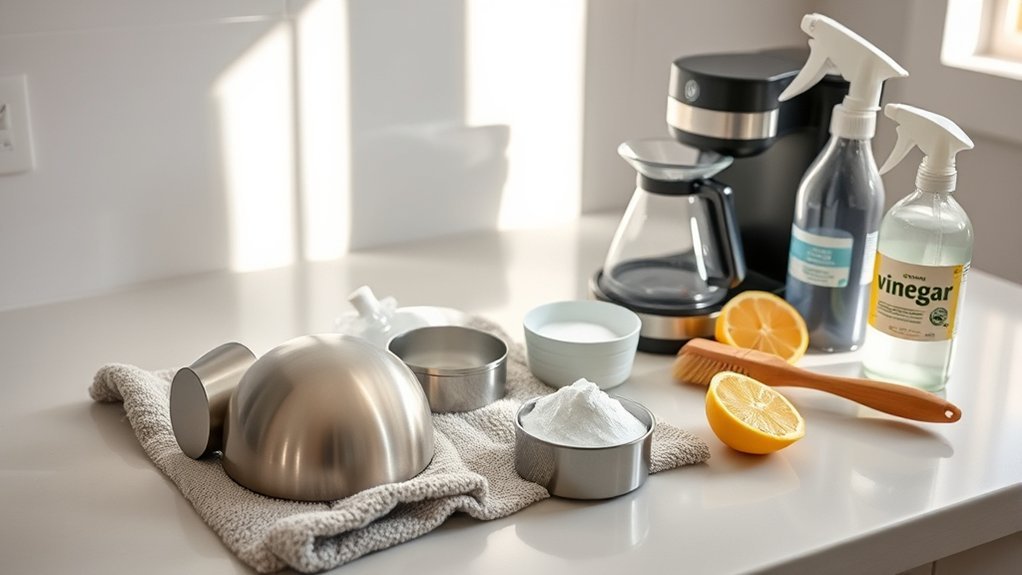
You can clean many parts of a coffee maker without running a brew cycle, but this method has an important limit: it cleans the carafe, filter basket, removable water reservoir, lid, drip tray, and exterior—not scale hidden in the machine’s internal tubing or heating system. Before using vinegar or another cleaner, check the instructions for your exact model because approved products and procedures vary.
Quick Answer
Unplug the coffee maker and wash removable parts with warm water, mild dish soap, and a soft cloth or brush. Use vinegar on a removable reservoir only if your model’s instructions allow it, following the specified method. A no-cycle cleaning removes surface residue but cannot descale hidden tubing, valves, or heating components.
Key Takeaways
- A no-cycle cleaning method works best for removable and easily accessible parts.
- Warm water and mild dish soap are the safest starting point for most washable carafes, baskets, lids, drip trays, and removable reservoirs.
- Do not assume vinegar is safe for every coffee maker or use a universal vinegar-to-water ratio.
- A passive reservoir soak cannot descale tubing, valves, pumps, or heating chambers that the liquid never reaches.
- Pod and espresso machines may have sharp, delicate, or manufacturer-specific components that require different cleaning procedures.
- Rinse cleaned food-contact parts thoroughly and let them dry before reassembling the machine.
At a Glance
| Time Required | About 15–45 minutes, depending on the number of parts and whether an approved soak is required |
| Difficulty | Easy |
| Tools Needed | Mild dish soap, soft sponge or cloth, small soft brush, clean towel, fresh water, and vinegar only when approved for the model |
| Cost | Little to none if you already have basic dishwashing supplies; an approved descaler costs extra when internal descaling is needed |
Why Cleaning Your Coffee Maker Matters
Coffee oils, fine grounds, water spots, and mineral deposits collect in different parts of a coffee maker. Oils and grounds are most common around the basket, lid, carafe, drip tray, and brew area. Minerals dissolved in water can leave pale or chalky deposits in a reservoir and, over time, inside the machine’s water path.
Removing coffee residue can improve flavor and reduce stale odors. Removing mineral scale can also help when buildup is affecting water flow or brewing performance. Manufacturer guidance from Cuisinart and KitchenAid distinguishes routine washing from the deeper descaling needed to remove mineral deposits.
Microorganisms can also colonize damp coffee-waste areas. A 2015 Scientific Reports study sampled coffee-waste reservoirs and drip-tray leach from ten Nespresso machines and found varied bacterial communities. That study supports keeping damp waste areas clean, but it does not show that every home coffee maker or clean-water reservoir is unsafe.
Routine washing removes coffee oils, grounds, stains, and other reachable residue. Descaling is a different process that removes mineral deposits from the machine’s internal water path.
What No-Cycle Cleaning Can and Cannot Do
Cleaning without operating the machine is useful when you want to wash removable parts, clear surface residue, clean a detached water tank, or freshen areas you can reach safely. It is also the sensible starting point when you have not confirmed whether your model allows vinegar.
A passive soak works only on surfaces touched by the liquid. If a cleaning solution remains in a detached reservoir and never travels through the water inlet, tubing, valves, pump, or heating chamber, it cannot descale those internal parts.
Note: If your coffee maker is slow, produces less water than normal, displays a clean or descale warning, or continues gurgling after accessible parts are clean, a no-cycle wash may not solve the problem. Follow the manufacturer-approved internal cleaning or descaling procedure.
Check Your Coffee Maker Type Before You Start
The safest cleaning method depends on the machine. Instructions written for a simple automatic drip brewer should not automatically be applied to a pod brewer or espresso machine.
Automatic Drip Coffee Makers
Most drip machines have a carafe, filter basket, lid, showerhead, warming plate, and either a fixed or removable reservoir. The carafe and basket are usually the easiest parts to wash without operating the machine. Internal scale normally requires a brew or dedicated cleaning cycle.
Single-Serve and Pod Coffee Makers
Pod machines may have piercing needles, pod holders, drip trays, and narrow outlet passages. Some piercing parts are sharp. Remove or clean them only as the owner’s manual directs, and do not insert a paper clip, pin, or other tool into a needle unless the manufacturer specifically gives that procedure for your model.
Espresso and Automatic Espresso Machines
Espresso machines can include removable brew groups, milk systems, steam wands, filters, pumps, and manufacturer-specific descaling programs. Do not apply a generic vinegar method to an espresso machine. For example, Philips specifically prohibits acetic acid, including vinegar, for several espresso-machine lines and requires its approved descaler.
What You Need to Clean Your Coffee Maker With Vinegar
Gather the following supplies before taking the machine apart:
- Warm water
- Mild dish soap
- A soft sponge or microfiber cloth
- A small, soft cleaning brush or unused toothbrush
- A clean towel or drying mat
- Distilled white vinegar only if your coffee maker’s instructions permit it
- Fresh water for thorough rinsing
For ordinary coffee oils, dust, stains, and removable-part residue, warm water and mild dish soap are usually enough. A chalky white film is more consistent with mineral scale. A sour, musty, or stale odor is more likely to involve standing water, old coffee residue, or another organic source than mineral scale alone.
Do not assume that equal parts vinegar and water, undiluted vinegar, or another generic mixture is appropriate for your machine. Manufacturer procedures vary. KitchenAid describes a half-vinegar, half-water descaling solution for certain drip makers, Cuisinart publishes model-dependent vinegar procedures, and some Hamilton Beach machines use plain white vinegar. Philips prohibits vinegar for several espresso machines.
Warning: Unplug the coffee maker and let hot surfaces cool before cleaning. Never immerse the appliance base, cord, or plug. Do not mix vinegar with bleach, ammonia, descaler, or another cleaning chemical. Mixing chlorine bleach with an acid such as vinegar can release dangerous chlorine gas.
How to Clean a Coffee Maker Without a Brew Cycle
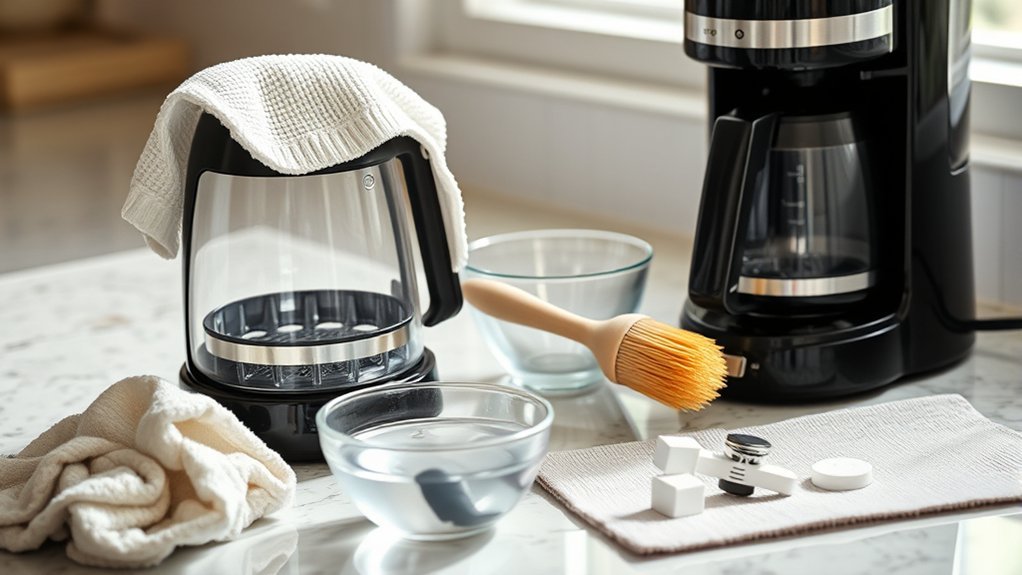
1. Read the Cleaning Section of the Manual
Confirm which parts are removable, whether they are dishwasher-safe, and whether vinegar is approved for any part of the machine. Pay special attention to instructions for charcoal filters, water filters, pod holders, piercing needles, brew groups, seals, steam systems, and removable reservoirs.
Do not assume that every removable part can go in the dishwasher. KitchenAid notes that some components may be top-rack dishwasher-safe, while Hamilton Beach gives model-specific top-rack instructions and warns against high-temperature “SANI” cycles on some products.
If the manual prohibits vinegar, use warm soapy water on washable parts and use only the recommended product for internal descaling.
2. Unplug the Machine and Remove Loose Parts
Turn off the coffee maker, unplug it, and allow hot surfaces to cool. Remove the carafe, filter basket, reusable filter, removable reservoir, reservoir lid, drip tray, pod holder, or other components identified as removable in the manual.
Discard used grounds, capsules, and paper filters. Remove a charcoal or replaceable water filter before exposing the surrounding reservoir to a cleaner unless the manufacturer tells you to leave it installed.
If your pod brewer has a piercing needle, keep your fingers away from the sharp point and follow the model-specific removal or cleaning procedure.
3. Wash the Carafe and Filter Basket
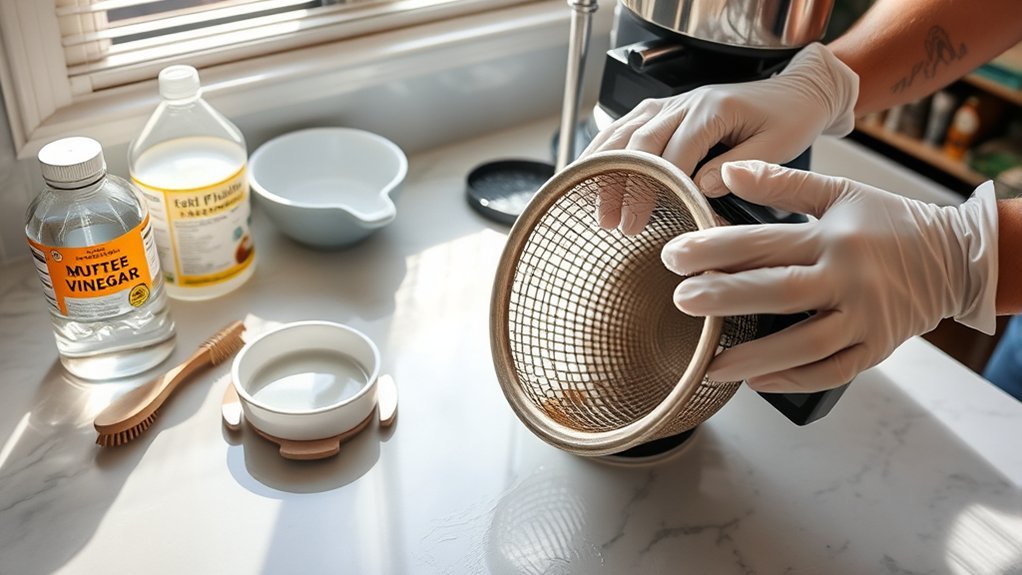
Wash the carafe, filter basket, reusable filter, and removable lid in warm water with a small amount of mild dish soap. Use a soft sponge or brush to loosen coffee oils and grounds from corners, mesh, and seams.
Rinse each part with fresh water until no soap remains. Avoid abrasive pads on glass, nonstick coatings, printed measurement marks, polished metal, and plastic surfaces that scratch easily.
Pro Tip: For a stained glass carafe, Cuisinart recommends baking soda as an option for deeper stains. Use it as a gentle paste on the carafe, rinse thoroughly, and keep loose baking-soda particles out of the coffee maker’s water inlet and internal tubing.
4. Clean a Removable Water Reservoir
Detach the reservoir and empty it. Wash the tank with warm, soapy water if its instructions allow hand washing. Use a soft cloth or brush to reach corners without scratching the plastic or damaging seals. Rinse away all detergent.
If chalky mineral film remains, check the owner’s manual before adding vinegar. Use a vinegar soak only when the manufacturer allows vinegar contact with that reservoir, and follow any concentration and contact-time instructions it provides. Do not substitute a universal 1:1 mixture for model-specific directions.
If the manual gives no vinegar-soaking procedure for the detached reservoir, stop after washing and rinsing it. Internal scale should then be handled with the manufacturer’s approved descaling procedure.
After any approved cleaning treatment, rinse the reservoir thoroughly with fresh water and let it drain. If you can still smell cleaner, continue rinsing before reinstalling it.
5. Handle a Fixed Reservoir Carefully
If the water reservoir does not detach, do not pour vinegar into it simply to let it sit unless the manufacturer gives that exact instruction. A fixed reservoir can be difficult to drain completely without moving the liquid through the machine.
Use a clean, damp cloth to wipe only the surfaces you can safely reach. Do not force a brush, cloth, wire, or other tool into the water inlet.
If visible scale is below the accessible area, stop the no-cycle method and follow the machine’s regular cleaning or descaling program.
6. Wipe the Showerhead and Accessible Brew Area
Use a soft damp cloth to remove loose coffee grounds and residue from the area above the filter basket. A small soft brush can help with reachable openings, but do not push debris farther into a valve, needle, or tube.
Do not spray cleaner directly into the machine. Apply water or a small amount of mild soapy water to the cloth instead, and keep excess moisture away from controls and electrical openings.
7. Clean the Exterior and Warming Plate
Wipe the exterior with a soft cloth dampened with water and, where appropriate, a small amount of mild dish soap. Follow with a clean damp cloth to remove detergent residue.
For a cooled warming plate, place a damp cloth or paper towel over a stubborn coffee spot for several minutes. Once the residue softens, wipe it away. Do not scrape coated warming plates with metal tools or abrasive pads.
8. Rinse, Dry, and Reassemble
Rinse all food-contact parts thoroughly and let them drain or dry before reassembly. Reinstall the reservoir, filter basket, carafe, lid, drip tray, filter, and other components only after checking that no soap, cleaner, or loose debris remains.
If vinegar or another cleaner was confined to a detached component and that component was fully rinsed before reinstallation, you do not need to operate the coffee maker merely to complete this surface-cleaning method.
If vinegar, descaler, soap, or another cleaner entered the machine’s internal water inlet or tubing, do not brew coffee immediately. Follow the manual’s prescribed rinse or cleaning cycles first.
When a Brew or Clean Cycle Is Required
A no-cycle cleaning method is not a substitute for internal descaling. You will normally need to operate the machine when:
- The clean or descale indicator is illuminated.
- Brewing takes noticeably longer than normal.
- The machine dispenses less water than expected.
- You hear persistent unusual gurgling or pumping noises.
- Visible mineral particles appear in dispensed water.
- The owner’s manual schedules an internal cleaning or descale cycle.
- Scale is below the accessible part of the reservoir.
- A manufacturer-approved cleaner has entered the internal water path and must be circulated or rinsed out.
Manufacturer procedures vary. Hamilton Beach, Cuisinart, and KitchenAid publish procedures that circulate vinegar or another approved descaling solution through particular machines and then use fresh-water cycles for rinsing. Follow the instructions for your exact model rather than substituting a generic ratio, soak time, or number of rinse cycles.
Best Practices for Regular Coffee Maker Maintenance
Cleaning frequency depends on the machine, how often you brew, your water hardness, and the manufacturer’s maintenance schedule. A practical routine is:
- After use: Discard grounds or pods, empty old coffee, and rinse components that the manual says should be rinsed after each use.
- Regularly: Wash the carafe, reusable filter, basket, removable lid, and other washable coffee-contact parts with warm soapy water.
- Weekly or as needed: Wipe the exterior, brew area, drip tray, and removable reservoir, and replace water that has been sitting unused.
- For internal descaling: Follow the model’s actual schedule or clean/descale indicator. Manufacturer examples range from about monthly to every one to three months, with some models calling for more frequent care in hard-water conditions.
- When prompted: Treat a machine-generated clean or descale warning as more relevant than a generic calendar schedule.
Filtered water can improve taste and may reduce scale when the filtration method actually reduces the minerals responsible for hardness. A basic carbon filter may mainly reduce chlorine, odors, or other impurities without removing much calcium and magnesium.
Do not assume distilled or demineralized water is correct for every machine. Some manufacturers specifically advise against it for certain models. Use the water type recommended in your owner’s manual.
Where the design allows it, leave removable components or compartments open long enough to dry instead of trapping moisture under a closed lid. Replace charcoal or water filters according to the machine’s instructions.
How to Know When to Clean Your Coffee Maker
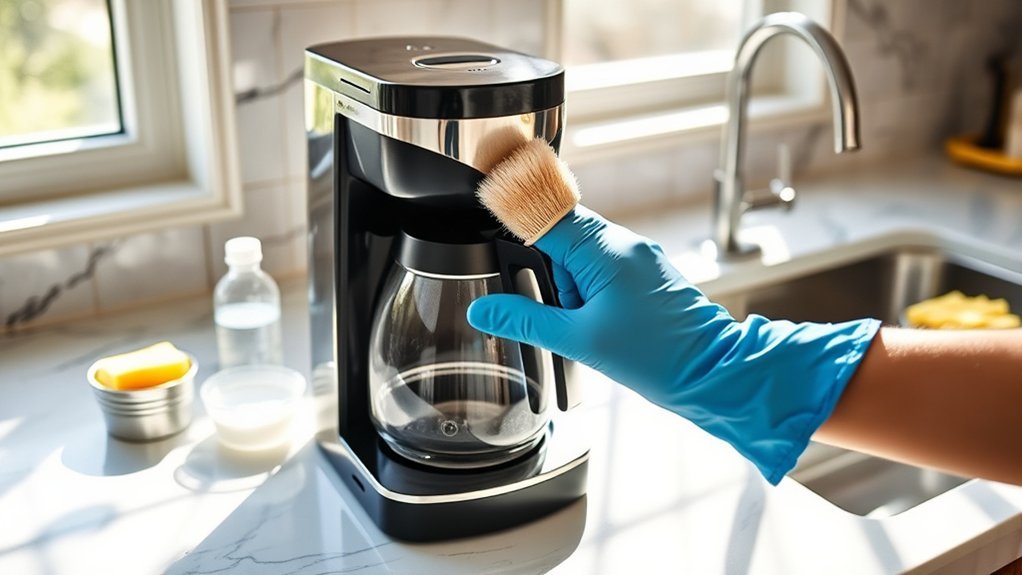
Inspect the machine and pay attention to its performance rather than relying on one universal number of brews. Common signs include:
- Bitter, stale, or unusual coffee flavor
- A sour, musty, or old-coffee odor
- Oily film in the carafe or around the basket
- White or chalky mineral deposits in the reservoir
- Visible slime, discoloration, or residue on accessible washable surfaces
- A slower-than-normal brewing time
- Persistent gurgling or unusual operating noise
- Reduced water output
- An illuminated clean or descale indicator
Different symptoms point to different maintenance needs. Oily residue and old-coffee odors usually call for washing accessible coffee-contact parts. Chalky deposits suggest mineral scale. Slow flow, reduced output, or a descale warning often points to buildup inside the water path and may require the machine’s complete descaling procedure.
Cleaning, Hygiene, and Coffee-Maker Safety
Regular cleaning removes coffee residue, standing water, dirt, and other organic material from surfaces you can reach. Keeping drip trays, used-capsule containers, and other damp waste areas clean also reduces the material and moisture available for unwanted microbial growth.
The often-cited coffee-machine microbiome study should be understood in context. Researchers sampled coffee-waste reservoirs and drip-tray leach from ten Nespresso machines and found diverse bacterial communities. The study did not conclude that every coffee maker is dangerous or that every clean-water reservoir contains the same organisms.
Cleaning is also not the same as disinfecting. The CDC distinguishes cleaning with soap, water, and scrubbing from sanitizing and disinfecting. Vinegar can help with mineral deposits when a manufacturer approves it, but it should not be described as a guaranteed disinfectant or sterilizer.
Do not pour bleach, surface disinfectant, or another household chemical into a coffee maker unless the manufacturer provides explicit instructions for that exact product and machine. Chemical residue inside a water path can be difficult to remove safely.
Never combine chlorine bleach with vinegar or another acid. Poison Control warns that mixing vinegar with chlorine bleach can produce irritating chlorine gas.
If you find heavy mold-like growth inside inaccessible tubing, a cracked reservoir, a damaged seal, or recurring contamination that cannot be reached with normal cleaning, stop using the appliance and contact the manufacturer or an authorized service provider. Replacement may be safer than dismantling a sealed electrical appliance yourself.
Alternatives to Vinegar
Manufacturer-Approved Descaler
A branded or manufacturer-approved descaling solution is the safest choice when the manual prohibits vinegar or specifies a particular formula. Use it only according to the label and machine instructions. A descaler is generally unnecessary for ordinary washing of a carafe, basket, or other removable part unless the manufacturer says otherwise.
Citric Acid
Citric acid is used in some commercial and manufacturer-approved descaling products. The correct concentration and procedure still depend on the product and coffee maker, so follow the descaler label and appliance manual instead of creating an unverified mixture.
Baking Soda
Baking soda can work as a gentle paste for stains on some carafes and other washable surfaces. Rinse it completely. Do not assume that a baking-soda solution is suitable for a coffee maker’s internal tubing; use it internally only when the manufacturer specifically approves that procedure.
Lemon Juice
Lemon juice is acidic and may loosen light deposits on some washable household surfaces, but its acid concentration is less standardized than a formulated descaler and it can leave aroma or organic residue. It is not a preferred internal descaling solution unless the coffee-maker manufacturer specifically approves it.
Troubleshooting After Cleaning
The Reservoir Still Smells Like Vinegar
Rinse a removable reservoir several more times with fresh water and let it air-dry with the lid open. If its care instructions permit dish soap, wash it again with a small amount of mild detergent and rinse completely.
White Scale Remains After Cleaning
Do not keep increasing the strength of a homemade acid solution. If scale remains on a removable part, follow that part’s approved cleaning instructions. If the deposit is inside the water path, use the manufacturer-approved descale cycle.
The Coffee Maker Is Still Slow
Surface cleaning does not clear scale from hidden tubing, valves, pumps, or heating passages. Follow the machine’s clean or descale program. If performance does not improve afterward, check the troubleshooting section of the manual or contact the manufacturer.
The First Coffee Tastes Like Vinegar
Stop drinking it. Vinegar probably entered the internal water path or remained on a component that was not fully rinsed. Empty the coffee maker and perform the manufacturer-recommended fresh-water rinse procedure before brewing coffee again.
Visible Growth Returns Quickly
Discard standing water, wash accessible removable reservoirs and drip trays, and allow washable components to dry as the manual permits. If growth is inside an inaccessible component or sealed tube, discontinue use until the manufacturer advises whether the affected part can be serviced or replaced.
Frequently Asked Questions
Can I use something other than vinegar for cleaning?
Yes. Warm water and mild dish soap are best for many removable parts. For internal descaling, use the cleaner specified in the owner’s manual. Some coffee makers use branded or citric-acid-based descalers and specifically prohibit vinegar.
How often should I clean my coffee maker?
Wash coffee-contact parts regularly and wipe accessible areas whenever they are dirty. For descaling, follow the schedule or indicator for your exact model. Manufacturer recommendations differ with machine design, daily use, and water hardness, so there is no single interval that fits every coffee maker.
Will cleaning affect the flavor of my coffee?
It can improve flavor by removing stale coffee oils, grounds, detergent residue, and mineral deposits. Rinse every food-contact part thoroughly because leftover vinegar, soap, or descaler can also create an unpleasant taste.
Can I clean my coffee maker with baking soda?
Baking soda can be used as a gentle paste on some stained carafes or washable surfaces. Rinse it completely. Do not send a baking-soda mixture through internal tubing unless your coffee maker’s manufacturer specifically approves that method.
Is it safe to clean the exterior with water?
Use a soft, damp cloth on the unplugged machine. Apply water to the cloth rather than pouring or spraying it onto the appliance. Never immerse the base, cord, plug, control panel, or another electrical component.
Does soaking the reservoir clean the internal tubes?
No. A passive soak cleans only surfaces touched by the solution. Internal tubes, valves, pumps, and heating components generally require the machine’s approved cleaning or descaling cycle.
Can I use bleach inside a coffee maker?
Do not put bleach or household surface disinfectant into the coffee maker’s water path unless the manufacturer gives explicit instructions for that exact product and model. Never mix chlorine bleach with vinegar because the combination can release chlorine gas.
What should I do if vinegar entered the machine?
Do not brew coffee immediately. Empty the reservoir and follow the manual’s fresh-water rinsing procedure. The required number of rinse cycles varies by machine, so use the model-specific instructions instead of assuming one or two cycles are enough.
Can removable coffee-maker parts go in the dishwasher?
Only if the manufacturer identifies those specific parts as dishwasher-safe. Some components are limited to the top rack, and some manufacturers warn against high-temperature sanitation settings. Check the manual before placing a reservoir, carafe lid, filter basket, pod holder, or other removable part in the dishwasher.
Is vinegar safe for an espresso or pod coffee maker?
Not automatically. Some machines allow vinegar, while others require a specific descaler. Philips, for example, prohibits acetic acid or vinegar for several espresso-machine lines. Follow the instructions for your exact model rather than applying a drip-coffee-maker recipe.
Conclusion
You can clean a coffee maker without running a brew cycle when the job is limited to the carafe, filter basket, removable reservoir, lid, drip tray, exterior, and other safely reachable parts. Warm water and mild dish soap should handle most routine residue. Vinegar is optional, not universal, and should be used only when the instructions for your machine permit it.
This method cannot remove scale from tubing, valves, pumps, or heating components the cleaner never reaches. When brewing slows, water output drops, a clean or descale indicator appears, or scale is hidden inside the water path, switch to the manufacturer’s complete descaling procedure. Checking the manual before using vinegar, baking soda, citric acid, or another cleaner protects both the appliance and the taste of your next cup.
Sources
- Cuisinart: How to Clean a Coffee Maker — removable-part cleaning, baking-soda carafe care, filtered water, and model-dependent vinegar procedures
- KitchenAid: How to Clean and Descale a Coffee Maker — removable-part washing, dishwasher guidance, descaling, vinegar use, and fresh-water rinsing
- Hamilton Beach FAQs — removable-part cleaning, model-specific vinegar procedures, maintenance intervals, and pod-needle care
- Philips: How to Descale a Philips Espresso Machine — espresso-machine descaling procedures and models that prohibit acetic acid or vinegar
- CDC: Cleaning and Disinfecting — definitions and differences among cleaning, sanitizing, and disinfecting
- Scientific Reports: The Coffee-Machine Bacteriome — bacterial communities identified in coffee-waste reservoirs and drip areas from sampled Nespresso machines



[…] you need to clean removable brewer parts without running a cleaning cycle, see how to clean a coffee maker without running a brew cycle. For the design and maintenance differences between serving vessels, see thermal vs. glass coffee […]