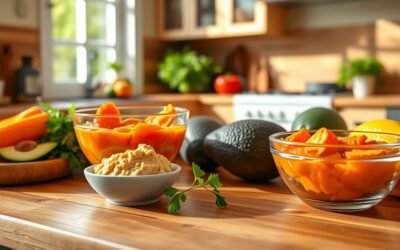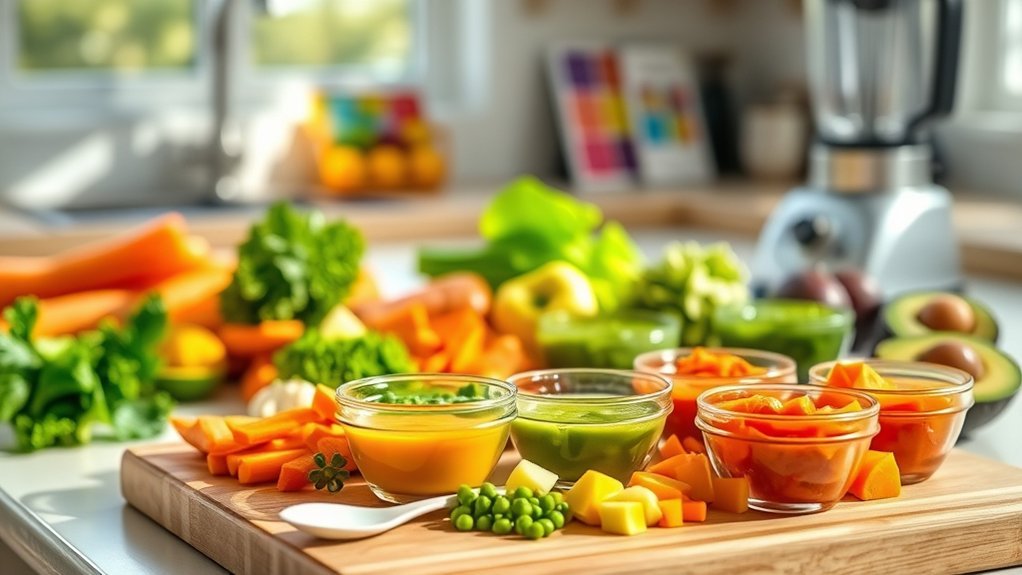
Introducing advanced baby food combinations is essential for your little one’s growth. At 8-10 months, look for signs of readiness like improved chewing and interest in self-feeding. Focus on enriching textures and flavors, incorporating iron-rich foods and healthy fats. Popular combinations include chickpea carrot mash and chicken with sweet potato. Always keep safety in mind by avoiding allergens and complex flavors. There’s so much more to explore about fostering your baby’s taste journey and nutritional intake.
Key Takeaways
- Introduce thicker textures and soft chunks at 8-10 months to enhance chewing skills and texture exploration.
- Combine iron-rich foods like lentils and vegetables to prevent anemia and promote growth.
- Gradually mix familiar flavors with new ingredients to encourage acceptance and reduce food rejection.
- Use natural spices and healthy fats to enhance purees and improve nutrient absorption.
- Monitor for allergic reactions by introducing one new food at a time and ensuring proper food safety practices.
Understanding Advanced Baby Food Combinations
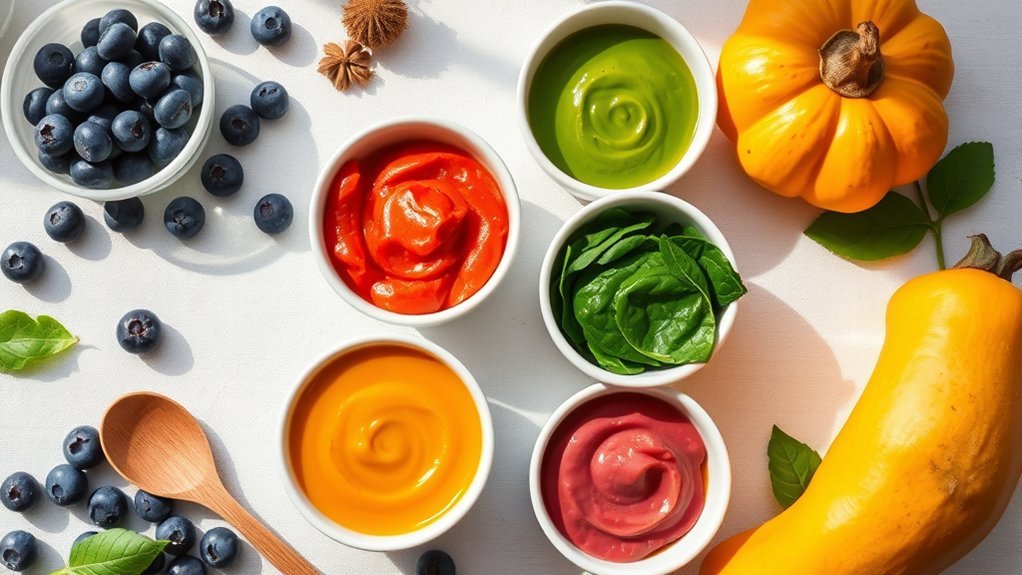
As your baby reaches 8 to 10 months, introducing advanced baby food combinations becomes vital for their development. During this stage, you can enhance their texture exploration by providing slightly thicker textures and small soft chunks.
These combinations, like oats with banana and cardamom or khichdi with vegetables, offer a delightful flavor variety and essential nutrients. Gradually introducing new flavors helps you monitor for any allergic reactions while promoting a balanced diet.
Encouraging self-feeding is important, as it builds fine motor skills and fosters independence. Incorporate a mix of lentils, grains, and colorful vegetables to maximize nutritional intake.
This approach not only supports healthy eating habits but also encourages your little one to embrace adventurous culinary experiences.
When Is Your Baby Ready for Advanced Combinations?
Recognizing when your baby is ready for advanced food combinations is key to supporting their growth and development.
Typically, around 8-10 months, your baby shows signs of baby food readiness, like improved chewing skills, sitting up independently, and a keen interest in self-feeding. At this stage, it’s important to introduce a variety of small soft chunks and slightly thicker textures.
Start adding grains, proteins, and diverse fruits and vegetables to their diet. Gradually introducing new flavors while monitoring for allergic reactions promotes healthy eating habits.
Offering a mix of familiar and new foods encourages texture exploration and helps your baby become adventurous with their tastes, fostering a positive relationship with food from an early age.
Must-Have Gear for Making Baby Food
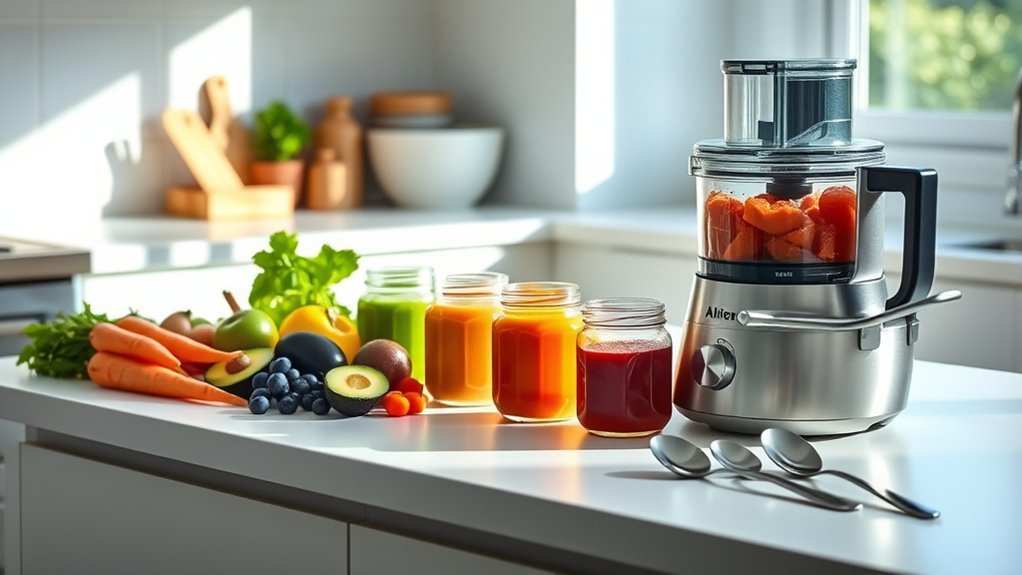
Creating homemade baby food can be a rewarding experience, and having the right gear makes the process smoother and more efficient.
Essential baby food gear includes a high-powered blender or food processor to achieve that perfect smooth texture, along with a steamer to retain nutrients during cooking.
Silicone ice cube trays are perfect for freezing purees in portion sizes, allowing you to combine flavors effortlessly later on. For convenient storage, consider reusable pouches from Squeasy Gear, which make on-the-go feeding easy and waste-free.
To keep your purees fresh, Wean Green Storage Cubes and Wee Sprout Containers are excellent choices.
Finally, a mixing bowl is vital for experimenting with flavors and creating customized baby food combinations.
Key Nutritional Ingredients for Advanced Baby Food Combinations
When creating advanced baby food combinations, it’s vital to focus on essential vitamins and minerals that support your baby’s growth.
Incorporating protein-rich ingredients and healthy fats will enhance brain development and overall nutrition.
Essential Vitamins and Minerals
To guarantee your baby gets the best start in life, it’s essential to incorporate key vitamins and minerals into their diet through advanced baby food combinations.
Iron-rich foods like lentils and spinach help prevent iron deficiency anemia, supporting growth and development.
Vitamin A sources such as sweet potatoes and carrots promote healthy vision and immune function.
Including omega-3 fatty acids from avocado and certain fish boosts cognitive growth, while vitamin C from blueberries and kiwi enhances iron absorption and strengthens the immune system.
Additionally, fiber from peas and oats aids digestion, ensuring your baby experiences healthy bowel movements.
Protein-Rich Ingredients Choices
Incorporating protein-rich ingredients into your baby’s diet is essential for their growth and development. Lentils are an excellent choice, offering essential amino acids and high fiber, which supports digestive health.
For a lean protein source, consider chicken blends; cooked and pureed chicken promotes muscle development and can be mixed with veggies for added nutrients. Ground turkey is another solid option, easily blended into purees and providing iron vital for cognitive growth.
Quinoa stands out as a complete protein grain, containing all nine essential amino acids, making it a nutritious addition when paired with fruits or vegetables.
Don’t overlook beans like black beans or chickpeas, which can enhance both nutrition and flavor in your advanced lentil recipes.
Healthy Fats for Growth
Healthy fats play an essential role in your baby’s growth, particularly in brain development and overall health. Incorporating healthy fat sources into your baby’s diet can markedly enhance cognitive function and energy levels.
Here are some excellent options:
- Avocados and olive oil: Packed with monounsaturated fats, they support brain health.
- Fatty fish: Salmon provides omega-3 fatty acids, vital for brain and eye development.
- Nut butters: Peanut or almond butter offers healthy fats and protein for muscle growth.
Including these ingredients in advanced baby food combinations guarantees your little one receives the brain development benefits they need while promoting overall wellness.
Prioritizing healthy fats is a simple yet effective way to nurture your baby’s growth journey.
Popular Advanced Baby Food Combinations to Try
As your baby approaches 8-10 months, it’s the perfect time to explore advanced combinations that not only enhance flavor but also boost nutrition.
You can try flavorful meat and veggie blends, unique fruit and grain mixes, and nutritious legume and root combinations to support your baby’s growth.
These creative mixtures will help expand their palate and encourage healthy eating habits early on.
Flavorful Meat and Veggie Blends
When you’re ready to introduce more complex flavors to your baby’s diet, flavorful meat and veggie blends offer a fantastic way to enhance nutrition and taste.
These combinations not only provide essential nutrients but also expose your little one to diverse meat textures and veggie nutrition.
Consider trying these delightful blends:
- Chicken with sweet potato and peas: Boosts protein and vitamins A and C.
- Beef with carrots and quinoa: Offers iron and fiber, perfect for older babies.
- Lamb mixed with spinach and butternut squash: Rich in omega-3 fatty acids, supporting brain development.
Each blend serves as a hearty meal option, ensuring your baby receives a well-rounded diet while enjoying new flavors and textures.
Unique Fruit and Grain Mixes
Introducing unique fruit and grain mixes can greatly enhance your baby’s culinary experience while providing essential nutrients. By experimenting with tropical blends and savory pairings, you can introduce delightful flavors and textures that promote healthy eating habits.
| Fruit Blend | Grain Pairing | Nutritional Benefits |
|---|---|---|
| Peach | Quinoa | Protein and fiber boost |
| Banana & Avocado | Oats | Creamy texture, healthy fats |
| Mango | Brown Rice | Vitamins and energy source |
| Raspberry | Farro | Antioxidants and fiber |
These combinations, like apple millet or pear couscous, help prevent picky eating while ensuring balanced nutrition and aiding digestion for your little one. Enjoy mixing and matching these advanced combos!
Nutritious Legume and Root Combinations
Exploring nutritious legume and root combinations can elevate your baby’s diet while providing a wealth of vitamins and minerals.
These combinations not only showcase legume benefits but also highlight root vegetable advantages. Here are some popular blends to try:
- Lentil and sweet potato puree: Packed with vitamins A and C, it supports immune function and vision development.
- Chickpea and carrot mash: Rich in iron and beta-carotene, essential for growth and cognitive development.
- Black bean and butternut squash mix: Offers a variety of flavors while delivering folate and potassium for overall growth and muscle function.
Incorporating spices like cumin can enhance flavor and provide anti-inflammatory benefits, making these combinations perfect for your little one.
Tips for Flavoring and Enhancing Purees
To enhance the flavor of your baby’s purees, consider incorporating a variety of natural ingredients that not only elevate taste but also support nutrition. Small pinches of spices like cinnamon, ground ginger, and cumin create delightful spice combinations that make purees more appealing.
Adding healthy fats, such as avocado or olive oil, improves texture variations while aiding nutrient absorption. Mixing in plain whole milk yogurt adds creaminess and boosts probiotics for gut health.
Experiment with natural flavor enhancers like vanilla extract or unsweetened coconut milk to elevate taste without added sugars. Finally, introduce mild herbs like basil or parsley to gradually expand your baby’s flavor palette, ensuring each meal remains suitable for their developing taste buds.
Avoid These Common Pitfalls When Making Baby Food
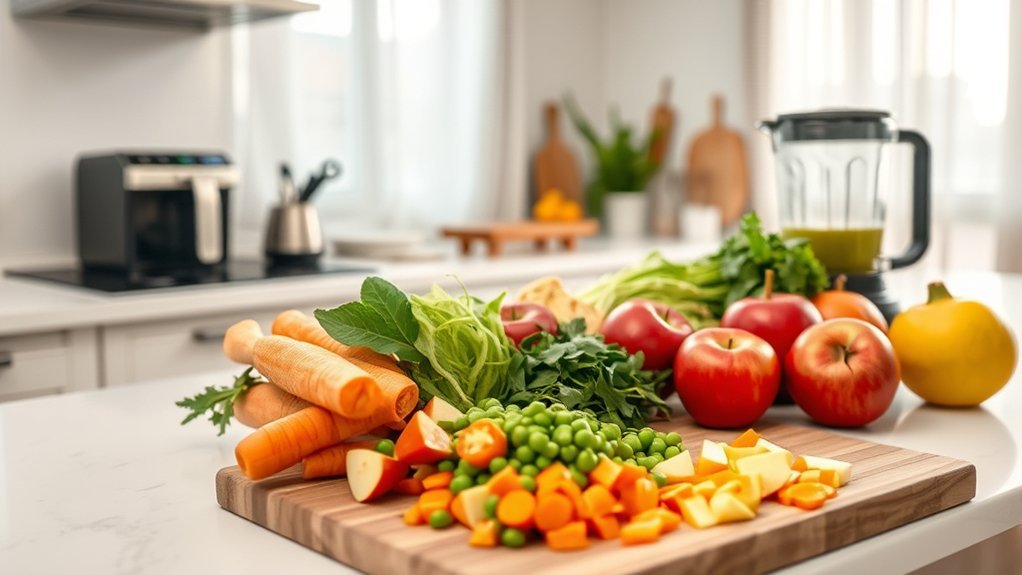
When making baby food, it’s crucial to sidestep common pitfalls that can compromise your baby’s health and enjoyment of meals.
Here are a few common mistakes to watch out for:
Be mindful of these common mistakes when preparing baby food to ensure a healthy and enjoyable eating experience for your little one.
- Introducing multiple new foods at once: This makes it hard to spot allergies. Stick to one new ingredient every few days.
- Adding salt, sugar, or honey: These can be harmful to infants, so avoid them until your baby is at least one year old.
- Using complex flavors or spices: Babies prefer simple tastes; overwhelming flavors can lead to rejection of food.
How to Prepare and Serve These Combinations
Creating baby food combinations can be a rewarding experience that enhances your child’s nutrition and palate.
Start your meal prep by mixing single or two-ingredient purees with spices like cinnamon or cardamom for added flavor and nutritional benefits. Use a high-powered blender or food processor to achieve smooth textures suitable for babies aged 8-10 months.
For advanced eaters, gradually introduce small, soft chunks to create texture variation. Store your prepared combinations in labeled freezer bags or silicone ice cube trays, ensuring they’re tightly sealed to prevent freezer burn.
Thaw them overnight in the refrigerator or use warm water for speed. Serve in small portions, allowing your baby to explore flavors and textures while keeping an eye out for any allergic reactions.
Encouraging Your Baby to Explore New Flavors
Introducing your baby to a variety of flavors during their early feeding stages is essential for developing healthy eating habits. By encouraging baby flavor exploration, you help prevent picky eating later on.
Here are some effective taste acceptance strategies:
- Gradually add mild spices, like cinnamon or ginger, to enhance flavors.
- Mix familiar foods with new ingredients to create a comforting change.
- Offer small, soft pieces of food for self-feeding, promoting independence and interest in diverse tastes.
Monitor your baby’s reactions and be patient; it might take several exposures for them to accept a new flavor.
This exploration not only supports their development but also builds a foundation for a lifetime of adventurous eating.
Frequently Asked Questions
Can I Use Frozen Fruits and Vegetables for Baby Food?
You can absolutely use frozen fruits and vegetables for baby food. They often retain nutrients better than fresh produce, as the saying goes, “You can’t judge a book by its cover.” So, blend away!
How Do I Store Homemade Baby Food Safely?
To store homemade baby food safely, use BPA-free containers. Label and date each container, then refrigerate or freeze portions. Proper baby food storage prevents spoilage, ensuring your little one enjoys fresh, nutritious meals.
When Can I Introduce Spices to My Baby’s Diet?
Start introducing spices around six to eight months; it’s a splendid time for flavor introduction! Spice selection like cinnamon or mild paprika can enhance your baby’s meals while boosting their adventurous palate. Enjoy experimenting together!
What Are Signs of Food Allergies in Infants?
Watch for food allergy symptoms like hives, swelling, or gastrointestinal distress. If your infant shows any unusual reactions after eating, consult a pediatrician immediately. Recognizing these signs early can help guarantee your baby’s safety.
How Can I Incorporate Leftovers Into Baby Food?
You can incorporate leftovers into baby food by blending cooked vegetables with grains or pureeing meats into meal combinations. Leftover ideas like mashed sweet potatoes or cooked lentils create nutritious, flavorful options for your little one.
Conclusion
By exploring advanced baby food combinations, you’re setting the stage for your child’s culinary adventure. For instance, a parent named Sarah introduced her 9-month-old to a blend of sweet potato, spinach, and pear. This not only provided essential nutrients but also expanded her baby’s palate. Remember, the key is to be patient and creative. With the right combinations and preparation techniques, you can make mealtime a delightful experience for your little one. Happy cooking!