
Advanced baby food combinations can help babies who already eat complementary foods practice new tastes and textures while getting important nutrients such as iron, zinc, protein, healthy fats, fruits, vegetables, and grains. Around 8 to 10 months, many babies are ready for mashed, lumpy, finely chopped, or appropriately prepared finger foods, but development matters more than the calendar. Breast milk or infant formula should continue alongside these foods throughout the first year.
Quick Answer
For a developmentally ready 8- to 10-month-old, build meals from a soft iron-rich food, fruit or vegetable, and healthy fat, using mashed, lumpy, finely chopped, or safe finger-food textures. Combine foods your baby already tolerates, introduce common allergens in age-appropriate forms rather than routinely delaying them, and always supervise eating.
Key Takeaways
- Move toward thicker, mashed, lumpy, finely chopped, and safe finger-food textures as your baby’s eating skills develop.
- Include iron-rich foods such as meat, poultry, eggs, beans, lentils, tofu, or iron-fortified infant cereal regularly.
- Once individual ingredients are tolerated, combine familiar foods with new flavors to build variety.
- Healthy fats from avocado, olive oil, appropriate fish, yogurt, and safely prepared nut or seed butters can add energy and nutrients.
- Do not routinely avoid common food allergens. Introduce them in developmentally appropriate forms, with special medical guidance for babies at higher allergy risk.
- Prevent choking by matching food size and texture to your baby’s skills and supervising every meal while your baby sits upright.
Note: This guide is general education for otherwise healthy infants. Ask your baby’s pediatrician or feeding specialist for individualized advice if your baby was born prematurely, has feeding or swallowing problems, poor growth, severe eczema, a known food allergy, or another medical condition that affects feeding.
At a Glance
| Time Required | About 5–30 minutes when ingredients are already cooked; longer for batch cooking |
| Difficulty | Easy to moderate |
| Tools Needed | Fork or masher, saucepan or steamer, knife and cutting board, optional blender or food processor, and food-grade storage containers |
| Cost | Variable; using unsalted family staples such as oats, lentils, vegetables, eggs, and beans can keep costs low |
Understanding Advanced Baby Food Combinations
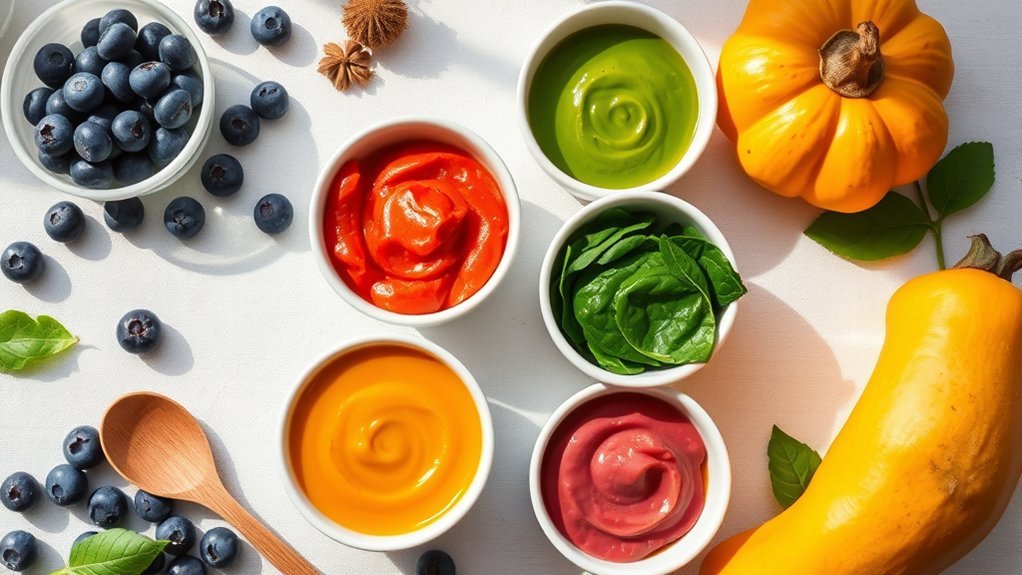
Advanced combinations are simply mixed meals that move beyond a single smooth puree. They may include mashed or lumpy foods, finely chopped ingredients, or soft foods your baby can pick up safely.
The CDC recommends offering a variety of tastes and textures as a child’s eating abilities develop. That practice helps babies develop chewing and fine-motor skills while becoming familiar with different foods.
Examples include oats with banana and a small pinch of cardamom, soft vegetable khichdi, lentils with sweet potato, or chicken with vegetables. Once the individual ingredients are tolerated, mixing them lets you expand flavor and texture without introducing several completely unfamiliar foods at the same time.
Continue offering breast milk or infant formula while complementary foods expand. During the first year, solids complement rather than abruptly replace milk feeds.

Power your essentials anywhere with a 999Wh pure sine wave power station delivering up to 1000W continuous with 2000W surge. It supports fast charging via USB-C PD 60W and USB-A QC 18W, plus simultaneous output for multiple devices through AC, USB, wireless, and car/DC ports. Recharge using AC, car, or solar with a built-in MPPT controller and dual cooling fans, while the upgraded battery management system protects against surges, short circuits, and overheating.

Simple and Wholesome: Our puffed corn and quinoa Melty Hoops are made with organic* strawberries and mangoes and a delicious flavor that little ones will love. Made without artificial flavors, artificial colors, or artificial preservatives, just yummy and wholesome ingredients

Happy Baby Savory Blends: These exciting recipes feature ingredients chosen for babys age & stage, combining organic protein and one full serving (_ cup) of veggies with flavorful oils & herbs just like you would roast or saute at home!
When Is Your Baby Ready for Advanced Combinations?
Eight to ten months is a common period for moving beyond very smooth purees, but age alone should not decide texture. The CDC recommends starting complementary foods at about 6 months when a baby shows developmental readiness.
Useful signs include:
- Good head and neck control.
- Ability to sit upright alone or with support.
- Swallowing food instead of pushing it immediately back out.
- Bringing objects or food toward the mouth.
- Reaching for and grasping food.
- Increasing ability to manage mashed, lumpy, or finely chopped textures.
Interest in self-feeding and improved chewing are helpful signs as your baby advances, but babies develop these skills at different rates. Do not rush larger or firmer pieces simply because your baby reaches a particular month.
Pro Tip: Test softness with a fork or between clean fingers. Foods offered as soft pieces should mash easily with gentle pressure and should be prepared in a shape and size your baby can manage safely.
Must-Have Gear for Making Baby Food
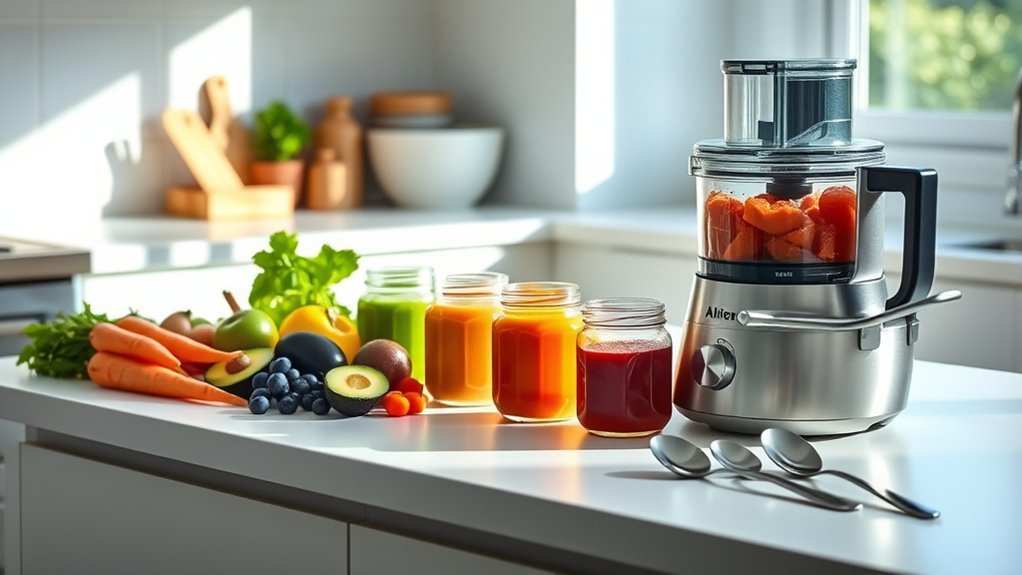
Homemade baby food does not require specialized equipment. A fork or potato masher is often enough once your baby is ready for more texture.
A blender or food processor can still help with foods that need to be smooth, while a saucepan or steamer is useful for cooking vegetables until soft. A clean cutting board and knife help you prepare finely chopped foods and safe finger-food shapes.
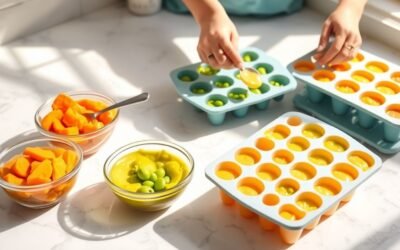
Silicone ice cube trays can make batch freezing convenient, but cube size should not be treated as a universal serving size. Your baby should decide how much to eat based on hunger and fullness cues.
Reusable pouches such as those sold by Squeasy Gear and storage products such as Wean Green Storage Cubes or Wee Sprout Containers are examples of convenient options, but they are not necessary. Any clean, food-grade container that seals well and can be cleaned according to its manufacturer’s instructions can work.
A mixing bowl is also useful for combining already tolerated ingredients and adjusting texture with breast milk, prepared infant formula, water, plain unsweetened yogurt, or another suitable ingredient.
Key Nutritional Ingredients for Advanced Baby Food Combinations
Advanced baby food combinations work best when they provide more than fruit and vegetables alone. Include foods that supply iron, zinc, protein, healthy fats, and other nutrients needed during rapid growth.
Essential Vitamins and Minerals
Iron deserves special attention. According to the CDC’s infant iron guidance, babies need an outside source of iron as complementary feeding develops. Meat, poultry, eggs, seafood, iron-fortified infant cereal, tofu, beans, lentils, and dark green vegetables can contribute iron.
Iron from meat and other animal foods is generally absorbed more readily than iron from plant foods. Pairing plant sources such as lentils or beans with vitamin-C-rich foods such as berries, broccoli, tomato, papaya, or sweet potato can improve non-heme iron absorption.
Sweet potatoes and carrots provide carotenoids that the body can use to make vitamin A, while fruits and vegetables add vitamin C, potassium, fiber, and other nutrients. Zinc is also important during complementary feeding and is found in foods including meat, dairy, fish, beans, and fortified infant cereals.
Protein-Rich Ingredient Choices
Lentils are a convenient plant protein and fiber source. Cook them until very soft and mash or blend them to the texture your baby can manage.
Chicken can be cooked thoroughly, finely chopped, shredded very finely, mashed, or blended with vegetables. Ground turkey is another useful protein and iron-containing food when cooked thoroughly and prepared to a safe texture.
Quinoa contains all nine essential amino acids and can be cooked until very soft before being combined with fruit or vegetables. Beans such as black beans and chickpeas also work well when thoroughly cooked and mashed so no firm skins or hard pieces remain.
Healthy Fats for Growth
Healthy fats provide concentrated energy and help make meals satisfying. Useful options include:
- Avocado and olive oil: Easy ways to add unsaturated fat to mashed foods.
- Low-mercury fish such as salmon: Provides protein along with useful fatty acids and other nutrients. Cook fish fully and remove every bone before serving.
- Smooth peanut, almond, or other nut butter: Provides fat and protein but must be served in a safe consistency.
- Plain, pasteurized whole-milk yogurt: Can add fat, protein, and creaminess without added sugar.
Warning: Never give a baby a thick spoonful or sticky glob of nut butter. Thin smooth nut butter with warm water, breast milk, prepared formula, yogurt, or another tolerated food until it is easy to swallow. Whole nuts and nut pieces are choking hazards.
How to Build a Balanced Baby Food Combination
You do not need complicated recipes. Start with foods your baby already tolerates and build meals from three simple parts:
- Choose an iron-rich or protein food: beef, chicken, turkey, egg, lentils, beans, tofu, fish, or iron-fortified infant cereal.
- Add a fruit or vegetable: sweet potato, peas, carrots, squash, broccoli, berries, pear, mango, or another soft option.
- Add energy and healthy fat when useful: avocado, olive oil, plain whole-milk yogurt, or safely thinned nut or seed butter.
You can also add a soft grain such as oats, quinoa, barley, millet, brown rice, couscous, or farro when the texture is suitable. If you use infant cereal frequently, vary the grains rather than relying only on rice cereal.
Popular Advanced Baby Food Combinations to Try
Once your baby has tolerated the separate ingredients, you can begin creating more varied meals. Adjust every combination to a mashed, lumpy, finely chopped, or soft finger-food texture that matches your baby’s skills.
Flavorful Meat and Veggie Blends
- Chicken with sweet potato and peas: Combines protein with vegetables rich in carotenoids, vitamin C, fiber, and other nutrients.
- Beef with carrots and quinoa: Provides iron and zinc from beef along with a soft grain and vegetable.
- Lamb with spinach and butternut squash: Supplies protein, iron, and zinc from lamb plus vegetables with folate, carotenoids, and other nutrients.
Cook meat thoroughly, remove skin, bones, gristle, and excess tough fat, and mince, mash, shred, or blend it finely enough for your baby’s current feeding ability.
Unique Fruit and Grain Mixes
Fruit-and-grain combinations can add variety without relying on sweetened packaged foods.
| Fruit Blend | Grain Pairing | Why It Works |
|---|---|---|
| Peach | Quinoa | Soft grain with protein, fiber, and fruit |
| Banana & Avocado | Oats | Creamy texture with healthy fat and fiber |
| Mango | Brown Rice | Soft carbohydrate with vitamin-rich fruit |
| Raspberry | Farro | Fiber-rich combination when both foods are cooked or mashed to a safe texture |
Apple with millet and pear with soft couscous are two more options. Mash berries and cook firmer grains thoroughly so the finished texture is appropriate for your baby.
Nutritious Legume and Root Combinations
- Lentil and sweet potato mash: Combines plant-based iron and protein with vitamin-C-rich sweet potato, which can help with non-heme iron absorption.
- Chickpea and carrot mash: Offers protein, fiber, iron, and carotenoids in a mild combination.
- Black bean and butternut squash mash: Adds protein, fiber, folate, potassium, and a naturally soft texture when thoroughly cooked.
A small pinch of cumin can add a different flavor without relying on salt. Spices should be used for taste, not as treatments or sources of claimed medicinal benefits.
Introducing Common Food Allergens Safely
Common allergenic foods should not automatically be avoided during complementary feeding. The CDC recommends introducing potentially allergenic foods along with other complementary foods.
At the beginning of complementary feeding, offering one new single-ingredient food at a time and waiting several days before another new food can make reactions easier to identify. Once foods have been tolerated, they can be combined freely into meals.
Age-appropriate allergen examples include:
- Peanut or tree nuts: Smooth butter thinned to a runny, easy-to-swallow consistency; never whole nuts or thick globs.
- Egg: Fully cooked and mashed or finely chopped.
- Dairy: Plain, pasteurized yogurt or cheese in an appropriate texture.
- Wheat: Soft cooked wheat cereal, pasta, or another easy-to-manage form.
- Fish or shellfish: Fully cooked, carefully checked for shell and bones, and prepared to a soft texture.
If your baby has severe eczema, egg allergy, a known food allergy, or has already reacted to a food, ask your baby’s clinician how to introduce allergens safely. In particular, babies with severe eczema or egg allergy may need individualized advice about peanut introduction.
Warning: Stop feeding a suspected food if your baby develops symptoms such as hives, facial or lip swelling, repeated vomiting, coughing, or wheezing. Trouble breathing, throat or tongue swelling, collapse, loss of consciousness, or another severe rapidly developing reaction requires emergency medical help. Call 911 in the United States.
Choking Prevention for Advanced Baby Foods
Moving to more texture does not mean offering adult-sized pieces. The CDC recommends preparing food to the right shape, size, and texture for the child’s development and avoiding hard, small, or sticky foods that are difficult to chew and swallow.
- Seat your baby upright in a high chair or another secure feeding seat.
- Stay within reach and watch your baby throughout the meal.
- Cook hard fruits and vegetables such as carrots and apples until soft.
- Cut round foods such as grapes, cherries, berries, and tomatoes into safer small pieces.
- Avoid whole nuts, hard raw vegetable chunks, popcorn, hard candy, and sticky spoonfuls of nut butter.
- Remove bones, pits, seeds, tough skins, and other hard pieces.
- Do not let a baby eat while crawling, walking, riding in a stroller, or traveling in a moving car.
Babies learning new textures may sometimes cough, gag, or spit food out while developing feeding skills. Persistent feeding difficulty, frequent coughing during meals, repeated choking, or trouble swallowing deserves evaluation by your child’s health professional.
Tips for Flavoring and Enhancing Purees
You do not have to keep baby food bland. Once your baby is comfortable with complementary foods, small amounts of mild herbs and spices can expose them to the flavors your family eats.
Cinnamon, ginger, cumin, cardamom, basil, parsley, and other mild seasonings can be added in small amounts. Avoid seasoning blends that contain a lot of sodium.
Healthy fats such as mashed avocado or a small amount of olive oil can change the texture and add energy. Plain, pasteurized whole-milk yogurt can make foods creamy and is different from serving cow’s milk as a beverage.
If you want vanilla flavor, avoid adding an alcohol-containing extract to uncooked baby food. An alcohol-free, unsweetened flavoring can be used sparingly instead. Unsweetened coconut milk can be used as a recipe ingredient, but it should not replace breast milk or infant formula as your baby’s main milk source.
Do not add honey before 12 months, and avoid added sugars and unnecessarily salty foods.
Avoid These Common Pitfalls When Making Baby Food
Homemade baby food can be simple, but a few mistakes can create avoidable nutrition or safety problems.
The safest advanced combinations use ingredients your baby already tolerates, a texture your baby can manage, and preparation methods that reduce choking and foodborne-illness risks.
- Introducing several brand-new foods in one mixture: At first, introduce new ingredients individually so a reaction is easier to identify. Use already tolerated foods for most mixed meals.
- Automatically avoiding allergenic foods: Current guidance supports introducing common allergens in safe forms rather than routinely delaying them, unless your child’s clinician recommends otherwise.
- Adding honey: The CDC says honey should not be given before 12 months because it can cause infant botulism.
- Adding sugar or too much salt: Avoid added sugars and choose foods that are not high in sodium rather than developing a preference for very sweet or salty foods.
- Keeping every meal completely smooth: When your baby’s skills allow, gradually progress to mashed, lumpy, finely chopped, and other developmentally appropriate textures.
- Serving unsafe finger foods: Whole nuts, hard pieces, sticky nut-butter globs, and round firm foods can be choking hazards.
- Replacing formula or breast milk with cow’s milk too early: Cow’s milk should not be your baby’s main beverage before 12 months, although pasteurized yogurt and cheese can be offered earlier.
How to Prepare and Serve These Combinations
Start with clean hands, clean preparation surfaces, and clean utensils. Wash produce and cook meat, poultry, seafood, and eggs thoroughly.
For babies still learning texture, cook firm foods until they mash easily with a fork. A blender can create a smooth texture, but it is not required for every meal. As your baby’s eating skills improve, use a fork, masher, knife, or food processor to leave more texture instead of automatically pureeing everything.
Prepare small portions and let your baby decide how much to eat. Avoid forcing another bite once your baby shows signs of being finished.
For batch preparation, portion food into clean covered containers or silicone freezer trays. The FDA’s baby food-safety guidance recommends careful refrigeration and freezing of homemade baby food. A practical conservative rule is to refrigerate homemade baby food for no more than 1–2 days or freeze it for up to about 3 months.
Thaw frozen portions in the refrigerator. For quicker thawing, use cold water or a microwave and serve promptly once the food is safely prepared. Stir microwaved food thoroughly and check its temperature because microwaves can create hot spots.
Do not save food that has been eaten directly from your baby’s bowl, spoon, pouch, or container. Saliva can introduce bacteria, so discard the remaining portion after the feeding.
Using Family Foods and Leftovers Safely
You can often turn plain family foods into baby food instead of cooking a separate meal. Before seasoning the family portion heavily, set aside soft vegetables, grains, beans, meat, or other suitable ingredients for your baby.
Family leftovers can also be used when they were cooked safely, refrigerated promptly, and have not been eaten from or contaminated by used utensils. Avoid leftovers that are very salty, contain honey, include hard choking hazards, or have been sitting at room temperature for an unsafe period.
Mash, mince, shred, or cut the food to the texture your baby currently handles. Add a little water, breast milk, prepared formula, or plain unsweetened yogurt if the food needs to be softened.
Encouraging Your Baby to Explore New Flavors
Early feeding is a chance to expose your baby to many flavors rather than trying to make every food instantly appealing. Some foods will be accepted immediately; others may need to be offered repeatedly.
- Mix a small amount of a new flavor with a familiar tolerated food.
- Use mild herbs and spices instead of salt or sugar to create variety.
- Offer soft finger foods when your baby is developmentally ready so they can practice picking food up.
- Eat similar healthy foods with your baby so they see other people enjoying them.
- Do not pressure your baby to finish a portion or eat a disliked food.
Current evidence supports repeated taste exposure as a useful way to improve acceptance of some new foods. A refusal today does not necessarily mean your baby permanently dislikes that food.
Frequently Asked Questions
Can I use frozen fruits and vegetables for baby food?
Yes. Plain frozen fruits and vegetables can be convenient, nutritious ingredients. Check for added sugar, salt, sauces, or seasonings. Cook firm vegetables until soft enough to mash, prepare everything to a safe texture, and follow safe thawing and storage practices.
How do I store homemade baby food safely?
Use clean, food-grade containers, label them with the preparation date, and refrigerate homemade baby food for about 1–2 days or freeze it for up to about 3 months. Thaw in the refrigerator when possible. Discard food that has been eaten from because saliva can introduce bacteria.
When can I introduce spices to my baby’s diet?
Once your baby is developmentally ready for complementary foods, small amounts of mild herbs and spices can be used to add flavor. Cinnamon, cumin, cardamom, ginger, basil, and parsley are examples. Avoid honey before 12 months, added sugars, and high-sodium seasoning blends.
What are signs of food allergies in infants?
Possible symptoms include hives, rash, swelling of the lips or face, vomiting, diarrhea, coughing, or wheezing. Stop feeding the suspected food and seek medical advice. Trouble breathing, throat or tongue swelling, collapse, loss of consciousness, or another severe rapidly developing reaction is an emergency; call 911 in the United States.
How can I incorporate leftovers into baby food?
Use safely cooked and promptly refrigerated family foods that have not been eaten from. Good options include plain vegetables, lentils, beans, grains, meat, or mashed sweet potato. Avoid foods that are high in salt, contain honey, or have unsafe hard pieces, and change the texture to match your baby’s eating skills.
How should I give peanut or nut butter to a baby?
Use smooth nut butter and thin a small amount with water, breast milk, prepared formula, yogurt, or another tolerated food until it is easy to swallow. Never offer whole nuts, nut pieces, or a thick spoonful of sticky nut butter. Babies with severe eczema, egg allergy, or a previous food reaction should have individualized medical guidance.
Can my baby have yogurt or cow’s milk?
Plain, pasteurized yogurt without added sugar can be introduced during complementary feeding when your baby is developmentally ready. Cow’s milk can also be used as an ingredient in food, but it should not replace breast milk or infant formula as your baby’s main beverage before 12 months.
How lumpy should food be for an 8- to 10-month-old?
There is no single texture that suits every baby. Many babies in this age range can move from smooth foods to mashed or lumpy foods and then to finely chopped or soft finger foods. Advance texture according to your baby’s oral-motor skills and ability to manage food safely rather than age alone.
Conclusion
Advanced baby food combinations are less about complicated recipes and more about safely expanding variety. Build meals around iron-rich foods, vegetables or fruit, and healthy fats; progress textures as your baby’s skills develop; and combine ingredients that have already been tolerated. Introduce common allergens in safe forms rather than routinely delaying them, prevent choking through careful food preparation and supervision, and follow safe storage practices. With patient, repeated exposure to different foods, your baby can gradually become comfortable with a broad range of flavors and textures.
Sources
- CDC — When, What, and How to Introduce Solid Foods — readiness, allergen introduction, texture, and food preparation guidance.
- CDC — Choking Hazards — safe food preparation, positioning, and supervision.
- CDC — Foods and Drinks to Avoid or Limit — honey, added sugar, sodium, mercury, unpasteurized foods, and cow’s milk guidance.
- CDC — Iron — infant iron needs, iron-rich foods, and vitamin C pairing.
- U.S. Food and Drug Administration — Once Baby Arrives: Food Safety — homemade baby food storage, freezing, hygiene, and leftover safety.
- U.S. Food and Drug Administration — Food Allergies: What You Need to Know — food-allergy symptoms and severe-reaction safety.