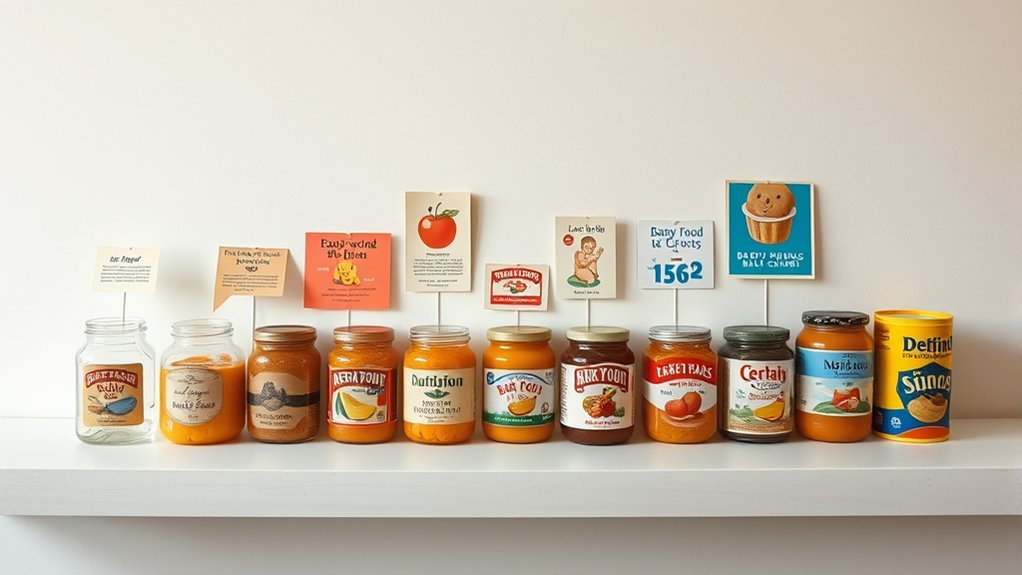
Commercial baby food did not appear in one single moment. Families had prepared soft cereals, broths, mashed vegetables, and other foods for infants for centuries. The modern U.S. baby food industry took shape in the 1920s, however, when Harold Clapp began selling food prepared specifically for babies and Gerber turned strained fruits and vegetables into widely available grocery products.
Quick Answer
Commercial baby food emerged in the United States during the early 1920s. Harold Clapp sold an early canned baby soup, while Gerber made strained fruits and vegetables widely available in grocery stores in 1928. Since then, ingredients, packaging, safety oversight, and medical feeding advice have changed substantially.
Key Takeaways
- Parents prepared complementary foods at home long before companies sold food specifically for babies.
- Harold H. Clapp began selling an early canned baby soup in the 1920s, but he did not invent solid food for infants.
- Gerber introduced widely available strained fruits and vegetables in 1928, helping create the modern mass-market baby food category.
- Advertising, medical advice, urbanization, and demand for convenience all helped commercial baby food become common.
- Modern guidance generally recommends starting complementary foods at about 6 months, when the baby shows developmental readiness, and never before 4 months.
- Today’s parents must consider ingredients, texture, allergens, added sugar, sodium, recalls, and environmental contaminants—not just whether a product is homemade or commercial.
What Counts as Baby Food?
The term baby food usually refers to foods made or prepared for infants who are beginning to eat something other than breast milk or infant formula. Health professionals call these complementary foods because they complement—not immediately replace—breast milk or formula.
Baby food may include smooth purées, mashed family foods, soft finger foods, infant cereals, yogurt, cooked vegetables, fruit, eggs, meat, beans, and other developmentally appropriate foods. It is different from infant formula, which is designed to serve as a primary source of nutrition during infancy and is subject to separate FDA nutrient and manufacturing requirements.
Note: Historical sources sometimes use “infant food” to describe milk substitutes, cereals, medicinal foods, and strained purées. That can make claims about the “first baby food” confusing unless the type of product is clearly defined.
Baby Food Before the 1920s
Babies ate complementary foods long before factories produced cans and jars. Families used foods available in their own homes and cultures, including grain porridges, bread softened in milk or broth, mashed vegetables, fruit, legumes, eggs, and finely prepared meat.
During the late 1800s and early 1900s, companies also sold proprietary infant cereals and milk-based preparations. These products belonged to the broader history of infant feeding, but they were not the same as the ready-to-eat strained fruits, vegetables, and meat mixtures that later defined the commercial baby food aisle.
Medical recommendations varied widely. A scholarly review of 20th-century feeding advice found that the recommended age for solid foods shifted dramatically over time. Some early authorities delayed solids, while mid-century physicians sometimes advised introducing them far earlier than experts recommend today. The modern standard is based more closely on developmental readiness and current nutrition evidence.
The Birth of Commercial Baby Food in the 1920s
Harold Clapp and Early Canned Baby Soup
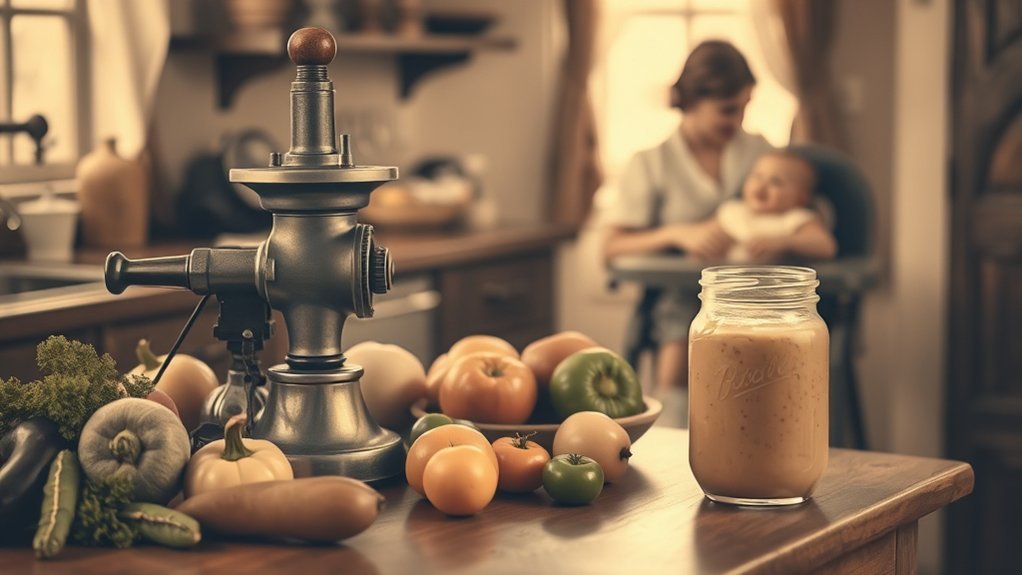
Harold H. Clapp, a restaurant operator in Rochester, New York, is commonly credited with developing one of the earliest commercially sold canned foods made specifically for babies. Contemporary accounts place the beginning of his business in 1921, when he prepared strained vegetables and soup for his infant children and began sharing the food with other families.
Clapp’s Baby Soup combined ingredients such as beef broth, vegetables, and cereal. The product was initially distributed through drugstores, which reflected the period’s tendency to treat specialized infant food as both a nutritional and medical product.
It is more accurate to call Clapp an early commercial baby food producer than the inventor of solid baby food. Parents had always adapted ordinary foods for infants, and other prepared infant products already existed.
Gerber Brings Strained Food to Grocery Stores
The next major step occurred in Fremont, Michigan. Dorothy Gerber was straining food for her infant daughter when the Gerber family recognized that its canning business could perform the same labor on a larger scale. Daniel Gerber developed a commercial line, and strained baby foods reached the market in 1928.
A published historical review of complementary feeding identifies 1928 as the year Gerber introduced the first widely available commercial baby foods in grocery stores. Early products included strained fruits and vegetables. A Harvard Business School profile of Daniel Gerber likewise describes the 1928 introduction as a major business milestone.
Clapp helped establish a market for food prepared specifically for babies; Gerber turned strained baby food into a widely distributed grocery product.
Baby Food History Timeline
| Period | Development |
|---|---|
| Before the 1920s | Families prepare porridges, broths, mashed foods, and other culturally familiar complementary foods at home. |
| 1921–1922 | Harold Clapp begins producing and selling an early canned soup formulated for babies. |
| 1928 | Gerber introduces widely available strained fruits and vegetables through grocery stores. |
| 1930s–1940s | Advertising, physician outreach, national distribution, and competition expand the market. |
| Postwar decades | Commercial baby food becomes a common household convenience, with broader flavors, textures, and product stages. |
| Late 20th century | Glass jars, dry cereals, plastic tubs, organic products, and more detailed age-stage labels broaden the category. |
| 21st century | Pouches, subscription brands, global flavors, allergen products, cleaner-label marketing, and greater contaminant scrutiny reshape the aisle. |
| 2025–2026 | FDA lead action levels and continued work on other toxic elements place greater emphasis on ingredient sourcing and manufacturing controls. |
Early Skepticism and Changing Feeding Practices
Commercial baby food initially faced resistance from both parents and health professionals. Home-prepared food was familiar, while canned products raised questions about spoilage, processing, ingredients, cost, and whether a factory could provide food suitable for an infant.
Concerns About Canned Food
Canning had improved greatly by the 1920s, but memories of spoiled or poorly processed foods still shaped consumer attitudes. Parents also had little reason to assume that a packaged purée was nutritionally superior to food prepared at home.
Manufacturers responded by emphasizing controlled preparation, smooth texture, convenience, consistent portions, and shelf life. Those benefits were especially appealing to households with limited time or equipment for repeatedly cooking and straining small servings.
Medical Authority and Marketing
Baby food companies did more than advertise to parents. Historical marketing often used physicians, nutrition research, educational materials, samples, and images of healthy babies to build credibility. The strategy linked packaged food with modern science and efficient parenting.
That approach helped normalize commercially prepared food, but it also blurred the line between neutral medical advice and product promotion. Modern readers should view historical company-sponsored nutrition claims in the context of the advertising practices of their time.
How Feeding Practices Shifted
Commercial baby food was not the only reason feeding practices changed. Refrigeration, urban employment, hospital birth, pediatric schedules, infant formula, changing family roles, supermarkets, and postwar consumer culture all influenced what babies ate and when they ate it.
| Initial Concern | Industry Response | Long-Term Effect |
|---|---|---|
| Fear of spoilage | Promotion of controlled canning, sealed packaging, and shelf stability | Greater trust in factory-prepared foods |
| Questions about nutrition | Doctor-focused outreach, research claims, and educational advertising | Association between packaged baby food and scientific feeding |
| Preference for homemade food | Emphasis on convenience, consistency, and reduced preparation time | Commercial products become a routine household option |
The Rise of the Industrial Baby Food Market
Gerber’s national reach encouraged other established food companies to compete. Beech-Nut, Heinz, Clapp’s, and additional manufacturers expanded the variety of strained fruits, vegetables, cereals, soups, meats, and combination meals available to parents.
Why Commercial Baby Food Grew
The category grew because it solved several practical problems. Products were portable, required little preparation, delivered a predictable texture, and could be stored longer than freshly prepared food. Supermarket distribution also made them easy to purchase with the rest of a household’s groceries.
Postwar economic growth and consumer interest in labor-saving products strengthened those advantages. Commercial baby food came to represent convenience, modern manufacturing, and a standardized approach to feeding.
How Advertising Shaped Expectations
Advertising did not merely sell jars. It helped define what a proper infant meal should look like, when solids should begin, how smooth the texture should be, and how much work a parent ought to perform at home.
Modern advertising remains subject to federal truth-in-advertising principles. The Federal Trade Commission states that claims must be truthful, nondeceptive, fair, and supported by evidence when evidence is needed. FDA separately oversees food labeling and certain package claims.
How Baby Food Ingredients Changed
The earliest canned products often used familiar savory ingredients, including vegetables, cereal, broth, and meat. As the industry expanded, manufacturers created smoother textures, combination meals, desserts, juices, cereals, and foods marketed for different stages of development.
Some mid-century products contained added sugar, salt, modified starches, or flavor enhancers. These ingredients could improve taste, texture, consistency, or shelf stability, but they also reflected a period when nutrition guidance and consumer expectations differed from current recommendations.
Modern parents are more likely to see products promoted as organic, non-GMO, plant-based, allergen-conscious, no-sugar-added, globally inspired, or minimally processed. Marketing language should not replace label reading, however. A product can have an appealing front label while still relying heavily on sweet fruit, refined grains, or a narrow range of ingredients.
The history of baby food is not just a story about new products. It is also a story about changing beliefs concerning convenience, science, taste, parenting, and what infants should eat.
When Should Babies Start Solid Foods?
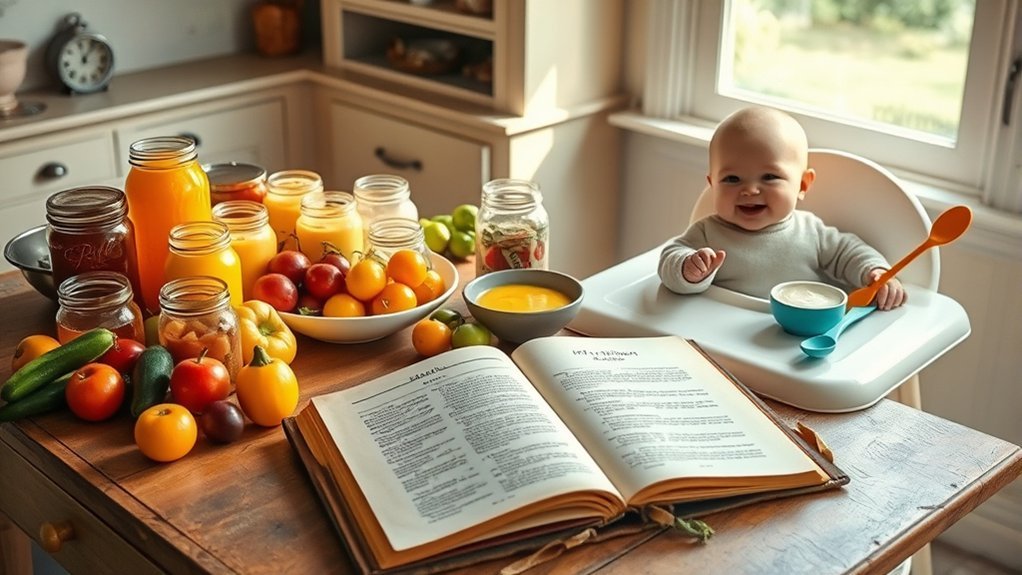
Current guidance differs sharply from some historical feeding schedules. The CDC recommends beginning foods other than breast milk or infant formula at about 6 months. Food should not be introduced before 4 months.
Age alone is not enough. A baby should show developmental signs such as controlling the head and neck, sitting alone or with support, opening the mouth for food, swallowing rather than automatically pushing food out, and moving food toward the back of the tongue.
Potentially allergenic foods are generally introduced when other complementary foods begin. These include egg, peanut in a safe form, wheat, dairy foods such as yogurt, fish, shellfish, soy, tree nuts in a safe form, and sesame. Babies with severe eczema, egg allergy, or another known risk factor may need a clinician-guided plan for peanut or other allergens.
Warning: This article provides general education, not individualized medical advice. Ask your child’s pediatrician about readiness, growth, prematurity, swallowing problems, eczema, or known allergies. Always supervise eating and prepare foods in a texture and shape that reduces choking risk. Seek emergency help for breathing difficulty, facial or tongue swelling, widespread hives, or other signs of a severe allergic reaction.
Homemade vs. Commercial Baby Food
Neither homemade nor commercial baby food is automatically better in every situation. Many families use both. The safer and more useful comparison is based on ingredients, preparation, texture, cost, convenience, storage, and the baby’s developmental needs.
| Aspect | Homemade Food | Commercial Food |
|---|---|---|
| Ingredients | Caregivers choose each ingredient and can serve foods used by the household. | The ingredient list and Nutrition Facts show what the manufacturer used. |
| Convenience | Requires planning, cooking, portioning, and safe refrigeration or freezing. | Portable and ready to serve, which can help during travel, childcare, or busy days. |
| Texture | Can be adjusted from smooth to mashed, lumpy, or soft finger-food textures. | Usually offers consistent textures and labeled developmental stages. |
| Cost | May cost less when prepared from foods already served to the family. | Individual jars, tubs, and pouches may cost more per serving. |
| Safety | Depends on clean preparation, thorough cooking, safe storage, and suitable texture. | Made under food-manufacturing controls but still subject to recalls, label errors, and environmental contaminants. |
| Variety | Makes it easier to share culturally familiar foods and savory family flavors. | Offers predictable options, although many blends rely heavily on sweet fruit. |
Pro Tip: Variety matters more than loyalty to one preparation method. Rotate vegetables, fruits, proteins, grains, and safe allergen-containing foods instead of relying on one cereal, one pouch blend, or one naturally sweet flavor.
Modern Baby Food Trends: Pouches, Safety, and Cleaner Labels
From Cans and Jars to Pouches
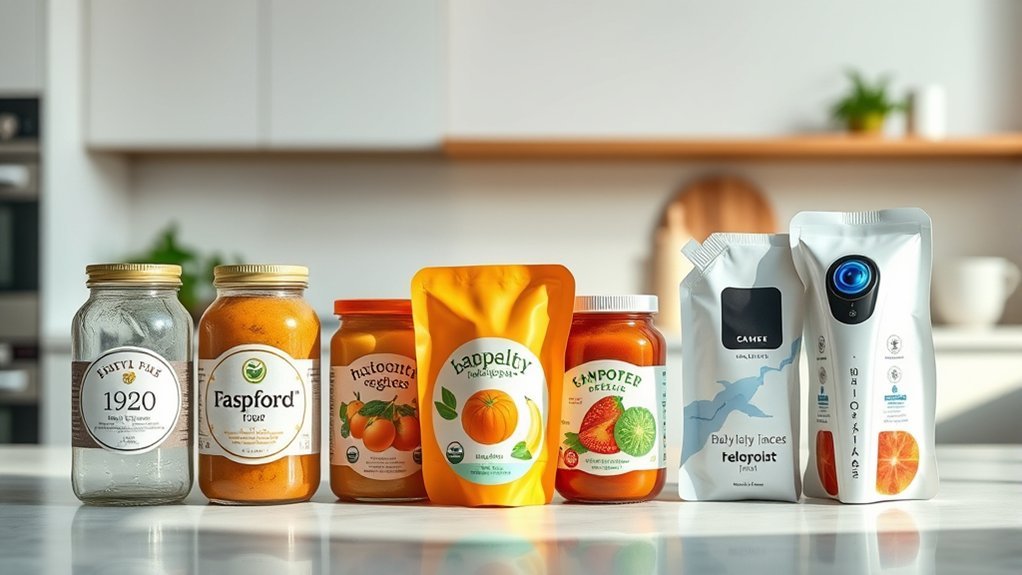
Early commercial baby food was commonly sold in cans. Glass jars later became an enduring symbol of the category because parents could see the product, reseal some containers, and hear a vacuum seal release when opened.
Today’s aisle also includes plastic tubs, bowls, squeeze pouches, frozen meals, refrigerated products, dry snacks, and subscription boxes. Pouches are lightweight and portable, but they can hide the food’s color and texture. Squeezing food directly into the mouth may also give a child less practice using a spoon, seeing food, and experiencing its aroma and texture.
Greater Attention to Contaminants
Lead, arsenic, cadmium, and mercury occur naturally or through environmental contamination and can enter both homemade and commercial foods. Their presence is not limited to one brand or preparation method.
In January 2025, the FDA finalized lead action levels for processed foods intended for babies and children younger than 2. The levels are 10 parts per billion for many fruits, vegetables, mixtures, yogurts, custards, meats, and similar foods, and 20 parts per billion for single-ingredient root vegetables and dry infant cereals.
These action levels guide FDA enforcement decisions and industry controls; they do not mean that foods below a listed level are completely free of lead. FDA also recommends a varied, nutrient-dense diet rather than eliminating broad groups of healthy foods.
More Varied Flavors and Formats
Modern brands increasingly offer lentils, herbs, spices, unsweetened yogurt, whole grains, meat, fish, and recipes inspired by different cuisines. This can help move the category beyond a narrow selection of sweet fruit purées.
However, a product named after spinach, kale, or another vegetable may contain more apple, pear, or banana than the featured vegetable. Ingredients appear in descending order by weight, so the first few ingredients provide a better picture than the product name alone.
How to Choose Commercial Baby Food Today
- Match the texture to the child’s skills. A beginning eater may need smooth or mashed food, while an older infant generally benefits from progressing toward thicker, lumpier, and soft finger-food textures.
- Read the full ingredient list. Look beyond front-label words such as “natural,” “organic,” “superfood,” or “veggie.”
- Choose nutrient-dense foods. Include iron-rich options such as meat, beans, lentils, eggs, tofu, and iron-fortified cereals.
- Avoid added sugar. Babies do not need added sugar. Naturally occurring sugar in fruit and plain dairy is listed separately from added sugar on the Nutrition Facts label.
- Compare sodium. Savory toddler foods and snacks can vary widely in sodium content.
- Check allergen statements. U.S. packaged foods must identify major allergens. The FDA recognizes nine major allergens: milk, egg, fish, crustacean shellfish, tree nuts, peanuts, wheat, soybeans, and sesame.
- Inspect the package. Do not use leaking, swollen, cracked, unsealed, or damaged containers. Follow storage instructions and discard food that has been contaminated by a used spoon.
- Watch recalls. A familiar brand name does not eliminate the possibility of manufacturing, labeling, or allergen errors.
- Serve a varied diet. Rotate food groups and grain types rather than relying heavily on one ingredient, especially rice cereal.
How Culture Shapes Baby Food Choices
There is no universal list of first foods. Families around the world introduce infants to ingredients that fit local agriculture, family meals, religion, climate, and culinary tradition.
One baby may begin with oat cereal and squash, while another receives rice porridge, lentils, soft fish, yogurt, beans, avocado, egg, or vegetables flavored with mild herbs and spices. These foods can all fit a healthy complementary-feeding pattern when prepared with an appropriate texture and without unsafe levels of salt, sugar, or choking hazards.
Commercial baby food has sometimes promoted the idea that infants require a separate, bland cuisine. Modern feeding guidance increasingly recognizes that babies can experience a broad range of family flavors while caregivers adapt texture, shape, and seasoning for safety.
Frequently Asked Questions
Who invented commercial baby food?
No single person invented every form of baby food. Harold H. Clapp produced one of the earliest U.S. canned foods made specifically for babies in the early 1920s. Gerber then introduced widely available strained fruits and vegetables in grocery stores in 1928, creating the model for the modern mass-market category.
What nutritional standards apply to commercial baby food today?
Commercial baby food must comply with applicable food-safety, ingredient, manufacturing, labeling, and allergen laws. It does not all share one mandatory nutrient formula. Infant formula is a separate category with specific nutrient requirements. Parents should compare ingredients, Nutrition Facts, texture, allergens, sodium, added sugar, and age-stage directions.
How has baby food packaging changed?
Commercial baby food moved from early cans to familiar glass jars and later expanded into plastic tubs, bowls, squeeze pouches, frozen trays, and refrigerated packages. Each format has tradeoffs involving weight, portability, visibility, storage, feeding skills, and recyclability.
Are baby food advertisements regulated?
Yes. Federal truth-in-advertising rules require advertisements to be truthful, nondeceptive, fair, and supported by appropriate evidence. FDA separately regulates food labeling, allergen declarations, and certain nutrient or health claims. Regulation does not mean every marketing phrase is equally useful, so parents should still read the ingredient and nutrition labels.
What common allergens should parents watch for?
The nine major allergens recognized for U.S. food labeling are milk, egg, fish, crustacean shellfish, tree nuts, peanuts, wheat, soybeans, and sesame. Introduce allergens in developmentally safe forms. Ask a healthcare professional for individualized guidance when a baby has severe eczema, an existing food allergy, or another risk factor.
Does commercial baby food contain heavy metals?
Environmental contaminants such as lead, arsenic, cadmium, and mercury can occur in ingredients used for both commercial and homemade food. FDA has established action levels for lead in several categories of processed baby food and continues work to reduce exposure. Serving a varied diet helps avoid repeated dependence on one higher-exposure ingredient.
How do cultural differences influence first foods?
Families choose first foods based on local ingredients, household meals, traditions, and access. Healthy options can include grains, vegetables, fruit, beans, lentils, eggs, fish, meat, tofu, yogurt, herbs, and mild spices. The key considerations are developmental readiness, nutrient density, safe texture, variety, and hygienic preparation.
Conclusion
The history of baby food stretches far beyond the invention of a jar or can. Families had always adapted food for infants, but Clapp and Gerber helped turn specialized baby food into a commercial industry during the 1920s. Advertising, medical authority, supermarkets, changing family life, and demand for convenience then carried it into millions of homes.
Modern parents have more formats and flavors to choose from, along with better access to ingredient labels, allergen information, feeding guidance, and contaminant data. The most useful lesson from the industry’s history is that no package, trend, or preparation method replaces careful attention to developmental readiness, safe texture, nutrient variety, and the individual child.
Sources
- Historical Overview of Transitional Feeding Recommendations and Vegetable Feeding Practices for Infants and Young Children — supports the 1928 Gerber milestone and historical changes in complementary-feeding guidance.
- Harvard Business School: Daniel F. Gerber Jr. — supports Gerber’s role in developing and commercializing strained baby food.
- CDC: When, What, and How to Introduce Solid Foods — supports current timing, readiness, allergen, texture, and choking guidance.
- FDA: Action Levels for Lead in Processed Food Intended for Babies and Young Children — supports the January 2025 contaminant guidance and category-specific lead levels.
- FDA: Food Allergies — supports the current list of nine major U.S. food allergens and allergen-labeling context.
- Federal Trade Commission: Advertising and Marketing — supports federal truth-in-advertising requirements.