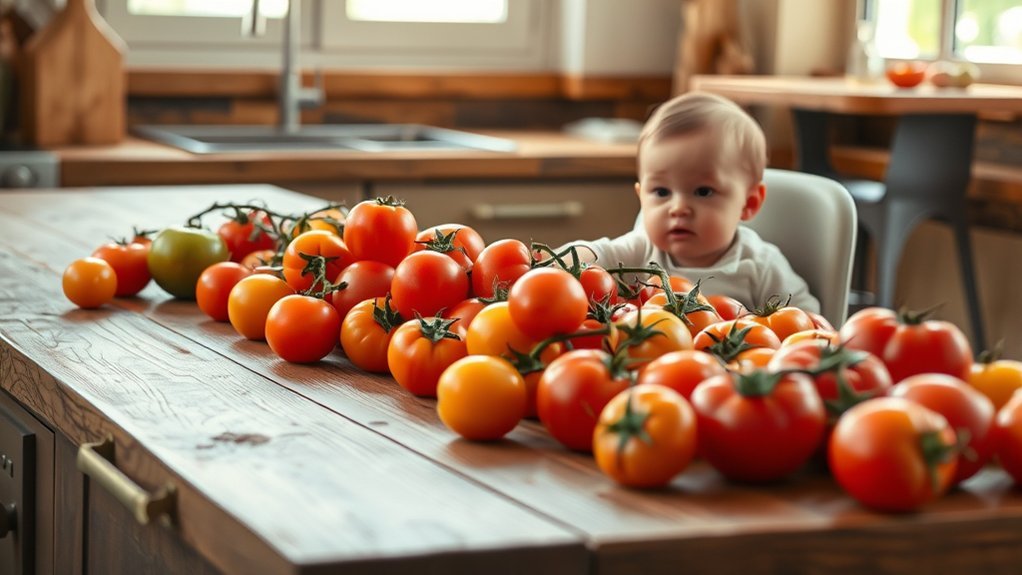
Babies can usually eat tomatoes at about 6 months, once they are developmentally ready for solid foods. Serve ripe tomato mashed, cooked into a soft sauce, or prepared as an age-appropriate finger food. The biggest safety issue is shape: whole cherry and grape tomatoes are choking hazards for young children, so they must be modified before serving.
Last updated: September 19, 2026
Quick Answer
For a first serving, use ripe tomato mashed or cooked into a no-salt-added sauce. If your baby self-feeds, a very soft large wedge can be easier to grasp than a small slippery piece. Never serve cherry or grape tomatoes whole or only halved to babies and young children; cut them lengthwise into four narrow pieces and supervise every bite.
Key Takeaways
- Introduce tomatoes at about 6 months when your baby can sit upright with support, control their head and neck, and swallow food.
- Start with mashed tomato, a smooth no-salt-added sauce, or a very soft piece suited to your baby’s feeding skills.
- Cut cherry and grape tomatoes lengthwise into four narrow pieces. Do not serve them whole to babies or young children.
- A red mark only where tomato touched the skin may be irritation from acidity rather than a true allergy.
- Seek emergency help for breathing trouble, swelling of the lips or tongue, collapse, or other signs of a severe allergic reaction.
At a Glance
| Starting Age | About 6 months, once your baby shows developmental readiness for solid foods |
| Best First Forms | Mashed ripe tomato, smooth no-salt-added sauce, or a very soft graspable wedge |
| Choking Rule | Never serve whole cherry or grape tomatoes to babies or young children; cut them lengthwise into four narrow pieces |
| Emergency Signs | Inability to breathe, cry, cough effectively, or make noise; tongue or throat swelling; collapse; or rapidly worsening multi-system symptoms |
Note: This article provides general feeding and safety information. Ask your pediatrician or feeding specialist for individual advice if your baby was born prematurely or has swallowing trouble, developmental delays, severe reflux, eczema, or a previous food reaction.
When Can Babies Safely Start Eating Tomatoes?
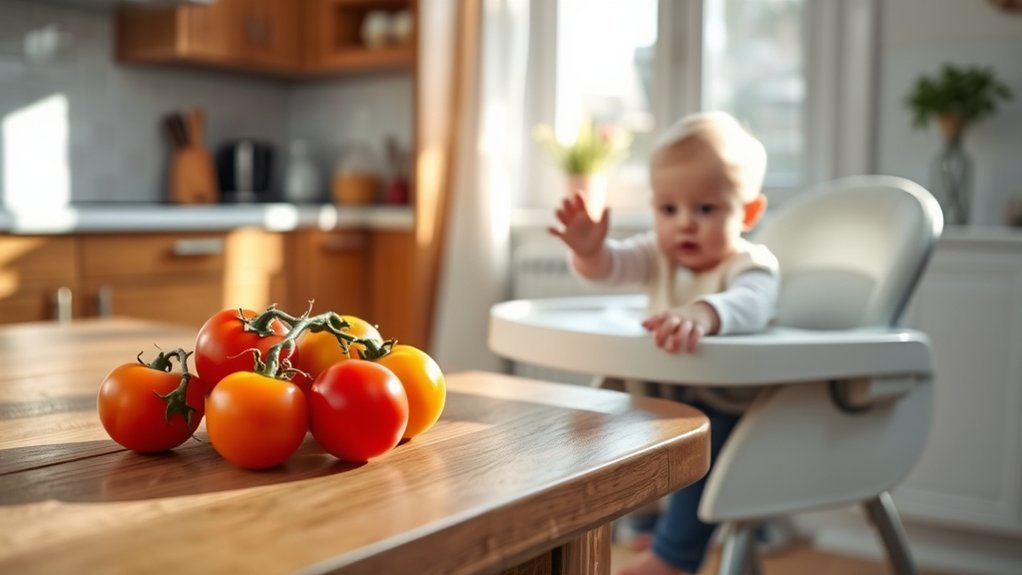
Most babies can begin eating tomatoes at about 6 months, at the same time they begin other complementary foods. Developmental readiness matters more than reaching an exact birthday.
According to the Centers for Disease Control and Prevention, signs of readiness include:
- Sitting upright alone or with support
- Controlling the head and neck
- Opening the mouth when food is offered
- Swallowing food instead of pushing it out with the tongue
- Bringing objects toward the mouth
- Moving food toward the back of the tongue to swallow
Tomatoes do not have to be introduced in a special order. Begin with a small amount during a calm daytime meal so you can observe how your baby handles the texture and whether any symptoms develop.
If tomato is one of your baby’s first new foods, the CDC recommends offering one single-ingredient new food at a time at first and waiting 3–5 days before starting another new food. This can make it easier to identify a reaction.
Pro Tip: For a first serving, offer a small amount, such as a teaspoon or two of mashed tomato or sauce. Your baby may eat more or less. Follow hunger and fullness cues rather than trying to make them finish a set amount.
Nutritional Benefits of Tomatoes for Babies
Tomatoes provide water, vitamin C, potassium, folate, and carotenoids such as lycopene. They can add color, moisture, and a mildly sweet-tart flavor to a varied diet.
Vitamin C and Iron Absorption
Vitamin C supports normal immune function, collagen formation, and wound healing. It also helps the body absorb non-heme iron from plant foods.
This makes tomato a useful partner for iron-rich foods such as lentils, beans, tofu, iron-fortified infant cereal, eggs, meat, or poultry. The CDC’s infant iron guidance lists tomatoes among vitamin C-rich foods that can support iron absorption.
Tomatoes should not replace iron-rich foods. Iron becomes especially important when complementary feeding begins around 6 months.
Lycopene and Other Carotenoids
Lycopene is the red carotenoid pigment found in tomatoes. It has antioxidant activity, but parents should not interpret this as proof that tomatoes prevent disease in babies.
Fresh and cooked tomatoes can both be nutritious. Cooking softens their texture, while tomato paste and cooked sauces tend to provide more concentrated tomato solids. Choose preparations without added salt or sugar.
| Nutrient or Component | Role in a Balanced Diet |
|---|---|
| Vitamin C | Supports normal body functions and helps absorb plant-based iron |
| Lycopene | Provides tomato’s red color and antioxidant activity |
| Potassium | Contributes to normal nerve and muscle function |
| Water | Adds moisture to meals, although breast milk or formula remains the main drink during infancy |
How to Prepare Tomatoes for Different Ages
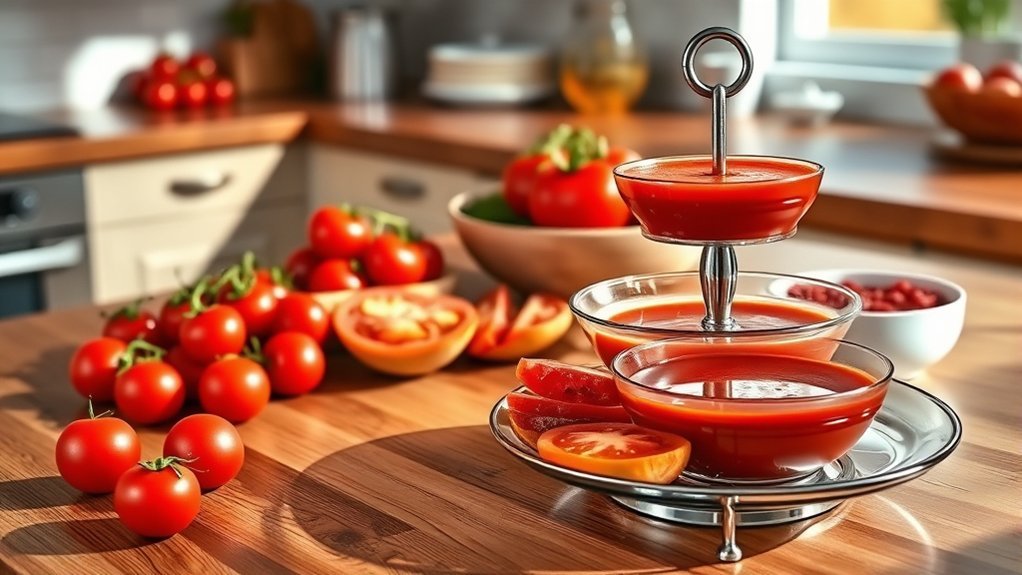
Wash the tomato under clean running water before cutting it. Use a clean knife and cutting board, then choose a texture and shape that match your child’s current eating skills.
Tomatoes should be ripe and soft. Cooked tomato should mash easily when pressed with a fork. Remove hard stem pieces and any loose skin that separates into long strips.
| Age or Stage | Safer Serving Options | Important Precautions |
|---|---|---|
| About 6 months, when ready | Mashed ripe tomato, smooth cooked sauce, or a very soft large wedge that the baby can grasp | Use a texture the baby can mash with the gums. Remove loose skin and supervise closely. |
| About 9 months and older | Soft diced pieces of a large tomato; cherry or grape tomatoes quartered lengthwise into four narrow pieces | Do not serve round halves or whole small tomatoes. |
| 12–24 months | Soft wedges, diced tomato, sauce, or lengthwise-quartered cherry tomatoes | Continue modifying round foods even when the child has more teeth. |
| 2 years to under 4 years | Diced large tomatoes or cherry tomatoes cut into four narrow lengthwise pieces | Supervision remains necessary. Chewing ability varies among children. |
| About 4 years and older, if developmentally ready | Whole small tomatoes may be considered only once the child reliably takes bites, chews thoroughly, and follows eating instructions | Continue cutting them if the child stuffs food, rushes, has oral-motor difficulty, or cannot chew reliably. |
Warning: Never give a baby or young child a whole cherry or grape tomato. Cutting one only in half can leave a rounded shape that may block the airway. Cut lengthwise into four narrow pieces. The American Academy of Pediatrics advises keeping high-risk choking foods away or safely modified until age 4 or older, depending on the child’s development and maturity.
How to Keep Your Baby Safe From Tomato Choking Hazards
Cherry and grape tomatoes are small, slippery, and round. That shape can seal a young child’s airway, which is why the CDC lists uncut cherry and grape tomatoes as choking hazards.
Use these precautions at every meal:
- Seat your baby upright in a stable high chair.
- Keep the meal calm and free from running, playing, screens, or other distractions.
- Stay close enough to see your baby’s face and reach them immediately.
- Cut small round tomatoes lengthwise into four narrow pieces.
- Check that large tomato pieces are ripe and soft.
- Do not place food directly into the back of your baby’s mouth.
- Do not rely on teeth alone; safe eating also requires tongue control, chewing, and coordinated swallowing.
Gagging Versus Choking
Gagging is a protective reflex and can be noisy. A gagging baby may cough, retch, make sounds, push the tongue forward, or have watery eyes.
Choking may be quiet. A child who cannot breathe, cry, cough effectively, or make noise needs immediate help. Bluish coloring, gasping, limpness, or loss of consciousness are emergency signs.
Warning: If your child cannot breathe, cry, or make noise, call 911 and begin age-appropriate choking first aid. Do not perform a blind finger sweep. Parents and caregivers should consider an infant CPR and first-aid course. Review the American Academy of Pediatrics choking guidance.
Recognizing and Managing Tomato Reactions in Babies

Tomatoes can cause a true food allergy, but their acidity can also irritate sensitive skin. These are not the same response.
Contact Irritation
A flat red mark limited to the area where tomato touched the skin—often around the mouth or in the diaper area—may be irritant contact redness. It may be more likely when the skin is already dry, chapped, or affected by eczema.
Gently rinse the skin with water, pat it dry, and avoid scrubbing. A thin layer of a pediatrician-approved barrier ointment may reduce direct contact during future meals. Contact your pediatrician if the rash is painful, blistering, widespread, infected-looking, or persistent.
Possible Food-Allergy Symptoms
The American Academy of Pediatrics lists possible food-allergy symptoms such as:
- Raised hives or an itchy, widespread rash
- Swelling of the lips, tongue, face, or eyes
- Repeated vomiting, diarrhea, or significant abdominal discomfort
- Coughing, wheezing, throat tightness, or trouble swallowing
- Pale or bluish skin, unusual limpness, faintness, or reduced responsiveness
Pollen-food allergy syndrome, also called oral allergy syndrome, is mainly an older-child issue rather than a typical explanation for a baby’s contact-only redness. American Academy of Pediatrics symptom guidance notes that oral allergy syndrome can begin around age 5 and may be linked with pollen allergy. Discuss repeated mouth itching, tingling, or swelling with your pediatrician or an allergist.
Warning: Trouble breathing, swelling of the tongue or throat, collapse, or rapidly developing symptoms affecting more than one part of the body may indicate anaphylaxis. Give epinephrine immediately if it has been prescribed for your child, call 911, and seek emergency care. Antihistamines are not a substitute for epinephrine in anaphylaxis.
Best Ways to Serve Tomatoes to Babies
The best serving method depends on your baby’s development and whether you are spoon-feeding, offering finger foods, or using a combination.
Age-Appropriate Preparation Methods
- Mashed tomato: Mash soft, ripe tomato flesh with a fork and serve on a spoon.
- Cooked sauce: Simmer crushed or diced tomato until soft. Blend or mash it to the texture your baby manages.
- Large soft wedge: A ripe wedge can be easier for a younger baby to grasp than a small slippery cube. Remove loose skin.
- Soft diced tomato: Older babies developing a pincer grasp may handle small, soft pieces of a large tomato.
- Quartered cherry tomato: Cut lengthwise into four narrow pieces. Never serve it whole.
Safe Serving Techniques
Start with a small serving and allow your baby to decide whether to eat more. Do not pressure, distract, or rush them. Tomatoes can be offered regularly as part of a varied diet, but there is no required number of servings per week.
If a slippery wedge is difficult to hold, lightly coat the outside with finely ground infant cereal or serve the soft flesh on a preloaded spoon. Do not coat it with whole seeds, chopped nuts, or other choking hazards.
Peeling is not routinely required. Remove the skin when it comes away in long pieces or appears difficult for your child to manage.
Effective Strategies for Introducing Tomatoes
- Choose the right time. Offer tomato when your baby is alert, seated upright, and not overly hungry or tired.
- Start simply. Use plain mashed tomato or a sauce without added salt or sugar.
- Serve a small amount. A small taste is enough at first; let your baby decide whether to eat more.
- Observe without hovering. Watch how your baby moves the food and look for unusual symptoms.
- Repeat the exposure. A baby may need to see and taste a food several times before accepting it.
- Keep a record when needed. Note the food, preparation, amount, timing, and symptoms if you suspect a reaction.
If tomato repeatedly seems to coincide with reflux symptoms or discomfort, pause it and discuss the pattern with your pediatrician. Symptoms after an acidic food do not by themselves prove an allergy.
Note: Breast milk or iron-fortified infant formula remains a baby’s main source of nutrition during the first year. Tomatoes and other complementary foods gradually add new nutrients, tastes, and textures.
Creative Tomato Recipes for Your Little One
Simple No-Salt Tomato Sauce
Simmer chopped ripe tomatoes or no-salt-added canned tomatoes with a little water until very soft. Add finely chopped onion or garlic if your baby has already tolerated them. Mash or blend to the appropriate texture.
Serve the sauce with soft pasta, lentils, beans, shredded chicken, or cooked vegetables. Avoid adding salt, sugar, stock cubes, or large amounts of salty cheese.
Baby-Friendly Tomato Pasta
Combine very soft small pasta with no-salt-added tomato sauce. For younger babies, mash the pasta and sauce together. For older babies, cut longer noodles and check that every piece is soft.
Tomato and Egg Scramble
Cook finely chopped tomato until soft, add beaten egg, and cook until the egg is firm throughout. Egg is a common allergen, so introduce it according to your baby’s allergy plan and avoid combining two untried foods in the same first meal.
Soft Tomato and Bean Mash
Mash cooked low-sodium beans with soft tomato and a little water, breast milk, or prepared formula. This pairing provides plant-based iron together with vitamin C.
Baby-Friendly Tomato Toast or Pizza
Spread a thin layer of no-salt-added tomato sauce on soft toast or a fully cooked soft pizza base. Add a small amount of pasteurized cheese if desired, then cut it into a shape your child can manage. Check sodium across the bread, sauce, and cheese.
The safest tomato serving is not determined by age alone. Softness, shape, chewing ability, upright seating, and close supervision all matter.
What to Do for Tomato Reactions in Babies
Use the type and severity of symptoms—not the presence of redness alone—to decide what to do.
- Only mild contact redness: Stop the meal, rinse and dry the skin, and monitor your baby.
- Persistent rash or repeated stomach symptoms: Stop serving tomato and contact your pediatrician for advice.
- Hives, facial swelling, or repeated vomiting: Seek prompt medical advice, especially when symptoms appear soon after eating.
- Breathing trouble, tongue or throat swelling, collapse, or rapidly worsening symptoms: Use prescribed epinephrine and call 911 immediately.
Do not deliberately reintroduce tomato at home after a suspected serious reaction unless your pediatrician or allergist has provided a plan.
Quick Safety Checklist Before Serving Tomatoes
- Is your baby developmentally ready for solid foods?
- Is the tomato washed, ripe, and soft?
- Have all hard stem pieces been removed?
- Are cherry or grape tomatoes quartered lengthwise?
- Is your child seated upright in a stable high chair?
- Are you staying close and watching the entire meal?
- Does a canned product say “no salt added” or “low sodium”?
- Do you know the signs of choking and a severe allergic reaction?
Frequently Asked Questions
Can tomatoes cause allergies in babies?
Yes. Any food can cause an allergy, although a flat red area only where acidic tomato touched the skin may be irritation rather than allergy. Hives, swelling, repeated vomiting, coughing, wheezing, or trouble breathing require medical attention. Severe symptoms are an emergency.
Are canned tomatoes safe for babies?
Canned diced, crushed, or whole tomatoes can be used in cooked meals. Choose a product labeled no salt added or low sodium, check for added sugar, cook it until soft, and adapt the final texture to your baby’s skills.
Should I peel tomatoes before giving them to my baby?
Not routinely. Ripe tomato skin is often manageable when the tomato is soft and prepared correctly. Remove skin that is tough, loose, or separating into long strips, or peel the tomato if your baby repeatedly struggles with it.
Can I give my baby tomato juice?
Tomato juice is not needed as a routine infant drink and many commercial versions are high in sodium. Offer tomato as mashed or cooked food instead. During the first year, breast milk or iron-fortified formula remains the main drink, with small amounts of water offered with meals from around 6 months.
How often can I feed my baby tomatoes?
There is no required schedule. Tomatoes can appear regularly within a varied diet if your baby tolerates them. Rotate them with other fruits, vegetables, iron-rich foods, grains, and proteins while following your baby’s hunger and fullness cues.
Can babies eat raw tomatoes?
Yes. A developmentally ready baby can have raw tomato from around 6 months if it is ripe, soft, and prepared in a shape the baby can manage. A large soft wedge can work for self-feeding, while mashed tomato is an easy spoon-fed option. Cherry and grape tomatoes must never be served whole to babies or young children.
Can babies have tomato sauce?
Yes. Tomato sauce can be offered from around 6 months when it is cooked to a texture your baby can manage. Choose homemade, no-salt-added, or lower-sodium sauce without added sugar, and avoid stock cubes or heavily salted cheese in the same meal.
Can a 9-month-old eat cherry tomatoes?
A developmentally ready 9-month-old may be offered a ripe cherry or grape tomato cut lengthwise into four narrow pieces. Never serve one whole, and do not assume that cutting it only in half removes the choking risk.
When can a child eat a whole cherry tomato?
Whole cherry tomatoes are a choking hazard for young children. Consider them only around age 4 or later, when the child reliably chews, takes appropriate bites, remains seated, and follows eating instructions. Continue cutting them for any child who is not ready.
Can tomatoes make diaper rash worse?
Acidic foods may irritate already-sensitive skin in some babies, but diaper redness alone does not confirm a tomato allergy. Use gentle skin care and a suitable barrier cream, and contact your pediatrician if the rash is severe, blistering, infected-looking, persistent, or accompanied by other symptoms.
Conclusion
Babies can usually begin eating tomatoes at about 6 months when they show the developmental skills needed for solid foods. Serve tomatoes ripe, soft, and in a shape your baby can manage. Mash or cook them for an easy first texture, and always quarter cherry or grape tomatoes lengthwise for babies and young children.
Keep your child seated upright and supervise every meal. Treat a small contact mark differently from widespread hives, swelling, vomiting, or breathing symptoms, and seek urgent help for signs of anaphylaxis. With careful preparation, tomatoes can be a flavorful source of vitamin C and a useful partner for iron-rich foods.
Sources
- CDC — When, What, and How to Introduce Solid Foods — starting age, readiness signs, textures, and food preparation
- CDC — Choking Hazards — supervision, upright seating, and uncut cherry-tomato risks
- American Academy of Pediatrics — Choking Prevention — emergency signs and age-related choking precautions
- American Academy of Pediatrics — Food Allergies in Children — allergy symptoms and the distinction between skin irritation and allergy
- CDC — Foods and Drinks to Avoid or Limit — sodium and no-salt-added canned-food guidance
- American Academy of Pediatrics — Anaphylaxis in Infants and Children — severe-reaction signs and emergency response
- American Academy of Pediatrics — Food Allergy Symptom Checker — oral allergy syndrome context and food-reaction triage