
Starting solid foods is less about choosing one perfect first food and more about your baby’s readiness, food texture, nutrition, and safety. Most babies begin at about 6 months. Offer soft, nutrient-dense foods in small amounts, follow your baby’s hunger and fullness cues, and keep breast milk or infant formula as the main source of nutrition through the first year.
Quick Answer
Most babies are ready for solid foods at about 6 months, once they can sit with support, control their head and neck, bring objects to their mouth, and swallow food. Start with soft, iron-rich foods, introduce common allergens in safe forms, and continue breast milk or formula as the main nutrition through 12 months.
Key Takeaways
- Begin solids at about 6 months when your baby shows several developmental readiness signs.
- Prioritize iron- and zinc-rich foods such as meat, beans, lentils, eggs, tofu, and iron-fortified infant cereal.
- Introduce unfamiliar foods one at a time at first, then combine ingredients after your baby has tolerated them.
- Do not delay common allergens without medical advice. Offer them in soft, infant-safe forms.
- Prevent choking by seating your baby upright, matching textures to feeding skills, and supervising every bite.
- Avoid honey before 12 months, juice before 12 months, unpasteurized foods, and cow’s milk as the main drink before age 1.
At a Glance
| Time Required | About 10–20 minutes for preparation, plus a calm feeding session |
| Difficulty | Easy, with close adult supervision |
| Tools Needed | Upright high chair, small bowl, infant spoon, cup, knife, cutting board, and masher or blender as needed |
| Cost | Varies; small portions of ordinary family foods can keep costs low |
Note: This guide provides general education, not individualized medical advice. Ask your pediatrician before starting solids if your baby was born prematurely, has poor growth, severe eczema, an egg allergy, swallowing difficulty, low muscle tone, or a previous food reaction.
When Should You Start Introducing Solid Foods?

Most babies are ready to begin complementary foods at about 6 months. Starting before 4 months is not recommended. Age is only one part of the decision, however. Your baby should also have the posture and oral-motor skills needed to handle food safely.
The current Dietary Guidelines for Americans, 2025–2030 state that breast milk or iron-fortified infant formula should continue while solids are introduced. Breast milk or formula remains the main source of nutrition up to 12 months.
Do not start because your baby has reached a certain weight, wakes more often at night, or watches someone eat. Those signs alone do not show that a baby can safely move food through the mouth and swallow it.

Power your essentials anywhere with a 999Wh pure sine wave power station delivering up to 1000W continuous with 2000W surge. It supports fast charging via USB-C PD 60W and USB-A QC 18W, plus simultaneous output for multiple devices through AC, USB, wireless, and car/DC ports. Recharge using AC, car, or solar with a built-in MPPT controller and dual cooling fans, while the upgraded battery management system protects against surges, short circuits, and overheating.

ON THE GO BABY FOOD: Gerber Stage 1 Baby Food Puree Tubs are designed for ease and convenience. These tubs are the perfect on the go baby food, made in a portable and easy-to-store format for busy parents

ON THE GO BABY FOOD: Gerber Stage 1 Baby Food Puree Tubs are designed for ease and convenience. These tubs are the perfect on the go baby food, made in a portable and easy-to-store format for busy parents
Key Signs That Indicate Your Baby Is Ready
Look for several readiness signs together. According to current federal and CDC infant-feeding guidance, a ready baby will usually show most of the following skills:
- Sits upright alone or with support.
- Controls the head and neck steadily.
- Opens the mouth when food is offered.
- Reaches for objects and brings them to the mouth.
- Moves food from the front to the back of the tongue.
- Swallows food instead of pushing most of it back out.
Sitting Up Securely
Your baby should be able to remain upright in a supportive high chair without slumping forward or to the side. Good head and neck control helps protect the airway and allows your baby to lean forward for another bite or turn away when finished.
Sitting completely without support is not required for the first spoon-fed foods. The important point is that your baby can stay stable and upright with the high chair’s support.
Interest in Food
Reaching toward food, watching other people eat, or opening the mouth for a spoon can support the decision to begin. Interest alone is not enough, though. It should appear along with good posture, head control, and the ability to swallow.
If your baby repeatedly turns away, keeps the mouth closed, cries during feeding, or pushes all food out, pause and try again another day. Feeding should not become a struggle.
Oral-Motor Readiness
A baby who is ready can take a small amount from a spoon, close the lips around it, move the food backward, and swallow. Some food may still come back out while the skill is new. That is different from being unable to manage the texture.
Best First Foods to Introduce to Your Baby
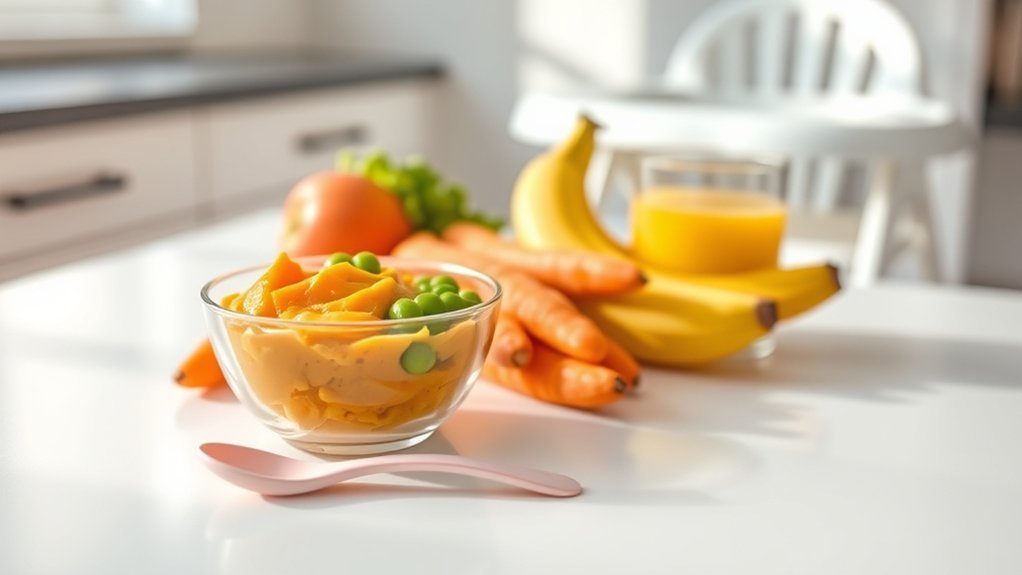
There is no required order for first foods. A banana does not have to come before a vegetable, and infant cereal does not have to be the first bite. The most useful approach is to offer a variety of soft, nutrient-dense foods while giving special attention to iron and zinc.
Iron-Fortified Cereals
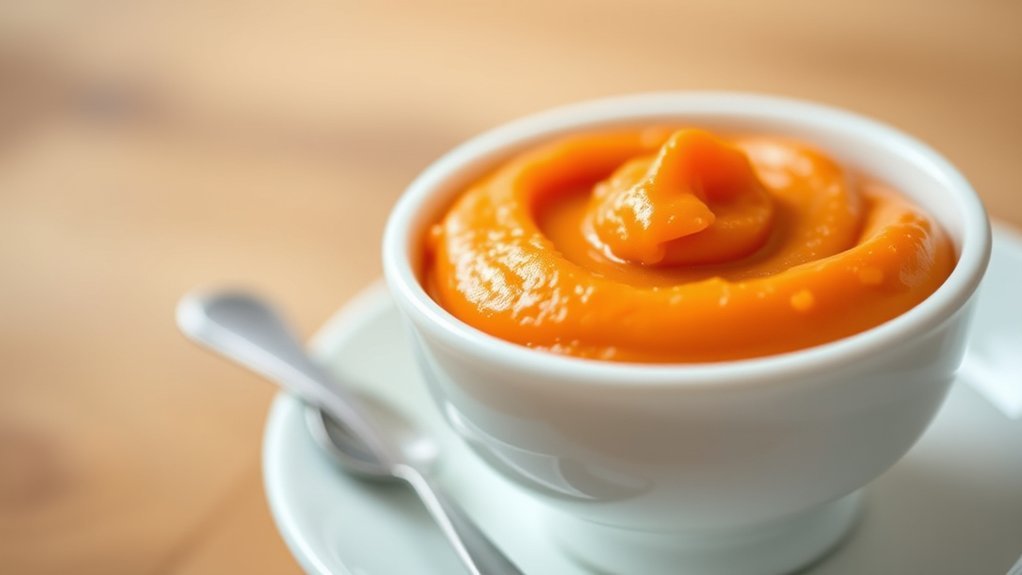
Iron-fortified oatmeal, barley, whole-wheat, and multigrain infant cereals are convenient first foods. Prepare cereal according to the package directions and thin it with breast milk, infant formula, or water until your baby can swallow it comfortably.
Rice cereal can be part of a varied diet, but it should not be the only grain offered. The FDA recommends offering infants a variety of grains rather than relying only on rice cereal because rice absorbs more arsenic than many other crops.
Pro Tip: Infant cereal should be served from a spoon. Do not put cereal or puree in a bottle unless your baby’s health care professional has prescribed it for a specific medical reason.
Iron- and Zinc-Rich Protein Foods
Protein foods are often overlooked as first foods, but many are rich in iron and zinc. Safe options include:
- Finely pureed or very tender shredded beef, chicken, turkey, pork, or lamb
- Mashed beans, peas, or lentils with skins softened
- Mashed tofu
- Fully cooked egg
- Soft, low-mercury fish with all bones removed
- Smooth, thinned nut or seed butter after allergy-risk guidance is considered
Texture matters more than whether the food comes from a jar or the family meal. Meat, beans, and other foods may be thinned with water, breast milk, or formula to make them easier to swallow.
Pureed Fruits
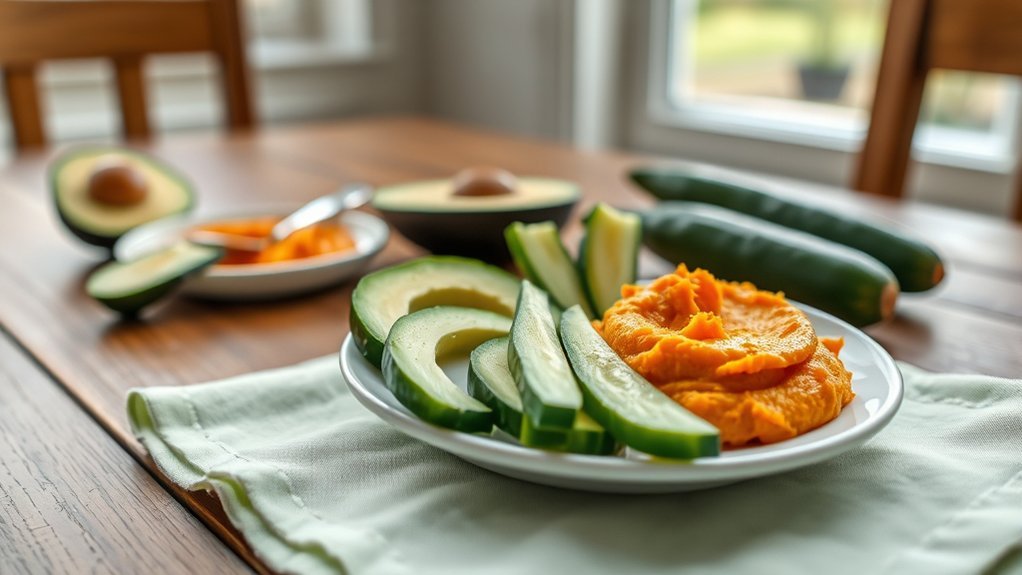
Soft fruits such as banana, avocado, pear, peach, mango, and cooked apple can be mashed or pureed. Fruits provide vitamins, fiber, and a range of flavors, but they should not replace iron-rich foods.
Begin with one unfamiliar fruit at a time. Once your baby has eaten the ingredients separately without a reaction, you can combine them with cereal, yogurt, vegetables, or other tolerated foods.
Soft Vegetables
Sweet potato, squash, peas, carrots, broccoli, cauliflower, green beans, and avocado can all work as early foods. Cook firm vegetables until they are very soft, then mash, puree, or offer them in an age-appropriate finger-food shape.
There is no need to hide vegetables in sweeter foods. Repeated, pressure-free exposure helps babies learn new flavors. Avoid adding honey or large amounts of salt. Mild herbs or seasonings may be used as long as the finished food is safe and not overly salty.
Common Allergenic Foods
Current guidance does not recommend delaying common allergens once a baby is developmentally ready for solids. Examples include cooked egg, peanut, tree nuts, dairy, wheat, soy, sesame, fish, and shellfish.
Offer each allergen in an infant-safe form. Whole nuts and spoonfuls of thick nut butter are choking hazards. Instead, thin smooth nut butter with warm water, breast milk, formula, or puree. Offer fully cooked egg, pasteurized plain yogurt, soft wheat foods, and fish with skin and bones removed.
The American Academy of Pediatrics advises that babies with severe eczema, egg allergy, or another reason for increased allergy risk may need a pediatric evaluation before peanut introduction. Review the AAP’s food-allergen introduction guidance and ask your child’s clinician for an individual plan.
How to Safely Prepare Your Baby’s First Foods
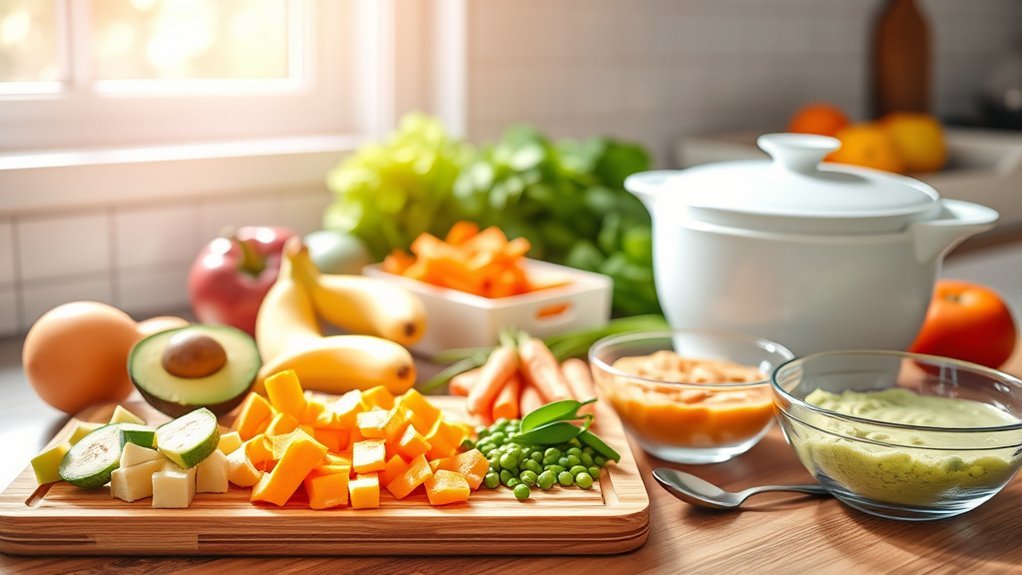
- Wash first. Wash your hands, produce, utensils, cutting boards, food-preparation surfaces, and the high-chair tray.
- Prevent cross-contamination. Keep raw meat, poultry, seafood, and eggs away from cooked or ready-to-eat foods.
- Cook thoroughly. Cook animal foods and eggs to safe temperatures. Avoid raw or undercooked eggs, meat, seafood, and sprouts.
- Remove hazards. Take out bones, pits, tough skins, seeds, gristle, and hard pieces.
- Adjust the texture. Mash, mince, shred, or puree food until it matches your baby’s current feeding skill.
- Serve a separate portion. Spoon a small amount into your baby’s bowl rather than feeding directly from a storage container. Saliva on a used spoon can introduce bacteria into leftovers.
- Refrigerate promptly. Cover and chill prepared food soon after cooking. Follow the storage directions on commercial baby food and discard food left out too long.
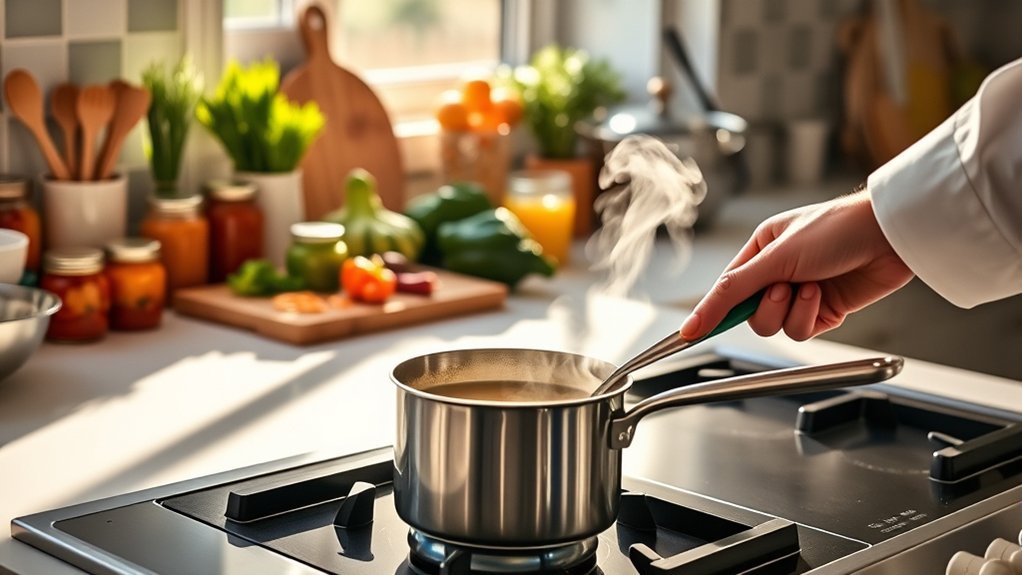
The FDA’s baby food-safety guidance recommends transferring food from a jar to a dish before microwaving. Stir the food, let it stand for about 30 seconds, and taste-test it. Food should be lukewarm, not hot.
Warning: Always seat your baby upright and stay within arm’s reach during meals. Never feed a baby who is lying down, crawling, walking, riding in a vehicle, or playing with food while unsupervised.
Gagging Versus Choking
Gagging can be noisy and may include coughing, watery eyes, or the tongue moving forward. It is a protective reflex while a baby learns to manage food. Choking may be quiet because the airway is blocked. A choking baby may be unable to cough, cry, or breathe and may change color.
Learn infant choking first aid and CPR from a qualified instructor before starting finger foods. Follow the CDC’s current choking-hazard guidance when choosing and preparing food.
How to Gradually Introduce New Foods to Your Baby
Begin with a small amount once a day when your baby is rested and not extremely hungry. A few spoonfuls may be enough for an early meal. Increase the amount and number of meals gradually according to your baby’s interest rather than forcing a fixed portion.
Continue normal breast or formula feeds. Early solid-food sessions are for learning as well as nutrition, so it is normal for only a small amount to be swallowed.
Monitor Baby’s Reactions
At first, offer one new single-ingredient food and wait about 3 to 5 days before introducing another unfamiliar food. This makes it easier to connect a reaction with a specific ingredient.
Keep a simple record of the food, date, amount, and any symptoms. A food diary is especially useful for a baby with eczema, digestive concerns, or a family history of food allergy.
Start With Single Foods
Single foods do not have to remain separate forever. Once your baby has tolerated oatmeal and pear, for example, they may be served together. Combining already-tolerated ingredients adds variety without making allergy tracking confusing.
Move from thin puree to thicker puree, mashed food, soft lumps, and finger foods as your baby’s skills develop. Staying with completely smooth puree for too long can limit opportunities to practice chewing and handling texture.
Introduce Allergens Safely
- Introduce one common allergen at a time.
- Offer it when your baby is healthy and you can observe them for the next few hours.
- Start with a small amount in a safe texture.
- Do not rub food on the skin as an allergy test.
- After a food is tolerated, continue offering it in an age-appropriate form as part of the usual diet.
- Ask a pediatrician about the timing of peanut if your baby has severe eczema or egg allergy.
How to Monitor for Allergies and Reactions
Food-allergy symptoms can appear within minutes or over the next few hours. Possible symptoms include:
- Hives, redness, or sudden itching
- Swelling of the lips, face, tongue, or eyelids
- Repeated vomiting
- Coughing, wheezing, or trouble breathing
- Sudden drooling or difficulty swallowing
- Unusual sleepiness, limpness, or poor responsiveness
For a mild, isolated symptom, stop serving the food and contact your pediatrician for guidance. Do not give the food again until you know how to proceed.
Warning: Trouble breathing, throat or tongue swelling, sudden limpness, or symptoms involving more than one body system may signal anaphylaxis. Use epinephrine immediately if it has been prescribed for your child, call 911, and seek emergency care. Antihistamines are not a substitute for epinephrine during anaphylaxis.
Foods to Avoid in Your Baby’s Diet
- Honey before 12 months: Honey and foods made with honey can cause infant botulism.
- Cow’s milk as the main drink before 12 months: Continue breast milk or iron-fortified formula instead. Pasteurized plain yogurt and cheese may be offered as foods.
- Juice before 12 months: Whole fruit is a better choice. Never offer unpasteurized juice.
- Unpasteurized foods: Avoid raw milk and products made from it.
- Raw or undercooked animal foods: Fully cook eggs, meat, poultry, fish, and shellfish.
- Foods with added sugar: Babies do not need sweetened drinks, desserts, candy, or sweetened infant snacks.
- Very salty foods: Limit processed meats, salty snacks, instant meals, and heavily salted family foods.
- Whole nuts and thick nut butter: These are choking hazards even when allergy introduction is appropriate.
- Hard, sticky, or round foods: Avoid popcorn, hard candy, marshmallows, gum, chunks of raw carrot or apple, whole grapes, sausage coins, and large chunks of meat or cheese.
Review the CDC’s full list of foods and drinks to avoid or limit for babies and young children.
Why Iron and Nutrient-Dense Foods Matter for Your Baby
Iron supports blood formation and brain development. Around the middle of the first year, babies need reliable sources of iron from complementary foods, particularly when they receive breast milk.
Useful iron sources include meat, poultry, fish, eggs, beans, lentils, tofu, and iron-fortified infant cereal. Plant sources of iron can be served with vitamin C-rich foods such as broccoli, strawberries, mango, tomato, or sweet potato to support absorption.
Zinc is also important for growth and immune function. Meat, dairy foods, beans, lentils, eggs, and fortified cereals can help supply it.
Do not give an iron supplement unless your baby’s health care professional recommends the type and dose. Some premature babies and babies with specific health needs require individualized supplementation.
The best first-food plan includes more than fruits and vegetables: offer an iron-rich food regularly, vary the flavors, and advance the texture as your baby’s skills grow.
When and How to Introduce Finger Foods
Finger foods do not need to wait until exactly 9 months. Some babies can begin soft, graspable foods around 6 months once they can sit upright, control their head, reach for food, and bring it to their mouth.
Early finger foods should be soft enough to flatten easily between your thumb and finger. Examples include:
- Ripe banana or avocado
- Very soft cooked broccoli or cauliflower
- Soft strips of omelet
- Tender shredded meat
- Soft toast strips with a thin spread
- Very soft cooked vegetable wedges
- Soft ripe pear, peach, or mango
A baby using a whole-hand grasp may handle a long, soft strip more easily than a tiny piece. Later, when the pincer grasp develops, you can offer smaller soft pieces. Cut grapes, berries, cherry tomatoes, and sausage lengthwise and into developmentally appropriate pieces rather than serving them whole or as round coins.
Babies do not need teeth to manage many soft foods because their gums can mash them. They do need constant supervision and food that matches their skill level.
How to Establish Healthy Eating Habits Early
- Follow hunger cues. Reaching for food, opening the mouth, and leaning toward the spoon may show interest.
- Respect fullness cues. Turning away, closing the mouth, slowing down, or pushing food away means the meal may be over.
- Do not pressure or distract. Avoid forcing bites, bargaining, or using screens to make a baby eat.
- Offer variety. Include foods from different food groups, cultures, colors, and textures.
- Repeat without pressure. A baby may need many calm exposures before accepting a food.
- Share family meals. When practical, offer an unsalted, safely prepared version of the family’s food.
- Use an open or straw cup. Small amounts of water may be offered with meals from around 6 months while breast milk or formula remains the main drink.
A simple progression is to begin with one small solid-food meal per day, then build toward two or three meals as your baby’s appetite and skills grow. There is no need to make your baby finish a set amount.
Pro Tip: Freeze small portions of prepared food in clean, covered containers. Thaw only what you expect to use and serve the food from a separate bowl so the stored portion is not contaminated by a used spoon.
Frequently Asked Questions
Can I mix different baby foods together from the start?
Offer unfamiliar ingredients separately during the first few introductions so you can identify a possible reaction. After your baby has tolerated each ingredient, you can combine foods such as oatmeal and pear, lentils and sweet potato, or yogurt and banana.
How do I know if the food is too hot for my baby?
Stir heated food thoroughly, let it stand for about 30 seconds, and taste-test a small amount. It should feel lukewarm, not hot. Do not microwave food inside a baby-food jar because the center may become much hotter than the food near the glass.
What utensils are safe for feeding my baby?
Use a stable high chair, an unbreakable bowl, and a small infant spoon with smooth edges. A soft-tipped spoon may be comfortable for beginners. Check utensils for cracks, loose pieces, sharp edges, or damage, and follow the manufacturer’s age and cleaning instructions.
How often should I feed my baby solids initially?
Start with one small meal or tasting session each day. Increase the amount and frequency as your baby becomes interested and skilled, eventually moving toward two or three meals. Continue regular breast milk or formula feeds because milk remains the main nutrition through 12 months.
What should I do if my baby refuses to eat?
End the feeding calmly and try the food again on another day. Change the texture or serve it beside a familiar food, but do not force a bite. Repeated, pressure-free exposure is normal and may be needed before a baby accepts a new flavor.
What is the difference between gagging and choking?
Gagging is often noisy and may involve coughing or pushing the tongue forward. Choking may be silent because air cannot move through the airway. If your baby cannot breathe, cough, or cry, begin age-appropriate choking first aid and call for emergency help.
Can I put infant cereal in my baby’s bottle?
Not as a routine feeding practice. Cereal in a bottle does not reliably help a baby sleep longer and can increase choking or overfeeding risk. Only thicken a bottle when your child’s health care professional gives specific instructions for a medical reason.
Conclusion
Start solid foods at about 6 months when your baby can sit upright with support, control their head and neck, reach for food, and swallow it. Offer iron-rich foods regularly, introduce a wide variety of flavors and textures, and serve common allergens in safe forms rather than delaying them without medical advice.
Keep every meal calm and closely supervised. Breast milk or infant formula remains the main nutrition through the first year, while solid foods gradually build feeding skills and add important nutrients. Follow your baby’s cues, expect some mess and refusal, and contact your pediatrician whenever feeding, growth, swallowing, or allergy concerns arise.
Sources
- Dietary Guidelines for Americans, 2025–2030 — current federal guidance on readiness, milk feeding, nutrient-dense foods, and allergens
- CDC: When, What, and How to Introduce Solid Foods — timing, readiness, food introduction, and texture guidance
- CDC: Choking Hazards — food preparation and choking prevention
- CDC: Foods and Drinks to Avoid or Limit — honey, milk, juice, added sugar, sodium, and unsafe foods
- FDA: Once Baby Arrives — storage, reheating, microwave safety, and food handling
- American Academy of Pediatrics: Introducing Common Food Allergens — allergen timing and risk-based pediatric guidance