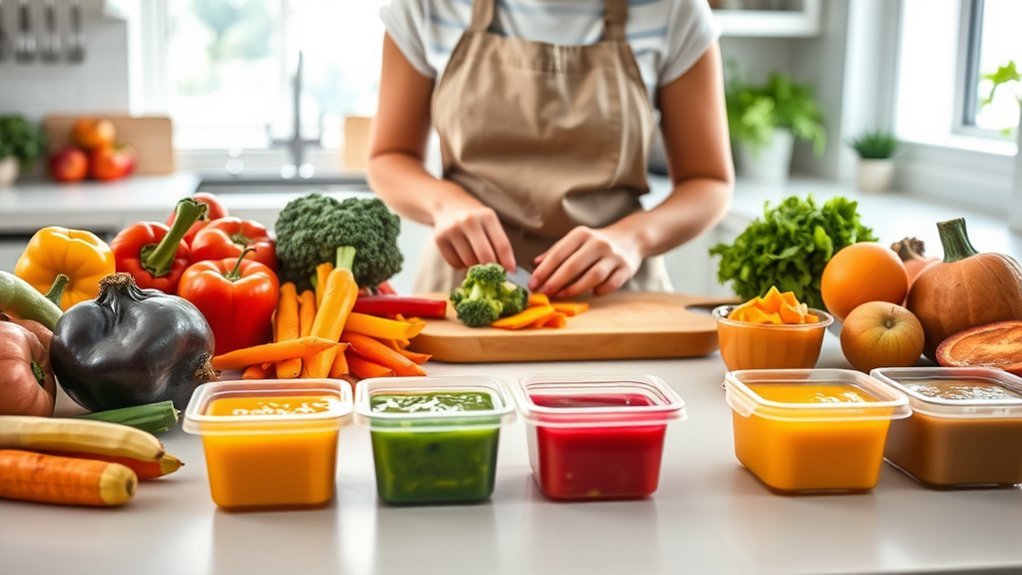
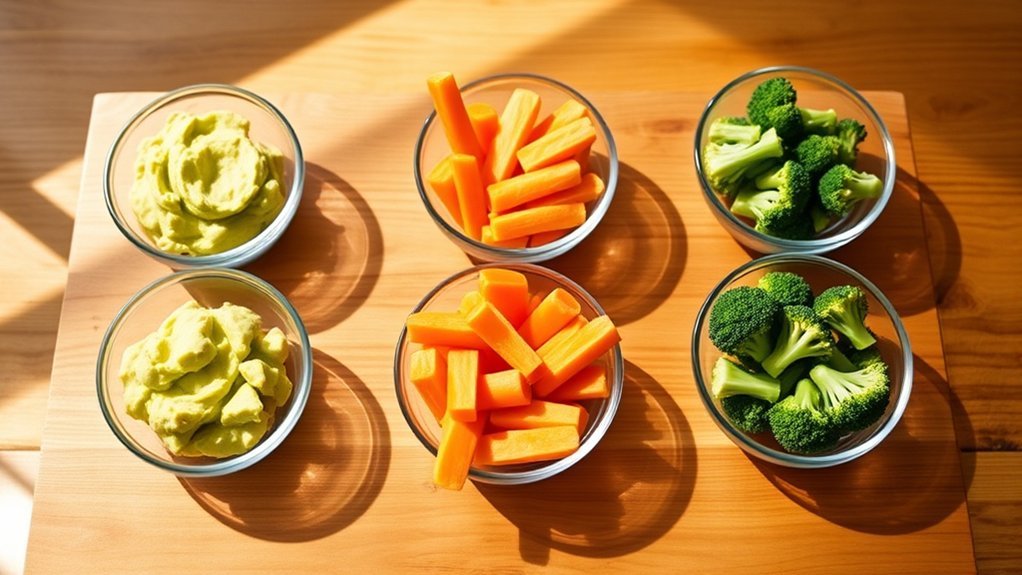
Baby-led weaning portion sizes work best as starting offers, not eating targets. Your baby may eat everything, taste only one piece, or refuse the meal. Begin with a small amount of soft food, offer more when your baby shows hunger, and stop when they close their mouth, turn away, or push food aside.
Quick Answer
At about 6 months, start with 1–2 tablespoons of soft food or a few soft, finger-shaped pieces. Increase the amount and variety as your baby’s skills and appetite grow. These are portions to offer, not amounts your baby must finish. Breast milk or formula remains the main nutrition source until 12 months.
Key Takeaways
- Start with small portions and let your baby decide how much to eat.
- For spoonable foods, 1–2 tablespoons is a useful first portion at about 6 months.
- For finger foods, offer a few soft pieces that your baby can grasp and mash easily.
- Include iron-rich foods, produce, grains or starchy foods, and healthy fats across the day.
- Breast milk or formula remains the main source of nutrition from 6 to 12 months.
- Never pressure your baby to clean the plate. Offer more when they show hunger and stop when they show fullness.
Note: This article provides general feeding information and does not replace advice from your child’s pediatrician or registered dietitian. Ask for individual guidance if your baby was born prematurely, has poor growth, severe eczema, a known food allergy, swallowing trouble, low muscle tone, or delayed feeding skills.
Baby-Led Weaning Portions at a Glance
At a Glance
| 6–8 Months | Start with 1–2 tablespoons of soft food in total or a few large, soft finger-shaped pieces. Offer more when your baby remains interested. |
| 9–11 Months | Begin with roughly 2–4 tablespoons of each selected food or a small plate containing two or three soft finger foods. Let appetite determine what is eaten. |
| 12 Months and Older | Start with about one-quarter of an adult portion or 1–2 tablespoons of each food. Keep extra food available for seconds. |
| Most Important Rule | You decide what, when, and where food is offered. Your baby decides whether to eat and how much. |
These ranges describe how much you might place on the tray or plate first. They are not minimum requirements. A baby’s appetite can change from one meal or day to the next.
Power your essentials anywhere with a 999Wh pure sine wave power station delivering up to 1000W continuous with 2000W surge. It supports fast charging via USB-C PD 60W and USB-A QC 18W, plus simultaneous output for multiple devices through AC, USB, wireless, and car/DC ports. Recharge using AC, car, or solar with a built-in MPPT controller and dual cooling fans, while the upgraded battery management system protects against surges, short circuits, and overheating.

THOUGHTFULLY DESIGNED: The ezpz food cutters make baby-led weaning food prep ezpz! The cutters assist with preparing foods in two essential shapes: finger-length strips and bite-sized cubes.

What You Should Know About Baby-Led Weaning
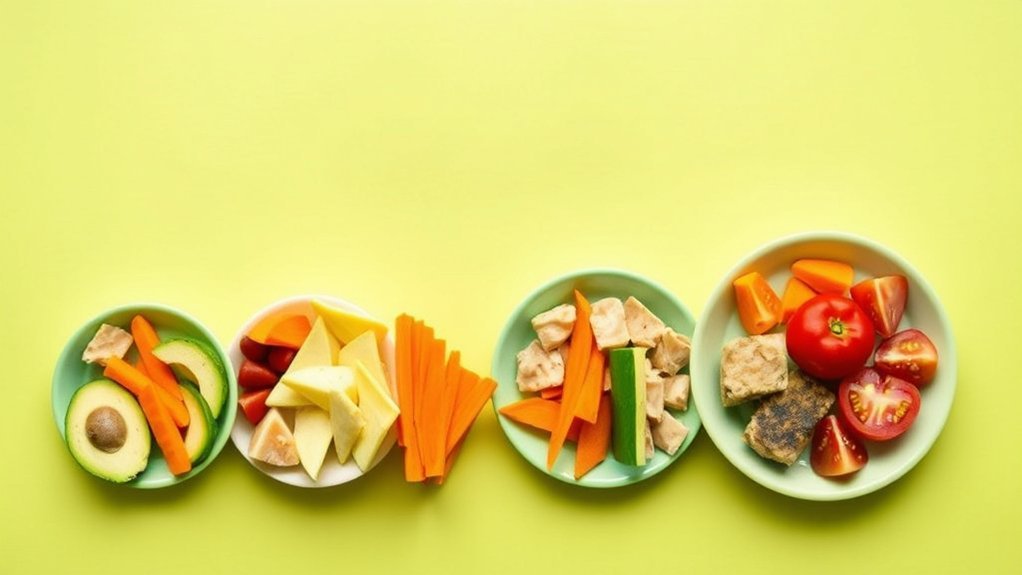
Baby-led weaning, or BLW, allows a baby to pick up developmentally appropriate foods and feed themselves instead of relying only on spoon-fed purées. Some families use finger foods exclusively, while others combine self-feeding with parent-loaded spoons or responsive spoon-feeding.
Most babies are ready to begin complementary foods at about 6 months, but age is only one factor. According to the American Academy of Pediatrics’ baby-led weaning guidance, readiness and safe eating skills matter more than following a calendar date.
Signs Your Baby Is Ready
Your baby should be able to:
- Sit upright with little or no support and remain stable in a highchair.
- Control their head and neck throughout the meal.
- Reach for food and bring objects accurately to their mouth.
- Swallow food instead of automatically pushing it out with the tongue.
- Show interest in food and open their mouth when food is offered.
Do not begin self-feeding solely because your baby has reached a certain age. A baby who slumps, cannot maintain head control, or struggles to swallow soft food may need more time or professional assessment.
What a Balanced BLW Meal Looks Like
You do not need to serve every food group at every meal. Across the day, try to include:
- An iron-rich food: Soft shredded meat, flaked fish with all bones removed, egg, mashed beans, lentil patties, tofu, or iron-fortified infant cereal.
- A fruit or vegetable: Soft broccoli florets, roasted sweet potato, ripe pear, avocado, banana, or soft-cooked zucchini.
- A grain or starchy food: Toast fingers, oatmeal, soft pasta, potato, rice formed into a soft scoopable shape, or quinoa.
- A healthy fat: Avocado, olive oil mixed into food, full-fat plain yogurt, egg, oily fish, or smooth nut butter thinned to a safe consistency.
A portion is what you offer. Intake is what your baby chooses to eat. Those amounts will not always be the same.
Recommended Portion Sizes for Babies 6 to 8 Months
During the first weeks of solids, eating is largely about learning. Your baby is practicing grasping, bringing food to the mouth, biting, chewing, moving food around the mouth, and swallowing.
The CDC recommends starting with 1–2 tablespoons of food. For BLW finger foods, the equivalent is a small number of soft, graspable pieces. You can place more on the tray when your baby finishes and continues reaching or opening their mouth for food.
Begin with one small meal when your baby is rested and not extremely hungry. Gradually work toward two or three opportunities to explore food as their interest and skills grow. Continue breastfeeding or formula feeding according to your baby’s usual routine.
Recommended Grain and Starchy Food Portions
Start with 1–2 tablespoons of spoonable oatmeal or another soft grain. For finger foods, try one or two soft toast fingers, a soft strip of pancake without added sugar, or a small mound of sticky rice that your baby can scoop.
Cook grains until soft. Avoid hard crackers, dry chunks, and firm foods that break into sharp pieces. As your baby becomes more skilled, gradually introduce thicker, lumpier textures rather than relying only on smooth purées.
Healthy Protein and Iron-Rich Portions
Offer 1–2 tablespoons of mashed beans, lentils, finely shredded meat, flaked fish, yogurt, cottage cheese, tofu, or egg. For self-feeding, you might offer a soft omelet strip, a tender meat strip that shreds easily, or a soft bean patty.
Iron-rich foods are especially useful after about 6 months. Include them regularly, and pair plant sources such as beans or lentils with vitamin C-rich foods such as tomato, broccoli, berries, or soft-cooked bell pepper.
Whole nuts and thick spoonfuls of nut butter are choking hazards. Thin smooth nut butter with warm water, breast milk, formula, yogurt, or purée before offering it.
Fruit and Vegetable Portions
Start with 1–2 tablespoons of mashed produce or a few soft pieces. Early finger foods should be roughly finger-length so your baby can hold one end in their fist while the other end remains visible.
Suitable options include ripe avocado wedges, banana spears, soft pear slices, steamed broccoli with a long handle, or roasted sweet potato wedges. The food should squash easily between your thumb and forefinger.
Pro Tip: Put only a few pieces on the tray at once. A less crowded tray makes it easier for a new eater to focus, grasp food, and show whether they want more.
Portion Sizes for Older Babies: 9 to 11 Months
Between 9 and 11 months, many babies become faster and more precise eaters. They may use a pincer grasp to pick up smaller pieces and may begin eating a wider range of family foods.
A practical starting plate can include 2–4 tablespoons of each of two or three foods. For example:
- Soft pasta, shredded chicken, and cooked peas flattened slightly.
- Omelet pieces, avocado, and soft toast.
- Mashed beans on toast fingers with soft roasted vegetables.
- Full-fat plain yogurt on a preloaded spoon with ripe fruit and oatmeal.
These are amounts to offer, not a required meal. Some babies will eat more, while others may take only a few bites. Continue to offer breast milk or iron-fortified formula, which remains the main nutrition source through the first birthday.
As hand control improves, you can offer smaller soft pieces. Continue to avoid hard, round, slippery, sticky, or coin-shaped foods.
What to Expect for Portion Sizes at 12 Months and Beyond
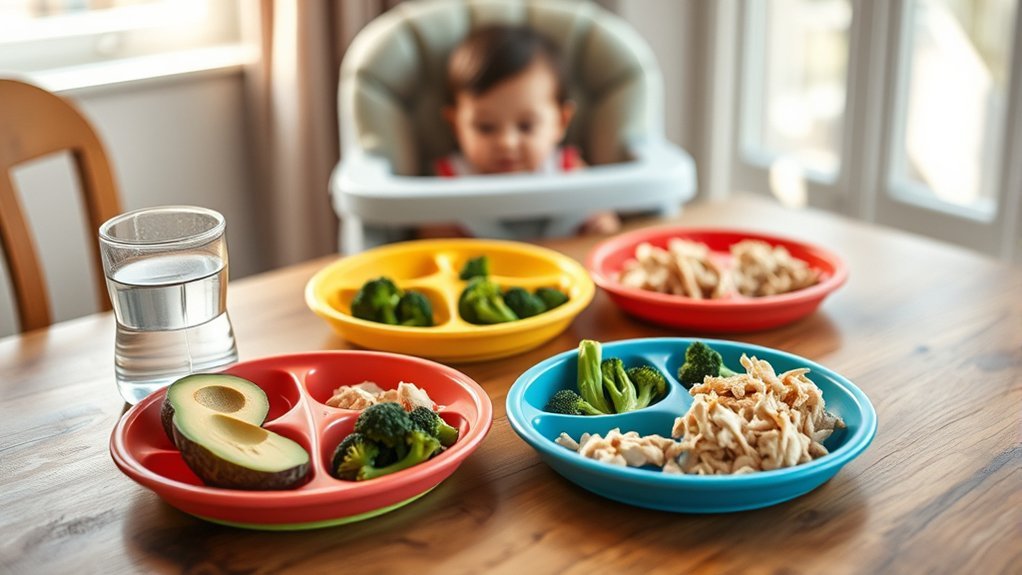
At about 12 months, many children move toward three meals and two or three planned snacks. Appetite often becomes less predictable because growth begins to slow.
Start with approximately one-quarter of an adult portion. For many foods, that may mean 1–2 tablespoons of each item. Serve more when your child asks for it rather than placing a large adult-sized meal in front of them.
A simple toddler plate might contain:
- 1–2 tablespoons of shredded or ground meat, egg, beans, tofu, or fish.
- 1–2 tablespoons of cooked vegetables.
- 1–2 tablespoons of fruit.
- A small serving of pasta, rice, potato, oatmeal, or bread.
Some children will comfortably eat one-quarter to one-half cup of a favorite food, but that should not be treated as a requirement for every food at every meal.
Milk After 12 Months
Pasteurized whole cow’s milk can generally be introduced as a drink at about 12 months. Breastfeeding can also continue for as long as it works for you and your child.
The American Academy of Pediatrics advises limiting cow’s milk to about 16 ounces per day for many toddlers. Consistently drinking more than 24 ounces can reduce appetite for iron-rich foods and may contribute to iron deficiency.
Ask your child’s clinician about milk type and quantity if your child has poor growth, anemia, a dairy allergy, or a restricted diet.
How to Measure Portions Without Overfeeding
You do not need to measure every meal. Tablespoons can help you understand how small an infant or toddler portion may be, but your baby’s cues are more useful than an exact measuring spoon.
Use this simple approach:
- Place a small amount of two or three foods on the tray.
- Let your baby touch, smell, lick, bite, and explore the food.
- Offer more of any food your baby finishes while still showing hunger.
- End the meal when your baby repeatedly turns away, closes their mouth, drops or pushes food away, or loses interest.
Do not use distraction, pressure, praise for finishing, or “one more bite” bargaining. The CDC recommends letting children decide how much they want to eat.
Safe Food Shapes and Textures for Baby-Led Weaning
Food preparation should change as your baby’s grasp and chewing skills develop.
For Early Graspers
Offer soft, finger-shaped pieces long enough to stick out from the baby’s closed fist. Examples include an avocado wedge, a soft omelet strip, a broccoli floret with a long stalk, or a roasted sweet potato wedge.
For Babies With a Pincer Grasp
Once your baby can reliably pick up food between the thumb and forefinger, offer smaller soft pieces such as finely shredded chicken, soft diced pear, cooked pasta pieces, or flattened beans.
Warning: Always seat your baby upright in a stable highchair and remain within arm’s reach throughout the meal. Avoid whole nuts, popcorn, whole grapes, round sausage or hot-dog slices, raw hard vegetables, hard apple chunks, firm meat or cheese cubes, thick spoonfuls of nut butter, and hard or sticky candy. If your baby cannot breathe, cough, cry, or make sound, treat it as choking and call emergency services immediately.
Gagging Versus Choking
Gagging is a protective reflex and is common while babies learn to handle food. A gagging baby may cough, make noise, turn red, or push the tongue forward.
Choking is different. A choking baby may be silent, unable to breathe or cough effectively, or develop bluish or gray skin. Every caregiver should learn age-appropriate infant choking first aid before beginning finger foods.
Introducing Allergenic Foods Safely
Common allergenic foods include peanut, egg, milk products, wheat, soy, sesame, fish, shellfish, and tree nuts. There is no benefit to delaying these foods once your baby is ready for solids unless your child’s clinician has advised otherwise.
The AAP recommends using infant-safe forms and introducing one new food at a time. Offer a small amount earlier in the day, then watch for a reaction.
Safe examples include:
- Smooth peanut butter thinned into yogurt, oatmeal, purée, breast milk, formula, or water.
- Well-cooked egg offered as mashed egg or a soft omelet strip.
- Plain full-fat yogurt.
- Finely flaked, thoroughly cooked fish with every bone removed.
- Sesame paste thinned into another familiar food.
If the food is tolerated, continue offering it regularly in a developmentally appropriate form.
Allergy Warning: Talk with your pediatrician before introducing peanut if your baby has severe eczema, egg allergy, or a previous immediate food reaction. Seek emergency help for trouble breathing, swelling of the tongue or throat, widespread hives with vomiting, sudden weakness, or loss of responsiveness.
Foods and Drinks to Avoid or Limit
The CDC identifies several foods and drinks that are unsafe or unsuitable for young babies.
- Honey before 12 months: Do not offer honey in any form because of the risk of infant botulism.
- Cow’s milk as a beverage before 12 months: Yogurt and cheese can be used as foods, but breast milk or formula should remain the main milk drink.
- Unpasteurized foods and drinks: Avoid raw milk, unpasteurized cheese, unpasteurized yogurt, and unpasteurized juice.
- Juice before 12 months: Whole fruit is the better choice. Juice is unnecessary after the first birthday as well.
- Added sugars: Avoid sweetened yogurt, desserts, sugary drinks, and foods made with added honey or syrup.
- High-sodium foods: Limit processed meats, salty packaged snacks, instant noodles, and heavily salted family foods.
- High-mercury fish: Choose lower-mercury fish appropriate for young children and follow current local fish advisories.
Tips for Monitoring Your Baby’s Appetite and Food Preferences
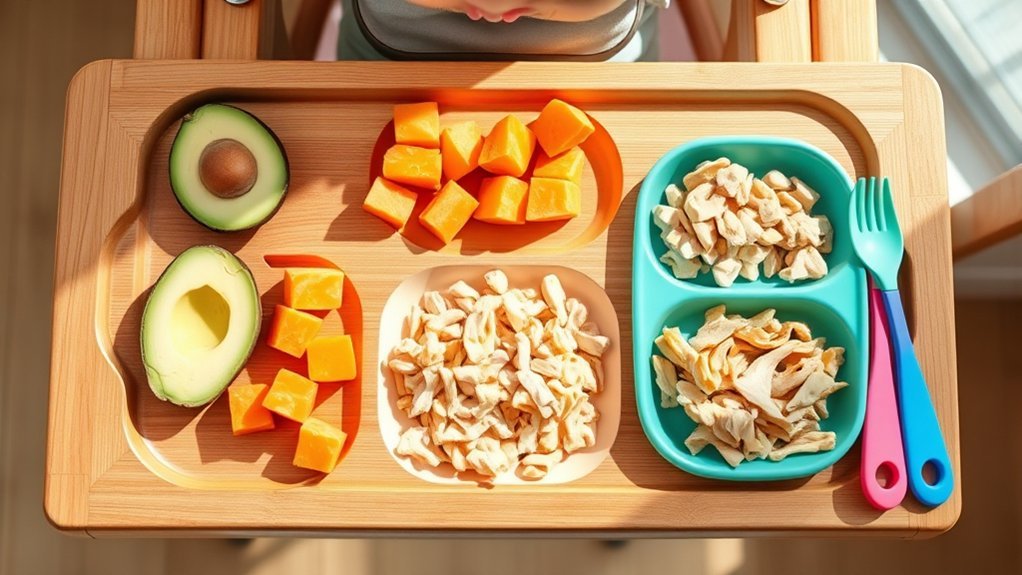
Your baby’s appetite can vary widely. Teething, illness, sleep, growth, milk intake, and new feeding skills may all affect how much they eat.
Common Hunger Cues
- Reaching or pointing toward food.
- Opening the mouth when food approaches.
- Leaning toward the tray.
- Becoming excited when food appears.
- Using sounds or gestures to request more.
Common Fullness Cues
- Closing the mouth.
- Turning the head or body away.
- Pushing the food or spoon away.
- Slowing down and becoming distracted.
- Dropping food repeatedly after previously eating.
- Using sounds or gestures to signal they are finished.
Playing with food is part of learning, especially during the first months. It does not always mean the meal has failed. Repeated exposure helps babies become familiar with new smells, textures, and flavors.
Pro Tip: When introducing a less familiar food, place it beside something your baby already accepts. Keep the portion small and offer it again on another day without pressure.
When to Get Professional Feeding Help
Contact your child’s pediatrician or a pediatric feeding specialist if your baby:
- Frequently coughs, chokes, or has wet or noisy breathing during meals.
- Cannot sit or maintain head control well enough to eat safely.
- Consistently vomits, develops diarrhea, or has repeated reactions after foods.
- Shows pain, distress, or extreme fatigue while eating.
- Accepts very few textures or cannot progress beyond smooth purées.
- Is not gaining weight as expected.
- Regularly takes an unusually long time to finish meals.
- Eats almost no complementary food as the first birthday approaches.
Frequently Asked Questions
Can I introduce allergenic foods during baby-led weaning?
Yes. Once your baby is developmentally ready for solids, introduce allergenic foods in soft, infant-safe forms. Begin with a small amount and watch for a reaction. Ask your pediatrician first if your baby has severe eczema, egg allergy, or a previous immediate food reaction.
How do I know if my baby is ready for self-feeding?
Look for steady head control, upright sitting, the ability to reach for and bring objects to the mouth, and the ability to swallow food instead of pushing it out automatically. Most babies develop these skills at about 6 months.
What if my baby refuses certain foods?
Stay calm and remove the food without pressure. Offer it again on another day, possibly in a different safe shape or texture. A baby may need many neutral exposures before accepting an unfamiliar food.
How can I make mealtime safe for my baby?
Seat your baby upright in a stable highchair, buckle the harness, prepare soft foods in developmentally appropriate shapes, remove bones and pits, and supervise continuously. Learn infant choking first aid before beginning finger foods.
Should I continue breastfeeding or formula feeding while weaning?
Yes. Breast milk or iron-fortified formula remains the main source of nutrition through 12 months while solid foods gradually become a larger part of the diet. Breastfeeding can continue after the first birthday.
How much should my baby eat at one meal?
At about 6 months, begin with 1–2 tablespoons of food or a few soft finger-food pieces. Older babies may be offered larger portions, but there is no required amount. Continue serving food until your baby shows fullness.
Can I combine baby-led weaning with spoon-feeding?
Yes. You can offer finger foods along with yogurt, oatmeal, mashed beans, or other spoonable foods. Let your baby hold a preloaded spoon when possible, and stop feeding when they turn away or close their mouth.
What if my baby eats almost nothing?
Very small intakes are common during the first weeks of solids. Continue offering varied foods without pressure and maintain normal breast milk or formula feeds. Contact your pediatrician if poor intake continues, feeding appears difficult, or you are concerned about growth.
Conclusion
Baby-led weaning portion sizes should guide what you place on the tray, not dictate what your baby must eat. Start with 1–2 tablespoons or a few soft finger-shaped pieces, add more when your baby remains hungry, and stop when they show fullness. Focus on safe textures, regular iron-rich foods, variety, and relaxed opportunities to practice self-feeding.
Every baby develops at a different pace. When growth, swallowing, allergy risk, or feeding skills are a concern, use personalized advice from your child’s pediatrician or a qualified pediatric dietitian.
Sources
- Centers for Disease Control and Prevention: How Much and How Often to Feed — starting portions, meal frequency, and the role of breast milk or formula.
- Centers for Disease Control and Prevention: Signs Your Child Is Hungry or Full — responsive feeding and hunger and fullness cues.
- American Academy of Pediatrics: Baby-Led Weaning—Is It Safe? — readiness, food preparation, seating, and choking prevention.
- American Academy of Pediatrics: Introducing Common Food Allergens — timing, safe forms, reaction monitoring, and high-risk infants.
- Centers for Disease Control and Prevention: Foods and Drinks to Avoid or Limit — honey, cow’s milk, juice, unpasteurized foods, caffeine, and added sugars.
- American Academy of Pediatrics: Formula and Cow’s Milk — milk timing, quantity, and iron-deficiency concerns.