Refreezing thawed baby food is not as simple as checking whether it still smells normal. General USDA guidance says many foods thawed in the refrigerator can be refrozen, but baby-specific guidance from University of Illinois Extension says not to refreeze baby food once it has thawed. Because infants are more vulnerable to foodborne illness, the safest everyday rule is to thaw only what you need and discard leftovers.
Quick Answer
Do not refreeze fully thawed baby food as a routine practice. Baby-specific food-safety guidance recommends using or discarding it instead. Keep it at 40°F (4°C) or below, follow food-specific refrigerator limits, and discard any portion that touched your baby’s mouth, was reheated, or sat out too long.
Key Takeaways
- The safest baby-specific rule is not to refreeze baby food after it has fully thawed, even though general USDA guidance allows some refrigerator-thawed foods to be refrozen.
- Thaw only the amount your baby is likely to eat, preferably in the refrigerator.
- Discard food that touched your baby’s mouth or feeding spoon; saliva can contaminate the remaining food.
- Discard perishable baby food left out for more than two hours, or more than one hour when the temperature is above 90°F (32°C).
- Use time and temperature history—not smell alone—to decide whether baby food is safe.
At a Glance
| Time Required | Overnight in the refrigerator, or a few minutes for immediate thawing and reheating |
| Difficulty | Easy |
| Tools Needed | Clean covered container, clean spoon, refrigerator/freezer thermometer, and optional food thermometer |
| Cost | No added cost if you already have suitable containers and thermometers |
How to Safely Handle Thawed Baby Food

Safe handling starts before the food thaws. Wash your hands, use clean utensils and containers, and keep the refrigerator at or below 40°F (4°C). The freezer should stay at 0°F (-18°C), according to the FDA’s food-storage guidance.
Place only the amount you expect to serve in a clean bowl. Keep the rest covered in the refrigerator or freezer. The FDA advises against feeding directly from a jar and saving the remainder because saliva transferred by the spoon can contaminate the food.
Warning: Throw away any baby food left in the serving dish, pouch or jar after your baby has eaten from it. Refrigeration or reheating does not reliably make saliva-contaminated leftovers safe.
A baby food can look and smell normal and still contain harmful bacteria. Its time and temperature history matter more than a sniff test.
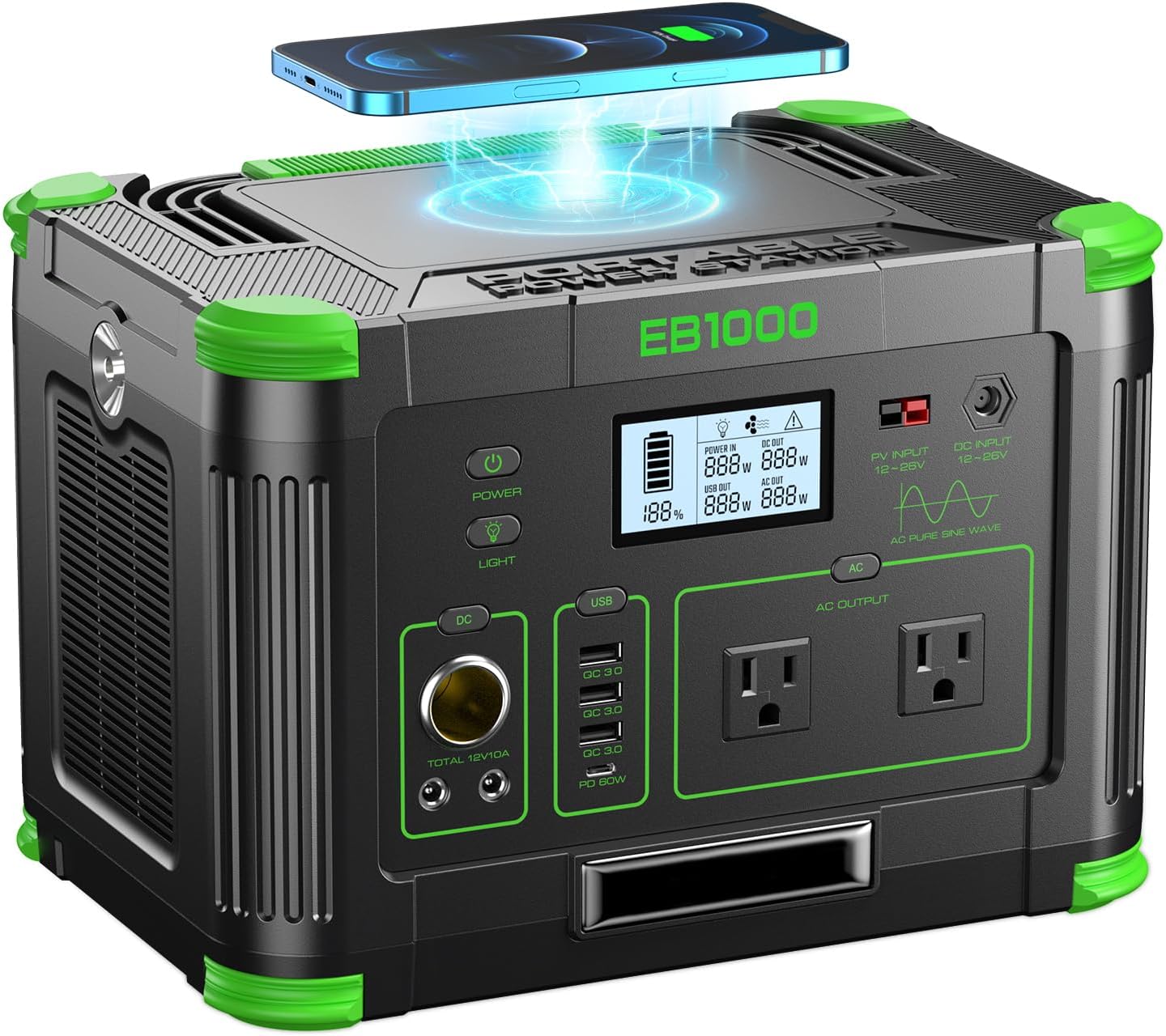
Power your essentials anywhere with a 999Wh pure sine wave power station delivering up to 1000W continuous with 2000W surge. It supports fast charging via USB-C PD 60W and USB-A QC 18W, plus simultaneous output for multiple devices through AC, USB, wireless, and car/DC ports. Recharge using AC, car, or solar with a built-in MPPT controller and dual cooling fans, while the upgraded battery management system protects against surges, short circuits, and overheating.
![VITEVER [16 Pack] 4 oz Small Containers with Lids, Reusable Plastic Jars for Snack and Puree, Salad Dressing Container to Go, Deli Containers, Freezer Baby Food Containers, Dishwasher Safe, BPA Free](https://m.media-amazon.com/images/I/41fnLIEevxL._SL500_.jpg)
BPA-FREE; DISHWASHER SAFE; MICROWAVE SAFE; SEALABLE; STACKABLE; REUSABLE.

Premium Baby Food Storage Containers: The set has 20 food storage containers, 4 oz each. 5 colors, 4 of each color. There are many colors for easy differentiation of use and a large number to meet the daily needs of baby use. A pen can be used to write the name, date or other information on the lid to remind you what is inside the jar. Perfect for storing homemade baby food, solid baby food, fruit and vegetable purees, jams, etc
Best Practices for Thawing Baby Food
Use one of these safe methods, and thaw only a single serving whenever possible:
- Refrigerator method: Move a covered portion from the freezer to the refrigerator and let it thaw gradually, usually overnight. This is the preferred method because the food stays cold throughout thawing.
- Cold-water method: Keep the food in a leak-proof container or bag and place it under cold running water or in cold water that is changed every 30 minutes. Use or reheat it immediately after thawing; do not refreeze it.
- Microwave method: Transfer the food to a microwave-safe dish. Thaw or heat it immediately before serving, stir thoroughly, let it stand for 30 seconds, and test several spots to make sure it is lukewarm. The FDA advises using the stovetop instead of a microwave for baby-food meats, meat sticks and eggs because they can overheat and splatter.
Pro Tip: Freeze homemade baby food in small, labeled portions. Thawing one cube or container at a time prevents the need to decide whether a larger batch can be saved.
Guidelines for Refreezing Thawed Baby Food
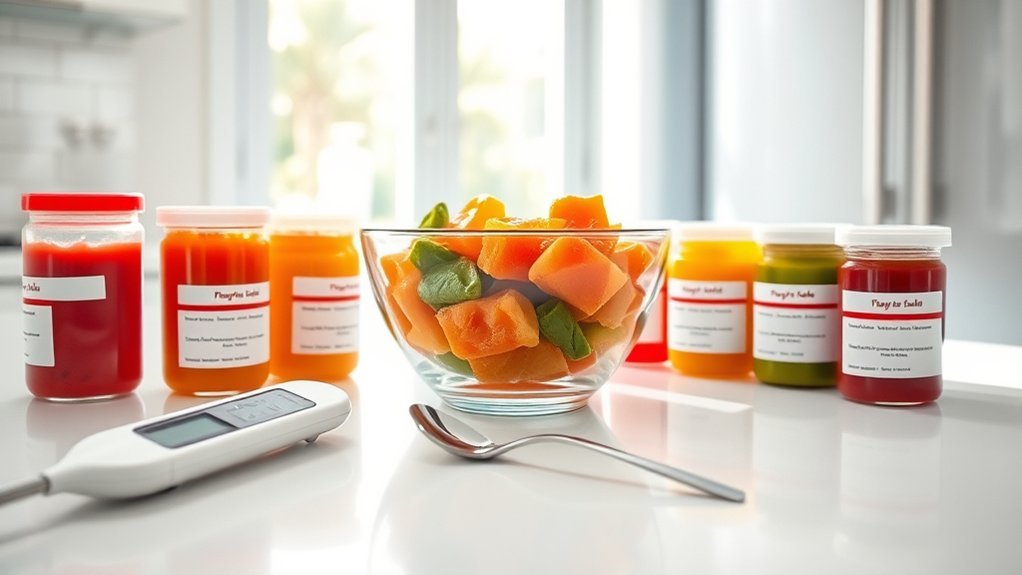
General and baby-specific guidance are not identical. The USDA says food thawed in the refrigerator can generally be refrozen, although quality may decline. However, University of Illinois Extension’s infant-feeding guidance says not to refreeze thawed baby food. For routine infant feeding, follow the more conservative baby-specific rule.
| What happened? | Safest action |
|---|---|
| Fully thawed in the refrigerator and never served | Use within the correct refrigerator limit; do not refreeze as a routine baby-food practice. |
| Thawed in cold water or the microwave | Use or reheat immediately; do not refreeze. |
| Touched by a used spoon, your baby’s mouth or saliva | Discard it. |
| Reheated or warmed for serving | Discard the uneaten portion; do not cool and refreeze it. |
| Left above 40°F for more than two hours, or more than one hour above 90°F | Discard it, even if it looks and smells normal. |
| Still partly frozen with ice crystals after an accidental thaw | General USDA guidance may allow refreezing if it stayed at 40°F or below, but follow the product label and use the conservative baby-specific rule when the temperature history is uncertain. |
Safety Guidelines Overview
The safest answer depends on the food’s entire handling history, not just the fact that it was once frozen. A clean, untouched portion kept continuously cold is lower risk than food that was warmed, served or held at room temperature. Still, because babies are at higher risk from foodborne illness, avoiding a second freeze-thaw cycle is the clearest household rule.
Refreezing can also damage quality. Purees may become watery, grainy or separated after another freeze-thaw cycle, especially foods made with potatoes, dairy, eggs or high-water fruits and vegetables.
Signs of Spoilage
Discard baby food if you see mold, bubbling, a swollen package, leaking, an unusual color, a sour or rotten odor, or a slimy texture. These are warning signs, but their absence does not prove that the food is safe. The FDA notes that disease-causing bacteria may be present even when food looks and smells normal.
How to Store Thawed Baby Food Safely
Keep thawed baby food covered, dated and refrigerated at 40°F or below. Current FoodSafety.gov storage guidance for opened or freshly made purées and solids varies by food type:
| Baby food type | Refrigerator | Freezer |
|---|---|---|
| Strained fruits and vegetables | 2 to 3 days | 6 to 8 months |
| Strained meats and eggs | 1 day | 1 to 2 months |
| Meat and vegetable combinations | 1 to 2 days | 1 to 2 months |
| Homemade baby food | 1 to 2 days | 1 to 2 months |
Note: These storage times apply only to food that has been handled cleanly and has not contacted saliva. For commercial baby food, also follow the package instructions if they are shorter.
Safe Thawing Methods
- Thaw in the refrigerator whenever you can.
- Keep cold-water-thawed food sealed and use it immediately.
- Microwave only in a separate dish, then stir, let stand and test the temperature.
- Never thaw baby food for a long period on the counter.
- Do not use a slow cooker to reheat a small serving of baby food because it may warm too slowly.
Refrigeration Guidelines
Label each container with the food and the date it was prepared or thawed. Store it toward the back of the refrigerator rather than in the door, where temperatures fluctuate more. When reheating homemade baby food, University of Illinois Extension recommends heating it to 165°F (74°C), then stirring and cooling it to lukewarm before feeding.
Discarding Spoiled Food
Throw the food away when any of these conditions apply:
- It exceeded its refrigerator storage limit.
- It was left at room temperature for more than two hours, or more than one hour in temperatures above 90°F.
- It touched a used feeding spoon, your baby’s mouth or saliva.
- Its storage temperature or handling history is unknown.
- The container is leaking, swollen, cracked or damaged.
- The food has mold, an unusual odor, discoloration, bubbling or a slimy texture.
Signs Your Thawed Baby Food Has Spoiled
Start with the clock and thermometer, not your senses. If the food was kept too warm or too long, discard it even when it appears normal. Do not taste questionable baby food to test it.
Visible mold, gas bubbles, a bulging pouch or lid, leaking, sour odor, unusual color and a slimy or curdled texture are all reasons to throw the food away. Natural separation after freezing can happen, but if you cannot confidently explain a texture change, do not serve the food to a baby.
How to Minimize Baby Food Waste While Traveling

Travel makes temperature control harder, so plan around small servings and a reliable cold source:
- Pack single portions: Freeze homemade purées in serving-size containers so you remove only what you need.
- Use an insulated cooler: Pack enough ice or frozen gel packs to keep perishable food at 40°F or below. A small cooler thermometer removes guesswork.
- Track time outside refrigeration: The FDA says perishable baby food transported without a cold source for more than two hours should not be used. Reduce that limit to one hour in temperatures above 90°F.
- Serve from a clean bowl: Keep the untouched food separate and use a clean spoon each time you add more.
- Carry a backup: Unopened shelf-stable baby food can reduce waste during delays; follow the package directions after opening.
Alternative Options for Thawed Baby Food
If you have more safely thawed food than your baby needs, use a clean portion within its refrigerator storage limit rather than refreezing it. An untouched vegetable or fruit purée may be stirred into oatmeal, yogurt or a family recipe for an older child or adult, provided it stayed cold and never contacted saliva.
Do not repurpose food that was served, left out too long or stored at an unknown temperature. Cooking cannot reliably correct every unsafe handling problem, including toxins that some bacteria may produce.
Prepare and freeze smaller portions so each container can be thawed once, served once and discarded without wasting a larger batch.
Frequently Asked Questions
Can I freeze homemade baby food after cooking?
Yes. Cool it promptly, divide it into clean single-serving containers, label it and freeze it. Current FoodSafety.gov guidance lists 1 to 2 months in the freezer for homemade baby food. Once a portion fully thaws, the safest baby-specific practice is not to refreeze it.
How long can I store thawed baby food in the fridge?
It depends on the ingredients. Strained fruits and vegetables generally keep for 2 to 3 days, strained meats and eggs for 1 day, and meat-and-vegetable combinations or homemade baby food for 1 to 2 days. Use a shorter package limit when one is listed.
Can I use thawed baby food for cooking?
Yes, if it was thawed safely, stayed at 40°F or below, remains within its refrigerator limit and never contacted saliva. Use it promptly in a thoroughly cooked dish. Do not try to rescue food that sat out too long or has an unknown temperature history.
What ingredients in baby food spoil faster?
Meat- and egg-based baby foods have the shortest federal refrigerator limit—about 1 day. Meat-and-vegetable combinations and homemade foods are generally limited to 1 to 2 days, while strained fruits and vegetables may keep for 2 to 3 days.
Is it safe to heat thawed baby food multiple times?
Avoid repeated heating and cooling. Warm only the serving you need, discard leftovers from the serving dish and keep the untouched portion cold. Each extra cycle adds handling and time in temperatures where bacteria can grow.
Can I refreeze baby food that thawed in the refrigerator?
General USDA guidance allows many foods thawed in the refrigerator to be refrozen, but baby-specific University of Illinois Extension guidance says not to refreeze thawed baby food. For routine infant feeding, use the more conservative rule: refrigerate and use it within the proper limit, or discard it.
Can I refreeze purée made with thawed breast milk?
No. FDA guidance says previously frozen breast milk should not be refrozen after it has thawed. To avoid waste, add fresh or refrigerated milk only to the portion you are about to serve.
Conclusion
The safest household rule is simple: thaw baby food once, serve only what your baby needs and do not refreeze the fully thawed remainder. Keep food at 40°F or below, follow the correct storage time for its ingredients, and discard anything that touched saliva, was reheated and left over, or spent too long without refrigeration. When the temperature history is uncertain, throw it away.
Sources
- University of Illinois Extension: Practicing Food Safety — baby-specific guidance on thawing, refreezing, reheating and saliva contamination.
- FoodSafety.gov: Children Under Five — current refrigerator and freezer storage times for puréed and solid baby foods.
- FDA: Once Baby Arrives — safe serving, travel, room-temperature and microwave practices.
- USDA FSIS: Freezing and Food Safety — general rules for refreezing food thawed in the refrigerator.
- FDA: Are You Storing Food Safely? — refrigerator, freezer and room-temperature limits.