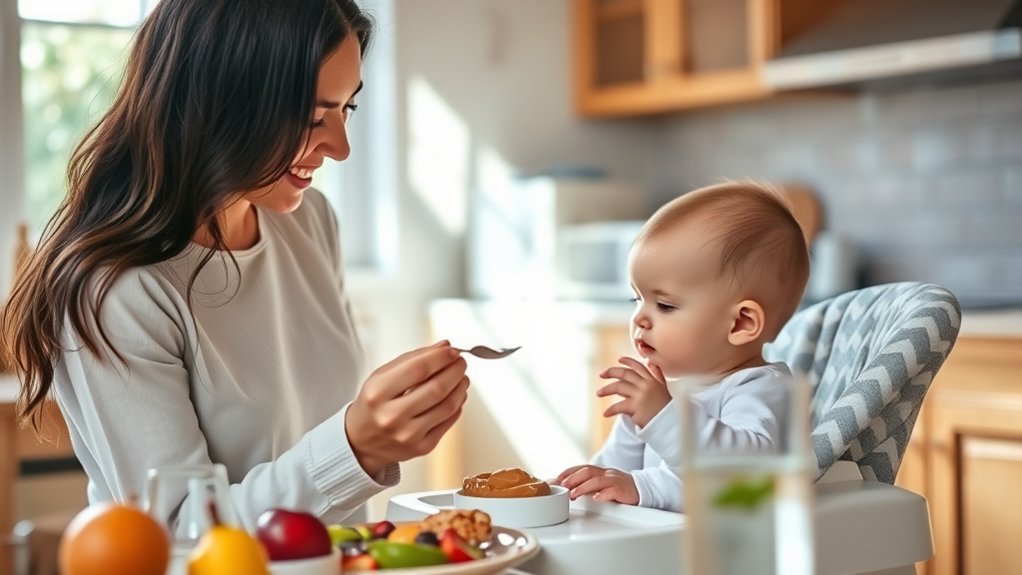
Babies can usually try strawberries at about 6 months old, once they are developmentally ready for solid foods. The safest serving depends on the berry’s softness and your baby’s eating skills. Start with mashed, puréed, finely chopped, or very soft thinly sliced strawberry, and supervise every bite.
Quick Answer
Babies can eat strawberries at about 6 months when they can sit with support, control their head and neck, and swallow food. Wash the berries, remove the leafy tops, and serve them mashed or cut into soft, non-round pieces. Avoid firm whole berries, added sugar, and unsupervised eating.
Key Takeaways
- Introduce strawberries at about 6 months, not before 4 months, and only after your baby shows readiness for solid foods.
- Wash strawberries under cool running water and remove the leafy top before cutting or mashing them.
- Serve soft, non-round pieces that match your baby’s eating skills. Do not rely on age alone or treat a whole berry as safe for every baby.
- Keep your baby seated upright and within arm’s reach throughout the meal.
- Strawberries are not among the nine major FDA allergens, but any food can cause a reaction.
- Choose plain fruit or an unsweetened strawberry product instead of jam, fruit drinks, or foods with added sugar.
At a Glance
| Starting Age | About 6 months, once developmentally ready |
| Preparation Time | About 3 to 5 minutes |
| Difficulty | Easy, with careful texture and size checks |
| Tools Needed | Running water, clean knife, cutting board, fork or blender |
| First Serving | A small taste or 1 to 2 teaspoons; offer more if your baby shows hunger cues |
Note: This article provides general feeding information, not individualized medical advice. Ask your pediatrician or feeding specialist before changing textures if your baby was born prematurely, has trouble swallowing, has poor head control, or has a history of serious food reactions.
When Can Babies Safely Start Eating Strawberries?
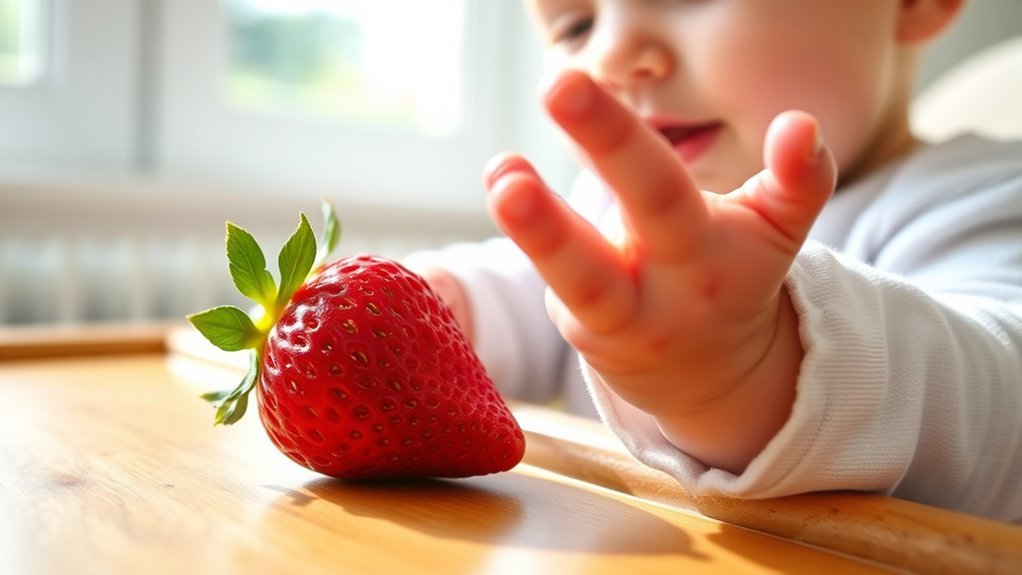
Most babies can begin trying strawberries at about 6 months of age. The Centers for Disease Control and Prevention recommends introducing foods other than breast milk or infant formula at about this age. Starting solid foods before 4 months is not recommended.
Readiness matters more than reaching an exact date. Your baby should show several of these signs:
- Sits upright alone or with support.
- Controls the head and neck steadily.
- Opens the mouth when food is offered.
- Swallows food instead of automatically pushing it out.
- Brings hands or objects to the mouth.
- Can move food from the front toward the back of the tongue.
Strawberries do not need to be delayed until 12 months when your baby is otherwise ready for solids. However, breast milk or infant formula should continue to provide important nutrition during the first year while solid foods are gradually introduced.
How to Prepare Strawberries for Your Baby
The goal is to make the fruit clean, soft, easy to manage, and free of round or firm pieces. Prepare the strawberry immediately before serving when possible.
- Wash your hands and equipment. Use a clean cutting board, knife, fork, bowl, and feeding surface.
- Rinse the strawberry. Hold it under cool running tap water and gently rub the surface. Federal food-safety guidance says not to use soap, bleach, disinfectant, or produce-cleaning chemicals on fresh fruit.
- Remove the leafy top. Cut away the green cap and any damaged, moldy, or bruised area.
- Check the texture. A ripe strawberry should yield easily when pressed with a fork. Cook, steam, or microwave a firm berry until it is soft, then let it cool completely.
- Prepare it for your baby’s skill level. Mash, purée, finely chop, or cut the soft fruit into thin, non-round pieces.
- Test it before serving. Make sure the berry can be squashed easily with a fork and does not contain a hard center.
Pro Tip: Pair mashed strawberry with an iron-rich food such as iron-fortified infant oatmeal, beans, lentils, or meat. Vitamin C helps the body absorb iron from plant foods more effectively.
How to Serve Strawberries by Age and Eating Skill
These are general starting points rather than rigid milestones. Move to a new texture only when your baby manages the current texture comfortably. A soft berry can still be risky if it is round, slippery, or too large for the child’s abilities.
| Stage | Safer Ways to Serve Strawberry | Avoid |
| Beginning solids, often around 6 months | Smooth purée, thoroughly mashed strawberry, or very soft finely chopped fruit mixed into a familiar food | Firm berries, hard centers, frozen-solid fruit, and round whole berries |
| Developing finger feeding, often around 8 to 11 months | Very soft thin slices, flattened pieces, or small soft pieces that are not round | Large firm chunks and slippery round pieces |
| Older infant or toddler with established chewing skills | Soft bite-sized pieces, thin slices, or small quarters cut lengthwise and checked for firmness | Hard, underripe, or frozen pieces and eating while walking or playing |
The CDC recommends cutting berries into small pieces and preparing foods so they match the child’s eating skills. The American Academy of Pediatrics also advises modifying round foods, keeping young children seated, and supervising every meal.
How Much Strawberry Can a Baby Eat?
For the first exposure, offer a small taste or about 1 to 2 teaspoons of prepared strawberry. Let your baby decide whether to continue. Some babies eat only a taste, while others want more.
Watch for fullness cues such as turning away, closing the mouth, pushing food away, slowing down, or becoming distracted. Do not pressure your baby to finish a serving. Strawberries can be part of a varied meal, but they should not displace breast milk, infant formula, or iron-rich foods.
Nutritional Benefits of Strawberries for Babies
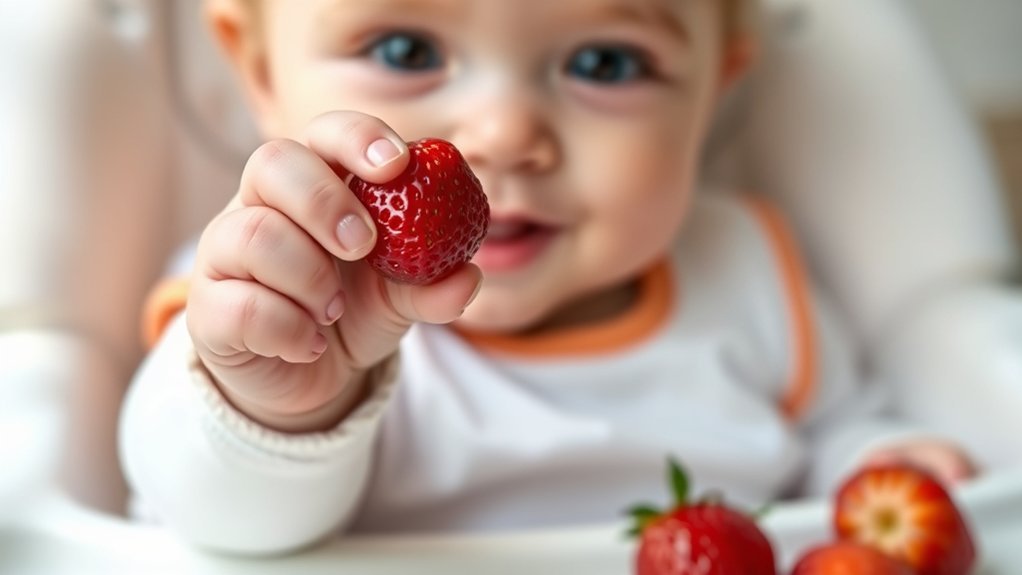
Strawberries provide vitamin C, fiber, water, folate, potassium, and naturally occurring plant compounds. According to the National Institutes of Health, vitamin C contributes to normal immune function and improves the absorption of nonheme iron found in plant foods.
This makes strawberry a useful partner for iron-fortified cereal, beans, lentils, tofu, or other iron-rich foods. However, strawberries are not a major source of iron, protein, or fat, so they should be offered as one part of a varied diet.
The safest strawberry serving is determined by softness, shape, and eating skill—not by age alone.
Choking and Allergy Risks of Strawberries for Babies
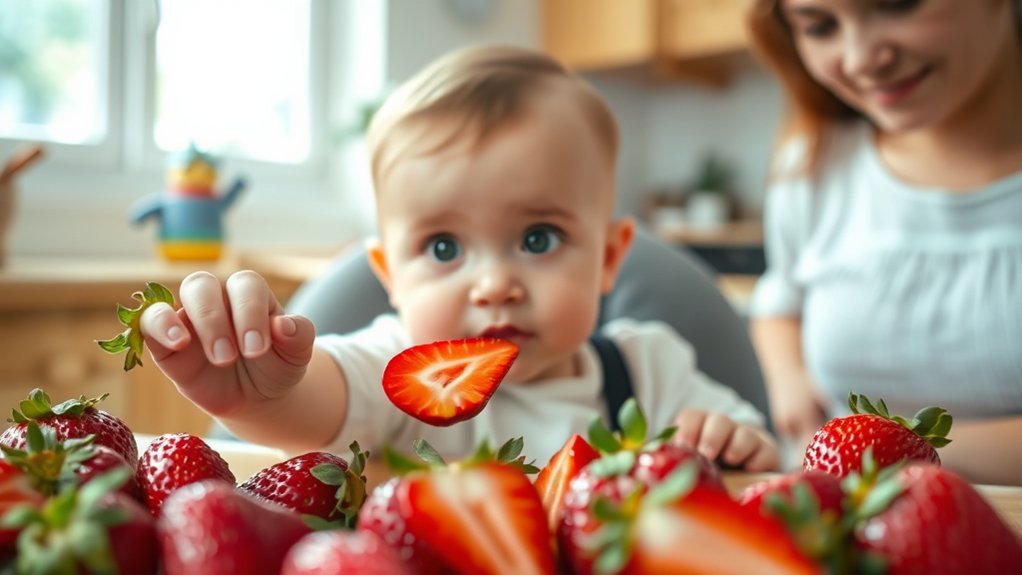
How to Reduce Choking Risk
Strawberries become more hazardous when they are firm, round, slippery, frozen, or served in a piece the baby cannot manage. To reduce risk:
- Make sure the fruit is soft enough to mash easily with a fork.
- Cut berries into small, thin, flattened, or finely chopped pieces.
- Remove any hard or pale center.
- Seat your baby upright in a stable high chair.
- Keep your baby within arm’s reach and watch continuously.
- Do not allow eating while crawling, walking, playing, reclining, or riding in a moving vehicle.
- Take a certified infant CPR and choking first-aid course.
Warning: A baby who cannot breathe, cry, cough effectively, or make noise; turns blue; becomes limp; or loses consciousness may have a blocked airway. Call 911 and begin the infant choking response you were trained to perform. Do not blindly sweep a finger inside the baby’s mouth.
Gagging Versus Choking
Gagging can happen while babies learn to handle new textures. A gagging baby may cough, make noise, or push the tongue forward. Choking occurs when the airway is partly or fully blocked and can prevent the child from breathing or making sound. Never leave a baby alone because gagging and choking can be difficult to distinguish quickly.
Can Babies Be Allergic to Strawberries?
Strawberries are not among the nine major allergens identified by the FDA. Still, any food can cause an allergic reaction.
Offer a small amount of plain strawberry when your baby is healthy and you can observe them. Avoid introducing several unfamiliar ingredients in the same dish because that can make the cause of a reaction harder to identify.
Possible food-allergy symptoms include:
- Hives or a spreading rash.
- Swelling of the lips, face, tongue, or throat.
- Repeated vomiting or diarrhea.
- Coughing, wheezing, or trouble breathing.
- Sudden sleepiness, limpness, dizziness, or loss of consciousness.
A small red area only where strawberry juice touched the skin does not by itself confirm an allergy. Wipe and rinse the skin, note how long the redness lasts, and contact your pediatrician if it repeatedly returns or occurs with other symptoms.
Warning: Call 911 for breathing difficulty, throat or tongue swelling, blue coloring, severe wheezing, collapse, or symptoms affecting more than one body system. A previous mild reaction does not guarantee that a future reaction will also be mild.
Fresh, Frozen, and Packaged Strawberry Options
Fresh Strawberries
Choose berries without mold, leaking juice, or major bruising. Rinse them under cool running water immediately before preparing them. Do not soak them in soap, bleach, vinegar, sanitizer, or disinfectant.
Frozen Strawberries
Frozen strawberries can be used after they are fully thawed, cooked if needed, and prepared to a soft texture. Never offer a frozen-solid strawberry or hard frozen piece because it can be difficult to chew and may cause choking.
You can also freeze prepared strawberry purée in a clean covered container or food-grade freezer tray. Thaw only the amount needed and discard food left in the baby’s bowl after the meal because saliva can introduce bacteria.
Strawberry-Flavored Products
Plain strawberry, unsweetened purée, or mashed strawberry mixed into plain yogurt or oatmeal is usually a better option than a product labeled only “strawberry flavored.” Check packaged foods for:
- Added sugar, syrup, honey, or sweeteners.
- Other allergens such as milk, wheat, soy, sesame, peanuts, or tree nuts.
- Hard dried-fruit pieces or sticky fruit snacks.
- Artificial flavor with little or no whole fruit.
The CDC advises avoiding added sugars for children younger than 24 months. Fruit-flavored drinks are not the same as whole fruit, and babies younger than 12 months should not be given fruit juice.
Are Organic Strawberries Better for Babies?
Organic strawberries are not required for a healthy baby diet. The organic label describes how the food was produced; it does not mean the berry is germ-free, pesticide-free, or automatically more nutritious.
The American Academy of Pediatrics notes that organic foods may have lower pesticide residue levels but have not been shown to be more nutritious than conventionally grown foods. Choose the option that fits your budget and availability, discard damaged berries, and wash both organic and conventional strawberries under running water.
Frequently Asked Questions
Can strawberries be frozen for later use with babies?
Yes. Wash, hull, and prepare the strawberries before freezing. Thaw them completely and mash, purée, or cut them into a developmentally suitable texture before serving. Never give a baby a frozen-solid strawberry or hard frozen chunk.
What are signs of a strawberry allergy in babies?
Possible signs include hives, a spreading rash, facial or lip swelling, repeated vomiting, diarrhea, coughing, wheezing, or breathing difficulty. Stop serving the food and contact your pediatrician about a suspected reaction. Call 911 for breathing trouble, throat swelling, blue coloring, collapse, or rapidly worsening symptoms.
Should strawberries be washed before serving them to a baby?
Yes. Rinse strawberries under cool running tap water and gently rub the surface before removing the leafy top and cutting the fruit. Do not use soap, bleach, sanitizer, alcohol, or household disinfectant on produce.
Can babies eat strawberry-flavored products?
Plain strawberry or unsweetened strawberry purée is preferable. A packaged strawberry product may contain added sugar, honey, another allergen, or a texture that is unsafe for a baby. Read the ingredient and Nutrition Facts labels rather than relying on the flavor name.
Are organic strawberries better for babies than non-organic strawberries?
Not necessarily. Organic strawberries may have lower levels of some pesticide residues, but they have not been shown to be more nutritious. Either organic or conventional strawberries can be part of a healthy diet when they are fresh, washed, and prepared safely.
Can strawberry seeds hurt a baby?
The tiny seeds on the outside of a ripe strawberry usually do not need to be removed. The greater concerns are the berry’s firmness, shape, and serving size. Mash or soften the fruit and prepare it in a form your baby can manage.
Can strawberries cause diaper-area redness?
Some children develop skin irritation after acidic foods, loose stools, or prolonged contact with stool. This does not automatically mean the child has a strawberry allergy. Contact your pediatrician if the rash is severe, blistered, persistent, or accompanied by hives, swelling, vomiting, or breathing symptoms.
Conclusion
Babies can usually begin eating strawberries at about 6 months when they show readiness for solid foods. Wash the fruit, remove the leafy top, and serve it mashed or in soft, non-round pieces suited to your baby’s skills. Keep your baby seated and supervised, avoid added sugar, and seek medical help for concerning allergy or choking symptoms.
Sources
- CDC: When, What, and How to Introduce Solid Foods — starting age, readiness signs, textures, and berry preparation.
- American Academy of Pediatrics: Choking Prevention for Babies and Children — choking signs, supervision, food modification, and first-aid training.
- FDA: Food Allergies—What You Need to Know — major allergens, reaction symptoms, and emergency risks.
- FoodSafety.gov: Safe Ways to Handle and Clean Produce — washing fresh fruit without soap or disinfectants.
- NIH Office of Dietary Supplements: Vitamin C — vitamin C functions and nonheme-iron absorption.
- American Academy of Pediatrics: Food Safety and Children — evidence on organic food, nutrition, and pesticide residues.