

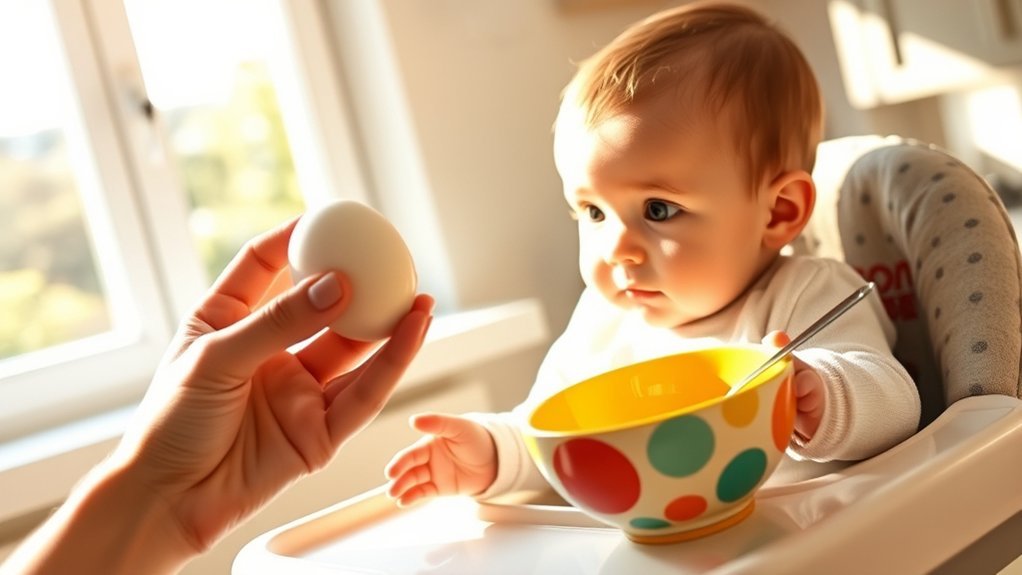
Eggs can be a nutritious early food, but the first serving should be prepared with allergy, choking, and food-safety risks in mind. Most babies can try well-cooked whole egg at about 6 months, once they can sit with support, control their head and neck, and swallow food instead of pushing it back out.
Quick Answer
Introduce well-cooked whole egg when your baby is about 6 months old and developmentally ready for solids. Offer a small amount in a soft, moist texture, watch closely for allergy symptoms, and keep egg in the diet regularly if tolerated. Seek emergency help for breathing trouble, swelling, limpness, or repeated vomiting.
Key Takeaways
- Offer well-cooked whole egg at about 6 months when your baby shows the signs of readiness for solid food.
- There is no need to begin with yolk alone. Using both the white and yolk provides a proper introduction to egg.
- Cook eggs until the yolk and white are firm, then serve them mashed, moist, or in another developmentally appropriate texture.
- Watch for hives, swelling, vomiting, wheezing, coughing, breathing trouble, unusual sleepiness, or limpness.
- After egg is tolerated, continue offering it routinely in safe portions instead of introducing it once and then avoiding it.
At a Glance
| Time Required | About 15–20 minutes to cook and prepare, followed by close observation for the next several hours |
| Difficulty | Easy |
| Tools Needed | Small pan or saucepan, bowl, fork, infant spoon, and a secure high chair |
| Cost | Low; only a small portion of one egg is needed for the first taste |
Note: This article provides general infant-feeding information and does not replace advice from your baby’s pediatrician or allergist. Ask for personalized guidance if your baby has severe eczema, a known food allergy, swallowing difficulties, or a previous reaction to food.
When Can Babies Have Eggs?

Most babies can begin eating eggs at about 6 months, when they are developmentally ready for foods other than breast milk or infant formula. Introducing solid foods before 4 months is not recommended. Current Dietary Guidelines for Americans include eggs among the potentially allergenic foods that can be introduced with other complementary foods at about 6 months.
Age is only one part of the decision. According to the CDC’s infant-feeding guidance, readiness signs include:
- Sitting upright alone or with support.
- Controlling the head and neck.
- Opening the mouth when food is offered.
- Bringing objects toward the mouth.
- Moving food from the front to the back of the tongue.
- Swallowing food instead of pushing it back onto the chin.
Breast milk or infant formula should remain your baby’s main source of nutrition through the first year while solid foods are gradually added.

Power your essentials anywhere with a 999Wh pure sine wave power station delivering up to 1000W continuous with 2000W surge. It supports fast charging via USB-C PD 60W and USB-A QC 18W, plus simultaneous output for multiple devices through AC, USB, wireless, and car/DC ports. Recharge using AC, car, or solar with a built-in MPPT controller and dual cooling fans, while the upgraded battery management system protects against surges, short circuits, and overheating.

Effortless Meal Preparation: Streamline your baby's nutrition with our 3 Pack Silicone Freezer Tray. Batch prepare baby food, purees, breastmilk, and more for efficient and convenient meal planning.
Make and store nutritious and soothing popsicles for baby
Who Should Talk to a Clinician First?
Ask your pediatrician or allergist how to introduce egg if your baby has severe or persistent eczema, a diagnosed food allergy, or an immediate reaction to another food. You should also seek medical advice if your baby has previously developed hives, swelling, coughing, wheezing, vomiting, or unusual sleepiness after possible egg exposure.
A family history of allergies does not automatically mean that your baby needs allergy testing. Your child’s own medical history, eczema severity, and previous reactions are more important factors for the clinician to assess.
Should You Start With Whole Egg or Egg Yolk?
Use a small amount of well-cooked whole egg, including both the yolk and white. A yolk-only introduction was once common advice, but it is not the current standard for introducing egg as an allergenic food.
Most of the major egg-allergy proteins are found in egg white, although reactions can involve proteins from either part. Feeding only yolk may therefore fail to provide a meaningful introduction to whole egg.
Current guidance supports introducing well-cooked egg with other complementary foods at about 6 months instead of delaying it or relying on yolk alone.
Safe Egg Preparation Tips
Raw and undercooked eggs can contain Salmonella, which can cause serious illness in young children. The FDA recommends buying refrigerated eggs with clean, uncracked shells and keeping them refrigerated at 40°F or below.
- Cook the egg completely: The white and yolk should be firm, with no runny or translucent areas.
- Cook mixed egg dishes safely: Egg muffins, frittatas, and similar dishes should reach 160°F, according to FoodSafety.gov.
- Avoid raw batter: Do not let a baby taste uncooked cake batter, cookie dough, homemade mayonnaise, or another food containing raw egg.
- Cool before serving: Test the egg’s temperature before it reaches your baby’s mouth.
- Keep it plain: Babies do not need added salt. Never add honey for a child younger than 12 months.
- Use a moist texture: Mash cooked egg with a little water, breast milk, or prepared infant formula if it is dry or crumbly.
Organic, cage-free, and free-range eggs may reflect your purchasing preferences, but those labels do not eliminate allergy or bacterial risks. All shell eggs require the same careful refrigeration, handling, and cooking.
How to Introduce Eggs to Your Baby Step by Step
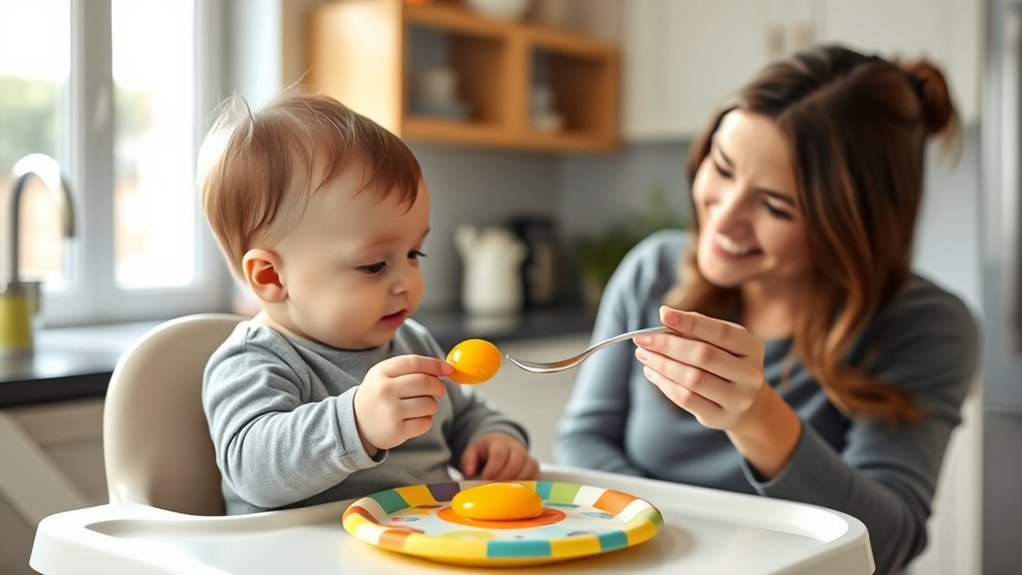
- Choose a suitable day. Introduce egg when your baby is healthy, not during a fever, stomach illness, or significant eczema flare. Choose a daytime meal when you can remain nearby and observe your baby.
- Use familiar foods. Do not combine the first egg serving with several other foods your baby has never eaten. Mixing egg with a familiar food makes a possible reaction easier to identify.
- Cook one whole egg thoroughly. Scramble it until fully set or hard-boil it until both the yolk and white are firm.
- Prepare a safe texture. Mash a small portion until soft and moist. Add a little water, breast milk, or correctly prepared formula if needed.
- Offer a small taste. Start with a small spoonful rather than a full serving. Wait briefly and look for an immediate reaction before offering more.
- Watch closely. Continue observing your baby during the meal and for the next several hours because allergic reactions can begin within minutes or may develop later.
- Increase gradually if tolerated. If there are no symptoms, offer more according to your baby’s appetite and feeding ability.
- Keep egg in the diet. Continue serving well-cooked egg routinely in developmentally appropriate portions. Do not introduce it once and then avoid it for months.
Pro Tip: A calm breakfast or lunch at home is usually more practical than introducing egg at dinner, while traveling, or immediately before bedtime. It gives you more time to observe your baby and contact their clinician if a mild reaction develops.
How to Spot an Allergic Reaction to Egg
Egg reactions are unpredictable. Symptoms can appear within minutes or several hours after eating. A baby may have only one symptom or several symptoms at the same time.
Possible Allergy Symptoms
- Hives, redness, or an itchy-looking rash.
- Swelling around the lips, face, eyes, or tongue.
- Vomiting or diarrhea.
- Coughing, sneezing, congestion, or a hoarse cry.
- Wheezing or noisy breathing.
- Sudden fussiness, drooling, unusual sleepiness, or inconsolable crying.
Stop feeding egg if any possible allergy symptom appears. Contact your pediatrician promptly for instructions, even if the symptom seems mild. Do not offer egg again at home until a healthcare professional tells you how to proceed.
Emergency Symptoms
Warning: Call 911 immediately for trouble breathing or swallowing, wheezing, repeated coughing, severe tongue or lip swelling, pale or bluish skin, limpness, fainting, sudden extreme sleepiness, or symptoms affecting more than one body system. If your child has prescribed epinephrine, give it immediately as directed and then call 911. Do not wait to see whether the reaction improves.
The American Academy of Pediatrics explains that anaphylaxis in infants and children can begin quickly and requires immediate treatment. Antihistamines are not a substitute for epinephrine during anaphylaxis.
Monitoring the Reaction Timeline
The original article’s five-to-ten-minute window is too narrow. Some reactions begin almost immediately, while others develop over several hours. Stay close enough to see your baby’s skin, breathing, behavior, and swallowing during and after the first serving.
Symptoms of food poisoning from contaminated egg follow a different timeline and may include diarrhea, fever, abdominal cramps, or vomiting hours or days after exposure. Thorough cooking and refrigeration help reduce this risk.
Fun and Easy Egg Serving Ideas for Babies
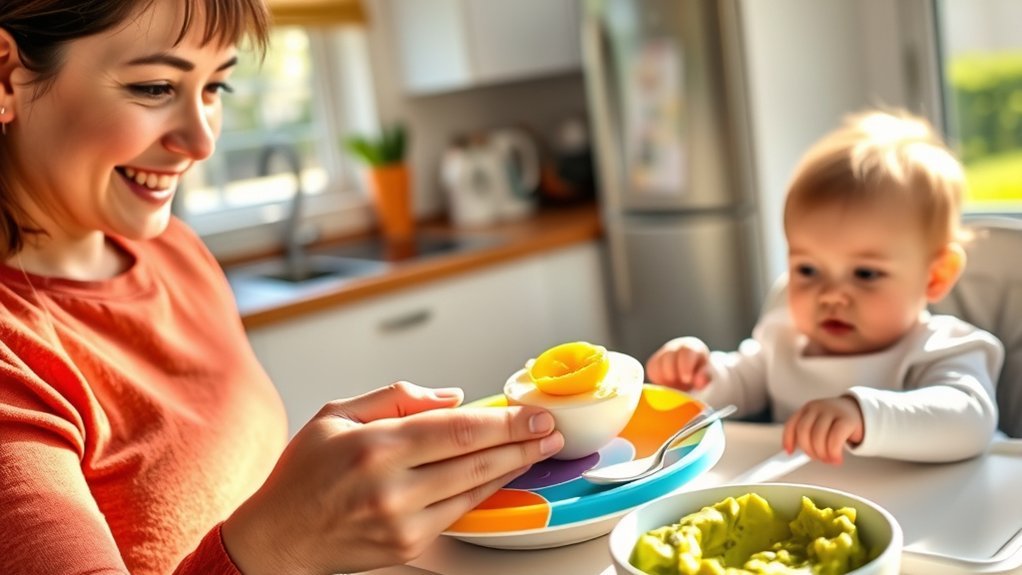
Once your baby has tolerated egg, you can offer it in different soft textures. Adjust every serving to your baby’s chewing, swallowing, and self-feeding skills rather than relying on age alone.
Creative Egg Finger Foods
- Soft scrambled egg: Cook until fully set but still moist. Serve mashed for a new eater or in soft clumps for a baby who can pick up food.
- Omelet strips: Cook a thin omelet completely and cut it into wide, soft strips that are easy to hold.
- Mini egg muffins: Bake egg with finely chopped, previously tolerated vegetables. Confirm that the center reaches 160°F and remains soft rather than rubbery.
- Moistened hard-boiled egg: Mash the fully cooked egg with water, avocado, vegetable purée, breast milk, or prepared formula. Avoid serving a dry ball of yolk.
Tasty Egg Mash Recipes
Cook the egg fully before combining it with other ingredients. Use foods your baby has already tolerated whenever possible.
- Simple creamy egg: Mash cooked whole egg with a teaspoon or two of water, breast milk, or prepared infant formula.
- Egg and peas: Mash cooked peas with well-cooked egg until no firm pea skins or dry chunks remain.
- Egg and sweet potato: Blend or mash cooked sweet potato with well-cooked egg for a smooth, moist texture.
- Egg and avocado: Mash equal amounts of avocado and cooked egg, then serve immediately.
- Vegetable egg muffin: Combine whisked egg with a small amount of finely chopped, previously tolerated vegetables and bake to 160°F.
Cheese can be included after dairy has been introduced successfully. Choose pasteurized cheese, use only a small amount, and avoid adding salt.
Fun Egg Shape Ideas
Visual variety can make familiar food more interesting, but shape never replaces safe texture.
- Cookie-cutter omelets: Cut a fully cooked, soft omelet into a simple star, heart, or circle.
- Mini omelets: Cook small, thin omelets that remain tender and easy to mash between your fingers.
- Egg faces: Decorate mashed egg with tiny pieces of soft, previously tolerated vegetables.
- Silicone molds: Bake egg mixtures in small molds, then check the finished food for rubbery edges or firm chunks before serving.
Key Information on Egg Allergies for Parents
Egg is a common childhood food allergen, but delaying egg introduction has not been shown to prevent allergy. The American Academy of Pediatrics advises introducing allergenic foods once a baby is ready for solids and continuing routine servings after they are tolerated.
Early introduction may help lower the chance of egg allergy, but it cannot guarantee prevention. Genetics, eczema, immune responses, and other factors also affect risk.
Some children with a diagnosed egg allergy can tolerate egg that has been extensively baked into a wheat-based food, while others cannot. Never use a muffin, cake, or other baked product as a home allergy test after a suspected reaction. An allergist may recommend testing or a medically supervised food challenge before adding baked egg.
A baby who has reacted to egg should avoid egg until evaluated. Check ingredient labels carefully because egg may appear in baked goods, pasta, breaded foods, mayonnaise, sauces, and other prepared products.
Are Eggs a Choking Hazard for Babies?
Egg is soft when prepared correctly, but dry yolk, rubbery egg white, or a large compact piece can still be difficult for a baby to manage. The CDC recommends matching every food’s shape, size, and texture to the child’s development.
- Keep egg soft and moist: Mash dry egg with liquid or another soft food.
- Avoid firm round pieces: Do not serve a whole hard-boiled egg or a large ball of compressed yolk.
- Seat your baby upright: Use a secure high chair. Do not feed while the baby is lying down, crawling, riding in a stroller, or moving in a car.
- Stay within reach: Watch continuously and keep the meal calm and free from rushing or distracting play.
Gagging can happen as babies learn to handle new textures, but choking blocks the airway and may be silent. Parents and caregivers should learn infant choking first aid and CPR from a qualified instructor.
Nutritional Benefits of Eggs for Growing Babies
Eggs provide high-quality protein and several nutrients needed during growth, including choline, vitamin B12, selenium, iodine, riboflavin, fat, and small amounts of vitamin D and iron.
Choline supports cell membranes, nerve signaling, and early brain development. The National Institutes of Health lists a large hard-boiled egg as providing about 147 mg of choline. That makes egg a rich source, but a baby’s actual intake depends on the portion eaten and the rest of their diet.
Egg should be part of a varied diet rather than treated as a complete meal by itself. Continue offering iron-rich foods such as meat, poultry, beans, lentils, tofu, and iron-fortified infant cereal alongside vegetables, fruits, grains, breast milk, or infant formula.
Encouraging a Positive Eating Experience With Eggs
A baby may need repeated opportunities to accept an unfamiliar taste or texture. Refusal during one meal does not necessarily mean the baby dislikes egg permanently.
- Pair egg with a familiar food: Try avocado, sweet potato, peas, or another food your baby already enjoys.
- Change the texture: Rotate between mashed egg, moist scrambled egg, soft omelet strips, and tender egg muffins.
- Follow hunger and fullness cues: Stop when your baby closes their mouth, turns away, or loses interest.
- Avoid pressure: Offer the food calmly and let your baby decide whether and how much to eat.
- Model eating: Let your baby see family members eating eggs as part of a normal meal.
Repeated, low-pressure exposure is more helpful than forcing bites or hiding egg in a large amount of food.
Frequently Asked Questions
Can I introduce eggs before six months of age?
Most babies should begin solids at about 6 months when they are developmentally ready. Do not introduce solid foods before 4 months. Ask your pediatrician before starting earlier than about 6 months, especially if your baby was born prematurely or has a medical or feeding condition.
Should I introduce egg yolk before egg white?
No yolk-first period is required. Offer a small amount of well-cooked whole egg so your baby is introduced to both the white and yolk. Make the portion soft, moist, and easy to swallow.
How much egg should I offer the first time?
Begin with a small taste from an infant spoon. If no symptoms appear, gradually offer more according to your baby’s appetite and feeding ability. There is no need to make a baby finish a predetermined portion.
What if my baby refuses to eat eggs?
End the meal without pressure and try again on another day. Change the presentation by offering mashed egg, moist scrambled egg, or a soft omelet strip. Some babies need multiple calm exposures before accepting a new food.
How should I store leftover cooked egg for my baby?
Refrigerate untouched strained or puréed egg promptly in a clean, airtight container and use it within one day. Discard food left in the baby’s bowl or touched by a used spoon because saliva can introduce bacteria. Reheat only the amount you need and check for hot spots before serving.
Are organic eggs safer for babies?
Organic labeling does not eliminate egg allergens or the possibility of Salmonella. Choose refrigerated eggs with intact shells, store them correctly, prevent cross-contamination, and cook both the yolk and white thoroughly.
Can I use an egg substitute instead of real egg?
An egg substitute may work in a recipe, but it does not necessarily contain egg protein or provide the same nutrients. A flax, chia, banana, or applesauce substitute will not introduce egg as an allergen. Check the label because some commercial substitutes do contain egg.
Can a baby with an egg allergy eat baked egg?
Possibly, but only after evaluation and guidance from an allergist. Some egg-allergic children tolerate extensively baked egg, while others react. Do not conduct a baked-egg test at home after a suspected or confirmed reaction.
Conclusion
Introduce well-cooked whole egg at about 6 months once your baby is ready for solid food. Begin with a small, soft serving, stay nearby to watch for symptoms, and continue offering egg routinely if it is tolerated. Careful cooking, safe textures, upright seating, and a clear emergency plan make the first introduction safer and less stressful.
Stop feeding egg and contact your pediatrician if a possible reaction occurs. For breathing or swallowing trouble, severe swelling, limpness, pale or blue skin, or other signs of anaphylaxis, use prescribed epinephrine and call 911 immediately.
Sources
- Dietary Guidelines for Americans, 2025–2030 — timing of complementary and potentially allergenic foods and developmental readiness.
- American Academy of Pediatrics: Introducing Common Food Allergens — early egg introduction, risk factors, small tastes, and continued servings.
- CDC: Choking Hazards — safe food textures, positioning, supervision, and meal practices.
- FDA: What You Need to Know About Egg Safety — refrigeration, shell inspection, thorough cooking, and Salmonella prevention.
- American Academy of Pediatrics: Anaphylaxis in Infants and Children — emergency symptoms, epinephrine use, and calling 911.
- NIH Office of Dietary Supplements: Choline — choline functions, infant intake guidance, and the choline content of eggs.