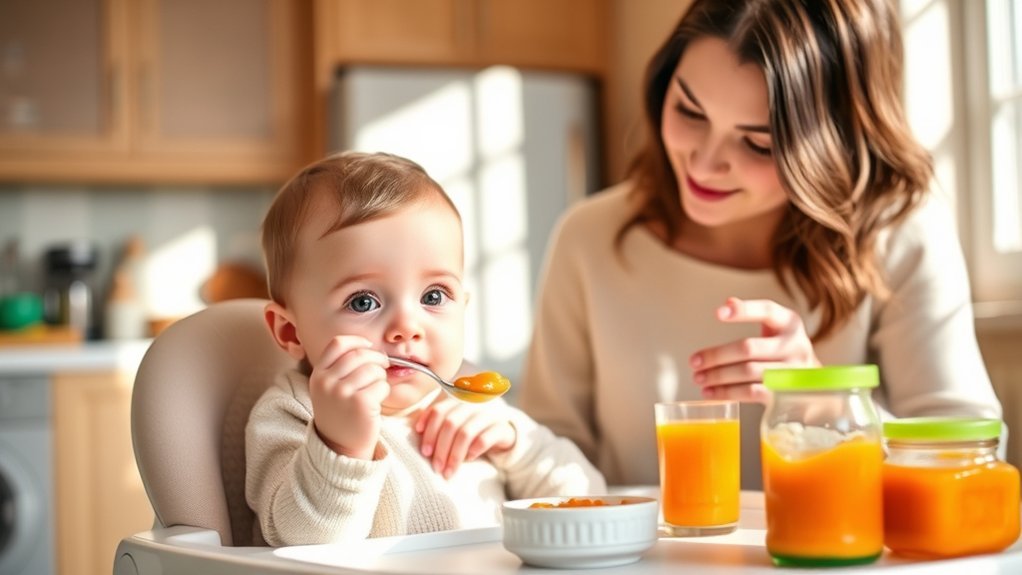
Starting baby food is less about reaching one exact birthday or weight and more about your baby being developmentally ready. Most babies begin solid foods at about 6 months while continuing breast milk or iron-fortified infant formula. A safe start combines upright seating, steady head control, soft age-appropriate textures, iron-rich foods, close supervision, and responsive feeding.
Quick Answer
Most babies can start solid foods at about 6 months when they can sit upright with support, hold their head steady, bring objects to their mouth, and swallow food instead of pushing it out. Start with small amounts of soft, iron-rich food while breast milk or formula remains their main nutrition.
Key Takeaways
- Start at about 6 months, when your baby shows several readiness signs; introducing solids before 4 months is not recommended.
- A doubled birth weight or a weight of 13 pounds can be a general clue, but neither is a required readiness test.
- Offer iron-rich foods early, such as finely minced meat, beans, lentils, eggs, tofu, or iron-fortified infant cereal.
- Introduce common allergens in safe forms once your baby is ready; ask the pediatrician first if your baby has severe eczema, an egg allergy, or a previous immediate food reaction.
- Keep your baby upright and supervised, and change the shape and texture of food to reduce choking risk.
- Breast milk or iron-fortified formula remains the main source of nutrition through the first year as solids gradually increase.
At a Glance
| Time Required | About 10–20 minutes for an early meal; texture and meal frequency increase over several months |
| Difficulty | Easy to moderate; preparation must match your baby’s skills |
| Tools Needed | Stable high chair with harness, small spoon, bib, cup, fork or masher; blender optional |
| Cost | Variable; ordinary family foods can be adapted, so specialty baby food is not required |
Medical note: This guide is general education, not a substitute for your baby’s clinician. Ask for individualized advice if your baby was born prematurely, has poor growth, severe eczema, a known food allergy, low muscle tone, or trouble coordinating chewing and swallowing.
Signs Your Baby Is Ready for Solid Foods

As your baby approaches 6 months, look for a group of developmental signs rather than relying on age alone. The CDC’s solid-food guidance says a baby may be ready when they can:
- Sit upright alone or with support and remain stable for the meal.
- Hold their head and neck steady.
- Open their mouth or lean forward when food is offered.
- Bring objects to their mouth and try to grasp food or toys.
- Move food from the front of the tongue toward the back and swallow it instead of pushing it onto the chin.
Interest in your food can support the overall picture, but reaching for a plate by itself does not prove that a baby is ready. Teething, mouthing objects, and waking more often at night are also not reliable reasons to start solids early.
Note: Some babies have doubled their birth weight or reached about 13 pounds by the time solids begin. Treat weight as background information, not a pass-or-fail requirement. Head control, upright posture, oral-motor skills, and your clinician’s assessment matter more.
Optimal Age for Introducing Solid Foods
For most healthy, full-term babies, the best time to start complementary foods is about 6 months. Introducing food before 4 months is not recommended. A baby who is 6 months old but cannot sit safely or control their head may need more time and a discussion with a pediatric healthcare professional.
| Timing | What It Means |
|---|---|
| Before 4 months | Too early for routine solid-food introduction. |
| About 6 months | Most babies are ready if the developmental signs are present. |
| Later than 6 months | A short delay may be appropriate when readiness skills are still developing. Seek advice if your baby approaches 9 months and still cannot manage solids. |
For a baby born prematurely, do not rely only on chronological age. Corrected age, growth, medical history, posture, and oral-motor readiness may all affect timing. Ask the baby’s pediatrician, neonatal follow-up team, dietitian, or feeding therapist for a plan.
The safest starting point is about 6 months plus clear developmental readiness—not a calendar date or weight milestone alone.
Best First Foods When Introducing Solid Foods
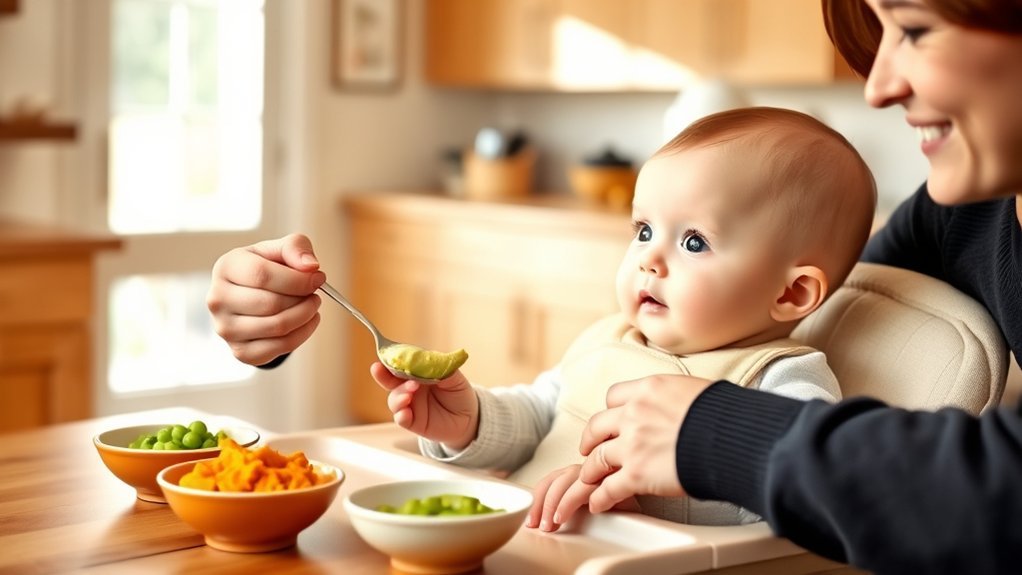
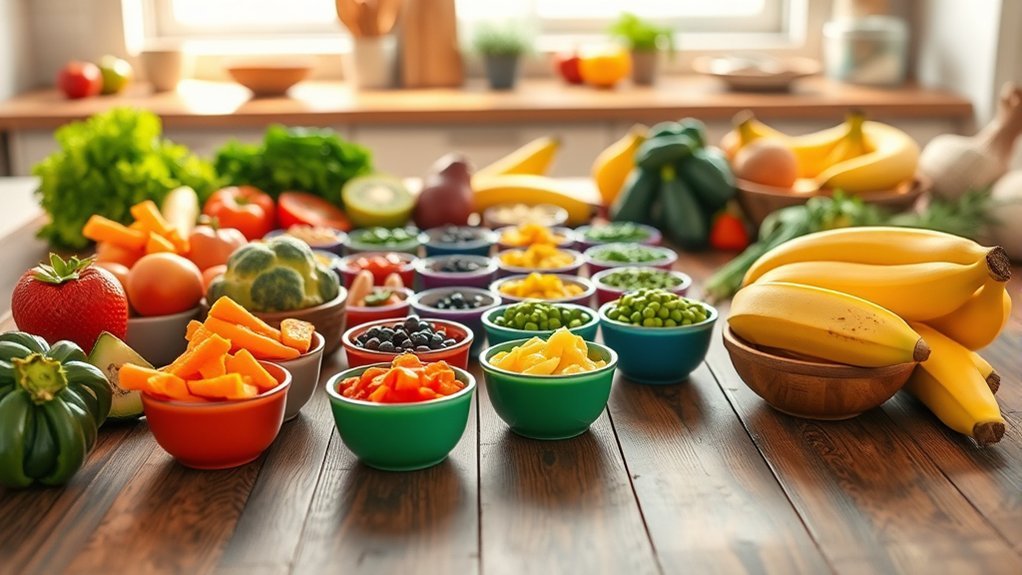
There is no required order for first foods. Choose nutrient-dense foods that are soft enough for your baby’s current skills, and include an iron source regularly from the beginning. Homemade food, commercial baby food, spoon-feeding, self-feeding, or a combination can all work.
| Food Group | Baby-Safe Examples | Simple Serving Idea |
|---|---|---|
| Iron-rich protein | Beef, chicken, turkey, egg, beans, lentils, tofu | Puree, mash, finely mince, or offer very soft shredded pieces |
| Fortified grains | Iron-fortified oat, barley, or multigrain infant cereal | Mix with breast milk, formula, or water to a spoonable texture |
| Vegetables | Sweet potato, broccoli, peas, squash, carrots | Cook until easily mashed between two fingers |
| Fruit | Banana, avocado, pear, peach, berries | Mash, puree, or offer soft pieces prepared for the baby’s grasp |
| Dairy foods | Plain full-fat yogurt, pasteurized cheese | Offer without added sugar; avoid cow’s milk as the main drink before 12 months |
If you serve infant cereal, rotate oats, barley, multigrain, and other fortified grains instead of serving only rice cereal. Pair plant-based iron foods with vitamin C foods, such as broccoli, tomato, berries, or sweet potato, to help iron absorption.
How Much Food to Offer at First
Start with a small amount—often 1 or 2 tablespoons—and let your baby decide whether to continue. Early meals are practice. Appetite will vary from one day to the next, and there is no need to force a set portion.
Introducing Common Food Allergens
Once your baby is developmentally ready and has tolerated a few foods, introduce common allergens such as well-cooked egg, smooth thinned peanut butter, dairy, wheat, sesame, soy, fish, and shellfish in age-appropriate forms. The American Academy of Pediatrics’ parent guidance explains that delaying these foods does not prevent allergy.
- Offer a small amount when your baby is healthy and you can observe them for at least two hours.
- Introduce one common allergen at a time so a reaction is easier to identify.
- Once tolerated, keep the food in the regular rotation.
- Never offer whole nuts or a thick spoonful of nut butter; both are choking hazards.
Warning: Ask your baby’s clinician before introducing peanut if your baby has severe eczema, an egg allergy, or a previous immediate reaction to food. A supervised introduction or testing may be recommended.
How to Safely Introduce Solid Foods
A safe introduction combines readiness, a stable feeding position, suitable textures, gradual variety, and responsive feeding. The goal is not to make solids replace milk quickly. It is to help your baby learn while adding nutrients that become increasingly important after about 6 months.
Signs of Readiness
Before each early meal, confirm that your baby is awake, calm, and seated upright with good head control. Fasten the high-chair harness, remove distractions, and stay within arm’s reach. Do not feed while your baby is lying down, crawling, walking, riding in a stroller, or sitting in a moving car.
Safe Food Preparation
- Wash your hands, utensils, high-chair tray, and preparation surface.
- Cook meat, poultry, fish, eggs, and other foods to safe temperatures.
- Cook hard fruits and vegetables until they can be mashed easily.
- Remove bones, pits, hard seeds, tough skins, and gristle.
- Mash, puree, finely mince, shred, or cut food into a shape and texture your baby can manage.
- Thin sticky nut or seed butter with warm water, breast milk, formula, yogurt, or puree.
- Do not add honey, added sugar, or extra salt.
Gradual Food Introduction
- Begin with one small solid-food meal when your baby is not overly tired or hungry.
- Offer one simple food at a time at first. The CDC advises waiting 3 to 5 days between new foods during this early stage to make reactions easier to identify.
- Include an iron-rich option regularly rather than starting with fruit and vegetables alone.
- After several foods are tolerated, build variety more quickly across food groups and textures.
- Introduce common allergens without unnecessary delay, using one allergen at a time in a safe form.
- Advance from smooth puree to thicker mashed, lumpy, minced, and soft finger-food textures as skills improve.
- Follow hunger and fullness cues; stop when your baby turns away, closes their mouth, pushes food away, or loses interest.
Pro Tip: Offer a familiar food beside a new one. Your baby gets a safe chance to explore without the whole meal depending on acceptance of an unfamiliar taste or texture.
A Simple First-Week Feeding Plan
This flexible plan keeps milk feeds in place and gives your baby time to practice. It is not a strict schedule, and some babies need a slower pace.
- First few meals: Offer one iron-rich food once daily, such as iron-fortified oat cereal, pureed meat, mashed beans, or well-cooked egg. Begin with a small amount.
- Next few days: Add a soft fruit or vegetable and vary the texture only when your baby handles the current texture comfortably.
- After a few foods are tolerated: Introduce one common allergen in a safe form during a daytime meal.
- By the following weeks: Work toward foods from several groups, regular iron sources, and increasing texture. Add a second meal when your baby shows interest and handles the first meal well.
Offer breast milk or formula on the baby’s usual schedule. Solids gradually become a larger part of the diet; they should not abruptly replace milk feeds.
Essential Techniques for Preparing Baby Food Safely
Children under 5 are more vulnerable to foodborne illness, so careful storage and reheating matter. Use clean containers, refrigerate perishable food promptly, and avoid feeding directly from a storage jar if you plan to save the rest.
- Spoon the amount you expect to use into a separate bowl. Saliva on a used spoon can contaminate the remaining food.
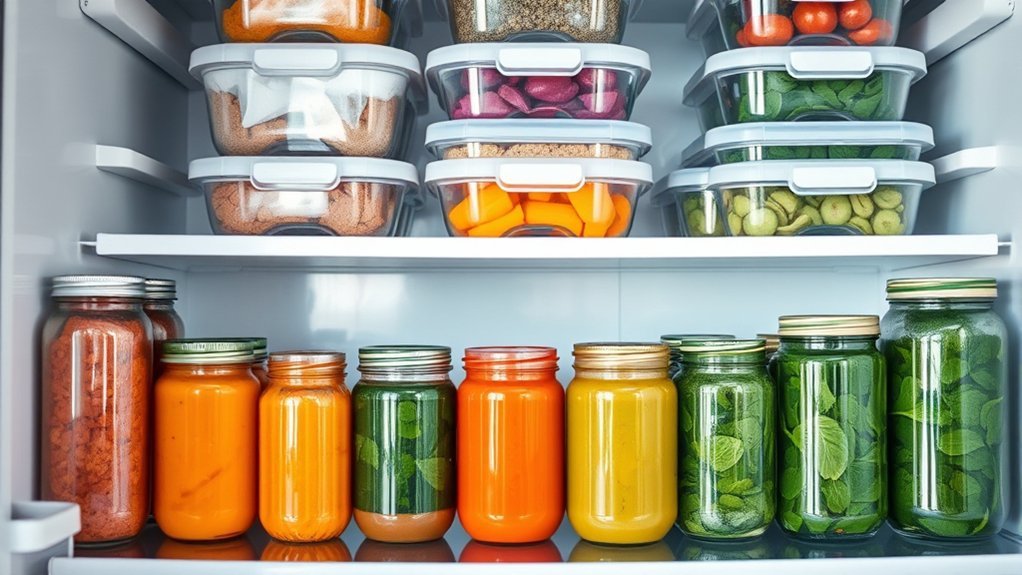
- Refrigerate homemade baby food in shallow, covered containers within two hours of preparation.
- Label food with the preparation date.
- Discard food left in the feeding bowl after the meal.
- Thaw frozen baby food in the refrigerator, under cold running water, or during cooking—not on the counter.
| Food | Refrigerator | Freezer |
|---|---|---|
| Homemade baby food | 1–2 days | 1–2 months |
| Strained fruits and vegetables | 2–3 days | 6–8 months |
| Strained meats and eggs | 1 day | 1–2 months |
| Meat-and-vegetable combinations | 1–2 days | 1–2 months |
These storage times follow FoodSafety.gov guidance for young children. When reheating, stir thoroughly and test the temperature before serving. Microwaves can create hot spots, so transfer food to a dish rather than heating it in the jar.
Top Mistakes Parents Make When Introducing Solids
Starting solids can feel complicated, but most problems come from a few correctable habits:
- Starting before developmental readiness: Age alone does not make feeding safe. Wait until about 6 months and look for stable posture, head control, and swallowing skills.
- Using weight as a hard cutoff: A doubled birth weight or 13-pound benchmark is not a substitute for readiness signs.
- Offering only smooth puree for too long: Gradually increase texture as skills develop so your baby can practice chewing and managing lumps.
- Skipping iron-rich foods: Fruit and vegetables are healthy, but they do not replace regular iron sources.
- Delaying allergens without a medical reason: Once your baby is ready, introduce allergenic foods in safe forms rather than avoiding them.
- Serving choking hazards: Whole nuts, popcorn, uncut grapes, hard raw produce, coin-shaped sausage, and thick spoonfuls of nut butter are unsafe.
- Pressuring the baby to finish: Repeatedly pushing the spoon after fullness cues can make meals stressful.
- Replacing breast milk or formula too quickly: Solids complement milk during the first year; they do not take over immediately.
Foods and Drinks to Avoid or Limit Before Age 1
The CDC’s foods-and-drinks guidance identifies several items that are unsafe or unsuitable for babies:
- Honey before 12 months: Honey can cause infant botulism, even when mixed into food or baked into homemade products.
- Cow’s milk as a drink before 12 months: Breast milk or iron-fortified formula should remain the main milk drink. Pasteurized yogurt and cheese can be offered earlier.
- Juice before 12 months: Whole fruit is the better choice.
- Unpasteurized foods and drinks: Avoid raw milk, unpasteurized juice, and foods made from them.
- Fish high in mercury: Avoid shark, swordfish, king mackerel, marlin, orange roughy, Gulf of Mexico tilefish, and bigeye tuna.
- Added sugar and high-sodium foods: Choose plain, nutrient-dense foods without added sweeteners and limit processed meats and salty packaged foods.
- Unsafe choking shapes and textures: Avoid hard, round, sticky, tough, or coin-shaped foods unless they are modified safely.
How to Recognize and Address Baby’s Reactions to New Foods
Facial expressions, gagging, mess, and temporary refusal are often part of learning. Allergy symptoms are different and may involve the skin, digestive system, breathing, circulation, or more than one body system.
Common Reactions to Foods
| What You See | Likely Meaning | What to Do |
|---|---|---|
| Grimacing, shuddering, spitting food out | Normal response to a new taste or texture | Stay calm and offer again another day without pressure |
| Noisy gagging, coughing, watery eyes, red face | Protective gag reflex may be working | Watch closely; let the baby work the food forward unless breathing is impaired |
| Hives, facial swelling, repeated vomiting, sudden cough, wheeze | Possible allergic reaction | Stop the food and follow the baby’s emergency plan or seek medical care |
| Silent struggle, inability to cry or cough, blue or gray color | Choking emergency | Begin age-appropriate choking first aid and call emergency services |
Gagging Versus Choking
Gagging is usually noisy because air is still moving. A gagging baby may cough, sputter, or push food forward. Choking may be silent because the airway is blocked. Learn infant choking first aid before starting finger foods, and follow the CDC’s choking-prevention advice for safe preparation and seating.
Warning: Call 911 or your local emergency number for trouble breathing, wheezing, blue or gray color, faintness, severe or rapidly increasing swelling, or symptoms affecting more than one body system. Do not wait for a pediatrician’s office to call back during a severe reaction.
Managing Allergic Responses
- Stop feeding the suspected food.
- For mild symptoms, contact your pediatrician promptly for advice.
- For severe symptoms, use prescribed epinephrine if available and call emergency services.
- Write down the food, amount, preparation, time eaten, symptoms, and timing.
- Do not deliberately reintroduce the food at home unless a qualified clinician has advised you to do so.
Some reactions happen within minutes to a few hours; some non-IgE reactions can be delayed. A clinician can help distinguish allergy from intolerance, reflux, infection, or a normal feeding response.
The Importance of Iron and Nutrients in Your Baby’s Diet
At about 6 months, babies need dietary sources of iron in addition to breast milk. The CDC’s infant iron guidance recommends iron-rich foods such as meat, poultry, eggs, iron-fortified cereal, tofu, beans, lentils, and leafy vegetables.
- Iron: Supports brain development and healthy blood. Offer an iron-rich food regularly.
- Zinc: Supports growth and immune function. Meat, beans, lentils, dairy, and fortified foods can help.
- Healthy fats: Avocado, egg, fish, yogurt, and smooth nut or seed butters provide energy for growth.
- Vitamin C: Helps the body absorb non-heme iron from beans, lentils, tofu, and fortified cereals.
- Vitamin D: Many babies need a supplement depending on milk intake and medical guidance; ask your pediatrician.
Preterm babies and babies with certain health conditions may need individualized iron or vitamin plans. Do not start a supplement or change the dose without professional guidance.
Moving From Purees to Finger Foods
Move forward based on skill, not a fixed age. When your baby can sit steadily, bring food to the mouth, and manage thicker textures, begin offering soft finger foods alongside mashed or spoon-fed food.
- Use foods soft enough to mash between your thumb and forefinger.
- For an early palmar grasp, offer soft pieces large enough for the baby to hold with part sticking out of the fist.
- As a pincer grasp develops, move toward smaller, soft pieces.
- Avoid round coins, hard chunks, tough meat, whole nuts, popcorn, and uncut grapes.
- Continue to supervise every bite while your baby sits upright.
Purees are not harmful, and baby-led feeding is not required. Many families use a combination: spoon-fed iron-rich foods, family foods adapted to a safe texture, and soft finger foods for self-feeding practice.
How to Foster Healthy Eating Habits From the Start
Early feeding habits shape how mealtimes feel. Your role is to decide what safe food is offered, when, and where. Your baby’s role is to decide whether to eat and how much.
Family Meal Time Importance
- Use a routine: Offer meals at predictable times when your baby is alert.
- Eat together: Let your baby watch family members enjoy a range of foods.
- Keep the mood calm: Avoid screens, rushing, bargaining, and pressure.
- Model safe choices: Serve vegetables, fruits, grains, proteins, and unsweetened foods as normal family food.
Variety of Healthy Foods
Offer a range of flavors, colors, food groups, and textures over time. Rejection on the first try is common and does not mean your baby dislikes the food forever. Repeated, pressure-free exposure can help acceptance.
Variety should include iron-rich foods, vegetables, fruit, grains, dairy foods or suitable alternatives, and common allergens in safe forms. Avoid turning sweet foods into the default reward or using one favorite food to end every meal.
Monitor Hunger Cues
Responsive feeding helps your baby learn to notice hunger and fullness.
- Hunger cues: Leaning toward food, opening the mouth, reaching, making excited sounds, or watching the spoon.
- Fullness cues: Turning away, closing the mouth, slowing down, pushing food away, dropping food repeatedly, or losing interest.
Pause when cues are unclear, and end the meal when fullness cues continue. Do not trick, distract, or force your baby to take “one more bite.”
When to Contact a Pediatrician or Feeding Specialist
Ask for medical or feeding support if your baby:
- Cannot hold their head steady or sit safely for feeding near the expected starting age.
- Frequently coughs, chokes, has a wet-sounding voice, or struggles to breathe during meals.
- Has poor weight gain, extreme fatigue with feeding, or fewer wet diapers than expected.
- Repeatedly vomits, develops hives, or has swelling after a food.
- Approaches 9 months and still cannot manage any solids or texture beyond thin puree.
- Has severe eczema, a known food allergy, or was born very prematurely and needs an individualized plan.
Frequently Asked Questions
Can I mix baby food with breast milk or formula?
Yes. Breast milk or prepared formula can thin infant cereal or puree to a texture your baby can swallow. Mix only the amount needed for that meal, and discard leftovers from the feeding bowl. Never add extra powder to prepared formula or change the formula-to-water ratio.
How should I store homemade baby food?
Refrigerate homemade baby food promptly in a clean, covered container and use it within 1–2 days. Freeze portions for 1–2 months. Serve from a separate bowl so saliva does not contaminate the stored batch, and discard food left in the feeding bowl.
What are common allergens to watch for?
Common allergens include milk, egg, peanut, tree nuts, wheat, soy, sesame, fish, and shellfish. Introduce them one at a time in age-appropriate forms once your baby is ready. Whole nuts and thick spoonfuls of nut butter are choking hazards.
How often should I introduce new foods?
At first, the CDC advises offering one single-ingredient food and waiting 3–5 days before another. After your baby tolerates several foods, expand variety while introducing one common allergen at a time. There is no need to keep every meal single-ingredient indefinitely.
Can I use store-bought baby food instead of homemade?
Yes. Both can be healthy. Choose products appropriate for your baby’s texture skills, check the ingredient list and use-by date, avoid added sugars and excess sodium, and follow storage directions after opening. Do not feed directly from the jar if you plan to save the remainder.
Should babies drink cow’s milk when they start solids?
Not as their main drink before 12 months. Continue breast milk or iron-fortified formula. Pasteurized plain yogurt and cheese can be introduced earlier if your baby is ready and has no medical reason to avoid dairy.
What if my baby gags on food?
Gagging can be a normal, noisy reflex while a baby learns textures. Stay close and calm. Choking is different and may be silent, with an inability to cough, cry, or breathe. Learn infant choking first aid and call emergency services for a blocked airway.
Conclusion
Introducing solid foods is a gradual learning process, not a race. Start at about 6 months when your baby shows clear readiness, keep breast milk or iron-fortified formula as the main nutrition, offer iron-rich and varied foods, introduce allergens safely, and match every texture to your baby’s skills. Calm supervision and respect for hunger and fullness cues help build both safety and a positive relationship with food.
Sources
- CDC: When, What, and How to Introduce Solid Foods — timing, readiness signs, first foods, allergen timing, and food preparation.
- CDC: Choking Hazards — seating, supervision, preparation, and foods that present choking risks.
- CDC: Foods and Drinks to Avoid or Limit — honey, cow’s milk, juice, mercury, unpasteurized foods, sugar, and sodium.
- CDC: Iron for Infants and Toddlers — iron needs and food sources after about 6 months.
- American Academy of Pediatrics: Introducing Common Food Allergens — safe allergen timing and high-risk infant guidance.
- FoodSafety.gov: Children Under Five — safe baby-food storage and reheating.