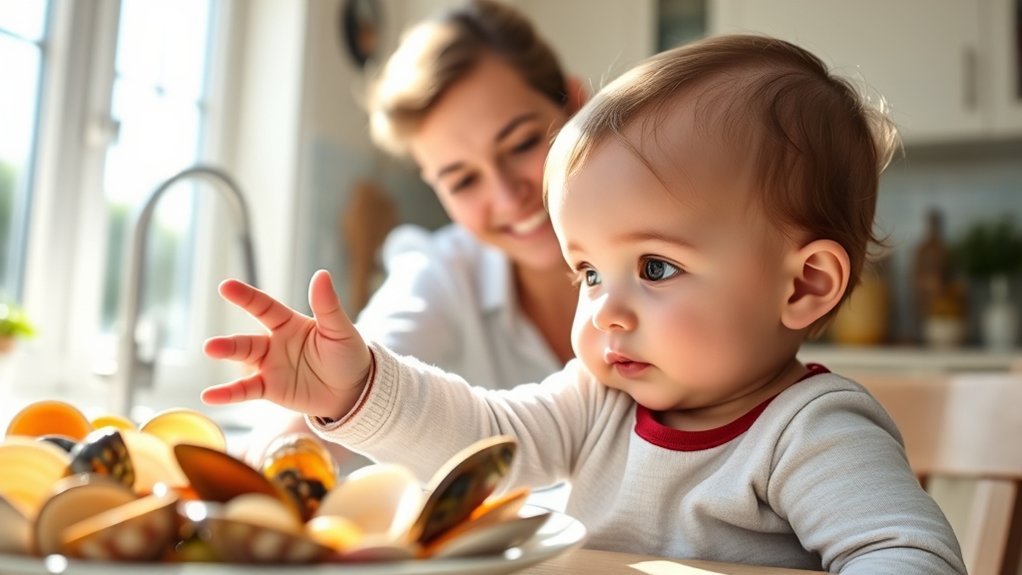
Baby food includes puréed, mashed, chopped, or otherwise safely prepared foods offered when a baby begins eating foods in addition to breast milk or infant formula. The best choices provide iron, zinc, protein, healthy fats, and a variety of flavors and textures while matching the baby’s developmental skills.
Quick Answer
Baby food is food prepared in a texture that an infant can safely manage. Most babies begin around 6 months when they show readiness signs. Early foods should complement—not immediately replace—breast milk or formula and should regularly include iron-rich foods, varied produce, protein, healthy fats, and safe common allergens.
Key Takeaways
- Most babies are ready for complementary foods at about 6 months, but foods should not be introduced before 4 months.
- Breast milk or infant formula remains the main source of nutrition from 6 through 12 months while food intake gradually increases.
- Offer iron-rich foods often and include fruits, vegetables, proteins, healthy fats, and varied fortified grains.
- Choose textures according to your baby’s eating skills, not only the “Stage 1,” “Stage 2,” or “Stage 3” number on a package.
- Homemade and commercial baby foods can both be healthy when they are prepared, stored, and served safely.
- Never give honey before 12 months, and always modify foods that could block a baby’s airway.
At a Glance
| Time Required | About 10–20 minutes for a supervised first-food meal; preparation time varies |
| Difficulty | Beginner, with medical guidance for babies at increased allergy or swallowing risk |
| Tools Needed | Upright high chair, clean bowl and spoon or safe finger foods, bib, and close adult supervision |
| Cost | $–$$, depending on ingredients, packaging, and whether food is homemade or commercial |
Note: This article provides general feeding information, not individual medical advice. Ask your child’s healthcare professional about premature birth, poor growth, swallowing problems, severe eczema, known food allergies, iron supplementation, or other health concerns.
What Is Baby Food and What Is Its Purpose?
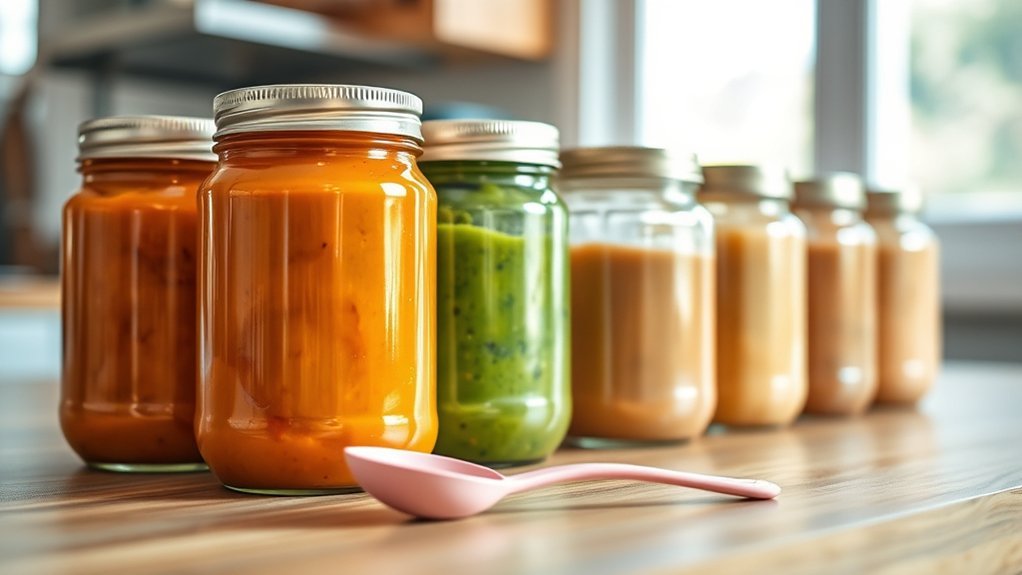
Baby food is not limited to food sold in jars or pouches. It can include smooth purées, mashed foods, soft finger foods, finely chopped family foods, iron-fortified infant cereal, yogurt, eggs, beans, meat, fish, fruit, vegetables, and grains prepared in a form the baby can safely eat.
These foods are often called complementary foods because they complement breast milk or infant formula. According to the Centers for Disease Control and Prevention, breast milk or formula remains a baby’s main source of nutrition from 6 through 12 months. Food gradually takes on a larger role as the baby approaches the first birthday.
The purpose of baby food is to provide nutrients that become increasingly important as a baby grows, while helping the child learn to move food through the mouth, chew, swallow, self-feed, and accept different tastes and textures.
Baby food should add nutrition, skills, flavors, and textures while breast milk or infant formula continues to provide most nutrition during the first year.

Power your essentials anywhere with a 999Wh pure sine wave power station delivering up to 1000W continuous with 2000W surge. It supports fast charging via USB-C PD 60W and USB-A QC 18W, plus simultaneous output for multiple devices through AC, USB, wireless, and car/DC ports. Recharge using AC, car, or solar with a built-in MPPT controller and dual cooling fans, while the upgraded battery management system protects against surges, short circuits, and overheating.

Make fresh, delicious food with wholesome ingredients. You control exactly what goes in - no hidden stabilizers, preservatives, or flavor enhancers necessary.
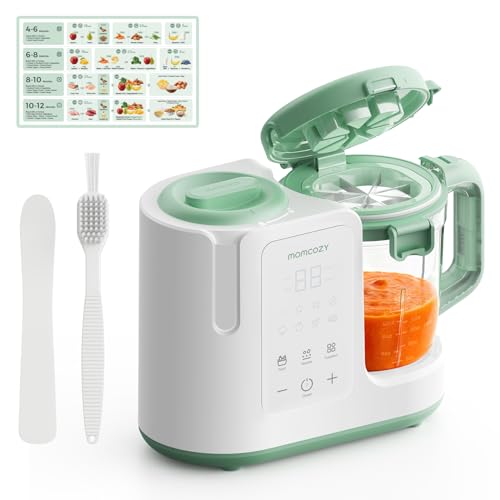
𝟑-𝐌𝐢𝐧𝐮𝐭𝐞 𝐏𝐫𝐞𝐩, 𝐈𝐭 𝐇𝐚𝐧𝐝𝐥𝐞𝐬 𝐭𝐡𝐞 𝐑𝐞𝐬𝐭 - Spend just 3 minutes prepping — the Momcozy Baby Food Maker automatically steams and blends in 18–25 minutes. No food transferring needed. For frozen ingredients, extend the duration in Auto Mode. Making fresh, healthy baby puree has never been easier.
When Should Babies Start Eating Solid Foods?
Most babies can begin solid foods at about 6 months of age. The CDC advises against introducing food before 4 months. Age alone is not enough; the baby should also show developmental readiness.
Signs a Baby Is Ready for Food
A baby may be ready when they can:
- Sit upright alone or with support.
- Control their head and neck.
- Open their mouth when food is offered.
- Swallow food instead of immediately pushing it out with the tongue.
- Bring objects to the mouth.
- Reach for or grasp food and other small objects.
- Move food from the front of the tongue toward the back of the mouth.
A baby who watches adults eat or reaches for a plate may be interested in food, but interest should be considered together with posture, head control, and swallowing skills.
Warning: Do not prop a baby back or feed while the baby is lying down. Seat the child upright and remain within arm’s reach throughout the meal.
How Much Baby Food Should You Offer?
Begin with a small amount, such as 1 or 2 tablespoons, once a day. The first meals are mainly for learning. Over time, increase the amount and frequency according to the baby’s appetite, skills, and normal milk-feeding routine.
Watch the child rather than trying to reach a fixed serving target. Hunger signs may include leaning toward food, opening the mouth, reaching, or becoming excited when food appears. Fullness signs may include turning away, closing the mouth, slowing down, pushing food away, or becoming distracted.
Do not force a baby to finish a jar, bowl, or planned portion. Responsive feeding helps the child practice recognizing hunger and fullness.
Pro Tip: Offer a small portion first. You can add more if the baby remains hungry, while untouched food stays clean and safe for later storage.
Essential Nutrients in Baby Food
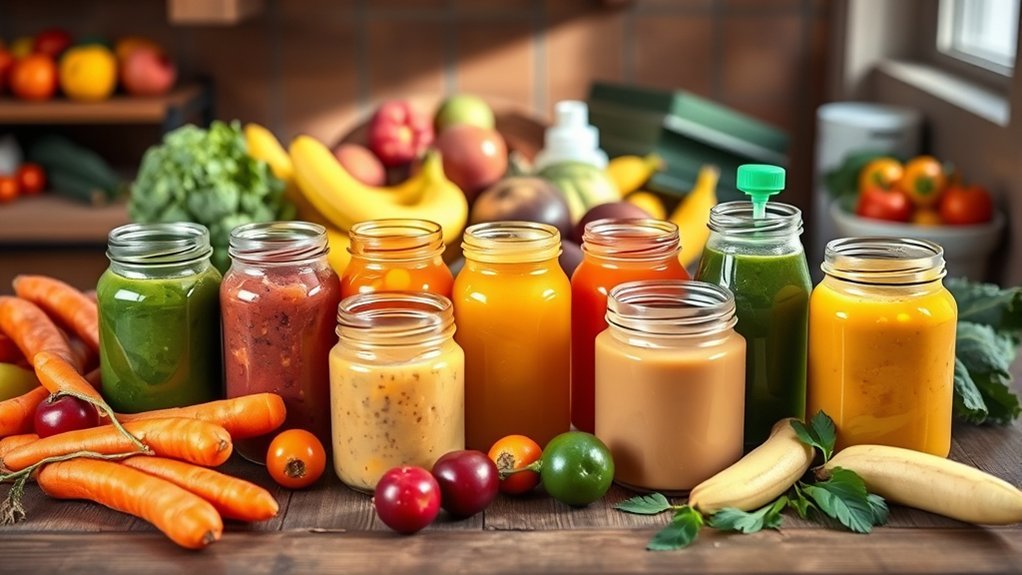
A baby does not need one perfect first food. A varied diet offered over time is more useful than relying on fruit purées or cereal alone. Include foods from several food groups and offer iron-rich options regularly.
Key Nutrients and Food Sources
| Nutrient | Baby-Friendly Sources | Why It Matters |
|---|---|---|
| Iron | Puréed or finely shredded meat, iron-fortified infant cereal, beans, lentils, tofu | Supports healthy blood production and brain development |
| Zinc | Meat, poultry, beans, yogurt, eggs, fortified cereal | Supports growth, immune function, and tissue repair |
| Protein | Egg, meat, fish, yogurt, beans, lentils, tofu | Provides building blocks for muscles and other tissues |
| Healthy fats | Avocado, full-fat plain yogurt, egg, low-mercury fish, thinly spread smooth nut butter | Provide energy and support brain and nervous-system development |
| Carbohydrates and fiber | Oats, barley, fruit, vegetables, beans, whole grains | Provide energy and support digestion |
| Vitamin B12 | Meat, fish, eggs, dairy, and properly fortified plant foods | Supports blood cells and the nervous system |
| Vitamin D | Supplementation when recommended, fortified formula, fortified foods, egg, and some fish | Supports bone development and calcium absorption |
Why Iron Deserves Special Attention
Babies need a reliable source of iron as their stored iron begins to decline during the second half of the first year. The CDC recommends iron-rich foods such as meat, iron-fortified infant cereal, beans, lentils, tofu, and dark-green vegetables.
Iron from plant foods is absorbed more effectively when it is served with vitamin C. Useful combinations include iron-fortified oatmeal with berries, beans with tomato, lentils with broccoli, or tofu with sweet potato.
Do not start an iron supplement without professional guidance. A healthcare professional may recommend one based on feeding method, prematurity, laboratory results, growth, or other health factors.
Vitamin D and Baby Food
Baby food alone may not provide enough vitamin D. The CDC states that breastfed and partially breastfed babies generally need 400 IU of vitamin D each day, beginning shortly after birth. Formula-fed babies may also need supplementation if their formula intake is not enough to supply the recommended amount.
Ask your baby’s healthcare professional which product and dose are appropriate. Do not estimate supplement doses with a household spoon.
Baby Food Stages and Texture Progression
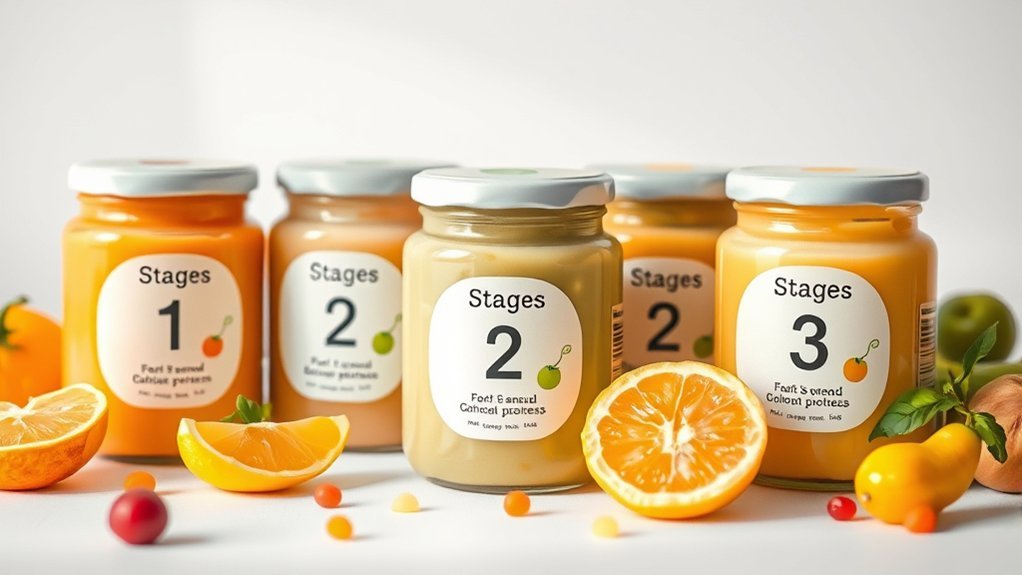
Commercial brands often use “Stage 1,” “Stage 2,” and “Stage 3” labels. These numbers can be a convenient shopping guide, but definitions and recommended ages vary by brand. A baby does not automatically need to move to a new stage on a birthday.
| Common Label | Typical Texture | What to Watch |
|---|---|---|
| Stage 1 | Very smooth, thin, single-ingredient purées | Useful during the first attempts, but not the only safe starting format |
| Stage 2 | Thicker purées, mashed foods, and ingredient combinations | Introduce as the baby manages thicker food and moves it through the mouth |
| Stage 3 | Chunkier mashed foods and soft pieces | Pieces must remain soft and appropriately shaped; mixed textures can be challenging for some babies |
The CDC recommends progressing from smooth food to mashed, lumpy, finely chopped, or ground textures as eating ability develops. Staying with completely smooth purées for too long may reduce opportunities to practice chewing and managing texture.
Gagging can happen while a baby learns. It is often noisy and may include coughing, tongue movement, or retching. Choking may be quiet because the airway is blocked. Caregivers should learn infant choking first aid and CPR from a qualified instructor.
Homemade vs. Commercial Baby Food: Which Is Better?
Neither homemade nor commercial baby food is automatically more nutritious. The better choice is the one that safely provides varied, nutrient-dense foods in a texture your baby can manage.
Potential Benefits of Homemade Baby Food
- You control the ingredients, seasoning, and texture.
- You can adapt nutritious family foods for the baby.
- It may cost less when made from ingredients the household already uses.
- It can expose the baby to a wider variety of flavors and textures.
Homemade food is not automatically contaminant-free. Produce, grains, meat, water, cookware, and preparation surfaces can all affect safety. Careful washing, cooking, cooling, and storage are essential.
Potential Benefits of Commercial Baby Food
- It is convenient and portable.
- Its texture is consistent.
- Some products, especially infant cereals, provide reliable iron fortification.
- Sealed packages may be useful when safe food preparation is difficult.
Commercial food still requires label reading. Products may contain concentrated fruit ingredients, added sugars, more sodium than expected, or a texture that does not match the baby’s skills.
How to Choose Commercial Baby Food
Before buying or serving a jar, tub, pouch, or tray:
- Check the seal. Do not use a leaking, swollen, cracked, rusted, or damaged package.
- Check the use-by date. Infant formula and some baby foods use safety-related date labeling.
- Read the ingredient list. Look for recognizable foods and avoid products with unnecessary added sugars.
- Compare sodium. Similar products may contain very different amounts.
- Match the texture. Do not rely only on the age or stage printed on the front.
- Rotate grains. Offer fortified oat, barley, and multigrain cereals rather than relying only on rice cereal.
- Review allergen labels. This is especially important for a child with a diagnosed food allergy.
- Check recalls. Follow current FDA or FoodSafety.gov recall notices when a product is in question.
Pouches can be convenient, but they should not be the baby’s only way of eating. Eating from a spoon, touching food, and managing safe soft pieces provide additional sensory and oral-motor practice.
Foods and Ingredients to Avoid or Limit
A baby does not need a completely bland diet, but some foods pose infection, choking, or nutritional concerns.
| Food or Ingredient | Recommendation | Reason |
|---|---|---|
| Honey | Avoid before 12 months, including in cooked foods and on pacifiers | Risk of infant botulism |
| Cow’s milk as the main drink | Wait until 12 months; yogurt and pasteurized cheese can be offered earlier | It does not provide the appropriate nutritional balance to replace breast milk or formula during infancy |
| Added sugars | Avoid when possible | They add calories without needed nutrients and can shape a preference for very sweet foods |
| High-sodium foods | Limit processed meats, salty snacks, instant meals, and heavily salted family foods | They can displace more nutritious foods and establish a preference for salty flavors |
| Unpasteurized milk, cheese, or juice | Avoid | Risk of foodborne illness |
| Raw or undercooked meat, fish, shellfish, and eggs | Cook thoroughly | Risk of Salmonella and other foodborne infections |
| High-mercury fish | Choose fish from the FDA’s lower-mercury “Best Choices” list | Young children are more vulnerable to mercury exposure |
| Whole nuts and spoonfuls of thick nut butter | Use smooth nut butter thinned with water, milk, or purée; never offer whole nuts | Choking risk |
| Hard, round, sticky, or tough foods | Modify or avoid whole grapes, popcorn, hard raw vegetables, candy, sausage coins, large meat pieces, and sticky spoonfuls | Choking risk |
For a broader list, review the CDC’s current guidance on foods and drinks to avoid or limit and its list of choking hazards for infants and toddlers.
Tips for Safely Making Homemade Baby Food
- Wash first. Wash your hands, utensils, blender parts, cutting boards, counters, and produce.
- Prevent cross-contamination. Keep raw meat, poultry, seafood, and eggs separate from ready-to-eat foods.
- Cook thoroughly. Cook meat, fish, poultry, and eggs to safe temperatures. Cook firm produce until it can be mashed easily with a fork.
- Remove hazards. Take out bones, pits, seeds, tough skins, and hard pieces.
- Adjust the texture. Purée, mash, grind, shred, or cut the food according to the baby’s skills.
- Cool promptly. Divide large batches into small, shallow containers so they cool quickly.
- Label portions. Write the preparation date and food name on refrigerated or frozen containers.
- Thaw safely. Thaw food in the refrigerator, in cold water, or in the microwave—not on the counter.
- Reheat carefully. Transfer food to a dish, stir it thoroughly, and check the temperature before serving.
Warning: Do not microwave baby food in its jar. Microwaves can create hot spots even when part of the food feels cool. Transfer it to a dish, stir well, and test the temperature before feeding.
Baby Food Storage Times
Use the package instructions when they are more restrictive. For opened or freshly made food, FoodSafety.gov provides the following general limits:
| Food | Refrigerator | Freezer |
|---|---|---|
| Strained fruits and vegetables | 2–3 days | 6–8 months |
| Strained meat and eggs | 1 day | 1–2 months |
| Meat and vegetable combinations | 1–2 days | 1–2 months |
| General homemade baby food | 1–2 days | 1–2 months |
For the safest quality, freeze homemade food in small meal-size portions. Once thawed, do not refreeze food that has been warmed or served.
When using a commercial jar or tub, place the amount you expect the baby to eat in a separate bowl. Saliva from a used spoon can contaminate food left in the original package. Refrigerate the untouched portion promptly and discard food left in the feeding bowl.
Common Baby Food Concerns: Allergies and Contaminants
Introducing Common Allergens
Once a baby is developmentally ready for solids, common allergenic foods can be introduced in safe forms along with other foods. Examples include well-cooked egg, smooth peanut butter thinned with water or purée, dairy, wheat, soy, sesame, fish, and shellfish.
At first, introduce one single-ingredient food at a time and consider waiting three to five days before another new food so a reaction is easier to identify. However, do not delay allergenic foods for months without a medical reason.
Infants with severe eczema, an existing egg allergy, or a previous food reaction need individualized guidance before peanut introduction. NIH-supported research found that early, regular peanut consumption substantially reduced peanut-allergy risk in high-risk children. Read the NIH summary of the long-term peanut-allergy research.
Offer a new allergen at home, early in the day, when the child is healthy and an adult can observe them. Begin with a small amount. Once tolerated, continue offering the food regularly in an age-appropriate form unless a healthcare professional advises otherwise.
Warning: Stop feeding and seek urgent help for breathing difficulty, wheezing, throat or tongue swelling, sudden weakness, faintness, or symptoms involving more than one body system. Use epinephrine immediately if it has been prescribed for the child, then call 911. Antihistamines do not replace epinephrine for anaphylaxis.
Contaminants and Heavy Metals
Lead, arsenic, cadmium, and mercury can enter food from soil, water, air, farming, or processing. This means low levels may occur in homemade, conventional, and organic foods. An organic label does not guarantee that a food contains less heavy metal.
The FDA’s Closer to Zero initiative monitors contaminants and develops action levels intended to reduce childhood exposure. In January 2025, the FDA issued final lead action-level guidance for processed foods intended for babies and young children.
Caregivers cannot eliminate every environmental contaminant, but they can avoid concentrating exposure from one food:
- Offer a varied diet rather than relying heavily on one product or ingredient.
- Rotate fortified oat, barley, multigrain, and other cereals instead of serving only rice cereal.
- Serve different fruits, vegetables, grains, and protein foods throughout the week.
- Wash produce under running water and remove damaged outer leaves.
- Choose lower-mercury fish.
- Follow FDA recall notices and manufacturer instructions.
How to Introduce New Baby Foods Safely
- Confirm readiness. Look for stable head control, upright sitting with support, reaching, and the ability to swallow food.
- Seat the baby upright. Use a stable high chair and stay close.
- Begin with a small serving. Offer about 1 or 2 tablespoons.
- Include an iron-rich choice. Meat, beans, lentils, tofu, egg, or fortified infant cereal are useful options.
- Choose a safe texture. Food should be soft enough to mash easily or be prepared in an appropriate purée, mash, shred, strip, or small-piece format.
- Introduce new foods calmly. Allow the baby to touch, smell, and taste without pressure.
- Watch for reactions. Introduce one new food at a time at first and observe for skin, breathing, digestive, or behavior changes.
- Follow hunger and fullness cues. Stop when the baby turns away, closes the mouth, or loses interest.
- Repeat foods. A baby may need several calm exposures before accepting an unfamiliar taste or texture.
- Keep milk feeds. Continue breast milk or infant formula as the main nutrition source through 12 months.
There is no required order for fruits, vegetables, cereal, or meat. Starting with vegetables does not guarantee that a child will prefer vegetables, and starting with fruit does not automatically create a preference for sweets. Variety and repeated exposure matter more.
Frequently Asked Questions
What are the most popular baby food flavors?
Apple, banana, pear, sweet potato, carrot, peas, squash, and mixed fruit flavors are widely sold, but there is no single best or universally most popular flavor. Offer both sweet and savory foods so your baby experiences a broad range of tastes.
Can baby food be frozen for later use?
Yes. Freeze homemade baby food promptly in clean, meal-size containers. FoodSafety.gov lists a general freezer limit of one to two months for homemade baby food, although strained fruits and vegetables may retain quality longer. Label each portion and thaw it safely in the refrigerator, cold water, or microwave.
How do I store opened baby food jars?
Spoon the serving into a separate bowl before feeding. Refrigerate the untouched food immediately in its closed original container and follow the label’s storage limit. Do not save food from a bowl or jar that has been in contact with the baby’s used spoon.
Is homemade baby food more nutritious than store-bought food?
Not automatically. Homemade food offers ingredient and texture control, while commercial food can provide convenience and dependable fortification. Nutritional quality depends on the ingredients, variety, preparation, storage, and the child’s overall diet—not whether the food came from a jar or a home kitchen.
Are there age-specific recommendations for baby food textures?
There are general developmental patterns, but texture should follow the individual baby’s skills. Many babies begin with smooth or mashed food around 6 months and progress to thicker, lumpier, ground, chopped, and soft finger foods as they gain control. Package stage numbers should not replace observation of the child.
How much baby food should a 6-month-old eat?
Start with about one or two tablespoons once a day. Increase gradually according to hunger, fullness, feeding skills, and medical guidance. Breast milk or infant formula should still provide most nutrition at this age.
When should common food allergens be introduced?
Common allergens can generally be introduced in safe forms when the baby is developmentally ready for complementary foods. Do not offer whole nuts or thick spoonfuls of nut butter. Ask a healthcare professional before peanut introduction if the baby has severe eczema, egg allergy, or a previous reaction.
Conclusion
Baby food is any nutritious food prepared in a form that a baby can safely manage. Most babies begin at about 6 months, while breast milk or infant formula remains their main nutrition through the first year.
Focus on readiness rather than the calendar, offer iron-rich foods regularly, move through textures as skills develop, and follow the baby’s hunger and fullness cues. Homemade and commercial foods can both work well. The priorities are variety, safe preparation, appropriate texture, careful storage, timely allergen introduction, and close supervision during every meal.
Sources
- CDC — When, What, and How to Introduce Solid Foods — Starting age, readiness signs, first foods, allergens, and texture preparation
- CDC — Iron for Infants and Toddlers — Iron-rich foods and vitamin C pairing
- CDC — Choking Hazards — Foods and shapes that require modification or avoidance
- FoodSafety.gov — Children Under Five — Baby-food refrigeration, freezing, and reheating guidance
- FDA — Closer to Zero — Lead, arsenic, cadmium, and mercury in foods for babies and young children
- National Institutes of Health — Early Peanut Introduction Research — Evidence on reducing peanut-allergy risk through early introduction