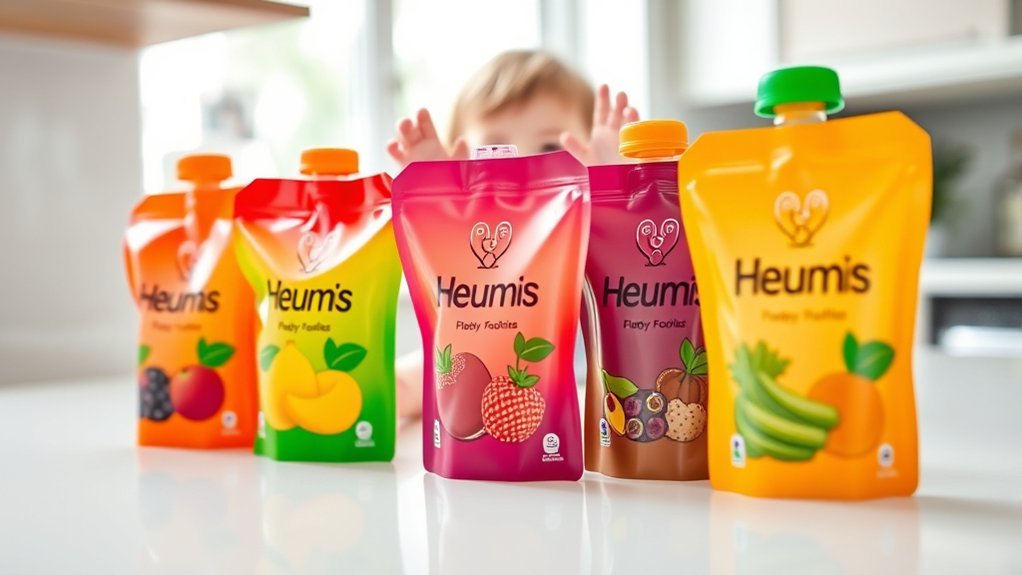
Baby food pouches can make feeding easier when you are traveling, short on time, or need a shelf-stable backup. They can fit into a healthy feeding routine, but they work best as one option among spoon-fed foods, mashed meals, and safe finger foods—not as a full replacement for varied meals and texture practice.
Quick Answer
Baby food pouches are convenient and can provide useful nutrients, but quality varies. Choose age-appropriate pouches with simple ingredients, no added sugar, and meaningful vegetables, protein, iron, or healthy fat. Serve the puree on a spoon when possible, offer varied textures alongside it, and follow the package directions for storage.
Key Takeaways
- Pouches can be useful for travel and busy days, but they should not crowd out breast milk or formula, family foods, and age-appropriate texture practice.
- Read both the ingredient list and Nutrition Facts panel. “No added sugar” does not always mean low total sugar.
- Look for iron-rich foods, protein, vegetables, and healthy fats instead of relying mainly on fruit puree.
- Squeeze puree onto a spoon or into a bowl when practical, and pair smooth puree with mashed, lumpy, or finger foods your baby can safely manage.
- Keep your baby seated upright and supervised. Follow the pouch label for refrigeration, heating, freezing, and disposal.
Note: This article provides general feeding information. Ask your pediatrician or a pediatric feeding professional for individual guidance if your baby was born prematurely, has poor growth, has swallowing trouble, has a diagnosed allergy, or needs a modified texture.
The Benefits of Baby Food Pouches for Busy Parents
Baby food pouches require little preparation, pack easily, and usually stay shelf-stable until opened. A resealable cap can also make it easier to portion food without carrying a glass jar.
Pouches can introduce combinations of fruits, vegetables, grains, yogurt, beans, meat, or spices. That variety can be helpful when the pouch contains ingredients your baby already tolerates and the texture matches their feeding skills.
The best use for a pouch is convenience—not replacing the learning that happens when a baby sees, touches, smells, chews, and self-feeds food.
Still, the package does not guarantee a balanced meal. Some pouches are mostly fruit puree, while others contain more vegetables, grains, protein, or fat. Treat each pouch as a specific food product rather than assuming every pouch offers the same nutrition.
Power your essentials anywhere with a 999Wh pure sine wave power station delivering up to 1000W continuous with 2000W surge. It supports fast charging via USB-C PD 60W and USB-A QC 18W, plus simultaneous output for multiple devices through AC, USB, wireless, and car/DC ports. Recharge using AC, car, or solar with a built-in MPPT controller and dual cooling fans, while the upgraded battery management system protects against surges, short circuits, and overheating.

Simple and Wholesome: Made from minimal ingredients like organic* beef and veggies. There are no artificial flavors or colors—just yummy, wholesome ingredients

FIBER & PROTEIN: Great for any toddler who is on the move, Fiber & Protein pouches are a mix of organic fruits & veggies. Fiber helps support the digestive system. Protein is a key building block for growing bodies. Easy to eat and easier to love!
Understanding the Nutritional Value of Baby Food Pouches
To judge a pouch fairly, check the ingredient order, serving size, total sugar, added sugar, protein, fat, sodium, and listed vitamins or minerals. The ingredients appear in descending order by weight, so the first few ingredients tell you what makes up most of the product.
How Nutrient-Dense Is the Pouch?
Fruit-only and fruit-forward pouches can provide vitamin C, potassium, and other nutrients, but they may offer little iron, protein, or fat. Babies need a varied diet that includes nutrient-dense complementary foods as they begin solids.
Instead of using an arbitrary percentage rule, look for clear food sources:
- Iron: iron-fortified infant cereal, meat, beans, lentils, or other iron-rich ingredients.
- Protein: meat, poultry, fish, yogurt, beans, peas, lentils, tofu, or nut and seed ingredients when safely introduced.
- Healthy fat: avocado, full-fat yogurt, tahini, nut butter, or added oil when appropriate for the recipe and your baby’s allergy plan.
- Vegetable variety: vegetables listed near the beginning rather than appearing after several fruit purees.
A pouch does not need to contain every nutrient. It can be paired with another food—for example, a vegetable-fruit pouch with plain full-fat yogurt, or a fruit pouch stirred into iron-fortified infant cereal.
Why Ingredient Order and Clear Labels Matter
A front label may highlight spinach, kale, chicken, or quinoa even when apple, pear, banana, or another sweet puree makes up most of the product. Read the full ingredient list rather than relying on the product name or package pictures.
Choose products with recognizable ingredients and no added sweeteners when possible. “Organic,” “natural,” and “no preservatives” do not automatically mean the pouch is balanced, low in sugar, or rich in iron.
How to Compare Sugar Content
Total sugar includes sugars naturally present in fruit, vegetables, and dairy. Added sugar is listed separately on U.S. Nutrition Facts labels. A pouch can have 0 grams of added sugar and still contain a high amount of total sugar because the recipe is concentrated fruit puree.
Compare similar products serving for serving. Favor options with no added sugar, less reliance on juice concentrates, and a more balanced mix of vegetables, protein, grains, or fat. There is no need to avoid whole fruit, but fruit-heavy puree should not become the only flavor and texture your baby receives.
How to Choose the Right Baby Food Pouches for Your Baby
The right pouch depends on your baby’s age, feeding skills, known allergens, and the rest of the meal. Use the checklist below instead of relying on marketing claims.
Check the Nutrition Facts
- Confirm the serving size and calories so you know whether the pouch is a taste, side, or more substantial part of a meal.
- Choose 0 grams of added sugar when practical.
- Compare total sugar among similar products.
- Look for useful protein, fat, iron, or other nutrients when the pouch is meant to contribute more than fruit.
- Avoid using one pouch as a complete meal unless its nutrition and portion truly fit your child’s needs.
Read the Ingredient and Allergen Labels
Packaged foods in the United States must identify the nine major allergens: milk, egg, fish, crustacean shellfish, tree nuts, peanuts, wheat, soy, and sesame. Read the label every time because recipes can change.
For a new allergen, follow your pediatrician’s advice and introduce it in a form and amount that is safe for your baby’s stage. Do not use a mixed pouch to introduce several unfamiliar allergens at once if that would make a reaction difficult to trace.
Choose Flavor and Texture Variety
Rotate savory and less-sweet options instead of serving only fruit blends. Also remember that most pouches provide a smooth, uniform texture. Even a pouch marketed for an older baby may not provide the same chewing practice as soft lumps, mashed food, or safe finger foods.
Pro Tip: Compare the first three ingredients. If they are all fruit purees, treat the pouch more like a fruit serving and pair it with an iron-rich or protein-rich food.
Introducing Baby Food Pouches: Tips for Balance
Introduce pouches when your baby is developmentally ready for complementary foods, usually around 6 months. Continue breast milk or infant formula as recommended while gradually adding a range of foods and textures.
Use pouches as part of a meal, a travel backup, or an occasional convenience food. Avoid letting them routinely replace shared meals, spoon practice, or finger foods.
| Food Type | How to Use It | Main Benefit |
|---|---|---|
| Baby food pouch | Squeeze onto a spoon, into a bowl, or over another food | Convenience and flavor variety |
| Mashed vegetables | Serve alone or mix with a smooth puree | Texture and vegetable exposure |
| Soft meat, beans, or lentils | Mash or shred to a safe texture | Iron and protein |
| Safe finger foods | Offer when your baby is ready and seated upright | Self-feeding and chewing practice |
| Whole grains | Stir puree into cereal, oats, or another age-appropriate grain | Energy, texture, and nutrients |
The Importance of Texture: Combining Pouches With Solid Foods
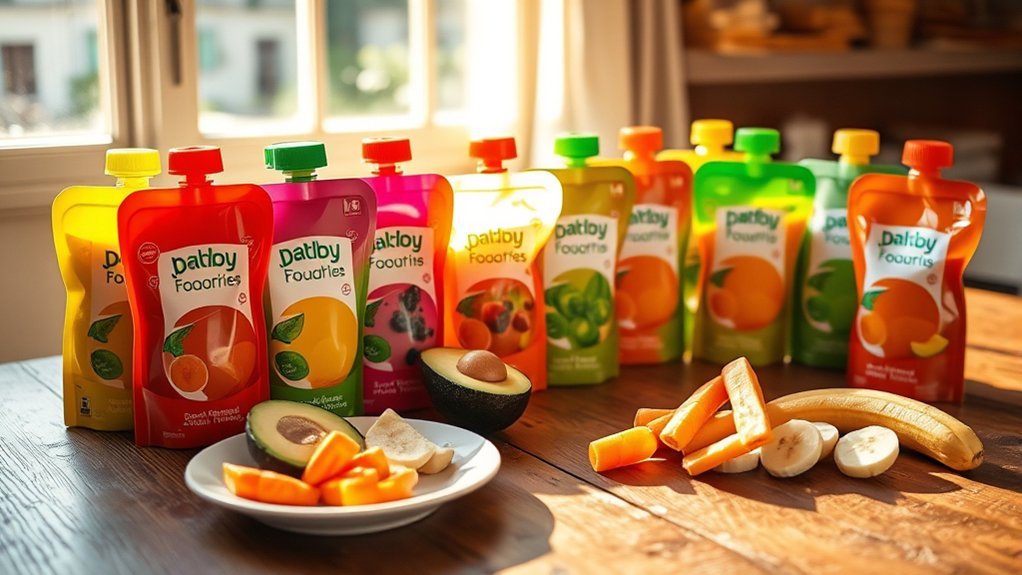
The CDC recommends offering a range of smooth, mashed, lumpy, finely chopped, and ground textures as a child’s eating skills develop. This variety helps babies practice chewing, picking up food, and accepting different foods.
Encouraging Texture Exploration
- Squeeze a smooth pouch into a bowl and add a small amount of mashed food.
- Serve the pouch puree beside soft finger foods rather than as the only food.
- Let your baby touch and smell food when mess is safe and manageable.
- Offer a preloaded spoon so your baby can practice bringing it to their mouth.
- Increase texture gradually based on your baby’s skills, not only the age printed on a package.
Supporting Oral Motor Skills
Sucking puree from a spout uses a narrower set of feeding skills than moving food from a spoon, managing lumps, biting soft food, or chewing. Direct-from-pouch feeding is not automatically harmful, but frequent reliance on it can reduce opportunities to practice other skills.
If your baby repeatedly coughs during meals, has a wet or gurgly voice after swallowing, takes unusually long to eat, loses weight, or cannot progress beyond smooth puree, contact a pediatrician or feeding specialist.
Warning: Always have your baby sit upright in a high chair or another safe seat, stay within reach, and watch continuously while they eat. Prepare foods in the right size and texture, and keep loose pouch caps out of reach. Review the CDC’s choking-prevention guidance.
How to Keep an Eye on Sugar in Baby Food Pouches
Do not judge a pouch by the “no added sugar” claim alone. Check total sugar, added sugar, serving size, and the first ingredients.
- Prefer products with 0 grams of added sugar.
- Compare total sugar among pouches with similar serving sizes.
- Limit products led by fruit juice concentrate or several fruit purees when you want a vegetable- or protein-focused option.
- Serve water from an age-appropriate cup with meals rather than sweet drinks.
- Avoid letting a child slowly suck on a pouch over a long period, especially after teeth appear.
The NHS advises using shop-bought pouches only occasionally, squeezing the contents onto a spoon, and choosing options with less sugar. It also warns that sucking directly from the pouch may increase the risk of tooth decay.
Best Practices for Using Baby Food Pouches
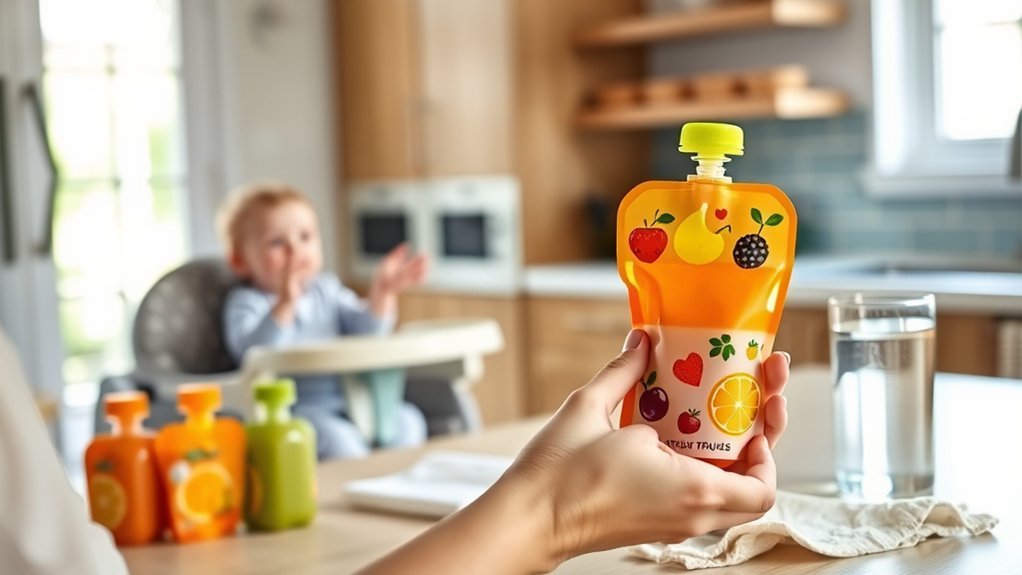
| Practice | What to Do |
|---|---|
| Before opening | Check the use-by date, seal, cap, swelling, leaks, and current recall notices. |
| Serving | Use a spoon or bowl when possible, especially for infants learning to eat solids. |
| Texture variety | Pair smooth puree with mashed, lumpy, or safe finger foods. |
| Supervision | Keep your child seated upright and watch throughout the meal. |
| Leftovers | Follow the label. Discard food that has been contaminated by saliva unless the manufacturer specifically provides a safe storage instruction. |
Avoid feeding in a moving car or stroller. Those settings make it harder to supervise closely and respond quickly if your child has trouble swallowing.
Encouraging Self-Feeding Skills With Baby Food Pouches
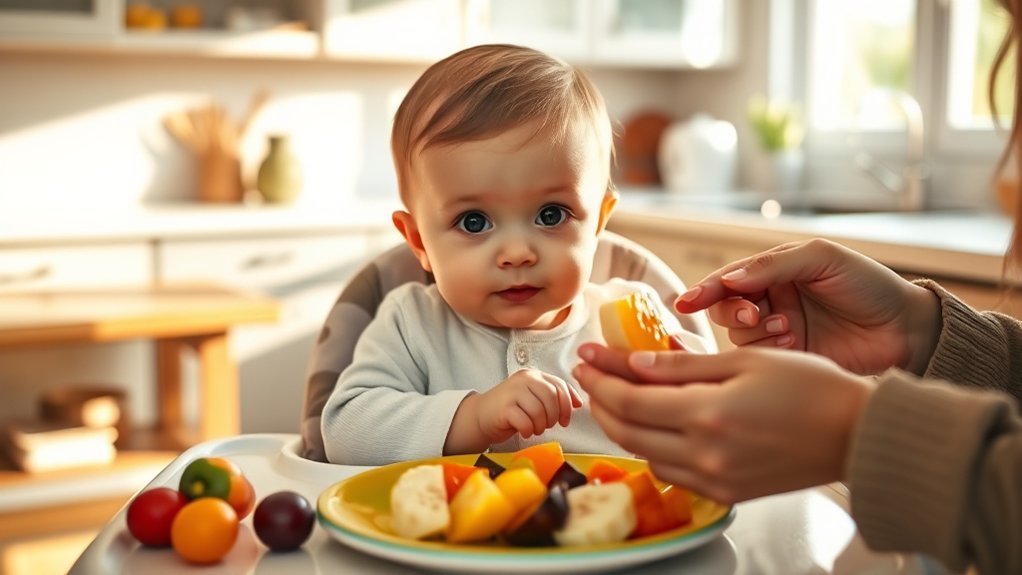
Pouches can support self-feeding when you use them as a bridge rather than the final skill. Squeeze a small amount onto a preloaded spoon and let your baby guide the spoon to their mouth. Offer soft finger foods at the same meal when your child is ready.
- Place a small portion in a bowl so your baby can see and touch the food.
- Use a short, baby-safe spoon that is easy to grasp.
- Allow mess and exploration without forcing bites.
- Watch for hunger and fullness cues, such as reaching, opening the mouth, slowing down, turning away, or closing the mouth.
- End the meal when your baby consistently shows they are finished.
Responsive feeding helps your child learn to recognize hunger and fullness. Do not pressure them to finish a pouch simply because it is open.
Common Mistakes to Avoid When Using Baby Food Pouches
- Using pouches as the main diet: This can narrow flavor, texture, and nutrient variety.
- Assuming vegetable pictures mean a vegetable-rich product: Check the ingredient order.
- Focusing only on added sugar: A fruit-heavy pouch may still contain substantial total sugar.
- Letting a baby graze from a pouch: Long, repeated exposure can work against regular meals and may increase contact between sugars and teeth.
- Saving saliva-contaminated leftovers: Direct contact with the spout can introduce bacteria.
- Ignoring texture progression: Continue offering safe mashed, lumpy, chopped, and finger foods.
- Forgetting the cap: Keep caps away from babies and toddlers.
What About Heavy Metals and Baby Food Recalls?
Lead, arsenic, cadmium, and mercury can enter food from soil, water, and other environmental sources. This issue is not limited to pouches or one brand. In January 2025, the FDA issued final action levels for lead in several categories of processed foods intended for babies and children younger than 2, including foods sold in pouches.
You cannot identify heavy metals by looking at a pouch. The practical steps are to vary the foods and brands you serve, avoid relying on one ingredient every day, inspect packaging, and check the FDA recall database when a product alert is reported.
Note: “Organic” does not mean a food is free of naturally occurring heavy metals. Dietary variety helps reduce repeated exposure from any one food source.
Storage, Heating, and Travel Safety
| Situation | Safer Approach |
|---|---|
| Unopened shelf-stable pouch | Store in a cool, dry place and use before the printed date. Discard swollen, leaking, punctured, or unsealed packages. |
| Opened pouch with no mouth contact | Refrigerate promptly and follow the manufacturer label, commonly within 24 to 48 hours. |
| Pouch used directly from the spout | The safest general rule is to discard leftovers because saliva can contaminate the food. |
| Heating | Check the package. Transfer food to a dish before warming, stir well, and test the temperature. Do not microwave the pouch. |
| Freezing | Freeze only when the manufacturer says the package is freezer-safe. For homemade food, use a freezer-safe reusable pouch or container and leave room for expansion. |
| Travel | Keep refrigerated products at 40°F (4°C) or below in an insulated cooler. Do not leave perishable food out longer than 2 hours, or 1 hour above 90°F (32°C). |
Making Your Own Baby Food Pouches: A Simple Guide
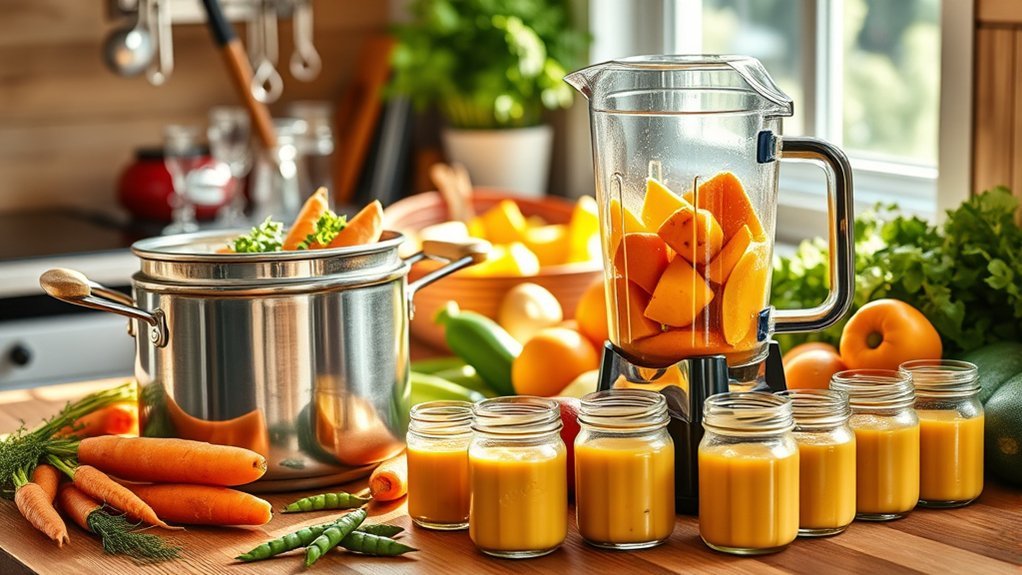
Homemade pouches let you control the ingredients, sweetness, thickness, and texture. You need clean equipment, a pot or steamer when cooking is required, a blender or masher, and reusable pouches or containers labeled freezer-safe.
- Choose a balanced combination. Include a vegetable or fruit, plus an iron-rich or protein-rich food when appropriate.
- Prepare safely. Wash your hands, surfaces, produce, and equipment. Cook ingredients to a soft texture as needed.
- Blend or mash. Add only enough liquid to reach a texture your baby can safely manage.
- Cool and portion. Divide the food into clean containers instead of repeatedly dipping into one large batch.
- Label and store. Add the preparation date. FoodSafety.gov lists homemade baby food for 1 to 2 days in the refrigerator or 1 to 2 months in the freezer.
- Thaw safely. Thaw in the refrigerator and stir well before serving. Do not refreeze food that has been warmed or contaminated by saliva.
Simple combinations include sweet potato with lentils, pear with iron-fortified oatmeal, avocado with plain yogurt, or chicken with peas and a small amount of water or unsalted cooking liquid. Introduce allergens separately when advised so you can identify a reaction.
Frequently Asked Questions
Can baby food pouches be heated before serving?
Many purees can be served at room temperature. When warming is allowed, follow the label, squeeze the food into a dish, warm gently, stir, and test the temperature before serving. Do not microwave the pouch itself because packaging may not be microwave-safe and the food can heat unevenly.
How long can an opened pouch stay in the refrigerator?
Follow the manufacturer’s label. An untouched pouch is commonly refrigerated for 24 to 48 hours, but rules vary. If your child put their mouth on the spout, discard the remaining puree unless the manufacturer gives a specific instruction stating otherwise.
Which allergens may appear in baby food pouches?
Pouches may contain milk, egg, fish, shellfish, tree nuts, peanuts, wheat, soy, or sesame, as well as other foods that can cause reactions. Read the ingredient and “Contains” statements every time. Seek urgent medical help for trouble breathing, swelling, repeated vomiting, unusual sleepiness, or other signs of a severe reaction.
Can I freeze baby food pouches?
Do not assume a commercial pouch is freezer-safe. Follow its label or contact the manufacturer. Homemade puree can be frozen in a clean reusable pouch or container designed for freezing, with space left for expansion. FoodSafety.gov lists homemade baby food for 1 to 2 months in the freezer.
Are baby food pouches bad for teeth?
A pouch is not automatically harmful, but frequent or prolonged sucking exposes teeth to puree for longer. Fruit-heavy products can contain substantial natural sugar. Serve puree on a spoon, avoid all-day grazing, offer water with meals, and follow your child’s dental-care routine.
Can a pouch replace a full meal?
Some pouches are only fruit or vegetables and are better treated as one part of a meal. A more complete meal generally needs enough energy plus iron-rich food, protein, fat, and variety. Check the label and pair the pouch with other age-appropriate foods rather than assuming it is nutritionally complete.
What are the environmental impacts of baby food pouches?
Many pouches use layered flexible packaging that is not accepted in standard curbside recycling. Check the package label and your local recycling rules before placing it in a bin. Reduce waste by buying only what you will use, choosing larger formats when practical, or using durable reusable pouches for homemade food.
Conclusion
Baby food pouches can be a practical part of feeding, especially during travel or a busy day. The goal is balance: choose products with useful nutrients, serve them in a way that supports eating skills, and keep offering varied tastes and textures. Careful label reading, safe storage, close supervision, and responsive feeding make pouches more useful without letting convenience take over the whole diet.
Sources
- CDC: Tastes and Textures — texture progression, chewing, and fine-motor development.
- CDC: Choking Hazards — safe seating, supervision, food preparation, and choking prevention.
- FDA: Have Food Allergies? Read the Label — the nine major food allergens and labeling rules.
- FDA: Once Baby Arrives — saliva contamination, heating, and infant food-safety practices.
- FoodSafety.gov: Children Under Five — refrigeration, freezing, and microwaving guidance for baby food.
- FDA: Action Levels for Lead in Processed Foods for Babies and Young Children — current federal guidance covering processed baby foods, including pouches.