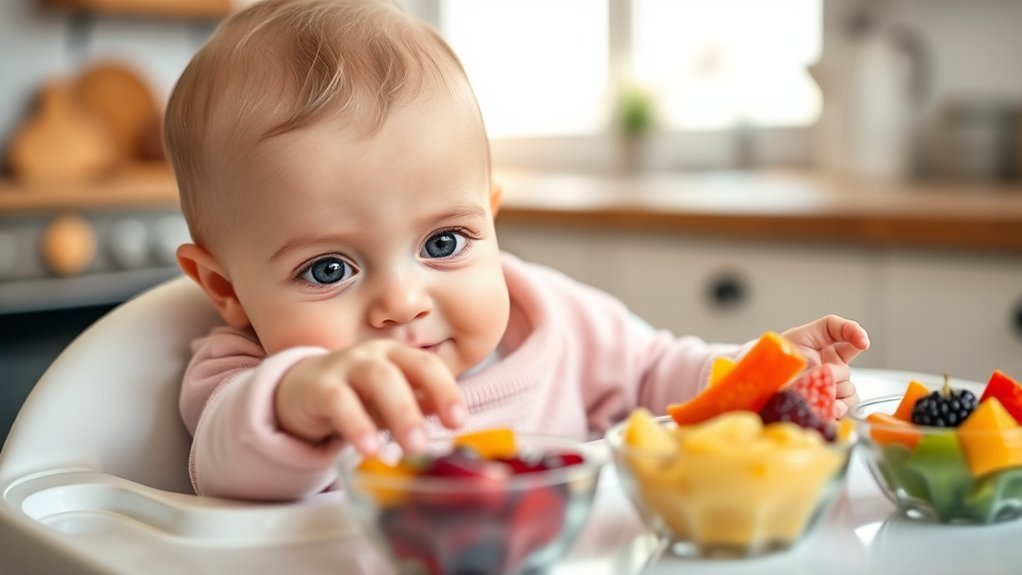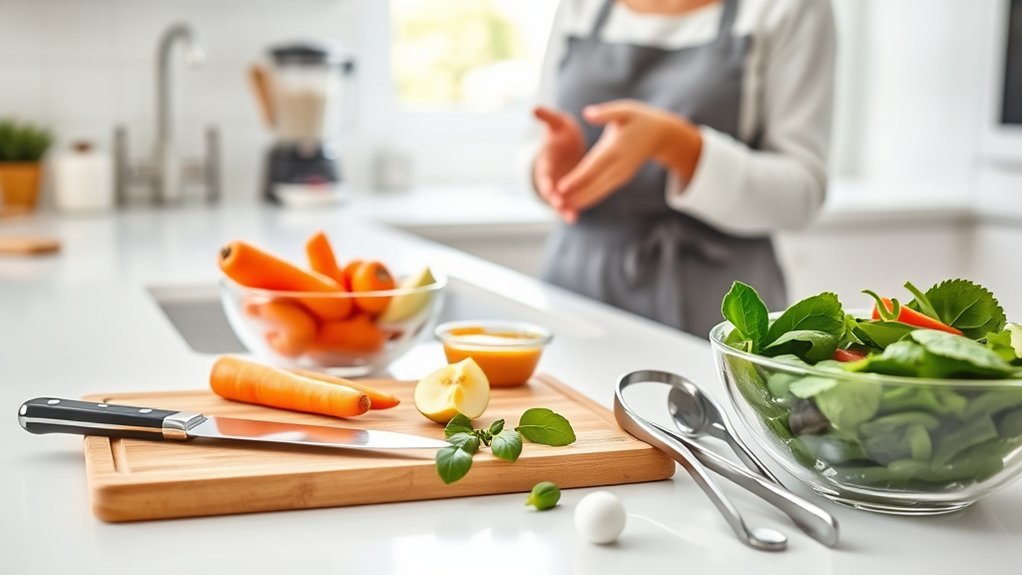
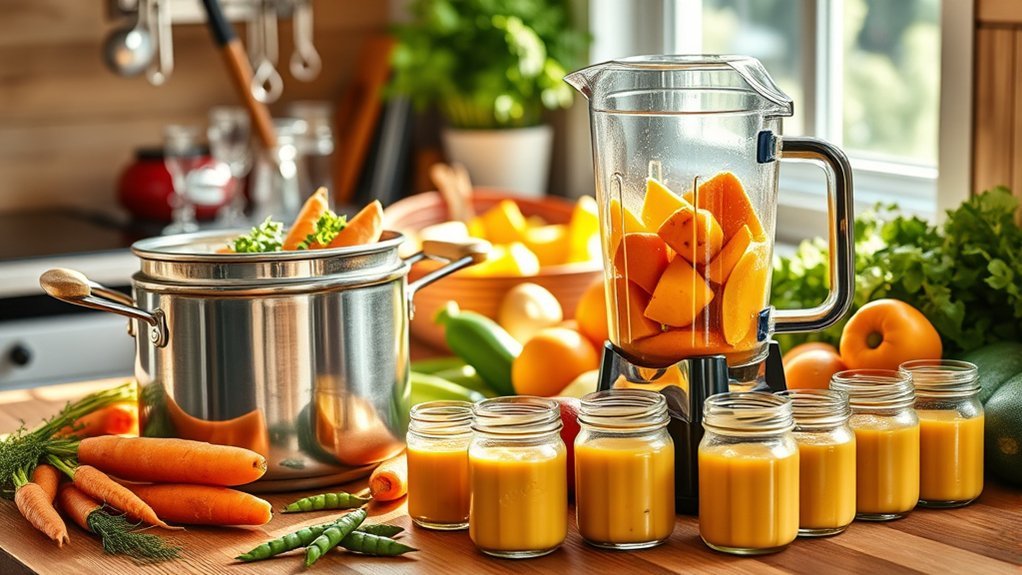
Mixed vegetable baby food puree is easy to prepare once your baby is developmentally ready for solids and has tried each vegetable separately. The safest method is to steam the vegetables until they mash easily, blend them to an age-appropriate texture, serve a small portion, and cool or freeze the remaining puree promptly.
Quick Answer
Choose two or three vegetables your baby has already tolerated, cut them evenly, and steam them until fork-soft. Blend with a little safe water until smooth. Refrigerate homemade puree for 1–2 days or freeze labeled portions for 1–2 months. Reheat only the portion you need, stir well, and cool before serving.
Key Takeaways
- Most babies are ready for solid foods at about 6 months, but readiness skills matter more than the calendar alone.
- Introduce vegetables separately before combining them so a possible reaction is easier to identify.
- Steam dense vegetables first and add quicker-cooking vegetables later; every piece should mash easily with a fork.
- Use safe water to thin a stored batch. Add breast milk or correctly prepared formula to the serving portion when desired.
- Keep homemade baby food refrigerated for no more than 1–2 days or frozen in labeled portions for 1–2 months.
- Always seat your baby upright, supervise every bite, and discard food left in the serving bowl after feeding.
At a Glance
| Time Required | About 25–35 minutes |
| Difficulty | Easy |
| Tools Needed | Knife, cutting board, saucepan, steamer basket, blender or food processor, spoon, and airtight containers |
| Cost | Varies by the vegetables, season, and local food prices |
Warning: This guide provides general food-preparation information and does not replace advice from your child’s pediatrician. Always supervise your baby while eating. Seek emergency help for trouble breathing, swelling of the lips or tongue, sudden weakness, or a severe or rapidly worsening reaction.
How to Make Mixed Vegetable Baby Food Puree
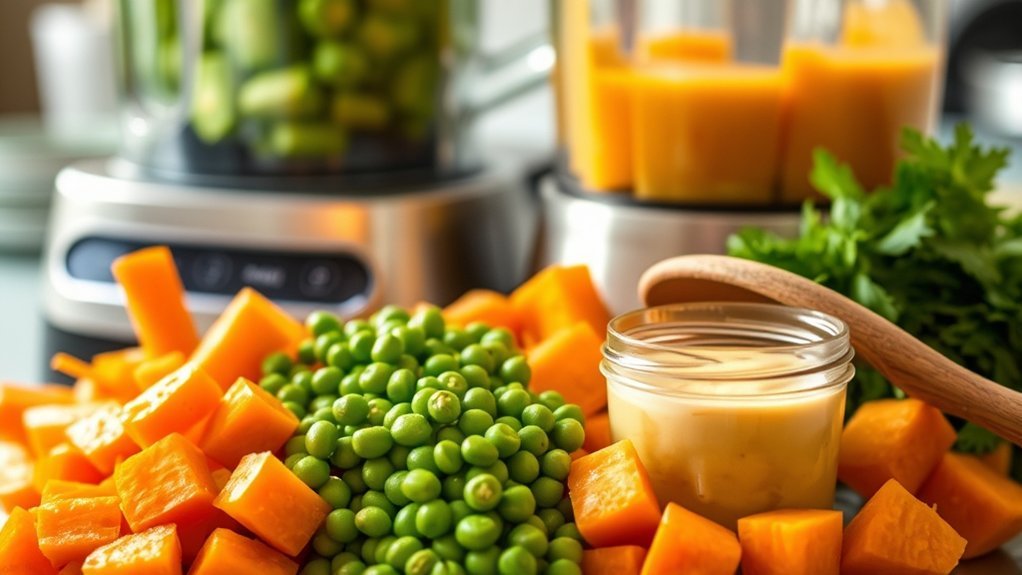
According to the Centers for Disease Control and Prevention, most children can begin foods other than breast milk or infant formula at about 6 months. Your baby should also be able to control their head and neck, sit alone or with support, open their mouth for food, and swallow rather than push food out.
For a first mixed puree, use two or three vegetables your baby has already eaten without a reaction. A mild starter batch can include:
- 1 cup peeled sweet potato cut into small cubes
- 1 cup chopped zucchini, broccoli florets, peas, or green beans
- About 1/4 to 3/4 cup safe drinking water for blending
This makes a flexible base rather than a fixed serving amount. The final yield depends on the vegetables and how much liquid you add. Start your baby with 1–2 tablespoons and follow their hunger and fullness cues.

Power your essentials anywhere with a 999Wh pure sine wave power station delivering up to 1000W continuous with 2000W surge. It supports fast charging via USB-C PD 60W and USB-A QC 18W, plus simultaneous output for multiple devices through AC, USB, wireless, and car/DC ports. Recharge using AC, car, or solar with a built-in MPPT controller and dual cooling fans, while the upgraded battery management system protects against surges, short circuits, and overheating.

The nutribullet Baby Turbo Steamer is fast, easy to clean, and a real go-getter just like you. Not only does it steam cook fresh ingredients for homemade baby food, it also defrosts frozen foods and sterilizes baby bottles, pacifiers, utensils, and toys for easier baby times, all around.
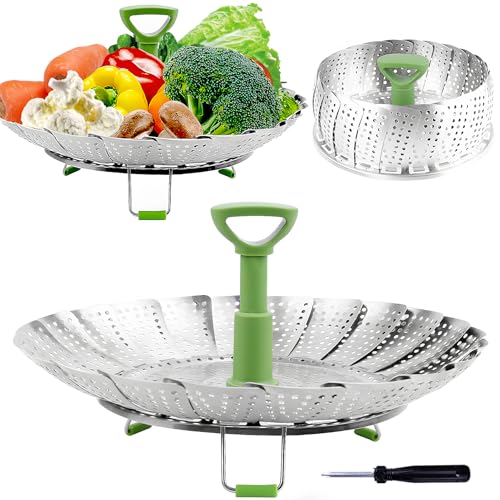
Healthier cooking choices: The steamer basket with high quality stainless steel petals, food grade plastic handle and silicone feet will promote your health. It is non-rust, scratch proof and corrosion resistant, easy to clean for long use. Steaming is a healthy cooking choice because it helps retain more than 90% of the nutrients lost when either boiling or microwaving food. The foldable steam basket can be used to steam veggies, seafood, eggs, meats, desserts, baby food and much more
Basic Method
- Wash: Wash your hands with soap and water. Clean the knife, cutting board, blender, steamer basket, counter, and storage containers.
- Prepare: Rinse the vegetables under running water. Peel vegetables when needed and remove tough stems, seeds, pits, or damaged areas.
- Cut evenly: Cut dense vegetables into small, similar-size pieces so they cook evenly.
- Steam: Start firm vegetables such as sweet potato or carrot first. Add broccoli, zucchini, peas, spinach, or green beans later so they do not overcook.
- Check softness: Continue steaming until every piece can be mashed easily with a fork.
- Blend: Transfer the vegetables to a clean blender. Add safe drinking water a tablespoon at a time and blend to the texture your baby can manage.
- Serve or store: Put the amount needed for one feeding into a separate bowl. Cool and portion the rest promptly.
Pro Tip: Steam vegetables in stages rather than adding everything at once. Sweet potato may need several minutes before quicker-cooking zucchini, peas, broccoli, or spinach is added.
Essential Ingredients for Mixed Vegetable Purees
You can use fresh or plain frozen vegetables. Frozen vegetables are convenient and often require less trimming, but check the ingredient list and avoid products with added salt, sauces, butter, or seasoning.
Useful vegetables include:
- Mild and creamy: sweet potato, butternut squash, potato, cauliflower, or zucchini
- Green vegetables: peas, broccoli, green beans, or cooked spinach
- Naturally sweet vegetables: carrot, sweet potato, peas, or winter squash
- Stronger flavors: broccoli, cauliflower, spinach, or green beans balanced with a milder vegetable
Offer variety rather than relying on one blend every day. Different vegetables provide different nutrients, colors, tastes, and textures.
Note: Breast milk and/or infant formula remains the main source of nutrition from 6–12 months. Vegetable puree is a complementary food, not a complete replacement. As solids expand, offer developmentally appropriate iron-rich foods such as meat, beans, lentils, eggs, tofu, or iron-fortified infant cereal.
Liquids for Thinning Puree
Safe drinking water is the simplest liquid for a batch that will be stored. You may mix a little breast milk or correctly prepared infant formula into the individual serving after the puree has cooled.
Do not change the water-to-powder ratio when preparing formula. Follow the formula label exactly, and discard formula or food that has been contaminated by saliva during feeding.
Seasoning Baby Food
Once your baby has tolerated the ingredients, a small pinch of a mild herb or spice can introduce another flavor. Options include cinnamon with sweet potato, garlic with peas, dill with zucchini, or a tiny amount of cumin with carrot.
Do not add honey before 12 months. Avoid added sugar and keep sodium low. The CDC’s infant and toddler food guidance advises against honey for babies younger than 12 months and recommends avoiding foods high in salt and added sugar.
Step-by-Step Guide to Steaming Vegetables
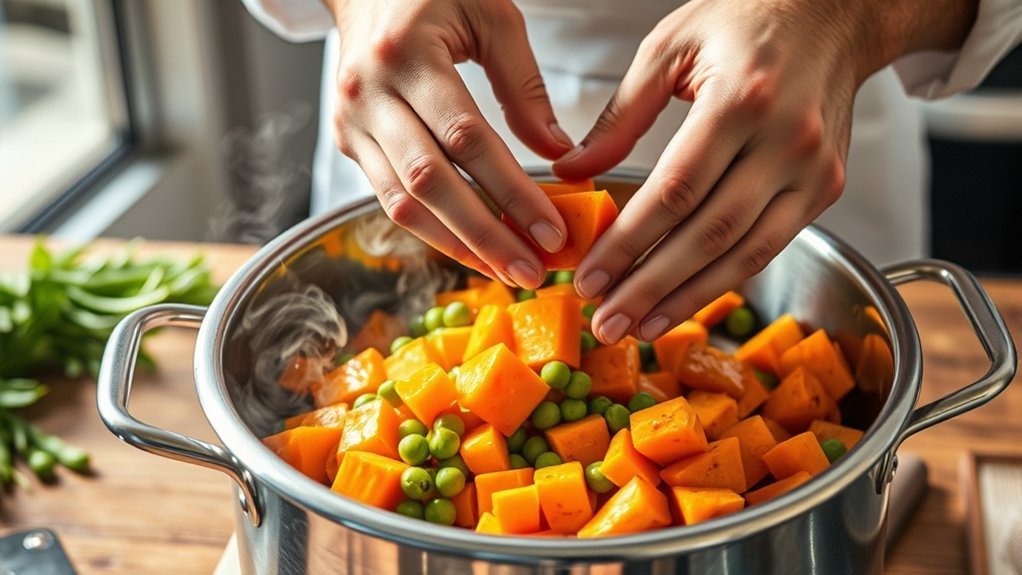
Steaming is useful because the vegetables remain above the cooking water and can be checked individually. Cooking times are approximate, so softness—not the clock—is the final test.
| Vegetable | Approximate Steaming Time | Preparation |
| Sweet potato or carrot | About 12–18 minutes | Peel when needed and cut into small cubes |
| Green beans | About 8–12 minutes | Trim the ends and cut into short pieces |
| Broccoli or cauliflower | About 6–10 minutes | Separate into small florets and include tender stem pieces |
| Zucchini | About 5–8 minutes | Cut into small chunks; peeling is optional |
| Peas or spinach | A few minutes | Cook just until very tender or wilted |
Keep the lid on the pot so steam surrounds the vegetables. Check the water level during cooking and add more hot water to the saucepan if needed, but do not let the vegetables sit in the water.
The safest doneness test is simple: every vegetable piece should flatten easily when pressed with a fork.
Blending Techniques for the Perfect Consistency
Allow the vegetables to cool slightly, then place them in a clean blender or food processor. Begin with a small amount of safe water and add more only as needed. Too much liquid is difficult to remove.
Blend in small batches for better control. Stop and scrape down the sides, then check for firm pieces, fibrous strings, skins, or lumps that may be unsuitable for your baby’s current feeding skills.
Adjusting Texture by Feeding Stage
- New to solids: Blend until smooth and thin enough to fall slowly from a spoon.
- Developing oral skills: Use less liquid and leave the puree thicker.
- Ready for more texture: Mash with a fork or pulse briefly to leave soft, small lumps.
- Moving toward finger foods: Offer separate pieces that are soft and prepared in a developmentally appropriate size rather than hiding every texture in puree.
The CDC’s texture guidance recommends moving from smooth foods toward mashed, lumpy, finely chopped, or ground textures as the child’s eating skills develop.
Storing and Reheating Baby Food Safely
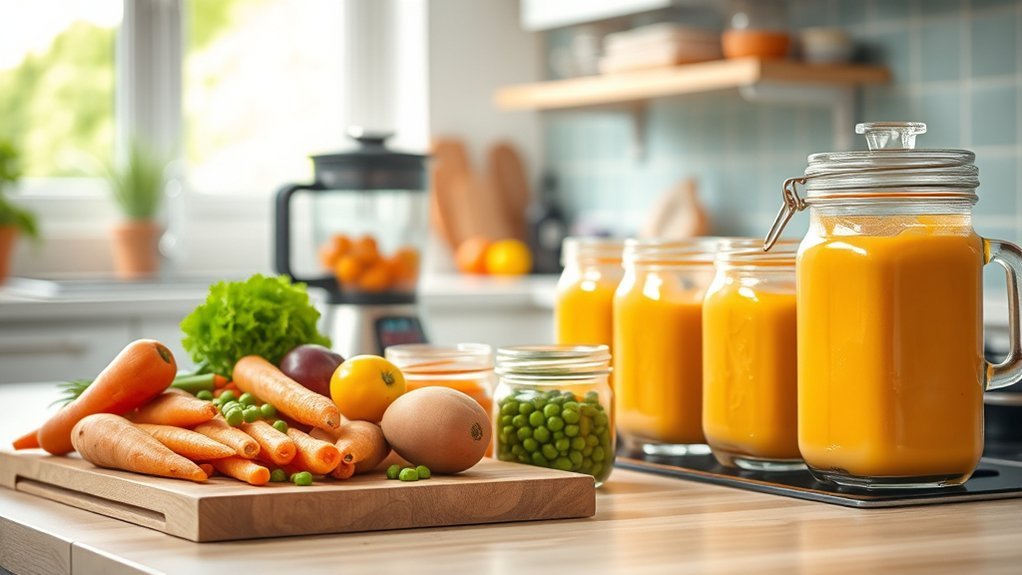
Babies younger than 5 have a higher risk of serious foodborne illness, so clean preparation, rapid cooling, short storage times, and careful serving practices are essential.
Safe Storage Practices
- Transfer the finished puree to clean, shallow containers so it cools quickly.
- Refrigerate or freeze it promptly rather than leaving it on the counter.
- Label each container with the ingredients and preparation date.
- Store only small portions so you can thaw or reheat what you need.
- Keep the refrigerator at 40°F/4°C or colder and the freezer at 0°F/-18°C or colder.
| Storage Method | Conservative Limit | Instructions |
| Refrigerator | 1–2 days | Use a covered airtight container and keep it in the coldest part of the refrigerator, not the door. |
| Freezer | 1–2 months | Freeze small labeled portions in a covered tray or freezer-safe container. |
| Serving bowl | Discard after feeding | Do not return puree touched by the feeding spoon to the storage container. |
These limits follow the conservative homemade baby-food guidance in the FoodSafety.gov storage table for children younger than 5.
Warning: Place only one feeding portion in the baby’s bowl. Saliva transferred from the spoon can introduce bacteria. Discard anything left in that bowl, even if it looks or smells normal.
Proper Thawing Techniques
The refrigerator is the simplest thawing method. Move the needed portion from the freezer to the refrigerator in a covered container and allow it to thaw gradually.
For faster thawing, place the sealed container in warm water or transfer the puree to a microwave-safe dish. Never leave frozen puree on the counter to thaw.
Use thawed puree promptly. Do not refreeze food that has been warmed, partially eaten, or left at room temperature for an extended period.
Reheating Guidelines
Baby food does not have to be served warm, but previously cooked puree may be reheated on the stovetop or in a microwave-safe dish. Heat only the portion needed for that feeding.
When reheating a stored portion, heat it thoroughly. General leftover guidance uses an internal temperature of 165°F/74°C. Stir the puree completely, allow it to stand briefly, and then cool it to lukewarm before feeding.
If using a microwave:
- Do not microwave baby food inside a jar.
- Transfer it to a microwave-safe dish.
- Heat in short intervals.
- Stir from the center to the edges to remove hot spots.
- Let it stand and test the temperature before serving.
The FDA provides additional instructions for safe preparation, storage, and microwaving of baby food.
Introducing New Vegetables: What to Watch For
Do not begin with a mixture of several unfamiliar vegetables. Offer one single-ingredient food first so you can identify a possible reaction. The CDC recommends waiting 3–5 days between new foods during the introductory stage.
Once each vegetable has been tolerated, you can combine them in a mixed vegetable puree. Keep a simple record of the food, date, amount, and any symptoms.
Possible food-allergy symptoms include:
- Hives or a new rash
- Swelling around the eyes, lips, or face
- Repeated vomiting or diarrhea
- Coughing, wheezing, or trouble breathing
- Sudden sleepiness, weakness, or unusual paleness
Stop serving the food and contact your pediatrician if a mild reaction occurs. Call emergency services immediately for trouble breathing, tongue or throat swelling, sudden weakness, or symptoms affecting more than one part of the body.
Vegetables are not the only foods that should be introduced. Current guidance supports offering developmentally appropriate common allergenic foods along with other complementary foods rather than delaying them without a medical reason. If your baby has severe eczema, an egg allergy, or a previous immediate food reaction, discuss allergen introduction with the pediatrician first.
Age, Readiness, and Portion Size
Most babies begin solid food at about 6 months. Introducing solids before 4 months is not recommended. Look for a combination of readiness signs:
- Your baby can sit alone or with support.
- Your baby has steady head and neck control.
- Your baby opens their mouth when food is offered.
- Your baby can move food backward and swallow it.
- Your baby shows interest in food and brings objects to their mouth.
Start with 1–2 tablespoons. Let your baby decide whether to eat more. Signs of fullness can include closing the mouth, turning the head away, slowing down, pushing the spoon away, or becoming distracted.
Keep your baby upright in a high chair or another safe seated position. Never feed puree while the baby is lying down, crawling, walking, riding in a moving car, or left without direct adult supervision.
Creative Meal Ideas Using Mixed Vegetable Purees
Mixed vegetable puree can be adjusted as your child develops rather than remaining a permanently smooth food.
- For a new eater: Serve a small spoonful of smooth sweet potato and zucchini puree.
- For a thicker texture: Mash peas, broccoli, and potato with a fork instead of blending completely.
- With an iron-rich food: Combine a tolerated vegetable puree with cooked lentils, beans, meat, egg, tofu, or iron-fortified infant cereal in an age-appropriate texture.
- With grains: Stir the puree into soft oatmeal, quinoa, rice, or another cooked grain that your child has already tolerated.
- For older babies: Use a thicker puree as a dip alongside soft, safely cut finger foods.
- For toddlers and older family members: Add an unused, uncontaminated portion to soup, pasta sauce, scrambled eggs, or a grain bowl.
Do not save or repurpose puree that has been in the baby’s serving bowl.
Troubleshooting Common Puree Problems
| Problem | Likely Cause | Fix |
| Too thick | Not enough blending liquid | Add safe water one tablespoon at a time and blend again. |
| Too watery | Too much liquid or a water-rich vegetable | Blend in more cooked sweet potato, potato, peas, or another tolerated thick vegetable. |
| Firm lumps | Vegetables were undercooked or cut unevenly | Steam the firm pieces longer and re-blend. Do not strain out undercooked chunks and assume the rest is ready. |
| Stringy texture | Tough green-bean ends, broccoli stems, skins, or fibrous vegetables | Trim tough parts, cook until very soft, blend longer, or pass the puree through a fine sieve for a new eater. |
| Bitter flavor | A strong green vegetable dominates the blend | Use less of the strong vegetable or balance it with sweet potato, peas, squash, or another tolerated mild vegetable. |
| Baby refuses it | The flavor or texture is unfamiliar, or the baby is not hungry | Do not pressure the baby. Offer a small amount again on another day and watch for hunger and fullness cues. |
| Separated after freezing | Water separated from the vegetable solids | Reheat safely, stir thoroughly, and adjust with a small amount of water if needed. |
Frequently Asked Questions
Can I use frozen vegetables instead of fresh?
Yes. Plain frozen vegetables are convenient and suitable for puree. Check the ingredient list and avoid products with added salt, sugar, butter, cheese, sauce, or seasoning. Cook the vegetables until they are soft enough to mash easily before blending.
How can I enhance the flavor of the puree?
Combine a stronger vegetable with a milder one your baby has already tolerated. You can also use a small amount of cinnamon, garlic, dill, cumin, or another mild herb or spice. Do not add honey before 12 months, and avoid added sugar or unnecessary salt.
What age is suitable for introducing mixed vegetable puree?
Most babies begin solids at about 6 months when they can control their head and neck, sit with support, open for food, and swallow it. Introduce each vegetable separately first. Once the ingredients are tolerated, you can combine them in a mixed puree.
Are there any vegetables to avoid for babies?
Preparation matters more than a blanket vegetable ban. Do not serve hard raw pieces such as raw carrot because they are choking hazards. Cook vegetables until very soft and match the texture to your baby’s skills. Ask the pediatrician about restrictions related to a medical condition, premature birth, or feeding problem.
How do I know if my baby is allergic?
Watch for hives, swelling, repeated vomiting, diarrhea, coughing, wheezing, breathing difficulty, sudden weakness, or unusual paleness after a new food. Stop offering the food and contact the pediatrician for mild symptoms. Call emergency services for breathing trouble, throat or tongue swelling, collapse, or a severe reaction.
Can I blend the puree with breast milk or formula?
Yes, but safe water is simpler for a batch you plan to store. Add breast milk or correctly prepared formula to the individual serving after the puree has cooled. Follow formula mixing instructions exactly, and discard any food or formula left after feeding.
Can I refreeze thawed baby food?
It is safest to thaw only the portion you need and avoid refreezing puree that has been warmed, partially eaten, or held at room temperature. Small frozen portions reduce waste and make it easier to follow this rule.
Conclusion
Making mixed vegetable baby food puree is a straightforward way to introduce familiar vegetables in a new combination. Begin when your baby is developmentally ready, test ingredients separately, cook every vegetable until very soft, and adjust the texture as feeding skills develop.
Keep food safety central to the process: use clean equipment, portion the puree before feeding, refrigerate it for no more than 1–2 days, freeze it for 1–2 months, and discard anything contaminated by a used spoon. Vegetable puree can add useful variety, but breast milk or formula remains the main nutrition source during the first year while other complementary foods gradually expand the diet.
Sources
- Centers for Disease Control and Prevention: When, What, and How to Introduce Solid Foods — starting age, readiness signs, single-ingredient introduction, preparation, and choking prevention.
- Centers for Disease Control and Prevention: Tastes and Textures — progression from smooth puree to mashed, lumpy, and finely prepared foods.
- Centers for Disease Control and Prevention: Foods and Drinks to Avoid or Limit — honey, sodium, added sugar, unpasteurized foods, cow’s milk, and juice guidance.
- FoodSafety.gov: Children Under Five — conservative homemade baby-food storage and safe microwaving practices.
- U.S. Food and Drug Administration: Once Baby Arrives — sanitation, portioning, freezing, spoon contamination, and microwave precautions.
- American Academy of Pediatrics: Introducing Common Food Allergens — allergen introduction, symptoms, and guidance for higher-risk babies.