

Starting solid foods does not cure infant reflux, but a calm, age-appropriate feeding routine can make meals easier. Most babies can begin complementary foods at about 6 months, once they show clear readiness signs. Start with small amounts of soft food, keep breast milk or formula as the main source of nutrition, and contact your pediatrician if reflux causes pain, feeding refusal, breathing problems, or poor growth.
Quick Answer
For a baby with reflux, start solids around 6 months once they can sit with support, control their head and neck, reach for food, and swallow it. Offer small amounts of soft, single-ingredient foods, keep meals calm, and hold your baby upright for 20–30 minutes afterward. Do not use wedges or thicken bottles unless your pediatrician advises it.
Key Takeaways
- Normal infant reflux, called gastroesophageal reflux (GER), is common and usually improves as a baby grows. GERD is reflux that causes troublesome symptoms or complications.
- Begin solids at about 6 months when your baby shows developmental readiness; do not start early just to treat spit-up.
- Offer small portions, introduce one new food every 3–5 days at first, and include iron-rich foods rather than relying only on fruit or cereal.
- There is no universal list of “reflux foods” that every baby must avoid. Track repeat patterns and discuss significant reactions with your pediatrician.
- For sleep, always place your baby on their back on a firm, flat surface. Never use a wedge, sleep positioner, nest, or inclined product to manage reflux.
At a Glance
| Time Required | About 10–20 minutes per meal, plus 20–30 minutes of supervised upright time afterward |
| Difficulty | Moderate; the main task is watching readiness, comfort, and reactions |
| Tools Needed | Upright high chair, small spoon, bib, age-appropriate food, and a simple food-and-symptom log |
| Cost | Low; suitable first foods can usually come from normal family groceries |
Understanding Infant Reflux: GER vs. GERD

Gastroesophageal reflux (GER) happens when stomach contents move back into the esophagus and may come out as spit-up. Mild GER is common in babies because their digestive system is still developing, they eat a liquid diet, and they spend much of the day lying down.
GER is not the same as gastroesophageal reflux disease (GERD). GERD means reflux repeatedly causes troublesome symptoms or complications, such as feeding refusal, poor weight gain, inflammation of the esophagus, or breathing symptoms. Crying, hiccups, arching, or poor sleep can occur for many reasons and do not prove that a baby has GERD.
Reflux is very common: the National Institute of Diabetes and Digestive and Kidney Diseases reports that about 70%–85% of infants have daily regurgitation by 2 months of age, and most no longer have GER symptoms by 12–14 months.

Power your essentials anywhere with a 999Wh pure sine wave power station delivering up to 1000W continuous with 2000W surge. It supports fast charging via USB-C PD 60W and USB-A QC 18W, plus simultaneous output for multiple devices through AC, USB, wireless, and car/DC ports. Recharge using AC, car, or solar with a built-in MPPT controller and dual cooling fans, while the upgraded battery management system protects against surges, short circuits, and overheating.

1.Gentle Incline Positioning:The angled wedge design supports a natural upright posture during feeding and supervised rest time. Helps create a comfortable daily routine setup.
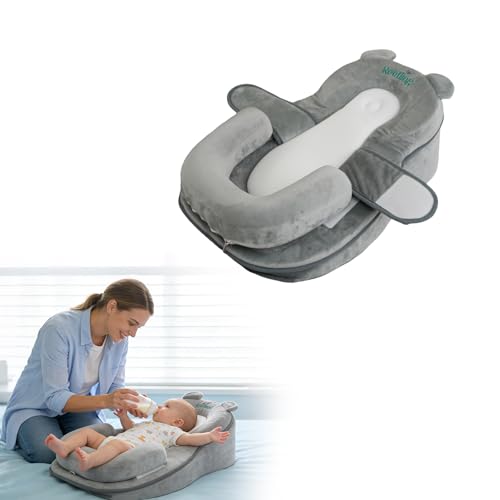
【Dual-Function Detachable Design】: The removable wedge segment transforms this pillow into a flat surface when detached, eliminating the need for separate bedding. Perfect for nursery transitions or travel cribs.Detachable parts require adult reassembly and supervision.
Common Reflux Symptoms
- Small amounts of milk or food flowing easily from the mouth, often with a burp
- Spit-up during or soon after feeding
- Occasional hiccups or brief fussiness
- Normal appetite, wet diapers, growth, and development in an otherwise comfortable “happy spitter”
Signs Reflux May Need Medical Review
Talk with your pediatrician when your baby appears to be in pain, refuses feeds, coughs or gags often during meals, has trouble swallowing, wheezes, or is not gaining weight as expected. These symptoms can reflect GERD or another condition, including a feeding problem or cow’s milk protein allergy.
Warning: Seek urgent medical care for green or yellow bile-stained vomit, blood or coffee-ground material in vomit, repeated projectile vomiting, breathing trouble, blue or gray skin, severe lethargy, a swollen abdomen, signs of dehydration, or a serious allergic reaction. These are not routine reflux symptoms.
Essential Tips for Safely Introducing Solid Foods to Babies With Reflux
Most babies are ready for complementary foods at about 6 months. Reflux alone is not a reason to begin solids early. Use your baby’s development—not a single age, weight, or amount of spit-up—to guide the start.
1. Check Readiness Signs
Your baby should be able to sit upright with support, hold their head and neck steady, open their mouth for food, bring objects toward their mouth, and move food from the front of the mouth toward the throat. If your baby was born prematurely or has swallowing or developmental concerns, ask their clinician when and how to begin.
2. Keep Breast Milk or Formula as the Main Nutrition
Early solids are practice as well as nutrition. Continue normal breast milk or iron-fortified infant formula feeds, unless your pediatrician gives different instructions. Start with about half a spoonful to 1–2 teaspoons and increase slowly according to your baby’s hunger and fullness cues.
3. Introduce One Food at a Time
The Centers for Disease Control and Prevention recommends beginning with one single-ingredient food at a time and waiting 3–5 days before adding another new food. This makes it easier to notice a consistent reaction.
4. Use Responsive Feeding
Feed when your baby is alert and calm. Pause when they close their mouth, turn away, push the spoon, lose interest, or become upset. Forcing extra bites or overfeeding can increase discomfort and spit-up.
5. Introduce Common Allergens in Baby-Safe Forms
Once your baby is ready for solids, allergenic foods such as well-cooked egg, smooth thinned peanut butter, dairy foods, wheat, soy, fish, and sesame can be introduced in safe textures along with other foods. Babies with severe eczema or an egg allergy should have a pediatrician-guided plan for peanut introduction.
Note: This article provides general education, not a diagnosis or an individual feeding plan. A baby with diagnosed GERD, poor growth, swallowing trouble, prematurity, food allergy, or a complex medical condition may need advice from a pediatrician, pediatric gastroenterologist, dietitian, or feeding therapist.
Best First Foods for Babies With Infant Reflux
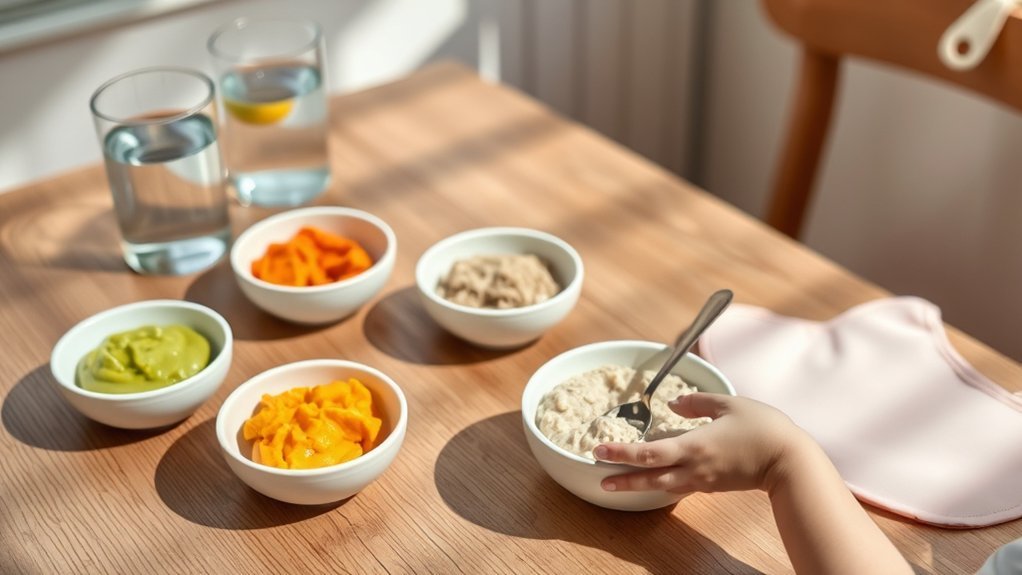
No specific food has been proven to cure infant reflux. The best first foods are soft, developmentally appropriate, nutrient-dense, and easy to offer in small amounts. A food that seems comfortable for one baby may not suit another, so watch for repeat patterns instead of relying on a universal “reflux diet.”
Gentle, Nutrient-Dense First Foods
- Iron-fortified oat, barley, or multigrain infant cereal: Mix with breast milk, formula, or water until smooth. Rotate grains rather than serving only rice cereal.
- Pureed or finely mashed meat, poultry, beans, or lentils: These provide iron and zinc, which become especially important around 6 months.
- Well-cooked egg: Mash or puree it to a safe texture and introduce it as a single new food.
- Plain full-fat yogurt: A soft source of protein and fat for babies who tolerate dairy; cow’s milk should not replace breast milk or formula as a drink before 12 months.
- Avocado: Mash until smooth and thin as needed.
- Pear, banana, peach, or applesauce: Offer soft fruit without added sugar. Apples do not need to be avoided automatically; raw apple chunks are a choking hazard.
- Sweet potato, squash, peas, carrots, or broccoli: Cook until very soft, then mash or puree to the right texture.
Smooth Purees and Texture Progression
Many babies begin with smooth mashed, pureed, or strained food because it is easier to control in the mouth. Smooth texture is a starting point, not a reflux treatment. As your baby’s eating skills improve, gradually move to thicker mashed food, soft lumps, and safe finger foods. Staying on thin purees for too long can limit texture practice.
Gagging can be noisy and is common while a baby learns to manage texture. Choking may be silent and prevents breathing. Always seat your baby upright, supervise every bite, and prepare foods so they are soft and easy to swallow.
Simple Meal Ideas After Individual Foods Are Tolerated
- Iron-fortified oat cereal with mashed pear
- Mashed avocado with well-cooked egg
- Pureed sweet potato with finely pureed chicken
- Mashed lentils with soft-cooked carrots
- Plain full-fat yogurt with mashed banana
Foods to Avoid or Limit
Blanket bans on “acidic” foods are not well supported for babies. Citrus, tomato, apple, or another food may bother an individual child, but many babies tolerate them. If one food repeatedly seems to worsen pain, feeding refusal, coughing, or vomiting, stop it for now, record what happened, and discuss the pattern with your pediatrician.
Foods All Babies Should Avoid or Have Modified
- Honey before 12 months: This includes honey in cooked foods because of the risk of infant botulism.
- Choking hazards: Avoid whole nuts, popcorn, whole grapes, hot-dog rounds, raw apple or carrot chunks, hard candy, spoonfuls of thick nut butter, and large pieces of meat or cheese.
- Unpasteurized milk, cheese, yogurt, or juice: These can carry harmful bacteria.
- Foods high in added sugar or sodium: Babies need nutrient-dense foods without added sugar and very little salt.
- Cow’s milk as the main drink before 12 months: Dairy foods can be offered in suitable forms, but breast milk or formula should remain the main milk drink.
- Juice before 12 months: Whole fruit is the better choice.
Reflux, Food Allergy, or FPIES?
A reaction to food is not always reflux. Hives, facial swelling, wheezing, breathing trouble, or sudden repetitive vomiting can signal an immediate allergy and require urgent care. Severe repeated vomiting, unusual sleepiness, paleness, or diarrhea several hours after a food can be a sign of food protein-induced enterocolitis syndrome (FPIES), which also needs prompt medical assessment.
Feeding Techniques to Minimize Discomfort for Babies With Reflux

How your baby eats may matter more than choosing a special “reflux food.” Keep meals slow, calm, and small enough that your baby can stop comfortably.
- Use an upright feeding position: Seat your baby securely with their hips supported and head centered, rather than slumped or reclined.
- Offer small portions: Begin with tiny spoonfuls and add more only when your baby asks for it.
- Slow the pace: Pause between bites and let your baby swallow before offering more.
- Avoid pressure: Stop when your baby turns away, closes their mouth, arches, cries, or pushes food away.
- Limit active play after meals: Keep your baby calmly upright and closely supervised for about 20–30 minutes when practical.
- Protect total intake: Smaller, more frequent milk feeds may help some babies, but changes should still provide enough fluid and calories for normal growth.
After feeding, supervised upright holding may reduce spit-up for some babies, but sleep must still be on the back on a firm, flat surface.
The American Academy of Pediatrics advises that cereal or another thickener should never be added to a bottle unless a pediatrician recommends it. Thickening is a medical feeding strategy for selected babies, not a do-it-yourself substitute for starting solids.
Warning: Never place a baby to sleep on their stomach or side because of reflux. Do not use a Babocush, wedge, nest, sleep positioner, inclined sleeper, swing, or car seat as a routine sleep space. The safest sleep position is flat on the back in an empty crib, bassinet, or play yard with a firm mattress.
Pro Tip: Keep a simple log with the food, amount, texture, time eaten, spit-up or vomiting, discomfort, stool changes, skin symptoms, and wet diapers. A repeat pattern is more useful to your pediatrician than a one-time reaction.
Join the Conversation and Share Your Reflux Experiences
Managing reflux can feel overwhelming, and support from other parents may help you feel less alone. Parent groups can be useful for meal ideas, practical encouragement, and questions to raise at a medical visit.
Keep in mind that another baby’s trigger, formula, medicine, or feeding schedule may not be safe or effective for yours. Use shared experiences as conversation starters, not as a replacement for medical advice. When discussing your baby’s pattern, include growth, wet diapers, feeding comfort, timing of symptoms, and any allergy signs.
When to Call a Doctor About Infant Reflux
Contact your pediatrician promptly if your baby has ongoing pain with feeding, frequent feeding refusal, poor weight gain, trouble swallowing, repeated coughing or wheezing with meals, fewer wet diapers, or symptoms that are getting worse instead of better. Reflux that first begins after 6 months or continues beyond 12–14 months also deserves review.
NIDDK advises calling a doctor right away for forceful or large-volume vomiting, bile-stained vomit, blood in vomit or stool, breathing or swallowing problems, dehydration, failure to thrive, or unusual irritability. Call emergency services for severe breathing trouble, blue or gray skin, collapse, or a severe allergic reaction.
Frequently Asked Questions
How can I tell if my baby has reflux?
Typical reflux is the easy flow of a small amount of milk or food from the mouth, often with a burp. A baby who remains comfortable, feeds well, has normal wet diapers, and grows normally may simply be a “happy spitter.” Pain, feeding refusal, breathing symptoms, or poor growth need medical review.
When should I consult a doctor about my baby’s reflux?
Call your pediatrician when reflux causes distress, repeated feeding refusal, trouble swallowing, coughing or wheezing, dehydration, or slow weight gain. Seek urgent care for green vomit, blood, repeated projectile vomiting, breathing trouble, severe lethargy, or a serious allergic reaction.
Can reflux affect my baby’s weight gain?
Normal GER usually does not interfere with growth. GERD or another feeding problem can reduce intake or cause frequent vomiting, which may lead to slow weight gain. Growth should be assessed on your baby’s growth chart rather than by judging the amount of visible spit-up.
Are there long-term effects of reflux in infants?
Most babies outgrow uncomplicated GER by 12–14 months without long-term harm. Untreated GERD can sometimes cause feeding problems, poor growth, or esophageal irritation, which is why persistent or severe symptoms should be evaluated.
How does reflux differ from general fussiness in babies?
Fussiness alone is not enough to diagnose GERD. Reflux is more likely when symptoms repeatedly occur with regurgitation or feeding. Even then, colic, constipation, infection, food allergy, swallowing problems, and other conditions can cause similar behavior.
Can starting solid foods cure infant reflux?
No. Reflux often improves around the same time babies begin sitting upright and eating solids, but growth and digestive maturity are the main reasons. Start solids for developmental and nutrition needs, not as a reflux treatment.
Can I add oatmeal or cereal to my baby’s bottle?
Do not add cereal or another thickener on your own. It can change calorie intake, nipple flow, and swallowing safety. A pediatrician or feeding specialist may recommend a specific thickening method for selected babies and should provide the exact product, amount, and preparation instructions.
What is the safest sleep position for a baby with reflux?
Place your baby flat on their back for every sleep on a firm mattress in an empty crib, bassinet, or play yard. Do not elevate the mattress or use wedges, nests, positioners, inclined sleepers, swings, or car seats for routine sleep.
Conclusion
Introducing solids to a baby with reflux is usually a gradual process, not a search for one perfect food. Begin at about 6 months when your baby is developmentally ready, offer small amounts of soft and iron-rich foods, and build variety over time. Keep meals calm, avoid overfeeding, and hold your baby upright briefly after eating. Most uncomplicated reflux improves with age, but pain, poor growth, feeding trouble, forceful vomiting, blood, bile, dehydration, or breathing symptoms need medical attention. For sleep, always return your baby to a firm, flat surface on their back.
Sources
- National Institute of Diabetes and Digestive and Kidney Diseases: Definition and Facts for GER and GERD in Infants — definitions, prevalence, and typical resolution.
- National Institute of Diabetes and Digestive and Kidney Diseases: Symptoms and Causes — symptoms and medical red flags.
- Centers for Disease Control and Prevention: When, What, and How to Introduce Solid Foods — readiness, textures, allergens, and the 3–5-day introduction approach.
- Centers for Disease Control and Prevention: Foods and Drinks to Avoid or Limit — food safety, cow’s milk, juice, added sugar, and other limits.
- American Academy of Pediatrics: Gastroesophageal Reflux and GERD — feeding strategies and clinician-directed thickening.
- American Academy of Pediatrics: Safe Sleep for Babies With Reflux — back sleeping and avoidance of wedges, positioners, and inclined products.