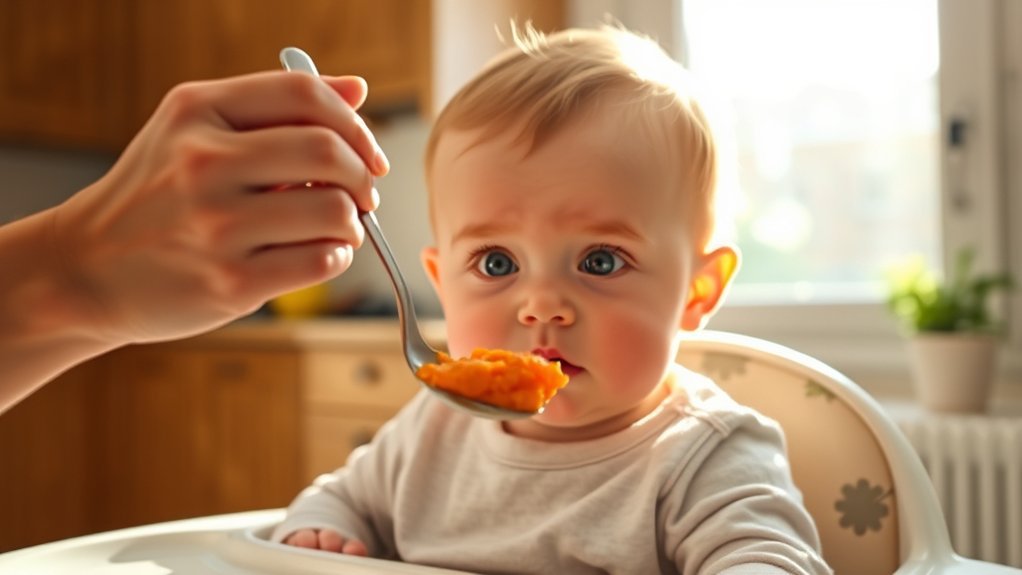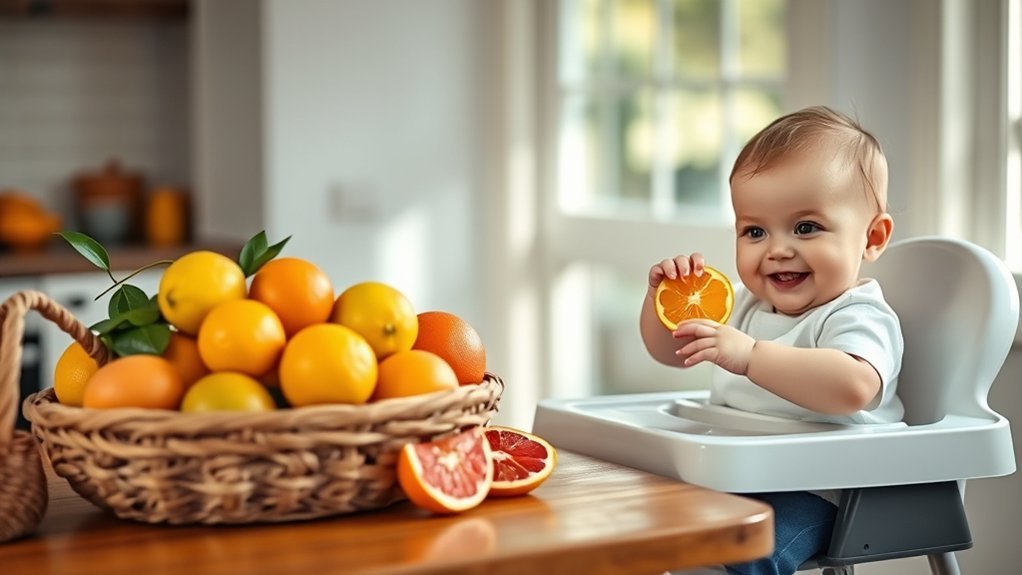
Citrus fruits such as oranges, mandarins, grapefruit, lemons, and limes can add flavor, vitamin C, and variety to your baby’s meals. Most babies can try properly prepared citrus at about 6 months, once they show the developmental skills needed for solid foods. Safe texture, close supervision, and careful monitoring matter more than following a rigid age schedule.
Quick Answer
Babies can usually eat citrus fruits at about 6 months, when they can sit with support, control their head, swallow food, and show interest in eating. Begin with mashed pulp, purée, or another developmentally appropriate texture. Remove seeds and tough membranes, supervise every bite, and do not offer fruit juice as a drink before 12 months.
Key Takeaways
- Introduce citrus at about 6 months only after your baby shows readiness for complementary foods.
- Match the fruit’s texture and shape to your baby’s current eating skills rather than relying on a strict month-by-month rule.
- Wash the fruit, remove seeds and tough membranes, and keep your baby seated upright and closely supervised.
- A flat red patch where citrus touches the skin may be irritation rather than an allergy, but hives, swelling, vomiting, coughing, wheezing, or breathing trouble need prompt attention.
- Offer whole fruit rather than juice. Babies younger than 12 months should not be given fruit juice as a drink.
At a Glance
| Time Required | About 5–10 minutes |
| Difficulty | Easy, with careful seed and membrane removal |
| Tools Needed | Clean hands, cutting board, sharp knife, spoon or fork, bowl, and secure high chair |
| Cost | Usually the cost of one piece of fresh fruit |
Note: This article provides general feeding information and does not replace advice from your child’s pediatrician, dietitian, allergist, or feeding specialist. Ask for individualized guidance if your baby was born prematurely, has poor head control, has trouble swallowing, has severe reflux or eczema, or has reacted to a food before.
When and How to Introduce Citrus Fruits to Your Baby

Most babies can begin trying complementary foods, including fruit, at about 6 months. The exact day is less important than developmental readiness. The Centers for Disease Control and Prevention recommends looking for several skills before starting.
Your baby should generally be able to:
- Sit upright alone or with support.
- Control their head and neck.
- Open their mouth when food is offered.
- Swallow food instead of consistently pushing it out with the tongue.
- Bring objects toward the mouth.
- Show interest in reaching for food.
A baby who has just turned 6 months may still need smooth or mashed food. Another baby of the same age may be ready to pick up soft food. Use your baby’s skills—not the calendar alone—to choose the texture.
For a first taste, offer a small amount of orange, mandarin, clementine, grapefruit, lemon, or lime pulp in a texture your baby can manage. The flavor of lemon or lime may be intense, so a small amount mixed into another familiar food is often easier to accept.
The CDC advises offering one single-ingredient food at a time during the early introduction period and waiting three to five days before adding another new food. This makes it easier to identify the cause if a reaction occurs.
Pro Tip: Introduce citrus earlier in the day rather than just before bedtime. You will have more time to watch for skin, digestive, or breathing symptoms while your baby is awake.

Power your essentials anywhere with a 999Wh pure sine wave power station delivering up to 1000W continuous with 2000W surge. It supports fast charging via USB-C PD 60W and USB-A QC 18W, plus simultaneous output for multiple devices through AC, USB, wireless, and car/DC ports. Recharge using AC, car, or solar with a built-in MPPT controller and dual cooling fans, while the upgraded battery management system protects against surges, short circuits, and overheating.

ON THE GO BABY FOOD: Gerber Stage 2 Baby Food Puree Tubs are designed for ease and convenience. These tubs are the perfect on the go baby food, made in a portable and easy-to-store format for busy parents
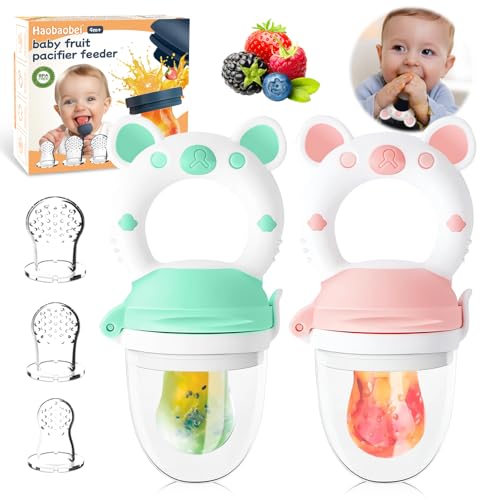
2-IN-1 FEEDING AND TEETHING: This baby fruit feeder works as a baby food pacifier feeder and teething toy. Fill the silicone pouch with fruit, vegetables, puree or frozen breast milk for supervised feeding.
Citrus Is a Complementary Food
Citrus should add variety to your baby’s diet, not replace breast milk or infant formula. From 6 to 12 months, breast milk, infant formula, or a combination of the two remains the main source of nutrition, according to the CDC’s infant-feeding guidance.
Begin with a small taste or approximately 1 to 2 tablespoons if your baby wants that much. Let your baby’s hunger and fullness cues guide the amount. Turning away, closing the mouth, pushing food away, or losing interest may mean your baby is finished.
Safe Preparation Methods for Babies and Toddlers
Before cutting citrus, wash your hands, clean the preparation surface, and rinse the whole fruit under running water. Wash the peel even when you plan to remove it so a knife does not carry dirt or germs from the outside into the fruit.
Remove every seed. Peel away thick, stringy, or loose membranes that may be difficult for your baby to manage. Citrus pulp should be soft and moist rather than dry, rubbery, or fibrous.
Optimal Cutting Techniques
There is no single coin-size rule that makes citrus safe for every baby. The appropriate shape depends on whether your baby is spoon-fed, grasps food with a whole hand, uses a pincer grasp, and chews soft pieces effectively.
| Approximate Stage | Serving Options | Safety Check |
|---|---|---|
| Starting solids, often around 6 months | Mash or purée membrane-free pulp. Stir a small spoonful into plain yogurt, oatmeal, mashed avocado, or another familiar food. A large, thick wedge with some peel left as a handle may suit certain self-feeding babies, but it is optional rather than required. | Remove seeds and loose membrane. If using a wedge, take it away if the peel splits, tears, or becomes small enough to enter the mouth. |
| Developing a pincer grasp, often around 9 months | Offer very soft, membrane-free pieces that your baby can pick up and mash easily with the gums. | Test the texture between your fingers. Avoid firm, rubbery, round, or slippery pieces that are difficult to control. |
| Experienced chewer, often 12 months and older | Serve soft bite-sized pieces or tender segments with most of the tough membrane removed. | Continue removing seeds and supervise closely. Do not assume a toddler is free from choking risk. |
| Older toddler with reliable chewing skills | Larger tender segments may be appropriate if the child consistently chews and manages similar foods well. | Remove seeds and unusually thick membrane. Keep the child seated rather than walking or playing with food. |
If you offer a citrus wedge with the peel as a handle, scrub the peel first and watch your baby continuously. Do not allow the child to chew off or swallow pieces of peel.
Membrane Removal Tips
The thin covering around an orange or grapefruit segment can be stringy and difficult for a new eater to break down. To remove it:
- Wash and dry the fruit.
- Cut away the top and bottom to create a stable base.
- Slice off the outer peel and white pith.
- Use a sharp knife to cut alongside each membrane and release the soft segment.
- Check the pulp carefully for seeds before serving.
You can also split a segment and gently peel the membrane away by hand. The goal is to expose soft pulp without leaving a tough wrapper around it.
Canned mandarin oranges may be soft and convenient. Choose fruit packed in water or its own juice with no added sugar rather than heavy syrup. Drain the fruit, inspect it for seeds or tough pieces, and cut or mash it to match your child’s skills.
Safe Serving Sizes
Begin with a small amount. One or two spoonfuls may be enough for the first exposure. If your baby remains interested and handles the texture well, you can offer more.
There is no need to make citrus a daily food. It can appear a few times a week or whenever it fits into a varied diet. Continue serving other fruits, vegetables, iron-rich foods, grains, proteins, and appropriate dairy foods.
Avoid forcing another bite after your baby turns away, closes the mouth, pushes food away, or becomes upset. Responsive feeding supports a calmer and safer mealtime.
Identifying Allergic Reactions and Sensitivities to Citrus Fruits
A true citrus allergy is possible, but redness after eating citrus is not always an allergy. The acids in orange and other citrus juices can irritate skin where the food touches the face. The American Academy of Pediatrics specifically notes that acidic foods can cause skin irritation that may be mistaken for food allergy.
Common Allergy Symptoms
Possible food-allergy symptoms include:
- Raised, itchy hives
- Swelling of the lips, tongue, face, or eyelids
- Repeated vomiting or significant diarrhea
- Coughing, wheezing, hoarseness, or throat tightness
- Trouble breathing or swallowing
- Sudden paleness, bluish coloring, weakness, limpness, or unusual sleepiness
Babies may also become suddenly distressed, unusually quiet, floppy, or difficult to console. A reaction can involve more than one part of the body.
Warning: Call 911 immediately if your baby has trouble breathing or swallowing, swelling of the tongue or throat, blue or very pale coloring, becomes limp or unresponsive, or develops rapidly worsening symptoms involving more than one body system. If your child has prescribed epinephrine, use it according to the child’s emergency plan.
Monitoring Your Baby’s Reactions
Offer the first taste while your baby is healthy and you have time to observe. Stop serving the food if a concerning symptom appears.
Use these distinctions as a practical guide:
- Possible contact irritation: A flat red patch limited to skin that touched the fruit, without hives, swelling, vomiting, coughing, or behavior changes.
- Possible digestive sensitivity: Repeated discomfort, loose stool, reflux symptoms, or worsening diaper irritation without immediate allergy symptoms.
- Possible allergy: Hives, swelling, repeated vomiting, coughing, wheezing, swallowing trouble, or symptoms affecting more than one body system.
For mild skin contact irritation, gently rinse or wipe the area with water and monitor your baby. A thin protective layer of petroleum jelly around the mouth before future meals may reduce direct contact, but do not use this approach to continue feeding a food that caused hives, swelling, breathing symptoms, or repeated vomiting.
Timing and Response Guide
| What You Notice | What to Do |
|---|---|
| A small, flat red patch only where juice touched the skin | Stop the meal, clean the skin gently, and observe. Discuss recurring irritation with the pediatrician. |
| Persistent diaper rash, reflux discomfort, diarrhea, or repeated stomach upset | Pause the food and contact the pediatrician for advice, especially if symptoms are severe, recurrent, or affect hydration. |
| Hives, facial swelling, repeated vomiting, coughing, wheezing, or sudden behavior change | Stop feeding and seek prompt medical help. Follow an existing allergy action plan if your child has one. |
| Trouble breathing or swallowing, tongue or throat swelling, blue or pale coloring, collapse, or rapidly worsening symptoms | Call 911 immediately. |
What Are the Nutritional Benefits of Citrus Fruits for Babies?
Citrus fruits provide vitamin C, water, natural flavor, and small amounts of fiber and other nutrients. According to the National Institutes of Health Office of Dietary Supplements, vitamin C supports normal immune function and helps the body absorb iron from plant foods.
This makes citrus a useful companion to iron-containing foods such as beans, lentils, tofu, fortified infant cereal, or finely prepared meat. For example, you could mix mandarin pulp into oatmeal or serve soft orange pulp alongside mashed beans.
- Vitamin C: Supports normal immune function, collagen production, and absorption of nonheme iron.
- Water: Whole citrus has a high water content, although it should not replace breast milk, formula, or age-appropriate drinking water.
- Fiber: Whole pulp retains more fiber than strained juice.
- Flavor exposure: Tart and sweet tastes can add variety to meals without added sugar.
- Potassium and folate: Citrus contributes small amounts of nutrients used in normal cell and body functions.
Whole citrus fruit provides texture and fiber that juice does not. For babies, a safely prepared piece of fruit is a better choice than a bottle or cup of orange juice.
Citrus is nutritious, but it is not a cure or a substitute for a balanced diet. Continue offering a range of foods rather than relying on one fruit for immune or digestive health.
Addressing Choking Hazards With Citrus Fruits
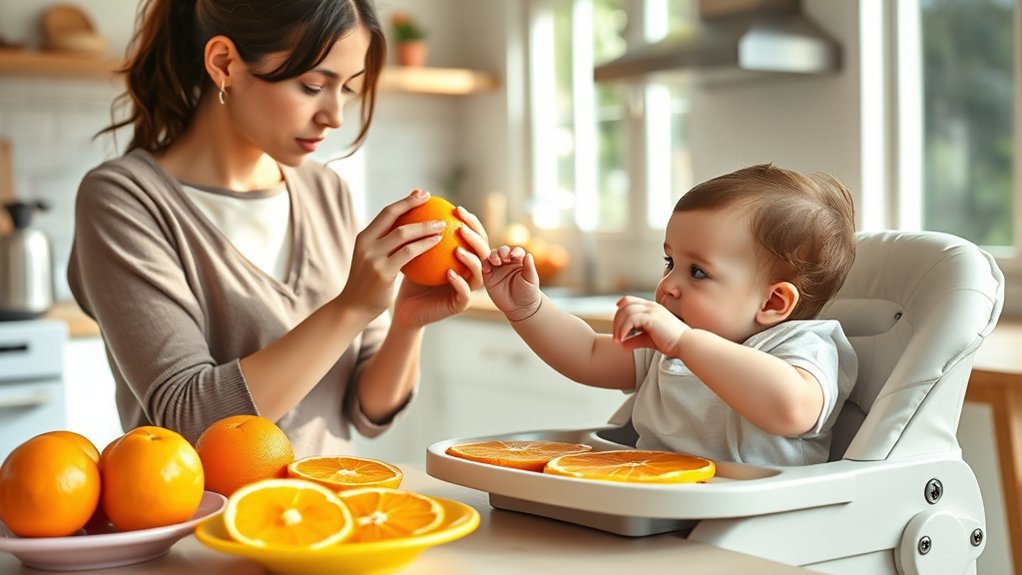
Citrus can be difficult for a new eater when it contains seeds, tough membranes, loose peel, or firm pieces. Acidity may irritate skin or the digestive tract, but it does not itself cause choking. Preparation and the eating environment are the central safety concerns.
The CDC’s choking-prevention guidance recommends preparing food in a shape, size, and texture suited to the child’s development.
During every meal:
- Seat your baby upright in a high chair or another secure feeding seat.
- Keep your baby within arm’s reach and watch continuously.
- Do not serve food while your child is lying down, crawling, walking, riding in a stroller, or traveling in a moving car.
- Keep the meal calm and free from distracting toys or screens.
- Remove seeds, hard peel, and tough membranes.
- Do not place food into a crying or laughing child’s mouth.
- Avoid blind finger sweeps if choking occurs; an unseen object can be pushed deeper.
Gagging Versus Choking
Gagging can happen while babies learn to handle new textures. A gagging baby may cough, make noise, push the tongue forward, or become red in the face. Stay calm, watch closely, and allow the baby to work the food forward.
A choking baby may be unable to breathe, cry, cough effectively, or make normal sounds. The baby may gasp, turn pale or blue, become panicked, or go limp. This is an emergency.
Caregivers should learn infant choking first aid and CPR from a qualified instructor before beginning finger foods. Ask your pediatrician about local training if you are unsure where to enroll.
Best Techniques for Introducing Citrus Fruits to Your Baby
-
Confirm readiness. Wait until your baby has the posture, head control, swallowing ability, and interest needed for complementary foods.
-
Choose a manageable texture. Start with mashed or puréed pulp if your baby is new to solids. Move to soft, membrane-free pieces as hand control and chewing improve.
-
Prepare the fruit carefully. Wash the outside, remove all seeds, and strip away thick or loose membranes.
-
Begin with a small amount. A taste or one spoonful is enough for the first exposure. Offer more only if your baby remains interested.
-
Introduce one new food at a time. During the first-food stage, wait three to five days before introducing another new ingredient so reactions are easier to trace.
-
Watch the skin and the whole child. A flat contact mark differs from raised hives, swelling, vomiting, wheezing, or sudden weakness.
-
Keep feeding responsive. Let your baby decide whether to eat and when to stop. Do not pressure the child to finish a serving.
-
Offer variety. Rotate citrus with bananas, pears, berries, peaches, melon, avocado, and other safely prepared fruits.
Can Babies Drink Citrus Juice?
Babies younger than 12 months should not be given orange juice, grapefruit juice, lemonade, or other fruit juice as a drink. The CDC recommends whole fruit instead of juice.
Whole citrus pulp provides texture and fiber. Juice is easy to consume quickly, can displace breast milk, formula, and nutrient-dense foods, and may worsen diarrhea or diaper irritation when offered in excess.
After 12 months, juice is still unnecessary. If it is offered, use pasteurized 100% juice and follow your pediatrician’s age-appropriate portion advice. Do not put juice in a bedtime bottle or allow a child to sip it throughout the day.
Frequently Asked Questions
Can citrus fruits cause diaper rash in babies?
Citrus may contribute to irritation in some babies, especially if it changes the stool or causes loose bowel movements. This is not automatically a citrus allergy. Reduce or pause the food, change diapers promptly, protect the skin with an appropriate barrier cream, and contact the pediatrician if the rash is severe, persistent, blistered, bleeding, or accompanied by other symptoms.
Are there specific citrus fruits infants must avoid?
There is no routine requirement to avoid oranges, mandarins, grapefruit, lemons, or limes solely because they are acidic. Start with a small amount and use an appropriate texture. Lemon and lime are intensely tart and may irritate sore skin or mouth ulcers. Ask the pediatrician or pharmacist before serving grapefruit if your child takes medication, because grapefruit can interact with some medicines.
How can I make citrus fruit more palatable for my baby?
Mix a small amount of membrane-free citrus pulp into a familiar food such as plain yogurt, oatmeal, mashed banana, avocado, or unsweetened applesauce. Avoid adding sugar, honey, or syrup. Honey must not be given before 12 months because of the risk of infant botulism.
Should citrus fruits be cooked before serving them to babies?
Citrus does not normally need to be cooked. The pulp is already soft, but seeds, firm peel, and tough membranes must be removed. Mash or purée the pulp for a baby who is not ready to manage soft pieces.
How often can I give my baby citrus fruits?
Citrus can be offered a few times a week or whenever it fits into a varied diet. There is no required schedule. Follow your baby’s appetite, rotate different fruits and food groups, and reduce the frequency if citrus repeatedly causes skin, reflux, stool, or diaper discomfort.
Is redness around the mouth a citrus allergy?
Not necessarily. A flat red patch limited to the area touched by acidic juice may be contact irritation. Raised hives, swelling, repeated vomiting, coughing, wheezing, swallowing trouble, or symptoms elsewhere on the body are more concerning for an allergy. Stop feeding and seek medical advice if you are unsure.
Can a baby drink freshly squeezed orange juice?
No fruit juice is recommended as a drink for babies younger than 12 months, including freshly squeezed orange juice. Offer safely prepared whole fruit instead. Fresh-squeezed juice may also be unpasteurized and can carry harmful germs.
Conclusion
Most babies can try citrus fruits at about 6 months once they are developmentally ready for solid foods. Begin with a small amount in a soft, manageable texture, remove all seeds and tough membranes, and keep your baby seated upright and directly supervised.
Citrus can contribute vitamin C, flavor, water, and variety, but whole fruit is preferable to juice. Watch for the difference between mild contact irritation and a true allergic reaction, and seek emergency help immediately for breathing trouble, swallowing difficulty, serious swelling, blue or pale coloring, collapse, or rapidly worsening symptoms.
Sources
- CDC: When, What, and How to Introduce Solid Foods — starting age, readiness signs, new-food spacing, and texture guidance
- CDC: Choking Hazards — food preparation, upright seating, supervision, and mealtime safety
- CDC: How Much and How Often to Feed — starting portions and the role of breast milk or infant formula
- CDC: Foods and Drinks to Avoid or Limit — fruit juice, added sugar, unpasteurized drinks, and whole-fruit guidance
- American Academy of Pediatrics: Food Allergies in Children — allergy symptoms and the difference between food allergy and acid-related skin irritation
- NIH Office of Dietary Supplements: Vitamin C — vitamin C functions and its role in iron absorption