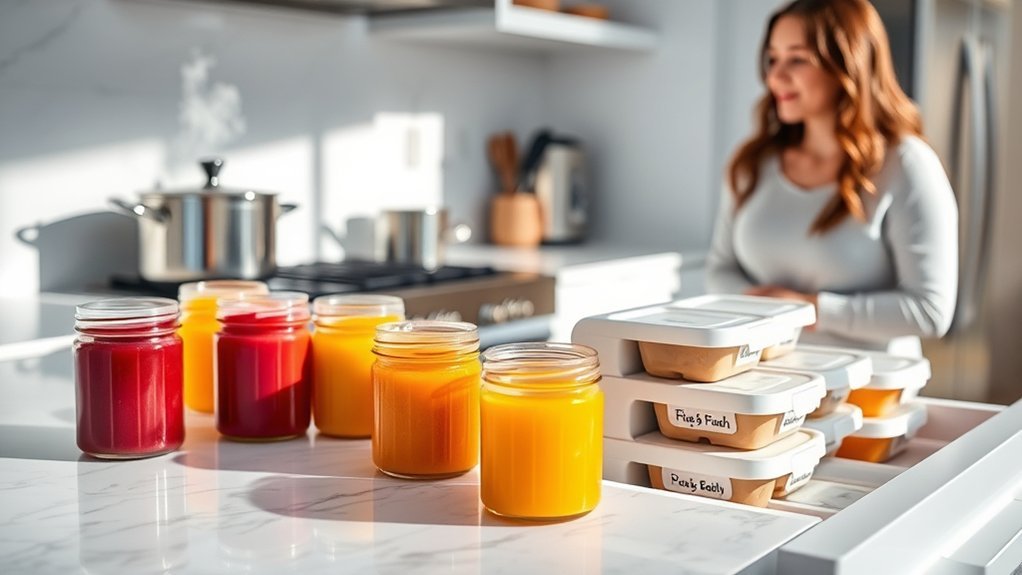
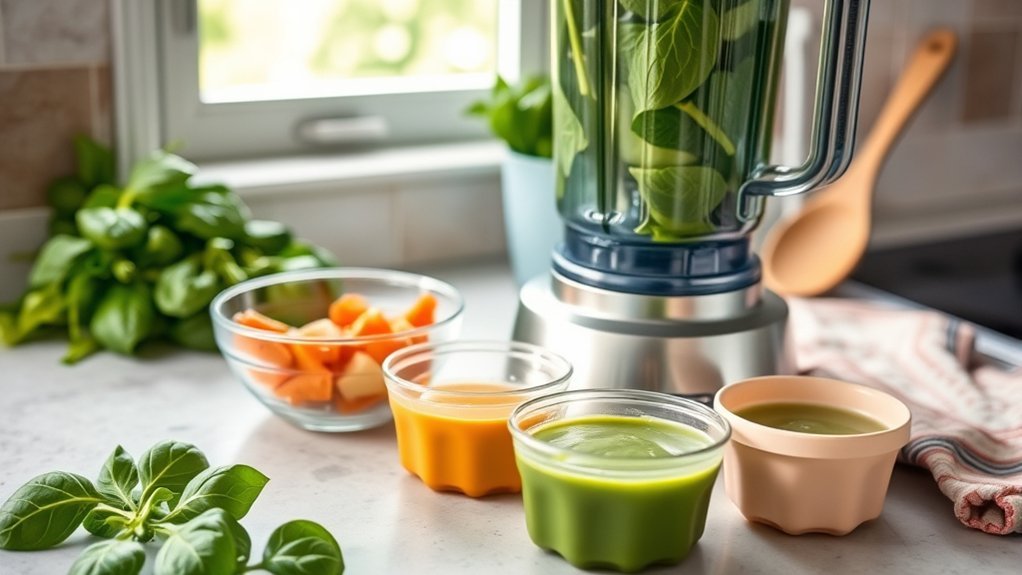
Spinach baby food is easy to prepare once your baby is ready for complementary foods. Cook the leaves until tender, drain them well, and blend with a small amount of fresh water. Because spinach naturally contains nitrates and its iron is not absorbed as easily as iron from some other foods, serve it in modest amounts as part of a varied diet.
Quick Answer
To make spinach baby food, wash loose spinach, remove tough stems, and steam the leaves for 3–5 minutes until fully wilted and tender. Drain well, blend with fresh water until smooth, and serve a small portion. Refrigerate untouched puree for only 1–2 days or freeze it in dated portions.
Key Takeaways
- Offer spinach only after your baby is ready for complementary foods, usually at about 6 months.
- Steam spinach until tender, drain it thoroughly, and use fresh water rather than salty stock for blending.
- Spinach contains nitrates, so do not serve homemade spinach puree during early infancy or in unusually large amounts.
- Spinach supplies nonheme iron, but it should not replace meat, beans, lentils, tofu, or iron-fortified infant cereal.
- Keep homemade puree in the refrigerator for only 1–2 days or freeze it in small, clearly dated portions.
- Place each serving in a separate bowl and discard food left after feeding.
At a Glance
| Time Required | About 15–20 minutes |
| Difficulty | Easy |
| Tools Needed | Pot with steamer basket, colander, blender or food processor, spatula, and clean storage containers |
| Cost | Usually low; varies with local spinach and pea prices |
Can Babies Eat Spinach?
Most babies can eat cooked spinach after they begin complementary foods, usually at about 6 months. Age is only one consideration. Your baby should also be able to sit upright with support, control their head and neck, open their mouth for food, and swallow food instead of pushing it back out.
The CDC recommends introducing solid foods at about 6 months and advises against starting them before 4 months. If your baby was born prematurely or has a feeding, swallowing, kidney, blood, or metabolic condition, ask their pediatrician when spinach is appropriate.
Warning: Spinach can contain substantial amounts of naturally occurring nitrates. The American Academy of Pediatrics advises that homemade spinach baby food is not a good choice during early infancy. Do not serve spinach before your baby is ready for complementary foods, and offer it as one vegetable within a varied diet rather than as a large daily serving.
Always seat your baby upright and supervise the entire meal. Start with a smooth texture, then gradually offer thicker, mashed, or finely chopped spinach mixtures as your baby develops stronger eating skills.

Power your essentials anywhere with a 999Wh pure sine wave power station delivering up to 1000W continuous with 2000W surge. It supports fast charging via USB-C PD 60W and USB-A QC 18W, plus simultaneous output for multiple devices through AC, USB, wireless, and car/DC ports. Recharge using AC, car, or solar with a built-in MPPT controller and dual cooling fans, while the upgraded battery management system protects against surges, short circuits, and overheating.

𝗦𝘁𝗲𝗮𝗺𝗶𝗻𝗴 𝗮𝗻𝗱 𝗕𝗹𝗲𝗻𝗱𝗶𝗻𝗴 𝗶𝗻 𝗢𝗻𝗲: The height of the blender container is 4.13 inches, and the outer diameter is 4.17 inches.This GROWNSY baby food maker thoughtfully designed for babies 6 months+ during the weaning stage.It seamlessly combines steaming and blending in a single device, simplifying meal prep and eliminating the need for extra kitchen tools. The built-in sterilizer mode saves time and effort, giving you more precious moments with your baby.

𝗔𝗹𝗹-𝗶𝗻-𝗢𝗻𝗲 𝗕𝗮𝗯𝘆 𝗙𝗼𝗼𝗱 𝗠𝗮𝗸𝗲𝗿: Say goodbye to kitchen clutter! The Bear baby food maker does it all in one compact device—steam, blend, sterili-ze bottles and warm milk. Simplify your daily routine and create fresh, homemade meals for your little one without the need for extra appliances
How to Make Spinach Baby Food: Ingredients and Instructions
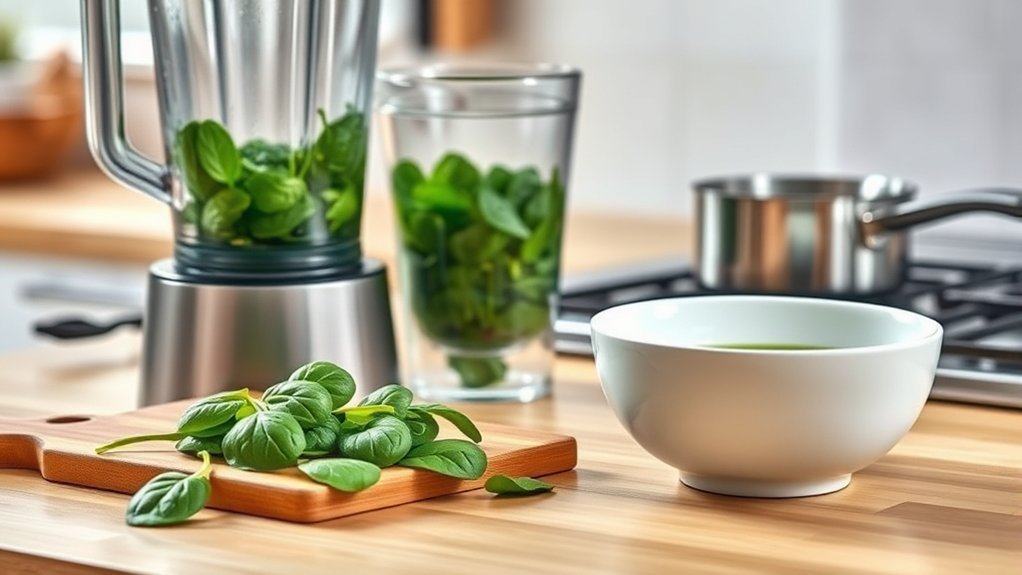
You can prepare a plain spinach puree or soften the flavor by blending spinach with peas. The pea variation is naturally sweeter and has more body, which can make the puree easier to spoon.
Ingredients
- 4 cups fresh baby spinach, loosely packed
- 2–6 tablespoons fresh water, added gradually
- 2 cups frozen peas, optional for a spinach-and-pea puree
- 1–2 tablespoons ripe avocado, optional for a creamier texture
- A small spoonful of vitamin C-rich puree, such as strawberry, mango, broccoli, or sweet potato, optional for serving
Use plain frozen peas without added salt, butter, sauce, or seasoning. Avoid regular broth unless it is unsalted and made with baby-appropriate ingredients, because many packaged broths contain more sodium than a baby needs.
Equipment
- Pot with a lid and steamer basket
- Fine-mesh colander
- Blender, mini food processor, or immersion blender
- Clean spatula and spoon
- Small airtight refrigerator or freezer containers
- Silicone freezer tray, if freezing portions
Basic Method
- Clean your work area: Wash your hands, blender parts, utensils, preparation surface, and storage containers.
- Prepare the spinach: Wash loose spinach under cool running water and remove any damaged leaves or tough stems.
- Steam until tender: Place the spinach in a steamer basket over simmering water. Cover and steam for 3–5 minutes, or until completely wilted and tender.
- Cook the optional peas: Steam or simmer the peas according to the package directions until hot and soft.
- Drain: Transfer the spinach to a clean colander and press gently to remove excess water.
- Blend: Blend the spinach alone or with the cooked peas. Add fresh water 1 tablespoon at a time until the puree reaches the right texture.
- Check before serving: Place a small amount in a separate bowl. Make sure the puree is smooth enough for your baby and is cool or comfortably warm, never hot.
Note: Water is the simplest liquid for a batch that will be stored. You may stir breast milk or correctly prepared infant formula into an individual serving immediately before feeding. Do not freeze puree mixed with prepared formula.
How to Prepare Spinach for Baby Food
Good spinach puree begins with crisp leaves, careful washing, and brief cooking. These steps improve texture and reduce the amount of grit that reaches the blender.
Selecting Fresh Spinach
Choose leaves that are green, crisp, and free from slime, heavy bruising, or yellow areas. Baby spinach is convenient because its leaves and stems are usually more tender than mature spinach.
| Quality | What to Look For |
|---|---|
| Color | Even green leaves without widespread yellowing |
| Texture | Crisp rather than limp, wet, or slimy |
| Leaf size | Small baby leaves are usually easier to puree |
| Stems | Thin, tender stems may stay; remove thick or fibrous stems |
Store fresh spinach in the refrigerator and use it while it remains crisp. Discard spinach that smells sour or has become slimy.
Proper Washing Techniques
Wash loose or unwashed spinach immediately before cooking:
- Wash your hands and clean the sink, colander, and preparation surface.
- Place the spinach under cool running water.
- Separate the leaves and rub them gently with clean fingers to loosen grit.
- For very sandy spinach, swish the leaves in a clean bowl of cool water, lift them out, empty the dirty water, and repeat as needed.
- Drain the leaves in a clean colander.
Do not use soap, bleach, or produce detergent. If the package is sealed and specifically labeled “ready to eat,” “washed,” or “triple washed,” follow the package directions rather than automatically rewashing it in a potentially contaminated sink.
Cooking Methods Explained
Cooking softens the leaves and makes them easier to blend. Steaming is the preferred primary method because the spinach does not sit in a large amount of water.
| Method | Process | Best Use |
|---|---|---|
| Steaming | Steam covered for 3–5 minutes until fully wilted and tender. | Best all-purpose method for puree |
| Boiling | Boil briefly until tender, then drain thoroughly. | Useful without a steamer basket |
| Blanching | Cook in boiling water until wilted, then cool promptly. | Useful when preparing a small batch quickly |
Whichever cooking method you choose, the leaves should be fully wilted, soft, and easy to break apart. Drain them well so the puree does not become watery.
Step-by-Step: Cooking Spinach for Puree
- Bring the water to a simmer: Add a small amount of water to a pot. The water should stay below the steamer basket.
- Add the spinach: Place washed spinach in the basket. It may look like a large amount, but it will shrink quickly.
- Cover the pot: Steam for 3–5 minutes, turning the leaves once if needed.
- Check tenderness: The spinach is ready when all leaves are wilted and the thicker stems are soft.
- Drain thoroughly: Let the spinach sit in a clean colander for a minute, then press gently with the back of a spoon.
- Cool briefly: Allow it to cool enough for safe handling, but do not leave it at room temperature for an extended period.
- Blend or store promptly: Puree the spinach while fresh, then refrigerate or freeze it soon after preparation.
Spinach should be one part of a varied complementary diet—not the only vegetable or the only food relied on for iron.
How to Blend Spinach Into a Smooth Puree
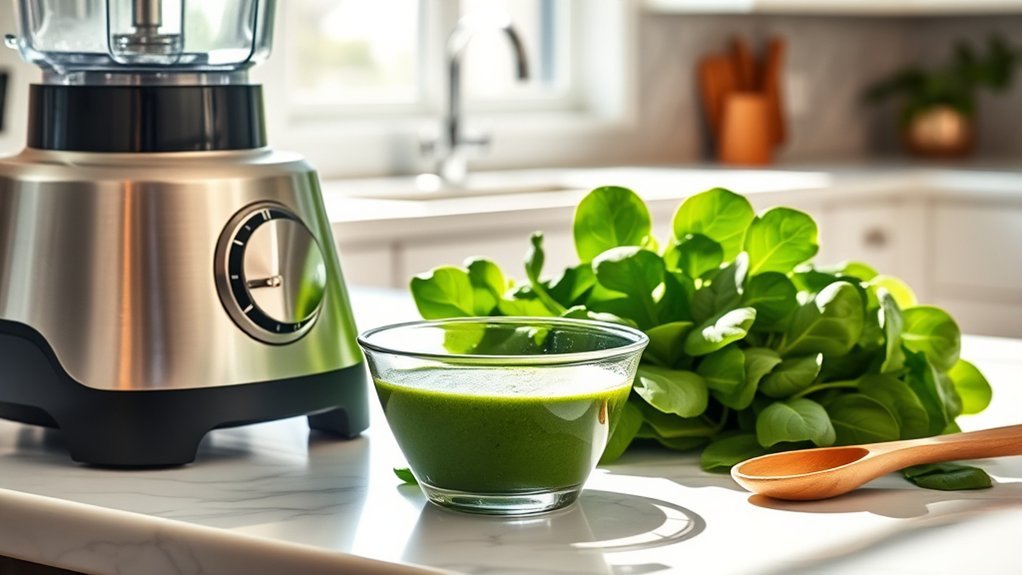
Cooked spinach is fibrous, so it may take more blending than softer foods such as banana or avocado. A small blender container usually works better than an oversized pitcher for a small batch.
Choosing the Right Blender
A high-speed blender, mini food processor, or immersion blender can all work. Choose a container that lets the blade stay in contact with the spinach.
- High-speed blender: Produces the smoothest result but may need a larger batch.
- Mini food processor: Convenient for a few servings.
- Immersion blender: Works well in a narrow, deep container.
- Standard blender: Add liquid gradually and stop to scrape down the sides.
Blend in short bursts, scrape down the container, and repeat until no long strands remain. Do not overload the blender with hot food, and follow the appliance manufacturer’s instructions for blending warm ingredients.
Achieving the Right Consistency
Add fresh water slowly. Spinach can move from too thick to watery with only a small amount of extra liquid.
| Desired Texture | How to Adjust It |
|---|---|
| Thin and smooth | Add fresh water 1 teaspoon or tablespoon at a time. |
| Thicker puree | Blend in peas, avocado, sweet potato, or prepared infant oatmeal. |
| Mashed texture | Pulse briefly or mash the cooked mixture with a fork for a baby who handles thicker textures. |
| Finely chopped | Chop very soft cooked spinach into tiny pieces for an older baby with established eating skills. |
The CDC encourages progression through smooth, mashed, lumpy, and finely chopped textures as a child’s eating ability develops.
Adding Flavor Enhancements
Spinach has an earthy flavor. Pairing it with a familiar food can make the first few servings easier to accept.
- Peas: Add sweetness and create a thicker puree.
- Avocado: Adds creaminess and unsaturated fat.
- Sweet potato: Softens the flavor and supplies vitamin C.
- Mango or strawberry puree: Adds vitamin C, which can support absorption of nonheme iron when eaten in the same meal.
- Apple or pear: Adds sweetness, although these are less useful as concentrated vitamin C pairings.
- Olive oil: A small amount can add energy and a smoother mouthfeel.
For an older baby who already tolerates dairy, a very small amount of pasteurized grated Parmesan may add savory flavor. Parmesan is salty, however, so it should be an occasional addition rather than a routine ingredient.
Pro Tip: When introducing spinach for the first time, mix one small spoonful into a familiar puree rather than using a rigid cube ratio. Gradually increase the amount if your baby accepts the flavor and has no reaction.
Tips for Adjusting Spinach Puree Consistency for Babies
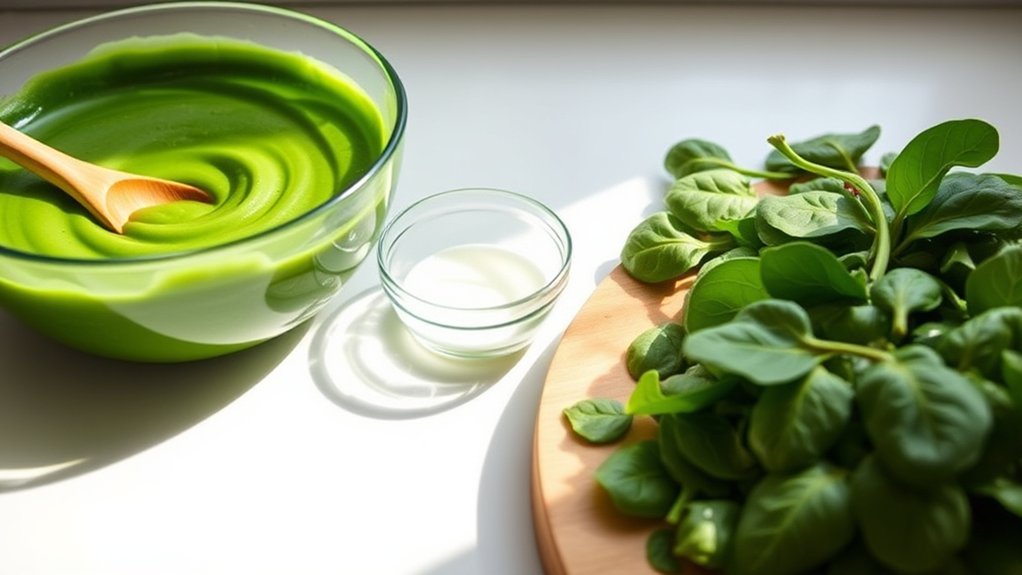
Use your baby’s current eating skills—not age alone—to choose the texture.
- If the puree is too thick: Blend in fresh water a teaspoon at a time.
- If it is too thin: Add peas, avocado, sweet potato, prepared infant oatmeal, or another thick familiar puree.
- If it is stringy: Remove more stems, blend a smaller batch, and scrape the container several times.
- If it is grainy: Blend longer or press the puree through a fine-mesh sieve for an early eater.
- If it tastes bitter: Blend it with peas, sweet potato, avocado, mango, apple, or pear.
- If frozen spinach releases too much water: Thaw, cook, drain, and press out excess moisture before blending.
A longer blending time usually creates a smoother puree. Short pulses preserve more texture for babies who are ready for mashed or finely chopped foods.
How Much Spinach Puree Should You Serve?
Begin with approximately 1–2 tablespoons, or less if this is your baby’s first taste. The CDC recommends starting with small servings and watching the child’s hunger and fullness signals.
Your baby may want more, less, or none at all on a particular day. Do not pressure them to finish a measured amount. Signs of fullness can include closing the mouth, turning the head away, slowing down, pushing the spoon away, or becoming distracted.
Spinach does not need to be served every day. Rotate it with peas, broccoli, beans, lentils, carrots, squash, sweet potato, meat, tofu, egg, and other developmentally appropriate foods.
How to Store and Freeze Spinach Puree
Cool the puree promptly and transfer it to clean, airtight containers. Label each container with the preparation date.
- Refrigerator: Store homemade spinach puree for no more than 1–2 days at 40°F (4°C) or below.
- Freezer: For longer storage, freeze the puree in small portions. The FDA lists 3–4 months for homemade baby food, although using it sooner may preserve better flavor and color.
- Room temperature: Do not leave baby food out for more than 2 hours, or more than 1 hour in temperatures above 90°F (32°C).
- After feeding: Discard food left in the serving bowl. Do not return it to the refrigerator because saliva from the spoon may introduce bacteria.
The FDA recommends keeping homemade baby food in the refrigerator for only 1–2 days.
Freezing Instructions
- Spoon cooled puree into a clean silicone freezer tray or small freezer-safe containers.
- Cover the tray and freeze until solid.
- Transfer frozen portions to an airtight freezer bag or container.
- Remove excess air where possible.
- Label the package with the food and preparation date.
Thawing and Reheating
Thaw a portion overnight in the refrigerator or place the sealed container in warm water. Heat only the amount needed for one feeding.
If using a microwave, transfer the food to a microwave-safe bowl, heat it in short intervals, stir thoroughly, and check for hot spots before serving. The puree may be served cool, room temperature, or comfortably warm; it does not need to be hot.
Do not refreeze food that has been warmed, offered to the baby, or left at room temperature beyond the safe limit.
How to Use Leftover Spinach Puree Creatively
These ideas apply only to untouched puree that has been stored safely. Do not reuse puree left in a bowl after feeding.
- Stir it into cooked infant oatmeal or another prepared grain.
- Mix it with sweet potato, peas, lentils, beans, avocado, apple, pear, or mango.
- Add it to soft rice or pasta for an older baby who can manage thicker textures.
- Spread a thin layer on toast fingers for a baby who is developmentally ready for finger foods.
- Stir it into scrambled egg after egg has been introduced safely.
- Add it beneath cheese in a grilled sandwich for a toddler.
- Pack a chilled portion in a clean reusable pouch for travel, keeping it at 40°F (4°C) or below until serving.
Avoid repeatedly warming and cooling the same container. Remove only the amount you plan to serve.
Why Spinach Can Be Part of a Healthy Baby Diet
Spinach provides folate, vitamin K, carotenoids, fiber, vitamin C, and minerals. It can contribute to dietary variety, but no single vegetable provides everything a growing baby needs.
Spinach and Iron
Spinach contains nonheme iron. This form is usually absorbed less efficiently than the heme iron found in meat. An NIH-indexed review of iron absorption explains that vitamin C can improve absorption of nonheme iron when the foods are eaten together.
Useful pairings include spinach with sweet potato, broccoli, mango, strawberry, or another age-appropriate vitamin C food. Continue offering dependable iron sources such as:
- Iron-fortified infant cereal
- Soft cooked meat or poultry
- Beans and lentils
- Tofu
- Egg
- Other iron-fortified foods suitable for the child’s age
Do not rely on spinach alone to prevent or correct iron deficiency. If you are concerned about your baby’s iron intake, growth, pallor, energy level, or feeding pattern, contact their pediatrician.
What About Oxalates?
Spinach also contains oxalates, which can bind some calcium. This is another reason to offer spinach as part of a varied diet rather than treating it as the main source of calcium or iron. Most healthy babies do not need to avoid spinach entirely once they are old enough for complementary foods, but a child with a kidney or metabolic disorder may need individualized advice.
Frequently Asked Questions
When can I start introducing spinach to my baby?
Most babies can try cooked spinach after they begin complementary foods at about 6 months and show developmental readiness. Do not offer homemade spinach puree during early infancy. Ask your pediatrician for individualized guidance if your baby was premature or has a medical or feeding condition.
Is frozen spinach suitable for making baby food?
Yes. Choose plain frozen spinach without salt, sauce, cheese, or seasoning. Cook it thoroughly, drain and press out excess water, and then blend it. Frozen spinach is compact, so begin with a smaller amount than you would use for fresh leaves.
Can I mix spinach with other vegetables for baby food?
Yes. Spinach mixes well with peas, sweet potato, broccoli, beans, lentils, avocado, squash, and other soft foods. When your baby is new to solids, introduce foods separately first so it is easier to identify a reaction.
How much spinach puree should I serve my baby?
Start with a small taste or about 1–2 tablespoons. Let your baby decide whether to eat more. Stop when they close their mouth, turn away, push the spoon aside, or show other signs of fullness.
Are there any allergies related to spinach in babies?
Spinach is not one of the most common food allergens, but any food can cause a reaction. Stop feeding it and contact your child’s clinician if symptoms develop. Seek emergency help for trouble breathing, swelling of the lips or tongue, severe lethargy, or a rapidly worsening reaction.
Can my baby eat spinach every day?
Spinach does not need to be served daily. Because it contains nitrates and oxalates, it is better used as one vegetable within a varied diet. Rotate it with other vegetables, fruits, proteins, grains, and healthy fats.
Can I reheat spinach puree more than once?
It is best to heat only the amount needed for one feeding. Repeated heating and cooling can increase contamination risk and reduce quality. Discard anything left in the serving bowl after the meal.
Why is my spinach puree watery or stringy?
Watery puree usually contains too much cooking or blending liquid. Drain the spinach well and add fresh water gradually. For stringy puree, remove thick stems, blend a smaller batch for longer, or pass the mixture through a fine-mesh sieve.
Conclusion
Making spinach baby food requires only a few steps: wash loose leaves, steam them until tender, drain well, and blend with fresh water to the texture your baby can manage. Peas, avocado, sweet potato, or fruit puree can soften spinach’s earthy flavor.
Wait until your baby is ready for complementary foods, serve spinach in modest amounts, and continue offering other iron-rich foods. For safe storage, refrigerate untouched homemade puree for only 1–2 days or freeze it promptly in labeled portions. Always discard food left after feeding.
Sources
- Centers for Disease Control and Prevention: When, What, and How to Introduce Solid Foods — readiness, timing, texture, and supervision guidance
- Centers for Disease Control and Prevention: Foods and Drinks to Encourage — dietary variety and cooked spinach during complementary feeding
- U.S. Food and Drug Administration: Once Baby Arrives — refrigerator, freezer, room-temperature, and leftover-food safety
- American Academy of Pediatrics: Baby Food and Feeding — nitrate warning for homemade spinach baby food during early infancy
- National Library of Medicine: Iron Absorption—Factors, Limitations, and Improvement Methods — nonheme iron and vitamin C
- USDA SNAP-Ed: Spinach — selecting and washing fresh spinach