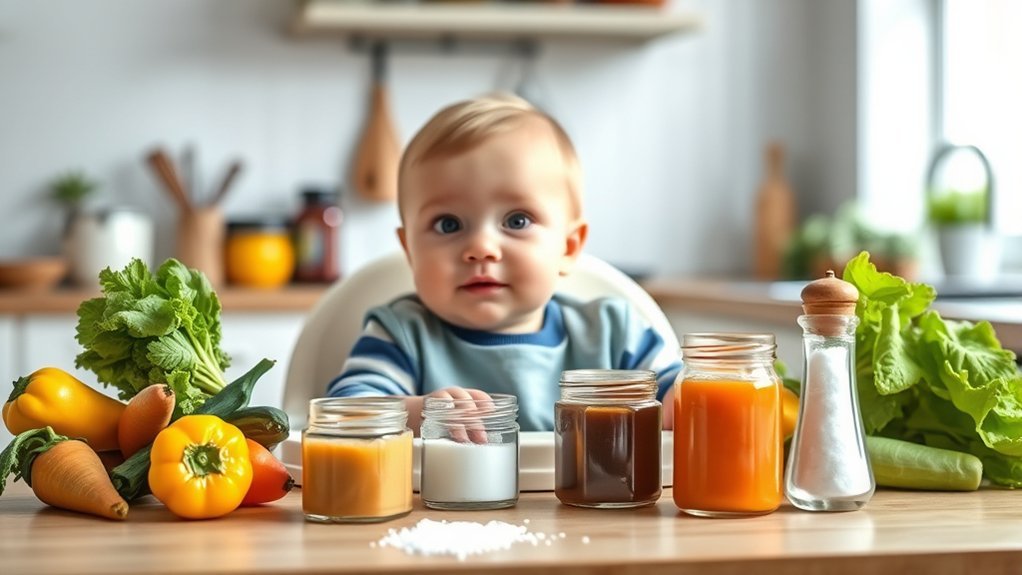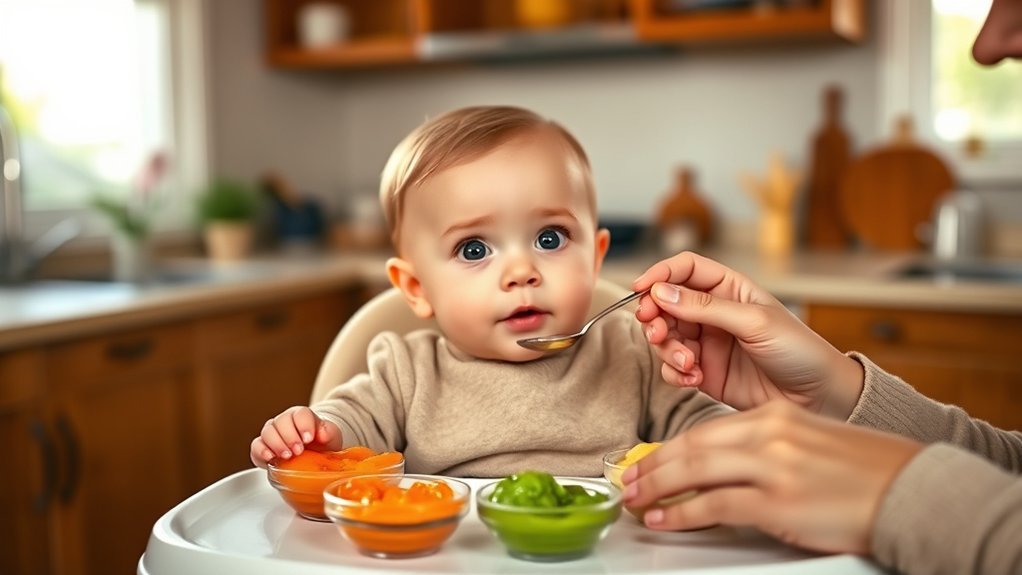
Starting baby food is less about reaching one exact birthday and more about whether your baby is developmentally ready to eat. Most babies are ready at about 6 months, but the safest approach is to watch their posture, head control, swallowing, and interest in food while continuing breast milk or iron-fortified formula as their main source of nutrition.
Quick Answer
Most babies can start solid foods at about 6 months when they can sit upright with support, control their head and neck, reach for food, and swallow rather than push food out. Begin with small amounts of iron-rich, soft food while breast milk or iron-fortified formula remains their main source of nutrition.
Key Takeaways
- Begin solids at about 6 months when your baby shows developmental readiness; age or body weight alone is not enough.
- Start with small portions of iron- and zinc-rich foods, then add fruits, vegetables, grains, proteins, and safe allergenic foods.
- Purees are optional. Mashed foods, soft lumps, and safely prepared finger foods can be offered as your baby develops eating skills.
- Introduce one new food at a time at first and wait 3 to 5 days before another new food when you need to identify possible reactions.
- Always seat your baby upright, prepare food in a developmentally safe shape and texture, and supervise every bite.
- Continue breast milk or iron-fortified formula through the first year; solids gradually become a larger part of the diet.
At a Glance
| Time Required | About 10–20 minutes to prepare a simple food; allow a calm 10–30 minutes for the meal. |
| Difficulty | Beginner, with careful attention to readiness, texture, allergens, and choking prevention. |
| Tools Needed | An upright high chair, small bowl, infant spoon, open or straw cup, fork or masher, and an optional blender. |
| Cost | Varies. Many family foods can be adapted into safe textures without buying special baby food. |
Medical note: This guide provides general feeding information and does not replace advice from your baby’s pediatrician, registered dietitian, allergist, or feeding specialist.
What Are the Signs Your Baby Is Ready for Solids?
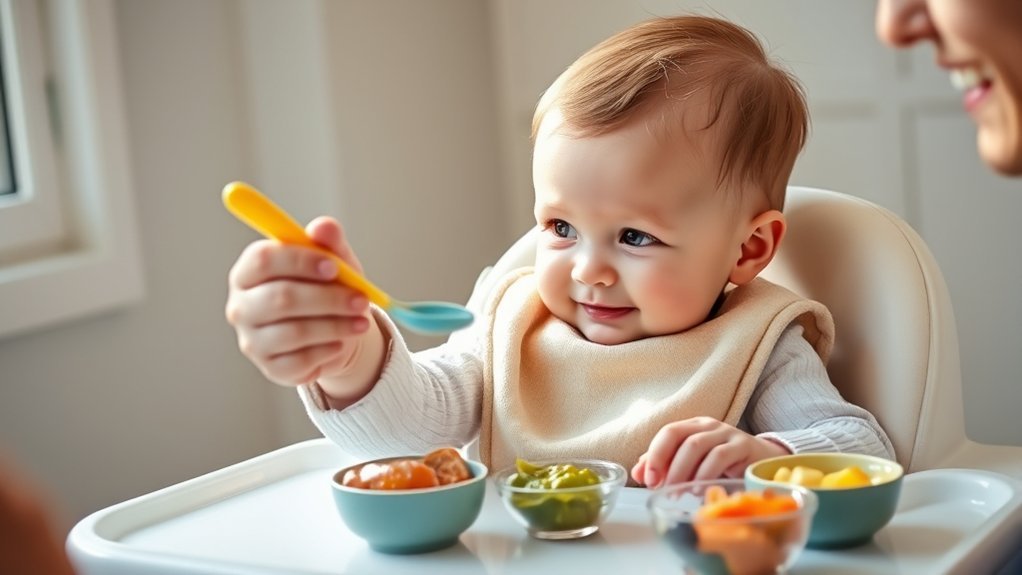
Most babies become ready for solid foods at about 6 months. The CDC recommends looking for developmental signs rather than relying on age, weight, or one milestone alone.
Your baby may be ready when they can:
- Sit upright alone or with support and remain stable during a meal.
- Control their head and neck without repeatedly slumping forward.
- Open their mouth or lean toward food when it is offered.
- Bring toys, hands, or other objects to their mouth.
- Reach for or grasp food and other small objects.
- Move food toward the back of the tongue and swallow it instead of automatically pushing it out.
Your baby does not need teeth to start solids. Their gums can handle many soft foods. However, being interested in watching other people eat is not enough by itself; safe posture, head control, and swallowing ability also matter.
Note: A specific weight, such as 13 pounds, and doubling birth weight are not reliable stand-alone readiness tests. Babies also should not begin solids before 4 months.
For a baby born prematurely, ask the pediatrician whether to consider corrected age, current growth, and feeding development. Get individualized advice before starting if your baby has poor head control, a known swallowing condition, significant developmental delay, frequent coughing during feeds, or difficulty gaining weight.

Power your essentials anywhere with a 999Wh pure sine wave power station delivering up to 1000W continuous with 2000W surge. It supports fast charging via USB-C PD 60W and USB-A QC 18W, plus simultaneous output for multiple devices through AC, USB, wireless, and car/DC ports. Recharge using AC, car, or solar with a built-in MPPT controller and dual cooling fans, while the upgraded battery management system protects against surges, short circuits, and overheating.

Feeder helps reduce the risk of choking— only small pieces of digestible food get through

【Baby Feeding Supplies】- Baby smock for eating babies and toddlers with crumb catcher, smock pocket apron helps contain spills, back tie closure, waterproof fabric is durable and stands up to messes, lightweight and comfortable.
When and How to Start Introducing Solid Foods
Choose a time when your baby is awake, calm, and mildly hungry. There is no need to delay a breast or bottle feeding for exactly one hour to make the baby hungrier. During the first year, breast milk or iron-fortified infant formula should continue to provide most of your baby’s nutrition.
A Simple First-Week Plan
- Seat your baby upright. Use a stable high chair with appropriate straps and foot support when possible.
- Begin with a small serving. One or two teaspoons may be enough at first. The goal is practice, not finishing a bowl.
- Offer a soft, iron-rich food. Examples include smooth meat puree, mashed beans, well-cooked egg, tofu, or iron-fortified infant cereal.
- Let your baby set the pace. Pause when they close their mouth, turn away, push the spoon, become distracted, or appear tired.
- Introduce one new food at a time initially. Waiting 3 to 5 days can make it easier to identify a reaction.
- Increase variety and texture gradually. Move from smooth or mashed food to soft lumps, finely chopped foods, and safe finger foods as skills improve.
Pro Tip: A small amount of mess is part of learning. Let your baby touch, smell, smear, and explore food while you maintain safe seating and close supervision.
Purees, Baby-Led Weaning, or Both?
Purees are not the only acceptable starting texture. Some families begin with spoon-fed mashed foods, while others offer graspable pieces of soft food through baby-led weaning. Many use a combination of both.
No single method fits every family. The important points are that your baby is developmentally ready, the food is soft and safely shaped, meals are supervised, and iron-rich foods are offered regularly. Never place food in your baby’s mouth by force.
Which Foods Should You Introduce First?

There is no required order for first foods. Aim for variety while making iron- and zinc-rich foods a priority because babies need reliable sources of these nutrients as their stored iron begins to decline.
| Food Group | Good First-Food Options | Safe Preparation |
|---|---|---|
| Iron and zinc | Meat, poultry, fish, beans, lentils, tofu, egg, and fortified infant cereal | Cook thoroughly, then puree, mash, shred finely, or serve in a very soft developmentally suitable form. |
| Vegetables | Sweet potato, squash, peas, broccoli, carrots, and green beans | Cook until easily mashed between two fingers; puree, mash, or cut into a safe soft shape. |
| Fruit | Avocado, banana, pear, peach, berries, and cooked apple | Mash soft fruit. Cook hard fruit and remove pits, seeds, tough skins, and choking-sized round pieces. |
| Grains | Fortified oat, barley, multigrain, or rice cereal; soft oatmeal; quinoa | Cook until soft and thin with breast milk, formula, or water when needed. |
| Dairy foods | Plain full-fat yogurt and pasteurized cheese | Choose unsweetened products and avoid hard cubes or large rubbery pieces of cheese. |
If you serve infant cereal, rotate oat, barley, multigrain, and other fortified grains instead of relying only on rice cereal. This provides more variety and can reduce repeated exposure to arsenic from rice-based foods.
How to Introduce Common Allergens
Common allergenic foods include milk, egg, peanut, tree nuts, wheat, soy, fish, shellfish, and sesame. Once your baby is developmentally ready for solids, these foods can generally be introduced in age-appropriate forms rather than being routinely delayed.
- Introduce one allergenic food at a time, preferably at home and earlier in the day.
- Start with a small amount and watch your baby during and after the meal.
- Serve egg fully cooked.
- Thin smooth peanut or tree-nut butter with warm water, breast milk, formula, yogurt, or puree. Never offer whole nuts or a thick spoonful of nut butter.
- Cook fish and shellfish thoroughly and remove every bone, shell fragment, and tough piece.
- Use smooth hummus, thinned tahini, soft tofu, yogurt, or another texture your baby can safely manage.
- If the food is tolerated, continue offering it as part of your baby’s varied diet.
Note: Ask your baby’s clinician how and when to introduce peanut if your baby has severe eczema, an existing egg allergy, a previous food reaction, or another condition that places them at higher allergy risk.
Easy Ways to Prepare Baby Food Safely
Safe preparation involves more than making food small. The food must have a suitable texture and shape, and your baby must remain upright and supervised throughout the meal.
Safe Food Preparation Techniques
- Wash your hands before preparing or serving food.
- Use clean utensils, cutting boards, bowls, and preparation surfaces.
- Rinse produce under running water and remove hard pits, seeds, bones, shells, and tough skins.
- Cook meat, poultry, seafood, and eggs thoroughly.
- Cook firm fruits and vegetables until they can be mashed easily with a fork.
- Use pasteurized milk products and avoid raw or unpasteurized foods.
- Keep raw meat and eggs separate from ready-to-eat foods.
| Cooking Method | Food-Safety Benefit | When It Fits |
|---|---|---|
| Steaming | Softens produce without leaving it waterlogged. | Use for vegetables or fruit that can then be mashed, pureed, or cut safely. |
| Boiling | Softens firm foods thoroughly. | Useful for potatoes, carrots, pasta, beans, eggs, and grains. |
| Pureeing | Creates a smooth texture for babies beginning to swallow food. | Optional at the start or for babies who need a smoother texture. |
| Mashing | Provides soft texture with small, manageable lumps. | Use as soon as your baby manages thicker food comfortably. |
Gagging Versus Choking
Gagging is a protective reflex that can happen while a baby learns to manage texture. A gagging baby may cough, make noise, push the tongue forward, or become red in the face. Choking means the airway is blocked. A choking baby may be unable to cough, cry, breathe, or make sound.
Warning: If your baby cannot breathe, cry, or cough effectively, treat it as a choking emergency. Call 911 and begin age-appropriate choking first aid. Do not perform a blind finger sweep. Parents and caregivers should learn infant CPR and choking response before solids begin.
Follow the CDC’s choking-prevention guidance by keeping your baby seated upright, supervising continuously, maintaining a calm meal environment, and preparing food for your baby’s current skills.
Common Choking Hazards and Safer Options
| Avoid Serving This Way | Safer Preparation |
|---|---|
| Whole grapes, berries, cherries, or cherry tomatoes | Cook if needed and cut lengthwise into small pieces appropriate for the baby’s skills. |
| Hot dog or sausage coins | Avoid when possible or cut lengthwise into narrow strips and then into small pieces. |
| Raw apple, raw carrot, or other hard produce | Cook until very soft, then mash, grate finely, or cut into a safe shape. |
| Whole nuts or thick spoonfuls of nut butter | Use finely ground nuts in moist food or smooth nut butter thinned until it is easy to swallow. |
| Popcorn, hard candy, gum, marshmallows, or chips | Do not offer these choking hazards to babies. |
| Large meat chunks, bones, or firm cheese cubes | Remove bones and gristle; cook until tender and shred, mince, mash, or slice safely. |
Proper Food Storage Methods
Cool cooked baby food promptly and store it in clean, covered containers. Label each portion with the food and preparation date. The current FoodSafety.gov storage chart gives the following limits:
| Food | Refrigerator | Freezer |
|---|---|---|
| General homemade baby food | 1–2 days | 1–2 months |
| Strained fruits and vegetables | 2–3 days | 6–8 months |
| Strained meats and eggs | 1 day | 1–2 months |
| Meat and vegetable combinations | 1–2 days | 1–2 months |
- Thaw frozen food in the refrigerator, under safe running water, or during reheating rather than on the counter.
- Transfer food to a separate dish before microwaving. Stir it, let it stand, and test the temperature to prevent hot spots.
- Serve only the amount your baby is likely to eat. Saliva from a used spoon can introduce bacteria, so discard food left in the feeding bowl.
- Do not feed directly from a jar or pouch if you plan to refrigerate the unused portion.
- Never refreeze food that has fully thawed unless it was thawed safely and then cooked as part of another dish.
Monitoring Allergy Reactions
Keep a simple food log during the early weeks. Record the food, date, amount, and any symptoms. A food allergy can cause hives, facial or lip swelling, vomiting, diarrhea, coughing, wheezing, or breathing difficulty. Symptoms may appear within minutes or several hours.
Warning: Call 911 for breathing difficulty, throat or tongue swelling, blue or pale coloring, faintness, unusual limpness, or rapidly worsening symptoms. Follow an existing allergy action plan and use prescribed epinephrine when directed.
For a mild or uncertain reaction, stop serving the food and contact your baby’s healthcare professional for advice before offering it again. Do not diagnose an allergy based only on one rash or digestive symptom.
What Feeding Schedule Should You Follow?
A feeding schedule should provide routine without ignoring hunger and fullness cues. Breast milk or formula remains the main source of nutrition from 6 to 12 months, while solid food gradually becomes more important.
| Stage | Common Progression |
|---|---|
| Beginning around 6 months | Offer a small amount once a day when your baby is alert. Continue normal breast or formula feeds. |
| As interest and skills grow | Increase to two or more eating opportunities, add food groups, and move toward thicker textures. |
| Later in the first year | Gradually move toward family mealtimes, three meals, and snacks as needed while continuing breast milk or formula. |
This is a flexible pattern, not a deadline. Some babies move faster or slower. Follow your baby’s cues and discuss feeding amounts with a pediatrician if growth, milk intake, or appetite is a concern.
Hunger and Fullness Cues
A hungry baby may lean toward food, open their mouth, reach, make excited sounds, or follow the spoon. A full baby may turn away, close their mouth, push food aside, slow down, drop food, or become distracted.
Avoid pressuring your baby to finish a portion. Responsive feeding helps the baby practice recognizing hunger and fullness.
Water, Cups, and Other Drinks
Once solids begin at about 6 months, you can offer small sips of water with meals in an open cup or straw cup. Breast milk or formula should still provide most fluids and nutrition. Cup practice can begin even if your baby spills at first.
Do not replace breast milk or formula with cow’s milk, plant-based drinks, or homemade formula during the first year unless a healthcare professional directs you to use a medically appropriate alternative.
Recognizing and Managing Food Allergies in Babies

A food allergy is an immune-system reaction and is different from an intolerance. An intolerance may cause digestive discomfort, while an allergy can affect the skin, stomach, breathing, circulation, or several body systems at once.
The FDA lists possible food-allergy symptoms including:
- Hives, flushed skin, or a spreading rash
- Swelling of the face, lips, tongue, or throat
- Vomiting, diarrhea, or abdominal discomfort
- Coughing, wheezing, hoarseness, or difficulty breathing
- Dizziness, unusual weakness, faintness, or loss of consciousness
Stop serving a suspected food and seek medical guidance. Do not intentionally retry a food that caused a significant reaction unless your baby’s healthcare professional or allergist gives you a specific plan.
Allergy testing is not automatically required before every allergenic food. It may be appropriate for a baby with severe eczema, egg allergy, a previous immediate reaction, or another high-risk history.
Foods and Drinks to Avoid Before 12 Months
Several foods and drinks need to be avoided or limited because of infection, botulism, nutrition, or choking risks. The CDC provides current guidance on foods and drinks to avoid or limit.
- Honey: Do not give honey in food, water, formula, baked products, or on a pacifier before 12 months because of infant botulism risk.
- Cow’s milk or plant beverages as the main drink: Wait until after the first birthday. Pasteurized yogurt and cheese can be introduced earlier in safe forms.
- Juice: Babies younger than 12 months do not need fruit or vegetable juice. Whole fruit provides more useful nutrition and texture practice.
- Unpasteurized foods and drinks: Avoid raw milk, unpasteurized juice, and foods made from unpasteurized milk.
- Added sugars: Avoid sweetened drinks, desserts, and baby foods with added sugar.
- High-sodium foods: Limit heavily salted processed meats, soups, sauces, snacks, and restaurant foods.
- Caffeinated drinks: Do not give coffee, tea, energy drinks, soda, or other caffeinated beverages.
- Choking hazards: Avoid whole nuts, popcorn, hard candy, gum, raw hard produce, hot dog coins, and thick globs of nut butter.
Key Nutritional Needs for Babies
Solid foods complement breast milk or formula; they do not immediately replace it. A varied diet helps provide the iron, zinc, vitamin D, protein, healthy fat, and other nutrients needed for growth and development.
At about 6 months, nutrient-dense complementary foods become increasingly important, especially foods that supply iron and zinc.
The CDC highlights iron, zinc, and vitamin D as important nutrients during infancy and toddlerhood.
- Iron: Offer meat, poultry, fish, beans, lentils, tofu, egg, and iron-fortified infant cereal.
- Zinc: Sources include meat, shellfish, beans, yogurt, cheese, and fortified grains.
- Vitamin D: Breastfed and partly breastfed babies commonly need 400 IU daily beginning shortly after birth. Ask your baby’s clinician about supplementation.
- Protein and healthy fat: Eggs, fish, meat, beans, avocado, yogurt, and nut or seed pastes can support growth when safely prepared.
- Calcium: Breast milk, formula, yogurt, cheese, and suitable fortified foods can contribute calcium. Needs change after the first birthday.
- Fruits and vegetables: Offer different colors, flavors, and textures without adding sugar or excessive salt.
Vegetarian and vegan families should discuss iron, zinc, vitamin B12, vitamin D, iodine, protein, and omega-3 sources with a pediatrician or pediatric dietitian.
When to Call Your Baby’s Healthcare Professional
Contact your baby’s clinician before or during the transition to solids when:
- Your baby was born prematurely or has a developmental, neurological, oral-motor, or swallowing condition.
- Your baby has severe eczema, egg allergy, or a previous food reaction.
- Your baby coughs, chokes, wheezes, or develops a wet-sounding voice during meals.
- Food regularly comes through the nose or your baby appears unable to move food backward and swallow.
- Vomiting is repeated, forceful, bloody, or associated with unusual sleepiness.
- There is blood in the stool, ongoing diarrhea, significant constipation, or persistent pain.
- Your baby refuses nearly all textures, cannot progress beyond smooth purees, or becomes extremely distressed at meals.
- You are concerned about growth, hydration, iron intake, milk intake, or vitamin supplementation.
Frequently Asked Questions
Can I give my baby store-bought baby food?
Yes. Choose an age-appropriate texture, inspect the seal and expiration date, and check the ingredient list for added sugar or unnecessary sodium. Pour the portion you need into a separate bowl before feeding if you plan to refrigerate the unused food.
How do I know if my baby is allergic to a food?
Possible symptoms include hives, facial swelling, vomiting, coughing, wheezing, or breathing trouble. Stop serving the food and contact a healthcare professional. Call 911 for breathing difficulty, tongue or throat swelling, blue or pale coloring, faintness, or rapidly worsening symptoms.
Should I consult a doctor before starting solids?
Discuss readiness at a routine pediatric visit. Individual guidance is especially important for a premature baby or a baby with poor growth, swallowing problems, developmental delays, severe eczema, egg allergy, or a previous food reaction.
What if my baby refuses to eat solid foods?
Stay calm and end the meal without pressure. Try again another day, change the texture or serving method, and let your baby explore the food. Repeated low-pressure exposure is normal. Seek help if refusal is persistent, causes distress, or affects growth and nutrition.
How can I make homemade baby food last longer?
Freeze freshly prepared food promptly in small covered portions and label each portion with the date. General homemade baby food should be used within 1 to 2 days when refrigerated or 1 to 2 months when frozen. Discard food that has touched a used spoon.
Is baby-led weaning safer or better than purees?
Neither method is automatically best for every baby. Purees, mashed foods, safe finger foods, or a combination can work. Developmental readiness, safe preparation, upright seating, iron-rich options, and continuous supervision matter more than the label used for the feeding method.
Can my baby drink water after starting solids?
Small sips of water can be offered in an open or straw cup with meals beginning at about 6 months. Breast milk or formula should remain the main drink during the first year, and juice is not recommended before 12 months.
What is the difference between gagging and choking?
Gagging is usually noisy and may involve coughing or a red face. Choking can be silent because the baby cannot breathe, cry, or cough effectively. Choking is an emergency that requires immediate age-appropriate first aid and a call to 911.
Conclusion
Introducing solids is a gradual learning process rather than a test your baby must pass on schedule. Begin at about 6 months when the readiness signs are present, continue breast milk or iron-fortified formula, prioritize nutrient-dense foods, and advance textures as your baby’s skills grow.
Keep meals calm and responsive. Your baby may accept one food immediately and need many low-pressure exposures to another. Safe posture, close supervision, suitable food preparation, and timely medical advice are more important than how much food is eaten during any single meal.
Sources
- CDC: When, What, and How to Introduce Solid Foods — readiness signs, first foods, allergens, grain variety, and texture preparation.
- CDC: Choking Hazards — seating, supervision, food preparation, and choking prevention.
- CDC: Foods and Drinks to Avoid or Limit — honey, cow’s milk, juice, raw milk, caffeine, and added sugars.
- FoodSafety.gov: Children Under Five — baby-food storage and microwave safety.
- CDC: Vitamins and Minerals for Infants and Toddlers — iron, zinc, and vitamin D guidance.
- FDA: Food Allergies—What You Need to Know — allergic-reaction symptoms and emergency concerns.