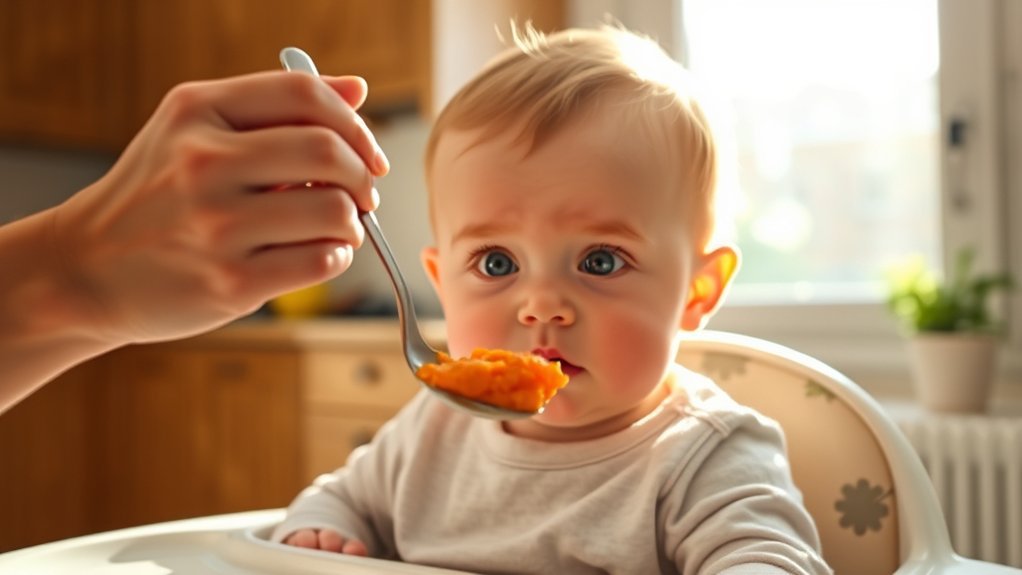
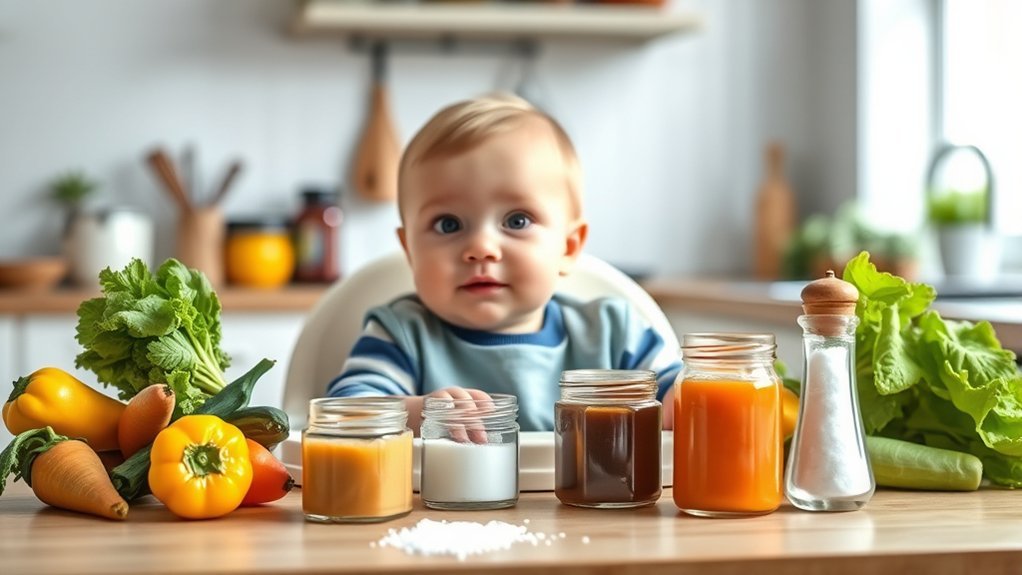
Babies need sodium for normal fluid balance, nerve function, and growth, but they need only a small amount. Human milk and infant formula already provide sodium from birth. When complementary foods begin at about 6 months, your baby can eat foods that naturally contain sodium, but there is usually no reason to add table salt to their meals.
Quick Answer
Babies receive sodium from birth through breast milk or infant formula. At about 6 months, they can eat complementary foods that naturally contain sodium, but added table salt is unnecessary. Limit salty sauces, processed meats, packaged snacks, and heavily seasoned family foods during the first year.
Key Takeaways
- Sodium is naturally present in breast milk, infant formula, and many whole foods, so it does not need to be deliberately introduced.
- Complementary foods usually begin at about 6 months, but routinely adding salt to a baby’s food is not recommended.
- The U.S. Adequate Intake is 110 mg of sodium per day from birth through 6 months and 370 mg per day from 7 through 12 months.
- Adequate Intake values are reference estimates, not maximum limits or an amount that parents must measure precisely each day.
- Processed meats, salty sauces, stock cubes, packaged snacks, and many ready-made meals can add a large amount of sodium quickly.
Note: This article provides general nutrition information for healthy, full-term infants. Follow individualized medical advice if your baby was born prematurely or has a kidney, heart, fluid-balance, digestive, or metabolic condition, a stoma, or a prescribed sodium supplement.
What Is Sodium and Why Is It Important for Babies?
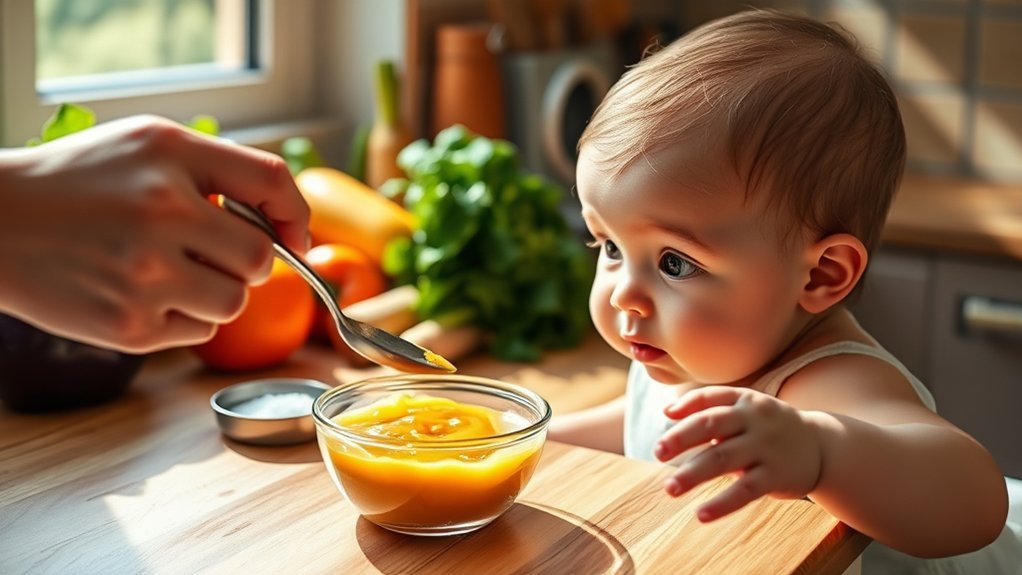
Sodium is an essential mineral and electrolyte. It helps regulate fluid balance, supports nerve signals and muscle function, and takes part in many normal processes throughout the body.
Table salt and sodium are related, but they are not the same thing. Table salt is sodium chloride and is about 40% sodium by weight. Sodium can also come from ingredients such as baking soda, monosodium glutamate, preservatives, cheese, bread, sauces, and naturally occurring minerals in food.
During the first months of life, breast milk or properly prepared infant formula supplies the sodium a healthy baby needs. After complementary foods begin, meat, eggs, yogurt, grains, beans, vegetables, and other foods add small amounts to the total diet.
The current Dietary Guidelines for Americans, 2025–2030 recommends beginning nutrient-dense complementary foods at about 6 months while continuing breast milk or infant formula as the main source of nutrition through 12 months.

Power your essentials anywhere with a 999Wh pure sine wave power station delivering up to 1000W continuous with 2000W surge. It supports fast charging via USB-C PD 60W and USB-A QC 18W, plus simultaneous output for multiple devices through AC, USB, wireless, and car/DC ports. Recharge using AC, car, or solar with a built-in MPPT controller and dual cooling fans, while the upgraded battery management system protects against surges, short circuits, and overheating.

One (1) 32 oz carton of Pacific Foods Organic Unsalted Chicken Bone Broth

All-Purpose Seasoning: Enhance your meals with Badia Complete Seasoning, a versatile spice blend perfect for meats, vegetables, soups, and more
What Are the Risks of Introducing Sodium Too Early?
The concern is not that babies must avoid every trace of sodium. Sodium is necessary and is already present in milk, formula, and normal foods. The concern is repeatedly offering foods with large amounts of added sodium while a baby’s kidneys and eating habits are still developing.
High-sodium products can also crowd out more useful foods. A baby who fills up on salty crackers, processed meat, gravy, or packaged meals may eat less iron-rich food, vegetables, fruit, whole grains, and other nutrient-dense choices.
Regularly serving very salty food can make strongly salted flavors seem normal. The evidence linking infant salt exposure with specific diseases later in life is still developing, so claims about guaranteed future high blood pressure or permanent “sodium sensitivity” should be avoided. The practical goal is to build eating habits around varied, minimally processed foods.
Warning: Never add salt to a bottle, infant formula, breast milk, or a homemade rehydration drink. Prepare formula exactly as directed on its label. A concentrated salt mixture can cause dangerous sodium poisoning.
When Can Babies Safely Have Salt in Their Diet?
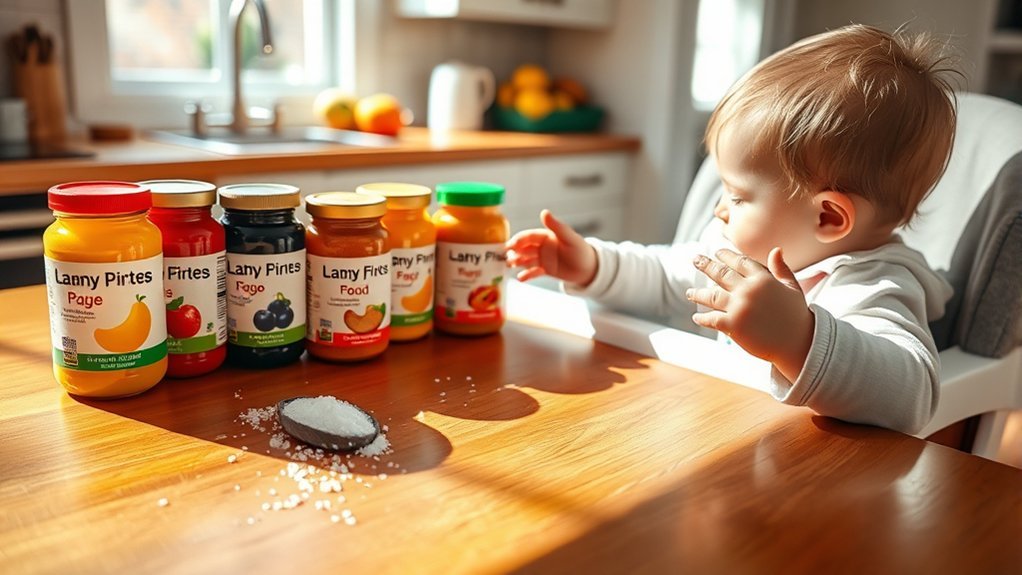
Babies safely consume sodium from birth through breast milk or formula. When your baby is developmentally ready for solids at about 6 months, they can also eat complementary foods containing naturally occurring sodium.
That does not mean you need to start sprinkling salt onto purées, finger foods, or family meals. The NHS advises parents not to add salt to a baby’s food or cooking water because babies do not need it and salty ingredients such as stock cubes and gravy can add a large amount. You can review its guidance on foods to avoid for babies and young children.
A tiny incidental amount in a shared homemade dish is not the same as routinely salting your baby’s serving or offering concentrated salty sauces. For most families, the easiest approach is to cook the main ingredients without salt, remove the baby’s portion, and season the rest of the meal afterward.
How Much Sodium Should Babies Consume Daily?
The National Academies establishes an Adequate Intake, or AI, for sodium during infancy. An AI is the estimated intake expected to meet the needs of most healthy people in an age group. It is not a maximum limit, a toxicity threshold, or a number that every parent must hit exactly.
The U.S. sodium Adequate Intake is 110 mg per day from birth through 6 months and 370 mg per day from 7 through 12 months.
| Age | Adequate Intake | Main Sources |
|---|---|---|
| Birth through 6 months | 110 mg per day | Breast milk or properly prepared infant formula |
| 7 through 12 months | 370 mg per day | Breast milk or formula plus complementary foods |
These values come from the National Academies’ sodium and potassium Dietary Reference Intakes. No sodium Chronic Disease Risk Reduction limit has been established for infants younger than one year.
Healthy babies eating an age-appropriate range of minimally processed foods generally do not require daily sodium calculations. Focus on avoiding concentrated sources and compare labels when buying packaged foods. Ask your pediatrician or a pediatric dietitian for a personal target if your baby has a medical condition that changes fluid or electrolyte needs.
What Are the Sources of Sodium for Babies?
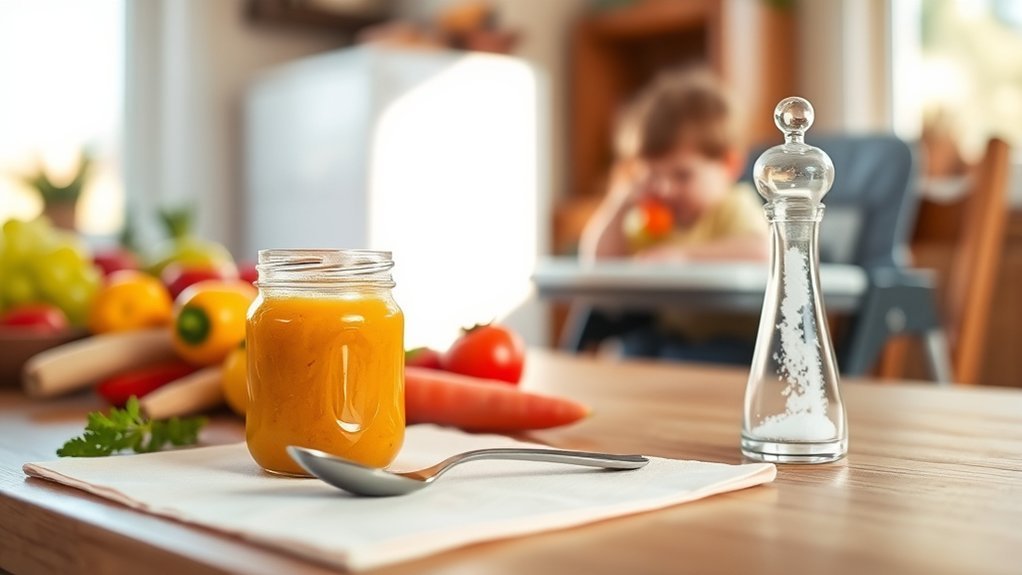
Breast milk and infant formula are the main sodium sources before solids begin. As your baby moves to complementary foods, sodium may also come from:
- Meat, poultry, fish, and eggs
- Plain yogurt and cheese
- Beans, lentils, grains, bread, and pasta
- Vegetables and other whole foods
- Commercial baby food and packaged toddler food
- Sauces, stocks, condiments, and foods prepared with added salt
Natural sodium in a balanced whole-food diet is generally not the main problem. The amount can rise quickly when food contains processed meat, salty cheese, bouillon, gravy, soy sauce, fish sauce, restaurant seasoning, or multiple packaged ingredients in one meal.
How to Recognize High-Sodium Foods for Infants
Salty taste alone is not a reliable guide. Bread, cheese, canned vegetables, sauces, and mixed dishes may contain substantial sodium without tasting extremely salty. Check the Nutrition Facts panel and compare similar products.
Common High-Sodium Foods
The CDC advises limiting foods high in salt for young children. Common examples include:
- Lunch meat, bacon, ham, sausages, and hot dogs
- Regular canned soups and some canned vegetables
- Frozen dinners and ready-made pasta or rice dishes
- Salty crackers, chips, and packaged toddler snacks
- Stock cubes, bouillon powders, gravy mixes, and seasoning packets
- Soy sauce, fish sauce, teriyaki sauce, ketchup, and bottled dressings
- Takeout meals and restaurant food prepared with an unknown amount of salt
Processed meats may also pose choking or food-safety concerns depending on their shape and preparation. Avoid serving whole hot dogs, sausage rounds, or tough pieces of meat to a baby.
Reading Nutrition Labels
Use the sodium number in milligrams and check the listed serving size. Then consider how much your baby will actually eat. Compare the same type of product and choose the option with less sodium when the other ingredients are suitable.
The FDA defines “low sodium” as 140 mg or less per labeled serving. However, that term is designed for general food labeling. It is not an infant-specific meal target. A product containing 140 mg could provide a large share of a seven- to 12-month-old baby’s 370 mg Adequate Intake.
Other useful label terms include:
- Sodium-free: Less than 5 mg per serving
- Very low sodium: 35 mg or less per serving
- Low sodium: 140 mg or less per serving
- Reduced sodium: At least 25% less sodium than the regular version
- No salt added or unsalted: No salt was added during processing, but the food may still contain naturally occurring sodium
See the FDA’s sodium-label guide for the formal definitions. The percentage Daily Value on a standard U.S. label is based on a 2,300 mg adult reference value, so it should not be treated as an infant requirement.
Pro Tip: For canned beans or vegetables, choose “no salt added” when available. Draining and rinsing regular canned products can remove some surface sodium, although it does not make every product low-sodium.
Can Babies Have Soy Sauce or Fish Sauce?
Soy sauce and fish sauce are highly concentrated sources of sodium and are not necessary for a baby learning to eat solids. Even reduced-sodium versions can contribute a large amount in a small volume.
A trace amount mixed through a large family recipe is different from adding sauce directly to a baby’s bowl or serving it as a dip. When possible, remove the baby’s portion before adding either sauce.
Safe Soy Sauce Use
Soy sauce commonly contains soy and wheat, although ingredients vary. If you offer a food containing it, check the allergen statement and use only a very small incidental amount.
Do not rely on soy sauce as the way to introduce soy or wheat. Those allergens can be introduced in more nutritious, lower-sodium forms that match your baby’s eating skills, such as soft tofu or appropriately prepared wheat cereal.
Diluting soy sauce lowers its sodium concentration per spoonful, but it does not remove sodium. If the entire diluted mixture is eaten, the total amount of sodium remains the same.
Fish Sauce Considerations
Fish sauce normally contains fish and may contain additional ingredients depending on the brand. Check the label for fish, shellfish, wheat, or other allergens rather than assuming every product has the same recipe.
There is no need to introduce shellfish before a product that contains only fish. However, potentially allergenic foods should be introduced in an age-appropriate form, and families of babies with severe eczema, egg allergy, or a previous food reaction should discuss allergen introduction with a healthcare professional.
Because fish sauce is so salty, use it sparingly in adult food and leave it out of the baby’s portion whenever practical.
What Condiments Are Safe for Babies?
The best baby-friendly condiments add moisture or flavor without a large sodium load. Suitable options may include:
- Plain full-fat yogurt: A creamy dip for soft vegetables or fruit, provided dairy has been introduced safely
- Mashed avocado: Naturally soft and easy to spread
- Unsalted tomato purée: Check that it does not contain added salt
- Lemon or lime juice: Use a small amount to brighten beans, fish, vegetables, or avocado
- Smooth unsalted nut or seed butter: Thin it to a safe consistency and introduce the allergen appropriately
- Fruit or vegetable purée: Useful as a naturally flavored dip or sauce
Ketchup, bottled dressing, prepared hummus, pesto, salsa, and other commercial dips vary widely. Read the sodium and allergen information before offering them, and use small portions rather than assuming a “natural” or “reduced sodium” label makes a product suitable for unlimited use.
Baking soda and baking powder are leavening ingredients, not condiments. Small recipe amounts may be present in foods such as muffins or pancakes, but they should not be sprinkled onto baby food. MSG also contains sodium and is unnecessary as a routine infant seasoning.
Foods to Avoid for High Sodium
During infancy, avoid making the following foods a regular part of meals:
- Processed meat such as bacon, ham, salami, lunch meat, and sausages
- Regular stock cubes, bouillon, gravy granules, and instant soup
- Highly salted canned vegetables, beans, soups, or pasta
- Frozen dinners and ready-to-eat mixed dishes
- Chips, salted crackers, and heavily seasoned toddler snacks
- Large servings of salty cheese
- Takeout food and restaurant meals with an unknown sodium content
- Food seasoned heavily with soy sauce, fish sauce, seasoning packets, or table salt
You do not need to ban every packaged food. Look at the whole meal, compare products, keep portions age-appropriate, and balance higher-sodium ingredients with unsalted whole foods.
Flavoring Baby Food Without Added Salt
Babies can enjoy a wide range of flavors without added salt. Introduce one new ingredient at a time when allergy monitoring is needed, and use textures that match your baby’s developmental skills.
- Add cinnamon to oatmeal, apple, pear, or sweet potato.
- Use basil, oregano, or parsley with tomato, beans, chicken, or vegetables.
- Try dill with yogurt, potato, peas, fish, or cucumber.
- Add cumin or mild paprika to lentils, beans, squash, or meat.
- Use ginger with carrot, pear, pumpkin, or chicken.
- Add a little pure garlic or onion powder, checking that it is not garlic salt or onion salt.
- Use lemon juice or a small splash of vinegar to brighten beans, fish, vegetables, or avocado.
- Roast or steam vegetables to bring out their natural sweetness.
Avoid seasoning blends unless the label confirms they contain no added salt. Products labeled “seasoning salt,” “garlic salt,” or “onion salt” can contain substantial sodium.
How to Serve Family Meals With Less Sodium
Your baby can take part in family meals without everyone eating bland food. Use this simple routine:
- Cook the main ingredients without salt, stock cubes, gravy, or salty bottled sauce.
- Remove and safely cut, mash, shred, or purée the baby’s portion.
- Add salt, sauce, or stronger seasoning to the remaining adult portions.
- Serve salty condiments at the table rather than mixing them through the entire meal.
- Use herbs, spices, garlic, onion, citrus, and roasting to build flavor for everyone.
This approach works well for soups, stews, pasta sauces, rice, curries, mashed vegetables, beans, meat, and casseroles.
What to Do If a Baby Eats Too Much Salt
A taste of a salty food is different from swallowing a spoonful of salt, drinking a concentrated salt mixture, or receiving formula prepared with too much powder or added salt. Large or concentrated exposures can be dangerous.
Possible signs of serious sodium poisoning include intense thirst, repeated vomiting, unusual weakness, marked sleepiness, irritability, confusion, muscle twitching, seizures, breathing difficulty, or loss of consciousness.
Warning: If your baby swallows a large amount of salt or a very salty liquid, contact a poison center immediately, even if symptoms have not started. Call emergency services for a seizure, breathing trouble, collapse, or inability to wake the child. Do not induce vomiting or attempt a home treatment unless a medical professional instructs you to do so.
Poison Control’s sodium guidance explains why a concentrated exposure requires prompt professional advice.
Frequently Asked Questions
Can I add herbs or spices to baby food instead of salt?
Yes. Mild herbs and spices such as basil, dill, cinnamon, cumin, ginger, garlic powder, onion powder, and mild paprika can add flavor without table salt. Check seasoning blends carefully because garlic salt, onion salt, and mixed packets may contain substantial sodium.
What are the symptoms of too much sodium in babies?
A dangerous exposure may cause intense thirst, repeated vomiting, weakness, unusual sleepiness, irritability, muscle twitching, seizures, breathing difficulty, or loss of consciousness. Contact a poison center immediately after a large salt ingestion or concentrated salt exposure.
Are there safe baby-food brands with added salt?
Recipes and sodium levels can change, so choosing by brand name alone is unreliable. Compare sodium in milligrams per serving, review the ingredient list, and favor products labeled no salt added or unsalted when the other ingredients and texture are appropriate.
How can I make homemade baby food without salt?
Steam, roast, simmer, or mash vegetables, fruit, grains, beans, eggs, meat, or fish without salt. Add flavor with herbs, spices, garlic, onion, citrus, plain yogurt, avocado, or unsalted tomato purée. Adjust the texture to your baby’s feeding skills.
What are the long-term effects of early salt exposure?
An occasional taste is unlikely to determine a child’s future health. However, frequently serving very salty processed foods can establish a pattern that continues as the child grows. Evidence about specific long-term effects from infant exposure alone is limited, so the best approach is a varied diet built around minimally processed foods.
Can babies eat family meals that contain some salt?
A small incidental amount in an otherwise balanced homemade meal is different from routinely salting a baby’s portion. The preferred method is to remove the baby’s food before adding salt, stock, gravy, or concentrated sauce to the family dish.
Is sea salt or Himalayan salt safer for babies?
No. Sea salt, kosher salt, pink salt, and regular table salt all supply sodium. Differences in crystal size or trace minerals do not make them suitable for routine use in infant food.
Conclusion
Babies do not need to wait until one year old to encounter sodium because it is already present in breast milk, formula, and many foods. The important distinction is between naturally occurring sodium and deliberately added salt.
Begin nutrient-dense complementary foods at about 6 months, continue breast milk or formula through the first year, and avoid routinely adding salt to your baby’s portion. Limit processed meats, salty sauces, packaged snacks, stock cubes, gravy, and heavily seasoned restaurant food. Herbs, spices, citrus, yogurt, avocado, and unsalted purées can build flavor without a large sodium load.
Seek individualized guidance when a medical condition affects sodium or fluid needs, and contact a poison center promptly after a large or concentrated salt exposure.
Sources
- National Academies: Updated Sodium and Potassium Dietary Reference Intakes — supports the 110 mg and 370 mg infant Adequate Intake values.
- Dietary Guidelines for Americans, 2025–2030 — supports complementary-food timing and the focus on nutrient-dense, minimally processed foods.
- CDC: Foods and Drinks to Avoid or Limit — identifies common high-salt foods for infants and young children.
- NHS: Foods to Avoid Giving Babies and Young Children — supports avoiding added salt, stock cubes, gravy, and salty foods.
- U.S. Food and Drug Administration: Sodium in Your Diet — explains sodium label claims and serving-based sodium information.
- Poison Control: Sodium—Too Much of a Good Thing — supports the warning about concentrated salt exposure and severe symptoms.