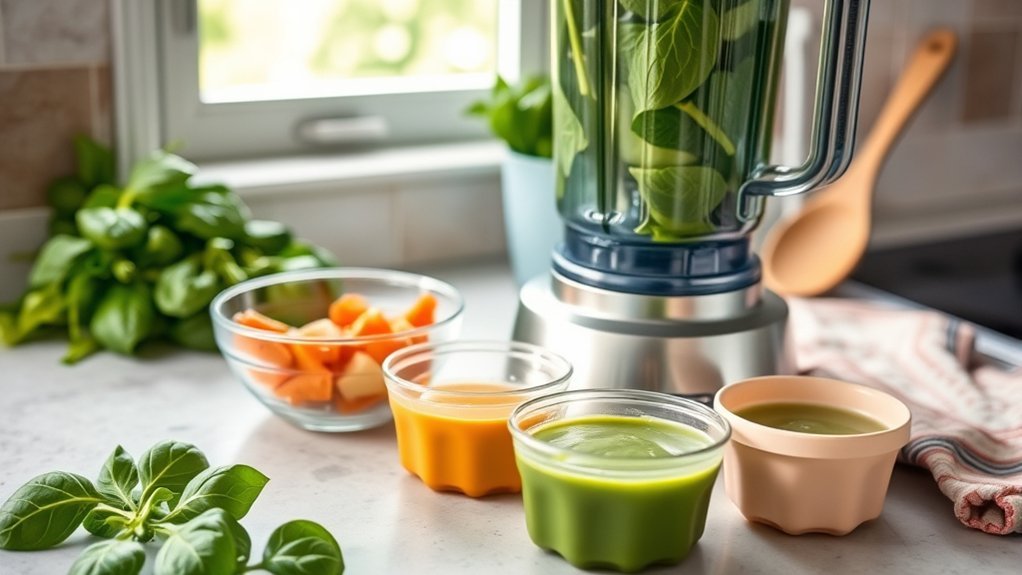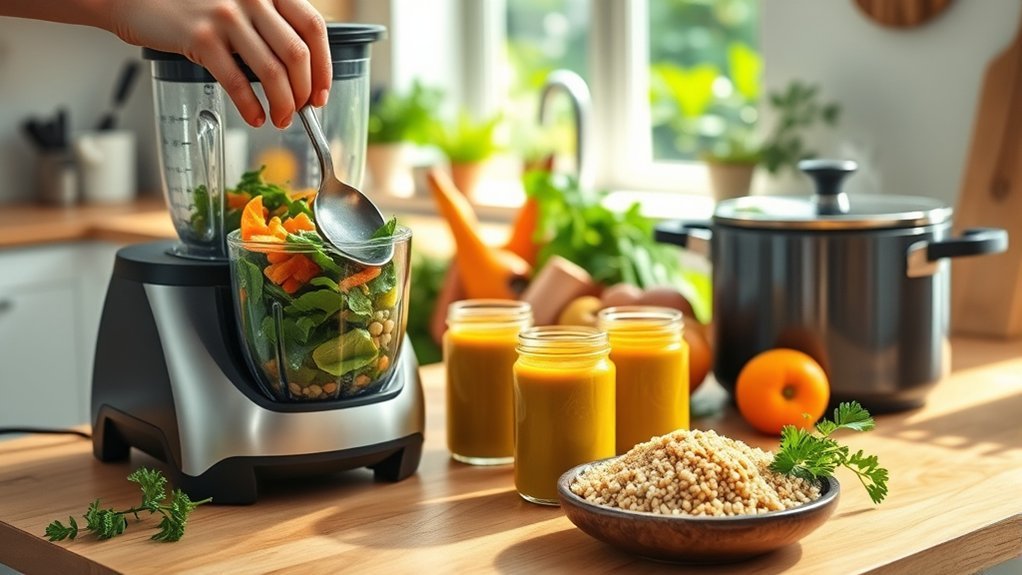
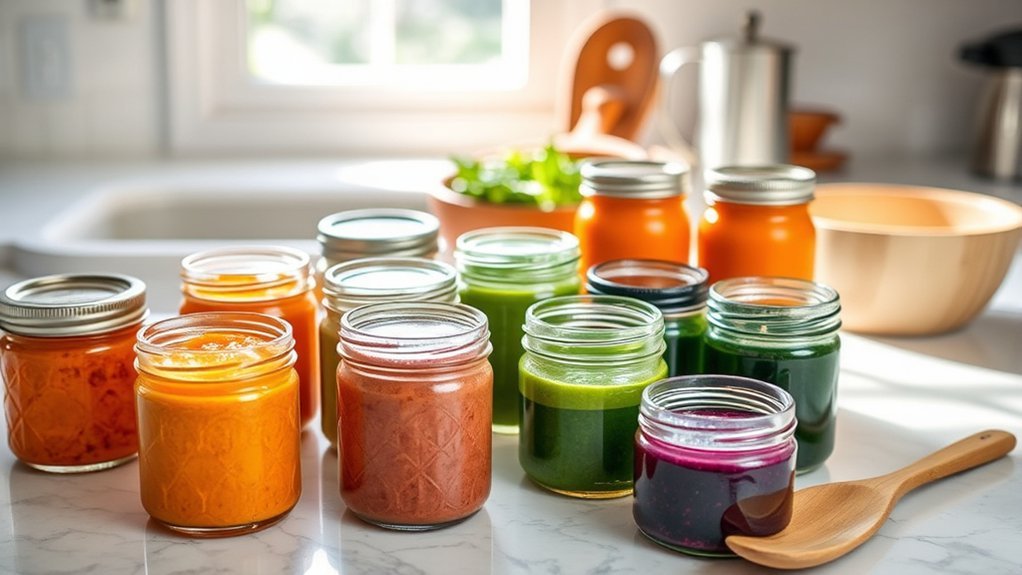
Homemade baby food can be stored safely when you cool it promptly, use clean airtight containers, keep it at the correct temperature, and label every batch. Storage times depend on the ingredients: plain fruit and vegetable purées generally last longer than meat, egg, or mixed meals. Because babies are more vulnerable to foodborne illness, use conservative limits and discard anything that may have been contaminated during feeding.
Quick Answer
Refrigerate homemade baby food within two hours and keep the refrigerator at 40°F (4°C) or below. Use most homemade mixtures within one to two days, plain fruit or vegetable purées within two to three days, and meat or egg purées within one day. Freeze extra food in labeled single portions and discard anything touched by the baby’s spoon or mouth.
Key Takeaways
- Keep the refrigerator at or below 40°F (4°C) and the freezer at or below 0°F (-18°C).
- Refrigerate or freeze perishable baby food within two hours, or within one hour when the surrounding temperature is above 90°F (32°C).
- Use meat and egg purées within one refrigerated day; use most other homemade mixtures within one to two days.
- Freeze food in small portions, remove excess air, and label each container with the food and preparation date.
- Never save food left in the baby’s bowl or a jar or pouch contacted by the baby’s mouth or used spoon.
- Do not taste food to decide whether it is safe. When its handling history is uncertain, throw it away.
At a Glance
| Time Required | About 10–20 minutes for cooling, portioning, labeling, and storage, plus freezing or thawing time |
| Difficulty | Easy |
| Tools Needed | Clean airtight containers, labels or marker, shallow storage dishes, and optional freezer-safe trays or baking sheet |
| Cost | Usually no added cost if suitable food-storage containers are already available |
Note: This article covers puréed and solid baby food, not homemade infant formula. Babies who were born prematurely, have a weakened immune system, or have medical or swallowing needs may require stricter instructions from their pediatrician or feeding specialist.
How Long Can You Store Homemade Baby Food?
The safest storage period depends on the ingredients and whether the food is homemade, commercially prepared, or a combination of several foods. The current FoodSafety.gov baby-food storage table gives the following category-specific limits.
| Food Type | Refrigerator | Freezer |
|---|---|---|
| Plain strained fruits or vegetables | 2–3 days | 6–8 months under the category-specific federal table |
| Strained meats or eggs | 1 day | 1–2 months |
| Meat and vegetable combinations | 1–2 days | 1–2 months |
| General homemade baby-food mixtures | 1–2 days | 1–2 months |
The FDA also provides a simpler recommendation to discard frozen homemade baby food after three months. Because these federal pages organize the categories differently, a practical conservative rule is to use mixed homemade meals within one to two months and never keep any homemade batch beyond three months. Always use the shorter limit when a recipe contains meat, eggs, dairy, fish, or several mixed ingredients.
A date label is only useful when the food has remained continuously cold. Time and temperature matter more than appearance alone.
Warning: Refrigerate or freeze perishable baby food within two hours of preparation. If the room, car, picnic area, or outdoor temperature is above 90°F (32°C), reduce that limit to one hour.
Power your essentials anywhere with a 999Wh pure sine wave power station delivering up to 1000W continuous with 2000W surge. It supports fast charging via USB-C PD 60W and USB-A QC 18W, plus simultaneous output for multiple devices through AC, USB, wireless, and car/DC ports. Recharge using AC, car, or solar with a built-in MPPT controller and dual cooling fans, while the upgraded battery management system protects against surges, short circuits, and overheating.

Premium Baby Food Storage Containers: The set has 8 food storage containers, 4 oz each. 8 colors, 1 of each color. There are many colors for easy differentiation of use and a large number to meet the daily needs of baby use. A pen can be used to write the name, date or other information on the lid to remind you what is inside the jar. Perfect for storing homemade baby food, solid baby food, fruit and vegetable purees, jams, etc

12-Pack, Durable 4oz Glass Jars with Lids – KeaBabies Baby Food Jars Glass check all the right boxes for a reliable baby snack containers. Ideal for busy parents as baby food containers for prepping and storing homemade meals smoothly.
Refrigeration Duration Guidelines
Keep the refrigerator at 40°F (4°C) or below. An inexpensive appliance thermometer is more reliable than the refrigerator’s numbered control dial. Place freshly made baby food in shallow containers so it cools quickly, and avoid packing a large amount of warm purée into one deep container.
Use plain fruit and vegetable purées within two to three days. Use meat or egg purées within 24 hours. Use mixed homemade meals within one to two days. When you are uncertain which category applies, follow the shorter one-to-two-day limit.
Freezer Storage Recommendations
Keep the freezer at 0°F (-18°C) or below. Freezing stops bacterial growth but does not reliably destroy all harmful germs. It also cannot make food safe again after it has spent too long at room temperature.
Use airtight freezer containers or freezer bags and remove as much air as practical. Label every package with the food name, ingredients, preparation date, and a use-by date. Place newer packages behind older ones so the oldest food is used first.
Labeling and Rotation
A useful label might read: “Sweet potato and chicken — prepared July 23 — use refrigerated by July 24 or frozen by September 23.” Writing the ingredients is especially useful when several purées look alike or when you are monitoring possible food reactions.
Pro Tip: Freeze the portions you will not use before their refrigerator time expires. Do not wait until the final safe day and then freeze food that may already have been repeatedly handled.
Best Practices for Refrigerating Baby Food
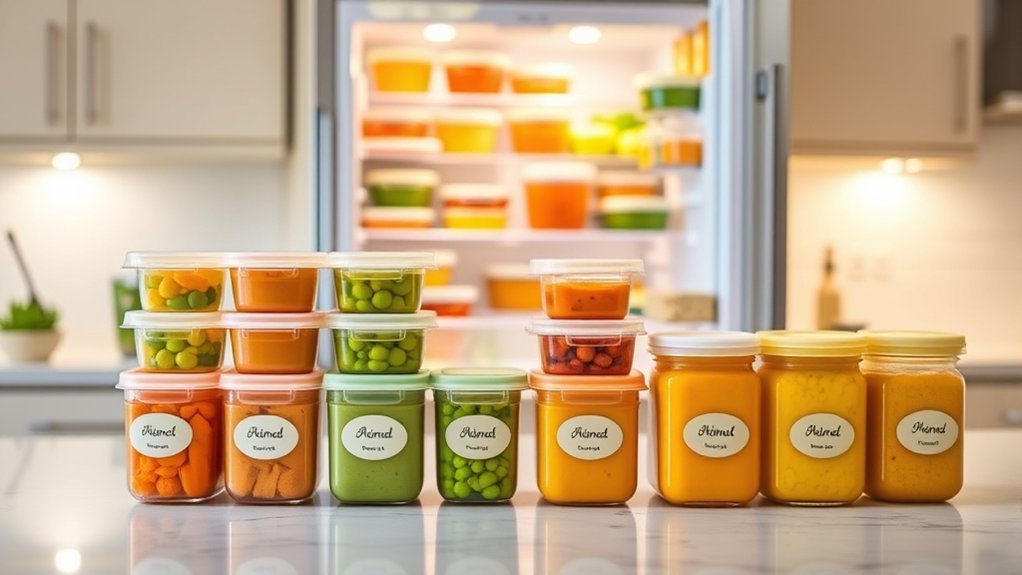
Use the following routine each time you prepare a batch:
- Start clean. Wash your hands, preparation surface, blender, utensils, and containers before handling cooked food.
- Cool promptly. Divide the food into shallow containers instead of leaving one large batch on the counter.
- Cover the food. Use a tight-fitting lid to protect it from spills, raw-food drips, odors, and repeated handling.
- Refrigerate within the time limit. Do not wait for food to reach room temperature before placing it in the refrigerator.
- Label and date it. Record both the food and the preparation date.
- Remove only the amount needed. Use a clean spoon to transfer one serving to a separate bowl.
- Discard served leftovers. Do not return food from the baby’s bowl to the storage container.
Store baby food away from raw meat, poultry, seafood, and eggs. Keep containers toward the colder interior of the refrigerator rather than in the door, where temperatures fluctuate more often.
Ice Cube Tray vs. Cookie Sheet: Freezing Techniques
Ice cube trays and lined cookie sheets can both create small portions that thaw faster and reduce waste. Use food-grade equipment that is intended for freezer storage, and cover the food while it freezes.
Ice Cube Tray Benefits
Freezer-safe ice cube or silicone trays make consistent portions and keep soft purées contained. Tray sizes vary, so do not assume every cavity holds one or two tablespoons. Measure one cavity with water if exact portion size matters.
Spoon cooled food into the tray, cover it tightly, and freeze it promptly. Once the portions are firm, transfer them to a labeled airtight container or freezer bag. Do not leave uncovered cubes in the tray for long periods because air exposure encourages freezer burn and odor transfer.
Cookie Sheet Advantages
A lined cookie sheet is useful when you want portions of different sizes. Drop measured spoonfuls of cooled purée onto parchment paper or a freezer-safe silicone liner, leaving space between them. Freeze until solid and then transfer the portions to a labeled freezer container.
This method can hold more portions at once than a small tray and works well for thicker foods that will stay in separate mounds. Cover the sheet or place it inside a clean protective freezer bag while the portions freeze.
Portion Control Techniques
- Start small: Freeze single-serving portions so you only thaw what the baby is likely to eat.
- Measure when helpful: Use a measuring spoon or cup instead of estimating tray capacity.
- Keep ingredients identifiable: Label mixed foods clearly and consider freezing newly introduced foods separately.
- Remove excess air: Press air from freezer bags before sealing them.
- Use the oldest portions first: Arrange packages by date rather than adding new food in front.
Freezing Homemade Baby Food Safely
Allow freshly cooked food to stop steaming, divide it into shallow portions, and refrigerate or freeze it promptly. Food should not remain on the counter until it is completely cold.
If you use a rigid freezer-safe jar, leave about one-half inch of headspace because food expands as it freezes. Do not use chipped glass, cracked containers, or ordinary glass that is not rated for freezing. Flexible freezer containers should have secure lids and should not be filled past their recommended line.
Some foods change texture after freezing. Potatoes may become grainy, and high-water foods may release liquid. These quality changes do not automatically mean the food is unsafe, but the food should still be discarded if it exceeded its storage time or was not kept continuously cold.
Safe Thawing Methods for Homemade Baby Food
The refrigerator is the easiest and most controlled thawing method. Place the covered portion in the refrigerator overnight and keep it separate from raw foods.
For faster thawing, keep the food sealed and place it under cold running water. A small sealed portion may also be warmed in a water bath when it will be served immediately. Do not leave it soaking unattended or allow water to enter the container.
A microwave may be used when the food will be heated and served immediately. Transfer the portion to a microwave-safe dish, heat it in short intervals, and stir thoroughly between intervals.
Never thaw homemade baby food on the kitchen counter. The outside can warm into the bacterial growth range while the center remains frozen.
After refrigerator thawing, follow the same time limit that applies to the food when freshly refrigerated. Use meat or egg purées within one day and most other homemade mixtures within one to two days.
Avoid refreezing food that has fully thawed, been warmed, or been portioned for feeding. General FDA guidance allows food that still contains ice crystals or remains at 40°F or below to be refrozen, but repeated freezing reduces quality. Freezing small portions is the simplest way to avoid the issue.
Reheating Baby Food: Stovetop vs. Microwave
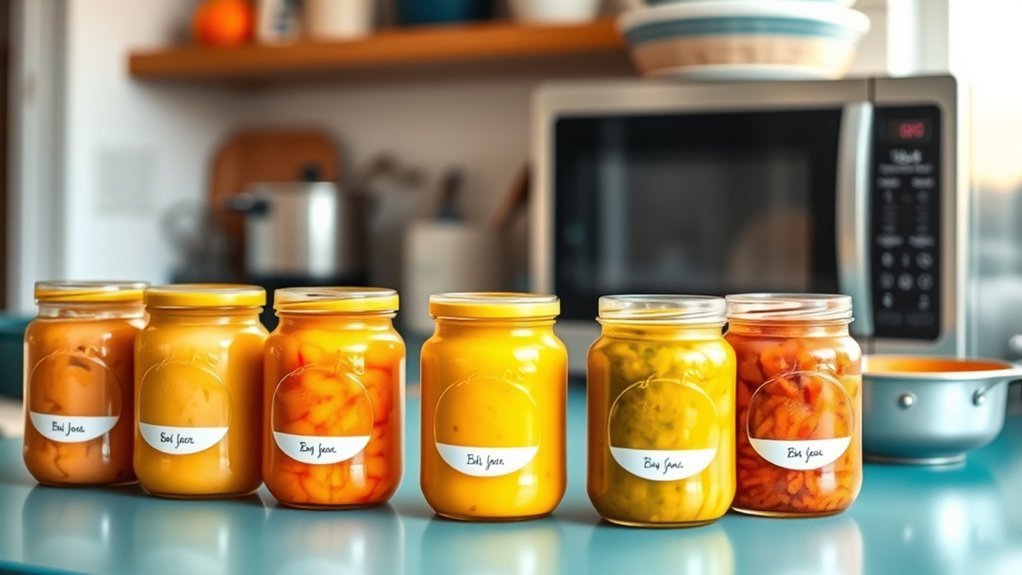
Baby food does not have to be warm. It may be served cold when it has been stored safely and the baby accepts it. When you choose to warm it, heat only the amount needed for one feeding.
Stovetop Reheating
Place the portion in a small saucepan or heat-safe bowl over warm water. Use low heat and stir frequently. The stovetop is the preferred method for baby-food meats and eggs because these foods can splatter or overheat unevenly in a microwave.
Microwave Reheating
- Never microwave baby food in its original jar.
- Transfer it to a microwave-safe dish.
- Heat a small portion in short intervals.
- Stir thoroughly, including food around the edge and at the bottom.
- Let the food stand for about 30 seconds so the temperature can become more even.
- Test it with a clean spoon before serving. It should feel lukewarm, not hot.
Do not use a slow cooker to reheat a small serving. It warms food too slowly for this purpose and gives you less control over the serving temperature.
Warning: Do not repeatedly cool and reheat the same portion. Discard food left in the serving bowl after the feeding begins because saliva may have introduced bacteria.
Signs Your Homemade Baby Food Has Spoiled
Spoilage signs can help identify food that should be discarded, but food may contain harmful germs even when it looks and smells normal. Storage time and temperature history are therefore more reliable than a sensory check.
| Observation | What It Means | What to Do |
|---|---|---|
| Mold growth | Clear spoilage | Discard the entire portion |
| Sour, fermented, or otherwise unusual odor | Possible spoilage | Discard without tasting |
| Leaking, swollen, cracked, or unsealed container | Possible contamination or container failure | Discard the food |
| Unexpected discoloration | May be oxidation or spoilage; safety cannot be confirmed visually | Discard when the cause or handling history is uncertain |
| Watery separation | Often a normal texture change after chilling or freezing | Stir and assess the storage history; separation alone does not prove spoilage |
| Freezer burn or surface ice | Air exposure and reduced quality, not automatic evidence of unsafe food | Discard if quality is poor or storage safety is uncertain |
| Exceeded time limit or was left warm too long | Potential bacterial growth even if the food looks normal | Discard it |
Warning: Never taste questionable baby food to test whether it is safe. When in doubt, throw it out.
Essential Food Safety Tips for Baby Food Preparation
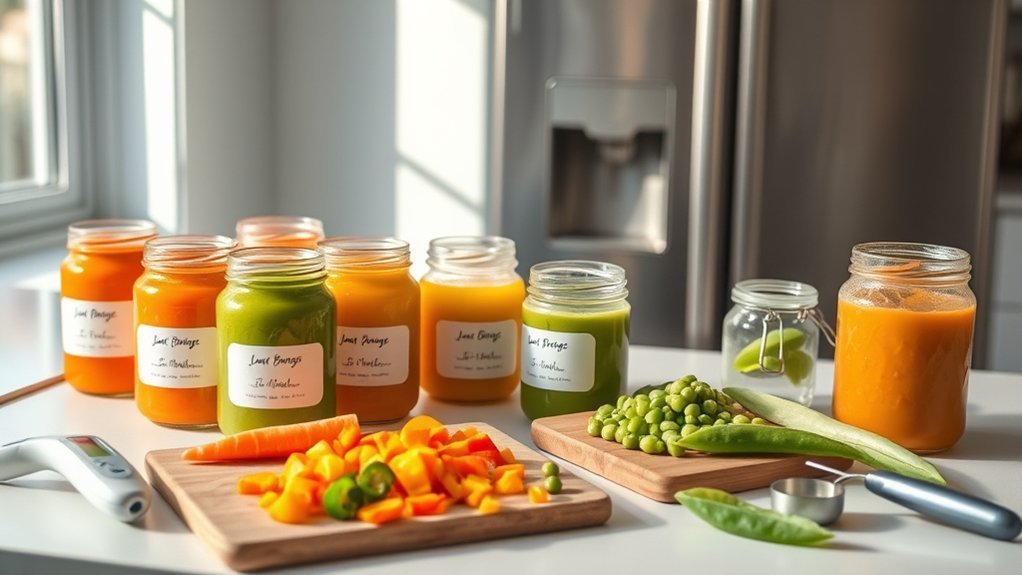
Children younger than five have a higher risk of serious complications from foodborne illness, so careful preparation matters. Follow the clean, separate, cook, and chill principles described by FoodSafety.gov.
- Wash your hands: Use soap and running water for at least 20 seconds before preparing or serving food.
- Clean equipment: Wash the blender, food processor, cutting boards, knives, spoons, containers, and work surfaces with hot soapy water.
- Wash produce: Rinse fruits and vegetables under running water before cutting or cooking them.
- Prevent cross-contamination: Keep raw meat, poultry, seafood, and eggs away from cooked food and ready-to-eat produce.
- Cook foods safely: Use a food thermometer and follow the appropriate minimum internal temperature for meat, poultry, seafood, and egg dishes.
- Cool and store promptly: Divide cooked food into small portions and refrigerate or freeze it within the safe time limit.
- Use pasteurized ingredients: Avoid raw milk, unpasteurized dairy products, raw eggs, and unpasteurized juice.
- Do not add honey before 12 months: Honey can expose infants to the organism that causes infant botulism. See the CDC guidance on foods to avoid or limit.
Preventing Contamination When Serving Baby Food
Always transfer one serving from the storage container into a separate clean bowl. Use a clean spoon and close the main container before feeding begins.
Discard food left in the baby’s bowl. Saliva transferred from the mouth to the spoon can introduce bacteria that continue to multiply even if the food is placed back in the refrigerator.
Do not feed directly from a storage jar if you plan to save the remaining food. The same rule applies to reusable pouches and commercial pouches: if the baby’s mouth touches the spout, discard the remainder rather than saving it.
For an opened commercial jar that was not contacted by a used spoon, follow the package instructions and the category-specific refrigerator limit. Fruit and vegetable foods may have a longer limit than products containing meat or eggs.
Pro Tip: Start with a small serving. You can add more from the untouched container with a fresh spoon, but you cannot safely return food from the baby’s bowl.
Transporting Homemade Baby Food Safely
Carry refrigerated baby food in an insulated cooler with enough frozen gel packs or other cold sources to keep it at 40°F (4°C) or below. Keep the cooler closed and out of direct sunlight.
Discard perishable baby food that has been without refrigeration or a cold source for more than two hours. Reduce that limit to one hour when the temperature is above 90°F (32°C), including inside a warm vehicle.
Pack clean bowls and spoons so the baby is not fed directly from the storage container. Bring only the amount likely to be used, especially when reliable refrigeration will not be available afterward.
Frequently Asked Questions
Can I use leftover baby food for future meals?
You may save food that remained in the main storage container, was handled with a clean spoon, and was returned to the refrigerator promptly. Discard anything left in the baby’s bowl or contacted by the baby’s mouth or used spoon.
What containers are best for storing homemade baby food?
Choose clean, food-grade containers with airtight lids. Freezer-safe glass, rigid plastic, silicone trays, and freezer bags can all work. Use shallow containers for quick cooling, and leave headspace in rigid containers when freezing.
How can I tell if baby food is still safe to eat?
Check its preparation date, storage temperature, and handling history first. Discard food with mold, an unusual odor, a leaking container, or an uncertain temperature history. Do not taste questionable food to test it.
Is it safe to mix different flavors of baby food?
Yes, ingredients that are age-appropriate, safely prepared, and already tolerated may be combined. Label mixed batches with every ingredient. Ask your pediatrician for guidance if your baby has allergies, eczema, swallowing problems, or another medical concern.
Can I refreeze baby food after it has been thawed?
Avoid refreezing baby food that has fully thawed, been warmed, or been prepared for serving. Food that still has ice crystals and has remained at 40°F or below may generally be refrozen, but its texture may decline. Small frozen portions prevent unnecessary refreezing.
How long does thawed homemade baby food last?
Apply the food’s normal refrigerator limit after thawing. Use meat or egg purées within one day and most mixed homemade meals within one to two days. Use a shorter period if the food was warmed or handled repeatedly.
Can I freeze baby food in glass jars?
Use only glass containers designed for freezer storage. Leave about one-half inch of empty space at the top so the food can expand. Do not freeze food in chipped, cracked, tightly overfilled, or non-freezer-rated glass containers.
What should I do if baby food was left out?
Discard perishable baby food left unrefrigerated for more than two hours. If the temperature was above 90°F, discard it after one hour. Do not rely on smell or appearance to make food that exceeded these limits safe.
Conclusion
Safe homemade baby food storage depends on four habits: cool it promptly, keep it cold, label every batch, and prevent saliva from reaching food you plan to save. Use the ingredient-specific refrigerator limits, freeze mixed homemade meals in small portions for one to two months, and discard anything with an uncertain handling history. These simple steps reduce waste while protecting your baby from avoidable foodborne illness.
Sources
- FoodSafety.gov — Children Under Five — refrigerator and freezer limits, microwaving guidance, and child food-safety risks
- U.S. Food and Drug Administration — Once Baby Arrives — freezing portions, storage containers, transportation, and saliva-contamination guidance
- FoodSafety.gov — Four Steps to Food Safety — cleaning, separating, cooking, chilling, appliance temperatures, and time limits
- U.S. Food and Drug Administration — Are You Storing Food Safely? — freezer safety, freezer burn, appliance temperatures, and refreezing principles
- Centers for Disease Control and Prevention — Safer Food Choices for Children Under Five — higher-risk foods and safe preparation practices
- Centers for Disease Control and Prevention — Foods and Drinks to Avoid or Limit — honey and other infant feeding cautions