Baby-led weaning, often shortened to BLW, is a way of introducing complementary foods by letting your baby pick up and self-feed soft foods. It does not mean stopping breast milk or infant formula. Most babies begin at about 6 months, once they have the head control, posture, hand skills, and swallowing ability needed to eat safely.
Quick Answer
Start baby-led weaning at about 6 months, once your baby can sit upright with good head control, reach for food, bring it to their mouth, and swallow rather than push it out. Offer soft, graspable foods, include an iron-rich option at each meal, supervise closely, and continue breast milk or formula.
Key Takeaways
- Begin at about 6 months only when your baby shows developmental readiness; age by itself is not enough.
- Offer a soft iron-rich food at each meal, along with produce, an energy-rich food, and continued breast milk or formula.
- Prepare foods in a shape, size, and texture your baby can manage, and keep your baby seated upright and supervised.
- Introduce common allergens in infant-safe forms at about 6 months, with clinician guidance for babies with severe eczema, egg allergy, or another known risk.
- Baby-led and spoon-feeding methods can be combined; responsive, safe feeding matters more than following one method perfectly.
At a Glance
| Time Required | About 10–20 minutes of preparation per meal; let your baby set the eating pace. |
| Difficulty | Moderate—cooking is simple, but safe texture, positioning, and supervision require care. |
| Tools Needed | Upright high chair with harness, fork for softness testing, baby-safe cup, optional preloaded spoon, bib, and cleanable floor mat. |
| Cost | Usually similar to the cost of family meals; special packaged BLW foods are not required. |
Medical and safety note: This guide is educational and does not replace care from your pediatrician. Ask for individual guidance if your baby was born prematurely, has poor head or trunk control, has trouble swallowing, coughs or chokes during feeds, has poor growth, or has severe eczema or a known food allergy.
Understanding Baby-Led Weaning and Its Benefits
Baby-led weaning is a form of complementary feeding in which a developmentally ready baby handles food and brings it to their own mouth. The baby controls whether to eat, which offered food to explore, and when to stop. Parents remain responsible for choosing safe, nutritious foods and supervising every meal.
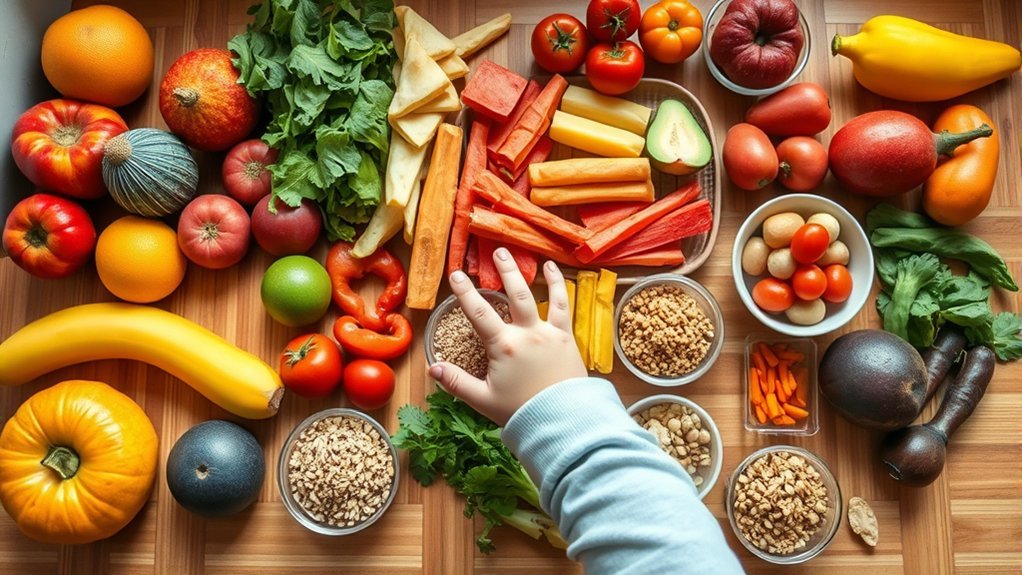
BLW may give babies more chances to practice grasping, hand-to-mouth coordination, chewing movements, and using a preloaded spoon. It may also make it easier to include the baby in family meals and expose them to different tastes and textures.
However, the evidence for long-term health benefits is limited. The American Academy of Pediatrics describes lower food fussiness, greater independence, and improved motor practice as possible benefits—not guarantees. A randomized clinical trial did not find that a modified baby-led approach produced a more favorable body mass index than traditional feeding.
Baby-led weaning is an optional feeding style, not a test of good parenting. A safe mixed approach using finger foods, mashed foods, and responsive spoon-feeding can work just as well for many families.
When Should You Start Baby-Led Weaning? Signs of Readiness
Most babies are ready to begin complementary foods at about 6 months. Look at your baby’s abilities rather than choosing a date based only on age. The current Dietary Guidelines for Americans, 2025–2030 recommend looking for several developmental signs.
| Readiness sign | What to look for | Why it matters |
|---|---|---|
| Stable upright posture | Your baby can remain upright in a supported high chair without slumping or folding forward. | Stable positioning supports safer swallowing and self-feeding. |
| Good head and neck control | Your baby can hold their head steady and turn it freely. | Head control helps the baby manage food and signal when they are finished. |
| Reaching and grasping | Your baby reaches for toys or food and can hold a large soft piece. | BLW depends on the baby being able to pick up food and bring it to their mouth. |
| Hand-to-mouth coordination | Your baby regularly brings toys and other safe objects to their mouth. | This is a core self-feeding skill. |
| Interest in food | Your baby watches others eat or opens their mouth when food is offered. | Interest makes early food exploration less frustrating. |
| Ability to swallow food | Your baby can move food toward the back of the mouth and swallow instead of consistently pushing it onto the chin. | This shows that oral feeding skills are developing. |
Teething, reaching for a parent’s plate, or waking more often at night are not reliable readiness tests by themselves. If your baby cannot remain upright, repeatedly coughs during feeds, has breathing changes while eating, or is not gaining weight as expected, speak with the pediatrician before beginning BLW.
How to Start Baby-Led Weaning Step by Step
- Confirm readiness. Make sure your baby is about 6 months old and shows the posture, head-control, grasping, and swallowing signs listed above.
- Use a safe seat. Place your baby upright in a stable high chair and fasten the harness. Do not feed while the baby is lying down, crawling, riding in a stroller, or sitting in a moving car.
- Begin when everyone is calm. Choose a time when your baby is alert and not extremely hungry, tired, or upset.
- Offer one or two soft foods. Include an iron-rich food whenever practical, such as shredded meat, lentil patty, mashed beans on a preloaded spoon, egg, tofu, or iron-fortified infant cereal.
- Let the baby bring food to their mouth. Place food on the tray or offer a preloaded spoon. Do not push finger food into the baby’s mouth.
- Follow hunger and fullness cues. Continue while the baby reaches, opens their mouth, or shows interest. Stop when they turn away, close their mouth, push food away, or become upset.
- Progress gradually. Start with one relaxed meal a day and add meals as your baby’s skills and interest grow. Continue normal breast milk or formula feeds.
Pro Tip: Learn infant choking first aid and CPR before solids begin. Keep your phone nearby for emergencies, but avoid screens and other distractions during the meal.
Recommended First Foods for Baby-Led Weaning

The best first foods are soft, nutrient-dense, easy to grasp, and simple to prepare. Because iron needs increase during the second half of infancy, make an iron-rich food the anchor of many meals. The CDC recommends iron-containing complementary foods from about 6 months.
Build a Balanced Baby-Led Weaning Meal
You do not need to serve every food group at every sitting. A practical meal can include two or three of the following:
- Iron-rich food: Tender shredded beef, chicken thigh, turkey, egg, fish, lentils, mashed beans, tofu, or iron-fortified infant cereal.
- Energy-rich food: Avocado, full-fat plain yogurt, egg, smooth thinned nut butter, olive oil added to vegetables, or soft cheese.
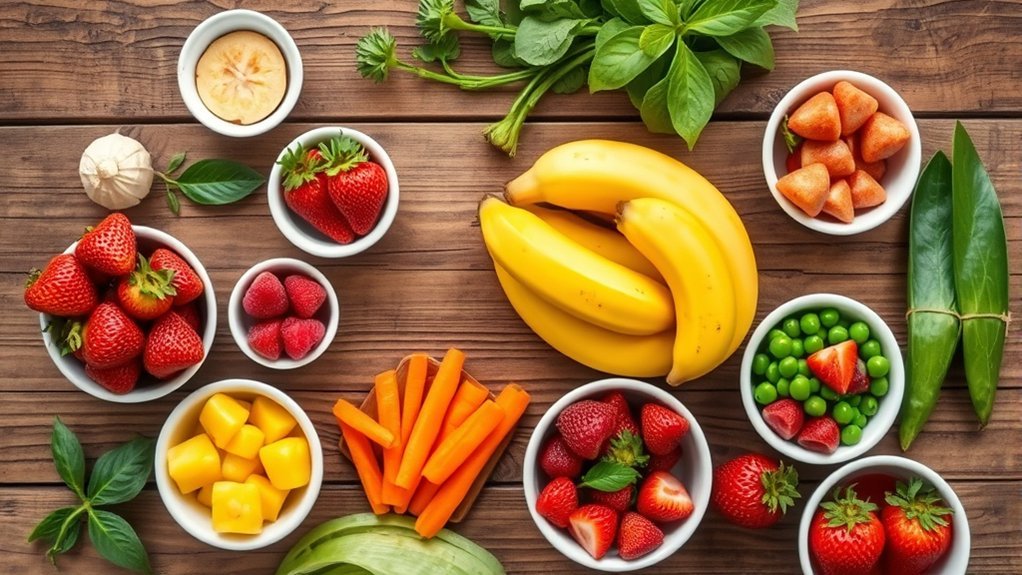
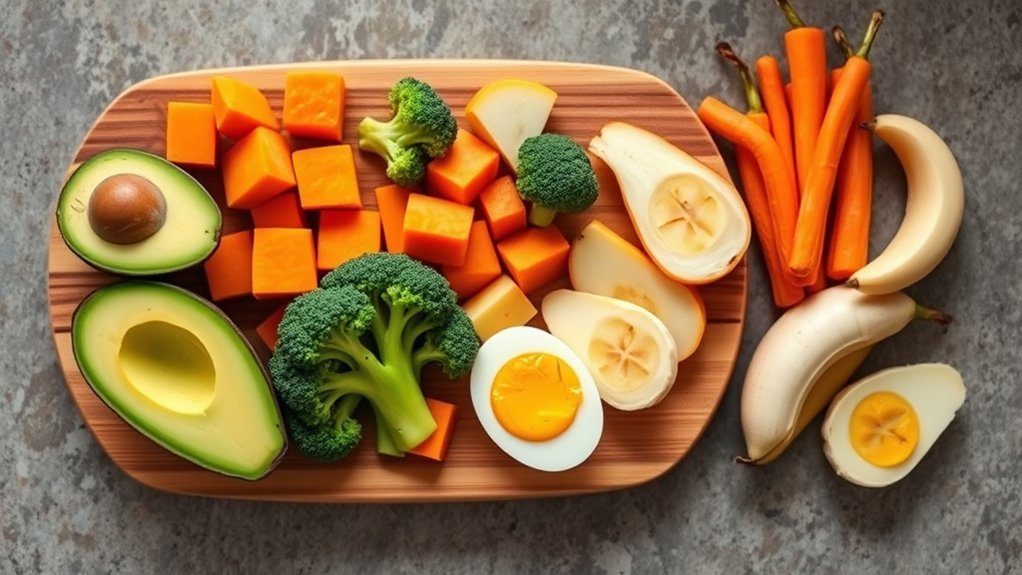
- Fruit or vegetable: Soft broccoli, sweet potato, ripe pear, banana, mango, zucchini, or cooked apple.
- Whole grain or starch: Oatmeal on a preloaded spoon, whole-grain toast, potato, quinoa patty, soft pasta, or polenta.
Ten Easy First Foods
- Avocado: Offer a thick ripe wedge or mash it onto a preloaded spoon.
- Sweet potato: Roast or steam until it crushes easily between your fingers, then cut into a graspable strip.
- Broccoli: Steam until the stalk is very soft and offer a large floret with a handle.
- Egg: Serve fully cooked omelet strips or soft scrambled egg on a preloaded spoon.
- Chicken thigh: Cook thoroughly and offer very tender shredded pieces or a soft low-sodium patty.
- Lentils: Mash into a thick scoopable mixture or form into a soft patty.
- Plain full-fat yogurt: Place a small amount on a preloaded spoon.
- Banana: Offer a thick section of ripe banana or mash it.
- Oatmeal: Prepare thick enough to stay on a preloaded spoon and use iron-fortified infant oats when available.
- Salmon: Cook fully, remove every bone, and offer soft flakes pressed into a patty.
Plant sources of iron, such as beans, lentils, tofu, and fortified cereal, are absorbed less efficiently than iron from meat. Pairing them with vitamin C-rich foods—such as berries, broccoli, tomato, kiwi, or sweet potato—can support iron absorption.
How Much and How Often to Feed
Early meals are for learning as well as nutrition. Your baby may lick, squeeze, drop, or taste food without swallowing much. Begin with small portions and allow more when the baby continues to show interest.
- Start with one meal a day, then work toward two and eventually three meals as skills and appetite develop.
- Offer a few pieces or one to two tablespoons of mashed food at first rather than filling the tray.
- Allow the baby to decide how much to eat. Do not require a clean plate or force another bite.
- Offer small sips of water from an open or straw cup with meals, while continuing normal milk feeds.
Breast milk or iron-fortified infant formula remains the main source of nutrition up to 12 months. Solid foods gradually take a larger role. The 2025–2030 Dietary Guidelines also advise discussing vitamin D and possible iron supplementation with your baby’s healthcare professional.
Note: Appetite changes from day to day. Look at growth, milk intake, feeding skills, and the variety eaten over time rather than judging nutrition by a single meal.
The 100 Foods to Introduce Before Baby’s First Birthday Checklist
A 100-food challenge is optional, not a medical requirement. It can be a fun way to encourage variety, but there is no need to rush or reach exactly 100 foods by a deadline. Introduce foods in textures your baby can safely manage, and modify every round, hard, sticky, or tough item.
Iron-Rich Proteins
- Beef
- Lamb
- Pork
- Chicken
- Turkey
- Lentils
- Black beans
- Chickpeas
- Tofu
- Iron-fortified oat cereal
Fish, Eggs, Dairy, and Allergen Foods
- Fully cooked egg
- Salmon
- Cod
- Trout
- Fully cooked shrimp
- Plain full-fat yogurt
- Pasteurized cheese
- Smooth peanut butter, thinned
- Smooth almond butter, thinned
- Tahini, thinned
First Vegetables
- Sweet potato
- White potato
- Carrot
- Broccoli
- Cauliflower
- Zucchini
- Butternut squash
- Pumpkin
- Green beans
- Peas
More Vegetables
- Spinach
- Kale
- Beet
- Bell pepper
- Eggplant
- Asparagus
- Parsnip
- Turnip
- Mushroom
- Okra
First Fruits
- Banana
- Avocado
- Pear
- Cooked apple
- Peach
- Plum
- Mango
- Papaya
- Kiwi
- Ripe melon
More Fruits
- Strawberry
- Flattened blueberry
- Raspberry
- Blackberry
- Orange with tough membrane removed
- Mandarin with tough membrane removed
- Soft pineapple
- Grape, cooked or squashed and cut lengthwise
- Cherry, pitted and cooked or cut into safe pieces
- Soft prune
Grains and Starches
- Oatmeal
- Quinoa
- Barley
- Brown rice
- Couscous
- Whole-grain pasta
- Whole-grain toast
- Polenta
- Buckwheat
- Millet
Beans, Seeds, and Plant Proteins
- Kidney beans
- Cannellini beans
- Pinto beans
- Navy beans
- Split peas
- Mashed edamame
- Tempeh
- Low-sodium hummus
- Chia pudding prepared to a soft consistency
- Ground flaxseed mixed into food
Soft Family Foods
- Cottage cheese
- Ricotta
- Mozzarella
- Plain pasteurized kefir mixed into food
- Whole-wheat pancake without honey
- Omelet strips
- Soft low-sodium meatball
- Soft fish cake
- Bean patty
- Soft baked falafel
Flavors and Healthy Fats
- Garlic
- Onion
- Cinnamon
- Basil
- Parsley
- Dill
- Ginger
- Unsweetened coconut milk used in food
- Olive oil
- Pumpkin seed butter, thinned
Serve herbs and spices in small amounts without added sugar or excessive salt. A food only counts as a safe exposure when it has been prepared in a texture and shape your baby can manage.
How to Safely Prepare Foods for Baby-Led Weaning
Food Safety Guidelines
- Wash your hands, the high-chair tray, utensils, and food-preparation surfaces.
- Cook meat, poultry, fish, shellfish, and eggs thoroughly.
- Use pasteurized dairy products and juices only; juice is not recommended as a drink before 12 months.
- Remove bones, pits, hard peels, tough skins, and gristle.
- Keep cooked food at a safe temperature and refrigerate leftovers promptly.
- Do not feed directly from a storage container and then save the contaminated remainder.
Appropriate Food Textures
For an early palmar grasp, offer soft finger-shaped pieces that your baby can hold in a fist with part of the food extending beyond the hand. The food should flatten or break apart easily when pressed between your thumb and finger.
Once your baby develops a pincer grasp and can pick up small items between the thumb and forefinger, you can offer smaller bite-size pieces. Continue modifying round foods, removing bones and pits, and cooking firm foods until soft.
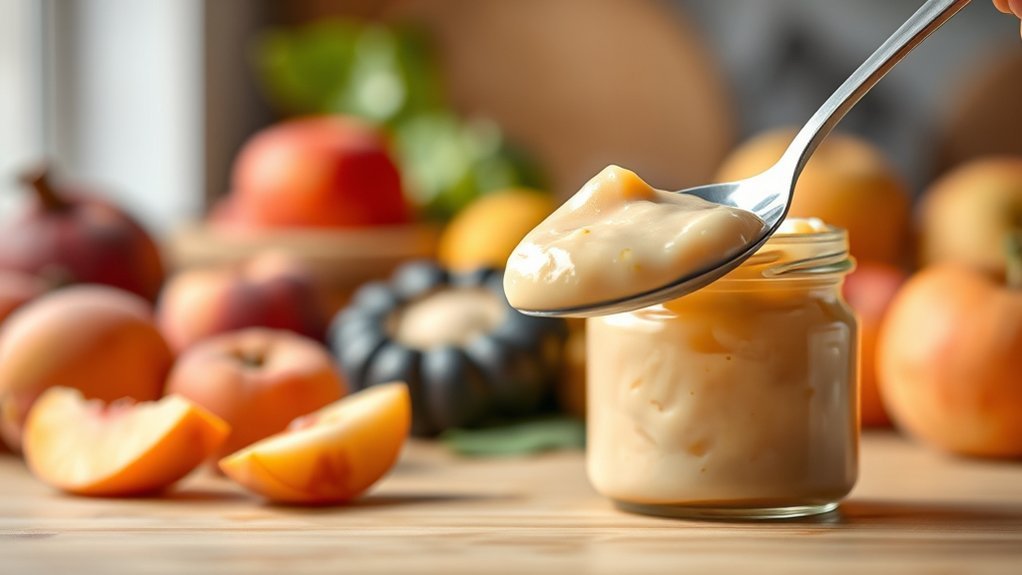
Mashed foods and purees can still fit a baby-led or mixed approach. Load a baby-safe spoon, place it on the tray, and allow your baby to bring it to their mouth. You do not need to avoid spoon-feeding to gain the benefits of self-feeding practice.
Cooking Methods for Safety
- Steam: Useful for broccoli, cauliflower, carrots, pears, apples, and other produce that must become soft.
- Roast: Works well for sweet potato, squash, zucchini, eggplant, and tender meat.
- Simmer: Softens lentils, beans, grains, and meat for shredding.
- Bake: Useful for soft patties, meatballs, fish cakes, egg dishes, and pancakes.
- Mash: Ideal for beans, avocado, potato, fruit, and thick cereal offered on a preloaded spoon.
Let hot food cool before serving. Test both the center temperature and the softness before placing it on the tray.
Gagging Versus Choking
| Gagging | Choking |
|---|---|
| Often noisy, with coughing, retching, or sputtering. | May be silent because airflow is blocked. |
| The baby can usually breathe and make sounds. | The baby may be unable to breathe, cough effectively, cry, or make a sound. |
| The face may become red, and the tongue may move forward. | The skin or lips may become pale, blue, or gray. |
| Stay calm and allow the baby to work the food forward. Do not blindly sweep the mouth. | Begin age-appropriate choking first aid and have emergency services called immediately. |
Warning: Call 911 immediately if your baby cannot breathe, cry, cough effectively, or make sound; becomes blue, gray, pale, limp, or unresponsive; or you suspect a complete airway blockage. Follow infant choking and CPR training rather than trying to remove unseen food with your fingers.
The CDC’s choking-prevention guidance recommends upright seating, calm meals, developmentally appropriate food preparation, and constant supervision. Research suggests that a safety-informed baby-led approach does not produce more choking than traditional feeding, but choking remains possible with any feeding method.
Allergenic Foods to Introduce in Baby-Led Weaning
Current federal guidance recommends introducing potentially allergenic foods with other complementary foods at about 6 months. Common allergens include peanut, tree nuts, egg, cow’s milk, wheat, soy, fish, shellfish, and sesame.
How to Introduce an Allergen
- Choose a day when your baby is healthy and you can watch them closely.
- Introduce one new major allergen at a time so that a reaction is easier to identify.
- Begin with a small amount in an infant-safe texture.
- If no reaction occurs, offer more during that meal.
- After a food is tolerated, continue including it in the baby’s diet regularly unless the healthcare professional advises otherwise.
Safe Allergen Forms
- Peanut or tree nut: Thin smooth nut butter with warm water, breast milk, formula, yogurt, or cereal. Never serve whole nuts or a thick spoonful of nut butter.
- Egg: Offer fully cooked scrambled egg or soft omelet strips.
- Cow’s milk protein: Offer plain pasteurized yogurt or cheese. Cow’s milk should not replace breast milk or formula as the main drink before 12 months.
- Wheat: Offer soft toast strips, cooked pasta, or a soft wheat pancake.
- Soy: Offer tofu, mashed edamame, or unsweetened soy yogurt in a safe texture.
- Fish: Fully cook a lower-mercury fish, remove every bone, and serve soft flakes or a patty.
- Shellfish: Cook thoroughly and mince, mash, or form into a soft patty.
- Sesame: Thin tahini or mix it into yogurt, cereal, or mashed food.
If your baby has severe eczema, egg allergy, or another known allergy risk, talk with the pediatrician or allergist before introducing peanut. Current guidance may support peanut introduction as early as 4 to 6 months for some higher-risk infants, but the timing and setting should be individualized.
Signs of an Allergic Reaction
Possible symptoms include hives, facial swelling, vomiting, diarrhea, coughing, wheezing, sudden congestion, unusual sleepiness, or behavior changes. Stop the food and contact your baby’s healthcare professional promptly for a mild suspected reaction.
Emergency allergy warning: Trouble breathing or swallowing, wheezing, sudden tongue or lip swelling, pale or blue skin, collapse, unusual limpness, or symptoms affecting more than one body system may indicate anaphylaxis. Give prescribed epinephrine immediately when available and call 911. Do not rely on an antihistamine instead of epinephrine for suspected anaphylaxis.
See the American Academy of Pediatrics anaphylaxis guidance for emergency signs and response information.
Foods and Drinks to Avoid or Modify
- Honey before 12 months: Honey can cause infant botulism, even when it is mixed into food or used in cooking.
- Cow’s milk as the main drink before 12 months: Continue breast milk or infant formula instead. Pasteurized yogurt and cheese may be offered as foods.
- Juice before 12 months: Whole fruit provides more useful nutrition and fiber.
- Whole nuts and seeds: Use smooth, thinned butter or finely ground forms mixed into another food.
- Whole grapes and cherries: Cook or soften when needed, remove pits, and cut into a safe shape.
- Popcorn, hard candy, sticky candy, and marshmallows: These are serious choking hazards.
- Hot dogs and sausages: Avoid or modify carefully; round coin-shaped slices can block the airway.
- Raw hard vegetables and hard fruit chunks: Cook carrots, apples, and similar foods until soft.
- Thick spoonfuls of nut or seed butter: Thin before serving.
- Large chunks of meat or cheese: Shred, mince, grate, or cook into a soft patty.
- Undercooked meat, poultry, seafood, or egg: Cook thoroughly.
- Raw or unpasteurized milk, cheese, yogurt, or juice: These may contain harmful bacteria.
- Higher-mercury fish: Choose lower-mercury fish and follow current FDA fish advice.
- Foods high in added sugar or salt: Infants have limited room for nutrient-poor foods. Choose low-sodium or no-salt-added options where practical.
The CDC’s foods and drinks to avoid or limit page provides current guidance on honey, milk, juice, sodium, added sugars, unpasteurized foods, and fish.
Practical Tips for Managing Messy Mealtimes During Weaning

Mess is a normal part of learning to eat. Touching, squeezing, smelling, licking, and dropping food help your baby learn about texture and how much pressure to use when grasping.
- Place a washable mat beneath the high chair to catch food.
- Use a bib with a catch pocket or a wipe-clean feeding smock.
- Offer only a few pieces at a time and add more as needed.
- Keep a damp cloth nearby, but wait until the meal ends before cleaning every small spill.
- Choose dishwasher-safe spoons, cups, and plates.
- Serve a baby-safe version of the family meal before adding extra salt, sugar, or a hard garnish.
Avoid wiping your baby’s face repeatedly during the meal unless needed for comfort or safety. Constant wiping can interrupt exploration and make some babies more resistant to messy textures.
Monitoring Allergic Reactions and Feeding Problems
Some coughing, gagging, or food spilling can occur while a baby learns. However, repeated or worsening problems deserve clinical attention.
Contact your pediatrician or ask for a feeding and swallowing evaluation if your baby:
- Coughs or chokes repeatedly during or after eating.
- Develops a wet, gurgly, or congested sound during meals.
- Has breathing changes, color changes, or frequent vomiting while eating.
- Takes an unusually long time to manage small amounts of food.
- Cannot progress beyond one texture.
- Shows pain, distress, or strong refusal at most meals.
- Loses weight or does not gain weight as expected.
- Has fewer wet diapers or other signs of dehydration.
Do not use BLW as a substitute for feeding therapy or medical care when a baby has a known swallowing, neuromuscular, airway, gastrointestinal, or developmental condition.
Frequently Asked Questions
Can I combine baby-led weaning with traditional spoon-feeding?
Yes. You can offer finger foods, hand your baby a preloaded spoon, and use responsive spoon-feeding when it works better. Follow your baby’s cues and avoid forcing bites. A mixed approach does not prevent your baby from learning to self-feed.
Does baby-led weaning increase the risk of choking?
Available research suggests that a baby-led approach with strong safety education does not cause more choking than traditional feeding. It does not remove the risk, however. Safe food preparation, upright seating, close supervision, and caregiver choking training remain essential.
What is the difference between gagging and choking?
Gagging is usually noisy and may include coughing, retching, and a red face while the baby continues to breathe. Choking may be silent and can prevent breathing, crying, or effective coughing. A choking baby needs immediate age-appropriate first aid and emergency help.
When should I introduce peanuts, eggs, and other allergenic foods?
Potentially allergenic foods can generally be introduced in safe forms at about 6 months when the baby is ready for solids. Babies with severe eczema, egg allergy, or another known risk need individualized guidance, especially before peanut introduction.
Does my baby need teeth for baby-led weaning?
No. A developmentally ready baby can mash many soft foods with their gums. The food should be tender enough to flatten easily between your fingers, with bones, pits, tough skins, and hard pieces removed.
What role do breast milk and infant formula play after solids begin?
Breast milk or iron-fortified infant formula remains the main nutrition source through the first year. Continue normal milk feeds while complementary foods gradually become a larger part of the diet.
What should I do if my baby refuses a food?
Do not force it. Remove the food calmly and offer it again on another day, perhaps in a different safe form. Some babies need eight to 10 or more pressure-free exposures before accepting a new food.
How can I make sure my baby gets enough nutrition?
Continue breast milk or formula, offer iron-rich foods often, include energy-rich foods such as avocado or full-fat yogurt, and provide varied fruits, vegetables, grains, and proteins. Ask the pediatrician about vitamin D, iron, growth, or intake concerns.
Is it safe for my baby to eat meat during weaning?
Yes. Meat can provide iron, zinc, protein, and energy. Cook it thoroughly and serve it tender, shredded, minced, or in a soft low-sodium patty rather than as a tough chunk.
How can I clean up messy mealtimes more easily?
Use a washable floor mat, a catch-pocket bib, dishwasher-safe utensils, and a damp cloth. Serve a few pieces at a time, wait until the meal is over for a full cleanup, and choose a high chair with a removable tray.
Conclusion
Baby-led weaning can be a practical way to introduce your baby to family foods, varied textures, and self-feeding. Success does not depend on avoiding every puree or reaching 100 foods by a deadline. Focus on readiness, soft and safe preparation, iron-rich choices, responsive feeding, continued breast milk or formula, and close supervision.
Every baby develops at a different pace. Pause and seek professional guidance when eating causes repeated coughing, choking, breathing changes, pain, poor growth, or strong distress. A flexible feeding plan that protects safety and meets your baby’s nutritional needs is more important than following a label perfectly.
Sources
- Dietary Guidelines for Americans, 2025–2030 — infant readiness, continued milk feeding, nutrient-dense foods, allergens, vitamin D, and added sugars.
- American Academy of Pediatrics: Baby-Led Weaning—Is It Safe? — BLW benefits, limitations, readiness, nutrition, and preparation.
- CDC: Choking Hazards — safe food preparation, positioning, supervision, and choking prevention.
- CDC: Iron for Infants and Toddlers — iron-rich foods and improving absorption of plant-based iron.
- American Academy of Pediatrics: Anaphylaxis in Infants and Children — severe allergic-reaction signs and emergency response.
- Fangupo et al., Pediatrics: Baby-Led Eating and Choking Risk — randomized-trial evidence on choking in a safety-informed baby-led program.