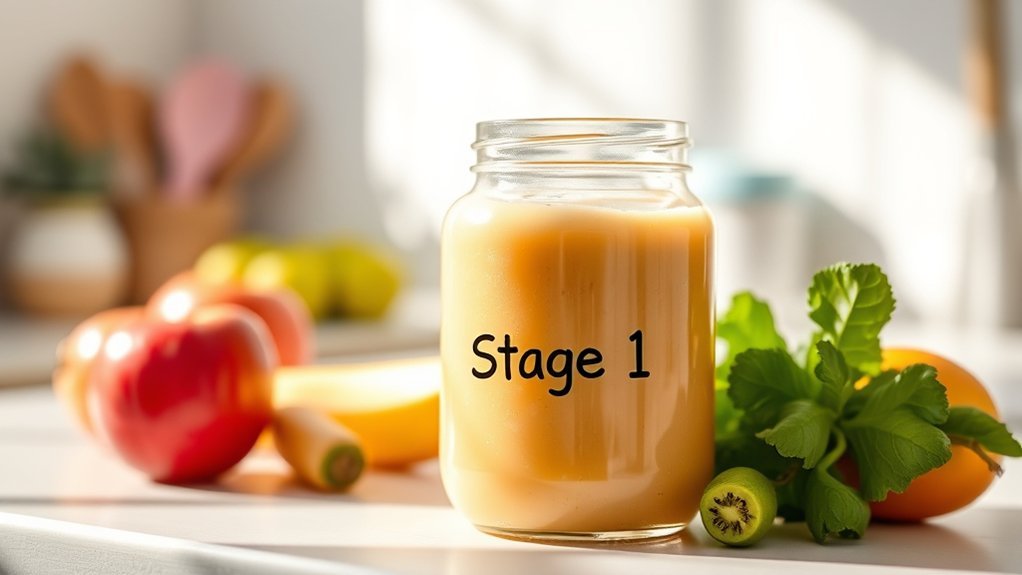
Stage 1 baby food is a common label for smooth, easy-to-swallow foods offered when a baby begins eating foods other than breast milk or infant formula. Most babies are ready at about 6 months, but readiness depends on head control, supported sitting, swallowing skills, and interest in food—not the stage number printed on a package.
Quick Answer
Stage 1 baby food usually means a completely smooth puree or thin infant cereal for a baby beginning solids at about 6 months. Good choices include iron-fortified cereal, pureed meat, beans, vegetables, fruit, egg, and other age-appropriate foods. Start only when your baby shows developmental readiness and can eat while sitting upright.
Key Takeaways
- Most babies begin complementary foods at about 6 months; starting before 4 months is not recommended.
- Readiness matters more than the age or “Stage 1” label on a package.
- Include iron- and zinc-rich foods instead of relying mainly on fruit and vegetable purees.
- Introduce common allergens in developmentally safe forms rather than delaying them without a medical reason.
- Prevent choking and contamination by seating your baby upright, supervising every bite, and serving food from a separate bowl.
At a Glance
| Typical Starting Point | About 6 months, once developmental-readiness signs are present |
| Texture | Smooth puree, mashed food, or thin iron-fortified infant cereal |
| Tools Needed | Upright highchair, small bowl, infant spoon, bib, and clean preparation tools |
| Cost | Varies; properly prepared homemade and commercial options can both be suitable |
Note: “Stage 1” is a common product label, not a test your baby must pass. Brands may use the term differently, so check the texture and ingredients and follow your baby’s developmental abilities rather than relying only on the number on the package.
What Stage 1 Baby Food Means for Your Baby’s Nutrition
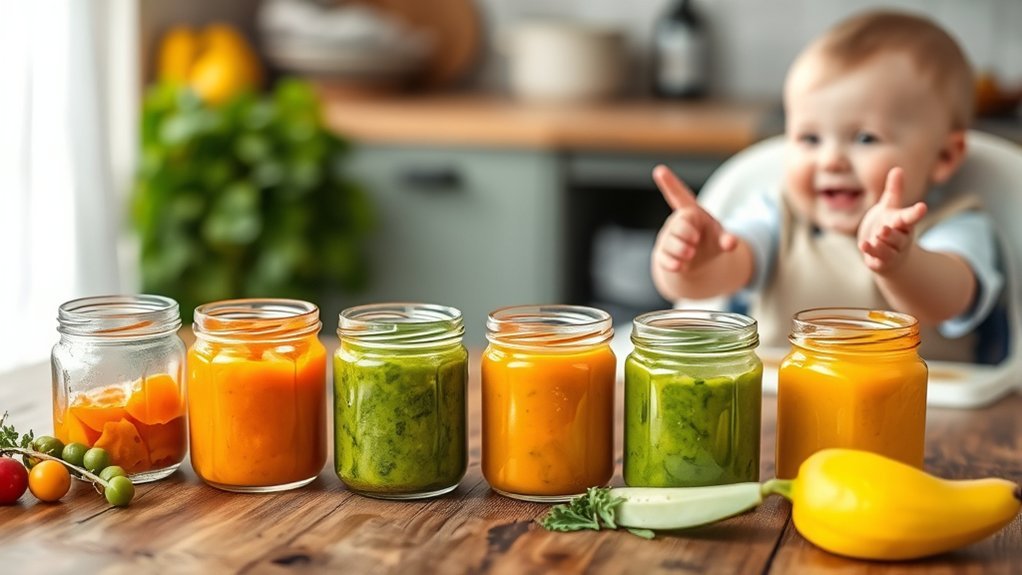
Stage 1 baby food generally has a smooth, uniform texture that requires little or no chewing. Examples include pureed vegetables, fruit, meat, beans, lentils, yogurt, thoroughly cooked egg, and iron-fortified infant cereal mixed to an easy-to-swallow consistency.
These foods are called complementary foods because they complement—not immediately replace—breast milk or iron-fortified infant formula. During the early months of solid feeding, breast milk or formula remains an important source of energy and nutrients.
The Centers for Disease Control and Prevention says most babies can begin foods other than breast milk or formula at about 6 months. There is no required order for first foods, but the choices should be nutrient-dense and suitable for the baby’s feeding skills.
A smooth texture can make early swallowing easier, but a puree made only from fruit is not nutritionally equal to an iron-rich food such as fortified cereal, meat, beans, lentils, or egg.
Signs Your Baby Is Ready for Stage 1 Foods
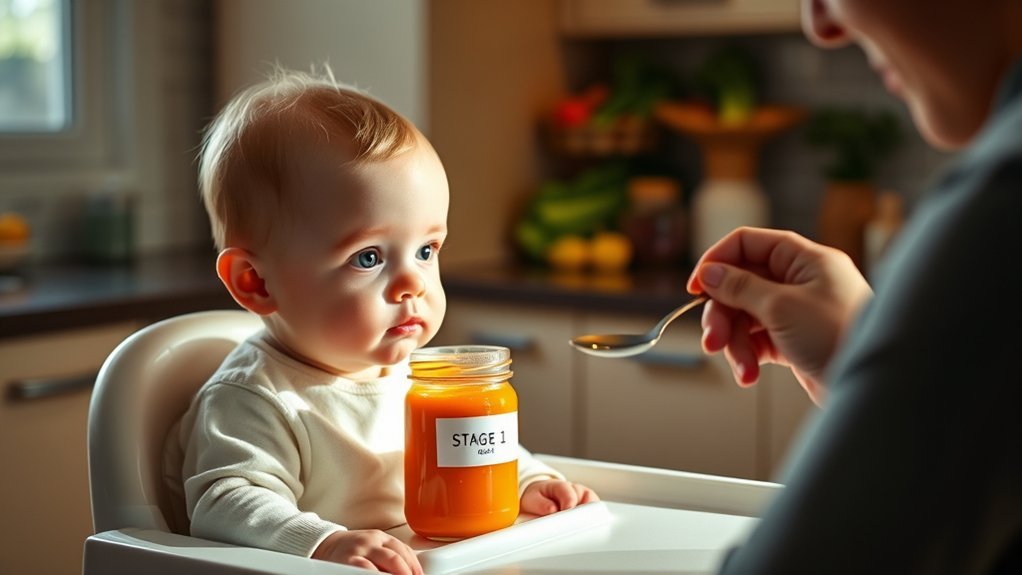
Most babies show several readiness signs at about 6 months. A birthday alone does not determine readiness, and starting solid foods before 4 months is not recommended.
Your baby may be ready when they can:
- Sit upright alone or with support and remain stable during feeding.
- Control the head and neck without repeatedly slumping forward or sideways.
- Open the mouth when food is offered.
- Bring objects toward the mouth and show interest in food.
- Move food from the front of the tongue toward the back of the mouth.
- Swallow some food instead of consistently pushing everything out with the tongue.
A baby does not have to sit completely independently, grow teeth, or finish a certain amount of food before beginning. However, a baby who cannot remain upright, has poor head control, repeatedly coughs during feeds, or has known swallowing difficulties should be evaluated before solids are introduced.
Note: Babies born prematurely or those with growth, neurological, oral-motor, or swallowing concerns may need an individualized feeding plan from their pediatrician or feeding specialist.
Best First Foods for Stage 1 Nutrition
Early foods should offer more than sweetness and vitamins. Around 6 months, iron and zinc become especially important, so include foods that provide these nutrients alongside fruits and vegetables.
Useful first-food options include:
- Iron-fortified infant cereal: Choose oat, barley, or multigrain cereal and mix it with breast milk, prepared formula, or water until smooth.
- Pureed meat or poultry: Beef, turkey, and chicken can provide iron, zinc, protein, and other nutrients.
- Beans and lentils: Cook until very soft, then puree or mash with enough liquid to create a safe texture.
- Well-cooked egg: Egg provides protein and is also a common allergen that can be introduced in an age-appropriate form.
- Plain full-fat yogurt: Choose pasteurized yogurt without added sugar. Cow’s milk products may be introduced before age 1 even though cow’s milk should not replace breast milk or formula as a beverage.
- Soft vegetables: Sweet potato, squash, peas, broccoli, carrot, and avocado can be cooked or mashed to a suitable texture.
- Soft fruit: Banana, pear, apple, peach, mango, and berries can add flavor, fiber, and vitamin C.
- Low-mercury fish: Thoroughly cook fish, remove every bone, and puree or flake it into a developmentally appropriate texture.
If you serve infant cereal, vary the grains rather than offering only rice cereal. The CDC recommends fortified oat, barley, and multigrain cereals because exclusive reliance on rice cereal may increase arsenic exposure.
Pairing an iron-rich plant food such as beans or lentils with a vitamin C source such as broccoli, berries, mango, or pear may help the body absorb plant-based iron.
How to Introduce Stage 1 Baby Food Safely
Choose a time when your baby is awake, calm, and not extremely hungry or tired. Early meals are for practicing feeding skills and exploring flavors, so do not expect your baby to eat a full container.
- Wash your hands and clean the feeding area. Use clean bowls, spoons, cutting boards, and preparation tools.
- Seat your baby upright. Use a stable highchair with appropriate support. Do not feed while your baby is lying down, crawling, walking, or riding in a moving vehicle.
- Start with a very small amount. Offer a small spoonful or two, then follow your baby’s hunger and fullness cues.
- Use an appropriate texture. At first, food may be smooth, mashed, pureed, or strained. It should not contain hard pieces, bones, seeds, or sticky lumps.
- Let your baby set the pace. Wait for the mouth to open before offering another spoonful. Stop when your baby turns away, closes the mouth, arches away, becomes distracted, or repeatedly refuses.
- Supervise every bite. Stay within arm’s reach and avoid screens or other distractions during feeding.
Pro Tip: Spoon a small serving into a separate bowl before feeding. Keep the original jar or container untouched in the refrigerator. This prevents saliva from the used spoon from contaminating the remaining food.
Gagging, Choking, and Feeding Safety
Gagging can happen while a baby learns to manage a new texture. A gagging baby may make sounds, cough, push the tongue forward, or become red in the face. Although upsetting to watch, gagging is a protective reflex.
Choking is different. A choking baby may be unable to breathe, cry, or cough effectively. The baby may become quiet or develop blue or gray coloring. Learn infant choking first aid and cardiopulmonary resuscitation from a qualified course before beginning solids.
Warning: Call 911 immediately if your baby cannot breathe, cry, or cough, becomes blue or unresponsive, or shows another sign of complete airway blockage. Never perform a blind finger sweep inside the baby’s mouth.
The CDC’s choking-hazard guidance advises avoiding whole nuts, thick spoonfuls of nut butter, popcorn, whole grapes, hard raw vegetables, tough meat, hot-dog rounds, large cheese chunks, bones, hard candy, and other foods that can block a young child’s airway.
Introducing Common Food Allergens
Common food allergens include egg, peanut, tree nuts, milk, wheat, soy, sesame, fish, and shellfish. Once your baby is developmentally ready and has tolerated a few first foods, these allergens can be introduced in safe textures rather than delayed without a medical reason.
The American Academy of Pediatrics notes that delaying allergenic foods does not prevent food allergy. For a first exposure:
- Introduce one common allergen at a time so a reaction is easier to identify.
- Offer a small amount at home when your baby is healthy and you can observe them.
- Use a safe texture, such as thoroughly cooked egg, smooth nut butter thinned into cereal or puree, plain yogurt, soft wheat cereal, or well-cooked boneless fish.
- Never give whole nuts or a thick spoonful of nut butter.
- If the food is tolerated, continue offering it in developmentally appropriate portions as part of the baby’s regular diet.
Speak with your baby’s clinician before introducing peanut if your baby has severe or persistent eczema, a known egg allergy, or a previous immediate food reaction. The clinician may recommend supervised introduction or testing.
Warning: Stop feeding the suspected food and seek medical advice if your baby develops hives, facial swelling, repeated vomiting, coughing, wheezing, or unusual lethargy. Call 911 for trouble breathing, trouble swallowing, sudden widespread swelling, collapse, or symptoms suggesting anaphylaxis.
How to Choose Commercial Stage 1 Baby Food
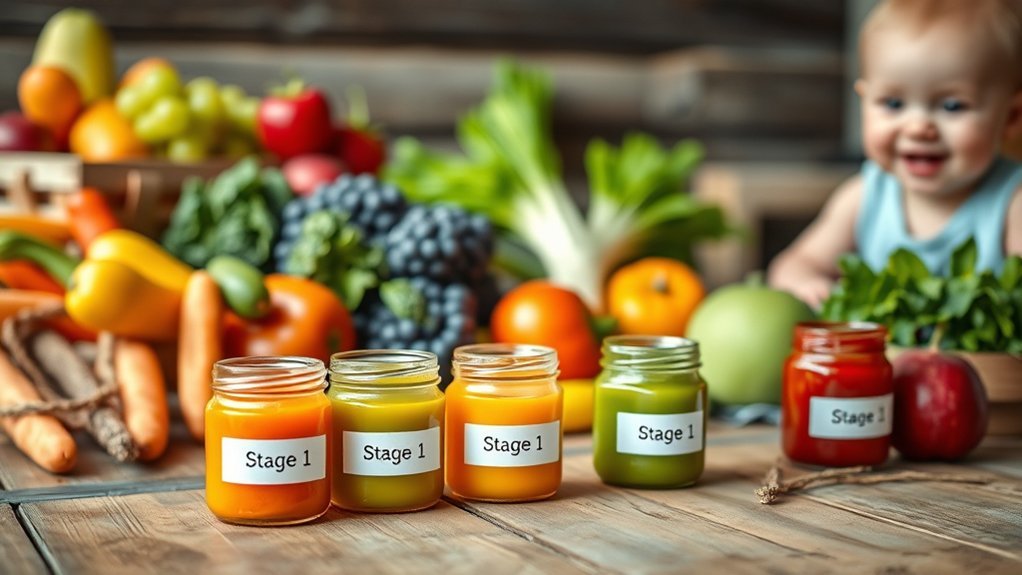
Commercial baby food can be convenient, but the stage number should not be the only factor you consider. Compare the ingredients, texture, nutrient content, packaging, and storage instructions.
Use this checklist:
- Check the ingredient list. Simple products may contain one main food plus water, but combinations can also be appropriate once their ingredients have been introduced.
- Look for iron. When buying infant cereal, select a product labeled as iron-fortified.
- Avoid added sugar. Check both the ingredient list and the Added Sugars line on the Nutrition Facts label.
- Limit sodium. Choose foods without added salt when practical and avoid products high in sodium.
- Match the texture to your baby. A product should be smooth enough for the baby’s current skills but not remain the only texture indefinitely.
- Inspect the package. Do not use leaking, swollen, cracked, unsealed, or damaged containers. Follow the manufacturer’s use-by and refrigeration instructions.
- Buy practical portions. Smaller containers may reduce waste while your baby is eating only a few spoonfuls.
- Vary foods and grains. Rotate vegetables, fruits, proteins, healthy fats, and fortified grains rather than serving the same puree every day.
Organic products are optional. According to the American Academy of Pediatrics’ guidance on metals in baby food, organic foods may contain fewer residues from some pesticides, but they can contain heavy metals at levels similar to nonorganic foods because these elements occur naturally in soil and water. Dietary variety is more useful than relying on an organic label as a guarantee of safety.
Making Homemade Stage 1 Baby Food
Homemade puree can be nutritious and affordable when it is prepared safely. Wash produce under running water, use clean utensils, and cook firm fruits, vegetables, meat, poultry, fish, and eggs thoroughly.
To make a basic puree:
- Remove bones, skin, hard seeds, pits, and other inedible parts.
- Cook the food until it can be mashed easily with a fork.
- Puree or mash it in a clean blender, food processor, mill, or bowl.
- Add a small amount of water, breast milk, or correctly prepared infant formula until the texture is easy to swallow.
- Cool cooked food promptly and divide it into small portions.
- Label refrigerated or frozen portions with the food and preparation date.
Do not add honey, sugar, salt, unpasteurized dairy, unpasteurized juice, or raw egg. Avoid homemade infant formula; commercial infant formula is produced to meet specific nutritional and safety requirements.
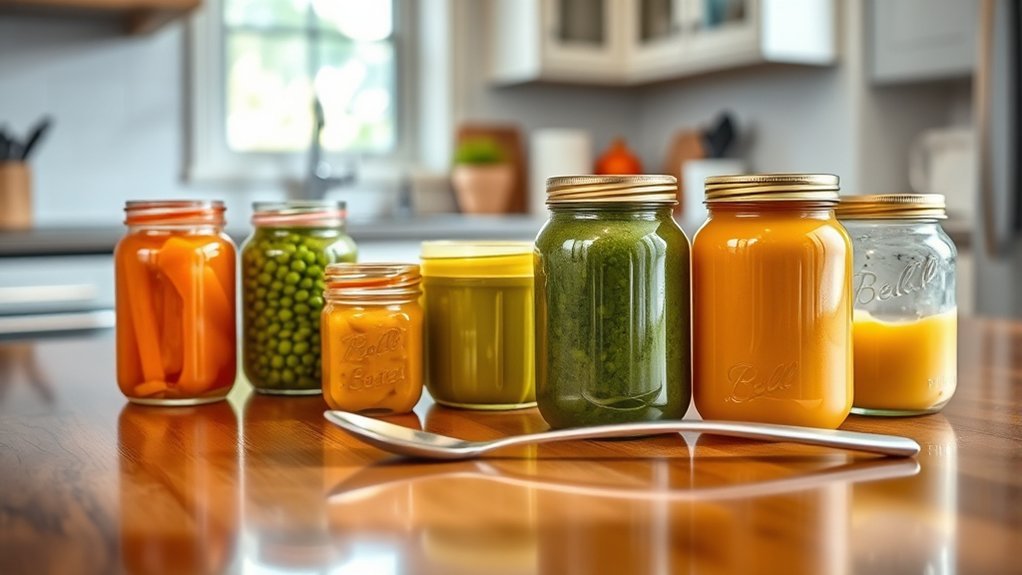
Storing Opened and Homemade Baby Food
Refrigerate perishable baby food promptly at 40°F (4°C) or below. The safe storage time depends on the ingredients:
- Strained fruit and vegetable puree: generally 2–3 days in the refrigerator.
- Strained meat or egg puree: about 1 day in the refrigerator.
- Meat-and-vegetable combinations: generally 1–2 days.
- Homemade baby food: generally 1–2 days.
These ranges come from FoodSafety.gov’s storage guidance for children under five. Follow a shorter manufacturer instruction when the package gives one.
Discard food that has been left at room temperature for more than 2 hours, or more than 1 hour in temperatures above 90°F (32°C). Throw away food left in the baby’s serving bowl after a meal because saliva can introduce bacteria. Do not return it to the original container.
Does Stage 1 Baby Food Need to Be Heated?
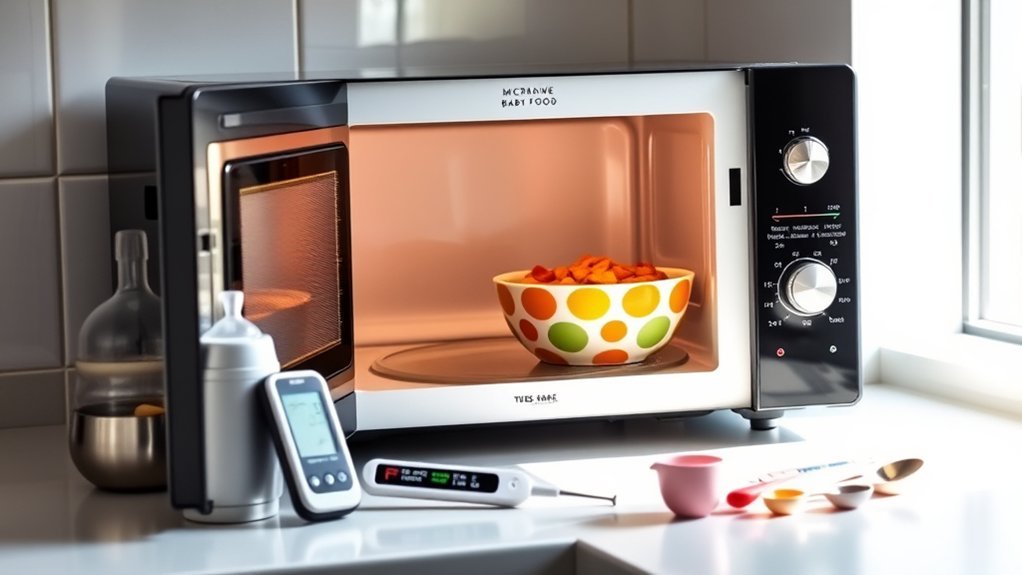
No. Baby food does not have to be warmed. It can be served cold, at room temperature, or gently warmed as long as it has been stored safely and your baby accepts the temperature.
When warming baby food:
- Transfer the portion to a microwave-safe dish instead of heating it in the jar.
- Heat only the amount you plan to serve.
- Stir thoroughly to distribute heat.
- Let the food stand briefly after heating.
- Test the temperature before feeding; it should be lukewarm, not hot.
The U.S. Food and Drug Administration warns that microwaved baby food can heat unevenly and develop hot spots. Never serve food without stirring and testing it first.
Foods and Drinks to Avoid During the Stage 1 Period
- Honey before 12 months: Honey can cause infant botulism, even when mixed into another food or used in cooking.
- Added sugars and sweeteners: Infants do not need foods or drinks with added sugar, low-calorie sweeteners, or artificial sweeteners.
- Foods high in sodium: Limit processed foods, salty snacks, processed meats, and products with substantial added salt.
- Unpasteurized food or drinks: Avoid raw milk, unpasteurized yogurt or cheese, and unpasteurized juice because they may contain harmful bacteria.
- Juice before 12 months: Whole fruit or puree is a better option. Infants younger than 12 months should not drink fruit or vegetable juice.
- Cow’s milk as a beverage before 12 months: Pasteurized yogurt and cheese may be offered earlier, but cow’s milk should not replace breast milk or formula as a drink during the first year.
- High-mercury fish: Avoid shark, swordfish, king mackerel, marlin, orange roughy, bigeye tuna, and tilefish from the Gulf of Mexico.
- Choking hazards: Avoid whole nuts, popcorn, whole grapes, hard raw vegetables, thick nut butter, hard candy, sausage rounds, and other firm or round foods.
See the CDC’s current foods and drinks to avoid or limit for additional examples.
Stage 1 Portions, Flavors, and Texture Progression
Early portions are small because your baby is learning rather than replacing full milk feeds. Begin with a small spoonful or two and offer more only when your baby remains interested. Avoid pressuring the baby to finish a jar or bowl.
Single-ingredient foods are useful at first because they make it easier to connect a reaction with a specific food. After ingredients have been introduced and tolerated, you may combine flavors such as:
- Apple and iron-fortified oatmeal
- Sweet potato and pureed lentils
- Avocado and well-cooked egg
- Pear and plain yogurt
- Peas and pureed chicken
- Banana and safely thinned peanut butter
Do not keep every meal completely smooth for longer than necessary. As your baby’s oral skills develop, gradually progress to thicker purees, mashed foods, soft lumps, and appropriately prepared finger foods. By about 7 or 8 months, many babies can eat foods from several food groups in a wider range of textures.
Move forward based on skill rather than a package label. Signs that your baby may be ready for thicker food include improved tongue movement, less pushing food out, purposeful chewing motions, and better control when bringing objects or food toward the mouth.
Note: This article provides general educational information and does not replace advice from your child’s pediatrician. Seek individualized guidance for premature birth, poor growth, severe eczema, known allergies, swallowing problems, repeated coughing during meals, or other medical concerns.
Frequently Asked Questions
Can I make homemade Stage 1 baby food?
Yes. Cook food until soft, remove bones, pits, seeds, skin, and other hard parts, then puree it with enough safe liquid to create an easy-to-swallow texture. Use clean equipment, refrigerate promptly, and freeze extra portions when they will not be used within 1–2 days.
How long can I store opened Stage 1 baby food?
Follow the product label when it gives a shorter limit. General refrigeration guidance is 2–3 days for strained fruits and vegetables, about 1 day for strained meat or egg, 1–2 days for meat-and-vegetable combinations, and 1–2 days for homemade puree. Discard any serving touched by a used spoon.
What are common allergens in Stage 1 foods?
Common allergens include egg, peanut, tree nuts, milk, wheat, soy, sesame, fish, and shellfish. Introduce them one at a time in safe forms after your baby is developmentally ready. Ask a clinician for guidance before peanut introduction if your baby has severe eczema, egg allergy, or a previous immediate reaction.
Should I heat Stage 1 baby food before serving?
Heating is optional. Safely stored baby food may be served cold, at room temperature, or lukewarm. If you warm it, transfer it to a dish, heat only a small portion, stir thoroughly, allow it to stand, and test the temperature before feeding.
Can I mix Stage 1 baby food flavors?
Yes. Introduce foods separately at first so reactions are easier to identify. Once your baby has tolerated each ingredient, you may combine them to add flavor and nutritional variety. Keep the finished texture appropriate for your baby’s current swallowing and chewing skills.
How much Stage 1 food should my baby eat?
Start with a small spoonful or two and let your baby decide whether to continue. Appetite varies by day. Stop when the baby turns away, closes the mouth, pushes the spoon away, arches back, or loses interest. Do not pressure the baby to finish a container.
When should my baby move beyond smooth Stage 1 puree?
Begin adding thicker, mashed, and softly lumpy textures as your baby gains control of food in the mouth. Do not wait for teeth; babies can manage many soft textures with their gums. Ask a pediatrician or feeding specialist for help if your baby repeatedly coughs, chokes, vomits, or cannot progress beyond very thin puree.
Conclusion
Stage 1 baby food can help your baby practice swallowing and explore new tastes, but a smooth texture is only one part of a safe and nutritious start. Begin at about 6 months when readiness signs are present, continue breast milk or formula, and offer a varied diet that includes iron-rich foods, vegetables, fruits, proteins, grains, and healthy fats.
Introduce common allergens in safe forms, follow your baby’s hunger and fullness cues, and progress to thicker textures as feeding skills improve. Careful supervision, clean preparation, correct storage, and clear emergency awareness matter more than any stage number printed on a package.
Sources
- CDC: When, What, and How to Introduce Solid Foods — starting age, readiness signs, first foods, allergen introduction, grain variety, and safe textures
- CDC: Foods and Drinks to Avoid or Limit — honey, added sugar, sodium, unpasteurized food, juice, cow’s milk, and high-mercury fish
- CDC: Choking Hazards — supervision, preparation, and foods that may block a young child’s airway
- American Academy of Pediatrics: Introducing Common Food Allergens — allergen timing, safe forms, and high-risk infants
- FoodSafety.gov: Food Safety for Children Under Five — refrigeration times and safe warming of pureed baby food
- U.S. Food and Drug Administration: Once Baby Arrives — contamination prevention, storage, honey, unpasteurized products, and microwave safety