
Responsive feeding means noticing your baby’s hunger and fullness cues and responding in a calm, timely, and age-appropriate way. You provide safe, nutritious feeding opportunities, while your baby helps decide whether to eat and when they have had enough. The approach can be used during breastfeeding, bottle-feeding, spoon-feeding, and self-feeding.
Quick Answer
Responsive feeding is a cue-based approach in which you offer appropriate food or milk, notice your baby’s signals, and respond without pressure. Feed when your baby shows hunger, allow pauses, and stop when they show fullness. A flexible feeding routine can still be used, especially after solid foods begin.
Key Takeaways
- Responsive feeding follows a simple cycle: your child signals, you notice and respond, and your child experiences a predictable response.
- The caregiver decides what, when, and where to offer food; the child helps decide whether to eat and how much.
- Hunger and fullness cues change as babies develop, so newborn cues differ from those of older babies eating solid foods.
- Responsive feeding can be used with breastfeeding, bottles, spoon-feeding, finger foods, and family meals.
- It may support appetite self-regulation and positive mealtime interactions, but it does not guarantee attachment, prevent obesity, or prevent food allergies.
What Is Responsive Feeding and Why Is It Important?

The World Health Organization recommends responsive feeding for children ages 6 to 23 months. It defines the approach as feeding that supports a child’s growing independence and responds to physical and developmental needs.
Responsive feeding generally involves three steps:
- Your child communicates. Hunger or fullness may appear through body movements, facial expressions, sounds, or words.
- You recognize and respond. You offer food or milk, provide help when needed, allow pauses, or end the feeding in a supportive way.
- Your child experiences consistency. Over time, your child learns that their signals are noticed and that feeding is predictable and safe.
This approach is not the same as letting a child choose every food or eat at any time of day. You remain responsible for offering safe, age-appropriate, nourishing choices. Your child is given reasonable control over whether to eat and how much to consume from what is offered.
Note: Responsive feeding describes how you interact during feeding. It does not replace guidance about nutrition, food safety, growth monitoring, allergy risks, or treatment for a medical feeding problem.

Power your essentials anywhere with a 999Wh pure sine wave power station delivering up to 1000W continuous with 2000W surge. It supports fast charging via USB-C PD 60W and USB-A QC 18W, plus simultaneous output for multiple devices through AC, USB, wireless, and car/DC ports. Recharge using AC, car, or solar with a built-in MPPT controller and dual cooling fans, while the upgraded battery management system protects against surges, short circuits, and overheating.

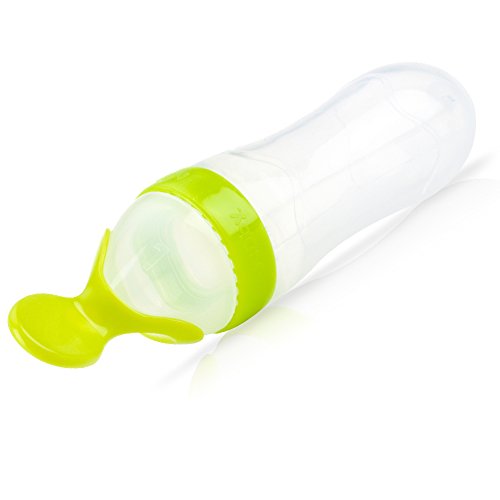
Offers a cleaner, easier way to feed baby semi-solid foods using just one hand
Potential Benefits of Responsive Feeding
Responsive feeding is intended to support a child’s developing ability to recognize hunger and fullness. It can also make feeding interactions calmer by reducing pressure and allowing the child to participate at a developmentally appropriate level.
Potential benefits include:
- Support for appetite self-regulation: Stopping at fullness cues gives a child opportunities to respond to internal signals rather than an adult-set portion.
- More positive interaction: Calm eye contact, patient assistance, and predictable responses can support trust during feeding.
- Greater feeding independence: Older babies can practice holding food, guiding a loaded spoon, or drinking from an appropriate cup with help.
- Less pressure: The child is encouraged but not forced, bribed, distracted, or required to clean the plate.
- Support for food learning: Repeated, pressure-free exposure can help children become familiar with different tastes and textures.
Responsive feeding is not about making a baby eat more or less. It is about offering appropriate nourishment and responding to the child in front of you.
The evidence should still be described honestly. WHO recommends responsive feeding, but research results differ by intervention, age, and outcome. The approach may help prevent overfeeding or underfeeding, but it should not be presented as a guaranteed way to prevent obesity, fussiness, or later eating problems.
Recognizing Baby Hunger and Fullness Cues

Babies communicate through patterns of movement, sound, attention, and behavior. A single action does not always mean hunger or fullness, so look at the full situation and learn your baby’s usual pattern.
Common hunger cues from birth to about 5 months include:
- Bringing hands toward the mouth
- Turning the head toward the breast or bottle
- Puckering, smacking, or licking the lips
- Becoming more alert or active
- Keeping the hands clenched
Crying can mean hunger, but it is often a late cue. A crying baby may need calming before they can latch or drink comfortably.
Common fullness cues from birth to about 5 months include:
- Closing the mouth
- Turning away from the breast or bottle
- Relaxing the hands and body
- Slowing or stopping sucking
- Unlatching repeatedly or falling peacefully asleep after an effective feeding
Common hunger cues from about 6 to 23 months include:
- Reaching or pointing toward food
- Opening the mouth when food is offered
- Becoming excited when food appears
- Leaning toward the spoon or food
- Using sounds, signs, gestures, or words to request more
Common fullness cues from about 6 to 23 months include:
- Closing the mouth when food is offered
- Turning the head or body away
- Pushing food or the spoon away
- Slowing down or losing interest
- Using sounds, gestures, or words to indicate they are finished
The CDC advises allowing children to decide how much they want rather than requiring them to finish a bottle, jar, bowl, or plate.
Responsive Feeding With Breastfeeding, Bottles, and Solid Foods
Responsive feeding can be adapted to the way your baby receives milk or food. The details differ, but the main principles remain the same: offer, observe, pause, and respond.
During breastfeeding:
- Offer the breast when early hunger cues appear rather than waiting for intense crying.
- Allow the baby to pause, switch sides, or finish without imposing a fixed feeding length.
- Watch and listen for effective swallowing, especially during the newborn period.
- Do not rely on cue-reading alone when a newborn is unusually sleepy, premature, jaundiced, ill, or not gaining weight as expected.
Many newborns breastfeed about 8 to 12 times in 24 hours, but this is not a permanent schedule for every baby. Feeding patterns change with age, milk transfer, growth, and the introduction of solid foods. The CDC provides age-specific breastfeeding-frequency guidance.
During bottle-feeding:
- Hold your baby close and support the head and neck.
- Hold the bottle at an angle rather than pointing it straight down, so milk flows mainly when the baby sucks.
- Allow breaks when the baby slows, releases the nipple, splays the fingers, or turns away.
- Stop when fullness cues appear, even when milk remains in the bottle.
- Never force a baby to finish a set amount solely because it was prepared.
Warning: Never prop a bottle or leave it in a baby’s mouth unattended. Do not add cereal or other solid food to a bottle unless a qualified clinician has prescribed it for a specific medical reason. These practices can increase choking and overfeeding risks.
See the CDC’s current bottle-feeding instructions for additional preparation and safety guidance.
During spoon-feeding and self-feeding:
- Offer small portions first and provide more when your child signals continued hunger.
- Wait for the child to open their mouth rather than pushing the spoon between closed lips.
- Allow the child to touch safe foods and practice guiding a loaded spoon when developmentally ready.
- Use upright seating and age-appropriate textures and shapes.
- End the meal calmly when clear fullness cues continue.
Can Responsive Feeding Include a Meal Schedule?
Yes. Responsive feeding can include a predictable routine. A routine determines when food is made available; responsiveness determines how you interact with the child and how much pressure you use.
After complementary foods begin, you can offer meals and snacks at generally consistent times while continuing breast milk or infant formula as appropriate. The child can then choose whether and how much to eat from what is offered.
The CDC recommends regular eating opportunities and advises against allowing young children to graze continuously throughout the day. Predictability can help a child arrive at meals with an appetite while reducing pressure on any one meal.
A useful division of responsibility is:
- The caregiver decides: what foods are offered, when they are offered, where feeding takes place, and how the food is prepared safely.
- The child decides: whether to eat and how much to consume from the foods provided.
Responsive Feeding Compared With Pressuring or Distracted Feeding
Responsive feeding is better compared with specific nonresponsive behaviors rather than with all “traditional” feeding. A family can use cultural traditions, spoon-feeding, scheduled meals, or shared family dishes and still feed responsively.
- Responsive approach: Offer food, observe cues, encourage gently, and accept a clear refusal.
- Pressuring approach: Require a set number of bites, force the spoon, insist on an empty plate, or shame the child for eating too little.
- Distracted approach: Rely on screens, toys, chasing, or repeated tricks to get food into a child who is signaling fullness.
- Restrictive approach: Ignore hunger cues or tightly limit appropriate food because of fear about the child’s weight without clinical guidance.
Encouragement is still appropriate. You can offer a food again, model eating it, describe it, or invite one taste. The key is to avoid turning encouragement into pressure.
How to Practice Responsive Feeding at Home

- Create a calm setting. Seat your child safely, reduce major distractions, and stay close enough to observe their face and body.
- Offer an appropriate feeding opportunity. Provide breast milk, infant formula, or age-appropriate food based on the child’s age and feeding plan.
- Start with a manageable amount. Small servings reduce waste and make it easy to offer more.
- Pause and observe. Give the child time to swallow, rest, look at the food, or signal for more.
- Respond to the signal. Offer more for continued hunger, assist when help is requested, or stop when fullness cues persist.
- End without conflict. Remove the food calmly instead of bargaining, forcing another bite, or using dessert as a reward.
- Offer another opportunity later. One light meal is usually less important than the child’s intake and growth pattern over time.
Pro Tip: Start with less food than you think your child may eat. You can always offer more. This makes it easier to respect fullness cues without worrying about a large untouched serving.
Common Challenges and Practical Solutions
Your baby’s cues are unclear.
Look for patterns rather than relying on one movement. Hands in the mouth can indicate hunger, self-soothing, or teething. Consider when the last feeding occurred, whether the baby is alert, and what happens after food or milk is offered.
Your child refuses a meal.
A calm refusal can be accepted. Avoid replacing every refused meal immediately with a preferred snack. Offer the next planned meal or snack and monitor the child’s overall intake, energy, hydration, and growth.
Your child eats different amounts each day.
Appetite commonly varies with activity, sleep, growth, teething, and minor illness. Continue offering balanced choices without demanding the same portion at every meal.
Your baby becomes distracted while feeding.
Try a quieter environment and shorter feeding session. Distraction can also mean the baby needs a pause or is no longer hungry.
You worry that your child has not eaten enough.
Focus on growth, wet diapers, energy, developmental progress, and intake over several days rather than one meal. A pediatrician can determine whether the pattern is medically concerning.
Different caregivers use different feeding rules.
Agree on a few simple practices: no forced bites, no bottle propping, no pressure to clean the plate, and consistent responses to clear fullness cues.
Siblings eat very different amounts.
Avoid comparing portions or praising one child for eating more. Children can have different appetites and growth needs even within the same family.
When to Seek Professional Feeding Help
Responsive feeding is not a substitute for medical evaluation. Contact your child’s pediatrician, lactation professional, registered dietitian, or feeding specialist when feeding concerns are persistent or affect growth, hydration, comfort, or safety.
Warning: Seek prompt medical advice if your baby is difficult to wake for feeds, feeds much less than usual, has fewer wet diapers, is not gaining weight as expected, repeatedly coughs or chokes while eating, has breathing trouble, shows signs of dehydration, appears to be in pain during feeds, or has frequent forceful vomiting. Call emergency services for breathing difficulty, blue or gray coloring, loss of consciousness, or a severe allergic reaction.
Babies born prematurely and children with reflux, oral-motor differences, developmental conditions, food allergies, heart or lung disease, or known swallowing problems may need an individualized feeding plan.
Note: This article provides general educational information and does not replace advice from a clinician who knows your child’s medical history, growth, and feeding skills.
Frequently Asked Questions
Can responsive feeding be practiced with older children?
Yes. With toddlers and older children, caregivers can provide regular meals and snacks, choose what foods are available, and avoid pressure or food-based rewards. The child can decide whether to eat and how much to consume from the choices offered.
What are common challenges with responsive feeding?
Common challenges include unclear cues, food refusal, distraction, variable appetite, fear that the child is not eating enough, and inconsistent practices among caregivers. A simple routine, small portions, reduced distractions, and attention to growth over time can help.
How does responsive feeding affect siblings?
Responsive feeding does not determine sibling relationships. However, applying the same pressure-free rules to each child can reduce portion comparisons and mealtime conflict. Each child should be allowed to respond to their own appetite and developmental needs.
Is responsive feeding suitable for every feeding method?
Responsive principles can be used with breastfeeding, expressed milk, infant formula, spoon-feeding, and age-appropriate self-feeding. Children with medical, growth, oral-motor, or swallowing concerns may need a clinician-directed plan that modifies ordinary cue-based practices.
Can responsive feeding help prevent food allergies?
Responsive feeding itself does not prevent food allergies. Allergy-prevention guidance concerns when and how allergenic foods are introduced. Infants with severe eczema, egg allergy, an existing food allergy, or a previous reaction should receive individualized advice before peanut or other allergenic foods are introduced.
Should I stop feeding after one fullness cue?
Pause first and observe. A brief head turn or pause may mean the child needs a break. When fullness cues continue—such as repeatedly closing the mouth, turning away, pushing food aside, or losing interest—end the feeding without pressure.
What should I do when my baby refuses food?
Accept the refusal calmly and offer another planned eating opportunity later. Continue exposing the child to suitable foods without forcing a taste. Seek professional advice if refusal is persistent, limits the diet severely, causes distress, or occurs with poor growth, pain, coughing, choking, or vomiting.
Conclusion
Responsive feeding combines structure with careful attention to your child. You provide safe milk or food at appropriate times, observe hunger and fullness cues, and respond without force. This gives your baby opportunities to participate in feeding and practice appetite self-regulation while you remain responsible for nutrition, routine, and safety.
Progress will not look the same at every meal. Appetite can change from day to day, and cues may take time to understand. Focus on calm repetition and your child’s overall growth and well-being rather than on finishing a particular bottle, bowl, or plate.
Sources
- World Health Organization: Guideline for Complementary Feeding of Infants and Young Children 6–23 Months — responsive-feeding definition, recommendation, benefits, and evidence limits
- CDC: Signs Your Child Is Hungry or Full — age-specific hunger and fullness cues
- CDC: About Feeding From a Bottle — bottle position, feeding pauses, fullness cues, and safety
- CDC: How Much and How Often to Breastfeed — breastfeeding frequency and age-related changes
- CDC: How Much and How Often to Feed — small portions, feeding opportunities, and meal routines
- National Institute of Allergy and Infectious Diseases: Peanut Allergy Prevention Guidelines — risk-based guidance for introducing peanut-containing foods