Cold baby food can be safe for a baby who is developmentally ready for solid foods. The temperature is usually a matter of preference; the important safety checks are proper refrigeration, clean serving utensils, age-appropriate texture, and direct supervision. Some babies readily accept chilled puree or yogurt, while others prefer food at room temperature or slightly warm.
Quick Answer
Yes. A baby who is ready for solids can eat baby food directly from the refrigerator. Keep the refrigerator at 40°F (4°C) or below, use the food within the correct storage window, serve it from a separate bowl with a clean spoon, and make sure its texture is safe for your baby’s development.
Key Takeaways
- Cold puree, mashed food, and pasteurized yogurt do not need to be warmed when they have been stored and handled safely.
- Do not feed directly from a jar and then save it. Transfer one portion to a clean bowl before feeding.
- Refrigerator limits vary: strained meats and eggs last less time than strained fruits and vegetables.
- Warming is optional. The 165°F rule applies when reheating previously cooked leftovers, which must then cool before serving.
- Food texture, size, posture, and supervision affect choking risk more than whether the food is cold or warm.
At a Glance
| Time Required | About 1–3 minutes |
| Difficulty | Easy |
| Tools Needed | Clean bowl and spoon; optional food thermometer when reheating cooked leftovers |
| Cost | No added cost beyond the food and storage container |
Can Babies Safely Eat Cold Puree From the Fridge?
Yes, provided your baby is ready for complementary foods and the puree has remained safely refrigerated. The CDC recommends introducing foods other than breast milk or formula at about 6 months, when a baby can control their head, sit with support, bring food toward the mouth, and swallow rather than push food back out.
There is no general requirement to warm refrigerated baby food before serving it. A chilled fruit puree, vegetable puree, or pasteurized yogurt can be served cold if it is within its storage limit and has not been contaminated by a used spoon.
Cold food is not automatically safer or less safe than warm food. Safety depends on how the food was prepared, how long it has been stored, whether it remained at 40°F (4°C) or below, and whether its texture suits your baby’s eating skills.
Note: This guidance covers purees, mashed foods, yogurt, and other complementary foods. Breast milk and infant formula have separate preparation, storage, and discard rules.
Power your essentials anywhere with a 999Wh pure sine wave power station delivering up to 1000W continuous with 2000W surge. It supports fast charging via USB-C PD 60W and USB-A QC 18W, plus simultaneous output for multiple devices through AC, USB, wireless, and car/DC ports. Recharge using AC, car, or solar with a built-in MPPT controller and dual cooling fans, while the upgraded battery management system protects against surges, short circuits, and overheating.

Premium Baby Food Storage Containers: The set has 8 food storage containers, 4 oz each. 8 colors, 1 of each color. There are many colors for easy differentiation of use and a large number to meet the daily needs of baby use. A pen can be used to write the name, date or other information on the lid to remind you what is inside the jar. Perfect for storing homemade baby food, solid baby food, fruit and vegetable purees, jams, etc

Includes 12 glass jars & lids for batch prepping multiple baby meals at once
How to Serve Cold Baby Food Safely
- Confirm that your baby is ready for the food. Use a smooth or soft texture that matches your baby’s development and any advice from their pediatrician.
- Check the container. Do not use a commercial jar with a broken seal, chipped glass, rusty lid, swelling, leakage, or an unusual appearance.
- Wash your hands and use clean utensils. Clean bowls, spoons, blenders, and storage containers reduce cross-contamination.
- Transfer one serving to a separate bowl. Keep the untouched food in its original container and return it promptly to the refrigerator.
- Check the texture. Puree should not contain hard pieces, bones, seeds, pits, or round chunks that could block the airway.
- Seat and supervise your baby. Keep your baby upright and watch closely throughout the meal.
- Discard food from the serving bowl after the meal. Do not return food to storage after the spoon has been in your baby’s mouth.
Warning: Never feed directly from a baby-food jar and then refrigerate the remainder. Saliva carried back by the spoon can introduce bacteria into the jar, and refrigeration may not stop every organism from growing.
Pro Tip: Start with a small portion. You can add more from the untouched container if your baby is still hungry, but you cannot safely save food left in the serving bowl.
How to Warm Up Baby Food Safely
Warming baby food is optional when the food is already safe to eat. Some babies prefer food cold, while others accept it more readily when it is lukewarm. Do not make food hot enough to burn your baby’s mouth.
Using a Microwave
- Transfer the portion to a microwave-safe dish. Do not microwave food in its jar.
- For about four ounces of solid baby food, federal guidance suggests microwaving for approximately 15 seconds on high power.
- Stir the food thoroughly to spread the heat and break up hot spots.
- Let it stand for at least 30 seconds.
- Test a small amount before serving. It should feel lukewarm, not hot.
The FoodSafety.gov baby-food guidance recommends heating baby-food meats, meat sticks, and eggs on the stovetop rather than in a microwave because their fat content can cause splattering and uneven overheating.
When Is 165°F Required?
If you are reheating a previously cooked leftover rather than simply warming refrigerated puree, heat the leftover to an internal temperature of 165°F (74°C). Stir it, verify the temperature in more than one spot, and then allow it to cool to a safe lukewarm temperature before feeding your baby.
Heating cannot reliably correct unsafe storage or contamination from saliva. When food has been left out too long or has contacted a used spoon, discard it instead of trying to make it safe by reheating.
Recognizing Risks of Cold Baby Food
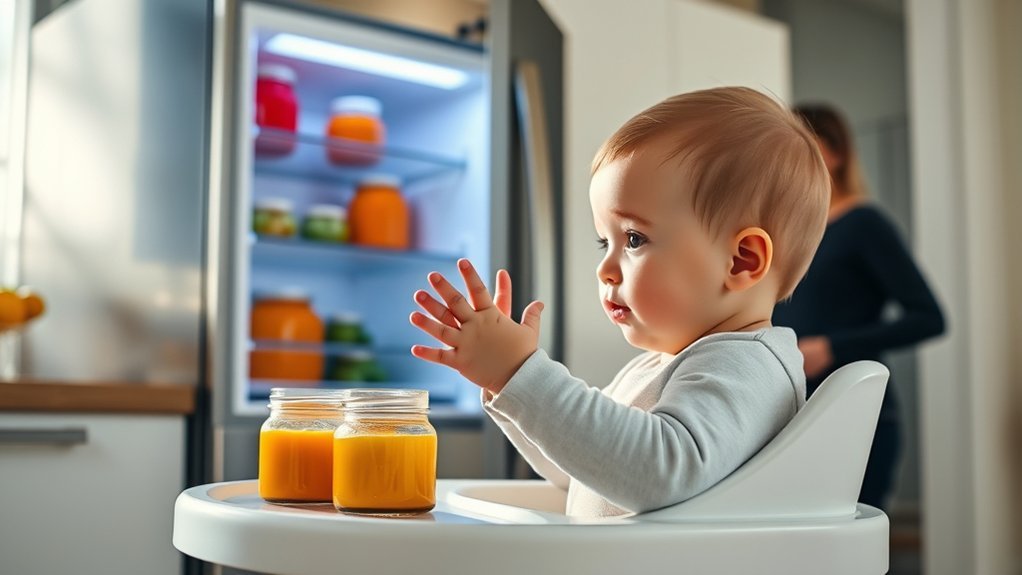
The main risks are usually not caused by the food being cold. They come from unsafe storage, contamination, an unsuitable texture, an allergic reaction, or an underlying feeding problem.
Unsafe Storage and Contamination
Discard perishable baby food that has been without refrigeration for more than two hours. When the surrounding temperature is above 90°F (32°C), such as in a hot car or at an outdoor event, the limit drops to one hour. Transport food in an insulated cooler with a cold source when refrigeration is unavailable.
Also discard food when you do not know how long it has been out, when its seal was damaged, or when it has contacted a used spoon. Do not rely only on smell or appearance to decide whether questionable food is safe.
Choking Hazards
According to the CDC’s choking-prevention guidance, food should match the child’s developmental level in texture, shape, and size. Keep your baby sitting upright, avoid distractions, and watch continuously during meals.
Cook hard fruits and vegetables until they are soft enough to mash. Do not serve whole grapes, uncut cherry tomatoes, hard raw apple or carrot pieces, chunks of meat or cheese, whole nuts, spoonfuls of thick nut butter, popcorn, or other hard, sticky, or round foods.
Allergic Reactions and Feeding Problems
A food allergy is a reaction to the food itself, not to whether it was served cold. Stop feeding the food and seek medical advice if your baby develops hives, repeated vomiting, unusual swelling, or another concerning reaction after eating it.
Warning: Seek emergency help immediately if your baby cannot breathe, cough, or cry; develops trouble breathing; or has swelling of the tongue, lips, or face after eating. Follow your baby’s emergency allergy plan when one has been prescribed.
Talk with your pediatrician if your baby repeatedly coughs, chokes, seems to have pain when swallowing, refuses many textures, or has been diagnosed with a swallowing or feeding disorder. Babies who were born prematurely, have a weakened immune system, or follow a medical feeding plan may need individualized advice.
How to Observe Your Baby’s Preferences for Cold Food
Offer a small amount and watch your baby’s cues. Opening the mouth, leaning toward the spoon, and continuing to accept bites suggest interest. Turning away, closing the mouth, slowing down, or becoming distracted may mean the baby is full rather than that the food temperature is wrong.
You can offer the same familiar food cold on one day and lukewarm on another. Avoid pressuring your baby to eat either version. Temperature preferences can change from meal to meal and do not need to be trained.
Do not label one grimace or refusal as a food aversion. Babies often need time to adjust to unfamiliar flavors and textures. Persistent distress, gagging with many foods, extreme texture restriction, or poor growth deserves discussion with a pediatrician or qualified feeding specialist.
Cold is a preference. Safe storage, clean serving, and developmentally appropriate texture are the essential safety checks.
Tips for Storing and Reheating Baby Food Safely
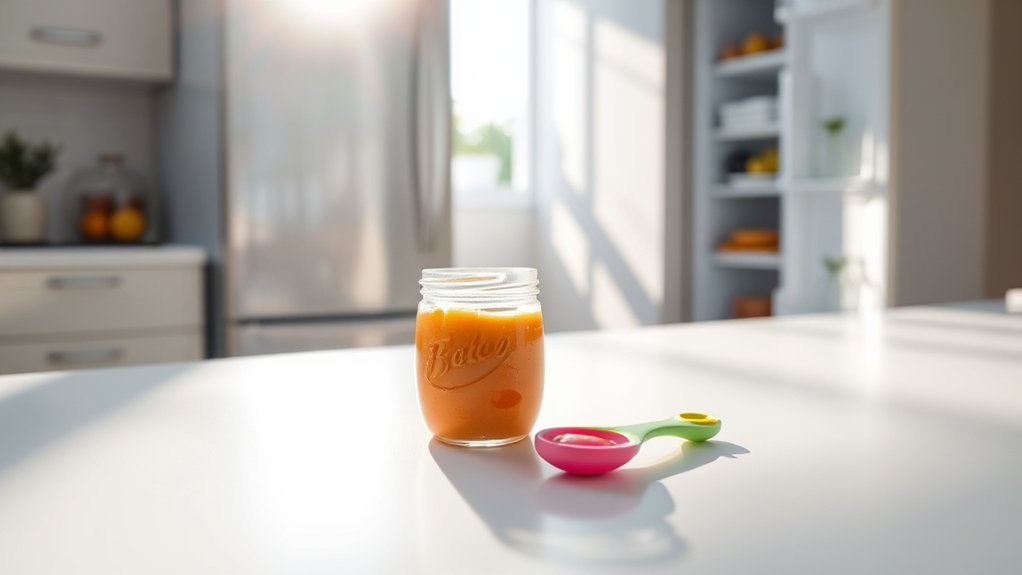
The following federal time limits apply to opened or freshly made pureed and solid baby foods stored at 40°F (4°C) or below. Follow the product label when it gives a shorter limit.
| Baby Food Type | Refrigerator | Freezer |
|---|---|---|
| Strained fruits and vegetables | 2–3 days | 6–8 months |
| Strained meats and eggs | 1 day | 1–2 months |
| Meat-and-vegetable combinations | 1–2 days | 1–2 months |
| Homemade baby foods | 1–2 days | 1–2 months |
- Keep the refrigerator cold: Maintain a temperature of 40°F (4°C) or below and store baby food away from the frequently opened door.
- Date each container: Mark homemade food and opened commercial food with the preparation or opening date.
- Use small containers: Freeze or refrigerate baby food in meal-size portions so only the needed amount is handled.
- Thaw safely: Thaw frozen food in the refrigerator rather than on the counter. Remove only the portion needed for the meal.
- Do not refreeze served food: Discard anything that has touched your baby’s spoon or mouth.
- Avoid repeated temperature cycles: Repeated warming and cooling increase handling and reduce quality. Portion the food before warming so the main container remains cold and untouched.
- Use a cooler for travel: Keep perishable baby food with ice or frozen gel packs until it can be refrigerated or served.
Frequently Asked Questions
Can babies eat cold fruits and vegetables from the fridge?
Yes, when the baby is ready for solids and the food has an appropriate texture. Puree, mash, or cook hard produce until soft. Do not serve hard raw carrot, raw apple chunks, whole grapes, uncut tomatoes, or similarly firm and round pieces.
What are the signs of food aversion in babies?
Repeated distress, strong refusal across many meals, or difficulty accepting multiple age-appropriate textures may suggest a feeding concern. Turning away once, closing the mouth, or slowing down often means the baby is full. Discuss persistent problems with a pediatrician.
How can I tell whether my baby prefers warm food?
Offer a small amount of the same familiar food at different safe temperatures on separate occasions. Your baby may open their mouth and continue eating at one temperature but turn away from another. Respect fullness cues and avoid pressuring the baby to continue.
Are there exceptions to serving cold baby food?
Yes. Follow individualized instructions when a baby has a swallowing disorder, feeding tube, weakened immune system, history of prematurity, oral sensitivity, or a clinician-directed feeding plan. A pediatrician or feeding specialist may recommend a particular texture or temperature.
Is it safe to freeze and reheat baby food multiple times?
Use meal-size portions so food is not repeatedly thawed, warmed, cooled, and handled. Thaw only what you need in the refrigerator. Never refreeze or save food that has touched your baby’s mouth or spoon.
Can babies eat cold yogurt?
Pasteurized plain yogurt can generally be introduced with other complementary foods at about 6 months. Choose an age-appropriate texture, avoid products with added sugar when possible, keep the yogurt refrigerated, and watch for possible milk-allergy symptoms.
Does all refrigerated baby food need to be heated to 165°F?
No. Safely stored puree can be served cold or warmed only until lukewarm. Heat to 165°F when reheating a previously cooked leftover, and then let it cool before serving. Do not use heat to rescue food that was stored improperly or contaminated by a used spoon.
Conclusion
Babies who are ready for solid foods can safely eat cold baby food from the refrigerator. Warming is optional, not a requirement. Focus on the correct storage time, a clean separate serving bowl, safe texture, upright seating, and close supervision. Discard food that has been left out too long or touched by a used spoon, and follow your pediatrician’s guidance when your baby has special feeding or medical needs.
Sources
- FoodSafety.gov: People at Risk—Children Under Five — Baby-food refrigerator and freezer limits, safe microwaving, and food-safety precautions.
- U.S. Food and Drug Administration: Once Baby Arrives — Jar safety, clean utensils, saliva contamination, refrigeration, and travel guidance.
- Centers for Disease Control and Prevention: When, What, and How to Introduce Solid Foods — Readiness, complementary-food timing, texture, allergens, and preparation.
- Centers for Disease Control and Prevention: Choking Hazards — Safe posture, supervision, food preparation, and common choking hazards.
- FoodSafety.gov: Safe Minimum Internal Temperatures — The 165°F reheating requirement for leftovers.
- National Institute of Allergy and Infectious Diseases: Food Allergy — Food-allergy risks and severe allergic reactions.