Opened or freshly prepared baby food should be handled carefully because infants and young children are more vulnerable to foodborne illness. Under normal conditions, perishable baby food should not stay at room temperature for more than two hours. Food that has been served to your baby needs even more caution because saliva can contaminate it.
Quick Answer
Opened or freshly made baby food should not stay at room temperature for more than 2 hours. If the temperature is above 90°F (32°C), limit that to 1 hour. Food that has been in your baby’s serving dish or contacted by a used spoon should be discarded after the meal.
Key Takeaways
- Keep opened or freshly made baby food at room temperature for no more than 2 hours, or 1 hour when temperatures are above 90°F (32°C).
- Discard food left in your baby’s serving dish after the meal because saliva from a used spoon can introduce bacteria.
- Refrigerate untouched strained fruits and vegetables for 2–3 days, strained meats and eggs for 1 day, and homemade baby food for 1–2 days.
- Keep your refrigerator at 40°F (4°C) or below and follow a product’s label when it gives a shorter storage period.
- Do not rely on smell, color, or texture alone to decide whether baby food is safe. Harmful bacteria may be present without obvious spoilage.
At a Glance
| Time Required | About 1–2 minutes to portion, cover, and refrigerate food safely |
| Difficulty | Easy |
| Tools Needed | Clean spoon, separate serving bowl, covered container, refrigerator; appliance thermometer recommended |
| Cost | No special purchase is normally required |
Essential Baby Food Safety Guidelines
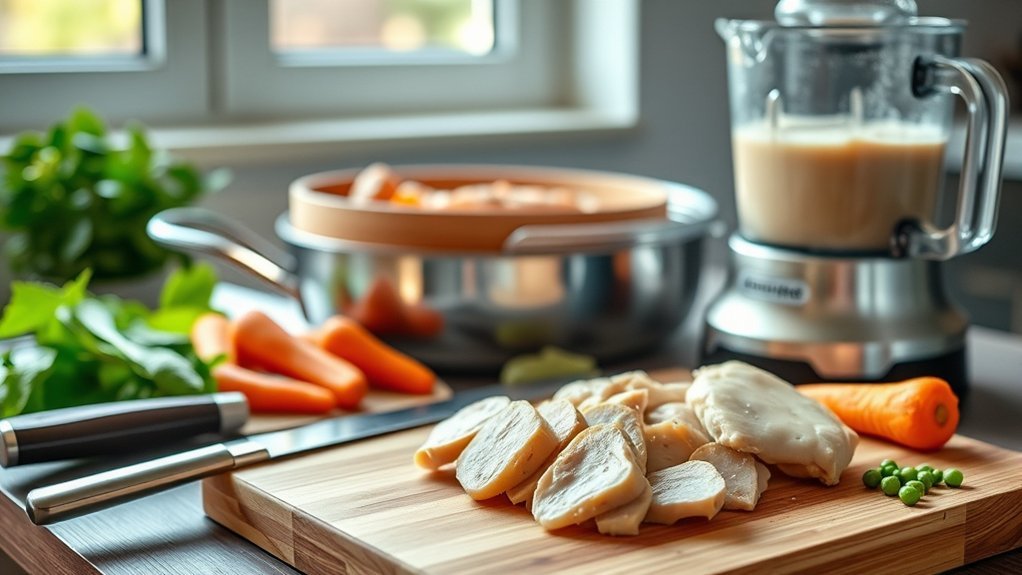
Good baby food safety starts before the first spoonful. Children under five have developing immune systems, which makes foodborne illness more concerning for them. FoodSafety.gov recommends careful cleaning, cooking, chilling, and food handling for young children.
- Wash first: Wash your hands and use clean bowls, spoons, food processors, and other equipment that will touch your baby’s food.
- Watch the clock: Do not leave perishable baby food at room temperature longer than two hours.
- Use the hot-weather rule: If the temperature is above 90°F (32°C), refrigerate or discard perishable food within one hour.
- Keep the refrigerator cold: Maintain a refrigerator temperature of 40°F (4°C) or below.
- Separate the serving: Spoon the amount you expect your baby to eat into a clean bowl, then refrigerate the untouched remainder promptly.
FDA guidance says baby food solids and liquids should not remain at room temperature for more than two hours.
Warning: Do not feed directly from a jar and then refrigerate that same jar. A used spoon can carry saliva back into the food. Put a serving in a separate dish and discard whatever remains in that dish after the meal.
For commercial baby food, inspect the container before opening. FDA guidance says the safety button on a jar lid should be down and the lid should pop when first opened. Do not use jars with damaged glass, rusty lids, or a broken seal. Also follow any storage or use-by directions printed on the package.
Power your essentials anywhere with a 999Wh pure sine wave power station delivering up to 1000W continuous with 2000W surge. It supports fast charging via USB-C PD 60W and USB-A QC 18W, plus simultaneous output for multiple devices through AC, USB, wireless, and car/DC ports. Recharge using AC, car, or solar with a built-in MPPT controller and dual cooling fans, while the upgraded battery management system protects against surges, short circuits, and overheating.

SET OF 6/12 4OZ SILICONE BABY FOOD CONTAINERS - Make healthy, homemade baby food a breeze with our 6/12-pack of silicone baby food containers. Perfect for both storing breastmilk and introducing solid foods to little ones. Each baby food storage container has measurement markings and baby daycare labels, making portioning and labeling a cinch!

Perfect Size ---- The set comes with 4 narrow organizer bins. The size of each clear bin is 13.86’’ L x 3.46” W x 3.86” H, perfect for most breast milk bags. Compact enough to fit standard fridges perfectly from front to back, ensuring milk supplies won't get lost. Please measure before buying: This bin is 13.86'' long and may not fit mini/compact fridges with a depth under 15'' (38cm).
How Long Can Baby Food Be Left Out?
The basic limit is two hours at room temperature. The important exception is hot conditions: when the air temperature is above 90°F (32°C), the limit drops to one hour. This rule applies to perishable baby food whether it is homemade or commercially prepared after opening.
Ideal Time Limits
| Situation | Safe Action |
|---|---|
| Opened or freshly made baby food at normal room temperature | Refrigerate or freeze within 2 hours; discard it if it has been out longer. |
| Baby food when the temperature is above 90°F (32°C) | Refrigerate or place in a cooler with a cold source within 1 hour; discard after that limit. |
| Food in the baby’s serving bowl | Discard what remains after the meal instead of saving it. |
| Jar or container touched by a used feeding spoon | Do not return it to the refrigerator for another feeding. |
| Untouched remainder in the original container | Cover and refrigerate promptly, then use within the appropriate storage period or the manufacturer’s shorter limit. |
| Unopened shelf-stable jar or pouch | Store according to the package directions and observe the use-by date and seal condition. |
Note: There is no separate one-hour room-temperature rule just because a purée contains meat. The one-hour rule applies when the surrounding temperature is above 90°F (32°C). Meat and egg baby foods do, however, have a shorter refrigerator-storage period.
Signs of Spoilage
Changes in smell, appearance, or texture can tell you when baby food should clearly be discarded. Mold, an unusual odor, leaking packaging, or unexpected bubbling are all reasons to throw the food away.
However, normal appearance does not prove that food is safe. FDA guidance notes that disease-causing bacteria can be present even when food does not look, smell, or taste spoiled. Use the time limit, refrigerator temperature, handling history, package instructions, and storage date as your main safety checks.
Recognizing Signs of Baby Food Spoilage
Visible spoilage still matters. When something looks or smells wrong, do not taste it to investigate. Discard it.
Color And Texture Changes
Some foods naturally darken or separate during storage, so a color or texture change by itself does not always identify dangerous food. More concerning signs include:
- Visible mold growth.
- Unexpected bubbling, fizzing, or a swollen container.
- Leaking or damaged packaging.
- A major texture change combined with an unusual smell or other spoilage signs.
When you are unsure how long a perishable food has been unrefrigerated, the safer choice is to discard it rather than depend on appearance.
Unpleasant Odors And Mold
A foul or unusual odor is a clear reason not to serve the food. Visible mold also means the food should be discarded rather than scraping off the affected area and serving the rest.
Do not taste-test questionable food. At the same time, remember that a normal smell cannot guarantee safety because pathogenic bacteria do not always create obvious spoilage.
Safe Serving Practices for Baby Food
Safe serving is mainly about preventing saliva and dirty utensils from contaminating food you plan to save.
- Wash your hands before preparing or serving food.
- Use a clean spoon and bowl for each feeding.
- Spoon a small serving from the jar or storage container into a separate dish.
- Do not put a spoon that has been in your baby’s mouth back into food you plan to save.
- Discard the food remaining in the serving dish after the meal.
- Promptly cover and refrigerate only the portion that stayed untouched.
- If your baby eats directly from a pouch, treat the remaining food as saliva-exposed and do not save it for another feeding.
Pro Tip: Start with a small serving. You can always add more from the untouched container with a clean utensil. This reduces waste while keeping the food you plan to refrigerate separate from saliva.
Travel and Hot-Weather Feeding
For trips, daycare drop-offs, or meals away from home, keep perishable baby food in an insulated cooler with an adequate cold source. The FDA recommends keeping infant food cold during travel and not using perishable food that has been without refrigeration or a cold source for more than two hours.
On a hot day above 90°F (32°C), use the stricter one-hour limit. A parked vehicle can become much hotter than the outside air, so do not use the car as food storage.
How to Store Leftover Baby Food Safely
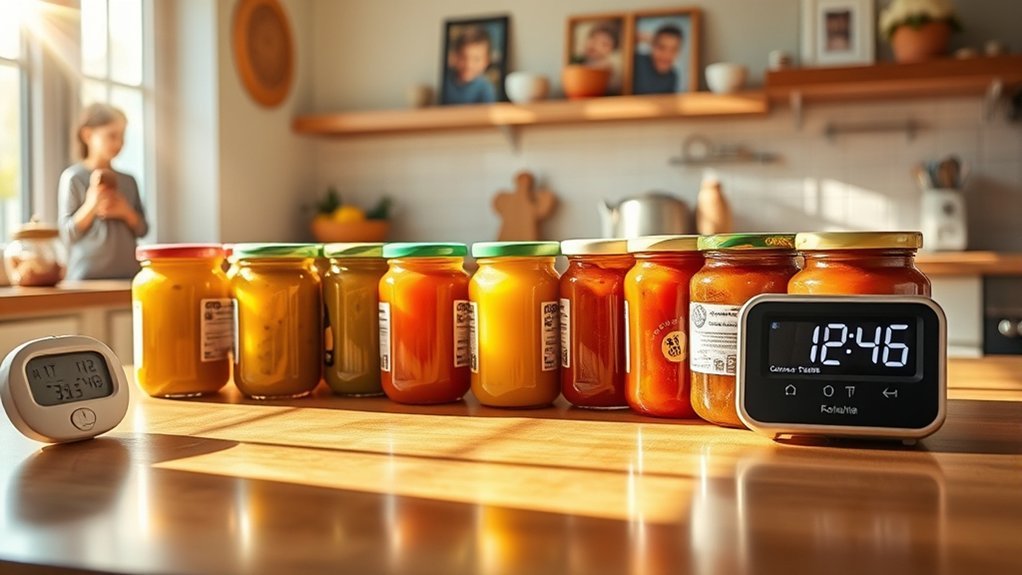
Only save baby food that has remained untouched by your baby’s mouth or used spoon. Refrigerate it promptly in a clean, covered container at 40°F (4°C) or below.
The current FoodSafety.gov storage guidance for children under five, last reviewed May 28, 2025, gives these refrigerator and freezer limits:
| Baby Food Type | Refrigerator | Freezer |
|---|---|---|
| Strained fruits and vegetables | 2–3 days | 6–8 months |
| Strained meats and eggs | 1 day | 1–2 months |
| Meat and vegetable combinations | 1–2 days | 1–2 months |
| Homemade baby foods | 1–2 days | 1–2 months |
These are general federal storage limits. When a commercial jar, tub, or pouch gives a shorter refrigeration period after opening, follow the manufacturer’s instructions.
Freezing and Thawing Baby Food
Freeze homemade food in small portions so you can thaw only what you need. Label containers with the food and date before freezing.
Freezing stops most bacterial growth, but it does not make food safe again if it has already spent too long at room temperature. Food that has exceeded the two-hour limit—or the one-hour limit above 90°F—should be discarded rather than frozen.
For simple, safe thawing, move frozen baby food to the refrigerator and allow it to thaw there. Do not leave perishable food on the counter to thaw. FDA general food-safety guidance identifies the refrigerator, cold water, and the microwave as safe thawing methods and specifically warns against countertop thawing.
How to Reheat Baby Food Correctly
Only warm the portion you intend to serve. Keeping the rest refrigerated and untouched prevents repeated exposure to warm temperatures and reduces waste.
- Transfer food from the jar: Do not microwave baby food in its original jar. Put the serving in a microwave-safe dish.
- Stir carefully: Microwaves can create hot spots. FDA’s example for four ounces of solid baby food is about 15 seconds on high, followed by thorough stirring.
- Let it stand: After microwaving, let the food stand for about 30 seconds and stir again so the temperature can even out.
- Taste-test before serving: Use a clean utensil to make sure the food is lukewarm rather than hot.
The FDA advises using the stovetop rather than a microwave for baby-food meats, meat sticks, and eggs because their higher fat content can lead to splattering and uneven overheating.
For stovetop warming, place the portion in a small saucepan and warm it gently while stirring. Regardless of the method, check the temperature before feeding.
Warning: Do not save food remaining in the baby’s serving bowl after a feeding. Reheating does not undo contamination from saliva or make food that has exceeded a safe time limit suitable to serve again.
When to Call a Healthcare Provider
This article provides general food-safety guidance and does not replace medical advice. If you believe your baby may have eaten unsafe food, watch for signs of illness and contact your pediatrician or another healthcare professional when you are concerned.
The FDA advises prompt medical evaluation for concerning symptoms such as blood in diarrhea, prolonged high fever, inability to take fluids, or repeated vomiting that prevents a child from keeping anything down.
Frequently Asked Questions
Can Homemade Baby Food Sit Out Longer Than Store-Bought?
No. Perishable homemade and opened commercial baby food follow the same basic two-hour room-temperature limit. When the temperature is above 90°F (32°C), use a one-hour limit instead.
Is It Safe to Freeze Baby Food After It’s Been Left Out?
It can be frozen if it is still within the applicable two-hour safety window, has not been contaminated by your baby’s mouth or a used spoon, and is handled promptly. If it has been out for more than two hours—or more than one hour above 90°F—discard it. Freezing does not make improperly held food safe again.
How Can I Tell if Baby Food Is Safe for My Baby?
Check how long the food has been out, whether it was kept at 40°F (4°C) or below, whether a used spoon touched the stored portion, the package instructions, and how long it has been refrigerated. Discard food with obvious spoilage, but do not assume food is safe simply because it looks and smells normal.
What Should I Do if Baby Food Smells Bad?
Discard it. Do not taste food that smells spoiled or appears moldy. An unpleasant smell is enough reason to throw it away, although the absence of an odor does not guarantee that food is safe.
Can I Mix Fresh Baby Food With Leftover Portions?
Do not mix fresh food with anything that was already served to your baby or contacted by a used spoon. An untouched portion that was refrigerated promptly and is still within its safe storage period may be used at a later meal.
What if My Baby Eats Directly From a Food Pouch?
Once your baby’s mouth contacts the pouch opening, saliva can enter the remaining food. For safest handling, do not refrigerate that pouch for another feeding. To save part of a pouch, squeeze the serving into a separate bowl before feeding.
How Long Does Opened Baby Food Last in the Refrigerator?
Current FoodSafety.gov guidance lists 2–3 days for strained fruits and vegetables, 1 day for strained meats and eggs, and 1–2 days for meat-and-vegetable combinations and homemade baby foods. Follow the manufacturer’s label if it gives a shorter period.
How Long Can Baby Food Sit Out in Hot Weather?
When the temperature is above 90°F (32°C), refrigerate or place perishable baby food in a properly chilled cooler within one hour. Discard it if it has remained above safe refrigeration temperatures longer than that.
Sources
- FoodSafety.gov — People at Risk: Children Under Five — current refrigerator/freezer storage periods and safe microwaving guidance.
- U.S. Food and Drug Administration — Once Baby Arrives — room-temperature limits, saliva contamination, travel, storage, and infant food handling.
- U.S. Food and Drug Administration — Are You Storing Food Safely? — two-hour and hot-weather one-hour rules, refrigerator temperature, spoilage, and freezing guidance.
- U.S. Food and Drug Administration — Safe Food Handling — refrigeration, thawing, cleaning, and general food-safety practices.
Conclusion
For opened or freshly made baby food, remember the basic rule: no more than two hours at room temperature, or one hour when temperatures exceed 90°F (32°C). Refrigerate untouched food promptly, keep the refrigerator at 40°F (4°C) or below, and discard anything that has been served to your baby or contaminated by a used spoon.
Storage time depends on the type of food, so use the appropriate refrigerator limit and follow any shorter instructions on the package. Most importantly, do not rely on smell or appearance alone. Careful timing, clean serving practices, and prompt refrigeration provide much stronger protection against foodborne illness.