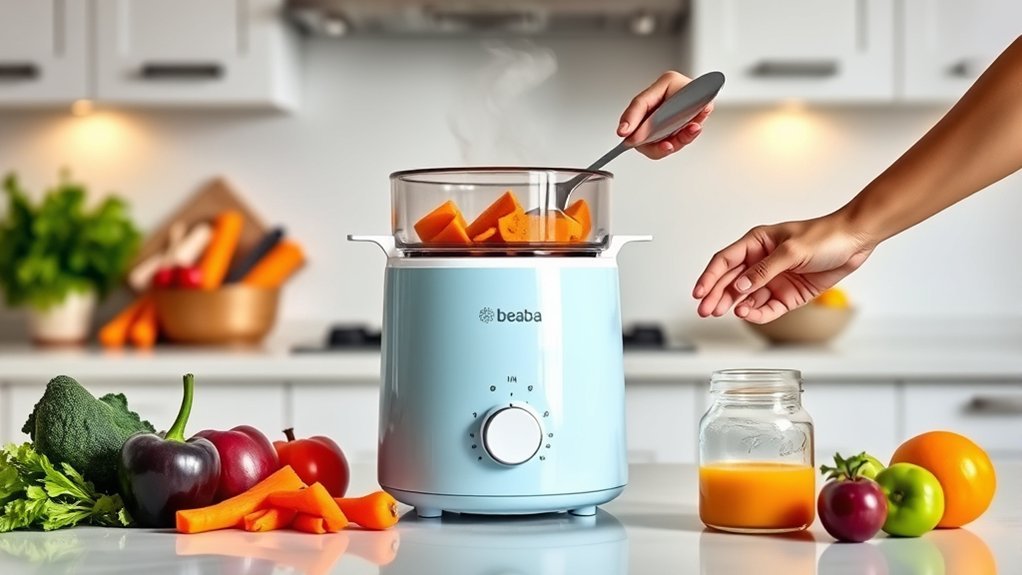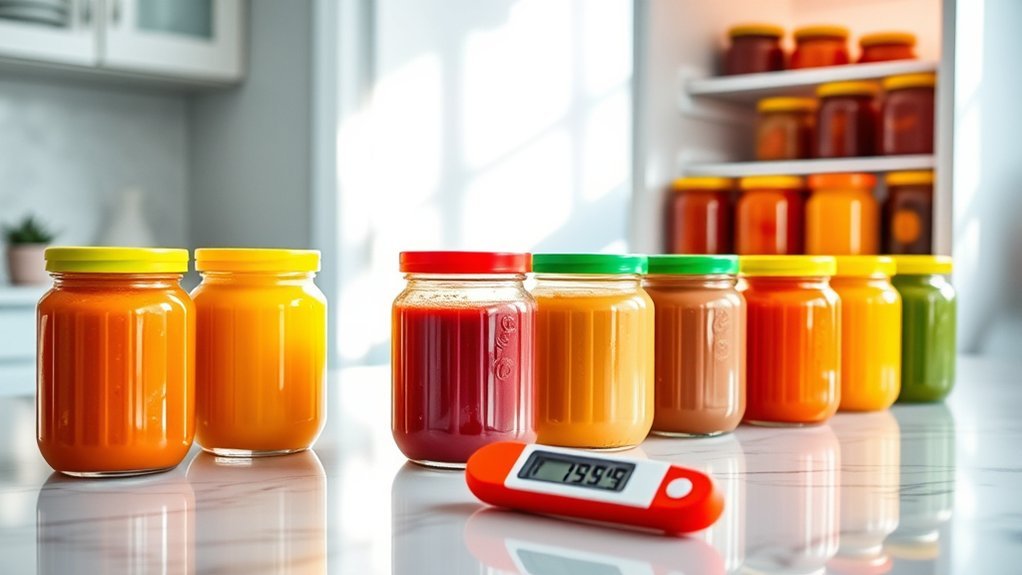
Safe baby food storage is less about complicated rules and more about controlling time, temperature, and contamination. Homemade purées, opened jars, and food that has touched your baby’s spoon do not all have the same storage life, so a clear routine helps protect both food quality and your baby’s health.
Quick Answer
Refrigerate homemade baby food within two hours and use it within 1–2 days. Keep the refrigerator at 40°F or below and the freezer at 0°F or below. Freeze portions for 1–2 months, thaw in the refrigerator, discard food touched by the feeding spoon, and reheat only once before cooling it to lukewarm.
Key Takeaways
- Keep the refrigerator at or below 40°F (4°C) and the freezer at or below 0°F (-18°C).
- Use homemade baby food within 1–2 refrigerated days or freeze it for 1–2 months.
- Serve from a clean dish instead of feeding from the storage jar or pouch.
- Thaw in the refrigerator or reheat directly from frozen; never thaw food on the counter.
- Stir reheated food well, let it stand, and cool it to lukewarm before feeding.
At a Glance
| Time Required | 10–20 minutes to portion and label; overnight for refrigerator thawing |
| Difficulty | Easy |
| Tools Needed | Clean airtight containers or freezer trays, labels, marker, appliance thermometer, and food thermometer |
| Cost | Usually $0–$20, depending on supplies already available |
Why Baby Food Storage Safety Matters
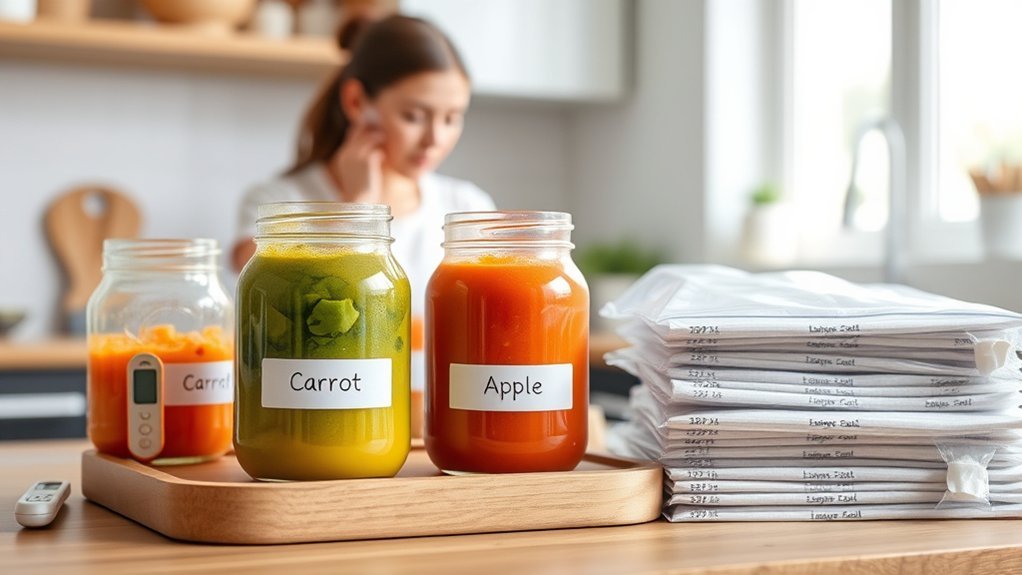
Infants and young children are more likely to become seriously ill from some foodborne germs because their immune systems are still developing. Careful storage also matters because food can become contaminated by unwashed hands, raw ingredients, dirty equipment, saliva, or too much time at an unsafe temperature.
The safest routine is simple: clean, separate, cook, chill, and serve from a fresh dish. Keep breast milk and infant formula under their own storage rules; the times in this guide apply to puréed and solid baby foods.
Warning: Seek prompt medical advice if your baby has blood in diarrhea, a high or prolonged fever, repeated vomiting, cannot keep fluids down, or shows signs of dehydration. This guide supports safe food handling but does not replace care from your child’s healthcare professional.
Food that looks and smells normal can still contain harmful germs. Time, temperature, and handling history are more reliable safety checks than appearance alone.
Power your essentials anywhere with a 999Wh pure sine wave power station delivering up to 1000W continuous with 2000W surge. It supports fast charging via USB-C PD 60W and USB-A QC 18W, plus simultaneous output for multiple devices through AC, USB, wireless, and car/DC ports. Recharge using AC, car, or solar with a built-in MPPT controller and dual cooling fans, while the upgraded battery management system protects against surges, short circuits, and overheating.

Premium Baby Food Storage Containers: The set has 8 food storage containers, 4 oz each. 8 colors, 1 of each color. There are many colors for easy differentiation of use and a large number to meet the daily needs of baby use. A pen can be used to write the name, date or other information on the lid to remind you what is inside the jar. Perfect for storing homemade baby food, solid baby food, fruit and vegetable purees, jams, etc

Effortless Meal Preparation: Streamline your baby's nutrition with our 3 Pack Silicone Freezer Tray. Batch prepare baby food, purees, breastmilk, and more for efficient and convenient meal planning.
Baby Food Storage Times
The following limits come from current federal food-safety guidance for opened or freshly made puréed and solid baby foods. Use the shorter time when a product label gives stricter instructions.
| Type of Baby Food | Refrigerator | Freezer |
|---|---|---|
| Homemade baby food | 1–2 days | 1–2 months |
| Opened strained fruits and vegetables | 2–3 days | 6–8 months |
| Opened strained meats and eggs | 1 day | 1–2 months |
| Opened meat-and-vegetable combinations | 1–2 days | 1–2 months |
Unopened commercial baby food: Store it as directed on the package. Do not use a jar with a broken seal, chipped glass, a rusty lid, leakage, swelling, or a lid that does not pop when first opened. A blanket “1–2 years” rule is not reliable because products and package dates differ.
How to Properly Store Baby Food in the Refrigerator
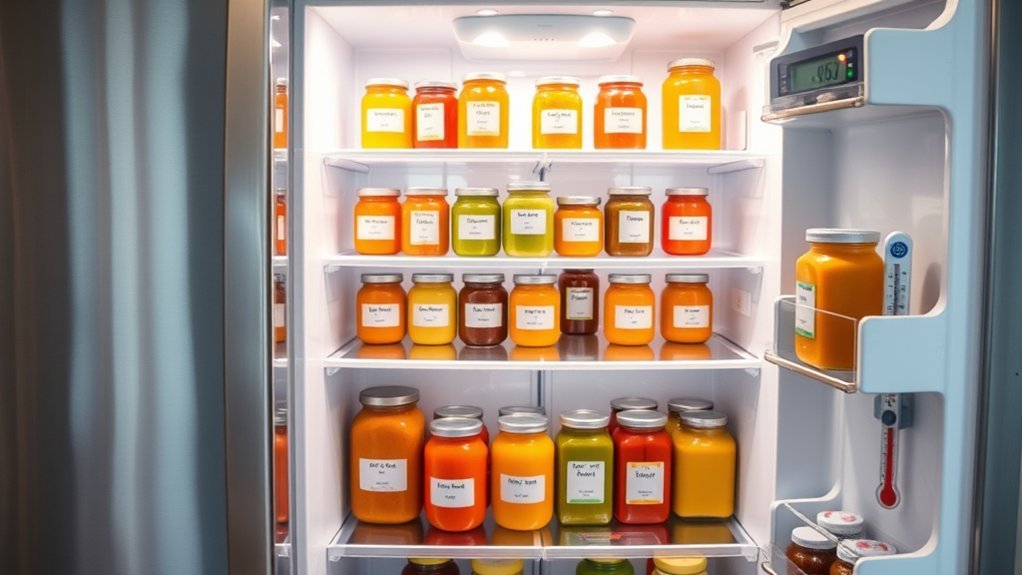
Keep the Refrigerator at 40°F or Below
Use an appliance thermometer to confirm that the refrigerator stays at 40°F (4°C) or below. Keep baby food toward the back of the main compartment, where temperatures are usually steadier, rather than in the door.
Cool and Portion Food Promptly
Refrigerate or freeze homemade baby food within two hours of cooking. If the room or outdoor temperature is above 90°F (32°C), shorten that limit to one hour. Divide a large batch into small, shallow portions so it cools quickly.
- Set aside the amount needed for the next meal in a clean dish.
- Place the remaining food in small airtight containers.
- Refrigerate portions you will use within 1–2 days.
- Freeze the rest before the refrigerated storage period expires.
Choose Food-Grade, Airtight Containers
Use clean BPA-free plastic, silicone, stainless-steel, or freezer-safe glass containers with tight-fitting lids. Dedicated baby food containers reduce the chance of cross-contamination.
Glass can be used safely only when the container is designed for freezing. Leave headspace for expansion, avoid sudden temperature changes, and discard any container that is chipped or cracked. Do not assume a reused commercial baby food jar is freezer-safe unless the manufacturer says it is.
Label and Date Every Portion
Write the food name and preparation or opening date on each container or freezer bag. For mixed foods, list the main ingredients and any common allergens. Use the oldest portions first and discard food when it reaches its storage limit, even if it still looks normal.
Pro Tip: Put a small “use first” bin in the refrigerator. Keeping the oldest baby food portions together makes date tracking easier during busy feeding times.
Best Practices for Freezing Baby Food Safely
Freezing small portions reduces waste and makes meal preparation easier. Keep the freezer at 0°F (-18°C) or below, and freeze only fresh food that has not touched your baby’s mouth or feeding spoon.
- Portion the food: Spoon purées into clean silicone molds, sanitized ice cube trays, or small freezer-safe containers. Thick mashed foods can also be placed in small portions on a clean parchment-lined freezer tray.
- Cover and freeze promptly: Seal trays or cover them tightly to protect the food from drying and freezer odors.
- Transfer frozen portions: Once solid, move cubes or portions to an airtight freezer bag or container.
- Label clearly: Add the food name and freezing date.
- Use homemade portions within 1–2 months: This conservative limit matches current federal storage guidance for homemade baby food.
Freezing pauses bacterial growth but does not sterilize food. Safe preparation and clean equipment still matter. Some foods may separate or change texture after thawing; stir them well and discard them only when their time, temperature, package condition, odor, or appearance suggests spoilage.
Thawing Baby Food: Safe Methods
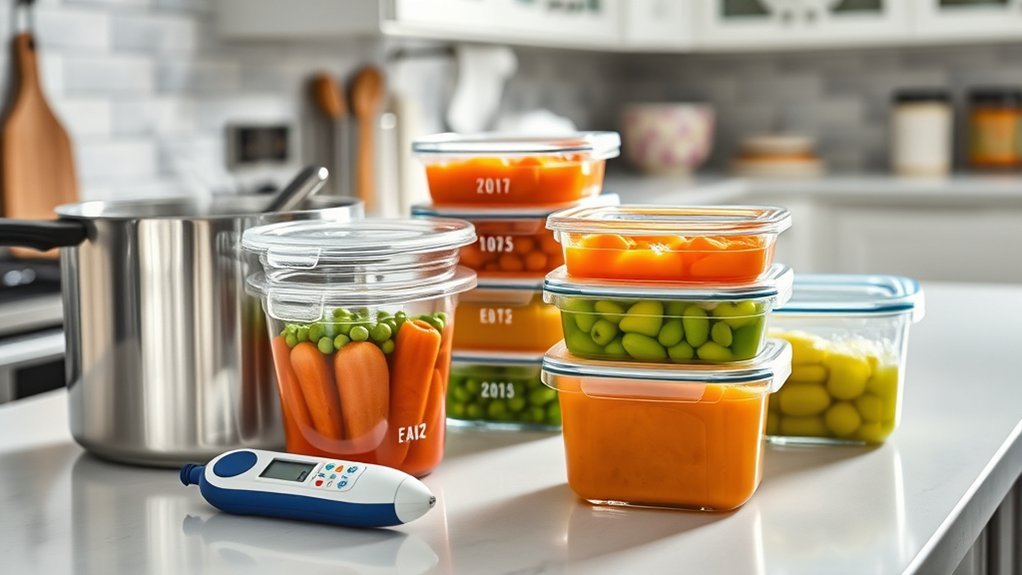
Never thaw baby food on the counter. The outside can warm into a temperature range where bacteria grow while the center remains frozen.
- Refrigerator: Move the needed portion from the freezer to the refrigerator the night before. This is the most controlled method.
- Microwave or stovetop: Reheat directly from frozen in a separate dish or small saucepan. Stir frequently so the food warms evenly.
- Water bath: Place a tightly sealed, leakproof container under cool-to-warm running water or in a bowl of warm water. Use the food promptly after thawing.
Keep thawed food refrigerated and follow the original storage limit for its ingredients. For a simple low-risk routine, do not refreeze thawed baby food, and never refreeze food that has been served or warmed.
Safe Reheating Tips for Baby Food
Baby food does not always need to be warmed. Commercial food may be served at room temperature or cold when the label permits and your baby accepts it. When reheating previously cooked food, heat it thoroughly, then cool it before feeding.
Reheat Thoroughly, Then Cool to Lukewarm
For cooked leftovers, a food thermometer can confirm reheating to 165°F (74°C). That is a reheating temperature—not a serving temperature. Stir the food, let it stand, and allow it to cool until it feels lukewarm before offering it to your baby.
Prevent Microwave Hot Spots
- Transfer the portion from the jar or storage container to a microwave-safe dish.
- Heat in short intervals, such as 15 seconds at a time.
- Stir thoroughly after each interval, including the center and edges.
- Let the food stand for at least 30 seconds.
- Test the temperature before feeding.
Do not microwave baby food in a glass jar. Uneven heating can create hidden hot spots that burn a baby’s mouth.
Reheat Only the Portion You Need
Do not repeatedly warm, cool, and reheat the same portion. Reheating a small serving protects the untouched batch and reduces waste. Discard warmed food left in the feeding dish after the meal.
Warning: “Steaming hot” food can burn an infant. Reheat thoroughly when needed, but always stir, let it stand, and cool it to lukewarm before serving.
Prevent Saliva and Cross-Contamination
Saliva from a used spoon can introduce bacteria into an otherwise clean jar, pouch, or storage container. Follow these serving habits:
- Spoon one meal-sized portion into a clean dish before feeding.
- Use a clean spoon and do not return it to the storage container after it enters your baby’s mouth.
- Discard leftovers from the feeding dish.
- Do not save a pouch after your baby has sucked directly from the spout.
- Keep raw meat, poultry, seafood, and eggs away from cooked food, produce, utensils, and feeding dishes.
Food Safety Tips for Homemade Baby Food
Safe storage starts with clean, separate, cook, and chill practices before the food reaches the refrigerator or freezer.
- Wash your hands: Scrub with soap and running water for at least 20 seconds before food preparation and after handling raw meat, eggs, diapers, pets, or garbage.
- Clean equipment: Wash the blender, food processor, knives, cutting boards, trays, containers, and work surfaces with hot, soapy water.
- Rinse produce: Wash fruits and vegetables under running water before peeling or cutting.
- Separate raw ingredients: Use a separate cutting board or plate for raw meat, poultry, seafood, and eggs.
- Cook animal foods safely: Use a food thermometer. Cook poultry to 165°F, ground meat to 160°F, fish to 145°F, and whole cuts of beef, pork, lamb, and veal to 145°F followed by a three-minute rest.
- Use pasteurized products: Avoid raw or unpasteurized milk and juice for infants and young children.
- Skip honey before age 12 months: Honey can cause infant botulism and should not be added to food, water, formula, or a pacifier.
Note: Introduce one new single-ingredient food at a time and wait 3–5 days before another new food so reactions are easier to identify. Once foods have been tolerated individually, they can be mixed in age-appropriate textures.
Travel and Power-Outage Safety
Traveling With Baby Food
Carry perishable baby food in an insulated cooler with enough ice or frozen gel packs to hold it at 40°F or below. Do not use food that has been without refrigeration or another cold source for more than two hours, or more than one hour when the temperature is above 90°F. Keep diapers and other contaminated items in a separate bag.
Baby Food During a Power Outage
According to FoodSafety.gov, a closed refrigerator generally keeps food cold for about four hours. After that, discard refrigerated perishable baby food unless a thermometer confirms it stayed at or below 40°F. Frozen food that still contains ice crystals or measures 40°F or below may be safe to refreeze, but discard it when the time or temperature is uncertain.
How to Tell If Baby Food Has Gone Bad
Do not rely on a smell test or texture check alone. Harmful bacteria may not change a food’s smell, taste, or appearance.
- Discard food that has passed its safe refrigerated storage time.
- Discard food left above 40°F for too long.
- Discard jars or pouches that are leaking, swollen, cracked, chipped, rusty, or missing an intact seal.
- Discard food with mold, an unusual odor, unexpected bubbling, or major discoloration.
- Do not taste questionable food to decide whether it is safe.
Some separation in thawed fruit or vegetable purée is normal and may disappear after stirring. When the food’s history is unknown, throw it out.
Common Baby Food Storage Mistakes
- Using one rule for every food: Meat, egg, fruit, vegetable, combination, and homemade foods have different limits.
- Feeding from the storage container: Saliva shortens the food’s safe life.
- Leaving food out too long: Refrigerate promptly and follow the two-hour rule.
- Thawing on the counter: Use the refrigerator, a controlled water bath, microwave, or stovetop.
- Microwaving in the jar: Transfer food to a dish so it can be stirred and checked.
- Repeated reheating: Warm only one serving and discard leftovers from the feeding dish.
- Using ordinary glass in the freezer: Choose only freezer-safe glass and leave room for expansion.
- Trusting appearance over time and temperature: Food can be unsafe without obvious spoilage.
Frequently Asked Questions
Can I use expired baby food if it looks fine?
Do not judge safety by appearance alone. Follow the package date and storage directions, and discard any jar or pouch with a damaged seal, swelling, leakage, rust, chips, or cracks. Date labels on many foods relate to quality, but infant formula must never be used after its “use-by” date.
What containers are best for homemade baby food?
Use clean, food-grade containers with airtight lids. Silicone portion trays, BPA-free plastic containers, stainless-steel containers, and freezer-safe glass can all work. Label each portion, and leave headspace in rigid freezer containers.
Is it safe to mix different types of baby food?
Yes, after your baby has tolerated the ingredients separately and the texture is appropriate. When introducing foods, offer one new single-ingredient food at a time and wait 3–5 days before adding another so a reaction is easier to trace.
How can I tell if baby food has gone bad?
Check how long it was stored, whether it stayed at 40°F or below, and whether the package remained sealed. Mold, swelling, leakage, bubbling, or an unusual odor means it should be discarded, but food can also be unsafe without visible signs.
Can I freeze baby food in glass jars?
Yes, but only in glass containers specifically labeled freezer-safe. Leave headspace for expansion, avoid rapid temperature changes, and discard chipped or cracked glass. Do not assume a reused commercial baby food jar is freezer-safe.
How long can baby food sit out?
Discard perishable baby food after two hours at room temperature, or after one hour when the temperature is above 90°F. Food left in the feeding dish or touched by a used spoon should be discarded after the meal.
Can I refreeze thawed baby food?
The simplest low-risk rule is not to refreeze thawed baby food. Never refreeze food that was warmed, served, or touched by your baby’s spoon. Freeze small portions so you thaw only what you need.
Conclusion
Safe baby food storage comes down to a repeatable routine: prepare food with clean hands and equipment, chill it quickly, label every portion, follow ingredient-specific storage limits, and keep saliva out of the stored batch. Thaw food safely, reheat only what you need, and cool it to lukewarm before serving. When you cannot confirm how long food was stored or how warm it became, throw it out.
Sources
- FoodSafety.gov — Children Under Five — baby food storage times and safe microwaving guidance
- U.S. Food and Drug Administration — Once Baby Arrives — jar safety, serving, freezing, travel, and reheating precautions
- Centers for Disease Control and Prevention — Preventing Food Poisoning — handwashing, separation, cooking, and chilling practices
- U.S. Food and Drug Administration — Are You Storing Food Safely? — refrigerator and freezer temperature guidance
- FoodSafety.gov — Food Safety During a Power Outage — four-hour refrigerator rule and frozen-food checks
- Centers for Disease Control and Prevention — Introducing Solid Foods — single-ingredient introduction and allergen tracking