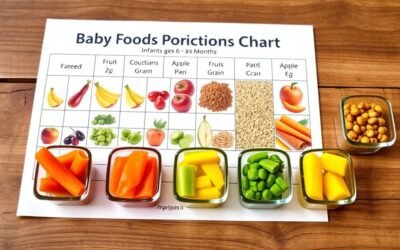
If your baby gags or appears to choke on purees, first look at whether they can still cough, cry, or make sounds. Gagging and effective coughing can be noisy and frightening, but they usually mean air is still moving. Severe choking is different: your baby may be unable to breathe, cry, or make a sound and needs immediate first aid.
Quick Answer
If your baby is gagging but still coughing or making sounds, let them keep coughing and watch closely. If they cannot breathe, cry, or make sound, call 911 and begin infant choking first aid: five back blows alternating with five chest thrusts, using the heel of one hand under current AHA guidance.
Warning: Severe choking is a medical emergency. The instructions below apply to infants younger than 1 year and are educational, not a substitute for hands-on CPR training. If your baby cannot breathe, cry, or make sounds, activate 911 immediately and begin choking first aid. Do not use abdominal thrusts on an infant.
Key Takeaways
- Gagging or an effective cough is usually noisy. Severe choking may cause a weak or absent cough, inability to cry, little or no sound, and trouble breathing.
- For severe choking in an infant, current American Heart Association guidance calls for repeated cycles of five back blows and five chest thrusts using the heel of one hand.
- Never perform a blind finger sweep. Remove food or an object from the mouth only when you can clearly see it.
- Abdominal thrusts, sometimes called the Heimlich maneuver, are not recommended for infants younger than 1 year.
- Repeated coughing, choking, wet breathing, or distress with purees or other feeds should be discussed with your baby’s pediatrician because a feeding or swallowing problem may need evaluation.
At a Glance
| Time Required | Act immediately for severe choking; back-blow/chest-thrust cycles take only seconds. |
| Difficulty | High-stakes first aid; hands-on infant CPR/choking training is strongly recommended. |
| Tools Needed | No special tool. Have a phone available for 911; use an AED if the infant becomes unresponsive and one is available. |
| Cost | No cost to give emergency first aid. CPR class fees vary by provider. |
Understanding the Difference Between Gagging and Choking

While introducing solid foods to your baby can be an exciting milestone, it is important to recognize the difference between gagging, effective coughing, and severe choking.
Gagging is a protective reflex that is common while babies learn to manage new tastes and textures. The CDC notes that babies may cough, gag, or spit up while adjusting to new food textures. If your baby is making strong sounds, coughing forcefully, or pushing food forward with the tongue, some air is still moving.
Severe choking means the airway is badly blocked. According to the American Heart Association pediatric basic life support guidelines, severe foreign-body airway obstruction in an infant requires immediate intervention. Warning signs include an inability to cry or make sounds, an ineffective or absent cough, obvious difficulty breathing, and pale or bluish skin.
A baby who is coughing or crying effectively still has airflow. A baby who cannot make sounds or breathe needs immediate choking care.

Power your essentials anywhere with a 999Wh pure sine wave power station delivering up to 1000W continuous with 2000W surge. It supports fast charging via USB-C PD 60W and USB-A QC 18W, plus simultaneous output for multiple devices through AC, USB, wireless, and car/DC ports. Recharge using AC, car, or solar with a built-in MPPT controller and dual cooling fans, while the upgraded battery management system protects against surges, short circuits, and overheating.

Comprehensive Choking First Aid Poster: This emergency choking first aid poster provides clear steps for adults, children, infants, pregnant and obese individuals using Heimlich maneuver and airway obstruction procedures.

Identifying Gagging: Signs and How to React
When your baby gags, the safest response is usually to stay close, remain calm, and let the protective reflex work while you watch for any change in breathing.
Gagging may include loud coughing, watering eyes, retching, tongue movements, or food coming forward out of the mouth. The baby’s face may become red while they continue to breathe and make noise.
Do not automatically put your fingers in your baby’s mouth or begin choking maneuvers when they are coughing strongly. Those actions are for a severe airway obstruction, not ordinary gagging or an effective cough.
Recognizing Gagging Symptoms
Gagging is a common part of learning to eat, especially when a baby is experiencing new textures. The CDC’s infant taste and texture guidance notes that coughing, gagging, or spitting up can occur while babies adapt to foods that are thicker or lumpier.
Typical signs can include:
- Loud coughing or retching
- Watery eyes
- Tongue movements that push food forward
- Redness of the face while the baby continues breathing
- Food being expelled from the mouth
Occasional gagging can be part of learning oral skills. However, repeated gagging at nearly every feed, persistent coughing, choking, wet-sounding breathing, poor weight gain, or marked difficulty with particular textures should be discussed with your baby’s pediatrician.
Appropriate Reactions to Gagging
During a typical gagging episode, stay calm and observe closely. Let your baby cough or move the food forward on their own when they are breathing and making sounds effectively.
Avoid blind finger sweeps. Reaching into the mouth when you cannot see an object can push material farther back. The American Heart Association specifically advises against blind finger sweeps for infants and children with a foreign-body airway obstruction.
Pro Tip: Take an infant CPR and choking course before you need the skill. Practicing the hand positions on a training manikin is much more useful than trying to memorize emergency steps during a crisis.
Differentiating Gagging From Choking
| Sign | Gagging / Effective Cough | Severe Choking |
|---|---|---|
| Sound | Usually noisy; coughing, gagging, retching, or crying may be heard. | Little or no sound; cough may be weak or ineffective. |
| Breathing | Air is still moving. | Baby cannot breathe normally. |
| Color | Face may become red during gagging. | Skin or lips may become pale or bluish. |
| What to do | Allow effective coughing and watch continuously. | Activate 911 and begin infant choking first aid. |
The key is not simply whether your baby looks distressed. Ask whether they can move air, cough effectively, cry, or make sounds. If they can, observe closely. If they cannot, treat the situation as severe choking.
Immediate Actions to Take if Your Baby Is Choking
If an infant younger than 1 year cannot breathe, cry, or make sounds because of a suspected food or object obstruction, act immediately.
- Activate emergency help. Have someone call 911 while you start first aid. If you are alone and have a phone within reach, use speaker mode so you can follow dispatcher instructions without delaying care.
- Position the baby face-down. Support the baby’s head and jaw and rest your forearm on your thigh. Keep the head lower than the chest.
- Give five firm back blows. Use the heel of your hand between the shoulder blades.
- Turn the baby face-up. Continue supporting the head and neck and keep the head lower than the body.
- Give five quick chest thrusts. Under the 2025 American Heart Association update, use the heel of one hand over the center of the chest on the lower half of the breastbone and thrust downward.
- Repeat five back blows and five chest thrusts until the obstruction comes out or the infant becomes unresponsive.
The current AHA guidance specifically recommends the heel-of-one-hand technique for infant choking chest thrusts and states that abdominal thrusts are not recommended for infants because of the risk of injury.
Warning: Do not use abdominal thrusts—the maneuver commonly called the Heimlich maneuver—on an infant younger than 1 year. Do not perform a blind finger sweep. Look in the mouth and remove material only if you can clearly see it.
What If Your Baby Becomes Unresponsive?
If the infant becomes unresponsive, place them on a firm, flat surface and begin CPR, starting with chest compressions. Do not delay CPR to perform a pulse check if you are a lay rescuer.
Current AHA pediatric CPR guidance recommends conventional CPR with compressions and breaths when you are able and trained. For a single rescuer, the compression-to-breath ratio is 30:2. Infant chest compressions should be about one-third the depth of the chest, approximately 1.5 inches, at 100 to 120 compressions per minute.
For infant CPR, the 2025 AHA guideline recommends the heel-of-one-hand technique or the two-thumb encircling-hands technique rather than the older two-finger compression technique. Each time you open the airway to give breaths, look for the obstruction and remove it only if it is clearly visible. Use an AED as soon as one is available and follow its prompts.
Continue CPR until the infant shows signs of life or emergency professionals take over. A 911 dispatcher can coach you through the steps in real time.
What if Your Baby Keeps Choking or Coughing on Purees?
A single gagging episode while learning to eat can be normal. Repeated coughing or choking during feeds is different and deserves medical attention, especially when it happens with smooth purees, breast milk, formula, or other liquids.
Feeding and swallowing problems can cause symptoms such as:
- Frequent coughing, choking, or gagging during or immediately after eating
- Wet, gurgly, or congested breathing after swallowing
- Watery eyes or obvious distress during feeds
- Food or liquid coming from the nose
- Repeated respiratory infections
- Very long or exhausting feeding sessions
- Difficulty gaining weight
- Consistent trouble with particular textures
Pediatric feeding and swallowing specialists evaluate these symptoms because food or liquid may not be moving safely through the mouth and throat. Conditions such as delayed oral-motor skills, swallowing dysfunction, structural differences, prematurity, neurologic conditions, or reflux can contribute, but the cause cannot be determined from symptoms alone.
Note: If your baby repeatedly coughs or chokes during meals, sounds wet or congested after swallowing, has breathing changes with feeds, or is not gaining weight as expected, stop trying to solve the problem only by changing food texture. Contact your pediatrician for an appropriate feeding or swallowing evaluation.
Choose Safe Foods and Avoid Choking Hazards

Choosing developmentally appropriate foods is one of the best ways to reduce choking risk as your baby moves beyond smooth purees.
According to the CDC’s choking-prevention guidance, food should be prepared in a shape, size, and texture that matches your child’s eating skills.
Examples of softer foods that can be prepared appropriately include:
- Ripe banana
- Avocado
- Well-cooked sweet potato
- Soft mashed fruits and vegetables
- Eggs cooked to a safe texture
- Well-cooked meat that is finely ground, shredded, or otherwise prepared for your baby’s eating skills
Common high-risk choking foods include:
- Whole grapes, cherries, berries, or cherry tomatoes
- Round pieces of hot dog or sausage
- Whole nuts and seeds
- Chunks or spoonfuls of nut butter
- Hard raw vegetables such as carrot pieces
- Hard raw fruit pieces such as apple chunks
- Popcorn
- Hard, sticky, or chewy candy
- Large chunks of meat or cheese
Cook hard fruits and vegetables until soft. Cut cylindrical foods into narrow strips or small pieces rather than round coins. Cut grapes and similar round foods into small pieces. Spread nut butter thinly instead of serving thick spoonfuls.
Choking Prevention Tips for Mealtime Safety
Food preparation is only one part of choking prevention. The CDC recommends introducing complementary foods at about 6 months when a baby is developmentally ready and preparing foods at a texture the baby can safely manage.
| Supervise During Meals | Stay close enough to see and hear your baby throughout the meal. Do not leave an eating infant unattended. |
| Offer Appropriate Textures | Choose soft, mashed, pureed, finely chopped, or otherwise developmentally appropriate foods as your baby’s skills progress. |
| Prepare Food Safely | Modify round, hard, sticky, or tough foods so they cannot easily plug the airway. |
| Keep Baby Upright | Use a stable high chair or feeding seat that keeps your baby upright rather than feeding while lying down, crawling, walking, or riding in a stroller or car. |
| Keep Meals Calm | Avoid rushing, distracting, startling, or encouraging a baby to eat while actively moving. |
Developmental readiness also matters. Around 6 months, signs can include sitting with support, good head and neck control, opening the mouth for food, and swallowing food rather than immediately pushing it back out. Introducing solid foods before 4 months is not recommended by current CDC guidance.
Get Ready: CPR and First Aid Tips Every Parent Should Know
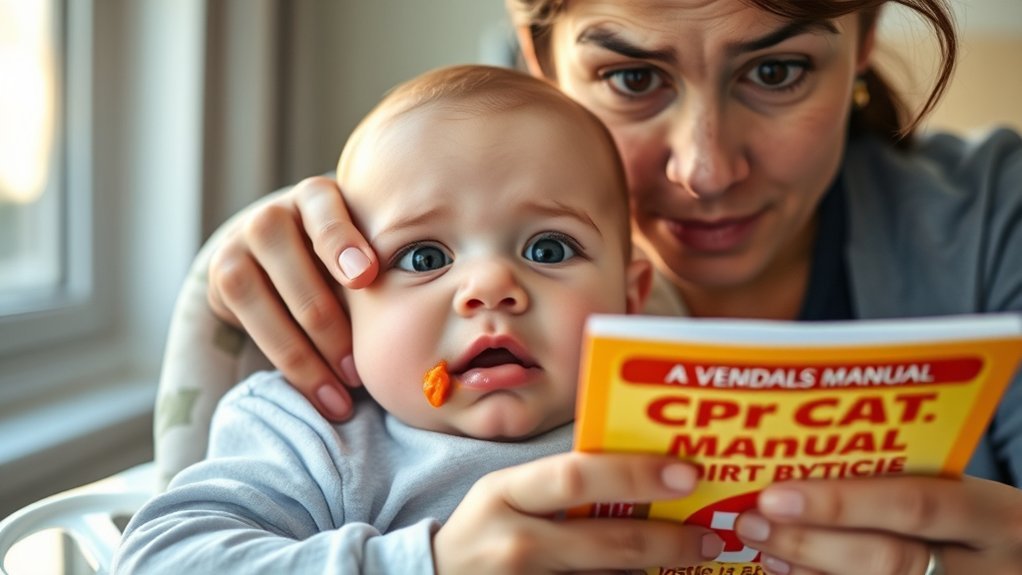
Every parent and caregiver can benefit from infant CPR and choking first-aid training. Reading the steps is useful, but practicing them with an instructor and training manikin builds the muscle memory needed during a stressful emergency.
Important skills to learn and refresh include:
- Recognizing an effective cough versus severe airway obstruction
- Positioning an infant safely for back blows
- Giving five firm back blows between the shoulder blades
- Giving five infant chest thrusts with the heel of one hand under current AHA guidance
- Knowing that abdominal thrusts are for older children and adults, not infants
- Beginning infant CPR if the baby becomes unresponsive
- Using an AED and following emergency-dispatcher instructions
The American Heart Association’s current pediatric BLS guidance is the most important reference for the updated 2025 techniques described here.
What About Anti-Choking Suction Devices?
Do not let a suction-based airway-clearance device delay 911 activation or standard choking first aid. The American Heart Association states that the effectiveness and safety of these devices have not been established for infants and children and that evidence is insufficient to recommend them as a replacement for established choking care.
After a Choking Episode
If the obstruction clears and your baby returns to normal breathing, continue watching them closely. Seek medical care promptly if coughing, wheezing, noisy breathing, swallowing difficulty, drooling, unusual sleepiness, or breathing problems continue. A piece of food or another object can occasionally remain in the airway even after the initial dramatic symptoms improve.
If chest thrusts, CPR, or emergency medical care were required, follow the evaluation and aftercare instructions provided by emergency professionals.
Frequently Asked Questions
What are the signs of a choking emergency in infants?
Severe choking signs include inability to breathe or cry, little or no sound, a weak or ineffective cough, obvious breathing difficulty, and pale or bluish skin. If your baby can cough or cry effectively, allow them to keep coughing while you watch closely. If they cannot move air or make sounds, activate 911 and begin infant choking first aid.
How can I prepare for emergencies while feeding my baby?
Take an infant CPR and choking course, make sure all regular caregivers know the correct infant technique, keep a phone accessible, know your exact address for emergency dispatch, and review the steps periodically. No emergency kit replaces 911, back blows, chest thrusts, or CPR.
Should I use a baby seat during feeding to prevent choking?
Use a stable high chair or feeding seat that keeps your baby upright with good head and trunk support. Avoid feeding while your baby is lying down, crawling, walking, or riding in a stroller or car. Upright positioning and close supervision help reduce choking risk.
What age is safe to introduce solid foods to my baby?
Current CDC and American Academy of Pediatrics guidance recommends beginning complementary foods at about 6 months when your baby shows developmental readiness, including good head control and the ability to sit with support and swallow food. Introducing solids before 4 months is not recommended.
Why does my baby keep coughing or choking on purees?
Repeated coughing or choking with smooth purees, liquids, or several different textures is not something to dismiss as ordinary gagging. It can occur with feeding-skill or swallowing problems and should be discussed with your pediatrician, particularly if feeds also cause wet breathing, color changes, respiratory symptoms, or poor weight gain.
Should I buy an anti-choking suction device for my baby?
Do not rely on a suction device instead of standard infant choking care. The American Heart Association says there is not enough evidence to establish the safety or effectiveness of suction-based airway-clearance devices in infants and children. A device should never delay 911, back blows, chest thrusts, or CPR.
Does a baby need medical care after a choking episode?
Seek prompt medical care if breathing, coughing, wheezing, drooling, swallowing problems, or unusual behavior continue after the object or food appears to clear. Call 911 for any ongoing breathing difficulty. Follow emergency professionals’ advice if back blows, chest thrusts, or CPR were required.
How can I teach my older child about choking hazards?
Teach older children never to give a baby food, candy, toys, coins, balloons, or other small objects without an adult’s approval. Explain that babies explore by putting things in their mouths and that dangerous items should be kept out of reach. Adults should still provide the supervision and emergency response.
Sources
- American Heart Association — Pediatric Basic Life Support — current infant choking, CPR, foreign-body airway obstruction, and 2025 technique guidance.
- CDC — Choking Hazards — food preparation, positioning, supervision, and common choking hazards.
- CDC — When, What, and How to Introduce Solid Foods — developmental readiness, age guidance, and appropriate food textures.
- American Academy of Pediatrics / HealthyChildren.org — Choking Prevention for Babies & Children — pediatric choking hazards and prevention.
- Nationwide Children’s Hospital — Pediatric Feeding Disorder — recurrent choking, gagging, coughing, texture problems, and feeding/swallowing evaluation.
Conclusion
Gagging and choking can look frighteningly similar, but the most useful clue is whether your baby can still move air and make sounds. A baby who is coughing or crying effectively should be watched closely and allowed to cough. An infant who cannot breathe, cry, or make sound needs immediate 911 activation and choking first aid.
For infants younger than 1 year, current American Heart Association guidance uses repeated cycles of five back blows and five chest thrusts with the heel of one hand. Do not use abdominal thrusts or blind finger sweeps. Just as important, talk with your pediatrician if coughing or choking happens repeatedly with purees or other feeds, because ongoing swallowing difficulty deserves proper evaluation.