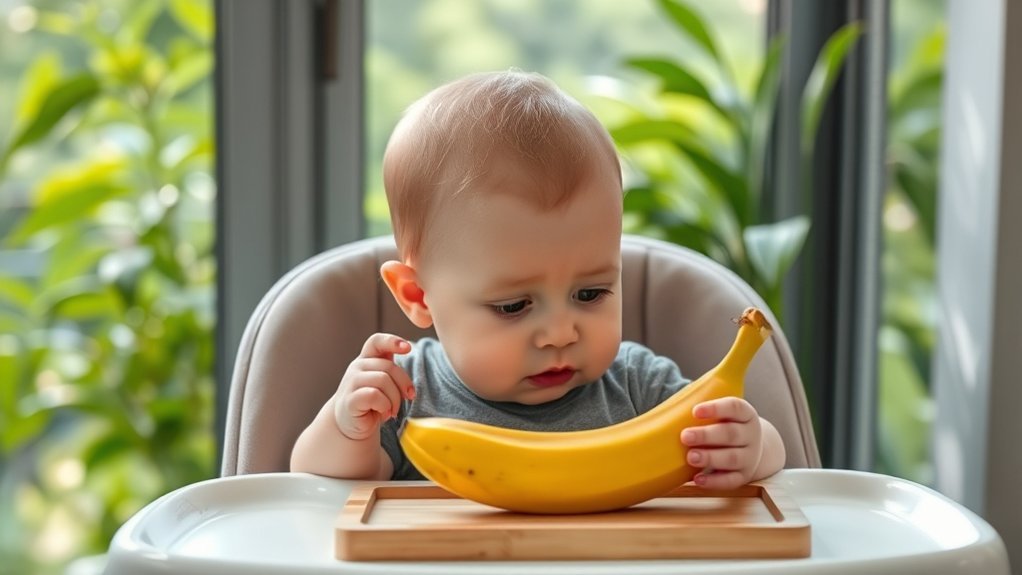
Bananas can be an easy first food because a ripe banana is soft, simple to mash, and naturally sweet. Most babies can try banana at about 6 months, but age is only part of the decision. Your baby should also show the physical skills needed to sit safely, control food in the mouth, and swallow it.
Quick Answer
Most babies can try ripe banana at about 6 months, once they can sit with support, control their head and neck, bring food to their mouth, and swallow rather than push food out. Serve it mashed or as a soft, graspable piece, adjust the size as feeding skills improve, and supervise every bite.
Key Takeaways
- Babies can usually eat ripe banana at about 6 months when they show the developmental signs of readiness for solid food.
- Begin with mashed banana or a large, very soft piece that the baby can hold without placing the entire piece in the mouth.
- Move to small, soft pieces after the baby develops a pincer grasp, usually around 9 months.
- A child who handles bites well may hold a half or partially peeled banana after 12 months, but direct supervision is still required.
- Banana provides carbohydrates, fiber, potassium, and vitamin B6, but it should be served with a varied diet that also supplies iron, protein, and healthy fat.
- Banana allergy is possible. Stop feeding it if symptoms appear, and call emergency services for trouble breathing, trouble swallowing, tongue or throat swelling, or sudden weakness.
At a Glance
| Time Required | About 2–5 minutes |
| Difficulty | Easy |
| Tools Needed | Clean hands, a fork, a bowl or plate, and a knife for older babies’ portions |
| Cost | Low; one ripe banana can make several starter portions |
Note: This article provides general feeding information, not individualized medical advice. Ask your pediatrician or feeding specialist before starting solids if your baby was born prematurely, has poor head control, has difficulty swallowing, has a known food allergy, or has a medical condition that affects feeding.
When Can Babies Eat Bananas?
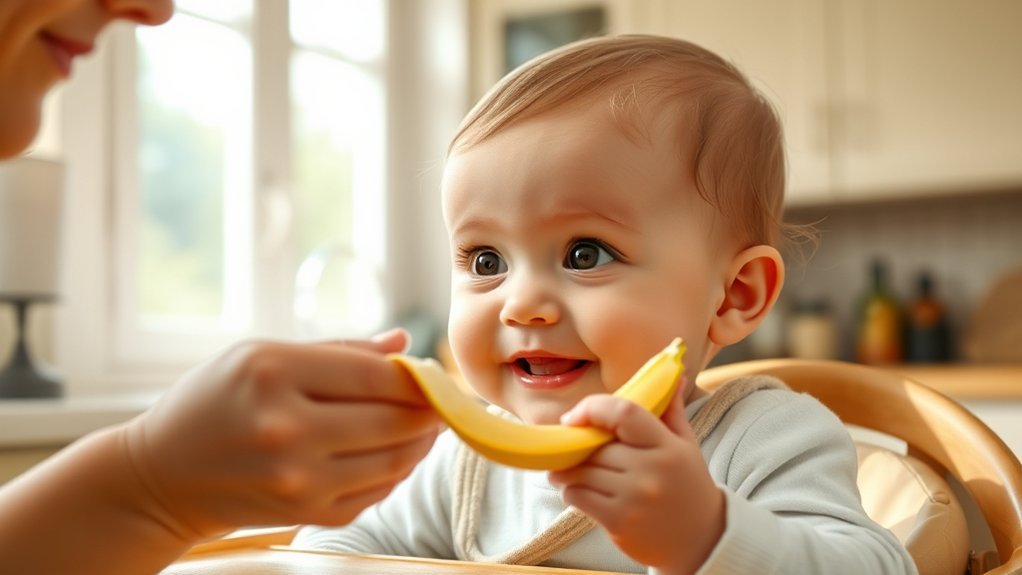
According to the Centers for Disease Control and Prevention, most children can begin eating foods other than breast milk or infant formula at about 6 months. Introducing solid food before 4 months is not recommended.
Do not rely on age alone. Your baby is more likely to be ready when they can:
- Sit upright alone or with support.
- Control their head and neck.
- Open their mouth when food is offered.
- Bring hands or objects toward the mouth.
- Swallow food instead of repeatedly pushing it out with the tongue.
- Reach for food and show interest during meals.
A ripe banana can work well at this stage because it can be mashed until smooth or offered in a very soft, graspable shape. A baby does not need teeth to manage a properly prepared ripe banana; the gums can break down soft food.
Breast milk or infant formula remains the main source of nutrition from 6 to 12 months. Banana and other solid foods gradually complement—not replace—those feedings.

Power your essentials anywhere with a 999Wh pure sine wave power station delivering up to 1000W continuous with 2000W surge. It supports fast charging via USB-C PD 60W and USB-A QC 18W, plus simultaneous output for multiple devices through AC, USB, wireless, and car/DC ports. Recharge using AC, car, or solar with a built-in MPPT controller and dual cooling fans, while the upgraded battery management system protects against surges, short circuits, and overheating.

ON THE GO BABY FOOD: Gerber Stage 1 Baby Food Puree Tubs are designed for ease and convenience. These tubs are the perfect on the go baby food, made in a portable and easy-to-store format for busy parents

ORGANIC TEETHING SNACK: These organic crunchy sticks dissolve easily and help soothe your baby's gums as they teethe
What Nutrients Do Bananas Provide for Babies?
Bananas supply carbohydrates for energy along with fiber, potassium, vitamin B6, and smaller amounts of vitamin C and magnesium. The Harvard T.H. Chan School of Public Health lists bananas as a source of these nutrients.
Energy and Essential Nutrients
The natural carbohydrate in banana can provide energy in a soft, easy-to-serve form. Potassium supports normal muscle and nerve function, while vitamin B6 participates in many processes involving metabolism and nervous-system function.
These nutrients contribute to normal growth as part of a varied diet. Banana should not be described as a treatment for poor growth, weak immunity, diarrhea, constipation, or delayed brain development.
Fiber and Digestive Health
Bananas contain fiber, but they do not affect every baby’s stool in the same way. Ripeness, serving size, fluid intake, breast milk or formula intake, and the rest of the diet can all influence digestion.
A very ripe banana is softer and contains less resistant starch than a green banana, making it the better choice for a new eater. If your baby develops repeated hard stools, painful bowel movements, ongoing diarrhea, vomiting, poor feeding, or signs of dehydration, contact a healthcare professional rather than trying to treat the condition with banana alone.
Banana Is Not a Complete Meal
Banana is nutritious, but it provides little iron, protein, or fat compared with many other first foods. Those nutrients are also important during infancy.
To create a more balanced meal, pair banana with an age-appropriate source of iron, protein, or healthy fat, such as:
- Iron-fortified infant oatmeal.
- Plain, pasteurized full-fat yogurt.
- Fully cooked egg after egg has been introduced safely.
- A thin layer of smooth nut butter mixed thoroughly into another food after that allergen has been introduced safely.
- Mashed beans or lentils served separately or as part of the same meal.
How to Prepare Banana Safely for a Baby
- Wash your hands and the peel. Rinse the whole banana under plain running water before peeling it. The U.S. Food and Drug Administration recommends washing produce even when the peel will not be eaten so dirt and bacteria are not transferred to the edible portion.
- Choose a ripe banana. Use a yellow banana that gives easily when pressed. Brown speckles are fine. Avoid serving a firm, green banana as finger food.
- Peel it immediately before serving. Remove the fibrous strings if your baby dislikes their texture, although the soft strings are not generally considered a major choking hazard.
- Prepare the correct texture. Mash it, cut it into a large soft spear, or divide it into small pieces according to the baby’s feeding skills.
- Seat the baby upright. Use a high chair or another secure, upright feeding seat.
- Begin with a small amount. One or two tablespoons is enough for an early tasting. Offer more only when the baby continues to show hunger cues.
- Stay within arm’s reach. Do not let a baby eat while lying down, crawling, walking, riding in a stroller, or sitting unattended in a car seat.
Warning: Any food can become a choking hazard. Prepare banana to match your child’s current skills, keep the child seated upright, and watch continuously. If your baby cannot breathe, cry, or cough effectively, remove the child from the high chair, call 911, and begin age-appropriate choking first aid.
Pro Tip: Banana can be slippery. Roll a soft banana spear in a small amount of iron-fortified infant cereal, finely ground oats, or unsweetened shredded coconut that your baby has already eaten safely. This creates a drier surface that is easier to grip.
Best Banana Serving Suggestions by Age and Skill
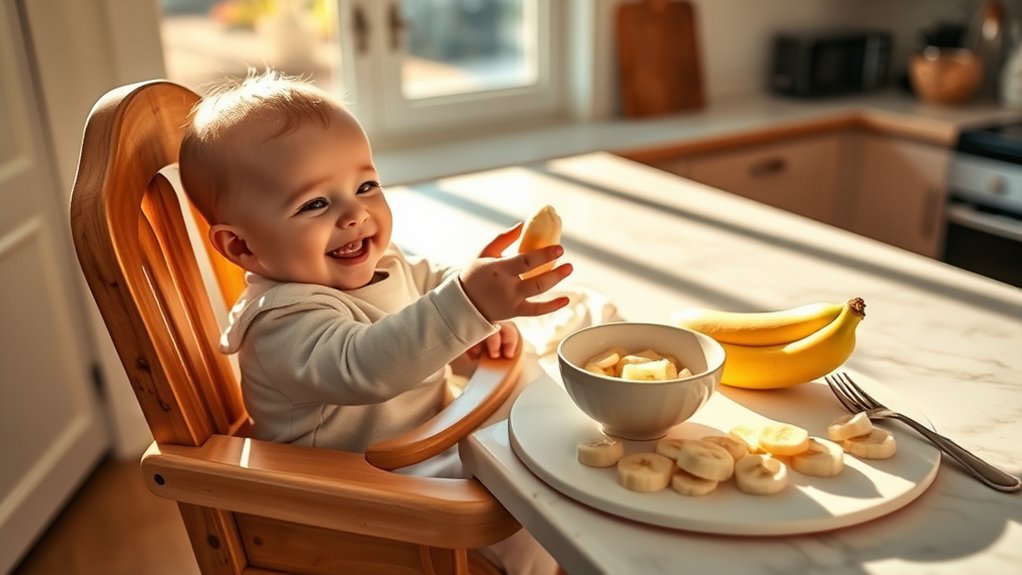
The ages below are general guides rather than deadlines. Move to a new shape when your child can manage the current texture safely and has developed the needed hand skills.
| Approximate Stage | Feeding Skills | Safe Serving Ideas |
| About 6–8 months | Palmar grasp; scoops food with the whole hand | Smooth or lightly lumpy mashed banana on a spoon; a thick, very soft banana spear; or half a banana with a short section of peel left on as a handle |
| About 9–11 months | Developing pincer grasp; picks up food with thumb and forefinger | Small, soft bite-size pieces; quarter a banana lengthwise before cutting it across so the pieces are less round and slippery |
| 12 months and older | More controlled biting, chewing, and self-feeding | Bite-size pieces, half a banana, or a partially peeled whole banana when the child manages bites well; continue direct supervision |
Avoid placing a large slippery chunk directly into the baby’s mouth. Let self-feeding babies control the food themselves, or place a small amount on a spoon and allow the child to bring the spoon to the mouth when possible.
How Much Banana Can a Baby Eat?
The CDC recommends starting with one or two tablespoons of food. A baby may eat less than that during the first few attempts, and that is normal.
Follow the child’s appetite instead of pressuring them to finish a portion. Signs of hunger may include reaching for food, opening the mouth, or becoming excited when food appears. Signs of fullness may include closing the mouth, turning the head away, pushing food away, or losing interest.
There is no requirement to serve banana every day. It can be offered several times a week as one fruit among many. Rotate it with berries, pears, peaches, melon, mango, avocado, and soft cooked fruits so your baby experiences different tastes, textures, and nutrients.
How to Monitor for Allergies and Digestive Reactions
When first introducing banana, offer a small amount by itself during a time when you can observe your baby. Current CDC guidance recommends beginning with one single-ingredient food at a time and waiting three to five days before adding another new food.
Stop serving banana and contact your pediatrician if your baby develops a possible reaction such as:
- Hives or a spreading rash.
- Swelling around the face or eyes.
- Repeated vomiting.
- Diarrhea soon after eating.
- Persistent coughing or unusual discomfort.
Warning: Call 911 immediately for trouble breathing or swallowing, wheezing, swelling of the lips, tongue or throat, a pale or bluish appearance, sudden weakness, collapse, or rapidly worsening symptoms affecting more than one part of the body. The American Academy of Pediatrics advises treating breathing or circulation symptoms as a possible severe allergic reaction.
Digestive Changes After Eating Banana
Stool color, texture, and frequency often change when solid foods begin. Some babies have firmer stools after eating banana, while others do not. Banana is not automatically constipating, and it should not be relied on to stop diarrhea.
Dark food fibers can sometimes be visible in stool after a baby eats fruit. However, do not assume that black, red, or unusual stool is harmless. Contact your pediatrician if the stool appears bloody or black and tar-like, or if your baby also has pain, fever, vomiting, unusual sleepiness, poor feeding, or signs of dehydration.
Tasty Banana Recipes for Babies
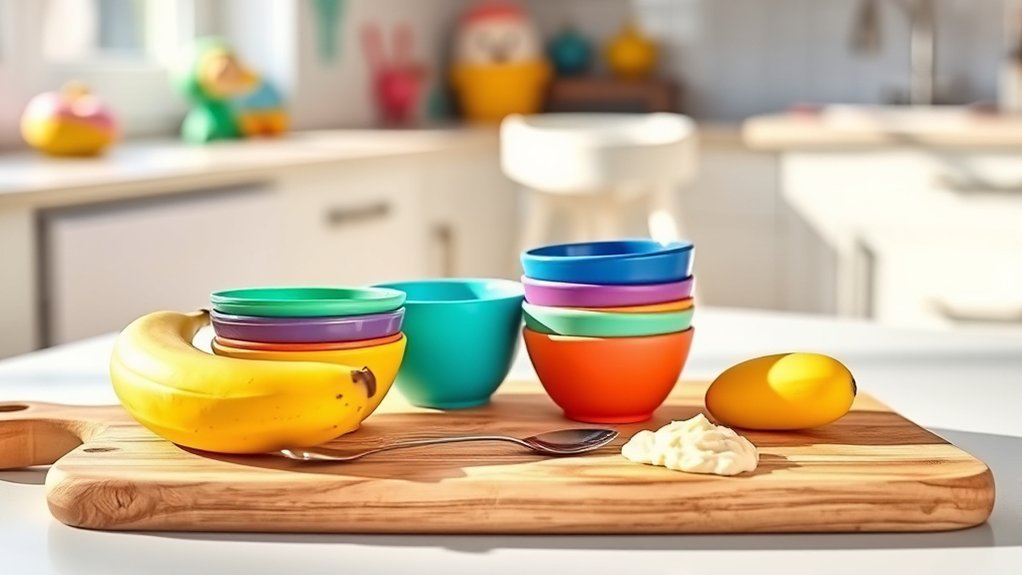
Banana and Mango Mash
Mash equal amounts of very ripe banana and soft mango until the texture matches your baby’s skills. Serve it smooth for a new eater or leave small soft lumps for a baby who is learning to manage texture.
Banana Oatmeal or Yogurt
Stir mashed banana into prepared iron-fortified infant oatmeal or plain, pasteurized full-fat yogurt. Do not add sugar. Introduce dairy separately first if your baby has not yet eaten yogurt.
Banana and Egg Pancakes
Mash one ripe banana with one beaten egg. Cook small pancakes in a lightly greased pan until the egg is completely cooked through. Cut them into wide strips for a beginning self-feeder or small soft pieces for a baby with a pincer grasp. Use this recipe only after egg has been introduced safely.
Mashed Banana on Toast
Spread a thin layer of mashed banana on lightly toasted whole-grain bread. Cut the toast into finger-width strips for a beginning self-feeder or small pieces for an older baby. Avoid thick, gummy clumps of bread and banana.
Soft Tropical Fruit Bowl
Combine soft banana, ripe kiwi, and seedless watermelon. For a baby with a pincer grasp, cut each fruit into small, soft pieces. For a younger self-feeder, serve each fruit separately in a larger graspable shape so you can confirm that every piece is soft enough.
Banana and Yogurt Smoothie
Blend ripe banana with plain pasteurized yogurt and a small amount of breast milk, prepared formula, or water. Offer a small amount from an open cup rather than a bottle. Smoothies should not replace breast milk, formula, or regular opportunities to practice eating whole-food textures.
Warning: Do not add honey to banana recipes for a child younger than 12 months because honey can cause infant botulism. Use pasteurized yogurt, cook egg completely, and avoid added sugar.
Frequently Asked Questions
Can bananas cause constipation in babies?
Bananas do not cause constipation in every baby. A ripe banana contains fiber, but stool consistency also depends on the child’s total diet, breast milk or formula intake, other fluids, and individual digestion. Offer several kinds of fruits and vegetables, and contact your pediatrician if stools are repeatedly hard, painful, or difficult to pass.
Are bananas a choking risk for babies?
A ripe banana is soft, but its slippery and sticky texture can still cause problems when a piece is too large for the child’s skills. Use a developmentally appropriate shape, keep your baby upright, and supervise continuously. Never place a large chunk directly into the baby’s mouth.
How often can babies eat bananas?
Banana can be offered several times a week as part of a varied diet. There is no need to serve it daily. Rotate fruits and include foods that provide iron, protein, and healthy fat so banana does not crowd out other important nutrients.
Can I mix banana with other foods?
Yes. Banana can be mixed with oatmeal, plain pasteurized yogurt, mango, avocado, or other soft foods. When an ingredient is a common allergen, such as egg, dairy, peanut, or wheat, introduce it according to your pediatrician’s advice and avoid combining several unfamiliar foods in the first tasting.
Should bananas be organic for babies?
Organic bananas are optional, not required. Both conventional and organic bananas can be used. Choose fruit that is fresh and undamaged, wash the peel under running water before peeling, and prepare it with clean hands and utensils.
Do bananas need to be cooked for babies?
No. A ripe banana can be served raw because it is already soft enough to mash. Use a banana that yields easily to pressure. Do not serve a firm, green piece that the baby cannot break down safely.
Conclusion
Most babies can begin eating ripe banana at about 6 months when they are developmentally ready for solid food. Start with a smooth mash or a large, soft piece, then change the shape as your child’s hand and eating skills improve. Keep every meal supervised, follow hunger and fullness cues, and serve banana alongside a varied diet rather than treating it as a complete meal or a remedy for digestive problems.
Sources
- CDC: When, What, and How to Introduce Solid Foods — starting age, developmental readiness, food textures, and introducing new foods.
- CDC: Choking Hazards — preparation, upright seating, supervision, and choking-risk reduction.
- CDC: How Much and How Often to Feed — starter portions and the continued role of breast milk or formula.
- American Academy of Pediatrics: Food Allergies in Children — food-allergy symptoms and medical evaluation.
- U.S. Food and Drug Administration: Selecting and Serving Produce Safely — washing produce before peeling or cutting.
- Harvard T.H. Chan School of Public Health: Bananas — banana nutrients, fiber, and ripeness information.