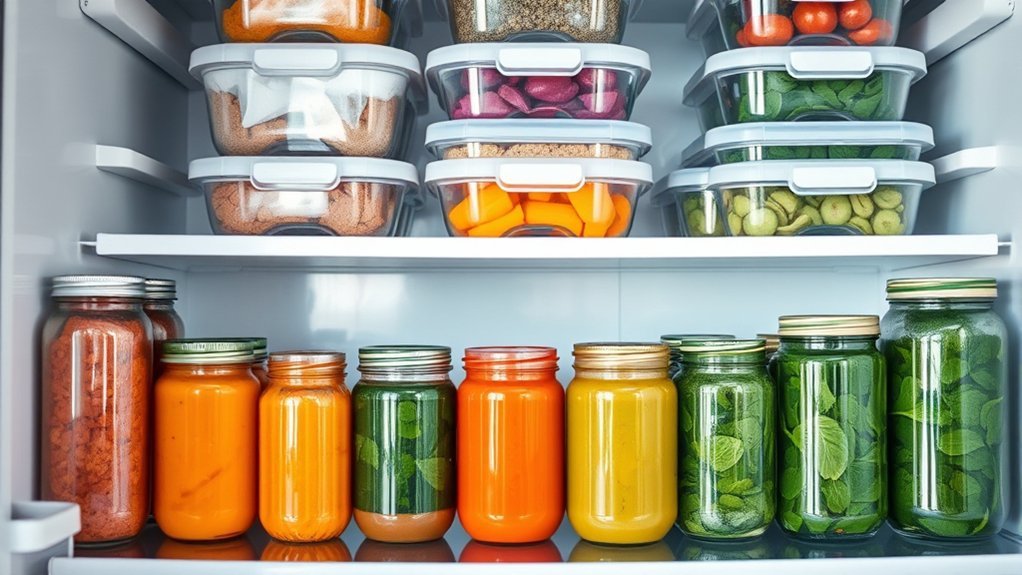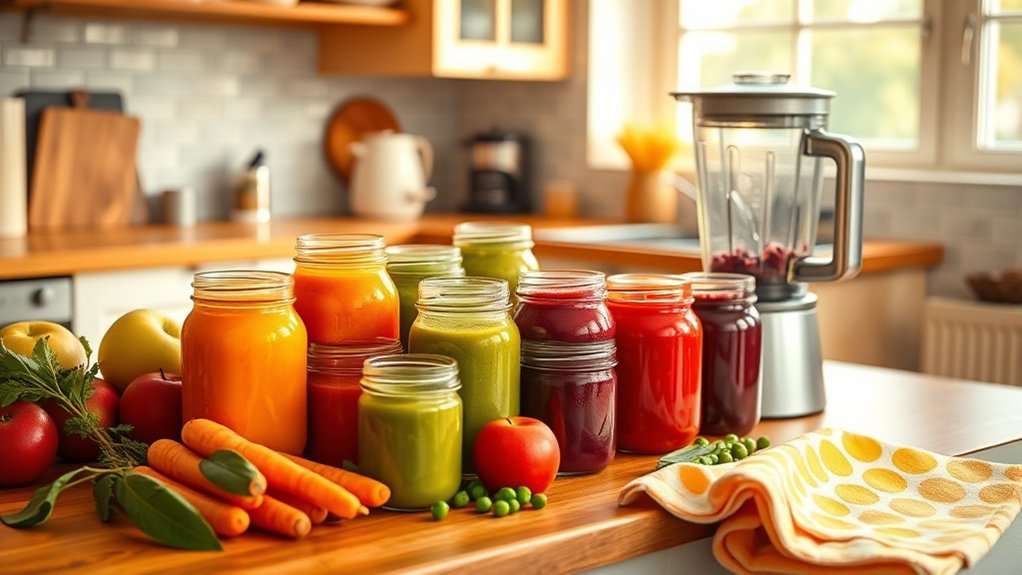

Glass baby food storage containers can be a practical choice for refrigerating, freezing, and portioning homemade baby food. Glass does not readily absorb stains or odors, and it reduces direct food contact with plastic. However, not every glass container is freezer-, microwave-, or oven-safe, and careful handling is essential because chipped or cracked glass can break.
Quick Answer
Glass is generally a safe option for baby food when the container is made for food storage and used according to its label. Choose freezer- or microwave-safe glass as needed, leave room for frozen food to expand, inspect it for damage, and never assume that every glass jar or lid can handle heat.
Key Takeaways
- Glass is nonporous, resists stains and odors, and reduces direct contact between baby food and plastic.
- Use a container in the freezer, microwave, oven, or dishwasher only when the manufacturer specifically approves that use.
- Homemade baby food generally keeps for one to two days in the refrigerator and three to four months in the freezer under FDA guidance.
- Place each serving in a separate dish before feeding. Do not refrigerate food that has been touched by a used feeding spoon.
- Glass is recyclable, but its environmental benefit depends on repeated reuse and whether local programs accept it.
Benefits of Glass Baby Food Storage
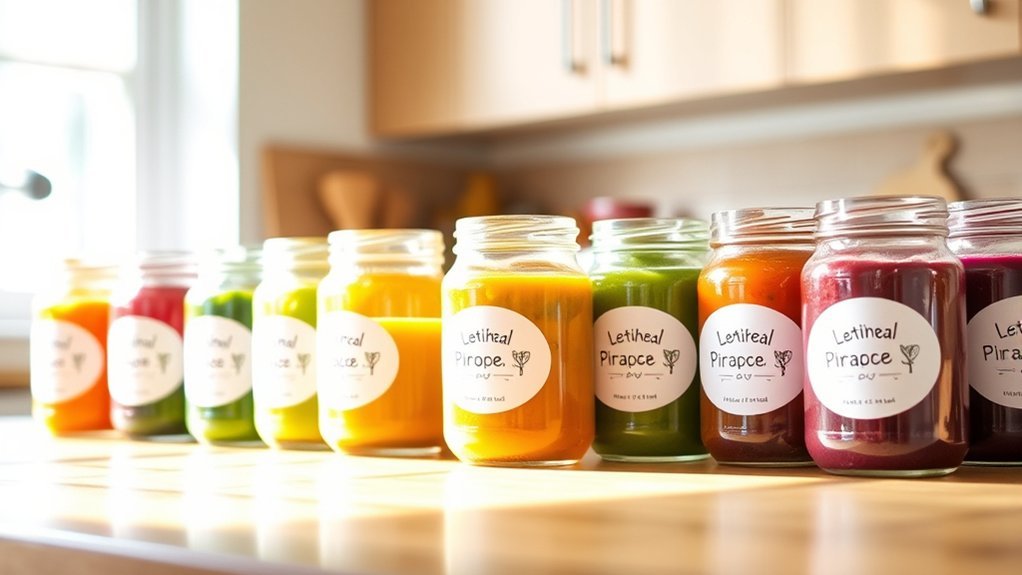
Glass baby food containers have several practical advantages. Their smooth, nonporous surfaces do not readily absorb food odors, colors, or flavors. This is useful when you store strongly colored foods such as carrots, beets, berries, or tomato-based meals.
Glass is also rigid, reusable, and easy to inspect. You can usually see the food clearly, check the portion size, and spot residue along the sides or under the lid.
The American Academy of Pediatrics advises families to avoid heating food in plastic when possible and to consider alternatives such as glass or stainless steel. This advice does not mean that every plastic container is unsafe or that every glass container is suitable for heating.
The safest container is one designed for food contact and used only for the temperatures and appliances listed by its manufacturer.
Power your essentials anywhere with a 999Wh pure sine wave power station delivering up to 1000W continuous with 2000W surge. It supports fast charging via USB-C PD 60W and USB-A QC 18W, plus simultaneous output for multiple devices through AC, USB, wireless, and car/DC ports. Recharge using AC, car, or solar with a built-in MPPT controller and dual cooling fans, while the upgraded battery management system protects against surges, short circuits, and overheating.

Premium Baby Food Storage Containers: The set has 20 food storage containers, 4 oz each. 5 colors, 4 of each color. There are many colors for easy differentiation of use and a large number to meet the daily needs of baby use. A pen can be used to write the name, date or other information on the lid to remind you what is inside the jar. Perfect for storing homemade baby food, solid baby food, fruit and vegetable purees, jams, etc

Premium Baby Food Storage Containers: The set has 8 food storage containers, 4 oz each. 8 colors, 1 of each color. There are many colors for easy differentiation of use and a large number to meet the daily needs of baby use. A pen can be used to write the name, date or other information on the lid to remind you what is inside the jar. Perfect for storing homemade baby food, solid baby food, fruit and vegetable purees, jams, etc
Health and Food-Safety Advantages
The glass portion of a food container is generally chemically stable and does not require plasticizers to remain rigid. It can therefore reduce direct contact between baby food and plastic, especially during storage and reheating.
However, “glass container” does not mean “plastic-free.” Many products use plastic lids, silicone seals, printed measurement markings, or protective sleeves. Check the materials and care instructions for the whole product, not just the bowl or jar.
It is also important to keep the risk in perspective. The FDA regulates substances used in food packaging and food-contact products. A food-safe plastic container used for its intended purpose can be a reasonable option, particularly for cold storage or travel.
Note: Container material does not stop bacteria from growing. Safe temperatures, clean utensils, proper cooling, and short storage periods matter more than whether the container is glass or plastic.
How Glass Compares With Plastic
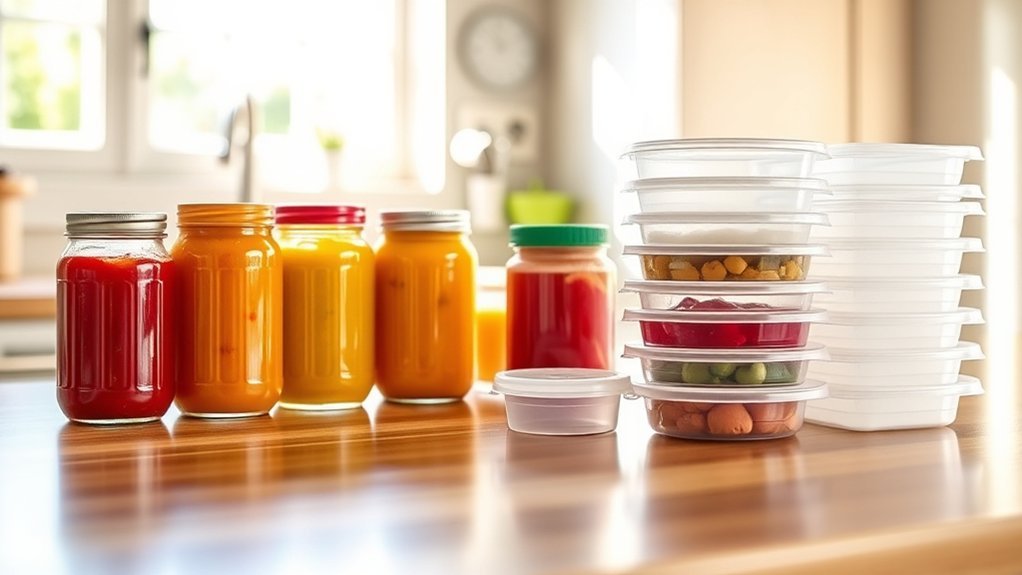
Glass and plastic each solve different problems. Glass works well for repeated home use, while lightweight plastic can be easier to carry in a diaper bag. The better choice depends on how you plan to store, heat, and transport the food.
| Factor | Glass | Food-Safe Plastic |
|---|---|---|
| Weight | Heavier and more stable on a counter | Lighter and easier to carry |
| Breakage | Can chip, crack, or shatter | More resistant to drops but can scratch or warp |
| Stains and odors | Usually resists both well | May stain or retain odors over time |
| Heating | Suitable only when labeled for the appliance | Use for heating only when labeled microwave-safe |
| Best fit | Repeated home storage and easy cleaning | Travel, daycare, and situations where drops are likely |
Chemical Safety Concerns
Glass reduces the amount of plastic touching the food, but claims that it eliminates all chemical exposure are too broad. A glass container may still have a plastic lid or silicone gasket, and food-contact safety depends on the complete product and how it is used.
Do not heat food in a scratched, warped, or unlabeled plastic container. Likewise, do not heat food in an ordinary glass jar unless the manufacturer says the jar is suitable for that appliance and temperature.
Environmental Impact Comparison
A reusable glass container can replace many disposable cups, bags, or jars over its useful life. Glass also does not create plastic fragments when it breaks down.
That does not automatically make glass the lowest-impact choice in every situation. Glass is heavier to transport, takes energy to manufacture, and must be reused enough times to make the most of its durability. A lightweight reusable container that remains in service for years may also be a responsible choice.
Durability and Breakage Risks
Glass is hard and resistant to scratches, but it is not impact-proof. A drop onto tile or concrete can cause immediate breakage. Smaller impacts can also create a chip or crack that weakens the container.
Inspect the rim, corners, base, and lid-contact area before each use. Stop using a container if you find a chip, crack, deep scratch, or rough edge. Do not attempt to repair damaged food-storage glass.
Warning: Never serve food from chipped or cracked glass. Do not place an ordinary cold glass jar into a hot oven or pour boiling food into cold glass unless the manufacturer specifically approves that temperature change.
Types of Glass and What Labels Mean
Terms such as borosilicate and tempered glass describe how a product is made or strengthened, but they are not substitutes for the care label.
- Borosilicate glass: Designed to tolerate temperature changes better than many ordinary glass formulations. Its actual limits still depend on the product.
- Tempered glass: Heat-treated for added strength. It can still break after an impact, chip, or rapid temperature change.
- Ordinary food jars: Useful for some refrigerator storage but not automatically suitable for freezing, microwaving, or oven use.
For example, the manufacturer describes OXO Tot Glass Baby Blocks as borosilicate glass containers that are freezer-, microwave-, and dishwasher-safe. Those properties apply to that product and should not be assumed for unrelated jars.
Environmental Impact of Glass Packaging
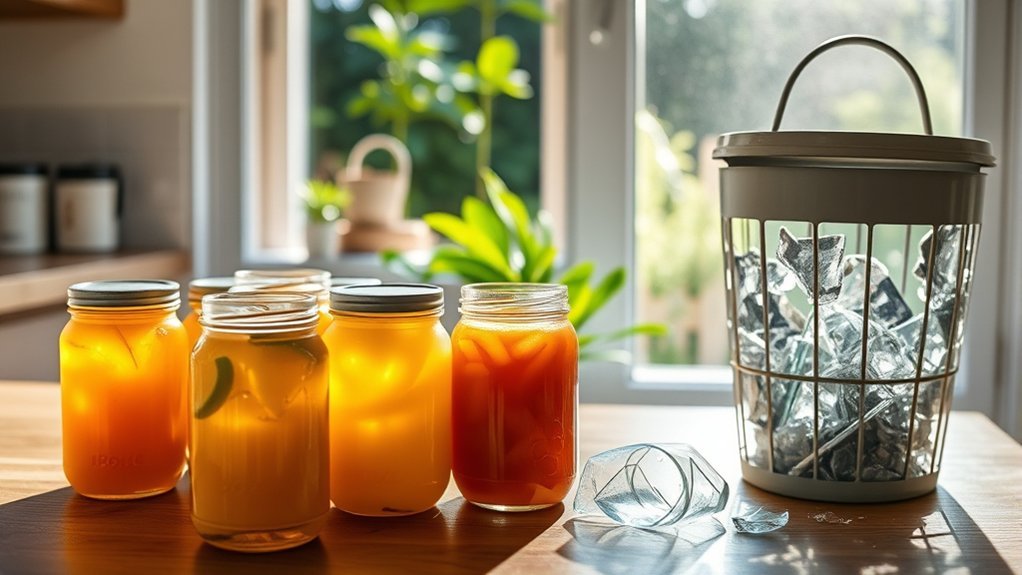
Glass can be recycled into new products, and a durable food container can be reused many times before it reaches the recycling stage. Reuse is therefore one of the clearest environmental advantages of choosing a well-made container.
However, glass is not recycled everywhere. Collection rules depend on the local program, and drinking glasses, cookware, ceramics, and heat-resistant glass may be excluded from bottle-and-jar recycling streams.
Recyclability of Glass Packaging
The latest national material-specific page from the U.S. Environmental Protection Agency reports that 31.3% of glass containers were recycled in 2018. The EPA page was updated in March 2026, but 2018 remains the national dataset displayed there.
This is far below the 80% rate sometimes repeated in unsourced articles. Before placing a damaged or unwanted container in a recycling bin, check your city or county’s accepted-material list.
Energy Use During Production and Transportation
Glass manufacturing requires high-temperature furnaces, and heavy containers require more energy to transport than lighter alternatives under similar conditions. Recycled glass can reduce the need for virgin raw materials, but the full environmental result depends on the manufacturing process, transportation distance, washing, reuse, and end-of-life handling.
For a household, the most practical approach is to buy only the number of containers needed, protect them from breakage, reuse them for as long as they remain undamaged, and recycle them where accepted.
Impact on Landfills and Oceans
Glass does not become microplastic, but discarded glass still uses landfill space and broken pieces can create physical hazards. It should not be left outdoors or placed in a recycling stream that does not accept it.
Reusable containers help reduce demand for single-use packaging. The benefit is greatest when the same containers remain in regular service instead of being replaced frequently.
What to Consider About Weight and Breakage
Glass containers are heavier than comparable plastic containers. The extra weight may help a container remain stable on a table, but it can make a fully packed diaper bag cumbersome.
| Factor | Advantage | Tradeoff |
|---|---|---|
| Weight | Stable on a flat surface | Heavier to carry in groups |
| Rigidity | Keeps its shape and is easy to stack | Does not flex during an impact |
| Breakage | Can last for years when protected | May chip or shatter if dropped |
| Handling | Clear surface makes inspection easy | Requires regular crack and rim checks |
Safe Refrigeration and Freezing
Safe storage time depends on the food, temperature, and handling—not on whether the container is glass. The FDA’s infant food-safety guidance lists the following times:
| Food | Refrigerator | Freezer |
|---|---|---|
| Homemade baby food | 1–2 days | 3–4 months |
| Opened or freshly made strained fruits and vegetables | 2–3 days | 6–8 months |
| Strained meats or eggs | 1 day | 1–2 months |
| Meat and vegetable combinations | 1–2 days | 1–2 months |
Keep the refrigerator at or below 40°F (4°C) and the freezer at 0°F (-18°C). Refrigerate or freeze perishable food promptly, and discard baby food left at room temperature for more than two hours.
How to Freeze Baby Food in Glass Safely
- Use a container specifically labeled freezer-safe.
- Cool freshly cooked food promptly before sealing it for storage.
- Fill the container in small portions instead of one large, deep batch.
- Leave about one-half inch of empty space at the top so the food can expand as it freezes.
- Wipe the rim clean and close the lid securely.
- Label the container with the food and preparation date.
- Place it where it will not be struck by other frozen items.
Pro Tip: Freeze baby food in single-meal portions. You can thaw only what you need and avoid reheating or discarding a larger batch.
Safe Reheating of Baby Food
Even when a storage container is labeled microwave-safe, the FDA advises against microwaving baby food directly in its jar. Food can heat unevenly, and the center may be much hotter than the glass sides.
For safer microwave reheating:
- Transfer one serving to a microwave-safe dish.
- Follow the appliance and food instructions.
- Stir the food thoroughly after heating.
- Let it stand for at least 30 seconds.
- Test the temperature before feeding. It should be lukewarm, not hot.
Do not microwave baby-food meats, meat sticks, or eggs. FDA guidance recommends using the stovetop because their higher fat content can lead to splattering and overheating.
Never heat a tightly sealed container. Remove the lid or vent it only as directed by the manufacturer. Remember that a glass bowl can become hot from the food inside even though the microwaves mainly heat the food.
Preventing Spoon Contamination
Do not feed your baby directly from the main storage container if you plan to save some of the food. Saliva from the used spoon can introduce bacteria into the remaining portion.
Instead, place one serving in a clean dish before feeding. Return the untouched storage container to the refrigerator promptly and discard any food left in the serving dish.
Cleaning and Maintenance of Glass Storage
Many glass food containers are dishwasher-safe, but lids and seals may require top-rack washing or hand cleaning. Always follow the product instructions.
- Separate removable pieces: Take apart lids, valves, and gaskets when the manufacturer permits it.
- Wash food-contact grooves: Pay attention to narrow channels where puree can collect.
- Rinse thoroughly: Remove all detergent and loosened food.
- Dry completely: Let every part dry before reassembly to reduce trapped moisture.
- Inspect regularly: Check the glass, rim, lid, and seal for damage or mold.
Replace a gasket that remains loose, cracked, sticky, or discolored after cleaning. Discard glass with chips, cracks, or sharp edges.
How to Choose Glass Baby Food Containers
Look for clear care information rather than relying on broad claims such as “durable” or “heat-resistant.” A useful container should identify its material and approved uses.
- Food-contact designation: Choose a product made for storing food.
- Freezer label: Required if you intend to freeze puree in the container.
- Microwave or oven label: Treat these as separate features. Microwave-safe does not always mean oven-safe.
- Secure lid: The lid should close evenly without a warped edge.
- Removable seal: A removable gasket is often easier to clean thoroughly.
- Wide opening: A wide mouth makes filling, spooning, and cleaning easier.
- Stable shape: Straight-sided or gently tapered containers leave room for frozen food to expand.
- Protective sleeve: A fitted silicone sleeve can improve grip and provide some impact protection, but it does not make glass unbreakable.
Tips for Transitioning to Glass Baby Food Containers
You do not need to replace every plastic container at once. Start with the uses where glass provides the most value, such as repeated refrigerator storage at home.
Replace containers gradually as older items become scratched, warped, or difficult to clean. Keep lightweight, food-safe containers for situations where breakage would be a larger concern, such as daycare or outdoor feeding.
If you select a borosilicate product such as OXO Tot Glass Baby Blocks, follow that product’s specific instructions instead of assuming every borosilicate container has the same limits.
Label each portion with the food and preparation date. Use the oldest safe portion first, and discard anything stored beyond the recommended period.
How to Transport Glass Containers Safely
Keep glass containers upright in a padded, insulated lunch bag. Use fitted sleeves or dividers so the jars cannot strike one another. Do not place loose glass containers beside hard objects such as metal bottles, utensils, or ice packs.
Keep cold baby food at 40°F or below during travel. Clean reusable ice packs before placing them next to food containers, and keep baby food separate from diapers or other items that could contaminate the feeding area.
Sources
- American Academy of Pediatrics: Food Additives and Plastic-Exposure Advice — supports the recommendation to avoid heating food in plastic when possible and consider glass or stainless steel.
- FDA: Once Baby Arrives—Infant Food Safety — supports storage periods, spoon-contamination precautions, freezing headspace, and microwave guidance.
- FDA: Are You Storing Food Safely? — supports refrigerator, freezer, and room-temperature guidance.
- FDA: Food Ingredients and Packaging — explains oversight of food-contact substances and containers.
- U.S. EPA: Glass Material-Specific Data — supports the national glass generation, recycling, and landfill figures.
- OXO: Glass Baby Blocks Product Information — verifies the material and approved uses of the product mentioned in this article.
Frequently Asked Questions
Are glass baby food containers microwave-safe?
Only use glass in a microwave when the manufacturer labels it microwave-safe. For baby food, FDA guidance recommends transferring one serving to a microwave-safe dish rather than heating it in the storage jar. Stir, let the food stand for at least 30 seconds, and test it before feeding.
Can glass containers be used for freezing baby food?
Yes, when the container is specifically labeled freezer-safe. Leave about one-half inch of empty space at the top because food expands as it freezes. Avoid ordinary jars with narrow shoulders unless the manufacturer approves them for freezing.
How long can homemade baby food stay in a glass container?
FDA guidance lists homemade baby food for one to two days in a refrigerator at or below 40°F and three to four months in a freezer at 0°F. The glass container does not extend those storage periods.
What sizes are glass baby food containers available in?
They are sold as small single-serving containers and larger containers for batch storage. Smaller portions reduce waste and thaw more quickly, while larger containers take less space than many individual jars. Choose a size that matches your baby’s current serving amount.
Do glass containers have special storage requirements?
Keep them where they will not strike hard objects or fall from a shelf. Leave expansion space when freezing, avoid rapid temperature changes unless the manufacturer allows them, and inspect each container for chips or cracks before use.
When should I discard a glass baby food container?
Discard it if you find a chip, crack, sharp edge, deep scratch, damaged rim, or loose piece of glass. Replace a lid or gasket that no longer seals correctly or cannot be cleaned completely.
How can I safely transport glass baby food containers?
Place them upright in a padded insulated bag with fitted sleeves or dividers. Keep them away from hard objects and use clean ice packs to hold cold food at 40°F or below. Check the glass for damage after any drop or strong impact.
Conclusion
Glass baby food storage containers are a strong option for repeated home use because they resist odors and stains, are easy to inspect, and reduce direct contact between food and plastic. Their main disadvantages are weight, breakage risk, and product-specific temperature limits.
Choose containers labeled for the way you plan to use them, follow safe refrigeration and freezing times, portion food before feeding, and discard damaged glass. Plastic can still be useful for travel or other situations where a dropped glass container would create a greater risk. The best system may include both materials, each used where its strengths matter most.