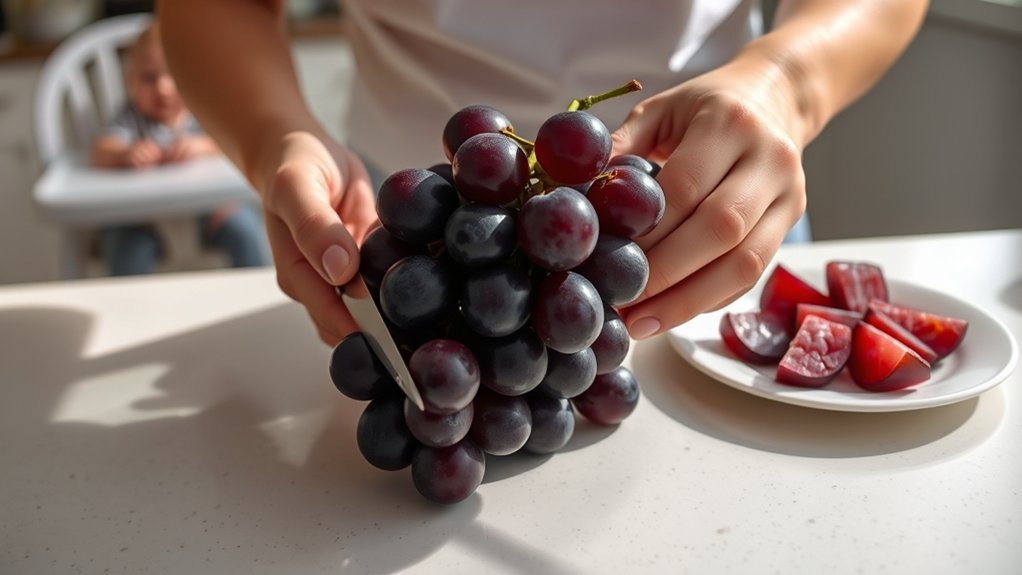
Grapes can be a nutritious finger food, but their round shape and slippery surface make whole grapes a serious choking risk for babies and young children. The safest approach is to wash each grape, place it on a stable cutting board, and cut it lengthwise into four narrow pieces before serving it to a seated, closely supervised child.
Quick Answer
To cut grapes safely for a baby or toddler, wash them under running water and quarter each grape lengthwise from stem to bottom. Serve the narrow pieces while your child is seated upright and directly supervised. Do not serve whole, crosswise-sliced, halved, or frozen grapes to a young child.
Key Takeaways
- Cut grapes lengthwise into four narrow pieces rather than slicing them across into round discs.
- Continue modifying grapes for children younger than 4 and longer when chewing, swallowing, or developmental skills require it.
- A grape’s color, size, seedless label, or oblong shape does not make it safe to serve whole.
- Serve grapes only while your child is seated upright, calm, and directly supervised.
- For an infant who cannot cough, cry, or breathe, use back blows and chest thrusts—not abdominal thrusts—and call emergency services.
At a Glance
| Time Required | About 2–5 minutes |
| Difficulty | Easy, with careful knife handling |
| Tools Needed | Running water, clean cutting board, sharp paring knife or grape quartering tool |
| Cost | No extra cost beyond the grapes and basic kitchen tools |
Warning: Whole grapes can block a young child’s airway. Direct supervision reduces risk but does not make an improperly prepared grape safe. Quarter grapes lengthwise and keep your child seated upright throughout the meal or snack.
Why Whole Grapes Are a Choking Hazard
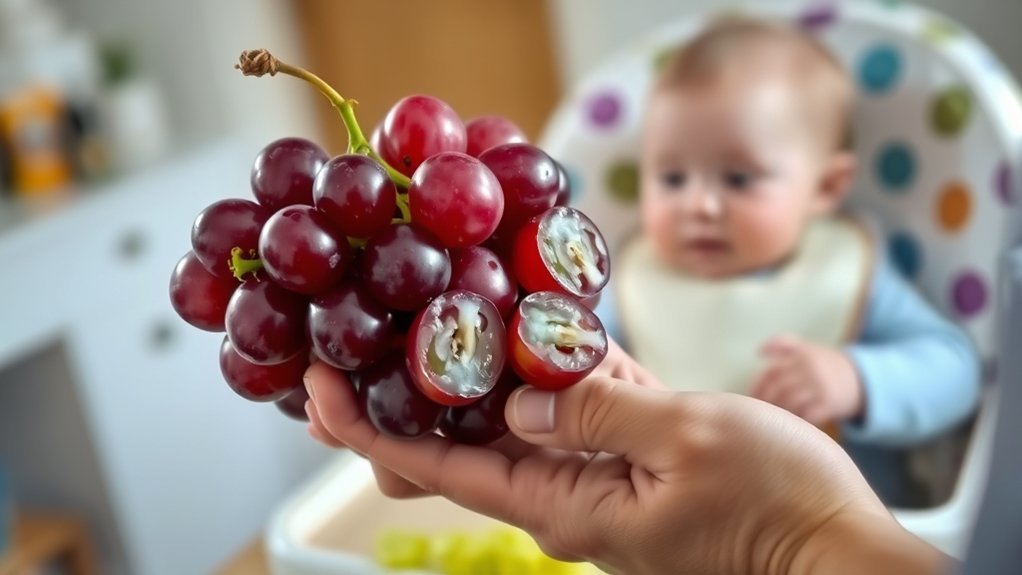
Whole grapes combine several features that make them hazardous: they are small, firm, round or oval, smooth, and slippery. A grape can be swallowed before a young child has chewed it enough, and its shape may form a tight seal in the airway.
The Centers for Disease Control and Prevention lists uncut grapes among potential choking hazards for young children. The American Academy of Pediatrics also identifies whole grapes as a high-risk food that must be thoroughly modified before it is served.
Cutting a grape lengthwise into four narrow pieces changes the round airway-sized shape that makes a whole grape especially dangerous.
Seedless grapes may be easier to prepare, but they are not safer when left whole. Large, small, round, and oblong grapes all need to be prepared according to the child’s age and eating skills.

Power your essentials anywhere with a 999Wh pure sine wave power station delivering up to 1000W continuous with 2000W surge. It supports fast charging via USB-C PD 60W and USB-A QC 18W, plus simultaneous output for multiple devices through AC, USB, wireless, and car/DC ports. Recharge using AC, car, or solar with a built-in MPPT controller and dual cooling fans, while the upgraded battery management system protects against surges, short circuits, and overheating.

Safe & Durable Design: Bottom screw nut guarantees zero chance of blades falling into your fruits. The integrated design makes this slicer last longer than others.
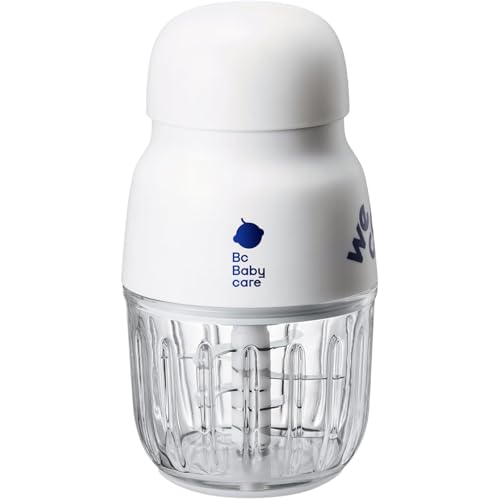
【High-Efficiency Food Processing】Equipped with a high-speed smashing motor, this baby food maker can chop fresh fruits, vegetables, meat, and more into nutrient-rich purees in just 8 seconds. Its 6-layer 8-blade design ensures ultra-fine textures for easy digestion and absorption by your baby's delicate stomach. For harder ingredients like potatoes or carrots, we recommend steaming them first and adding a small amount of water to achieve smoother results.
How to Cut Grapes Safely for a Baby or Toddler
Use a clean, stable cutting surface and work slowly. Do not balance grapes in your hand or use an unstable shortcut that requires sliding a knife between two plates.
Safe Cutting Tools
- Sharp paring knife: A sharp blade is less likely to slip than a dull one when used correctly.
- Stable cutting board: Place a damp towel beneath the board if it moves on the counter.
- Grape quartering tool: A purpose-built cutter can help produce four lengthwise pieces, but inspect every piece before serving.
Keep knives and cutting tools out of your child’s reach. An adult should complete all cutting.
The Lengthwise Quartering Method
- Wash your hands and clean the knife and cutting board.
- Rinse the grapes thoroughly under running water. The FDA advises washing produce under running water and does not recommend using soap, detergent, or commercial produce wash.
- Remove each grape from the stem and discard grapes that are moldy, split, leaking, or badly damaged.
- Place one grape on the cutting board with the stem end facing away from you.
- Cut from the stem end to the bottom so the grape becomes two long halves.
- Turn each half cut-side down and slice it lengthwise again to make four narrow pieces.
- Remove seeds if the grape contains them. For a new eater, peel the skin or chop the quarters into smaller pieces when needed.
- Check the pieces before serving. They should be narrow rather than round or coin-shaped.
Pro Tip: Cut only the amount your child is likely to eat. Freshly cut grapes are easier to inspect, and preparing a small portion reduces waste.
Step-by-Step Grape Preparation
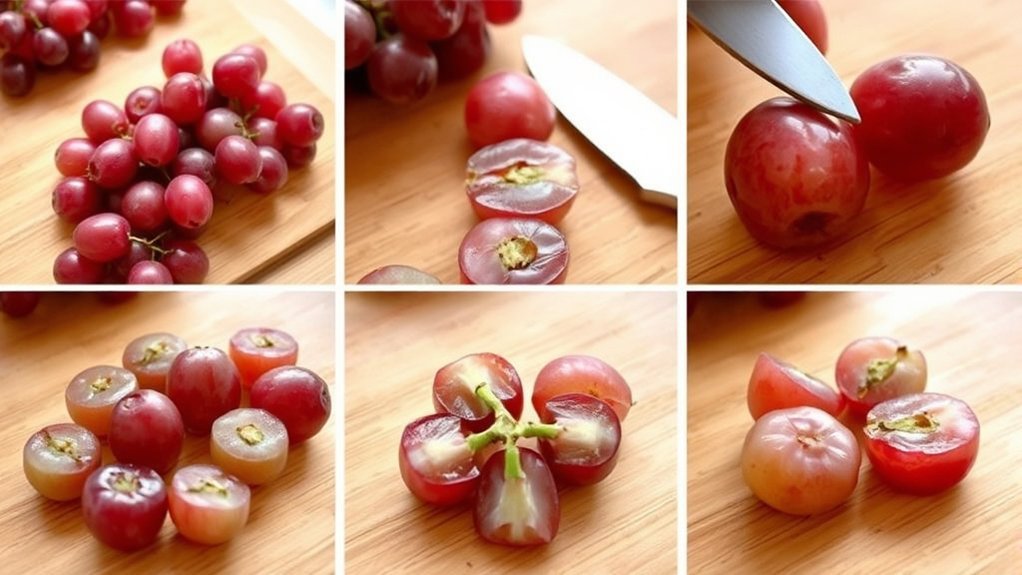
Before serving grapes, follow this simple preparation check:
- Wash: Rinse the grapes under running water before cutting.
- Inspect: Remove damaged fruit, stems, and any seeds.
- Quarter: Cut every grape lengthwise into four narrow pieces.
- Adjust: Chop, peel, cook, or mash the fruit further when your child needs a softer texture.
- Seat: Place your child upright in a high chair or suitable seat.
- Supervise: Stay within reach and watch the child throughout the snack.
Do not assume that cutting a grape once is enough. A lengthwise half can still be large and rounded, especially for a baby or young toddler. Quartering produces narrower pieces and is the more cautious preparation.
Age-Appropriate Guidance for Serving Grapes
Age is only one part of food readiness. Your child’s ability to sit upright, bring food to the mouth, chew, swallow, and remain calm while eating also matters. The CDC recommends introducing solid foods at about 6 months, when a baby shows the appropriate developmental signs.
Around 6 Months
For a baby who is beginning solid foods, use a preparation that matches the baby’s skills. Grapes can be cooked until soft and mashed, blended into a smooth or lumpy texture, or finely chopped after the skin and seeds are removed.
Do not place a whole grape into a feeder and assume the feeder removes every risk. Inspect the device before use, follow its manufacturer’s directions, and supervise continuously.
Older Babies and Toddlers
Quarter grapes lengthwise and make the pieces smaller when needed. Continue to monitor how your child manages the skin and texture. A child who stuffs food, rushes, has limited chewing skills, or has difficulty swallowing may need grapes cooked, peeled, mashed, or chopped more finely.
Children Younger Than 4
Continue cutting grapes lengthwise into four small pieces. The American Academy of Pediatrics advises keeping high-risk foods away from young children or completely chopping them into small pieces through age 4 or longer, depending on development and maturity.
When Whole Grapes May Be Appropriate
Do not switch to whole grapes based on a birthday alone. Consider the child’s chewing ability, attention, eating habits, and developmental maturity. Some children need modified grapes beyond age 4. Ask your pediatrician or a feeding specialist for individualized advice if your child has a history of choking, swallowing difficulty, oral-motor delay, or another condition that affects eating.
Note: Supervision is essential at every age, but supervision alone does not correct an unsafe food shape. Prepare the grape first, then supervise the child while eating.
Supervision and Safe Eating Practices
Serve grapes only when your child is alert and seated upright. Eating while walking, running, playing, riding in a vehicle, or lying down increases the chance that food will be swallowed without enough chewing.

- Use a stable high chair or age-appropriate seat.
- Stay close enough to respond immediately.
- Keep screens, toys, and active play away from the eating area.
- Offer a small number of grape pieces at a time if your child tends to stuff food.
- Encourage a calm pace without forcing the child to take another bite.
- Do not ask a child to laugh, talk, or move around with food in the mouth.
- Teach older children to chew and swallow before speaking or leaving the table.
Taking an infant and child CPR or first-aid course is one of the best ways to prepare for an emergency. Reading instructions cannot replace supervised, hands-on practice.
Gagging Versus Choking: Signs to Watch For
Gagging can happen while a baby learns to manage new textures. It is often noisy and may involve coughing, retching, a red face, or bringing food forward in the mouth. Although gagging can look alarming, air is usually still moving.
A child with a severe airway obstruction may be unable to cough forcefully, cry, speak, or breathe. Choking can be quiet. The child may look frightened, make weak or no sounds, or develop a blue or gray color around the lips or face.
Warning: If your child cannot cough, cry, speak, or breathe, treat it as an emergency. Call 911 or your local emergency number and begin age-appropriate choking first aid. Do not perform a blind finger sweep inside the mouth.
What to Do If Your Baby or Child Chokes on a Grape
First determine whether the child can cough, cry, speak, or breathe. If the child has an effective cough, encourage coughing and watch closely. Do not leave the child alone.
For an Infant Under 1
If the infant cannot cough, cry, or breathe, have someone call 911 while you begin first aid. Current American Red Cross infant-choking guidance uses five back blows followed by five chest thrusts. Continue the cycle according to your training and the emergency dispatcher’s instructions until the object is expelled, the infant breathes, or the infant becomes unresponsive.
Do not give abdominal thrusts to an infant. If the infant becomes unresponsive, place the infant on a firm, flat surface and begin CPR according to your training and the emergency dispatcher’s directions.
For a Child Over 1
For a conscious child over 1 who cannot cough, speak, or breathe, current first-aid guidance uses back blows followed by abdominal thrusts. Follow a certified first-aid method and the emergency dispatcher’s directions. The NHS choking guide explains the age-based difference between chest thrusts for babies and abdominal thrusts for older children.
Seek medical evaluation after a serious choking event or after chest or abdominal thrusts, even when the object appears to have come out. A remaining fragment or an injury may not be immediately obvious.
Note: This section provides general safety information and does not replace an accredited infant and child CPR or first-aid course.
Fun and Safe Ways to Serve Grapes
Grapes can be included in snacks and meals once every grape has been prepared for the child’s age and abilities.
Safe Grape Snack Ideas
- Mix finely chopped or lengthwise-quartered grapes with soft banana and ripe strawberry pieces.
- Stir chopped grapes into plain yogurt or cottage cheese.
- Add small grape pieces to oatmeal after it has cooled to a safe temperature.
- Mash peeled grapes into yogurt for a softer texture.
- Arrange quartered grape pieces in a line, flower, or simple face on a plate.
- Offer a small portion beside another familiar food without pressuring the child to eat it.
Do not give babies or young children whole or halved frozen grapes. Freezing makes grapes firmer, and a frozen grape or grape half can still obstruct the airway.
Safe Presentation Tips
Use colorful plates or arrange properly cut pieces into simple patterns. Skip skewers and pointed food picks for babies and toddlers. A flat plate arrangement gives the same visual effect without adding a sharp object.
Cookie cutters are not useful for cutting small grapes safely. Instead, create shapes by arranging narrow grape quarters with other appropriately prepared fruits.
Safe Grape-Themed Activities
Keep loose whole grapes out of sensory bins and play areas. Safer grape-themed activities include:
- Use purple and green felt circles for sorting and counting.
- Place whole grapes inside a securely sealed sensory bag for supervised touch exploration.
- Use a grape-shaped sponge or cork for washable-paint stamping instead of real fruit.
- Compare pictures of red, green, and dark-colored grapes.
- Let an older child help rinse grapes while an adult handles all cutting.
- Hold a seated tasting activity using properly prepared pieces and direct supervision.
How to Wash and Store Cut Grapes
Wash grapes under clean running water before cutting. Do not wash produce with soap, bleach, detergent, or household cleaning products. Clean your hands, knife, cutting board, and food container before preparation.
Place cut grapes in a clean, covered container and refrigerate them promptly at 40°F or colder. Do not leave cut fruit at room temperature for more than two hours, or more than one hour when the temperature is above 90°F. Discard grapes that become moldy, slimy, fermented-smelling, or otherwise spoiled.
For the best texture, prepare a small amount close to serving time rather than storing a large batch of cut grapes for several days.
Frequently Asked Questions
Can I serve frozen grapes to my baby?
No. Whole or halved frozen grapes are firm, slippery choking hazards. For a cool snack, use chilled grapes that have been quartered lengthwise, or mash peeled grapes into refrigerated yogurt.
Is cutting a grape in half enough?
A lengthwise half is safer than a whole grape but can still be too large and rounded for a baby or young child. Quarter each grape lengthwise into four narrow pieces, then chop the pieces smaller when your child’s eating skills require it.
When can a child eat whole grapes?
Avoid using age alone as the deciding factor. High-risk foods generally need to be avoided or thoroughly modified through age 4, and some children need modified grapes longer. Consider chewing ability, attention, maturity, food-stuffing habits, and any swallowing concerns.
How should I store cut grapes?
Refrigerate cut grapes promptly in a clean, covered container at 40°F or colder. Do not leave cut fruit at room temperature for more than two hours, and discard pieces that look moldy, slimy, damaged, or spoiled.
What other fruits have a similar choking shape?
Cherry tomatoes, cherries, large blueberries, melon balls, and other small round foods can pose similar risks. Remove pits and cut round foods lengthwise into small, narrow pieces. Firm fruits such as apples may need to be grated, cooked, or sliced thinly.
Are organic grapes safer for my baby?
Organic certification does not change a grape’s choking risk. Organic and conventionally grown grapes should both be washed under running water and cut lengthwise into four narrow pieces before they are served to a young child.
What if my child has trouble chewing or swallowing?
Use a softer preparation, such as cooked, peeled, mashed, or finely chopped grapes, and speak with your child’s pediatrician. A feeding or swallowing specialist can provide individualized texture and portion guidance.
How can I encourage my baby to try grapes?
Offer a small amount without pressure and pair it with a familiar food. Try age-appropriate textures such as mashed grape, finely chopped peeled grape, or lengthwise quarters. Repeated calm exposure is more useful than forcing a bite.
Conclusion
The safest way to serve grapes to a baby or young child is to wash them, cut them lengthwise into four narrow pieces, and adjust the texture further when needed. Keep your child seated upright and stay close throughout the snack. Avoid whole, halved, crosswise-sliced, or frozen grapes until the child has the maturity and eating skills to manage them safely.
Preparation is only part of choking prevention. Learn to recognize when a child cannot cough, cry, speak, or breathe, and complete an accredited infant and child CPR or first-aid course so you can respond correctly in an emergency.
Sources
- American Academy of Pediatrics: Choking Prevention for Babies and Children — high-risk foods, whole grapes, age, development, and prevention.
- CDC: Choking Hazards — foods that may obstruct a young child’s airway.
- NHS: Preparing Food Safely for Babies — quartering small round fruits and safe seated feeding.
- American Red Cross: Infant Choking — infant back blows, chest thrusts, and emergency response.
- NHS: How to Stop a Child From Choking — age-based choking first aid for babies and older children.
- FDA: Selecting and Serving Produce Safely — washing and handling fresh produce.