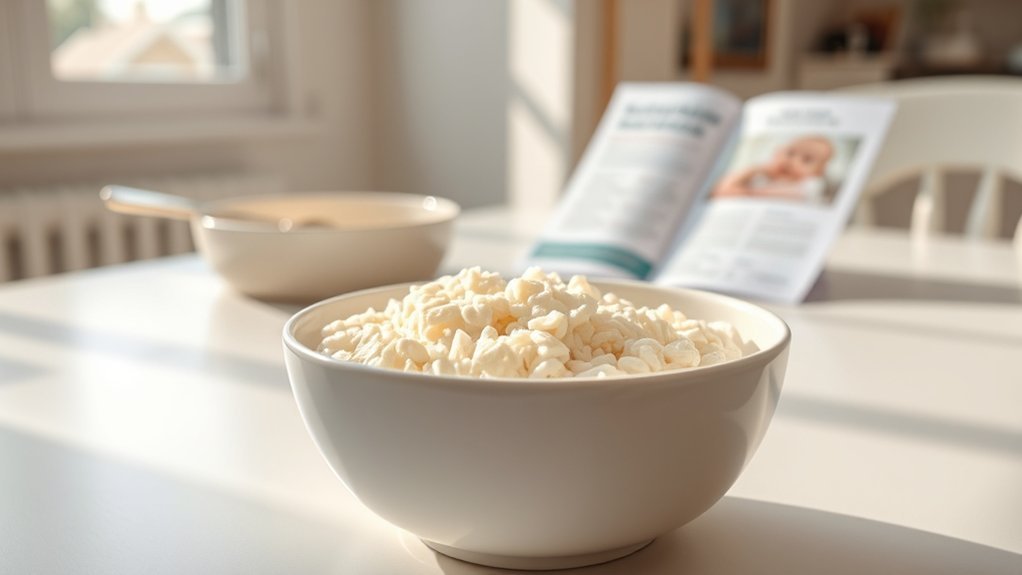

Oatmeal can be a nutritious first food when your baby is developmentally ready for solids. The usual starting point is around 6 months, but readiness matters more than reaching a specific date. Choose an age-appropriate oatmeal, prepare it with a soft texture, and introduce it in a calm, supervised setting.
Quick Answer
Most babies can eat oatmeal at around 6 months when they can sit with support, control their head and neck, bring food toward their mouth, and swallow food instead of pushing it out. Start with smooth, loosely mixed oatmeal served by spoon, then gradually thicken the texture as feeding skills improve.
Key Takeaways
- Introduce oatmeal at about 6 months only after your baby shows developmental readiness for solid food.
- Iron-fortified infant oatmeal can provide more iron than ordinary cooked oats, so compare labels carefully.
- Follow the package directions and add breast milk, prepared formula, or water until the texture suits your baby’s feeding ability.
- Serve oatmeal while your baby is seated upright and remain within arm’s reach throughout the meal.
- Avoid honey before 12 months and choose oatmeal without added sugar or excessive sodium.
- Seek urgent help for breathing trouble, facial or tongue swelling, collapse, or repeated vomiting with unusual sleepiness or paleness.
At a Glance
| Time Required | About 5–10 minutes, depending on the type of oats |
| Difficulty | Easy |
| Tools Needed | Small saucepan or microwave-safe bowl, measuring spoon, baby bowl, feeding spoon, and optional blender |
| Cost | Low; cost varies by brand and whether the cereal is iron-fortified |
When Can Babies Eat Oatmeal?
The Centers for Disease Control and Prevention recommends introducing complementary foods at about 6 months. Introducing solid food before 4 months is not recommended. Age is only one part of the decision, however.
Your baby may be ready for oatmeal when they can:
- Sit upright alone or with support.
- Control their head and neck steadily.
- Open their mouth when food approaches.
- Bring toys or food toward their mouth.
- Move food from the front of the tongue toward the back and swallow it.
- Keep most food in the mouth instead of automatically pushing it out with the tongue.
Around 6 months—and only when developmental readiness signs are present—is the usual starting point for oatmeal and other complementary foods.
Note: Ask your child’s pediatrician or feeding specialist before starting oatmeal if your baby was born prematurely, has poor head control, has trouble swallowing, coughs during feeds, has a developmental condition, has severe eczema, or has previously reacted to a food.
Breast milk or properly prepared infant formula should continue while complementary foods are introduced. Oatmeal adds new tastes, textures, and nutrients, but it should not abruptly replace regular milk feeds.

Power your essentials anywhere with a 999Wh pure sine wave power station delivering up to 1000W continuous with 2000W surge. It supports fast charging via USB-C PD 60W and USB-A QC 18W, plus simultaneous output for multiple devices through AC, USB, wireless, and car/DC ports. Recharge using AC, car, or solar with a built-in MPPT controller and dual cooling fans, while the upgraded battery management system protects against surges, short circuits, and overheating.

INFANT NUTRITION: This organic whole grain cereal is fortified with iron to offer nutritional support as your baby transitions to eating solid foods

WHOLESOME, ORGANIC INGREDIENTS Gerber organic baby food gives busy parents a convenient, reliable way to provide their little one with high-quality organic ingredients. Our Oatmeal Cereal for baby is made with 60% of the daily value of iron to support brain development SNAP and EBT item in eligible states
Why Oatmeal Is Beneficial for Babies

Oatmeal is soft, easy to adjust to different textures, and simple to combine with other foods after each ingredient has been introduced safely. Oats naturally contain carbohydrates, protein, and soluble fiber, including beta-glucan.
The soluble fiber in oats may support digestion and comfortable stools, although oatmeal does not guarantee that a baby will avoid constipation. Stool patterns often change when solid foods begin, and each child responds differently.
Oatmeal is also a useful alternative to serving rice cereal at every meal. The CDC recommends offering a variety of fortified cereals, such as oat, barley, and multigrain cereals. The FDA has established an action level for inorganic arsenic in infant rice cereal, so varying grains can help reduce reliance on a single cereal.
Variety is important beyond grains, too. Oatmeal should be one part of a diet that gradually includes vegetables, fruits, beans, eggs, meat or other proteins, and other age-appropriate foods.
Nutritional Benefits of Oatmeal for Your Baby
The nutritional value of oatmeal depends on the product. Iron-fortified infant oatmeal is not the same as plain rolled oats or an adult instant-oatmeal packet.
| Type | Best Use | What to Check |
|---|---|---|
| Iron-fortified infant oatmeal | Convenient early cereal that mixes into a smooth texture | Choose a single-ingredient, unsweetened product and review the iron content and preparation directions. |
| Plain quick or rolled oats | Suitable when cooked until very soft and blended or mashed to the needed texture | Ordinary oats may contain less iron per baby-sized serving than fortified infant cereal. |
| Steel-cut oats | Better for babies who manage thicker, lumpier textures after thorough cooking | Cook until completely soft; firm or chewy pieces are unsuitable for a new eater. |
| Adult flavored oatmeal packets | Usually not the best first choice | Many contain added sugar, sodium, flavorings, dried pieces, or several ingredients that make reactions harder to trace. |
The American Academy of Pediatrics identifies iron-fortified infant oatmeal as one option for complementing breast milk. Check the label instead of assuming every oatmeal product supplies the same amount of iron.
Pro Tip: For the first oatmeal feeding, use a plain, single-ingredient product. Once your baby tolerates it, add only foods they have already eaten safely so you can identify the cause of any reaction more easily.
Preparing Oatmeal for Your Baby

Preparation depends on whether you are using instant infant cereal or ordinary oats. Always check the package because cooking times and liquid ratios vary.
- Choose a plain oatmeal. Start with single-ingredient, unsweetened infant oatmeal or plain oats. Avoid packets containing honey, added sugar, candy pieces, or hard dried fruit.
- Cook or mix it as directed. Cook ordinary oats until completely soft. Prepare powdered infant cereal according to its label.
- Adjust the texture. Add breast milk, properly prepared formula, or water until the oatmeal is smooth and loose enough for your baby’s current feeding ability. Blend cooked oats if needed.
- Cool it before serving. Stir well and check the temperature before bringing the spoon to your baby’s mouth, especially after microwave heating.
- Begin with a small amount. Offer one or two small spoonfuls and let your baby decide whether to continue. Increase the amount gradually according to hunger and fullness cues.
- Thicken it over time. As chewing and swallowing skills improve, use less liquid and leave a little more texture instead of keeping every meal completely smooth.
Warning: Do not routinely put oatmeal or cereal in a bottle. Serve it from a spoon or offer an age-appropriate self-feeding texture. Only thicken a bottle when your baby’s pediatrician or feeding specialist has specifically prescribed a method for a diagnosed medical or swallowing concern.
Keep your baby seated upright in a stable high chair or another safe feeding seat. Place a small amount in a separate bowl rather than repeatedly dipping a used spoon into the main container.
Discard oatmeal left in your baby’s serving bowl after the meal because saliva has contacted it. Refrigerate untouched cooked oatmeal promptly and follow the product’s storage and reheating directions.
Choking Hazards and Allergens to Watch For
Properly prepared oatmeal is generally soft, but preparation and serving conditions still matter. The CDC recommends matching food texture to the child’s development, seating children upright, keeping meals calm, and watching them continuously while they eat.
| Potential Risk | Safer Approach |
|---|---|
| Dry granola, hard oat clusters, or uncooked oats | Use fully cooked, soft oatmeal. Do not give granola or hard clusters to an infant. |
| Dense, sticky spoonfuls | Loosen the oatmeal with liquid and offer small spoonfuls at a slow pace. |
| Hard raw fruit, whole nuts, spoonfuls of thick nut butter, or firm dried fruit mixed in | Use soft mashed fruit and smoothly thinned ingredients that match the baby’s feeding skills. |
| Eating while lying down, crawling, walking, riding in a stroller, or traveling in a car | Seat the baby upright in a secure feeding chair and keep the meal calm and distraction-free. |
| Inadequate supervision | Stay within arm’s reach and watch the baby throughout the meal. |
Oat Allergy and FPIES
An immediate oat allergy is uncommon but possible. Symptoms may appear soon after eating and can include hives, redness, swelling, coughing, wheezing, vomiting, or trouble breathing.
Oats are also a recognized trigger for food protein-induced enterocolitis syndrome, or FPIES. Unlike a typical immediate allergy, FPIES often causes repeated vomiting one to four hours after the trigger food. A baby may also become pale, unusually sleepy, weak, or dehydrated. A peer-reviewed FPIES review indexed by the National Library of Medicine identifies oats among the commonly reported triggers.
Warning: Call 911 for trouble breathing, swelling of the lips or tongue, blue or gray coloring, collapse, or unresponsiveness. Seek urgent medical care for repeated vomiting accompanied by marked paleness, weakness, unusual sleepiness, or signs of dehydration. Stop serving the suspected food until your child has been medically evaluated.
Oats and Gluten
Oats do not naturally contain the gluten proteins found in wheat, rye, and barley, but cross-contact can occur during growing, transport, or processing. Under FDA gluten-free labeling rules, oats labeled gluten-free must meet the federal gluten limit.
If your child has diagnosed celiac disease, a wheat allergy, or a medically prescribed gluten-free diet, ask the treating clinician which oatmeal products are appropriate. Do not start a restrictive diet based only on mild or unclear symptoms.
Safe Introduction of Oatmeal Into Your Baby’s Diet
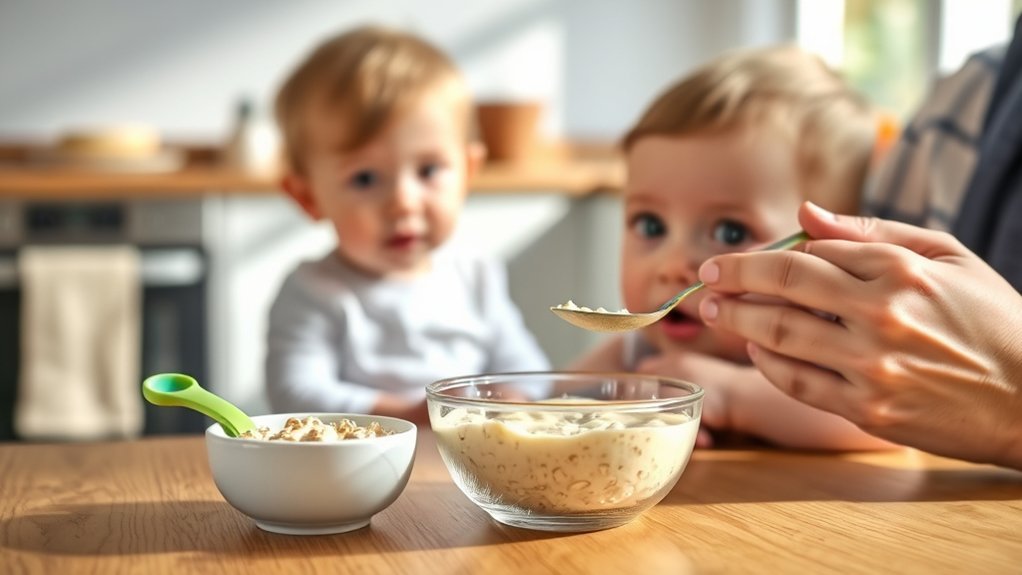
A simple, gradual introduction makes it easier to assess texture tolerance and notice a possible reaction.
- Start when your baby is healthy and alert. Avoid a first taste when the child is already vomiting, has diarrhea, or is unusually unwell.
- Offer plain oatmeal first. Use a single-ingredient product so a reaction is easier to trace.
- Serve a small spoonful. Pause and let your baby open their mouth rather than pushing the spoon in.
- Follow your baby’s cues. Continue when the baby leans forward or opens the mouth. Stop when the baby turns away, closes the mouth, becomes upset, or loses interest.
- Watch for a reaction. Monitor for immediate symptoms and remain aware that delayed repetitive vomiting can occur several hours later with FPIES.
- Increase gradually. If oatmeal is tolerated, slowly increase the quantity and texture over future meals.
Changing Oatmeal Texture as Your Baby Develops
- New eaters around 6 months: Offer smooth, loose oatmeal that falls easily from a spoon.
- Developing eaters: Gradually make the oatmeal thicker and leave soft, small lumps as chewing and swallowing improve.
- Babies with a reliable pincer grasp: Soft oatmeal may be shaped into moist, squashable pieces for supervised self-feeding. Avoid dense, rubbery, dry, or sticky balls.
- Older babies and toddlers: Continue increasing texture and offer soft toppings in sizes the child can manage safely.
These stages are based on feeding ability, not a strict birthday. Return to a softer texture and speak with a clinician if your baby repeatedly coughs, chokes, has a wet-sounding voice after meals, struggles to move food, or has poor growth.
Safe Foods to Mix With Oatmeal
Once plain oatmeal is tolerated, you can mix in foods your baby has already eaten safely, such as:
- Mashed banana, pear, peach, or cooked apple.
- Mashed sweet potato, pumpkin, or cooked carrot.
- Plain, pasteurized yogurt without added sugar.
- A small amount of smooth nut butter thinned thoroughly into the oatmeal after following your pediatrician’s allergen-introduction advice.
- A pinch of cinnamon for flavor, provided the finished food remains mild and unsweetened.
When introducing another new ingredient, add only one unfamiliar food at a time. This makes it easier to identify the cause if a reaction occurs.
Warning: Never add honey to oatmeal for a child younger than 12 months. The CDC warns that honey can cause infant botulism. This restriction includes raw, pasteurized, baked, and cooked honey.
Choose plain oatmeal rather than sweetened packets. Infants and young children should avoid added sugars, and salty adult products can contain more sodium than needed.
Frequently Asked Questions
Can oatmeal be mixed with other foods for babies?
Yes. After your baby tolerates plain oatmeal, mix it with previously tolerated soft foods such as mashed banana, pear, sweet potato, pumpkin, or plain pasteurized yogurt. When adding an unfamiliar ingredient, introduce only one new food at a time so a reaction is easier to identify.
How often should I feed my baby oatmeal?
There is no required two- or three-times-per-week schedule. Oatmeal can be offered regularly if your baby tolerates it, but it should not crowd out breast milk or formula, vegetables, fruits, proteins, and other grains. Follow your baby’s appetite and aim for variety across the week.
Is instant oatmeal safe for babies?
Plain infant oatmeal cereal or plain quick oats can be suitable when prepared to a safe texture. Adult flavored packets are usually a poorer choice because they may contain added sugar, sodium, flavorings, dried pieces, or several ingredients. Read the label and choose a plain, unsweetened product.
What are signs of an oatmeal allergy in babies?
Possible immediate symptoms include hives, redness, swelling, coughing, wheezing, vomiting, or trouble breathing. Call 911 for breathing difficulty, tongue or facial swelling, blue or gray coloring, collapse, or unresponsiveness. Repeated vomiting one to four hours later with paleness or lethargy may indicate FPIES and needs urgent medical assessment.
Can I use flavored oatmeal for my baby?
Plain oatmeal is the better choice. Flavor it with a previously tolerated mashed fruit, vegetable, or a small pinch of cinnamon rather than using packets with added sugar, honey, salt, or hard mix-ins. Never give honey to a baby younger than 12 months.
Can babies eat regular rolled oats?
Yes. Cook rolled oats until completely soft, then blend, mash, or thin them to match your baby’s feeding ability. Remember that ordinary oats may not contain as much iron as iron-fortified infant cereal, so compare labels and include other iron-rich foods.
What should I do if my baby vomits after eating oatmeal?
Stop serving the oatmeal and assess your baby. Call 911 for breathing trouble, swelling, blue or gray coloring, collapse, or unresponsiveness. Repeated forceful vomiting one to four hours after oatmeal—especially with paleness, unusual sleepiness, weakness, or dehydration—can be a sign of FPIES and requires urgent medical care.
Conclusion
Most babies can begin oatmeal at around 6 months once they show the physical skills needed to manage solid food. Start with plain oatmeal in a smooth, loose texture, serve it by spoon while your baby sits upright, and increase the amount and thickness gradually.
Iron-fortified infant oatmeal can be a useful early option, but oatmeal should remain one part of a varied diet. Avoid honey, added sugar, hard mix-ins, and routine cereal-in-bottle feeding. Stop and seek medical guidance if your baby develops a suspected reaction, feeding difficulty, or repeated delayed vomiting.
Sources
- CDC: When, What, and How to Introduce Solid Foods — supports the age, readiness, texture, cereal-variety, and food-introduction guidance.
- CDC: Choking Hazards — supports upright seating, continuous supervision, and developmentally appropriate food preparation.
- CDC: Foods and Drinks to Avoid or Limit — supports the honey, added-sugar, sodium, and infant-feeding restrictions.
- American Academy of Pediatrics: Breastfeeding and Solid Foods — supports iron-fortified oatmeal, first-food preparation, and gradual texture changes.
- National Library of Medicine: FPIES—Beyond the Guidelines — supports oat-triggered FPIES symptoms and timing.
- FDA: Inorganic Arsenic in Infant Rice Cereals — supports varying infant grains rather than relying exclusively on rice cereal.