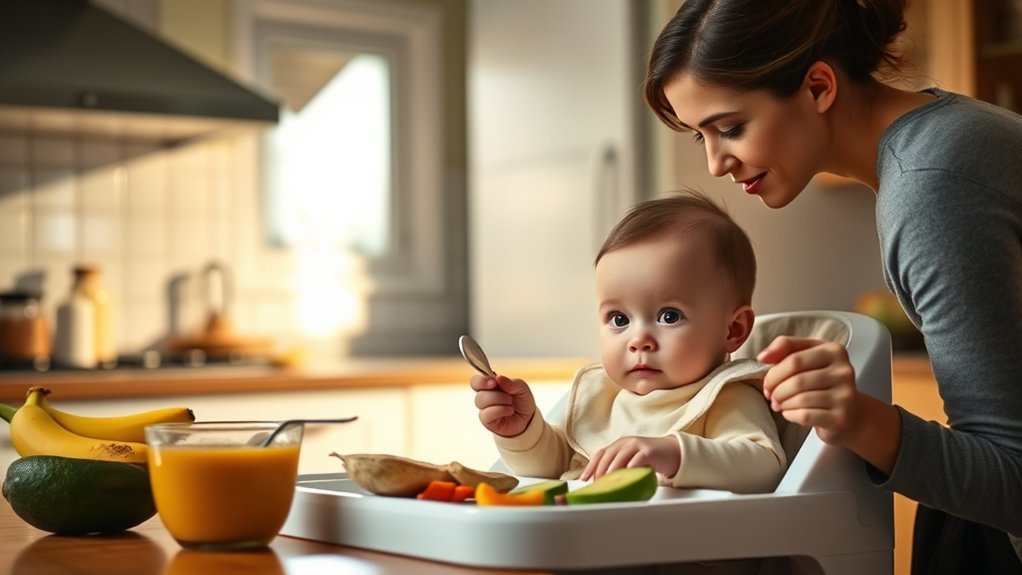
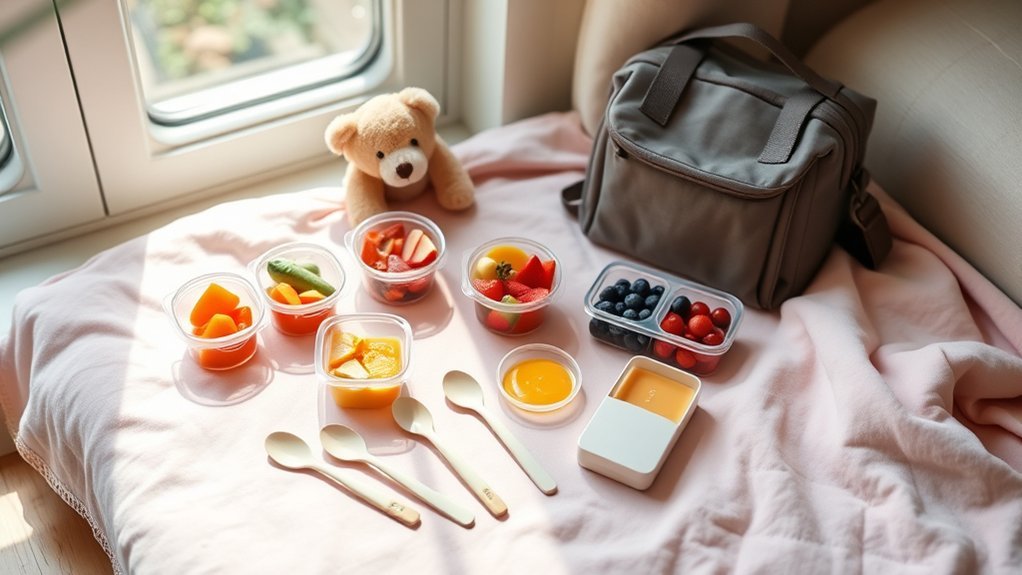
Packing baby food for travel is easier when you plan around three things: what your baby already eats, how long the food must stay safe, and the rules for your route. Bring enough breast milk, formula, meals, and snacks for the planned trip, plus extra for delays. Keep perishable foods cold, use age-appropriate textures, and place anything needed during travel in your carry-on or day bag.
Quick Answer
Pack familiar, age-appropriate foods in single servings, with extra formula, breast milk, or snacks for delays. Keep perishables at 40°F (4°C) or below in an insulated cooler, separate baby food for airport screening, and avoid whole, hard, sticky, or round foods that could cause choking.
Key Takeaways
- Pack enough familiar food for the trip plus at least one extra feeding for delays, spills, or missed connections.
- Use unopened shelf-stable pouches and jars when refrigeration is limited, but follow the label after opening.
- Keep homemade purees, cooked eggs, dairy, meat, and other perishables at 40°F (4°C) or below.
- Prepare every food for your baby’s current eating skills; whole beans and thick spoonfuls of nut butter are choking hazards.
- For U.S. airport screening, baby food, formula, breast milk, and cooling packs may be carried in reasonable quantities beyond the usual liquid limit.
At a Glance
| Time Required | 20–40 minutes to plan, portion, label, and pack |
| Difficulty | Easy, with extra planning for formula, allergies, or long travel days |
| Tools Needed | Insulated cooler, ice packs, leakproof containers, bibs, spoons, wipes, sealable bags, and labels |
| Cost | Usually $0–$30 if you already own feeding supplies |
Essential Packing List for Baby Food When Traveling
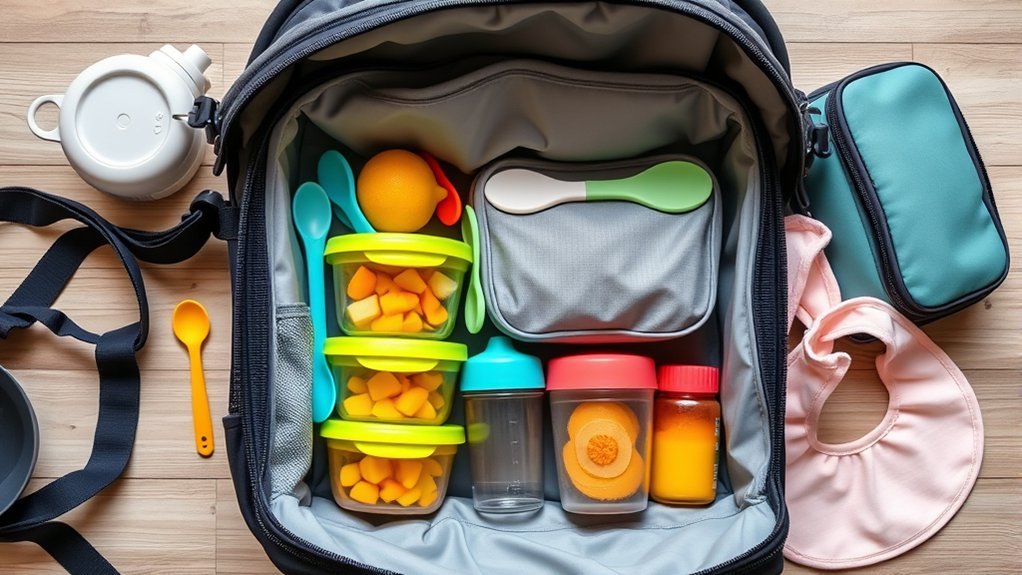
A simple checklist helps prevent rushed purchases and missed feedings. Adjust the quantities for your baby’s age, usual feeding schedule, trip length, and access to a refrigerator or safe water.
- Milk feeds: Pack breast milk, ready-to-feed formula, or powdered formula in the form your baby normally uses. Bring extra for delays.
- Safe water: If you use powdered formula, bring or confirm access to water that is safe for infant feeding. Measure water and powder exactly as the formula label directs.
- Bottles and nipples: Bring enough clean bottles for the travel period or a safe way to wash and dry them between uses.
- Meals and snacks: Choose familiar purees, soft finger foods, or commercial baby foods that match your baby’s current skills.
- Cold storage: Use an insulated cooler with several frozen gel packs for homemade food, opened pouches, cooked eggs, cheese, yogurt, meat, or other perishables.
- Serving gear: Pack baby spoons, a small bowl, a wipe-clean mat, bibs, and a cup if your baby uses one.
- Cleanup supplies: Add hand wipes, surface wipes, paper towels, sealable bags, and a separate bag for dirty items.
- Labels: Mark homemade containers with the food and packing date. Label breast milk as needed for childcare or shared refrigerators.
Pro Tip: Pack one complete feeding in an easy-to-reach pouch. Include the food, spoon, bib, wipes, and a sealable bag so you do not have to unpack the whole diaper bag.
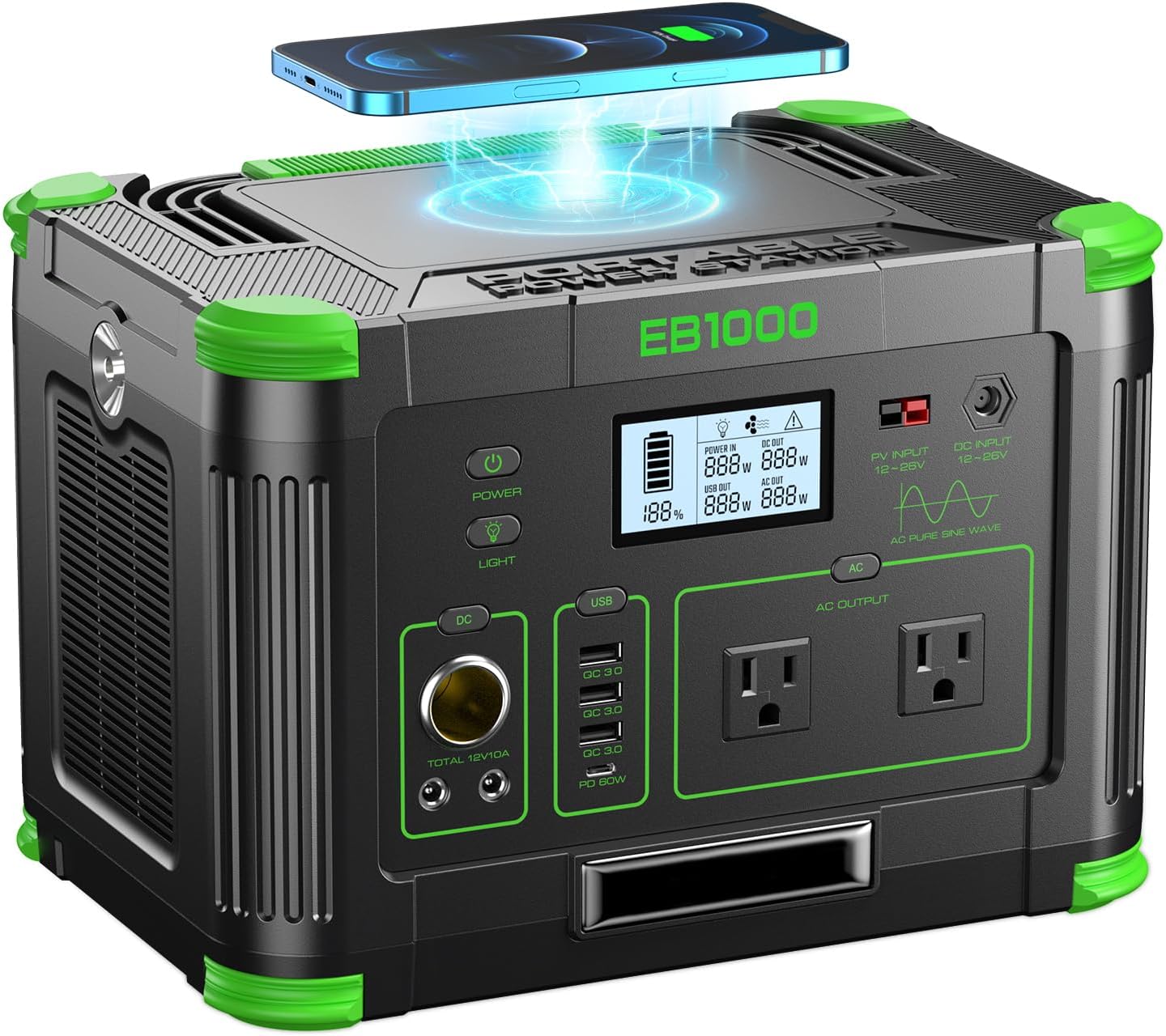
Power your essentials anywhere with a 999Wh pure sine wave power station delivering up to 1000W continuous with 2000W surge. It supports fast charging via USB-C PD 60W and USB-A QC 18W, plus simultaneous output for multiple devices through AC, USB, wireless, and car/DC ports. Recharge using AC, car, or solar with a built-in MPPT controller and dual cooling fans, while the upgraded battery management system protects against surges, short circuits, and overheating.

Clearly Crafted: When it comes to caring for your baby, transparency is everything. Thats why we bring you Clearly Crafted. Our clear packaging lets you see the ingredients in each recipe, in all its vibrant color. its goodness you can see

DELICIOUS 18 COUNT VARIETY PACK: This variety pack contains (6) Protein & Fiber (apple, yogurt, raspberry, purple carrot, oat), (6) Iron & Zinc (apple, blueberry, spinach), and (6) Prebiotic Fiber (carrot, apple, sweet potato) pouches
Best Baby Food Options for Travel
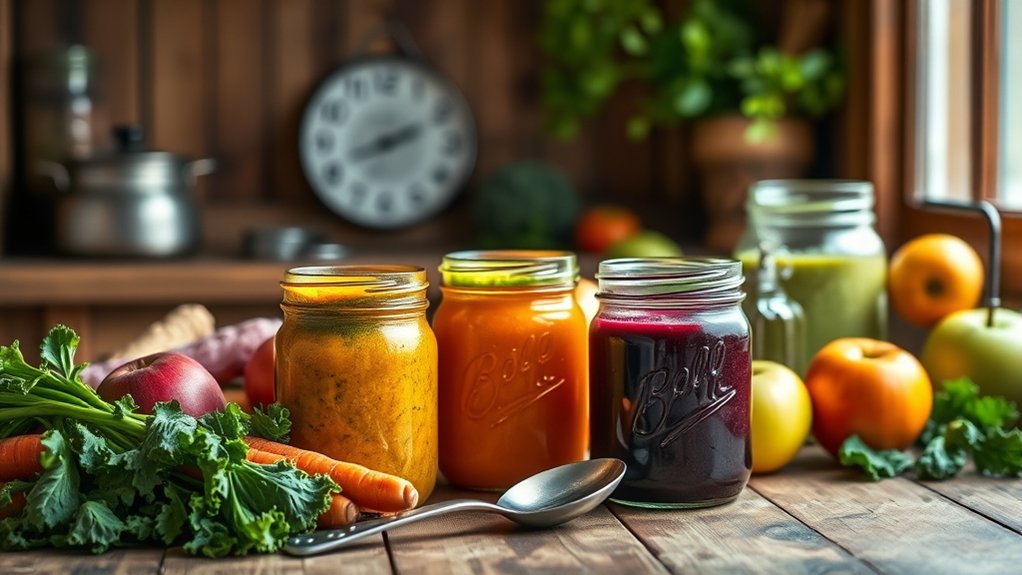
The best travel foods are familiar, easy to portion, and safe for the conditions you expect. Unopened shelf-stable baby food pouches and jars are useful because they do not need refrigeration before opening. Check the package for age guidance, damage, swelling, broken seals, or an expired use-by date.
Other practical options include soft banana, very ripe pear, unsweetened applesauce, smooth oatmeal, soft cooked pasta, mashed beans, and tender cooked vegetables. Hard-boiled eggs, shredded cheese, yogurt, cooked rice, and homemade purees can also travel well, but they must stay properly chilled.
Breast milk or infant formula remains the main source of nutrition from 6 to 12 months, so solid foods should support rather than replace normal milk feeds. Pack foods your baby has already eaten successfully whenever possible.
Warning: Do not let a baby eat while a vehicle is moving or while the baby is lying down, crawling, or walking. Seat your baby upright and supervise every bite. Whole beans, chunks of cheese, spoonfuls of nut butter, dried fruit, hard crackers, and round or slippery foods can cause choking.
Quick Baby Food Recipes for Travel
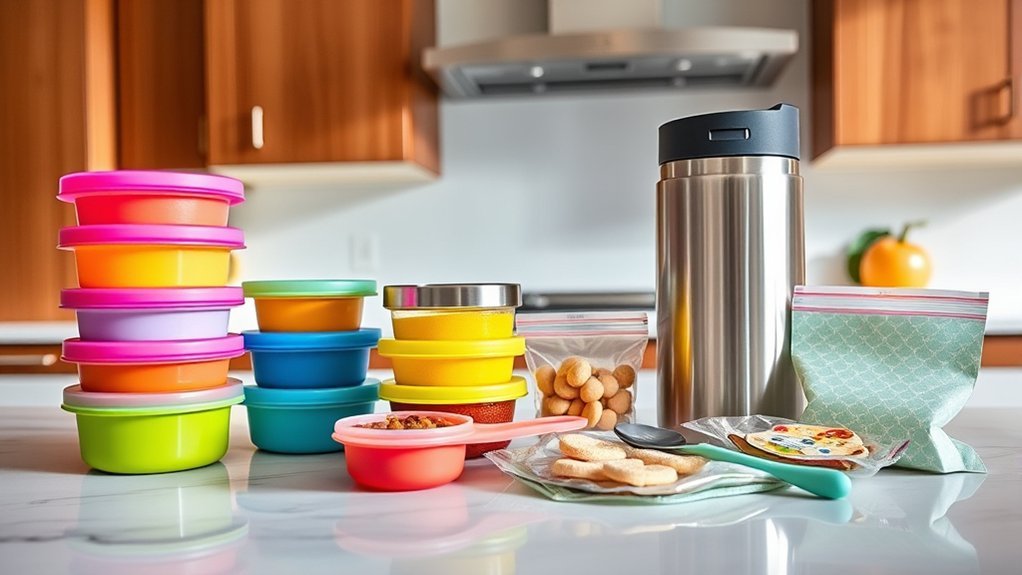
Homemade travel foods work best when they are simple, familiar, and packed in small portions. Prepare them with clean hands and equipment, cool cooked food quickly, and refrigerate or freeze it promptly.
Easy Puree Recipes
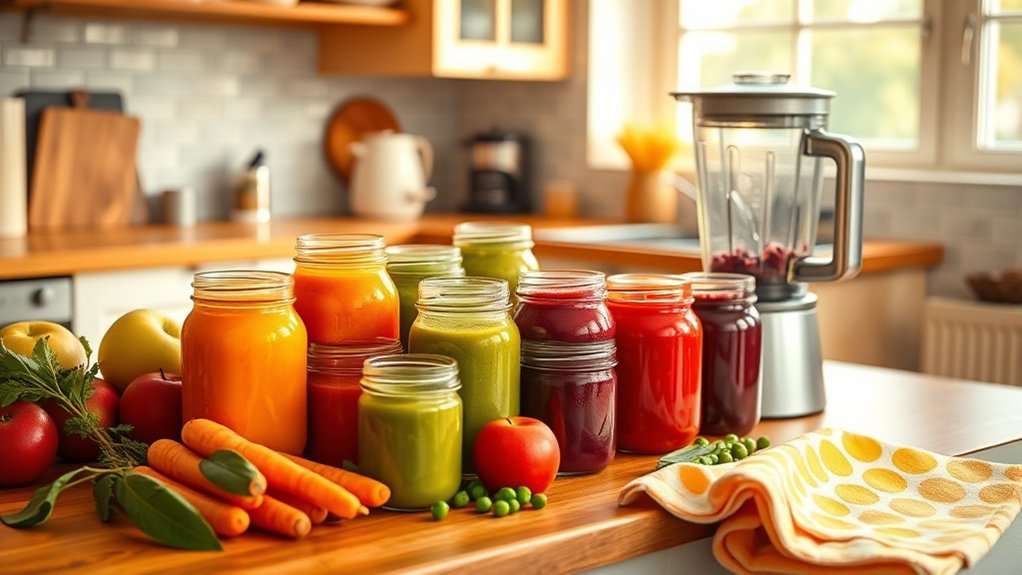
For a sweet potato and carrot puree, steam peeled pieces until very soft. Blend with a small amount of safe water, breast milk, or prepared formula until the texture matches your baby’s current feeding skills. You can blend in well-cooked quinoa or brown rice if your baby already eats those foods.
Divide the puree into single-serving containers and refrigerate or freeze it right away. Frozen puree cubes can help keep a cooler cold as they thaw, but they still count as perishable food and should remain at 40°F (4°C) or below. Do not refreeze food that has fully thawed and warmed.
No-Cook Snack Ideas
No-cook snacks can reduce mess, but each option still needs the right texture and size. Useful choices include:
- Unopened baby food pouches: Choose a texture your baby handles safely. After opening, follow the label and discard food contaminated by saliva.
- Soft fruit: Offer mashed banana or very ripe peeled pear in an age-appropriate shape. Keep cut fruit chilled.
- Mashed beans or chickpeas: Rinse low-sodium canned beans, then mash them smooth. Do not offer whole beans to a baby.
- Soft oat-and-fruit bites: For an older baby or toddler, make them flat and soft rather than round. Do not use honey before 12 months.
- Thinned nut butter: Only use a nut product your baby has already tolerated, and thin it into oatmeal or puree. Never offer a sticky spoonful.
Tips for Keeping Baby Food Fresh During Your Journey
Food safety matters more than whether a meal is homemade or store-bought. Keep cold foods at 40°F (4°C) or below. As a general rule, discard perishable food that has been above that temperature for more than two hours, or more than one hour when the surrounding temperature is above 90°F (32°C).
A cooler is only safe if it stays cold: use enough frozen packs, limit how often you open it, and check the temperature when the trip is long.
Use Insulated Food Containers
Use leakproof, food-safe containers with tight lids. Small containers make serving easier and reduce the chance that the entire batch will be exposed to saliva or warm air. A hard-sided or well-insulated soft cooler usually holds temperature better than a lunch bag.
Vacuum-insulated food jars can hold hot or cold food, but they do not make food shelf-stable. If you carry hot food, preheat the jar as directed and keep the food at a safe hot-holding temperature until serving. If you cannot confirm safe hot holding, pack the food cold and reheat it at your destination.
Opt for Shelf-Stable Options
Unopened commercial pouches, jars, dry infant cereal, and other factory-sealed foods can simplify travel. “Shelf-stable” applies only while the package is unopened and stored as the manufacturer directs. Once opened, the food may need refrigeration or prompt disposal.
Vacuum sealing homemade baby food does not make it safe at room temperature. Homemade purees, cooked grains, eggs, dairy foods, meat, and cut produce still need temperature control. For international travel, also check destination import rules and declare agricultural products when returning to the United States.
Pack Extra Ice Packs
Use several fully frozen gel packs, frozen water bottles, or other cold sources around the food. Thin packs fit between containers, while larger packs usually stay frozen longer. Keep the cooler out of direct sun and open it only when needed.
For U.S. airport security, frozen or partially frozen cooling accessories used for baby food, formula, breast milk, or toddler drinks are allowed in carry-on baggage, though they may receive extra screening. Place them where they can be removed easily.
Best Snacks for Traveling With Baby
Choose snacks based on your baby’s developmental stage, not only the age printed on the package. Good options may include a familiar puree, mashed fruit, smooth oatmeal, soft cooked vegetable strips, well-mashed beans, or dissolvable snacks designed for your baby’s eating skills.
Cooked eggs, shredded cheese, yogurt, and homemade muffins can be useful for older babies, but keep perishable foods cold. Make muffins soft, low in added sugar, and free of honey for babies younger than 12 months. Instant oatmeal can work when you have safe hot water and a clean bowl; cool it before feeding.
Pack at least one extra snack or milk feeding for delays. Avoid relying on unfamiliar airport or roadside food, especially when your baby has allergies or specific texture needs.
Managing Food Allergies When Traveling With Baby
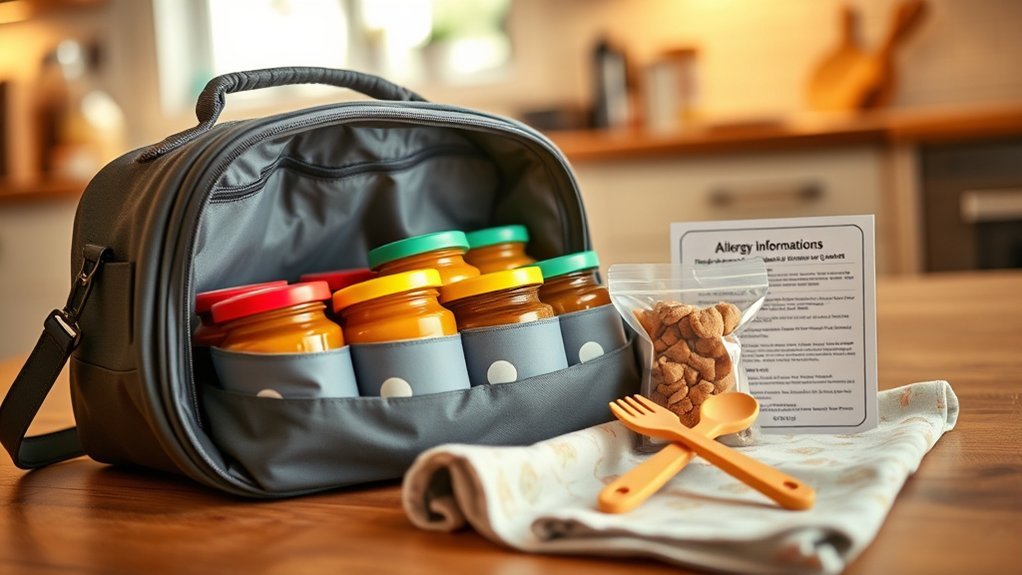
When a baby has a diagnosed or suspected food allergy, travel planning should include safe meals, medication, written instructions, and a plan for emergency care. Discuss the trip with your child’s clinician when reactions have been severe or the destination is remote.
Identify Common Allergens
In the United States, the nine major food allergens are milk, eggs, fish, crustacean shellfish, tree nuts, peanuts, wheat, soy, and sesame. Labeling rules differ by country, and foods prepared in restaurants or shared kitchens may have cross-contact that is not obvious.
Carry a written allergy action plan and any prescribed medication, including the correct epinephrine auto-injector when one has been prescribed. Keep medicine in your carry-on rather than checked luggage, and bring enough for the full trip plus delays.
Pack Allergen-Free Snacks
Pack foods your baby has eaten safely before. Read every label each time because ingredients can change. “Free from” claims do not replace checking the full ingredient and allergen statement.
| Snack Type | Safer Travel Example |
|---|---|
| Fruit | Mashed banana or a familiar commercial fruit puree |
| Crunchy snack | A familiar dissolvable snack that matches your baby’s skills |
| Protein | Smooth mashed beans or another tolerated protein |
| Homemade snack | Soft oat-and-fruit strip made without the child’s allergens |
Note: Do not use travel as the first exposure to a high-risk food when you will be far from medical care. At the same time, do not delay routine allergen introduction without medical advice. Ask your pediatrician how and when to introduce allergens safely.
How to Make Mealtime Stress-Free While Traveling
Keep the schedule flexible, but use your baby’s normal routine as the starting point. Feed before a long boarding line or road segment when possible, and build in time for upright, supervised eating.
- Pack familiar foods: Familiar tastes and textures can reduce refusal in a new setting.
- Prepare for delays: Carry at least one extra feeding and enough safe water or ready-to-feed formula.
- Use portable gear: A wipe-clean mat, lidded bowl, bib, and short baby spoon help contain mess.
- Serve small portions: Refill as needed instead of exposing a full container to saliva.
- Follow hunger and fullness cues: Travel can change appetite. Do not pressure your baby to finish a bottle, pouch, or bowl.
What You Need to Know About Airline Rules for Baby Food
At U.S. airport checkpoints, formula, breast milk, toddler drinks, and baby or toddler food may be carried in reasonable quantities greater than 3.4 ounces (100 milliliters). They do not need to fit in the quart-size liquids bag. Tell the Transportation Security Administration officer at the start of screening and remove these items from your carry-on for separate inspection.
Cooling accessories such as ice packs, freezer packs, and gel packs are also permitted when used for these items. Containers may be opened or screened by other methods. Allow extra time, and place feeding supplies together so they are easy to present.
TSA rules cover U.S. security screening, not every airline, airport, or country. Check the airline and departure airport before travel, especially for international routes. Keep the food needed during the journey in your carry-on; checked baggage can be delayed, lost, or exposed to unsafe temperatures.
Strategies for Introducing New Foods While Traveling
Travel can expose a baby to new tastes, but safety and supervision come first. When you offer something new, choose a simple food with a clear ingredient list and serve it when you can watch your baby closely.
- Pair familiar and new foods: Offer a small amount of the new food beside a familiar favorite rather than hiding it in a full meal.
- Use one new ingredient at a time: This makes it easier to identify a possible reaction.
- Choose a safe texture: Puree, mash, shred, or cut the food to match your baby’s skills.
- Avoid rushed first exposures: Do not introduce a new allergen during boarding, while driving, or when medical help is hard to reach.
- Watch for a reaction: Stop feeding and follow your child’s allergy action plan if symptoms appear. Seek emergency help for trouble breathing, swelling, repeated vomiting, weakness, or other signs of a severe reaction.
How to Store and Prepare Baby Food on the Go
Pack homemade food in clean, airtight, single-serving containers. Keep raw and ready-to-eat items separate, and use a clean spoon each time. If your baby eats directly from a jar, pouch, or container, discard the leftovers rather than saving them for later.
Prepared infant formula should be used within two hours of preparation and within one hour after feeding begins. If a prepared bottle will not be used within two hours, refrigerate it right away and use it within 24 hours. Throw away formula left in the bottle after a feeding.
When washing bottles or feeding tools away from home, use safe water and soap, then allow items to air-dry on a clean surface. If safe cleaning water is not available, use ready-to-feed formula and clean disposable feeding supplies when practical.
Warning: Never taste food to decide whether it is safe. If a cooler has warmed above 40°F (4°C) and you cannot confirm how long the food was warm, discard the perishable food.
Frequently Asked Questions
Can I bring homemade baby food on flights?
Yes. At U.S. checkpoints, baby food is allowed in reasonable quantities and may exceed 3.4 ounces. Tell the TSA officer, remove it for separate screening, and keep perishable homemade food cold with permitted ice packs.
How do I keep baby food warm while traveling?
Use a preheated insulated food jar only when it can keep food safely hot. A safer alternative for long trips is to keep food at 40°F (4°C) or below and reheat it at the destination. Stir well and test the temperature before feeding.
Are there age restrictions for baby food pouches?
There is no single legal starting age for all pouches. Follow the package directions and your baby’s developmental readiness. Most babies begin complementary foods around 6 months, but texture, posture, swallowing skills, and supervision matter more than the calendar alone.
Can I pack baby food in checked luggage?
Yes, but keep anything needed during travel in your carry-on. Checked bags may be delayed or exposed to temperatures that are unsafe for perishable food. Seal shelf-stable containers in leakproof bags and check customs rules for international trips.
What should I do if baby food spills during travel?
Move the baby away from the spill, wipe hands and surfaces, and place dirty items in a sealable bag. Discard food from a broken, dirty, or leaking container. Clean reusable containers with safe water and soap before using them again.
How long can baby food stay in a cooler?
It can stay safe while the cooler holds 40°F (4°C) or below. Use a cooler thermometer when possible. If perishable food has been warmer than 40°F for more than two hours, or one hour above 90°F (32°C), discard it.
Can I take ice packs through airport security?
Yes. TSA allows ice packs, freezer packs, frozen gel packs, and similar cooling accessories used for baby food, formula, breast milk, or toddler drinks. They may be frozen, partially frozen, or slushy and may receive extra screening.
Conclusion
Traveling with baby food does not have to be stressful. Pack familiar foods in small portions, bring extra for delays, keep perishables safely cold, and serve every meal with your baby seated upright and supervised. Check airport and customs rules before international trips, and use your child’s allergy plan when needed. A little preparation makes feeding safer, cleaner, and easier wherever the trip takes you.
Sources
- Transportation Security Administration: Breast Milk, Formula, and Baby Food — carry-on quantities, separate screening, and cooling accessories.
- CDC: Infant Formula Preparation and Storage — safe water, preparation, storage windows, and disposal of leftovers.
- FoodSafety.gov: Four Steps to Food Safety — cold holding at 40°F and the two-hour/one-hour rules.
- CDC: Choking Hazards — safe positioning, supervision, and foods that require modification.
- FDA: Food Allergies — the nine major food allergens and labeling information.
- U.S. Customs and Border Protection: Bringing Food Into the United States — declaration and inspection of agricultural products.